
How to Choose a Video Marketing Agency: The Complete UK Guide
Table of Contents
Choosing a video marketing agency is one of the most significant decisions UK businesses make in their digital strategy. The difference between selecting the right partner and the wrong one can mean the difference between video content that generates measurable revenue and expensive creative projects that sit unused on YouTube with minimal views.
The video marketing agency landscape has undergone a dramatic transformation. What once consisted mainly of production houses delivering creative files has evolved into a sophisticated ecosystem of strategic partners capable of integrating video throughout your entire customer journey. A modern video marketing agency doesn’t just shoot and edit—they connect video performance to CRM systems, implement technical SEO, navigate UK compliance requirements, and most importantly, tie video metrics directly to business outcomes.
This guide provides UK business owners, marketing managers, and decision-makers with a framework for evaluating and selecting a video marketing agency that delivers genuine ROI. Whether you’re based in Belfast, London, Manchester, or anywhere across the UK and Ireland, the principles remain the same: strategic thinking matters more than showreels, measurable outcomes trump creative awards, and integration capabilities separate exceptional agencies from average production companies.
The video marketing agency you choose will influence not just your video content quality, but your ability to generate leads, shorten sales cycles, improve customer retention, and ultimately drive revenue growth. By the end of this article, you’ll understand precisely what to look for, which questions to ask, and how to identify agencies capable of transforming video from a marketing expense into a revenue-generating asset.
Why Video Drives Business Growth
Video has become the primary content format for UK businesses pursuing digital growth. The medium combines visual storytelling with measurable performance data, creating opportunities that text and static imagery cannot match.
The Business Case for Video Marketing
Modern consumers across the UK expect video at every stage of their buying journey. From initial research through to post-purchase support, video addresses customer needs with clarity and efficiency. Research shows that people retain 95% of a message when consumed through video, compared to 10% when reading text.
Video content performs across multiple business functions. Marketing teams use it to generate awareness and nurture leads. Sales departments deploy video to shorten sales cycles and address objections. Customer success teams utilise video to decrease support tickets and enhance onboarding completion rates.
Social media algorithms prioritise video content, giving businesses organic reach that other formats struggle to achieve. Email campaigns that include video see click-through rates increase by up to 300%. Over 75% of UK internet users watch videos on mobile devices weekly, making mobile optimisation critical for capturing attention.
Search Engine Performance
Google’s algorithm treats video as high-value content. Pages with embedded video are 53 times more likely to rank on the first page of search results. Video also increases time-on-page metrics, signalling content quality to search engines. Businesses that implement video SEO strategies capture traffic that their competitors miss.
Unlike traditional marketing channels, video provides granular performance data. Businesses track viewer behaviour at a detailed level: watch duration, drop-off points, engagement patterns, and conversion triggers. Modern video platforms integrate with CRM systems, connecting video performance to sales outcomes.
“Video has moved from a nice-to-have marketing asset to a revenue-critical tool,” notes Ciaran Connolly, Director at ProfileTree. “Businesses that integrate video into their sales process see measurably shorter sales cycles and higher close rates.”
Strategic Video Integration
Most UK businesses treat video as isolated creative projects. Strategic video marketing requires a different approach—one that connects video performance to business systems and commercial outcomes.
The Four Pillars of Video Integration
Successful video strategies rest on four interconnected pillars that work together to drive measurable results.
CRM and Sales Integration
Enterprise-grade video hosting platforms, such as Wistia and Vidyard, integrate directly with CRM systems, including HubSpot, Salesforce, and Microsoft Dynamics. This integration enables behaviour-based lead scoring. When a prospect watches specific video content, your CRM automatically updates their profile and triggers appropriate follow-up sequences.
Video becomes a qualification tool. Prospects who engage with technical product demonstrations signal higher purchase intent than those who only visit pricing pages. Sales teams gain visibility into prospect engagement before making contact, improving conversation relevance and close rates.
Technical Video SEO
Video SEO extends far beyond uploading content to YouTube. Implementing JSON-LD schema markup informs search engines precisely what your video contains, including its topic, duration, thumbnail location, and upload date. Video XML sitemaps prioritise your video content for search engine crawlers. Transcription files make spoken content searchable, capturing long-tail keyword opportunities.
Innovative businesses host videos on their own domains before syndicating to YouTube. This approach captures the SEO value directly on owned properties whilst still benefiting from YouTube’s distribution reach.
Cross-Channel Distribution
Maximum ROI from video production comes through strategic content repurposing. A single shoot day generates dozens of assets optimised for different platforms and audience behaviours. Vertical 9:16 formats are optimised for use on Instagram Reels and TikTok. Square 1:1 videos work across Facebook and LinkedIn feeds. Silent-optimised versions with burned-in captions address the 85% of social media videos watched without sound.
Paid Media and Attribution
Modern businesses track video performance beyond simple view counts, measuring assisted conversions, view-through conversions, and multi-touch attribution across the customer journey. First-party data collection through interactive video players enables the targeting of data for paid campaigns, thereby enhancing the efficiency of paid media.
Understanding Video Marketing Agencies
The term “video marketing agency” encompasses a wide range of service models. Understanding these distinctions enables businesses to select partners that align with their strategic requirements.
Production Houses vs Marketing Agencies
Traditional production companies focus exclusively on content creation. They deliver high-quality finished videos but typically exit once the file is delivered. Video marketing agencies offer strategic services that extend beyond production, including content strategies tailored to business objectives, distribution across multiple channels, tracking and analytics, and performance optimisation based on data.
The cost structures differ significantly—production houses charge per project or per shoot day. Marketing agencies typically work on retainer arrangements, providing ongoing strategy, production, distribution, and optimisation services.
What Comprehensive Video Marketing Includes
Full-service video marketing begins with strategic planning. Agencies audit existing content, identify gaps in the customer journey, and develop content roadmaps aligned with business priorities. This strategic foundation enables video production to serve specific business functions, rather than creating content for its own sake.
Distribution and amplification separate exceptional agencies from average ones. Strategic distribution places video content where target audiences actually spend time, optimised for each platform’s technical requirements and audience behaviour patterns.
Performance measurement completes the service cycle. Agencies should provide regular reporting on metrics aligned with business objectives: lead generation, engagement rates, conversion impact, and revenue attribution.
ProfileTree’s Approach
ProfileTree combines video production with a comprehensive digital marketing strategy. Our video services integrate seamlessly with web development, SEO, content marketing, and AI implementation—creating cohesive digital experiences that drive measurable business growth.
We specialise in working with UK SMEs, particularly businesses across Northern Ireland, Ireland, and the broader UK market. Our process begins with understanding your business objectives, not just your creative preferences. We map video content to specific stages in your customer journey, then develop production plans that address genuine business needs.
Types of Video Content for Business
Different video formats serve distinct marketing and sales functions. Strategic video programmes deploy multiple formats across the customer journey.
Brand and Mission Videos
Brand videos effectively communicate a company’s values, culture, and market positioning. These assets typically live on homepage sections and about pages, establishing emotional connections with new visitors. Effective brand videos strike a balance between storytelling and clear communication of what makes your business unique.
Product Demonstrations
Demonstration videos remove uncertainty from purchase decisions. They show exactly how products work, what features they include, and what results customers can expect. Practical demonstrations focus on user benefits rather than feature lists, showcasing the product as it solves real problems in realistic scenarios.
Educational and How-To Content
An educational video establishes authority while providing genuine value to prospects. How-to content attracts organic traffic through search, builds trust through expertise demonstration, and nurtures leads by solving problems before purchase. This content type supports broader content marketing strategies.
Customer Testimonials
Social proof video overcomes scepticism more effectively than written testimonials. Seeing and hearing real customers describe their experiences creates credibility that text alone cannot achieve. Effective testimonial videos include specific results and measurable outcomes rather than generic praise.
Animated Explainer Videos
Animation excels at visualising abstract concepts, processes, or services. It offers unlimited creative flexibility without the logistical constraints of live-action production. Animation is particularly well-suited for businesses that explain software, processes, or intangible services.
Short-Form Social Content
Platform-native short-form video (Reels, TikTok, YouTube Shorts) captures attention in crowded social feeds. This format requires different creative approaches than traditional video—faster pacing, immediate hooks, and best practices tailored to its specific format. Successful short-form content often repurposes longer video assets, extracting the most engaging moments to create a concise and engaging experience.
Video Deployment Throughout the Customer Journey
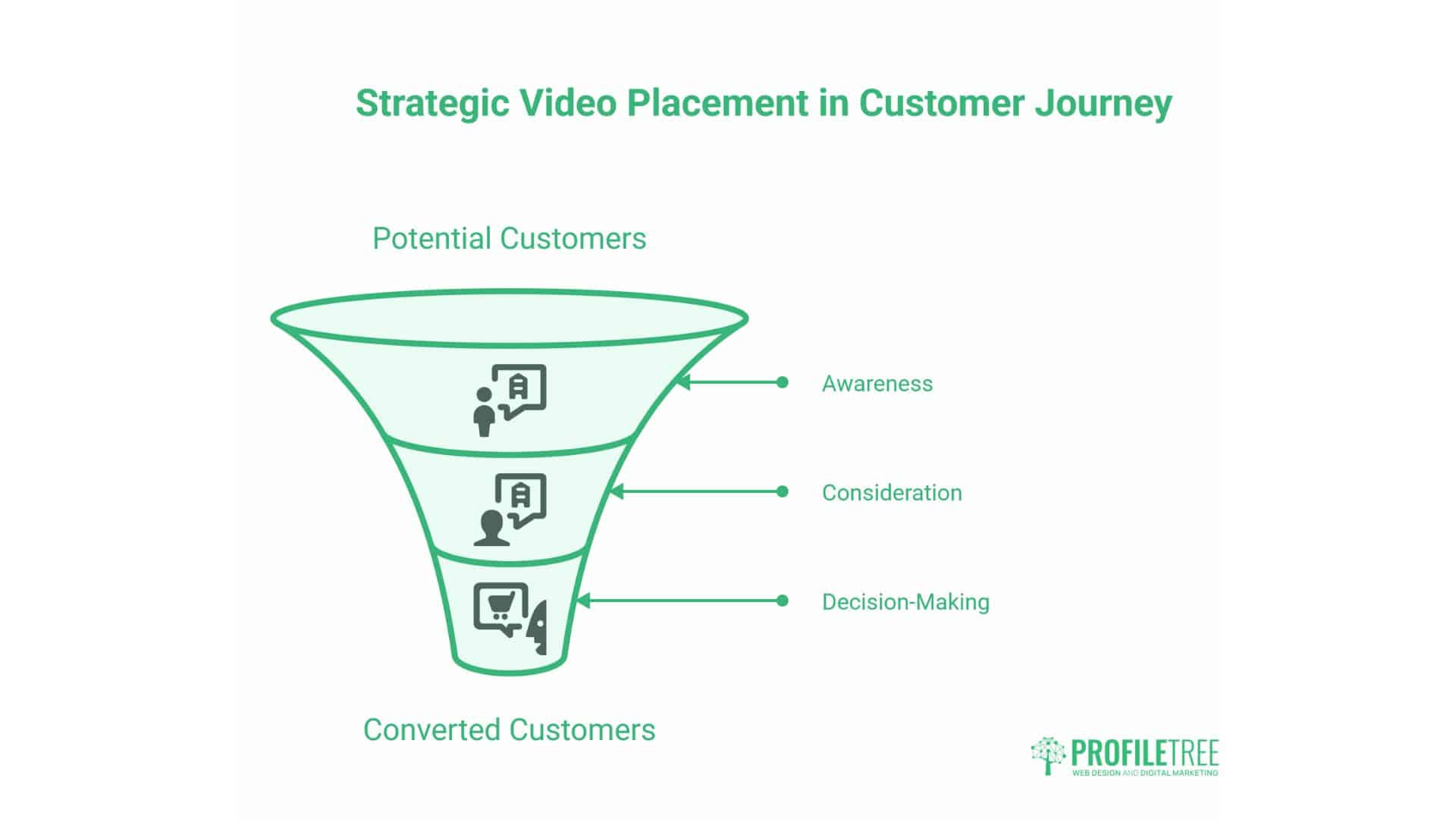
Strategic video placement accelerates prospects through the customer journey. Different content types serve specific purposes at each stage.
Awareness Stage
Early-stage prospects require content that identifies problems, educates them on solutions, and fosters brand awareness. Social video content, educational how-to guides, and thought leadership interviews are compelling here. The goal is to establish your business as a credible resource worth remembering.
Consideration Stage
Middle-funnel prospects compare options and evaluate solutions. Product demonstrations, detailed explainers, and comparison content serve this stage effectively. Website videos play a critical role—prospects visiting your site have demonstrated interest, so video content should answer their questions and alleviate their concerns.
Decision Stage
Bottom-funnel videos remove the final barriers to purchase. This content includes detailed product tours, customer success stories with specific results, and direct-response calls to action. Personalised video proposals and recorded demonstrations addressing specific prospect questions work particularly well.
Retention Stage
Post-purchase videos reduce churn, increase customer lifetime value, and generate referrals. Content types include onboarding sequences, feature tutorials, best practice guides, and customer success spotlights. Video support content reduces the customer service load while improving the customer experience.
Selecting the Right Video Marketing Agency
Choosing an agency partner requires systematic evaluation. The lowest price rarely delivers the best outcomes.
Defining Your Video Objectives
Clear objectives guide effective agency selection. Are you building brand awareness, generating leads, supporting sales cycles, or improving customer retention? Different agencies excel at different objectives.
Quantify success metrics before engaging agencies. Whether that’s leads generated, sales influenced, search rankings achieved, or engagement rates, measurable targets enable objective performance evaluation. Consider both short-term and long-term objectives.
Researching Agency Options
Start with your network. Ask colleagues in similar industries about their video marketing partners. Personal recommendations provide filtered options backed by real experience. LinkedIn makes this outreach efficient.
Review agency websites and portfolios critically. Look beyond production quality to strategic thinking. Do case studies include business results, or only creative awards? Does the content demonstrate understanding of your industry?
Evaluating Agency Portfolios
Portfolio review separates capable agencies from mediocre ones. Look beyond surface-level production quality to strategic execution and business outcomes. Assess production quality relative to your requirements and identify strategic thinking in portfolio work.
Look for relevant industry experience. While great agencies can serve multiple sectors, experience in your specific market accelerates execution and improves strategic recommendations.
Critical Questions to Ask
Strategic Approach:
- How do you approach developing a video strategy?
- What discovery process precedes production?
- How do you measure video marketing success?
- What reporting and analytics do you provide?
Technical Capability:
- What video formats and styles do you specialise in?
- How do you handle video SEO and technical implementation?
- Do you integrate video with CRM or marketing automation systems?
Process and Timeline:
- What does your typical production process look like?
- How long does production take from kickoff to delivery?
- How many revision rounds are included?
Commercial Terms:
- What’s your pricing structure?
- What’s included in quoted prices?
- What payment terms do you offer?
Understanding Pricing Models
UK video marketing costs vary dramatically based on quality expectations, complexity, and strategic services included. Basic corporate videos typically cost between £2,000 and £5,000. Sophisticated marketing campaigns with multiple assets run £10,000-£50,000+. Ongoing retainers usually start at around £3,000 to £5,000 per month.
Agencies employ various pricing structures, including project-based pricing for defined deliverables, retainer pricing for ongoing services, day-rate pricing for variable needs, and value-based pricing tied to business outcomes.
Red Flags to Avoid
Agencies unwilling to discuss strategy or measurement focus solely on creative execution. Without strategic frameworks and performance tracking, video content becomes expensive and lacks accountability.
Unrealistic timelines signal inexperience or capacity issues. Poor communication during the sales process worsens after engagement. Agencies without relevant case studies or verifiable client results may lack experience in your sector.
Performance Measurement and ROI
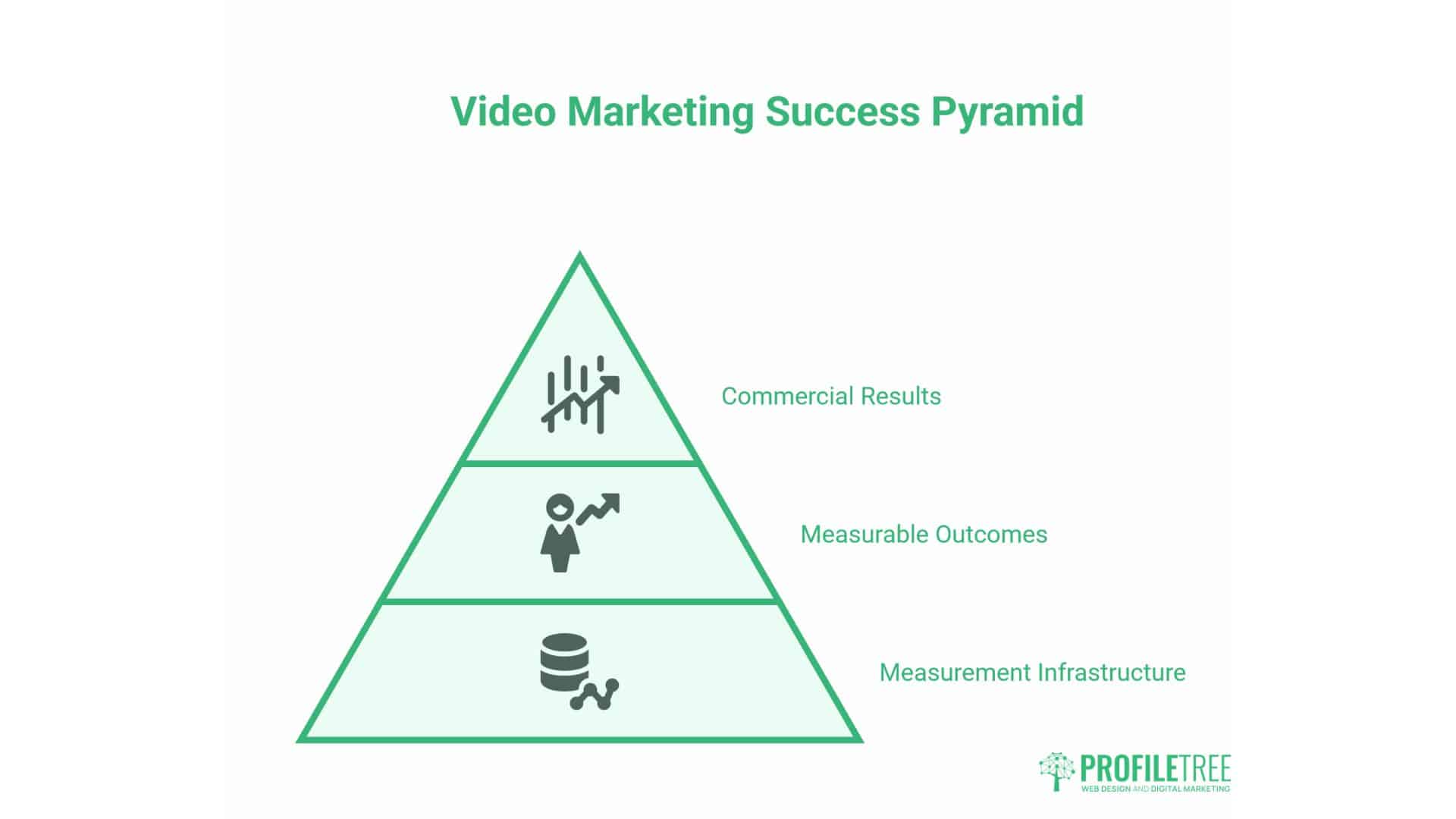
Video marketing succeeds when it drives measurable business outcomes. Proper measurement infrastructure connects video performance to commercial results.
Moving Beyond Vanity Metrics
View counts and engagement rates provide surface-level feedback but rarely connect to business outcomes. Strategic measurement focuses on metrics that matter to business performance: lead generation, sales cycle impact, and revenue attribution.
Lead generation metrics track how video contributes to pipeline growth. Sales cycle metrics measure the impact of video on deal velocity and close rates. Revenue attribution connects video directly to business income through multi-touch attribution models.
Essential Video Marketing Metrics
Engagement Metrics:
- Play rate (percentage of page visitors who start video)
- Average view duration
- Completion rate
- Social sharing and commenting
Technical SEO Metrics:
- Organic search rankings for target keywords
- Video snippet appearances in search results
- Click-through rates from search
Lead Generation Metrics:
- Lead form completions
- CRM contact creation
- Email captures
Revenue Metrics:
- Influenced revenue (deals where prospects engaged with video)
- Attributed revenue (deals credited to video)
- Customer lifetime value by video engagement
Attribution Models
Last-click attribution credits the final touchpoint before conversion, undervaluing the role of video in awareness stages. First-click attribution credits the initial touchpoint, over-valuing top-funnel video. Linear attribution distributes credit equally across all touchpoints.
Position-based attribution (U-shaped or W-shaped) distributes credit based on the importance of each journey stage. The correct attribution model depends on your business model and sales cycle. B2B businesses with long sales cycles benefit from multi-touch models.
First-Party Data Collection
Interactive video enables data collection whilst providing valuable content experiences. Branching video content presents different paths based on viewer choices, providing targeting data whilst personalising the viewing experience.
Quiz-based videos engage viewers while collecting qualification information. Gated video content generates leads by trading high-value content for contact information.
Navigating UK Video Marketing Regulations
UK businesses must comply with specific requirements when producing and distributing video content. Ignorance of regulations creates legal and reputational risks.
ASA Guidelines for Digital Video
The Advertising Standards Authority (ASA) regulates advertising across all UK media, including digital video. All advertising claims require substantiation. If your video states “most popular in the UK” or “clinically proven results,” you must hold evidence supporting these claims before publication.
Comparative advertising must not mislead or disparage competitors’ products or services. Environmental claims face particular scrutiny—terms like “eco-friendly” or “sustainable” require specific evidence.
Clearcast and Broadcast Compliance
Clearcast pre-approves television advertising for UK broadcast. Those planning TV, BVOD (Broadcaster Video on Demand), or cinema advertising must navigate the Clearcast approval process. The approval process typically takes 5-10 working days.
Different rules apply to broadcast versus digital video. Content acceptable on social media may require modification for broadcast compliance.
Data Protection and Privacy
GDPR and UK data protection law affect video marketing. If you’re collecting personal data through video interactions, gated content, or form integrations, you must have an appropriate legal basis and provide clear privacy notices.
Cookie consent requirements apply to video tracking. Filming people requires appropriate permissions—a commercial video featuring identifiable individuals needs signed releases granting usage rights.
Regional and Cultural Considerations
Cultural sensitivity matters for effective UK video marketing. Content that resonates in London may fall flat in Belfast, Edinburgh, or Cardiff. Regional dialects, cultural references, and local issues must be considered.
Northern Ireland requires particular sensitivity, given its complex political and cultural landscape. Working with local expertise prevents accidental offence.
FAQs
What should I expect to pay for video marketing services in the UK?
Basic corporate videos typically cost between £2,000 and £5,000. Comprehensive campaigns range from £10,000-£50,000+. Ongoing retainers usually start at around £3,000 to £5,000 per month. Costs vary based on production complexity, strategic services, and agency experience.
How long does video production typically take?
Simple videos can be completed in 2-3 weeks. More complex productions may take 6-8 weeks or longer, including time for revision rounds and approvals.
How do we measure the ROI of video marketing?
Track leads generated, sales influenced by video engagement, and revenue from video-driven customers. Compare these outcomes to total investment using multi-touch attribution models for accurate crediting.
What video formats should we prioritise?
B2B businesses typically prioritise LinkedIn content, website video, and email video. Consumer brands focus on Instagram, TikTok, and YouTube. Start where your audience actively engages.
Taking the Next Steps
Selecting a video marketing agency represents a significant investment decision. The right partnership drives measurable business growth; poor choices waste budgets whilst delivering disappointing results.
Begin with clarity about your objectives. What specific business outcomes do you need video marketing to deliver? Quantify success metrics before engaging agencies. This foundation enables productive agency conversations focused on results rather than creative preferences.
Research thoroughly before committing. Review portfolios, check references, and conduct multiple interviews with agencies. The cheapest option rarely delivers the best outcomes; the most expensive doesn’t guarantee success. Focus on finding agencies demonstrating strategic thinking, relevant experience, and clear accountability for business results.
Treat agency relationships as strategic partnerships rather than vendor transactions. The most effective video marketing emerges from collaborative relationships where agencies have a deep understanding of your business, market, and objectives. This understanding develops over time through open communication and shared learning.
Monitor performance rigorously but avoid micro-management. Establish clear KPIs aligned with business objectives, review performance regularly, and adjust strategies based on data. Trust experienced agencies to execute whilst holding them accountable for results.
Video marketing succeeds when it connects creative storytelling with commercial outcomes. The agency you choose determines whether video becomes a revenue driver or an expensive creative hobby. Choose wisely, measure carefully, and iterate continuously.
If you’re ready to explore how strategic video marketing can drive growth for your UK business, ProfileTree combines production expertise with a comprehensive digital strategy. We specialise in working with SMEs across Northern Ireland, Ireland, and the UK, developing video programmes that deliver measurable results. Contact us to discuss your specific requirements and discover how integrated video marketing can help achieve your business objectives.