
Is Microsoft Dynamics 365 for Marketing Right for Your Business?
Table of Contents
Microsoft Dynamics 365 for Marketing is one of the most capable enterprise marketing automation platforms available to UK businesses. It handles email marketing, lead scoring, customer journey orchestration, and event management, all connected directly to your CRM. But it is not the right tool for every organisation, and the cost of getting that decision wrong runs to tens of thousands of pounds in wasted implementation spend.
This guide is built around a single question: should your business use Dynamics 365 for Marketing? It covers the 2025/26 rebrand to Customer Insights Journeys, breaks down UK pricing in GBP, addresses GDPR compliance, and gives you a clear framework for deciding whether the platform fits and whether you need an implementation partner to make it work. We draw on ProfileTree’s experience supporting businesses across Northern Ireland, Ireland, and the UK through marketing automation decisions and digital strategy implementations.
If you’ve already decided Dynamics 365 for Marketing is the right platform, and you’re looking for implementation support, our digital strategy and AI implementation teams work with UK businesses at every stage of that process. If you’re still deciding, read on.
The 2025/26 Rebrand: Dynamics 365 for Marketing Explained
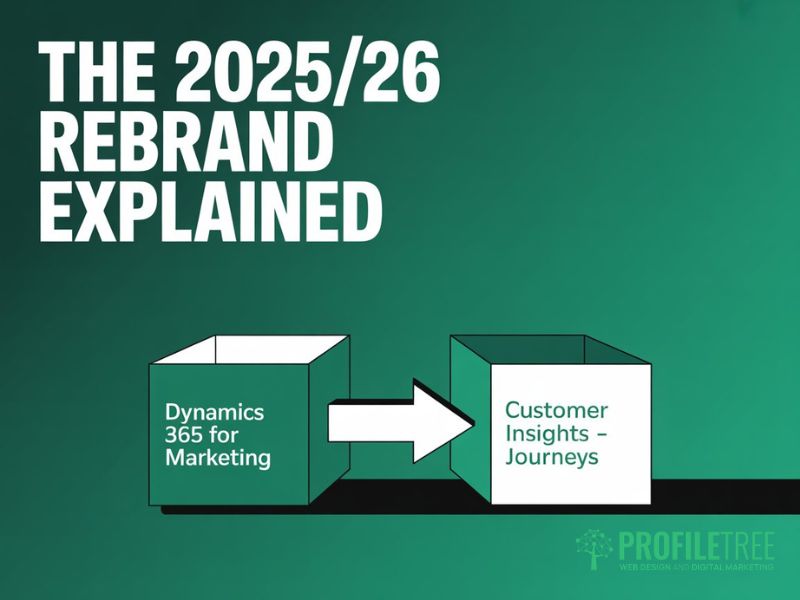
Before evaluating Dynamics 365 for Marketing as an enterprise marketing platform, you need to understand what Microsoft changed and why, because the rebrand has caused genuine confusion in the market, and much of the documentation you’ll find online describes a product that no longer exists under that name.
The old naming structure divided two closely related products: Dynamics 365 for Marketing handled campaign management, email marketing, and customer journey orchestration; Dynamics 365 Customer Insights handled customer data unification and analytics. Microsoft merged them into a single SKU in 2024, and the combined product is now called Dynamics 365 Customer Insights.
For marketing teams, the module that matters is Customer Insights – Journeys, which covers what used to be called Dynamics 365 for Marketing: real-time customer journey orchestration, email marketing campaigns, lead management, event management, and AI-powered lead scoring. The underlying architecture now sits on a unified Dataverse, which is both its strength and one of its main implementation challenges for teams without prior Microsoft platform experience.
The rebrand also reflects a shift in Microsoft’s positioning of the product. Dynamics 365 for Marketing was often sold as a standalone email marketing and campaign tool. Customer Insights reframes it as a data-first enterprise marketing platform: one where your Dynamics 365 marketing activity and your customer data live in the same environment by design. If you’ve been searching for Dynamics 365 marketing features, Dynamics 365 marketing pricing, or Dynamics 365 marketing implementation options, the capabilities you’re looking for are now within Customer Insights – Journeys.
How the naming has changed:
| Old Name | New Name | Key Change | Licensing Impact |
|---|---|---|---|
| Dynamics 365 for Marketing | Customer Insights – Journeys | Copilot added; real-time journeys expanded | New per-tenant model |
| Dynamics 365 Customer Insights | Customer Insights – Data | Unified customer profiles | Separate add-on pricing |
| Separate SKUs | Single Customer Insights SKU | Both modules under one subscription | Simpler, but higher base cost |
Core Features of Dynamics 365 for Marketing
Dynamics 365 Customer Insights – Journeys covers the full enterprise marketing automation stack: customer journey orchestration, email marketing, lead scoring, event management, and AI-powered segmentation. Understanding each module helps you assess where the platform adds genuine value versus where a simpler tool would serve you better.
Real-Time Customer Journey Orchestration
The customer journey builder in Dynamics 365 Marketing allows teams to design automated, multi-channel sequences that respond to customer behaviour in real time. A contact visits a product page, downloads a brochure, or opens an email, and the journey adapts accordingly. Triggers draw from CRM data, website behaviour, event attendance, and form submissions, all without manual intervention.
This is meaningfully different from batch-and-blast email marketing. Customer journeys in Dynamics 365 for Marketing can branch based on lead scoring thresholds, escalate contacts to sales when they show buying intent, and suppress contacts who’ve already converted. For B2B businesses with longer sales cycles, that logic-driven nurturing is where the platform earns its license cost.
AI-Powered Lead Scoring and Segmentation
Lead scoring in Dynamics 365 for Marketing uses configurable models combining demographic data with behavioural signals: email opens, link clicks, event registrations, and CRM activity. Leads that cross a defined threshold are automatically handed off to a salesperson or moved into a higher-intensity nurture track, removing the manual judgment calls that slow most B2B pipelines.
Copilot, Microsoft’s AI assistant, now extends into segmentation and lead scoring configuration. You can describe your target audience in plain language, and Copilot generates a segment definition for review. The same feature applies to email marketing subject line suggestions and customer journey design. These tools reduce the technical barrier to using the platform’s more advanced features, though they don’t replace the need for clean underlying data.
Email Marketing Tools
The email marketing module in Dynamics 365 for Marketing includes a drag-and-drop editor, responsive templates, dynamic content blocks, and A/B testing. Dynamic content blocks change based on the recipient’s CRM data, including different images, offers, or calls to action based on industry, purchase history, or lead score. This allows email marketing output to feel personal at scale.
What separates Dynamics 365 for Marketing from standalone email marketing tools is the feedback loop between sends and CRM data. Every email marketing interaction (opens, clicks, unsubscribes) is recorded directly on the contact record and feeds into lead scoring and customer journey logic. Standalone email marketing tools can’t replicate that without custom integrations that introduce their own maintenance overhead.
Event Management and Webinars
The platform includes a fully integrated event management module covering registration pages, attendee management, automated pre-event and post-event communications, and attendance tracking back to individual CRM contact records. Webinar integration works with Microsoft Teams and ON24.
Post-event customer journeys are triggered automatically based on attendance status: attendees, partial attendees, and no-shows each receive a different email marketing sequence. For professional services firms and B2B businesses using webinars as lead generation, this removes a manual process that most marketing teams handle badly.
Copilot and AI Features in 2025/26
The Copilot features added to Dynamics 365 for Marketing across 2024, 2025, and into 2026 change what a non-technical marketer can do without developer support. In practical terms, Copilot can generate a first draft of a marketing email from a short prompt, suggest lead scoring segment definitions in natural language, summarise customer journey performance, and flag contacts whose behaviour signals readiness for a sales conversation.
The output isn’t always ready to publish without editing, but it reduces the time to the first draft considerably. For UK SMEs without a dedicated marketing operations resource, this is one of the more notable recent developments in the Dynamics 365 for Marketing platform.
UK Pricing and Licensing for Dynamics 365 for Marketing
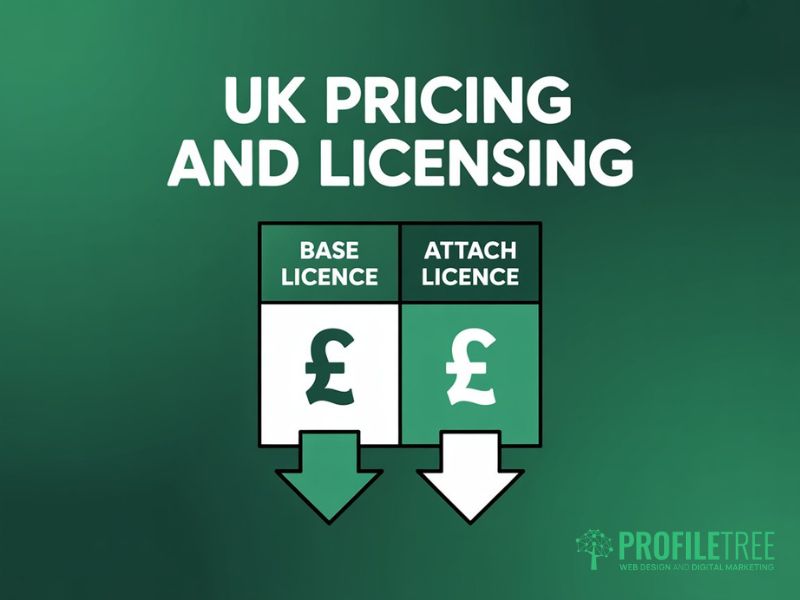
Pricing is the section most UK buyers of Microsoft Dynamics 365 for Marketing find hardest to work through, because Microsoft’s pricing page uses USD, lists multiple licence tiers, and doesn’t make the Base versus Attach distinction obvious. Below is a plain-language breakdown of what Dynamics 365 for Marketing costs for UK organisations. All figures are approximate as of early 2026; verify current GBP pricing directly with Microsoft or a certified Microsoft Partner before committing.
The Base vs. Attach Licensing Model
The Base price applies if Dynamics 365 for Marketing (now Customer Insights – Journeys) is the first or only Dynamics 365 product your organisation uses. The Attach price applies if you already hold a qualifying Dynamics 365 licence, most commonly Dynamics 365 Sales.
The Attach price is substantially lower, often around 20–30% of the Base price. If your organisation already uses Dynamics 365 Sales, the marketing automation module becomes considerably more affordable. If you’re buying Dynamics 365 for Marketing as a standalone tool without any other Dynamics 365 products, the cost is higher, and the business case needs to be proportionally stronger.
Approximate UK pricing (GBP, per month):
| Licence Tier | Approx. Cost/Month (GBP) | Included Interacted People |
|---|---|---|
| Base (standalone) | From £1,300 | 10,000 |
| Attach (with D365 Sales) | From £200–£400 | 10,000 |
| Additional interacted people | Incremental bands above 10k | Per 5,000 additional contacts |
Understanding Interacted People
Microsoft licenses Dynamics 365 for Marketing based on the number of people who interact with your database rather than the total number of contacts in your database. An interacted person is a contact that receives a marketing communication, whether an email marketing message, an SMS, or a push notification, in a given month. Contacts sitting in your CRM who receive nothing that month don’t count towards your limit.
This model is more favourable than it first appears for businesses with large databases but targeted monthly send volumes. A business with 50,000 contacts but only 8,000 actively receiving email marketing in a given month stays within the 10,000 threshold. Get clear on your typical monthly active send volume before pricing a Dynamics 365 for Marketing licence; it changes the maths considerably.
Total Cost of Ownership
The licence cost alone doesn’t tell the full story of what Dynamics 365 for Marketing costs to run. Organisations also need a Power Platform environment, Dataverse capacity, and, in most cases, either a dedicated internal Dataverse administrator or a certified Microsoft Partner to manage the platform. For UK SMEs and mid-market businesses, a realistic implementation project covering discovery, data migration, customer journey setup, consent model configuration, and team training costs between £15,000 and £50,000, depending on complexity, with ongoing administration adding a monthly overhead on top of the licence.
That total cost of ownership figure is what should drive the business case, not the licence price in isolation. We’ve seen organisations buy the licence and then stall at implementation because they hadn’t budgeted for the professional services required to make it work. The platform investment only delivers if the implementation is done properly.
GDPR and PECR Compliance in Dynamics 365 for Marketing
UK organisations using Dynamics 365 for Marketing face a more complex consent framework than their US counterparts. The General Data Protection Regulation (as retained in UK law post-Brexit) and the Privacy and Electronic Communications Regulations together govern how you can contact individuals by email marketing, SMS, and other electronic channels. Getting this right in the platform requires deliberate configuration; it doesn’t come correctly set up out of the box.
Consent Management and Preference Centres
Dynamics 365 for Marketing includes a built-in Preference Centre that lets contacts manage their own communication preferences across consent topics: product updates, promotional email marketing, and event invitations. The platform respects those preferences automatically when sending any customer journey communication, but only once the consent model has been correctly configured for UK law.
For UK PECR compliance, the distinction between opt-in and soft opt-in matters considerably and must be reflected in how you configure consent purposes in Dynamics 365 for Marketing. Contacts from lead generation forms need explicit opt-in status; contacts acquired through a recent purchase relationship can carry soft opt-in status. Building this correctly from the start is critical; retrospectively correcting a consent model in a live Dynamics 365 for Marketing environment is time-consuming and risks campaign disruption.
Your existing contact data may not have the consent records you need before migrating to Dynamics 365 for Marketing. The ICO publishes detailed PECR guidance at ico.org.uk, and Microsoft’s compliance documentation for Dynamics 365 for Marketing is at learn.microsoft.com. Both should be reviewed as part of your implementation project.
Data Residency and UK GDPR
Microsoft provides UK data regions through its Azure infrastructure, covering the UK South (London) and UK West (Cardiff) data centres. When you set up your Dynamics 365 for Marketing environment, you can specify the UK data region, which means your customer data can be stored and processed within the UK. For organisations in financial services, healthcare, or the public sector with strict data residency requirements, confirming this configuration during implementation is non-negotiable.
The platform supports data subject rights management: access requests, erasure requests, and consent withdrawal, but this requires deliberate setup as part of the implementation project and should be tested before any email marketing campaigns go live.
Is Dynamics 365 for Marketing Right for Your Business?
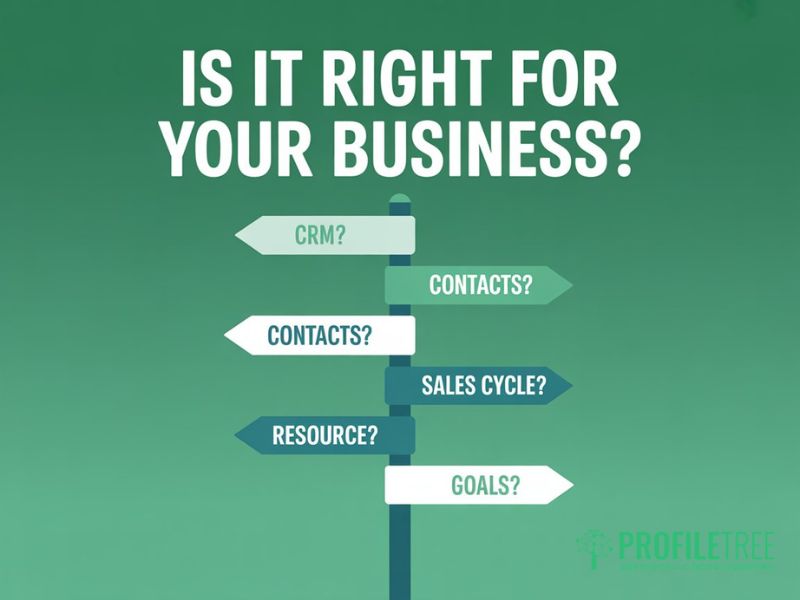
This is the question the article is built around, and the honest answer is: it depends on five factors. Work through each one before committing to a licence or an implementation project.
Factor 1: Do You Already Use Dynamics 365 Sales?
If you’re already running Dynamics 365 Sales as your CRM, adding Dynamics 365 for Marketing is a very different decision from buying it standalone. The Attach licence drops the monthly cost by 70–80%, and the integration between your CRM and your marketing automation is built in rather than engineered. Most of the value in Dynamics 365 for Marketing comes from that shared data model; if you’re not using Dynamics 365 Sales, you lose the shared contact record, the lead scoring integration, and the real-time handoff between marketing and sales.
If you’re using Salesforce, HubSpot, or another CRM, the integration is possible but adds cost and complexity. It’s worth evaluating whether migrating to Dynamics 365 Sales makes sense before committing to Dynamics 365 for Marketing, rather than maintaining two separate platforms with a custom integration between them.
Factor 2: What Is Your Contact Volume and Campaign Cadence?
Dynamics 365 for Marketing is licensed based on the number of interacting people per month, so your actual cost depends on how many contacts you actively market to, not how many you hold in your database. A business with 50,000 contacts but a targeted, segmented approach to email marketing may stay comfortably within the 10,000 interacted people threshold. A business with 8,000 contacts but a high-frequency broadcast approach may exceed it.
Map your current monthly email marketing send volumes and segment sizes before pricing up a licence. If you’re routinely sending to more than 10,000 contacts per month, build the additional interacted people bands into your cost model from the start.
Factor 3: How Complex Is Your Sales Cycle?
Dynamics 365 for Marketing delivers its strongest returns for businesses with longer, relationship-driven sales cycles: professional services, technology, manufacturing, healthcare, and similar B2B sectors where a prospect might take 3 to 12 months from first contact to contract. The customer journey and lead scoring features are built for exactly that nurturing period.
If your sales cycle is short, a prospect sees your product, decides, and buys within days, the complexity and cost of Dynamics 365 for Marketing is very difficult to justify. Simpler email marketing platforms will serve you better and cost a fraction of the price.
Factor 4: Do You Have the Internal Resource to Run It?
This is the question most evaluations skip, and it’s the one that most often determines whether an implementation succeeds. Dynamics 365 for Marketing runs on the Microsoft Power Platform and Dataverse. Running it properly requires someone who understands Dataverse, can configure environments, manage capacity, handle consent model changes, and troubleshoot journey logic when something breaks.
Very few UK SME marketing teams have that capability internally. If you don’t, you have two options: hire someone who does, or engage a certified Microsoft Partner to manage the platform on an ongoing basis. Either option adds cost to your total ownership figure. Factor it in before you sign a licence.
Factor 5: What Does Success Look Like for You?
Define your success metrics before you implement, not after. Dynamics 365 for Marketing can improve lead quality, reduce time-to-qualification, increase marketing-to-sales handoff rates, and give you cleaner attribution data. But it only does those things if you’ve defined what qualified looks like, agreed lead stage definitions with your sales team, and built customer journeys that reflect your actual sales process rather than a generic template.
If you can’t answer ‘what does a Marketing Qualified Lead look like for our business?’ before implementation, the platform won’t answer it for you. Resolve that first.
When Do You Need a Dynamics 365 for Marketing Implementation Partner?
For most UK SMEs and mid-market businesses, the answer is: from the start. Dynamics 365 for Marketing is a genuinely powerful enterprise marketing platform, but its power comes with architectural complexity that most in-house marketing and IT teams aren’t equipped to handle alone. An implementation partner doesn’t just handle the technical setup; they prevent the expensive mistakes that happen when the platform is configured incorrectly.
What an Implementation Partner Actually Does
A certified Microsoft Partner for Dynamics 365 for Marketing covers the scope that most buyers underestimate. That includes environment provisioning on the Power Platform, Dataverse capacity planning, data migration and deduplication from your existing CRM or email marketing tool, consent model configuration to UK GDPR and PECR standards, customer journey design and build, lead scoring model setup, integration with Dynamics 365 Sales, user training, and post-launch support.
That list explains why implementation projects typically cost £15,000 to £50,000. It’s not inflated; it reflects the actual work involved in getting the platform to a state where your marketing team can use it confidently. Shortcutting any part of that list is where implementations go wrong.
Signs You Shouldn’t Attempt a Self-Managed Implementation
You should strongly consider an implementation partner if any of the following apply: you’ve never worked with the Microsoft Power Platform or Dataverse before; your contact data is in multiple systems and hasn’t been cleaned or deduplicated; you don’t have a documented consent record for your existing marketing contacts; your marketing and sales teams use different definitions of a qualified lead; or your IT team’s primary platform experience is with Google Workspace or AWS rather than Microsoft Azure.
None of those is disqualifying; they’re the normal starting point for most UK mid-market businesses. They do mean you need specialist support to stand the platform up correctly, rather than discovering the gaps after you’ve gone live.
SME vs. Mid-Market: Different Needs, Different Approaches
For UK SMEs (under 50 employees, typically under 2,000 active marketing contacts), the implementation partner relationship is often project-based: a fixed-scope engagement to set the platform up correctly, followed by a lighter-touch managed service or a handover to an internal champion who’s been trained to run day-to-day operations. The goal is to get the platform stable and your team self-sufficient as quickly as possible.
For mid-market businesses (50–249 employees, more complex sales processes, multiple customer journey programmes running simultaneously), the partner relationship tends to be ongoing. The platform evolves with your business, with new journeys, new lead scoring models, new integrations, and Copilot feature adoption; maintaining a partner relationship gives you access to that expertise without building a full internal Dynamics 365 practice.
At ProfileTree, our digital marketing strategy team works with UK and Irish businesses at the evaluation stage, helping you assess whether Dynamics 365 for Marketing is the right fit before you commit to a licence and an implementation partner. We also support businesses through the AI implementation and digital transformation stages that often follow a Dynamics 365 for Marketing deployment, as the platform’s Copilot features and data layer open up broader AI automation opportunities.
Questions to Ask a Potential Implementation Partner
Before engaging any Microsoft Partner for a Dynamics 365 for Marketing implementation, ask these questions and treat the answers as qualification criteria, not formalities. How many Dynamics 365 for Marketing implementations have they completed in the UK in the last 12 months? Can they provide references from businesses of a similar size and sector? Do they have specific experience configuring consent models to UK GDPR and PECR standards? What does their post-launch support model look like, whether it’s included or charged separately? Have they worked with migrations from your current email marketing platform?
A credible partner will answer all of those questions directly and will have client references to back their claims. If they can’t, keep looking.
Our digital training team also runs practical workshops on the Dynamics 365 for Marketing platform evaluation and readiness assessment, useful if your team wants to build internal knowledge before engaging an implementation partner.
The Decision Framework: Should You Buy Dynamics 365 for Marketing?
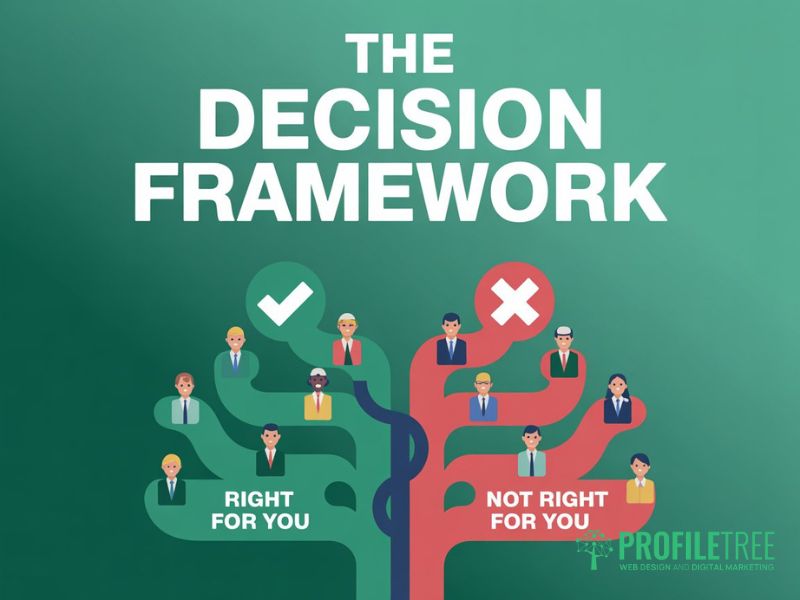
Based on the five factors above and the implementation partner considerations, here is a direct summary of the business types that suit Dynamics 365 for Marketing and those that don’t.
Dynamics 365 for Marketing is most likely the right choice if:
- You already use or are planning to use Dynamics 365 Sales as your primary CRM.
- You have a B2B sales cycle of three months or longer, with multiple touchpoints between first contact and close.
- You’re regularly marketing to between 5,000 and 100,000 contacts with segmented, personalised campaigns rather than broadcast sends.
- You have a budget not just for the licence but for a proper implementation (allow £15,000–£50,000) and ongoing administration.
- Your sector places strict requirements on data residency and consent management (financial services, healthcare, professional services, public sector).
Dynamics 365 for Marketing is probably not the right choice if:
- Your sales cycle is short (under 30 days), and your marketing is primarily brand awareness or e-commerce rather than B2B lead nurturing.
- You have fewer than 500 active marketing contacts and a straightforward sales process.
- You have no existing Microsoft technology investment and no plans to adopt Dynamics 365 Sales or the Power Platform.
- Your marketing team of one or two people needs a tool they can run independently without ongoing technical support.
- Your total technology budget for marketing doesn’t stretch to the licence plus implementation costs.
Alternatives worth considering:
| Business Profile | Better-Fit Tool | Why | When to Reconsider |
|---|---|---|---|
| Micro business, simple sales | Mailchimp / Brevo | Low cost, quick to run independently | When the contact list exceeds 10k |
| SME, moderate complexity | HubSpot Starter / Pro | Easier onboarding, strong CRM integration | When deep Microsoft integration is needed |
| Mid-market, Microsoft stack | Dynamics 365 for Marketing | Native CRM integration, enterprise data model | This is the target profile |
| Enterprise, complex stack | Dynamics 365 or Salesforce Marketing Cloud | Scale and governance requirements | Evaluate the total stack before deciding |
Next Steps for UK Organisations
Microsoft Dynamics 365 for Marketing (now Customer Insights – Journeys) is a strong enterprise marketing platform for mid-market UK businesses with a Microsoft-invested technology stack, a complex B2B sales process, and a structured marketing function. The customer journey, email marketing, lead scoring, and GDPR compliance tools are genuinely capable. The gap between capable and successfully deployed comes down to implementation quality and whether your organisation has been honest about the five factors covered in this guide.
If you’re at the evaluation stage and want an independent view on whether Dynamics 365 for Marketing is the right fit for your business, ProfileTree’s digital strategy team works through exactly that question with UK and Irish businesses. We don’t have a vested interest in selling you a particular platform; we have a vested interest in you making the right decision for your organisation.
If you’re ready to explore what a Dynamics 365 for Marketing implementation would look like for your business, or if you want to understand how the platform connects to broader AI implementation and digital transformation opportunities, start with a conversation with our team.
For businesses that want to build internal capability before committing to a platform decision, our digital marketing strategy service includes a marketing technology audit and platform selection framework tailored to your sector, contact volume, and budget.
And if your team wants hands-on training on Dynamics 365 for Marketing evaluation, implementation readiness, or AI-powered marketing automation, our digital training team runs practical workshops for UK and Irish businesses at every stage of that journey.
FAQs
1. Is Dynamics 365 for Marketing discontinued?
No. Dynamics 365 for Marketing has been rebranded, not discontinued. The email marketing, customer journey, lead scoring, and event management functionality now sits within Customer Insights – Journeys and has been expanded with Copilot AI features. Existing Dynamics 365 for Marketing licence holders can follow Microsoft’s published migration paths to the new SKU.
2. What is the minimum cost for Dynamics 365 for Marketing in the UK?
The Base licence (standalone) starts at approximately £1,300 per month for up to 10,000 interacted people. If you already hold a Dynamics 365 Sales licence, the Attach price starts around £200–£400 per month for the same volume. Always verify current GBP pricing directly with Microsoft or a Microsoft Partner before building a business case, as these figures are approximate as of early 2026.
3. Can I use Dynamics 365 for Marketing without Dynamics 365 Sales?
Yes, Dynamics 365 for Marketing operates as a standalone marketing automation tool covering customer journeys, email marketing, lead scoring, and event management without requiring Dynamics 365 Sales. The value proposition is considerably weaker without the CRM integration, because you lose the shared contact record, real-time lead scoring handoff, and the full-funnel visibility that makes the platform worth its cost for most UK businesses.
4. How does Dynamics 365 for Marketing compare to HubSpot?
HubSpot is easier to start with: better onboarding, a more intuitive email marketing interface, and no need for a Dataverse administrator. Dynamics 365 for Marketing wins on integration depth for businesses already on the Microsoft stack, native data ownership in your own Dataverse environment, and the strength of its UK GDPR compliance tooling. For UK SMEs without Microsoft infrastructure, HubSpot is usually the lower-friction choice. For mid-market organisations already running Dynamics 365 Sales, Dynamics 365 for Marketing typically delivers stronger long-term value.
5. Is my data stored in the UK when using Dynamics 365 for Marketing?
Microsoft provides UK data regions through its Azure infrastructure, covering UK South (London) and UK West (Cardiff). Specifying the UK region during environment setup means your Dynamics 365 for Marketing data is stored and processed within the UK, which satisfies most UK GDPR data residency requirements. Some ancillary telemetry services may still be processed outside the UK; this should be reviewed in your Data Protection Impact Assessment.