
Business Podcast Growth: Statistics, Trends & Production Insights
Table of Contents
The business podcasting sector has experienced sustained growth, with data showing significant shifts in how organisations use audio content for brand development and audience engagement. For business owners and marketing professionals seeking to understand the podcast landscape, current statistics reveal both opportunities and strategic considerations for 2026.
Understanding these metrics helps inform decisions about whether to launch a podcast, how to structure content, and where to allocate production resources. This analysis examines verified data on podcast consumption patterns, production trends, and the commercial impact of podcasting for UK businesses.
UK Business Podcast Growth and Adoption
The podcasting medium has evolved from an experimental marketing channel to a well-established business communication tool. Over 82 million people in the United States actively listen to podcasts, whilst the UK market has experienced parallel growth with distinct regional characteristics.
More than half of Americans listened to a podcast in 2022, representing a 29.5% increase in U.S. podcast listeners over the past three years, reaching 120 million listeners. The Infinite Dial study projected that nearly two-thirds (62%) of Americans would have listened to at least one podcast by the end of 2022.
Supply-Side Growth Patterns
Apple Podcasts maintains market dominance with approximately five million podcasts globally and a 40% market share of all podcast downloads. Approximately 450,000 active podcasts are currently operating across various platforms, creating both opportunities and competition for businesses entering the space.
However, the data reveals an 80% decrease in new business podcast show creation globally over the past year. This contraction suggests market maturation rather than decline—the barrier to entry remains low, but sustained success requires professional production standards and strategic content planning.
Language Distribution and Global Reach
Business podcasts are produced in more than 100 languages, with the top five being Spanish, Portuguese, Indonesian, German, and English. For UK businesses targeting international markets, this linguistic diversity presents opportunities for multilingual content strategies, particularly when serving European or Commonwealth markets.
“The podcast landscape has shifted from quantity to quality,” notes Ciaran Connolly, Director at ProfileTree. “Businesses that succeed in 2025 understand that podcast production is a strategic investment, not just content creation. It requires the same rigour as any other marketing channel—clear objectives, audience research, and measurable outcomes.”
Listener Demographics and Consumption Patterns
Understanding who listens to podcasts—and how they consume content—shapes effective podcast strategies for business applications. Current demographic data reveals several patterns relevant to B2B and professional content creators.
Age Distribution of Podcast Audiences
Younger audiences represent the largest segment of podcast listeners, with Millennials and Generation Z forming approximately 56% of the audience. However, the 35-54 age group accounts for approximately 39% of listeners, demonstrating that podcasts appeal to a diverse range of age demographics.
For businesses creating professional or industry-specific content, this age distribution matters. Decision-makers and senior professionals are increasingly using podcasts for industry intelligence, competitive analysis, and continuous learning during commutes or while exercising.
Income and Education Levels
Podcast listeners tend to have higher household incomes than the general population. Data shows that 45% of podcast listeners have household incomes exceeding £250,000 (converted from U.S. data), with approximately 17% of monthly podcast listeners earning between £100,000 and £150,000.
Educational attainment follows similar patterns—25% of monthly podcast listeners hold college degrees, suggesting podcast audiences are more educated than the average population. These demographics make podcasting particularly effective for businesses targeting professional services, B2B sales, or premium consumer segments.
Weekly Listening Habits
On average, podcast listeners spend over seven hours per week consuming podcast content. This substantial time commitment indicates high engagement levels and suggests that quality content can command significant audience attention.
Listeners follow an average of 11 different podcasts weekly, indicating that audiences actively seek diverse content rather than committing exclusively to a single show. For business podcasters, this creates both competition and opportunity—listeners will sample new content, but retention requires consistent quality and clear value propositions.
Listening Contexts and Device Preferences
Podcast consumption occurs across multiple contexts and devices. Common listening scenarios include:
- Morning routines whilst preparing for the day
- Commutes using mobile devices or car audio systems
- Exercise sessions with headphones or earphones
- Household tasks, including cooking and cleaning
- Work activities where background audio aids productivity
Smartphones dominate podcast consumption, with 79% of listeners using mobile devices. This mobile-first behaviour influences content strategy—episodes must work well in audio-only formats, though video podcasting is gaining traction for social media distribution.
Listeners also use tablets for visual podcast elements, whilst headphones and earphones provide the preferred listening experience. The rise of wireless devices, such as Bluetooth headphones, has made podcast consumption more convenient, contributing to increased listening times.
Professional Podcast Production for UK Businesses
The technical and strategic requirements for successful business podcasts have increased substantially. Whilst basic recording equipment is accessible, producing content that builds brand authority requires professional production standards and strategic planning.
The Video Podcasting Shift
YouTube has emerged as a primary discovery platform for business podcasts in the UK market, surpassing traditional audio-only directories for many demographics. This shift means businesses must consider video production alongside audio—not as an optional extra, but as core infrastructure.
Video podcasting addresses several strategic needs:
- Discovery optimisation: YouTube’s search algorithm and recommendation system exposes content to new audiences
- Social media distribution: Short video clips from episodes perform well on LinkedIn, Instagram, and TikTok
- Engagement metrics: Visual content typically achieves higher completion rates than audio-only formats
- Production value signals: Video demonstrates production investment, building perceived credibility
ProfileTree’s approach to podcast production integrates video capture from initial recording, using 4K pipelines that deliver broadcast-quality output suitable for both YouTube distribution and social media cut-downs.
Recording Infrastructure and Studio Access
Businesses face choices between in-house recording, remote production, and studio-based services. Each approach carries different cost structures and quality implications.
Remote recording technology has improved substantially, with platforms like Riverside.fm enabling high-fidelity audio and video capture without studio access. For UK businesses with distributed teams or international guests, remote recording provides flexibility whilst maintaining quality standards.
However, studio recording still delivers superior results for flagship content. Major UK cities, including London, Manchester, and Bristol, offer professional business podcast studios with acoustic treatment, multiple camera angles, and technical support. Hybrid approaches—combining studio recording for hosts with remote capture for guests—strike a balance between quality and practicality.
Post-Production and Content Refinement
The editing phase determines whether recorded content becomes compelling finished episodes. Professional post-production includes:
Audio engineering: Noise reduction, level balancing, and sonic enhancement that meet broadcast standards. This isn’t just removing background noise—it’s creating a consistent audio signature that builds brand recognition.
Narrative editing: Restructuring conversations to maximise impact, removing redundant segments, and tightening pacing. Effective editing respects the listener’s time by eliminating filler content whilst preserving natural conversation flow.
Sonic branding: Custom music composition and audio identity elements that differentiate your business podcast from competitors. Generic stock music undermines professional positioning.
Social content creation: Producing 3-5 vertical video clips per episode, optimised for social media platforms with burned-in captions and attention-grabbing openings.
Strategic Development and Format Planning
Before recording begins, successful business podcasts require strategic planning that defines purpose, audience, and competitive positioning.
Audience profiling: Identifying specific listener demographics, professional roles, and information needs. Generic “everyone” targeting rarely succeeds—focused content for defined audiences builds loyal followings.
Format architecture: Choosing between interview formats, solo commentary, panel discussions, or narrative documentary styles. Each format serves different strategic objectives and requires distinct production approaches.
Run of show development: Creating episode structures that maintain engagement whilst delivering consistent value. Templates help hosts stay on track and provide guests with clear expectations.
This strategic work differentiates between business podcasts that generate business results and those that consume resources without clear returns. ProfileTree’s production ecosystem begins with strategic consultation before any recording equipment is deployed.
Cost Structures for UK Podcast Production
Transparency around podcast production costs enables businesses to make informed decisions about podcast investments. The UK market offers several production tiers, each with distinct cost profiles and outcomes.
DIY Production Approach
Basic podcast production requires minimal investment—a USB microphone (£80-200), free recording software, and hosting services (£10-30 monthly). This approach works for testing business podcast concepts or creating very niche content where production quality is secondary to subject expertise.
However, DIY podcast production carries hidden costs. Time investment for recording, editing, and distribution typically exceeds 8-10 hours per episode. Technical learning curves mean early episodes often require multiple recording attempts. Without professional audio engineering, content quality may undermine rather than enhance brand perception.
Freelance Production Services
Freelance editors and producers offer middle-ground options, typically charging £200-£ 500 per episode, depending on the complexity. This model works well for businesses with clear creative direction who need technical execution but can manage strategy independently.
Freelancers offer variable quality; portfolios and samples should be reviewed carefully. Turnaround times can fluctuate based on the availability of freelancers, which may impact publishing schedules during busy periods.
Agency Production Services
Full-service podcast agencies handle strategy, production, and distribution, with typical costs ranging from £1,500-5,000+ per episode, depending on scope. This investment level suits businesses treating podcasts as strategic marketing assets rather than experimental content.
Agency services include:
- Strategic planning and format development
- Professional recording (studio or remote)
- Complete post-production and audio engineering
- Video editing and social media content creation
- Distribution and podcast SEO optimisation
- Performance analytics and optimisation recommendations
For businesses where executive time is valuable, agency production provides the most efficient path to professional results. The total investment should be evaluated against potential outcomes, including brand visibility, thought leadership positioning, and lead generation.
Marketing Impact and ROI Metrics
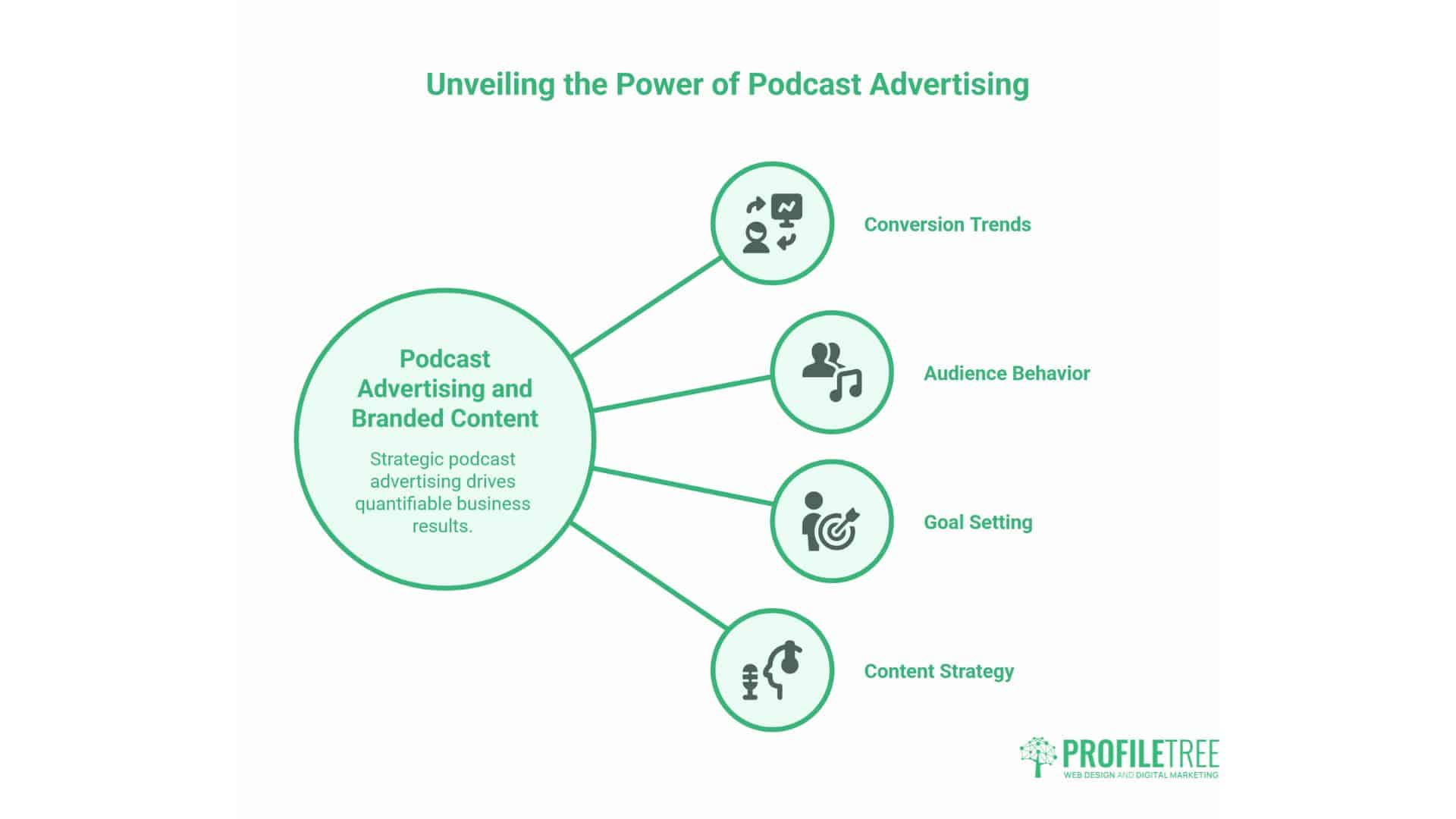
Podcast advertising and branded content deliver measurable business outcomes when implemented strategically. Understanding conversion patterns and audience behaviour helps businesses set realistic expectations and optimise content strategies.
Advertising Revenue Growth
The podcast advertising market is expected to continue expanding, with estimated revenues reaching $4 billion by 2024. The UK podcast advertising market grew 26% year-over-year, generating over $1.8 billion in revenue as of 2022 (U.S. market data serving as proxy for UK trends).
This growth reflects advertisers’ confidence in the effectiveness of business podcasts. Unlike display advertising, podcast ads benefit from:
- High attention environments: Listeners actively choose to engage with content
- Host endorsement effects: Ad reads by trusted hosts carry credibility
- Contextual relevance: Advertisers can target specific niche audiences
Conversion Patterns and Purchase Behaviour
Podcast advertisements have a significant influence on listener purchasing decisions. Data shows that 38% of podcast listeners report purchasing products or services mentioned in episodes—a conversion rate substantially higher than most digital advertising formats.
After hearing podcast ads, 79% of listeners visit advertiser websites, demonstrating strong intent signals. Conversion rates vary by objective: 0.08% for lead generation campaigns and 1.10% for website visits. Whilst these percentages may appear modest, they reflect qualified traffic from engaged audiences.
For businesses producing branded podcasts rather than buying advertising, ROI manifests differently. Metrics include:
- Brand search volume increases: Tracking organic searches for company and product names
- Qualified lead generation: Podcast listeners who request consultations or demos
- Sales cycle acceleration: Prospects who engage with podcast content before sales conversations
- Thought leadership positioning: Media mentions and speaking opportunities generated by podcast authority
Distribution and Discovery Strategies
Producing quality content is necessary, but it is insufficient—effective distribution determines whether podcasts reach their target audiences. Strategic approaches include:
SEO for audio content: Optimising podcast titles, descriptions, and show notes for search engines. Transcripts provide searchable text that helps content rank for relevant queries.
YouTube strategy: Treating YouTube as a primary podcast platform rather than a secondary distribution channel. Video podcasts benefit from YouTube’s recommendation algorithm and search functionality.
LinkedIn distribution: B2B podcasts achieve strong performance on LinkedIn, where professional audiences actively seek industry insights. Native video uploads typically outperform external links.
Email nurture sequences: Integrating podcast episodes into existing email marketing, providing subscribers with relevant content based on their interests and buyer journey stage.
Strategic guest selection: Featuring guests with engaged audiences creates opportunities for cross-promotion. Guest networks amplify reach beyond owned channels.
ProfileTree’s approach to podcast marketing integrates SEO, video optimisation, and social media strategy from the initial concept development stage. Distribution planning influences content creation decisions, rather than being considered after podcast production is complete.
Video Production Capabilities for Podcast Enhancement
The convergence of audio and video podcasting necessitates production capabilities that surpass traditional radio-style recording. Modern business podcasts benefit from video elements that serve multiple strategic purposes.
Multi-Camera Production Standards
Professional video podcasting employs multiple camera angles to create dynamic visual content. Three-camera setups—featuring wide shots, individual host and guest close-ups—provide editing flexibility while maintaining visual interest throughout episodes.
Lighting design matters substantially. Professional setups use three-point lighting to eliminate shadows and create flattering appearances that match the authority conveyed by audio content. Background design should reflect the brand identity without distracting from the speakers.
Social Media Content Creation
Each business podcast episode can generate 5-10 social media assets when approached strategically. Short-form video clips (30-90 seconds) perform well across platforms when they:
- Open with attention-grabbing statements or questions
- Include burned-in captions for sound-off viewing
- Use platform-specific aspect ratios (vertical for Stories/Reels, square for feed posts)
- Feature clear calls-to-action in final frames
This content multiplication justifies video production investment—a single recording session yields the primary podcast episode plus substantial social media inventory. ProfileTree’s video production service includes social content creation as standard, maximising the value of each recording session.
YouTube Optimisation Techniques
YouTube functions as both a podcast platform and a search engine. Optimisation requires attention to:
Thumbnail design: Creating compelling visual previews that encourage clicks in crowded feeds. Effective thumbnails feature clear subject faces, minimal text, and high contrast.
Title optimisation: Balancing search terms with curiosity gaps that encourage clicks. Titles should communicate clear value whilst maintaining intrigue.
Description content: Providing comprehensive episode summaries with timestamps, relevant links, and searchable keywords. YouTube indexes description text, making it valuable for SEO.
Chapter markers: Adding timestamped chapters enhances the viewer experience and increases watch time—a key YouTube ranking signal.
Website Design and Development for Podcast Hosting
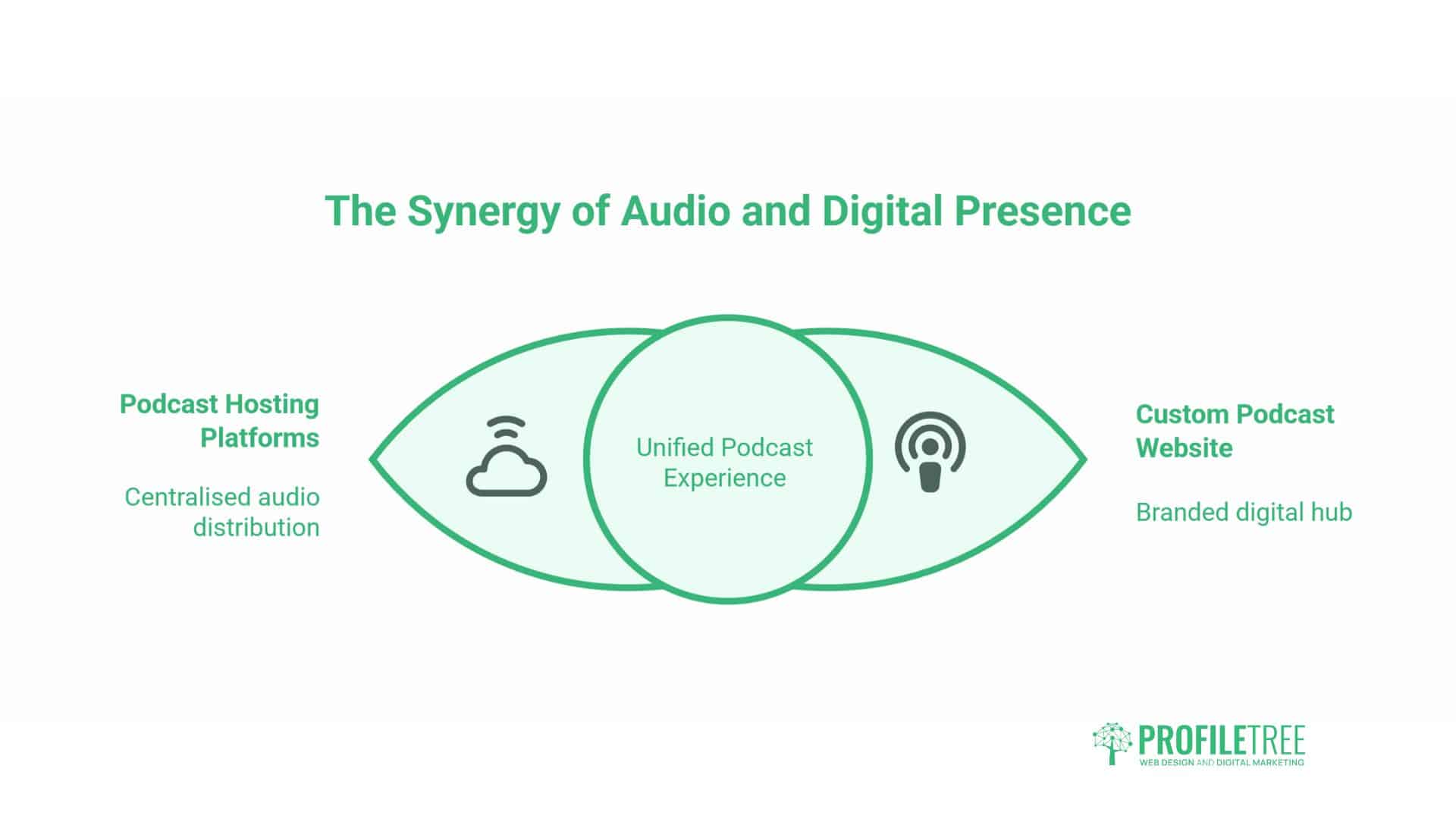
Podcasts require digital infrastructure beyond audio hosting platforms. Strategic website development creates owned channels for podcast discovery whilst supporting broader marketing objectives.
Podcast Website Architecture
Dedicated podcast websites serve multiple functions—content hosting, audience building, and lead generation. Effective business podcast sites include:
Episode archives: Organised by date and topic, with search functionality for listeners seeking specific content. Each episode should have a dedicated page with embedded audio/video player, show notes, and transcripts.
Resource libraries: Downloadable assets mentioned in episodes, gated behind email capture forms for lead generation. This converts passive listeners into identifiable prospects.
Newsletter signup: Email collection for episode notifications and related content. Email subscribers represent owned audiences independent of platform algorithm changes.
About pages: Clear information about hosts, podcast production values, and the show’s purpose. This content helps potential guests evaluate whether the show aligns with their objectives.
ProfileTree’s WordPress development expertise ensures that podcast websites integrate seamlessly with broader business sites while maintaining distinct identities. Custom development supports features like advanced search, custom audio players, and CRM integration for lead tracking.
SEO Considerations for Podcast Content
Search engines cannot directly index audio content, making supporting text essential for discovery. Podcast SEO requires:
Full transcripts: Complete text versions of episodes that provide searchable content. Transcripts also enhance accessibility for hearing-impaired audiences and those who prefer to read.
Optimised show notes: Episode summaries that include relevant keywords whilst providing genuine value to readers. Show notes should adhere to standard SEO practices, including clear headings, natural keyword integration, and internal linking.
Schema markup: Structured data that helps search engines understand podcast content types, episode information, and publication dates. This can generate rich snippets in search results.
Link building: Encouraging episode citations from industry publications, guest websites, and relevant directories. Links signal authority to search engines whilst driving referral traffic.
AI Implementation for Podcast Production Efficiency
Artificial intelligence tools are transforming podcast production workflows, reducing time requirements while maintaining quality standards. Strategic AI adoption enables businesses to scale content creation without incurring proportional cost increases.
Automated Transcription Services
AI-powered transcription tools convert audio to text with 95%+ accuracy, dramatically reducing the time required to create podcast transcripts. Services like Descript, Otter.ai, and Rev.ai can process hour-long episodes in minutes, rather than the hours needed for manual transcription.
These transcripts serve multiple purposes beyond SEO—they enable content to be repurposed into blog posts, social media content, and email newsletters, allowing for greater reach and engagement. Episode quotes can be extracted and formatted as standalone graphics or text posts.
Content Editing and Enhancement
AI editing tools can identify filler words (“um,” “uh,” “like”) and long pauses, automatically suggesting or making cuts that tighten pacing. While these tools don’t replace human editorial judgment, they substantially accelerate the technical editing process.
Speech enhancement AI can improve audio quality in post-production, reducing background noise and balancing levels. This technology partially compensates for suboptimal recording conditions, though it cannot fully replace proper acoustic treatment and microphone technique.
Audience Insights and Analytics
AI-powered analytics tools track listener behaviour patterns, identifying which content performs well and where audiences disengage. This data informs content strategy decisions, including topic selection, episode length, and structural formats.
Sentiment analysis of listener comments and social media mentions provides qualitative feedback at scale, enabling producers to understand audience reactions without manually reviewing every comment.
ProfileTree’s AI training services help businesses effectively implement these tools, selecting appropriate solutions and developing workflows that strike a balance between automation and human creativity and strategic thinking.
Digital Marketing Strategy for Podcast Growth
Podcasts succeed when integrated into broader digital marketing strategies rather than operating as isolated projects. Comprehensive approaches connect podcast content with other marketing channels and business objectives.
Content Marketing Integration
Podcast episodes should feed content marketing systems, providing source material for blog posts, infographics, social media content, and email campaigns. This content multiplication maximises podcast production investment whilst maintaining message consistency across channels.
Blog post development: Each episode can generate 2-3 blog posts—full transcripts, topic deep-dives, and guest spotlight features. These posts capture search traffic whilst providing multiple entry points to podcast content.
Email nurture sequences: Podcast excerpts are compelling in automated email sequences, providing valuable content that fosters long-term relationships with prospects. Segmenting email lists by topic interest allows targeted podcast recommendations.
Social media calendars: Planning social posts around episode themes creates cohesive messaging across platforms. Behind-the-scenes content from recording sessions humanises brands whilst promoting upcoming episodes.
Audience Development Tactics
Growing podcast audiences requires active promotion beyond simply publishing episodes. Effective tactics include:
Guest collaboration: Featuring guests who actively promote episodes to their audiences. Written agreements about promotional expectations prevent misaligned expectations.
Cross-promotion networks: Partnering with complementary podcasts for mutual promotion. Audience overlap creates efficient growth opportunities.
Paid promotion: Targeted advertising on podcast platforms, social media, and search engines. Small promotional budgets can accelerate initial growth and test content-market fit.
Speaking engagements: Hosts should pursue speaking opportunities at industry events, using these platforms to promote their podcasts and establish authority.
Lead Generation Mechanisms
Business podcasts should include clear pathways from listening to a business enquiry. Effective approaches include:
- Episode-specific resources: Offering downloadable assets related to episode topics in exchange for email addresses
- Consultation offers: Inviting listeners to book strategy sessions or assessments
- Product demonstrations: Providing exclusive access to product features or trials for listeners
- Community access: Building member communities around podcast topics, with free tiers that generate leads for paid offerings
These mechanisms transform podcasts from brand awareness tools into direct lead generation channels. Tracking which episodes generate the most enquiries helps refine content strategy towards commercial objectives.
Digital Training and Skill Development
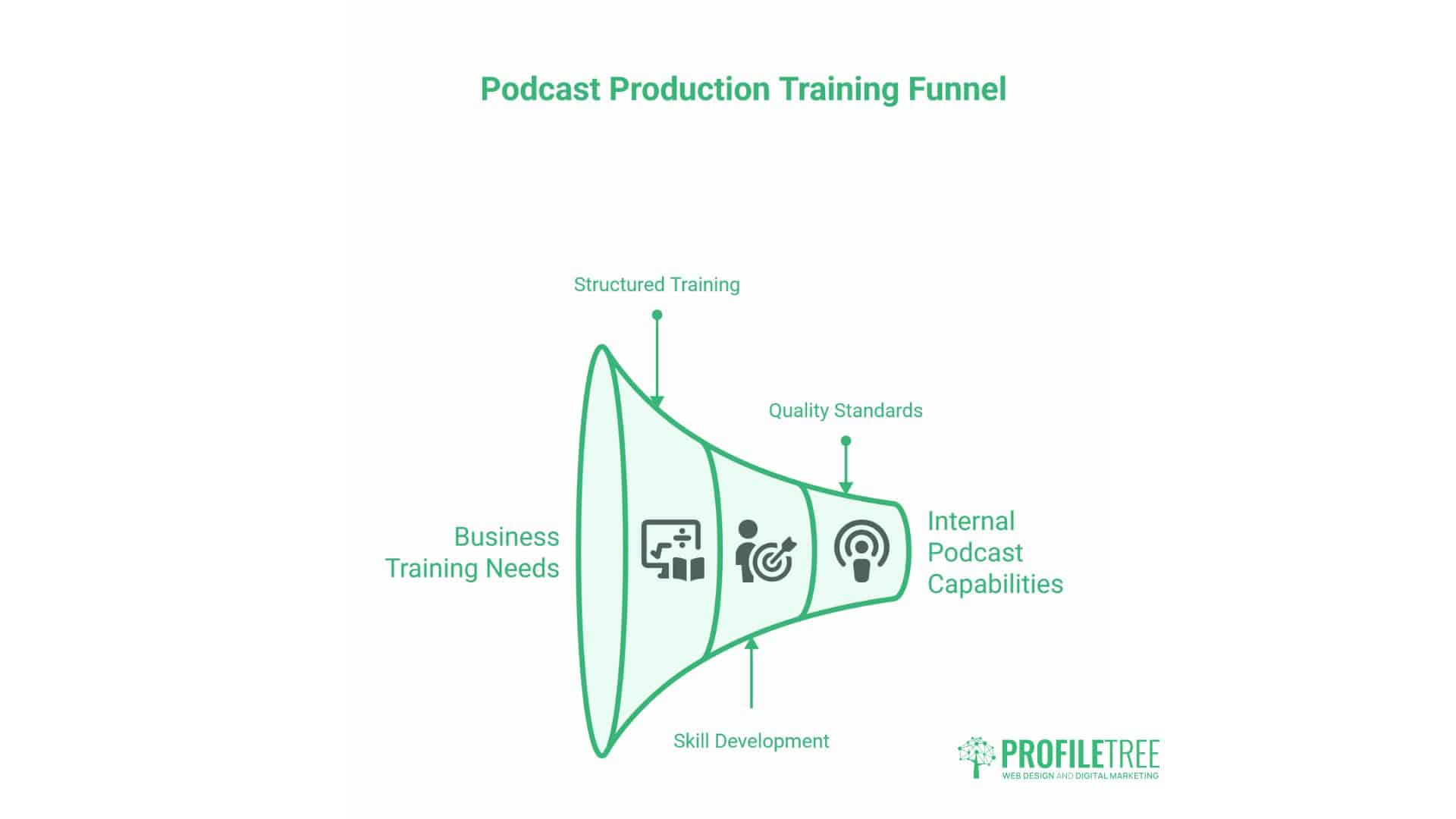
Businesses considering in-house podcast production benefit from structured training that builds internal capabilities while maintaining quality standards. Strategic training approaches strike a balance between technical skills and strategic thinking.
Podcast Production Skills Training
Technical training encompasses recording techniques, audio editing fundamentals, and the operation of equipment. Key competencies include:
Microphone technique: Proper positioning, distance management, and handling to capture clean audio. Poor microphone technique can undermine even the most expensive equipment.
Interview skills: Asking practical questions, managing conversation flow, and creating comfortable environments for guests. Technical quality matters less if conversation content lacks substance.
Editing workflows: Using digital audio workstations (DAWs) efficiently, applying compression and EQ, and maintaining consistent audio quality across episodes.
ProfileTree’s digital training services offer hands-on instruction tailored to address business-specific requirements, rather than generic tutorials. Training can be delivered remotely or at client locations, with follow-up support during early production stages.
Strategic Content Planning
Beyond technical execution, practical podcasting requires strategic thinking about audience needs, content differentiation, and business alignment. Training should address:
- Audience research methods: Identifying listener demographics, interests, and information needs
- Competitive analysis: Evaluating other podcasts in your space to identify gaps and opportunities
- Format selection: Choosing episode structures that match content goals and production capabilities
- Guest identification: Building pipelines of potential guests who provide value to target audiences
These strategic capabilities determine whether podcasts achieve business objectives or simply consume resources without clear returns.
Measuring Podcast Performance and Business Impact
Effective measurement connects podcast activities to business outcomes, demonstrating ROI and informing optimisation decisions. Comprehensive measurement frameworks track both vanity metrics and commercial results.
Audience Metrics
Standard podcast analytics include:
- Download numbers: Total episode downloads across all platforms
- Listener retention: How much of each episode do audiences complete
- Subscriber growth: Rate of new subscribers over time
- Geographic distribution: Where listeners are located
- Platform preferences: Which apps and services listeners use
These metrics provide baseline performance indicators but don’t directly connect to business value. A podcast with 1,000 downloads from ideal customers generates more value than 100,000 downloads from unqualified audiences.
Engagement Indicators
Deeper engagement metrics signal audience quality:
- Website traffic from podcast: Listeners who visit company sites after episodes
- Social media engagement: Shares, comments, and discussions about episodes
- Email signup rates: Listeners who join email lists through podcast CTAs
- Time on site: How long podcast-driven visitors spend on websites
These indicators suggest that listeners are taking desired actions beyond passive consumption.
Commercial Outcomes
Ultimate measurement connects podcasts to revenue:
- Lead attribution: Tracking which podcast episodes generate sales enquiries
- Sales cycle impact: Comparing deal velocity for prospects who engage with podcasts versus those who don’t
- Customer lifetime value: Analysing whether podcast-sourced customers show higher retention or spend
- Brand search volume: Monitoring organic search increases for brand terms following podcast launches
ProfileTree implements analytics frameworks that connect podcast performance to business metrics, enabling data-driven decisions about content strategy and production investment.
FAQs
How long should business podcast episodes be?
Episodes between 20 and 45 minutes perform well for business content. Interview formats typically run 30-45 minutes, whilst solo commentary works at 15-25 minutes. Test different lengths and monitor completion rates to find what works for your audience.
What equipment is required to start a business podcast?
The minimum equipment required includes a USB microphone (approximately £150-300), headphones, and free recording software. For professional results, consider XLR microphones (£200-£500), audio interfaces (£100-£300), and video equipment. Many businesses find that outsourcing production provides better ROI than equipment investment.
How often should we publish new episodes?
Consistency matters more than frequency. Weekly works well with dedicated resources, fortnightly suits businesses balancing multiple priorities, and monthly maintains presence but slows growth. Choose a sustainable schedule and maintain consistency—irregular publishing undermines audience trust.
Should we use video for our business podcast?
Video has become essential for discovery through YouTube and social media distribution. However, it adds complexity and cost. Consider starting audio-only to prove content-market fit, then add video once you’ve established quality. Alternatively, begin with simple video setups and upgrade as the podcast demonstrates value.
Taking Action on Podcast Opportunities
The statistics and strategies outlined demonstrate that podcasting offers measurable opportunities for business growth when approached systematically. Success requires treating podcasts as strategic marketing channels rather than experimental side projects.
For businesses evaluating podcast production, key considerations include:
- Strategic clarity: Define specific business objectives—lead generation, thought leadership, customer education—before podcast production begins. Vague goals, such as “raising awareness,” rarely justify investment.
- Production quality standards: Determine the quality level that aligns with your brand positioning. Premium professional services require production values that reinforce market positioning.
- Resource allocation: Assess whether internal production is feasible or whether outsourcing provides better ROI. Executive time has high opportunity costs that often favour agency partnerships.
- Distribution planning: Develop comprehensive plans for getting content in front of target audiences. Excellent content that nobody discovers delivers no business value.
- Measurement frameworks: Implement tracking that connects podcast activities to business outcomes from launch rather than attempting retrospective analysis.
ProfileTree’s comprehensive digital services—from strategic planning and video production through to website development, SEO optimisation, and AI implementation—provide the infrastructure and expertise businesses need to launch podcasts that generate measurable commercial results. Contact our team to discuss how podcast production integrates with your broader digital marketing strategy and business development objectives.
The podcast medium continues evolving, but the fundamental principle remains constant: valuable content, professionally produced and strategically distributed, builds authority and generates business opportunities that justify investment. Whether you’re launching your first episode or optimising existing shows, data-informed strategies deliver superior outcomes compared to intuitive approaches.