
AI Photography for E-commerce: Product Images Without Photoshoots
Table of Contents
Belfast e-commerce businesses can reduce product photography costs by 85% whilst maintaining professional standards through strategic AI implementation. After transforming product catalogues for retailers across Northern Ireland, from boutique jewellers on the Lisburn Road to industrial suppliers in Newtownabbey, we’ve developed proven workflows that deliver photoshoot-quality results without traditional photography expenses.
The traditional product photography model is broken. A professional photoshoot costs £500-2,000 per day, delivers 20-40 edited images, and requires weeks of planning. Meanwhile, AI tools generate unlimited variations in minutes, cost pennies per image, and improve with each iteration. This isn’t about replacing photographers entirely – it’s about democratising professional product presentation for businesses that couldn’t previously afford it.
This guide explores AI photography for e-commerce. It shares exact workflows, tool combinations, and quality standards that transform smartphone photos into conversion-driving product images. More importantly, we’ll show before-and-after examples from real Northern Ireland businesses, demonstrating achievable results rather than theoretical possibilities.
The New Reality of Product Photography
Traditional product photography creates bottlenecks that kill e-commerce momentum. New products wait weeks for photoshoots. Seasonal variations require expensive reshoots. Testing different angles or contexts means additional photographer fees. Small Belfast retailers competing with Amazon need professional imagery but lack enterprise budgets.
AI photography eliminates these constraints entirely. Upload a basic product photo, and within minutes generate lifestyle shots, colour variations, seasonal contexts, and marketing materials. The technology has reached an inflection point where AI-generated images match or exceed traditional photography for most e-commerce applications.
Quality concerns dominated early AI photography discussions, rightfully so. First-generation tools produced obvious artifacts, unrealistic lighting, and distorted proportions. Today’s tools achieve photorealism that fools professional photographers. The key lies in understanding each tool’s strengths and combining them strategically.
Cost reduction extends beyond photography fees. Traditional shoots require studio rental, equipment, props, models, stylists, and post-production. A simple white-background product shot might cost £50-100 per image when fully loaded. AI tools deliver equivalent results for under £1, including all variations and formats needed.
Speed transforms business operations. Launching new products no longer depends on photographer availability. A Bangor fashion retailer can photograph morning deliveries and list products online by afternoon. Seasonal campaigns adapt instantly to weather changes or trending styles. Marketing teams test multiple visual strategies without budget constraints.
The democratisation effect cannot be overstated. Previously, only well-funded businesses achieved consistent visual excellence. Now, a home-based craft business in Ballymena can present products as professionally as John Lewis. This levels playing fields and rewards product quality over marketing budgets.
Midjourney: The Creative Powerhouse for Product Mockups
Midjourney has revolutionised product visualisation, though mastering it requires understanding both capabilities and limitations. At its core, Midjourney excels at creating aspirational lifestyle contexts that traditional photography struggles to achieve affordably.
Consider a Belfast pottery studio wanting to showcase ceramics in high-end interior settings. Traditional photography would require location scouting, styling, and substantial investment. With Midjourney, we generate dozens of sophisticated room settings, each perfectly lit and styled, in under an hour.
The prompt engineering makes all the difference. Generic requests produce generic results. Specific, detailed prompts incorporating brand aesthetics, target demographics, and emotional triggers create compelling narratives around products. We’ve developed prompt frameworks that consistently deliver commercial-quality results.
Real example from a client project: A Northern Ireland sustainable fashion brand needed lifestyle shots for their eco-friendly handbag line. Traditional quote: £3,000 for 20 images. Our Midjourney solution: £200 for 100+ variations across different settings, seasons, and model demographics.
Midjourney Workflow for E-commerce
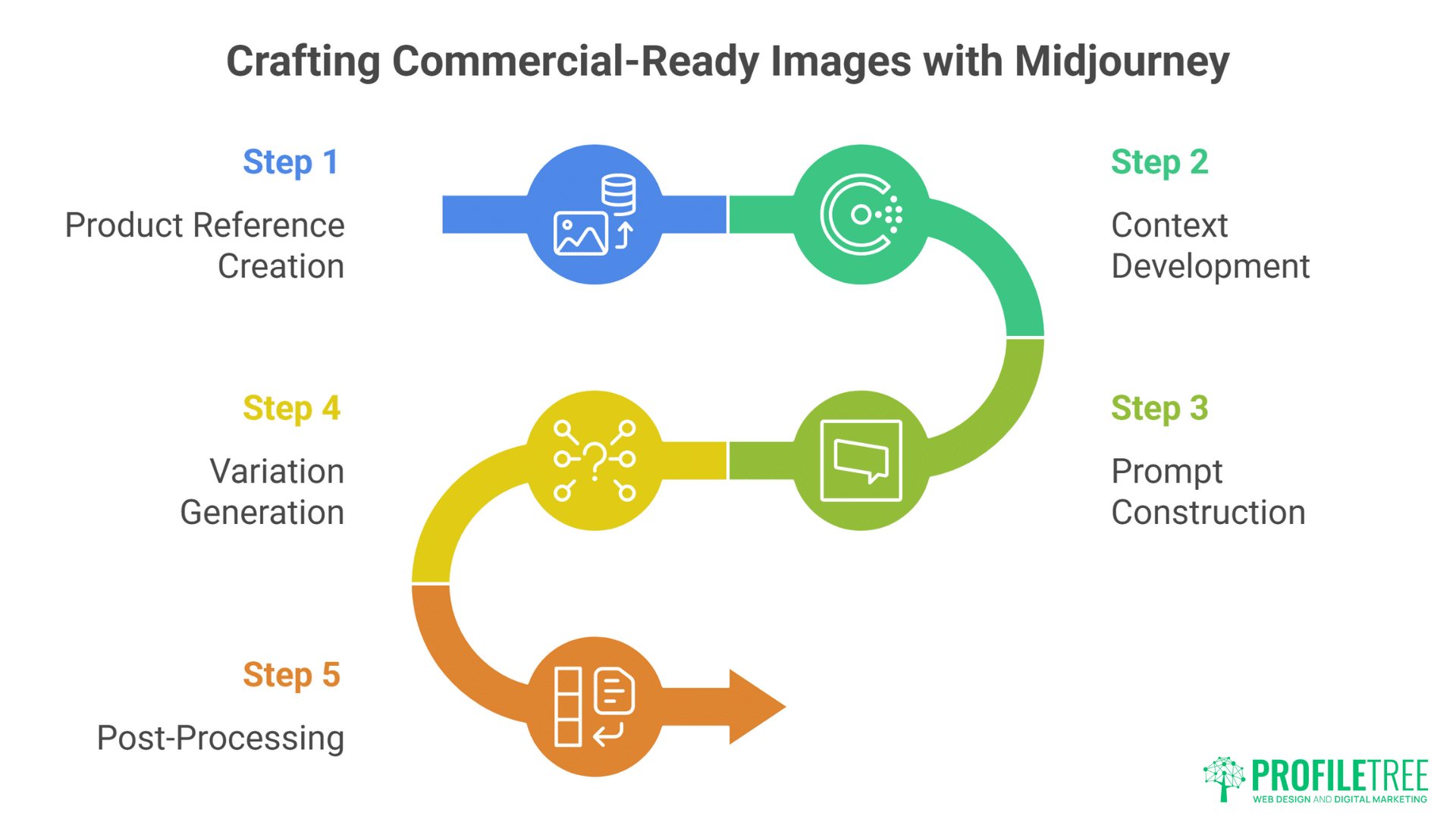
- Step 1: Product Reference Creation Upload clear product photos to Midjourney as reference images. Multiple angles provide better results. Include detail shots for texture and material accuracy.
- Step 2: Context Development Define your ideal customer environment. Urban Belfast professional? Rural cottage aesthetic? Minimalist modern home? Create detailed scene descriptions reflecting brand positioning.
- Step 3: Prompt Construction Combine product references with context descriptions. Example: “/imagine [handbag reference] carried by professional woman walking through Belfast Titanic Quarter, golden hour lighting, shallow depth of field, commercial photography style –ar 16:9 –v 6”
- Step 4: Variation GenerationGenerate multiple options, selecting best results for refinement. Adjust prompts based on outputs – more specific if too generic, broader if too constrained.
- Step 5: Post-Processing Export high-resolution versions for final editing. Colour correction, cropping, and brand overlay complete the commercial-ready image.
Midjourney Limitations and Workarounds
Text rendering remains problematic. Product labels, brand names, or text-heavy packaging require alternative approaches. We combine Midjourney backgrounds with traditionally photographed products for text clarity.
Exact product replication challenges persist. While Midjourney excels at creating similar products in context, maintaining exact design details proves difficult. Fashion items with specific patterns or technical products with precise features need hybrid approaches.
Brand consistency requires careful prompt management. Random variations can drift from brand guidelines. We maintain prompt libraries ensuring consistent aesthetic across all generated content.
Licensing complexities need consideration. Midjourney’s commercial license covers most uses, but some clients require additional documentation. We maintain clear records of generation parameters and licensing terms.
Background Removal: The Foundation of Flexibility
Background removal technology has matured from basic cutout tools to sophisticated AI systems understanding complex edges, transparency, and shadows. Modern tools achieve professional masking quality in seconds that previously required hours of Photoshop work.
The implications for e-commerce are transformative. One product photo becomes infinite possibilities. White backgrounds for marketplace requirements. Lifestyle contexts for social media. Seasonal themes for campaigns. Transparent PNGs for design flexibility. All from a single source image.
Remove.bg leads the automated solution space, processing images in seconds with impressive accuracy. Hair, fur, and semi-transparent materials – traditionally challenging subjects – render cleanly. The API integration enables bulk processing, essential for large catalogues.
Photoshop’s recent AI updates deliver professional-grade results with more control. The “Remove Background” button seems simple, but underlying technology rivals dedicated solutions. For complex products requiring manual refinement, Photoshop remains unmatched.
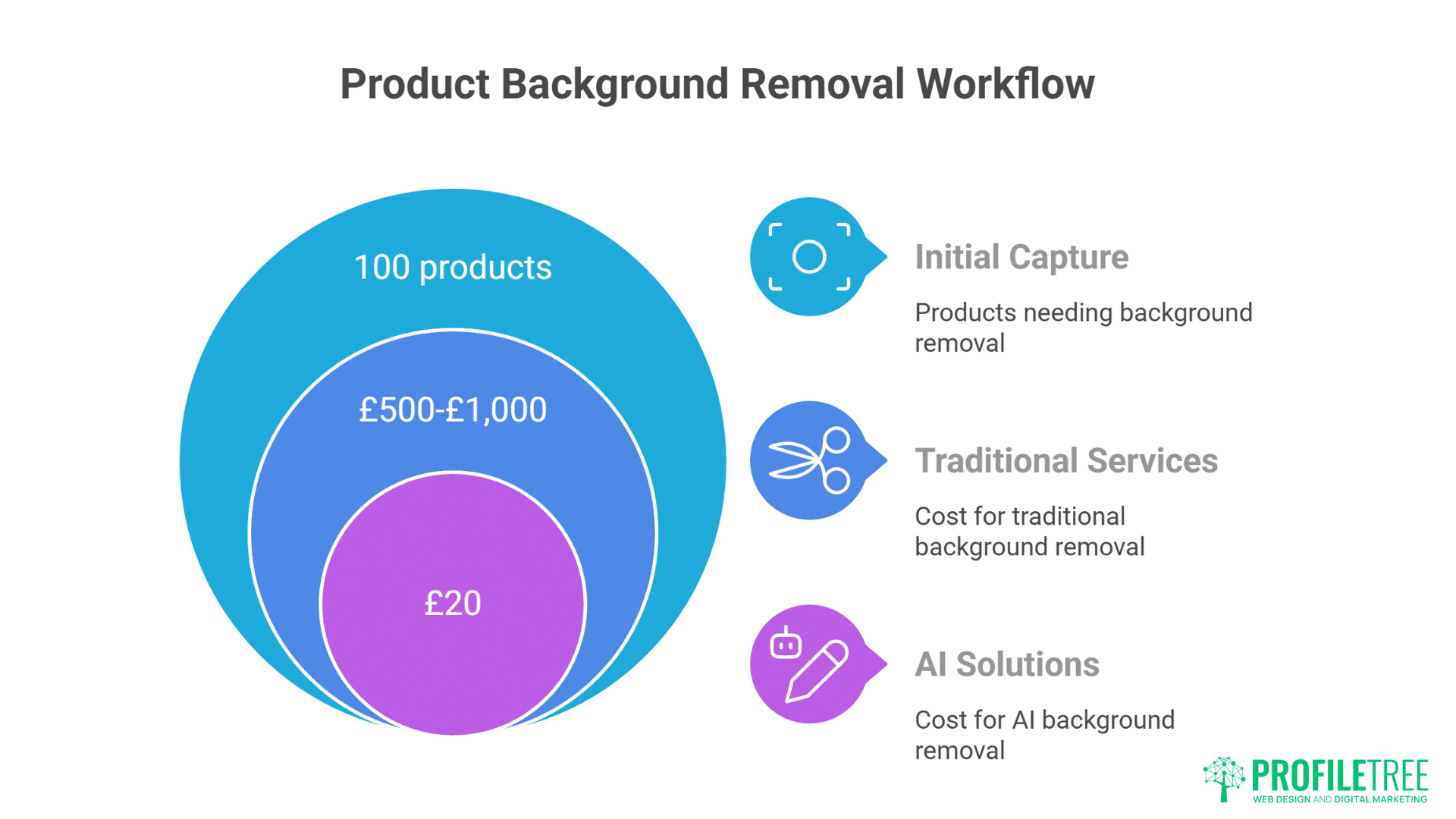
Professional Background Removal Workflow
Initial Capture Optimisation: Photograph products against contrasting backgrounds. Avoid busy patterns or similar colours to products. Even lighting reduces shadow complications. Sharp focus ensures clean edges.
Tool Selection Strategy
- Simple products (solid edges): Remove.bg or similar automated tools
- Complex products (hair, transparency): Photoshop AI tools
- Bulk processing: API solutions with manual quality control
- Budget constraints: Free tools like PhotoRoom for basic needs
Quality Control Process: Every removed background requires inspection. Check edges for halos or missing details. Verify shadow preservation where appropriate. Ensure transparency renders correctly across different backgrounds.
Output Optimisation: Save multiple formats for different uses. PNG for transparency preservation. WebP for web performance. High-resolution versions for print materials. Compressed versions for fast loading.
Cost-Benefit Analysis
Traditional clipping path services charge £2-10 per image depending on complexity. Professional retouchers command £30-50 hourly. For a 100-product catalogue, costs reach £500-1,000 for background removal alone.
AI solutions operate at fraction of these costs. Remove.bg charges £0.20 per image for pay-as-you-go. Subscription plans reduce this further. Photoshop’s monthly subscription (£20) includes unlimited processing. Even with manual quality control time, costs remain 80% lower than traditional services.
Time savings multiply value. Traditional masking takes 10-30 minutes per complex product. AI tools deliver results in seconds. A day’s work compresses into an hour, freeing resources for strategic activities rather than technical execution.
AI Image Enhancement: From Amateur to Professional
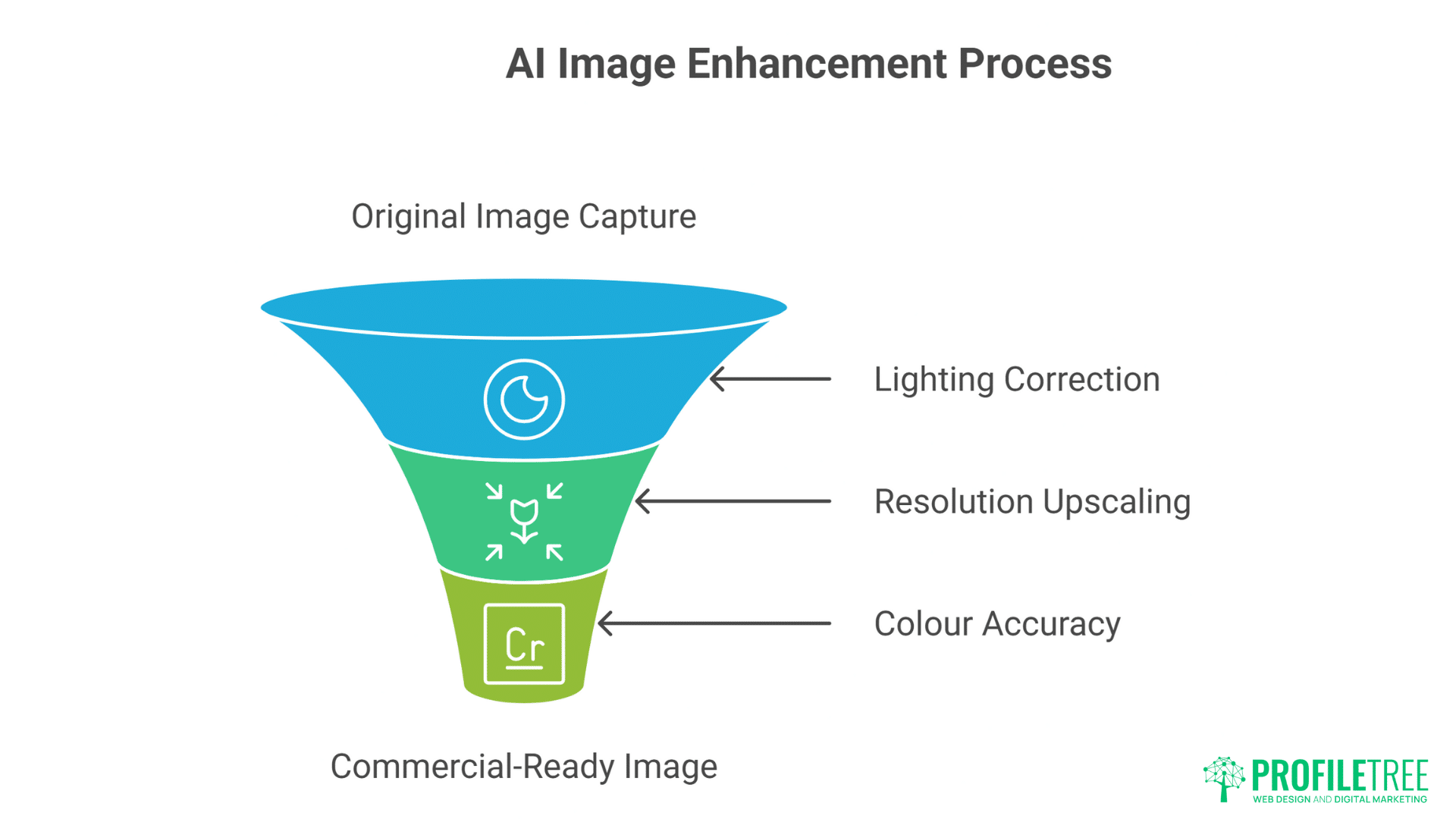
Raw product photos rarely achieve commercial standards without enhancement. AI enhancement tools bridge the quality gap, transforming smartphone captures into professional imagery. The technology analyses images, identifying and correcting technical deficiencies automatically.
Let’s examine a real transformation from a Derry accessories retailer. Original image: smartphone photo with poor lighting, slight blur, and colour cast. After AI enhancement: crisp details, balanced exposure, accurate colours, and commercial-ready quality. Traditional editing would require 20-30 minutes per image. AI enhancement: 30 seconds.
Topaz Labs dominates professional enhancement with specialised AI models. Denoise AI removes grain from high-ISO shots. Sharpen AI recovers focus from slightly blurred images. Gigapixel AI upscales low-resolution images without quality loss. Combined, these tools salvage otherwise unusable photography.
Adobe’s Camera Raw AI features integrate enhancement into existing workflows. The “Enhance” button applies intelligent adjustments based on image analysis. Masking AI enables selective enhancement – brightening products whilst maintaining background mood.
Let’s examine practical enhancement scenarios:
Lighting Correction
Poor lighting kills product photography. Harsh shadows obscure details. Flat lighting removes dimension. Colour temperature issues misrepresent products.
AI lighting correction analyses scene geometry, inferring three-dimensional structure from two-dimensional images. Shadows lighten naturally. Highlights recover detail. Contrast adjusts locally rather than globally. The result: studio-quality lighting from amateur captures.
Workflow example: Fashion retailer with inconsistent lighting across product shots. Traditional solution: reshoot everything. AI solution: batch process through enhancement tools, achieving consistent professional lighting across entire catalogue.
Resolution Upscaling
E-commerce demands multiple image sizes. Thumbnails for category pages. Full-resolution for zoom features. Social media formats. Print-quality for catalogues. Starting with low-resolution images limits options.
AI upscaling transcends traditional interpolation. Machine learning models trained on millions of image pairs predict missing detail. A 1000×1000 pixel image convincingly becomes 4000×4000 pixels. Product textures, fabric weaves, and surface details generate realistically.
Real application: Antique dealer with old product photos needed high-resolution versions for new website. Traditional recreation impossible – items already sold. AI upscaling recovered detail, enabling modern e-commerce presentation from archive imagery.
Colour Accuracy
Product returns often stem from colour misrepresentation. That “navy” dress appearing black. The “cream” sofa looking white. Accurate colour reproduction reduces returns and builds trust.
AI colour correction goes beyond basic white balance. Algorithms understand material properties, adjusting for fabric types, surface finishes, and lighting conditions. Metallic surfaces render accurately. Fabric textures maintain natural appearance.
Implementation strategy: Photograph colour reference card with products. AI tools use this reference for accurate correction across entire batch. Consistency improves whilst maintaining true-to-life representation.
Creating Lifestyle Shots: Context That Converts
Static product shots inform. Lifestyle shots inspire. AI enables unlimited contextual variations, testing which environments resonate with target audiences. The psychological impact of seeing products in use dramatically increases purchase intent.
Traditional lifestyle photography requires models, locations, props, and substantial budgets. A Belfast furniture retailer wanting to show sofas in different room settings faces thousands in photography costs. AI generates unlimited room variations for the price of a coffee.
The process begins with understanding customer psychology. Who buys your products? Where do they live? What aspirations drive purchases? A gaming chair targets different environments than executive office furniture. AI tools generate appropriate contexts matching customer expectations.
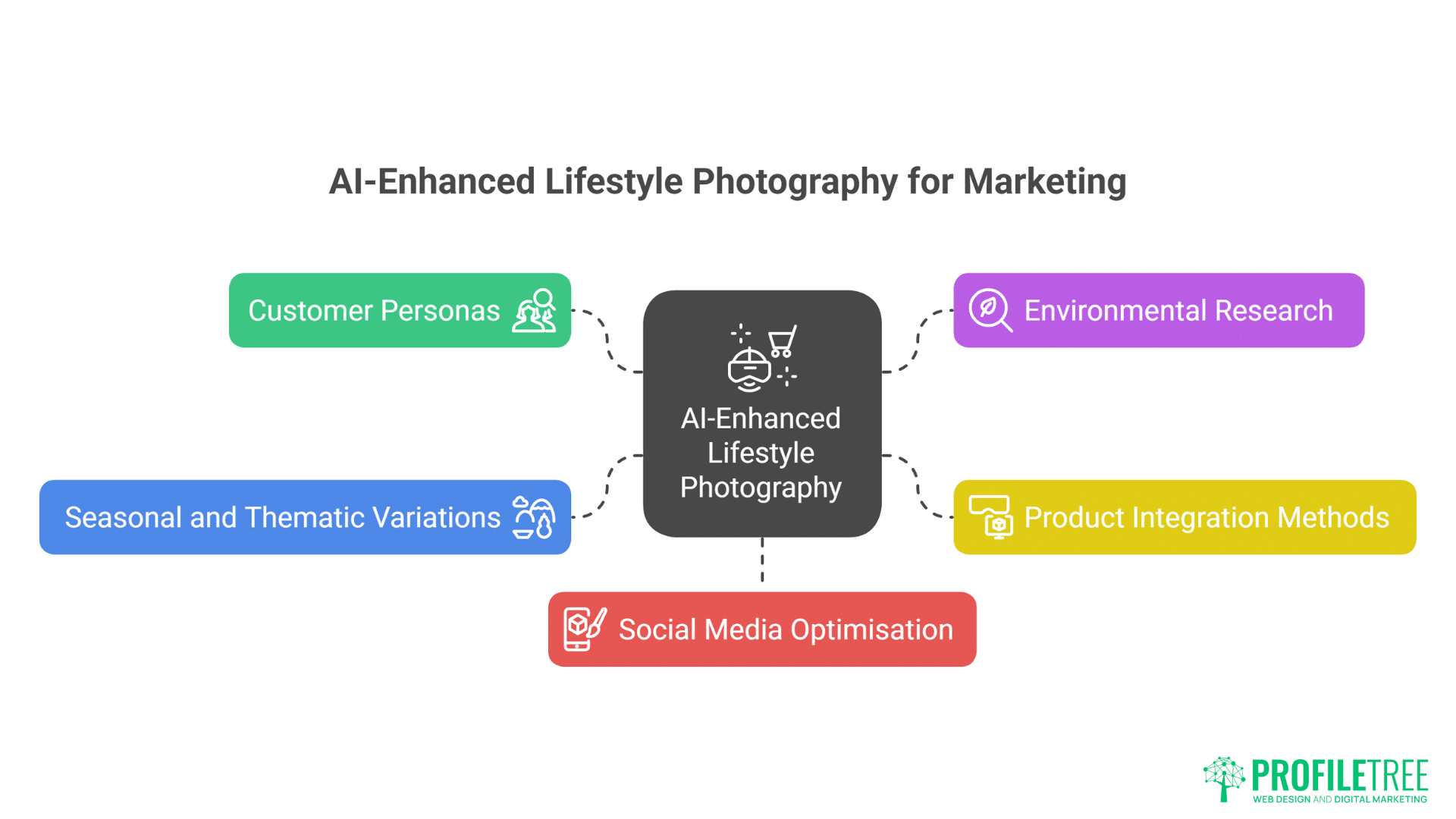
Lifestyle Generation Workflow
- Define Customer Personas Create detailed profiles of target customers. Age, lifestyle, aesthetic preferences, and usage contexts. A Belfast young professional differs from rural family customers.
- Environmental Research Collect reference images of appropriate settings. Interior design trends, architectural styles, and seasonal variations. Build mood boards guiding AI generation.
Product Integration Methods
- Method 1: Full AI Generation Generate entire scenes including products. Best for concept testing and marketing materials where exact product representation isn’t critical.
- Method 2: Composite Approach Generate backgrounds, then composite actual product photos. Maintains product accuracy whilst adding contextual richness.
- Method 3: Hybrid Enhancement Photograph products in basic settings, then AI-enhance environments. Balances realism with creative possibility.
Seasonal and Thematic Variations
Northern Ireland’s distinct seasons offer marketing opportunities. The same product photographed once generates Christmas, Easter, summer, and autumn variations through AI.
- Christmas transformation example: Basic product shot becomes festive scene with tree, lights, and seasonal decorations. Multiple variations test different aesthetic approaches – traditional, modern, minimalist.
- Summer positioning: Products placed in garden settings, beach contexts, or outdoor adventures. Belfast retailers can suggest seasonal usage without expensive location shoots.
- Cultural events: St. Patrick’s Day, Orange Order parades, Ulster fleadhs – local events provide contextual marketing opportunities. AI generates culturally relevant settings respecting sensitivities.
Social Media Optimisation
Different platforms require different visual strategies. Instagram favours aspirational lifestyle shots. Facebook responds to relatable, everyday contexts. Pinterest demands vertical, inspiration-focused imagery.
AI tools generate platform-specific variations from single product photos. Square crops for Instagram. Vertical formats for Pinterest. Horizontal layouts for website headers. Each optimised for platform algorithms and user behaviour.
Engagement metrics improve dramatically. A Lisburn boutique increased Instagram engagement 240% after switching from flat product shots to AI-generated lifestyle imagery. The variety prevents feed monotony whilst maintaining brand consistency.
Before and After: Real Northern Ireland Success Stories
AI photography has helped Northern Ireland businesses boost product appeal and online sales. The following before-and-after examples highlight the measurable results.
Case Study 1: Artisan Jewellery (Hillsborough)
Before: iPhone photos on kitchen table, inconsistent lighting, amateur appearance. Challenge: Competing with established brands online. Solution: AI enhancement and lifestyle generation
Process:
- Enhanced existing photos using Topaz AI (£10 monthly)
- Removed backgrounds with Remove.bg (£9 monthly)
- Generated luxury contexts with Midjourney (£8 monthly)
- Created seasonal campaigns without reshooting
Results:
- Conversion rate increased 67%
- Average order value up 34%
- Social media engagement improved 150%
- Photography costs reduced from £200/month to £27/month
Case Study 2: Vintage Furniture (Belfast)
Before: Dark warehouse photos, poor angles, items appearing damaged Challenge: Showing restoration potential and in-situ appeal Solution: AI lighting correction and room staging
Process:
- Corrected lighting using Adobe Camera Raw AI
- Upscaled old catalogue images with Gigapixel
- Created room scenes showing furniture in period and modern settings
- Generated before/after restoration visualisations
Results:
- Sales increased 89% in three months
- Customer enquiries reduced (better visual information)
- Expanded to international markets (professional presentation)
- Saved £15,000 annual photography budget
Case Study 3: Fashion Retailer (Coleraine)
Before: Mannequin shots, no lifestyle context, limited angles Challenge: Competing with ASOS and Boohoo Solution: AI model generation and dynamic backgrounds
Process:
- Created diverse model representations
- Generated urban and rural Northern Ireland backdrops
- Produced seasonal lookbooks without photoshoots
- Tested different styling approaches
Results:
- Return rate decreased 23% (better representation)
- Site engagement time increased 45%
- Social media following grew 300%
- Launched 5x more products due to faster imaging
Quality Standards: Maintaining Professional Credibility
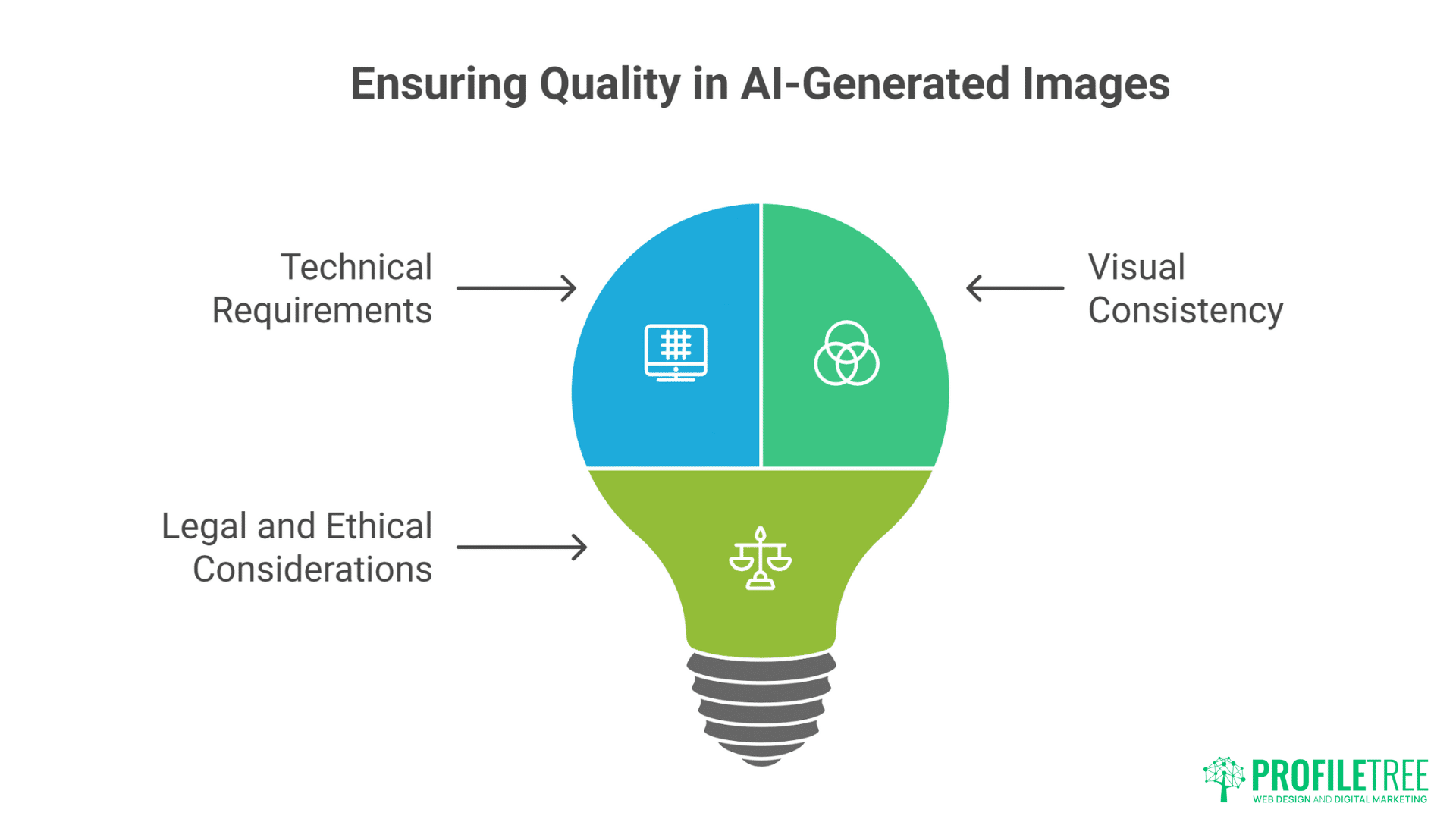
Not all AI-generated images meet commercial standards. Understanding quality markers separates amateur experiments from professional e-commerce photography.
Technical Requirements
Resolution Standards
- Minimum 2000×2000 pixels for zoom functionality
- 72 DPI for web, 300 DPI for print materials
- Multiple sizes for responsive design
- WebP format for optimal loading speed
Colour Accuracy
- Consistent colour space (sRGB for web)
- Calibrated monitors for editing
- Reference shots for colour matching
- Batch processing for catalogue consistency
File Management
- Organised naming conventions
- Version control for iterations
- Backup systems for original and edited files
- CDN delivery for global performance
Visual Consistency
Brand recognition depends on visual consistency across all touchpoints. AI’s variety potential becomes problematic without strategic constraints.
Style Guidelines
- Defined colour palettes
- Consistent lighting direction
- Standardised angles and compositions
- Unified post-processing approach
Quality Checkpoints
- Edge quality after background removal
- Natural shadow placement
- Realistic proportions and perspectives
- Absence of AI artifacts
Legal and Ethical Considerations
AI-generated imagery raises new legal questions. Transparency builds trust whilst avoiding potential disputes.
Disclosure Policies
- Clear terms about AI usage
- Model releases for generated faces
- Intellectual property documentation
- Platform compliance requirements
Ethical Standards
- Accurate product representation
- Diverse and inclusive imagery
- Cultural sensitivity in contexts
- Environmental claims verification
Implementation Roadmap for Belfast Businesses
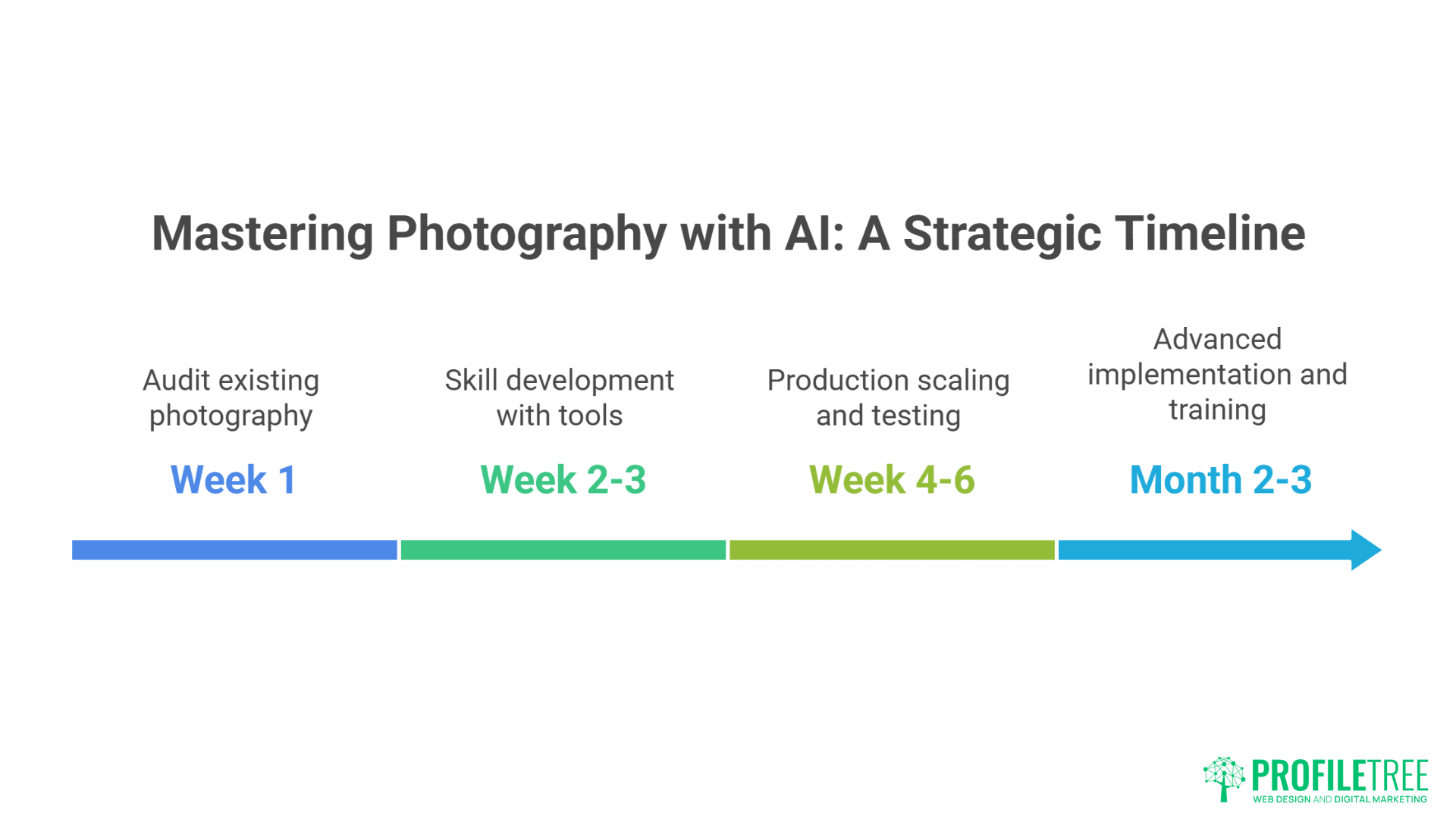
For Belfast businesses ready to embrace AI photography, a clear roadmap makes the transition smoother. This section outlines the key steps from planning to execution.
Week 1: Foundation Building
- Audit existing photography. Identify gaps, quality issues, and improvement priorities. Calculate current photography costs including hidden expenses.
- Select initial tools. Start with one background removal tool and one enhancement solution. Master basics before expanding toolkit.
- Create test products. Select 5-10 products for experimentation. Include simple and complex items testing tool capabilities.
Week 2-3: Skill Development
- Complete tool tutorials. Every platform offers training resources. Invest time understanding capabilities and limitations.
- Develop prompt libraries. Document successful prompts for consistent results. Build brand-specific generation guidelines.
- Establish workflows. Map processes from capture through final delivery. Document each step preventing knowledge loss.
Week 4-6: Production Scaling
- Batch process existing catalogue. Apply learnings across product range. Maintain quality standards whilst increasing speed.
- Test market response. A/B test AI-generated versus traditional images. Monitor conversion rates and customer feedback.
- Refine approaches. Adjust based on performance data. Optimise for conversions rather than aesthetic preferences.
Month 2-3: Advanced Implementation
- Integrate automation. Connect tools through APIs and webhooks. Reduce manual intervention in routine tasks.
- Expand capabilities. Add specialised tools for specific needs. Video generation, 360° views, AR visualisation.
- Train team members. Spread expertise preventing bottlenecks. Document institutional knowledge.
Cost Comparison: Traditional vs AI Photography for E-commerce
Choosing between traditional photography and AI solutions often comes down to cost. This section compares both approaches to help e-commerce businesses make informed decisions.
Small Business Scenario (50 products)
Traditional Photography:
- Photographer day rate: £800
- Studio rental: £200
- Props and styling: £150
- Post-production: £500
- Total: £1,650
- Per image: £33
AI Solution:
- Tool subscriptions: £50/month
- Training time: 20 hours (£500 value)
- Processing time: 10 hours (£250 value)
- Total first month: £800
- Per image: £16
- Ongoing cost: £3 per image
Growing Retailer (500 products)
Traditional Photography:
- Photography (10 days): £8,000
- Studio and equipment: £2,000
- Styling and props: £1,500
- Post-production: £5,000
- Total: £16,500
- Per image: £33
AI Solution:
- Premium tool stack: £200/month
- Initial training: £1,000
- Monthly processing: £500
- Total first month: £1,700
- Per image: £3.40
- Ongoing cost: £1.40 per image
Enterprise E-commerce (5000+ products)
Traditional Photography:
- Annual photography budget: £150,000
- Studio facilities: £30,000
- Equipment depreciation: £10,000
- Staff costs: £60,000
- Total: £250,000
- Per image: £50
AI Solution:
- Enterprise tools: £1,000/month
- Dedicated operator: £30,000/year
- Training and development: £5,000
- Infrastructure: £5,000
- Total annual: £53,000
- Per image: £10.60
Integration with E-commerce Platforms
Seamless integration is key to unlocking the full potential of AI photography. We’ll look at how leading e-commerce platforms enable effortless connection.
Shopify Optimisation
Shopify’s image requirements shape AI generation parameters. Product images need consistent dimensions. Variant images must clearly show differences. Mobile optimisation takes priority.
Workflow Integration:
- Generate images meeting Shopify specifications
- Bulk upload through CSV import
- Automate variant image creation
- Optimise for mobile-first browsing
WooCommerce Implementation
WooCommerce’s flexibility enables sophisticated image strategies. Custom fields store AI generation parameters. Galleries showcase multiple angles and contexts.
Advanced Features:
- Dynamic image generation based on user preferences
- Seasonal image rotation
- A/B testing different presentations
- Personalised product visualisation
Marketplace Requirements
Amazon, eBay, and Etsy have specific image requirements. White backgrounds for main images. Size and quality minimums. Lifestyle shots in galleries.
Compliance Strategy:
- Generate marketplace-specific versions
- Maintain main image standards
- Use AI for compelling gallery images
- Test performance across platforms
Future-Proofing Your Visual Strategy
AI photography evolves rapidly. Today’s cutting-edge becomes tomorrow’s standard. Build adaptable systems surviving technological change.
Emerging Technologies:
- 3D product modelling from 2D images
- Real-time customisation visualisation
- AI video generation from stills
- Augmented reality integration
- Continuous learning mindset
- Experimentation with new tools
- Community engagement for insights
- Documentation of successes and failures
Strategic Positioning:
- Differentiation through creative application
- Brand story integration
- Customer co-creation opportunities
- Sustainability through reduced physical shoots
“AI photography isn’t about replacing human creativity – it’s about amplifying it,” notes Ciaran Connolly, ProfileTree founder. “Belfast businesses combining AI efficiency with local market understanding create compelling visual stories that resonate with customers whilst managing costs effectively.”
Professional Support: When to Seek Expert Help
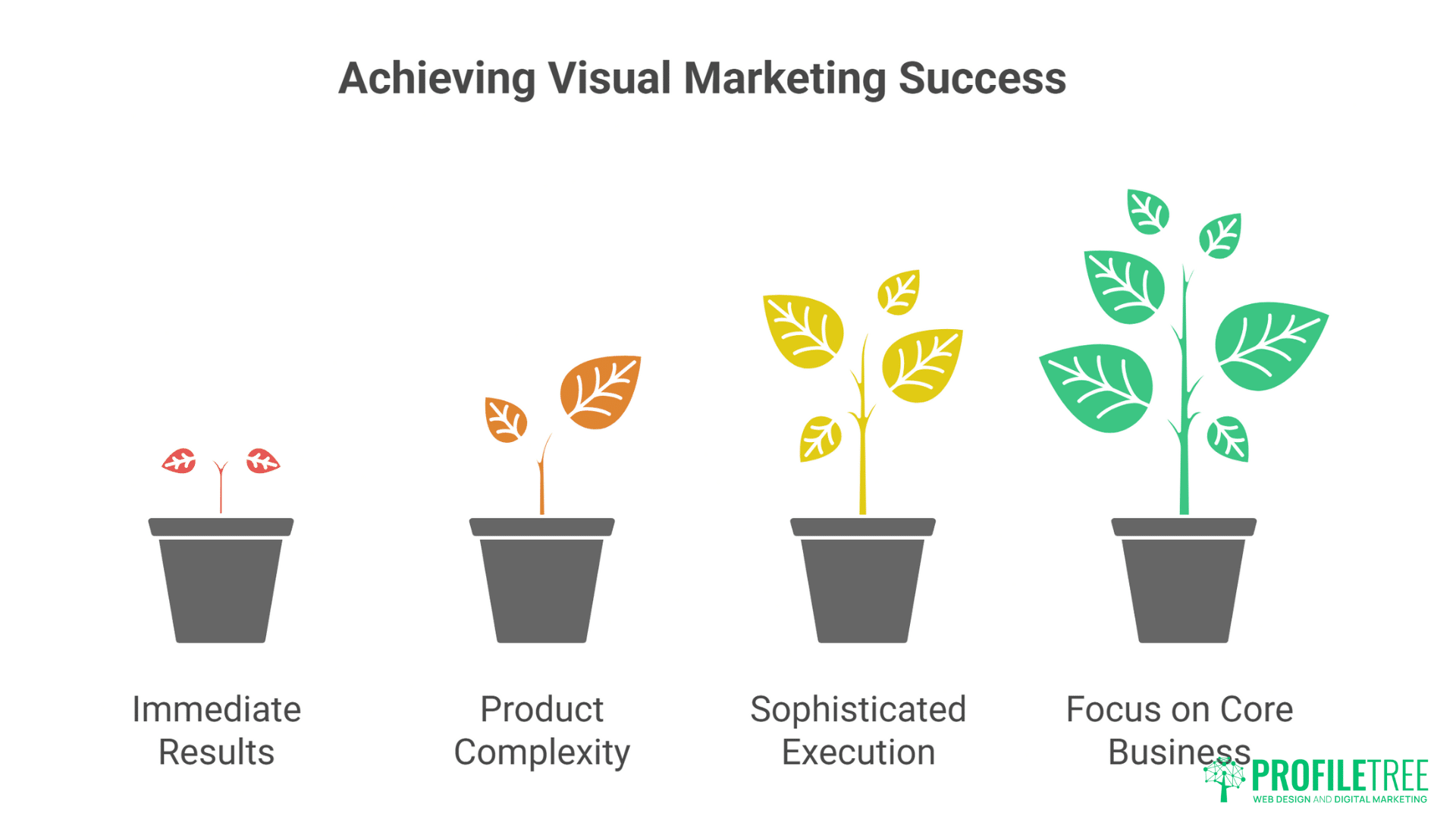
Whilst AI tools democratise product photography, professional guidance accelerates success and prevents costly mistakes.
Consider professional support when:
- Launch timelines demand immediate results
- Product complexity exceeds tool capabilities
- Brand positioning requires sophisticated execution
- Internal resources focus on core business
Our creative services extend beyond traditional photography, incorporating AI tools into comprehensive visual strategies. We’ve developed workflows specifically for Northern Ireland businesses, understanding local market preferences whilst achieving international standards.
Video marketing integration combines static AI photography with dynamic content, creating comprehensive visual narratives that engage customers across all touchpoints.
Content marketing strategies incorporate AI-generated imagery into broader campaigns, ensuring visual consistency whilst maximising engagement and conversion.
FAQs
Can AI completely replace product photographers?
Not entirely. AI excels at variation generation and enhancement but struggles with complex technical products or highly specific brand requirements. Hybrid approaches combining traditional photography with AI enhancement deliver best results.
What’s the minimum budget for getting started?
£30-50 monthly covers basic tools for small catalogues. Free trials allow testing before commitment. Smartphone cameras provide adequate source images when properly lit.
How long does it take to master these tools?
Basic competency develops within 2-4 weeks of regular use. Advanced techniques require 2-3 months. Continuous improvement occurs as tools evolve and skills develop.
Do customers notice AI-generated images?
When properly executed, AI images are indistinguishable from traditional photography. Poor implementation creates obvious artifacts. Quality control and human oversight ensure professional standards.
What about product authenticity and returns?
Accurate product representation remains paramount. AI should enhance presentation, not misrepresent products. Clear policies about image generation build trust whilst protecting against disputes.
Which tools should Belfast businesses start with?
Begin with Remove.bg for background removal (£9 monthly) and Canva’s AI features for enhancement (£10 monthly). Add Midjourney (£8 monthly) once comfortable with basics.
Taking Action: Your First AI Product Shoot
Start small with one product category. Choose items with simple shapes and solid colours for initial experiments. Photograph products against plain backgrounds using natural light from windows.
Upload images to Remove.bg, generating transparent PNGs. Place products on AI-generated backgrounds using Canva. Test different contexts measuring customer response.
Document successful prompts and workflows. Share learnings with team members. Build confidence through incremental improvement rather than perfection paralysis.
The revolution in product photography has arrived. Belfast businesses embracing AI tools compete visually with global brands whilst maintaining local authenticity. The question isn’t whether to adopt AI photography, but how quickly you can implement it effectively before competitors gain insurmountable advantages.