
Restaurant social media statistics for the UK and Ireland
Table of Contents
Restaurant social media statistics for the UK show that social platforms now sit beside friends’ recommendations and Google in how people pick a place to eat. A third of British adults research venues on social platforms, and 58% are more likely to visit when friends post about one. ProfileTree, a Belfast agency, plans restaurant social media around these figures.
How UK diners use social media to choose a restaurant
Social media is now one of the main ways people in Britain find somewhere to eat, although it works alongside personal recommendation and does not replace it. Research from CGA by NIQ and Reputation, based on a nationally representative sample of 755 British consumers surveyed in August 2025, found that 32% check social platforms when researching a venue, compared with 27% who use Google Maps. The same study found that 58% are more likely to visit a venue when their friends post about it.
For an owner in Belfast, Dublin or a market town, that second figure matters more than the first. A post from a regular carries more weight with their friends than anything the restaurant publishes, so the accounts that do best make sharing easy, with dishes worth photographing and the restaurant’s handle printed on the menu. ProfileTree is a Belfast web design and digital marketing agency, founded in 2011 and based at the McSweeney Centre, and our social media marketing Belfast work for food businesses starts from that point: give customers something worth posting, then reply when they post it.
Discovery figures by age group
Age changes the order of the channels people use. YouGov’s tracking of how Gen Z eats out, drawn from daily UK surveys between August 2025 and August 2026, found that 59% of Gen Z diners discover restaurants through friends or family, while 43% turn to social apps and the same share find places by exploring their local area. Online reviews came lower at 30%, and advertising helped only 13%.
SevenRooms’ 2025 UK restaurant trends report, which covers diners of all ages, reported that 45% find new places through social platforms, but only 11% do so through influencers. Around one in three diners in that report used Google to discover restaurants. The two studies measure different groups in different ways, yet both place social media close to word of mouth and well ahead of paid advertising.
What friends’ posts and diners’ photos do for bookings
Almost every adult online in the UK uses social media, but fewer of them now post or comment. Ofcom’s Online Nation 2025 report found that UK adults spend about four and a half hours online a day, with YouTube, Facebook and Instagram the three most used social media services. Ofcom’s adult media use research, published in 2026, found that 89% of adult internet users use at least one social platform, yet only 49% of adult social media users now post, share or comment, down from 61% the year before.
This has a practical consequence for restaurants. A post with few likes may still have reached the people who went on to book, so likes are a weak measure of whether the account is working. Tracked booking links and a simple question at the till about how a guest heard of you tell you far more.
Review and Google Business Profile figures restaurants should track
Reviews decide whether a diner who has found you goes on to book, and most of them are read on Google. BrightLocal’s Local Consumer Review Survey 2026, which surveyed 1,002 adults in the United States, found that 97% of consumers read reviews for local businesses and 71% use Google to read them, down from 83% a year earlier. The sample is American, so treat the exact numbers as a guide, although the British CGA data points the same way.
How diners read and judge reviews
Recency matters as much as the star rating. In the CGA research, 73% of respondents said they do not trust reviews older than three months to describe a venue accurately, and BrightLocal found almost the same share in the US, with 74% caring only about reviews written in the last three months. BrightLocal also found that 47% of consumers will not use a business with fewer than 20 reviews, and 68% will only use one rated four stars or more.
In practice, a steady flow of new reviews counts for more than a large total collected years ago. A short request on the receipt or in the follow-up email after a booking keeps the profile current without pressuring anyone. Our guide to Google Business Profile management sets out a monthly routine for photos, opening hours, menus, and the questions people ask on the profile.
Replying to negative reviews in public
Diners expect owners to reply, and they notice when replies are copied and pasted. BrightLocal found that 89% of consumers expect a business to respond to reviews, 42% would avoid a business that never replies, and half are put off by generic or templated responses. Expectations are faster for direct contact, with 66% of people in the CGA sample expecting a venue to reply within a few hours.
Later readers often judge a restaurant on its reply as much as on the complaint. A calm public response within a day, which acknowledges the problem and moves the detail to a private message or a phone call, shows how the business treats people when something goes wrong. A defensive reply stays visible to everyone who checks the restaurant afterwards, and our article on handling negative feedback on social media works through replies that hold up in public.
Restaurant social media statistics by platform
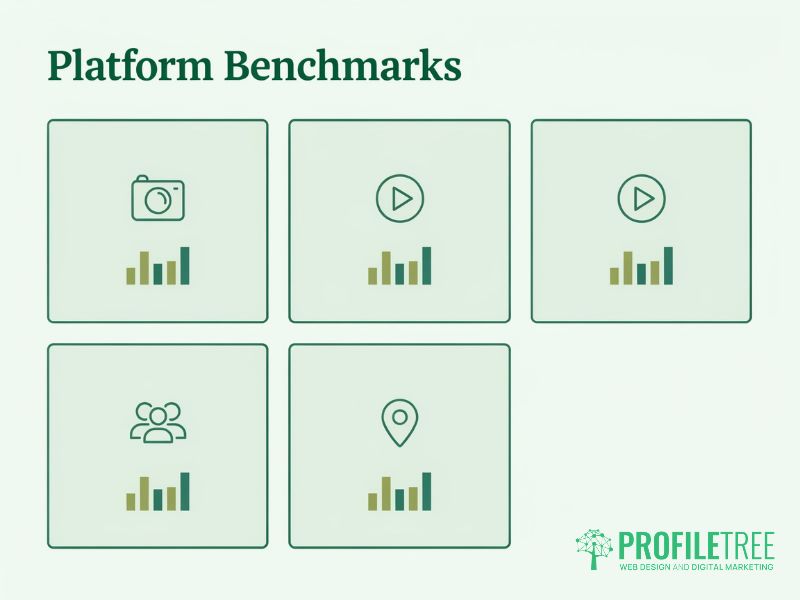
Each platform does a different job, and the figures below show what typical food and drink accounts achieve. The engagement figures come from Dash Social’s 2026 benchmarks, which analysed global food and beverage brands with at least 1,000 followers between January and June 2026, so compare your own account with its previous months before comparing it with these averages.
| Platform | Main job | Benchmark or figure | Source |
|---|---|---|---|
| Shows dishes, the room, and the team to people who already know the name | 3.2% average engagement by views, with five posts weekly on average | Dash Social, January to June 2026 | |
| TikTok | Reaches people new to the restaurant | 3.5% average engagement by views, with four posts weekly on average | Dash Social, January to June 2026 |
| Local groups, event nights and regulars | One of the two most used sources of local recommendations, alongside Google | BrightLocal, 2026, US sample | |
| Google Business Profile | Opening hours, menu, photos and reviews at the point of booking | 71% of consumers use Google to read local reviews | BrightLocal, 2026, US sample |
Instagram, Reels and Stories
Instagram works as a visual menu and a credibility check. Someone who has heard about you from a friend will often look at the grid before booking, so it needs to show current dishes and the room as it looks today. Reels reach people beyond your followers, while Stories suit daily specials and last-minute tables, because they disappear after a day and leave the grid uncluttered.
Instagram also lets a business add a booking button to its profile and a link sticker to its Stories, which shortens the path from a post to a confirmed table. Restaurants that take bookings through a system such as ResDiary or OpenTable can connect it so that the button opens the booking page directly.
TikTok for reaching new diners
TikTok is an awareness channel for most restaurants. Candid footage tends to suit it better than a polished advert, whether that is the pass during a busy Friday service or a chef explaining where the fish comes from. Its value lies in reaching people who have never heard of the restaurant, and those people usually check Instagram or Google before booking, so TikTok pays off when the other profiles are ready for them. If filming is the bottleneck, the article on restaurant video marketing covers what to film, how often to post, and what it costs to have video produced.
Facebook groups in Northern Ireland and Ireland
Facebook still matters for local reach, particularly through community groups. Ofcom’s 2026 adult media use research found that some people now use Facebook more selectively, focusing on specific uses such as joining online groups about their local area. A recommendation posted by a customer in a town or neighbourhood group carries social proof that a page post cannot match.
For many restaurants outside the cities, Facebook is also where regulars check event nights, opening hours and offers. Keep the page current with a booking link, and answer messages there as quickly as you would on Instagram.
AI assistants as a new step in choosing where to eat
AI assistants are starting to sit between social media and booking. CGA’s research shows 26% of British consumers using AI tools such as ChatGPT to learn about a venue, with 37% using one to get recommendations tailored to their preferences. BrightLocal’s 2026 survey found generative AI tools used for local recommendations by 45% of US consumers, up from 6% a year earlier.
These tools draw on what is written about a restaurant across the web, from reviews and the Google Business Profile to the website and social posts. The CGA study found that 60% of consumers trust AI-generated review summaries, so the review flow and accurate listings described above now shape AI answers as well as search results. Using the same name, address, hours, and menu everywhere gives an assistant less room to get the details wrong, and our guide to local SEO for restaurants covers the search side of this work.
Value-led posts for cost-conscious diners
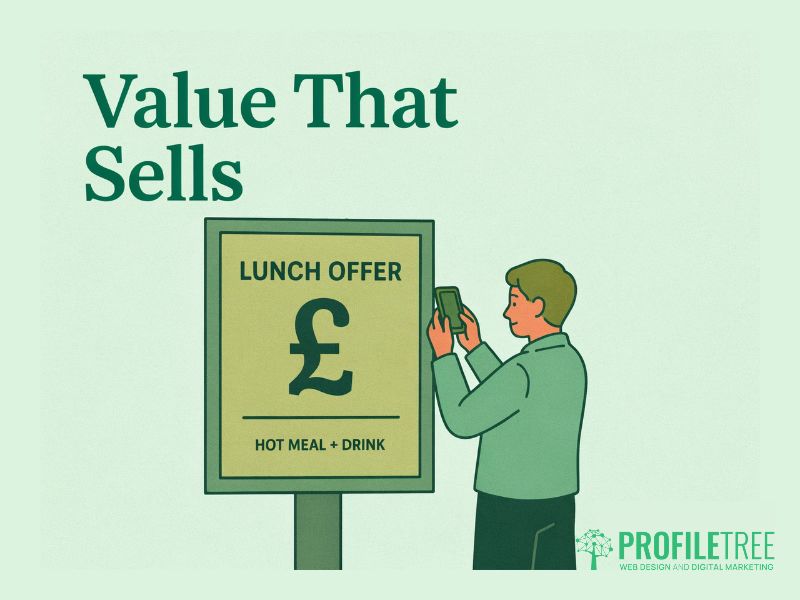
Price and value are part of what diners look for on social media, and the CGA figures show a split market. The research showed that 34% of the British sample typically spend £100 or more a month on eating and drinking out, while 31% spend less than £40, and 34% said their expectations of venues are higher than a year ago. More expect to eat out more often over the next year (36%) than less often (21%).
A restaurant serving both groups needs posts that give practical detail as well as good photography. Lunch menus with prices, early-evening offers and set menus for groups give a careful spender what they need to commit, while higher spenders still look for the atmosphere and the dishes. Posting polished food shots with no prices leaves out information a large part of the audience is searching for.
Turning the figures into a posting plan you can keep up
The figures point to a plan built around the moment someone decides where to eat, and the order of work matters. Start with the Google Business Profile, because diners check hours, menus, and reviews there just before they book. Then bring the Instagram grid up to date with current dishes and photos of the dining room, set a posting rhythm the team can keep for months, and add TikTok or Facebook only once the first two run smoothly.
Measure bookings alongside reach. A tracked link in the Instagram bio, another on the Facebook page, and a separate link for each offer show which platform is filling tables, and your booking system’s reports will show the rest. Where nobody on the team has had training in planning or measuring posts, digital training from £350 plus VAT can build those skills in-house.
“Every figure a restaurant acts on should be checkable. When ProfileTree plans social media marketing for a restaurant in Belfast, we start by asking where a statistic came from and who was surveyed, because a study of American consumers tells a Northern Ireland owner less than their own booking data does. That rule costs us a few headline numbers and keeps our clients’ plans honest,” says Ciaran Connolly, founder of ProfileTree.
Getting help with your restaurant’s social media
The quickest improvement for most restaurants is an hour spent updating the Google Business Profile and the Instagram grid, followed by a booking link that can be tracked. If you would like help planning or running social media for a restaurant, cafe or food business anywhere in the UK or Ireland, our social media management team works with hospitality businesses from our office in Belfast, with pricing quoted on request. ProfileTree has more than 500 Google reviews with a 5.0 rating.
FAQs
1. Which platform should a UK restaurant focus on first?
Google Business Profile comes first, followed by Instagram. Google is where most diners read reviews and check opening hours just before they book, and Instagram is where they check what the food and the room look like. Add TikTok to reach younger diners who have never visited, or Facebook for local groups and events, once those two are kept current.
2. How often should a restaurant post on Instagram and TikTok?
Post as often as the team can sustain for months at a time. Dash Social’s 2026 benchmarks show food and beverage brands averaging five Instagram posts and four TikTok posts a week, although most of those accounts belong to larger brands. For an independent restaurant, three good posts a week plus Stories for daily specials is a realistic starting point.
3. Do restaurant owners need to reply to every Google review?
Replying to every review is the safest approach. BrightLocal’s 2026 survey reported that nine in ten consumers expect businesses to respond and 80% are likely to use a business that replies to all its reviews. Short, specific replies work better than templates, which half of the consumers in the same survey said put them off.
4. Are people using ChatGPT to find restaurants?
Yes, about a quarter of people in Britain already do. Research by CGA by NIQ and Reputation found that 26% use tools such as ChatGPT when looking into a venue. Those tools rely on reviews, listings and website content, so accurate and consistent information across all of them improves what an assistant says about your restaurant.
5. How can a restaurant tell whether social media is producing bookings?
Track bookings by source. Use a separate tracked link for the Instagram bio, the Facebook page and each offer, check your booking system’s reports for where reservations came from, and ask walk-in guests how they heard of you. Likes and follower counts show reach, but only bookings show whether the work is paying for itself.