
Local SEO for Restaurants and Cafes: A UK Guide
Table of Contents
When someone searches for a place to eat nearby, they’re rarely browsing. They’re deciding, usually within minutes and often on their phone while already hungry. Local SEO for restaurants and cafes is what determines whether your business appears in that decision, or gets skipped in favour of whichever venue Google shows first.
For hospitality businesses, this comes down to three things: your Google Business Profile, your visibility in Google Maps and the local pack, and the reviews backing it all up. Get those right, and you show up at the moment it matters. Get them wrong, and a five-star menu won’t save you.
This guide covers what actually moves a restaurant or cafe up the local pack in the UK and Ireland: profile setup, Maps visibility, reviews, and how to tell whether it’s actually working.
Food and drink businesses are inherently local. The competitive radius is measured in minutes, not miles, which makes local search performance a direct driver of covers rather than a general marketing metric. A restaurant invisible in the local pack loses customers to whichever competitor a few streets over does appear.
Restaurant searches carry a different kind of intent than most other local searches. Someone typing “restaurants near me” is hungry now, not researching for next month, and the gap between search and decision is often minutes rather than days. Being visible in that narrow window matters more than appearing in a generic awareness search with no purchase intent behind it.
Optimising Your Google Business Profile for the Local Pack
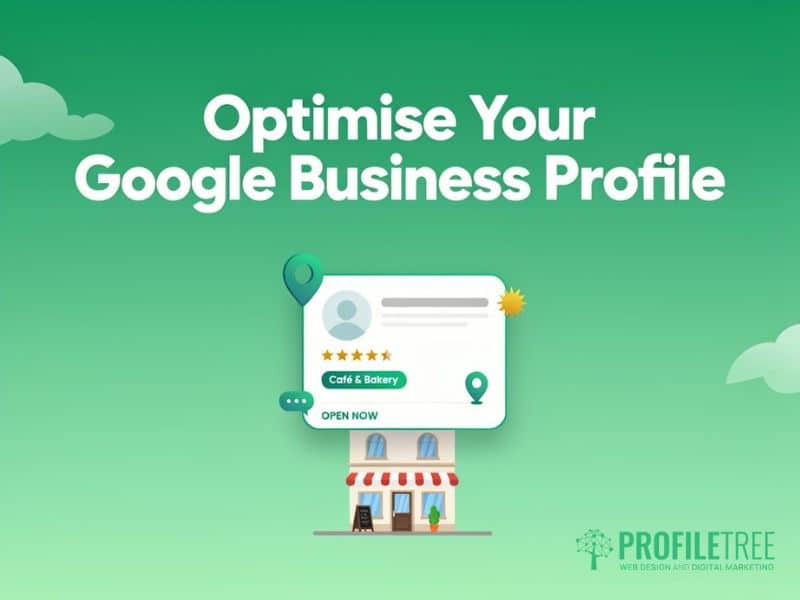
Your Google Business Profile is the single biggest lever for local SEO for restaurants and cafes. It decides whether you appear in the map pack, what a hungry searcher sees before they’ve even clicked through, and how trustworthy you look next to the three or four competitors sitting alongside you.
Category and Attributes
Choose the most accurate primary category available: Restaurant, Cafe, Coffee Shop, or Pizza Restaurant, rather than something generic. “Cafe” and “Coffee Shop” serve different searches, so pick the closer match and add secondary categories, Bar, Takeaway Restaurant, Vegan Restaurant, for everything else you genuinely offer.
Fill in every relevant attribute: outdoor seating, wheelchair access, good for groups, dog-friendly. Google matches these against specific searches, so a listing that only mentions “restaurants near me” in its description, but skips the attributes, will miss searches such as “restaurants with outdoor seating in Belfast” entirely.
Dietary attributes deserve particular care. Vegetarian, vegan, halal and gluten-free filters are now common search modifiers, and a venue that genuinely caters well to any of these should mark it clearly across attributes, menu descriptions and website copy. Being reliably findable for “vegan-friendly restaurants Belfast” captures a segment that a generic “restaurant Belfast” listing shares with every competitor nearby.
Menu, Photos and Posts
Upload your menu directly into Google’s native menu builder rather than as a PDF. PDFs are hard for Google to read and next to useless for AI-generated search summaries, which pull structured text rather than scanned documents. Every dish needs its own title, description and current price, kept up to date as the menu changes.
Photos carry more weight for food businesses than for almost any other sector, since people decide what to eat with their eyes before they read a single review. Cover signature dishes, the dining room and the exterior, and keep adding fresh ones rather than letting a profile go stale. A broad, regularly refreshed library holds local pack position better than a handful of hero shots uploaded once at launch and never touched again. Weekly Google Posts covering specials, events, or seasonal changes are one of the lowest-effort habits that keep a profile looking active, and Google rewards that activity in local pack rankings.
If food photography and short-form video content aren’t something your team has time for, ProfileTree’s video marketing service for hospitality businesses covers exactly this, from the initial shoot through to keeping a profile stocked with fresh content month after month.
Q&A and User Photos
The Q&A section on your profile is public and searchable, so seed it yourself with the questions people actually ask: whether you take walk-ins, whether there’s parking nearby, and whether the venue is suitable for a large group. Left empty, this space either sits unused or gets filled by guesses from people who’ve never visited.
Customer-uploaded photos also carry weight, since they read as more credible than your own marketing shots. Encourage diners to add a photo when they leave a review, and check the photo section periodically for anything outdated or unflattering that would be worth reporting for removal.
Opening Hours You Can Trust
Accurate opening hours matter more for restaurants and cafes than for almost any other business type, since arriving to find a venue closed is one of the fastest ways to lose a customer for good. Update special hours ahead of bank holidays and the Christmas period as early as you can, and always respond when Google prompts you to confirm hours before a known busy period.
If you offer table reservations, link your booking platform directly to your profile so a searcher can book without leaving Google. Removing that extra step from discovery to booking is one of the simplest ways to convert local pack visibility into covers.
If you rely on delivery platforms, bear in mind that a search for your name can just as easily land on Deliveroo or Just Eat as on your own site. Point your Order Online link to your own booking or ordering page where the commission works in your favour, and reserve the delivery apps for the orders that genuinely need delivering.
Ciaran Connolly, founder of ProfileTree, puts it plainly: “For restaurants and cafes, the Google Business Profile does more work than the website. It’s often the only thing a hungry searcher sees before deciding where to go, so getting the basics right, category, photos, hours, consistently, moves the needle faster than almost anything else we do for hospitality clients.”
Google Maps Visibility, NAP Consistency and Reviews
Ranking in the local pack, the practical goal of local SEO for restaurants and cafes, depends on more than your profile alone. Google cross-checks your business details against every other place your restaurant or cafe is listed, and weighs your reviews heavily when deciding which three businesses to show first.
What Actually Decides Local Pack Ranking
Google weighs three things when deciding which businesses appear in the local pack: proximity to the searcher, relevance to what they typed, and prominence, a mix of review signals, citation consistency and general online authority. You can’t change proximity, but relevance and prominence are both within your control.
Relevance comes from matching your category, attributes and business description to how people actually search, rather than how you would describe yourself internally. Prominence builds slowly through NAP consistency across your listings, genuine reviews and a website that reinforces the same location and service details rather than contradicting them.
In practice, this means two venues of similar quality a few doors apart will often be separated by prominence alone: the one with more recent reviews, a fuller profile and consistent citations tends to edge out the one that simply opened first or has marginally better food photography.
Keeping Your Details Consistent
This is what NAP consistency means in practice: your Name, Address and Phone number need to match exactly, letter for letter, across your website, TripAdvisor, OpenTable, and anywhere else you’re listed. A mismatch between “St.” and “Street”, or a missing unit number, weakens the location signals that Google Maps relies on to confirm where you actually are.
Mention your location naturally in your website copy, too. “Serving the Cathedral Quarter since 2018” does more for local SEO for restaurants and cafes than a generic “we’re based in Belfast”, because it ties your business to a specific, searchable area rather than a whole city.
Keep the same details current on TripAdvisor, OpenTable and any delivery platforms you use. These citation platforms rarely move the needle on their own, but NAP consistency across every one of them strengthens the trust signals that Google, and increasingly AI-powered search tools, use to confirm your business is exactly where and what it says it is.
How AI-Powered Search Reads Your Profile
Conversational tools such as ChatGPT, Perplexity and Google’s AI Overviews answer questions like “a good Italian restaurant in central Belfast” by pulling structured details from your Google Business Profile, TripAdvisor and website rather than reading your homepage top to bottom. A missing menu, an incomplete category, or hours that have not been confirmed in months are gaps that reduce your chances of being recommended in that kind of answer.
Treat your profile as a data feed these tools draw on, not a static listing you fill in once and leave. The businesses cited most confidently tend to be the ones with complete, consistent information sitting across several platforms, not just one well-polished page.
Getting this right across every platform, rather than perfecting one and neglecting the rest, is exactly the kind of joined-up thinking our digital strategy service handles for hospitality clients at a broader level.
Generating and Responding to Restaurant Reviews
Restaurant reviews carry more weight than reviews for most other business types, since choosing where to eat means trusting a stranger’s account of the experience. Ask at the moment a customer compliments the food or thanks a server, not days later by email when the memory has faded. QR codes on receipts, linking straight to your Google review page, remove almost all the friction between a good experience and a review being left.
Respond to everything, positive and negative. Thank specific details in good reviews rather than reusing the same line each time, and address negative ones without getting defensive: acknowledge what happened, say what you’re doing about it, and invite the person back. Google factors both review volume and response activity into local pack rankings, so silence carries a cost.
For a genuine one-star review, keep the reply short and specific rather than generic. Acknowledge the exact experience mentioned, apologise for the gap between that and your usual standard, and invite the reviewer to get in touch directly rather than asking them to remove the review. Future customers read your response as closely as the original complaint, so a calm, professional reply often does more for trust than five identical five-star replies ever will.
Never offer discounts or incentives in exchange for a review. This breaks Google’s guidelines and risks a profile penalty, which costs far more than the extra reviews are worth.
Turning Local Visibility into Bookings
Ranking well only matters if it turns into covers. This is where local SEO for restaurants and cafes needs to connect to the rest of your marketing, rather than sit as a standalone technical task handled once and forgotten.
ProfileTree’s own work in the sector goes beyond client projects. Amazing Food & Drink, ProfileTree’s food and drink content brand, gives the team a genuinely hands-on view of how people actually search for places to eat, what makes them click through from Google Maps, and which profile details, including restaurant reviews, make the difference between a booking and a scroll past. That same thinking carries into client campaigns, whether the goal is direction requests, phone calls or table bookings.
If you’d rather have this managed for you, ProfileTree’s local SEO service, built specifically for restaurants and cafes, covers profile setup, review management and ongoing local pack tracking, so this stays consistent even when things get busy in the kitchen.
For businesses that need this alongside broader visibility work, our search engine optimisation service extends the same approach across your full website, not just your Google listing.
Standing Out from Every Other Local Listing
Most areas have dozens of venues competing for the same hungry searchers, so local pack visibility alone doesn’t decide who gets chosen. Be specific about what you actually do: “modern Irish small plates” says far more than “European food”, and “quick business lunch under £15” serves a different searcher than “relaxed weekend brunch”. Reflect that positioning consistently across your profile description, website and review replies, since AI tools and search algorithms both respond better to specific, repeated entity descriptions than to vague, general ones.
Local content helps too. Posts about what is on locally, a good spot for a business lunch nearby, seasonal ingredient stories, or a supplier feature give you something to rank for beyond direct restaurant searches, and they give returning customers a reason to check back in. This is the kind of groundwork that a wider content marketing service builds systematically, rather than as one-off posts whenever there is time.
Track direction requests, calls and menu views in your Google Business Profile Insights each month rather than watching keyword rank alone. For restaurants, direction requests are usually the closest thing to a straight line between a search and a table filled.
| Metric | Where to Find It | What It Tells You |
|---|---|---|
| Direction requests | Google Business Profile Insights | People intending to visit |
| Calls from your profile | Google Business Profile Insights | Direct booking intent |
| Menu views | Google Business Profile Insights | Pre-visit research behaviour |
| Local pack rankings | Manual search checks | Visibility for key search terms |
| Review count and rating | Google Business Profile, TripAdvisor | Trust signals are building over time |
If time is limited, start with the highest-impact items first: a fully completed Google Business Profile, a native menu with current prices, and a habit of asking for restaurant reviews at the right moment. Schema markup, NAP consistency work and content all compound over months, but the profile and review basics are the fastest route to local SEO for restaurants and cafes, actually paying off in bookings.
FAQs
1. How do I get my restaurant onto Google Maps and the local pack?
Claim and verify your Google Business Profile, then complete every field: category, hours, attributes and menu. Verification is usually done by phone or by postcard to your address. Once verified, Maps visibility follows within days, though local pack ranking still depends on reviews and consistency elsewhere.
2. How long before local SEO for restaurants and cafes shows results?
Profile changes such as better photos or a complete menu often move the needle within two to four weeks in your Insights data. Review growth and citation consistency take two to four months to show in rankings. Most restaurants see a genuine shift in local pack position within three to six months of steady effort.
3. Is a PDF menu on Google good enough?
No. PDFs are difficult for Google to read and can’t be parsed by AI-generated search summaries. Use Google’s native menu builder so every dish has its own title, description and price, and update it as soon as anything changes.
4. How many restaurant reviews does a cafe or business need to rank well?
There’s no fixed number, but volume and recency both matter more than a single perfect score. A profile with dozens of recent reviews typically outperforms one with a handful from two years ago, even at a slightly lower average rating.
5. Does having more than one location change the approach?
Yes. Each location needs its own fully completed Google Business Profile with its own address, hours and photos, rather than one profile covering several sites. Consistent branding across locations helps, but each one still has to rank in its own local pack independently, so treat every branch as a separate optimisation project rather than a single task done once.