
Why Self Development Skills Are Vital: 15 Must-Have Skills This Year
Table of Contents
The topic of self development skills is a growing point of interest for people worldwide. Thanks to advances in technology and science, we can apply tested methodology to carve a path to success. We have access to virtually the entire human knowledge with a simple click. And if you look up self development skills, you will have a flood of results and answers for all the questions. But this is not the focus here. The main focus here is where to start.
It can prove challenging to be able to maintain your current life routine, let alone of looking up and planning how to improve it, and keeping up with this said plan. That is the goal of this article, to help you to obtain an understanding of the concept of self development skills, what you should ask, and what you should address.
Recent data shows that 66% of UK professionals feel increased pressure to upskill compared to just a year ago, with 94% of UK workers expected to need reskilling by 2030. This pressure stems from rapid technological advancement, particularly in AI and automation, which is reshaping every industry. For business owners and marketing managers, self development skills have become the foundation of remaining competitive in an increasingly digital economy.
Let’s start with the basics.
What Are Self Development Skills?
In 1943, Abraham Maslow, an American psychologist, created and proposed the hierarchy of needs, which is to be known later as Maslow’s Hierarchy of Needs. Most contemporary programs and businesses involved with self development skills still draw heavily from this model.
Self development skills are a set of activities and tasks that help you achieve a sense of mindfulness, productivity, awareness, and identity. Self development skills vary from one person to the next, depending on many variables, such as age, fitness, free time, and even work nature and environment, that aim to help you reach your full potential.
To translate the activities of self development skills, you can focus on improving current skills or training on new ones. It’s also worth investing in a personal hobby or talent, expanding your knowledge by pursuing higher education or reading beneficial books. Your goal should be improving self-awareness and self-knowledge, or improving fitness and overall health status.
For professionals working in the digital sector, self development skills take on particular significance. The World Economic Forum identifies AI and big data skills as showing the most growth over the next five years, followed by cybersecurity, networking, and digital literacy. However, only 23% of the UK workforce report having received digital skills training from their employer, creating a significant gap between needs and provision.
At ProfileTree, we observe this skills gap daily when working with clients across Northern Ireland, Ireland, and the UK. Businesses seeking to improve their online presence through web design, implement AI solutions, or develop effective digital marketing strategies often discover that their teams lack the foundational self development skills needed to maximise these investments.
Why Do We Need Self Development Skills?
Common human behaviour in life and work nowadays focuses on finding a problem to every solution. On the other hand, practitioners of self-development skills are trained to find a solution to every problem. Sometimes, it can even go the extra mile of anticipating problems and proactively counter expected challenges.
Self-development skills allow individuals to reach a point where they can tweak with their given lot to improve upon their quality of life, abolishing the mindset of “this is how things are” and instilling the more effective “this is how things should be” instead.
Done right, self development skills should allow people to reach a point of balance, to find one’s centre physically, mentally, and career-wise. In other words, it can be a realistic, substantial approach to achieve individual harmony.
For those in marketing and business management roles, developing self development skills in areas like SEO, content strategy, data analysis, and AI collaboration has become essential. These capabilities determine whether businesses can compete effectively in digital markets. When ProfileTree conducts digital marketing training or AI implementation workshops, participants with strong self development skills adapt far more quickly to new tools and strategies than those without this base.
“The businesses thriving in the digital economy share a common trait, they invest in continuous learning,” notes Ciaran Connolly, Director of ProfileTree. “When we train companies on AI implementation or digital marketing strategy, those with strong self development skills cultures master new technologies far more quickly than organisations lacking this foundation.”
How Self Development Skills Improve the Quality of Life

The ultimate goal of self development skills is to improve the quality of the individual. Self Development skill works to cover the areas that require improvement, if done right.
Expand Your Comfort Zone
It is important to have a comfort zone, but it is more important to not be afraid to step out of it every one and a while. A good set of self development skills should assist you into venturing outside this boundary, in healthy dosages, of course. You should not spread yourself too thin.
The occasional stroll outside your comfort zone will make you more adaptive and makes the process of gaining, and improving upon current, skills much easier. It will not be an exaggeration to say that this is the first step to any successful set of self development skills.
Help You Gain a Better Understanding of Yourself
One of the most dreaded questions, and a running joke in the World of recruitment, is where do you see yourself in x amount of years? It is hard to predict what the future holds for someone if they barely have a notion of what they are and the current time, to begin with.
“You cannot learn a thing you think you know.” This is a paraphrase of one of the major tenets of Stoicism. In the process of improving yourself, a tad degree of stoicism, and positive realism, is direly needed.
An effective module of self development skills should prepare one mentally to obtain a better understanding of themselves; you need to know who you are, what are you good at? What do you WANT to be good at, and what are your weaknesses. Self development skills utilise your capacity not to only find answers, but to find the right answers, as well.
This self-knowledge becomes particularly valuable when selecting training priorities. With limited time and resources, professionals must choose which skills to develop. Understanding your strengths, weaknesses, values, and career goals enables strategic decisions about where to focus development efforts.
For instance, a marketing manager might recognise they excel at creative strategy but struggle with data analysis. Rather than attempting to become expert at everything, they might focus development efforts on learning sufficient analytics to interpret campaign results and make data-informed decisions, while partnering with specialists for deeper analysis.
Exercise a Realistic Approach
“Dream big, start small, act now.” —Robin Sharma
You may find this formula repeated by many self-help and life coaches; there is a reason for that: it works. A closer look at this formula should be insightful:
Start Small
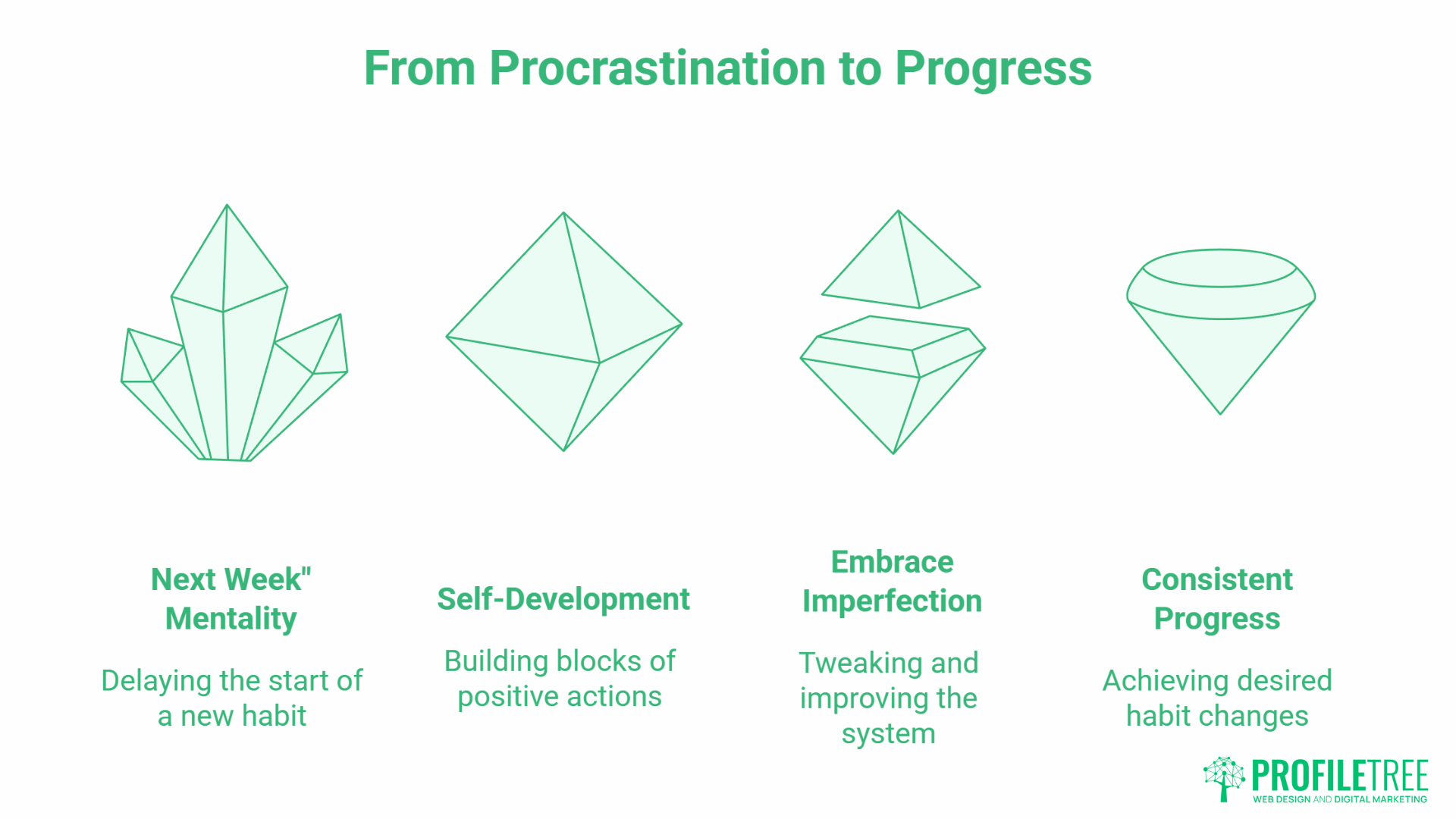
A common practice for smokers who are trying to quit smoking is the I will start from the beginning of the next week/month/week approach. To each his own, but it is no secret that this practice seldom yields any substantial results, even though research shows that only cold turkey quitters’ success rate is 3 to 5%.
Self development skills should develop the mindset of building blocks of actions. Most people trying to maintain a positive habit feel bad when they break their streak, but a person with a set of self-development plan always finds a way to tweak and improve upon their system.
In the end, nothing is written in stone.
Act Now
Self development skills create an initiative and a self-driven personality. By time, you will find that you will start to take, by your own accord, brisk steps towards achieving your goals. The sooner you start acting on your current task, the better and faster you will be prepared for the next level of the process of achieving your goal.
This simple sequence roots a successful implementation of self development skills; it is easier said than done, but surely it is immensely rewarding.
This principle applies directly to digital skills development. Rather than waiting to “find time” for a comprehensive SEO course or video production training, starting with small, actionable steps, watching one tutorial video per week, optimising one webpage, or creating one short video, builds momentum and develops capability gradually.
ProfileTree’s digital training programmes emphasise this approach, breaking complex topics like AI implementation or content marketing strategy into manageable modules that professionals can absorb without feeling overwhelmed.
Help You Integrate with Society Healthily
As achievements pile up, it is bound that you feel more self-confident and harness more confidence in your abilities. Self development skills help you gain a bird-eye view over issues.
This is extremely helpful, especially in conflict resolution. Rather than just seeing your point of view, you will be able to walk a mile in everyone’s shoes, especially if the other person used to be in your place or struggling with something you used to struggle with.
Being able to see things through different eyes generally broadens your scope and outlook on life. A perpetual sense of development helps you to resolve conflict in healthier ways and seek mutually beneficial solutions rather than counterproductive measures that most people take, especially in a workplace environment.
Twenty years ago, the notion of self help and self development skills was alien to our minds. But now, we can see the successful fruition of such efforts in prominent names such as Steve Jobs, Bill Gates, Elon Musk, and many other names that took to their hands the matter of making themselves better people on all the necessary aspects.
And when things seem to be too overwhelming, always focus on Sharma’s quote: “Dream big, act small, start now.”
And positive effort, however small it is, is in the forward direction.
Teach You Adaptability
As the Greek philosopher, Heracles said, “Change is the only constant in life.”
This fact is what shapes our modern world, and successfully helped build most of it. For self development skills to be succinct, it is necessary to allow the individual to grow into adaptability and to be able to change the way they operate.
Being adaptive is a strength that can be the gateway to the utmost potential of an individual. Many people face anxiety and issues related to life and work due to the rigidity of our minds when it comes to responding to change.
Being able to be quick-on-your-feet helps to reach this point where you can acknowledge problems easily, and acknowledge and devise solutions for them as easily done.
It is common for people who are starting on the path of self-development to reach a point of feeling burnt out. As all fruitful journeys, there has to be an end to this trek, right? Do not worry if you feel that you are still dreading miles that you need to cover when you think that you did not finish anything yet. You still have time, and you can still work around to reach your goal.
Sometimes, the path end of the journey is reaching the point where self-development becomes a mindset rather than a singular purpose.
After all, consistency is the key.
15 Must-Have Skills for Self-Improvement This Year
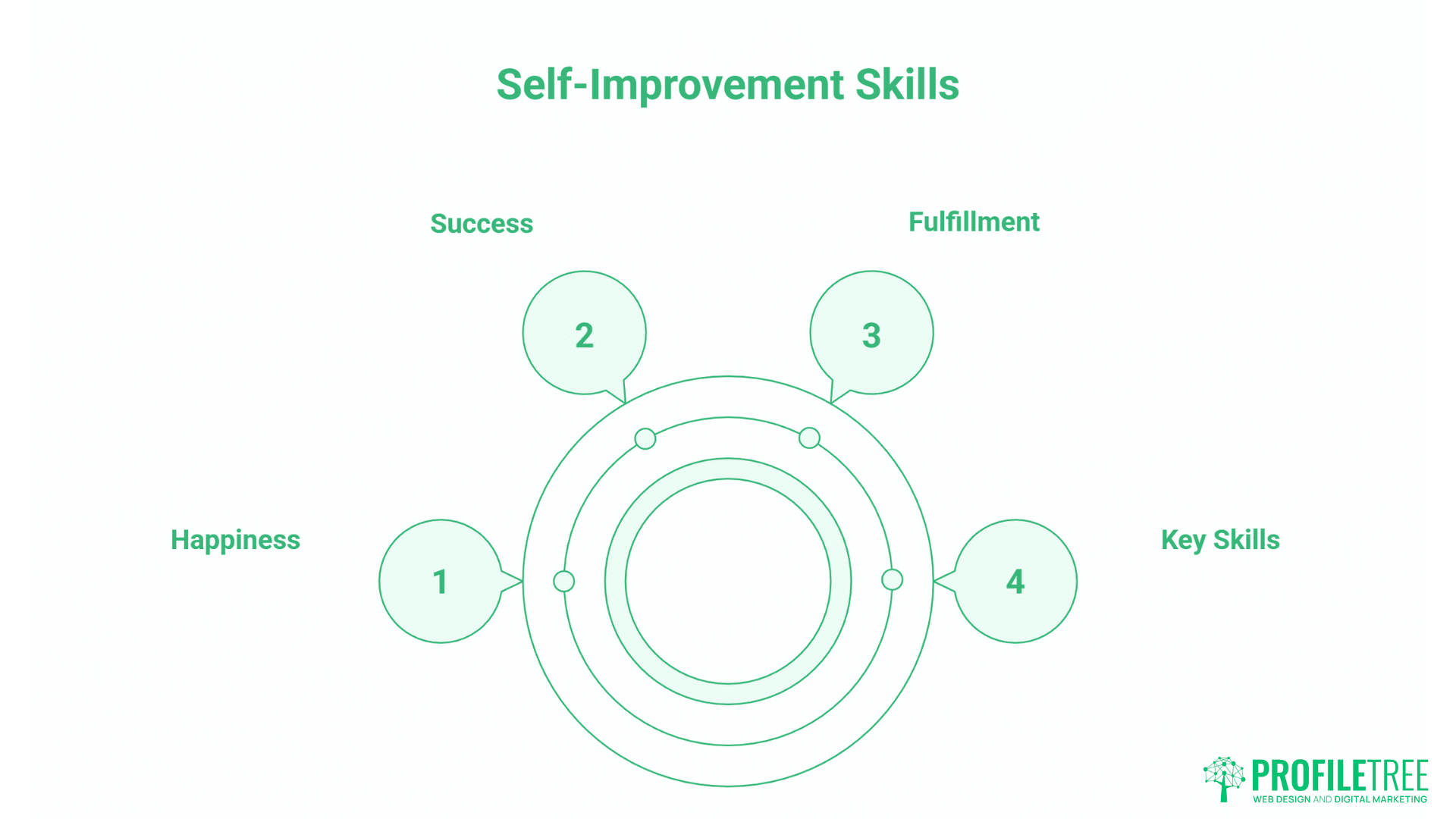
As we embark on a new year, it’s natural to reflect on our personal growth and set goals for self-improvement. Mastering certain key skills can significantly impact your life, leading to increased happiness, success, and fulfilment. Here are 15 essential skills to consider prioritising in your self-improvement journey this year:
1. Communication
Express yourself clearly and concisely. Practise active listening and empathy. Develop strong writing and public speaking skills.
Communication forms the backbone of professional success. Research indicates that 74% of UK tech firms now value soft skills such as collaboration, communication, and problem-solving as much as or more than technical expertise when making hiring decisions.
In the digital sector, communication takes many forms. Whether explaining website functionality to clients, collaborating with designers and developers on projects, or presenting marketing results to stakeholders, clear communication proves essential. For those creating video content or managing YouTube channels, communication skills directly impact audience engagement and channel growth.
2. Emotional Intelligence (EQ)
Increase self-awareness and manage your emotions effectively. Build strong relationships by being empathetic and understanding. Navigate conflicts effectively and resolve them constructively.
The World Economic Forum’s Future of Jobs report identifies emotional intelligence skills, motivation, self-awareness, empathy, and active listening, as ranking among the top 10 core competencies. Recent research from Harvard shows that 95% of top performers demonstrate high emotional intelligence.
Emotional intelligence comprises five key elements: self-awareness, self-regulation, motivation, empathy, and social skills. People with high EQ identify how they feel, what those feelings mean, and how emotions impact their behaviour and others around them.
3. Time Management
Set SMART goals and prioritise tasks effectively. Utilise time management tools and strategies. Develop strong organisational skills and minimise distractions.
Time management in 2025 faces unique challenges. The proliferation of communication channels, constant notifications, and the blurring of work-home boundaries create unprecedented demands on attention. Effective time management now requires not just scheduling skills but also digital boundaries, focus techniques, and energy management.
For business owners juggling multiple responsibilities, operations, marketing, client relations, team management, time management becomes critical. Strategic time allocation determines whether you work in your business (handling daily tasks) or on your business (developing growth strategies).
4. Goal Setting
fine your goals clearly and break them down into actionable steps. Develop a plan and track your progress regularly. Stay motivated and celebrate your achievements.
Goal setting in professional development requires alignment between personal aspirations and market demands. With the UK job market evolving rapidly, goals must be flexible enough to adapt to changing circumstances yet specific enough to guide daily actions.
5. Resilience
Develop a growth mindset and embrace challenges as opportunities for learning. Learn from your mistakes and setbacks. Develop healthy coping mechanisms for dealing with stress and adversity.
Resilience has become increasingly important as the pace of change accelerates. According to CIPD research, workers with higher adaptability show greater job satisfaction and lower burnout rates. Resilience enables professionals to weather setbacks, adapt to unexpected changes, and maintain performance under pressure.
Building resilience involves several strategies. Maintain perspective by viewing challenges as temporary rather than permanent. Develop a support network of colleagues, mentors, and peers who provide encouragement and advice. Practise stress-reduction techniques such as exercise, meditation, or hobbies that provide mental breaks from work pressures.
6. Problem-Solving

Analyse situations logically and identify root causes. Brainstorm creative solutions and consider various perspectives. Choose the most effective solution and implement it with confidence.
Problem-solving in the digital age requires both analytical and creative thinking. Complex business challenges rarely have single correct answers. Instead, they demand the ability to gather information, identify patterns, generate multiple potential solutions, evaluate trade-offs, and make decisions despite uncertainty.
7. Adaptability
Be open to change and new experiences. Learn to adjust your approach and strategies as needed. Embrace uncertainty and be comfortable navigating unfamiliar situations.
The UK labour market data shows a job-to-job transition rate of 13%, among the highest in the OECD. This mobility requires professionals to adapt to new roles, industries, and work environments throughout their careers. Adaptability determines how successfully these transitions occur.
In the digital sector, adaptability manifests constantly. When Google updates its search algorithm, SEO strategies must adapt. When new social media platforms emerge, marketing approaches evolve. When AI tools become available, workflows transform. Professionals who embrace these changes maintain relevance; those who resist fall behind.
Developing adaptability involves exposing yourself to new experiences regularly. Attend industry conferences, experiment with emerging tools, read about developments outside your immediate field, and seek projects that stretch your capabilities. Each experience builds comfort with change and develops pattern recognition that speeds future adaptation.
8. Decision-Making
Gather relevant information and assess the pros and cons of each option. Consider your values and priorities when making decisions. Be confident in your choices and learn from your experiences.
Decision-making quality directly impacts career progression and business success. Leaders make dozens of decisions daily, some minor, others significant. Developing systematic decision-making processes improves outcomes and builds confidence.
9. Creativity and Innovation
Think outside the box and challenge the status quo. Develop innovative solutions to problems and challenges. Express yourself creatively through art, music, writing, or other forms.
Creativity proves essential in the digital marketing, web development, and content creation sectors. Creating compelling content, designing engaging websites, and developing innovative campaigns all require creative thinking. However, creativity extends beyond traditionally “creative” roles.
Problem-solving often demands creative approaches. Finding new ways to streamline processes, identifying untapped market opportunities, or developing novel applications for existing technologies all involve creative thinking. Organisations that encourage creativity across all roles, not just designated “creative” positions, generate more innovation.
10. Learning Agility
Be open to new ideas and information. Embrace continuous learning and development. Adapt your skills and knowledge to stay competitive in a rapidly changing world.
The half-life of learnt skills has shortened to approximately five years, shrinking to just two and a half years in highly technical fields. Learning agility, the ability to learn quickly and apply knowledge to new situations, has become one of the most valuable professional attributes.
Data from 2025 reveals significant demand for digital skills training. Over 103,000 monthly searches for AI training courses, 57,000 for coding training, and 34,000 for graphic design courses demonstrate widespread recognition of the need for continuous learning. Yet many professionals struggle to find time or resources for skill development.
11. Financial Literacy
Develop a budget and track your income and expenses. Learn about investing and saving for your future. Make informed financial decisions based on your goals and priorities.
Financial literacy extends beyond personal finances. For business owners and managers, understanding financial statements, cash flow management, budgeting, and financial forecasting proves essential. These skills enable better business decisions and more effective resource allocation.
Marketing professionals benefit from financial literacy when calculating ROI on campaigns, allocating budgets across channels, and justifying marketing investments to leadership. Understanding metrics like customer acquisition cost, lifetime value, and return on ad spend transforms marketing from a cost centre to a strategic investment with measurable returns.
12. Physical Health

Engage in regular physical activity and exercise. Eat a healthy diet and prioritise sleep. Develop healthy habits and routines to promote physical well-being.
Physical health directly impacts professional performance. Energy levels, focus, stress resilience, and overall productivity all depend on physical well-being. Yet busy professionals often neglect health in favour of work demands.
Research consistently shows that regular exercise improves cognitive function, reduces stress, and enhances mood. Adequate sleep proves essential for memory consolidation, decision-making, and emotional regulation. Nutrition affects energy levels, concentration, and long-term health.
This is highly important for professionals in high-pressure roles, managing multiple projects, meeting tight deadlines, or running businesses, establishing health routines provides the foundation for sustained performance. Rather than viewing health practices as time taken away from work, successful professionals recognise them as investments that enhance work capacity.
13. Mental Health
Practise mindfulness and meditation to manage stress and anxiety. Seek professional help when needed to address mental health concerns. Develop healthy coping mechanisms and build a strong support network.
Mental health awareness has increased significantly in UK workplaces. However, awareness does not automatically translate into action. Professionals must actively develop practices that protect and enhance mental health.
Mindfulness practices help manage work-related stress. Regular breaks prevent burnout. Setting boundaries between work and personal life maintains balance. Seeking support, whether from colleagues, friends, family, or professionals, provides necessary assistance during challenging periods.
14. Digital Literacy
Stay informed about the latest technology trends. Utilise digital tools and platforms effectively. Protect your online privacy and security.
Digital literacy has evolved from a specialised skill to a fundamental requirement across nearly all professions. However, only 23% of the UK workforce report receiving digital skills training from employers, creating a significant gap between needs and provision.
Digital literacy encompasses several competencies. Basic proficiency includes using common software applications, navigating online platforms, and communicating through digital channels. Intermediate skills involve data analysis, digital content creation, and understanding how algorithms shape online experiences. Advanced digital literacy includes AI collaboration, automation, and strategic technology integration.
Current demand for digital skills training reflects this need. Monthly search data shows over 76,000 searches for Excel training, 54,000 for Python courses, and 15,500 for web design training. This demand spans creative skills (graphic design, UX design), technical capabilities (coding, data analysis), and business applications (AI, digital marketing).
ProfileTree’s digital training programmes address these varied needs. From SEO fundamentals for business owners to AI implementation for marketing teams, our courses provide practical skills that participants can apply immediately. We recognise that effective digital literacy involves not just understanding technologies but knowing when and how to apply them strategically.
15. Social Responsibility
aware of your impact on the environment and social issues. Contribute to positive change and make a difference in your community. Live a life of purpose and integrity.
Social responsibility increasingly influences business success. Consumers, employees, and partners evaluate organisations not just on products and profits but on values and impact. Professionals who understand and embody social responsibility bring value beyond technical skills.
This awareness manifests in several ways. It might involve sustainable business practices, ethical marketing, inclusive hiring, or community engagement. For digital agencies, social responsibility includes accessibility in web design, creating websites that work for users with disabilities, ethical AI use, transparent client relationships, and environmentally conscious hosting choices.
By focusing on developing these essential skills, you can unlock your full potential and achieve remarkable progress in various aspects of your life. Remember, self-improvement is a continuous journey, not a destination. Embrace the process, celebrate your achievements, and never stop learning and growing.
Developing Key Skills: A Step-by-Step Guide
Mastering key skills takes dedication and practice, but the rewards are immense. Whether you’re aiming for personal growth, career advancement, or simply navigating life’s challenges, cultivating these essential abilities empowers you to unlock your potential and achieve your goals. Let’s break down how to develop four crucial skills with step-by-step advice.
Communication
Step 1: Active Listening
Pay close attention: Focus on the speaker’s words, body language, and emotions. Ask clarifying questions: Confirm you understand their message by asking relevant questions. Paraphrase and summarise: Reflect on what you heard to demonstrate understanding and encourage elaboration.
Active listening represents one of the most underutilised communication skills. In our fast-paced environment, many people focus on formulating responses rather than truly understanding messages. This creates misunderstandings, conflicts, and missed opportunities.
Step 2: Clear and Concise Expression
Organise your thoughts: Structure your message logically and focus on key points. Use simple language: Avoid jargon and technical terms unless necessary. Vary your tone and pace: Keep your audience engaged with dynamic delivery.
Clear communication requires understanding your audience. Technical specialists might appreciate detailed explanations and industry terminology. However, clients or stakeholders from different backgrounds need simpler language focused on outcomes rather than processes.
Step 3: Practise and Feedback
Seek opportunities to practise: Engage in conversations, participate in discussions, and deliver presentations. Record yourself and analyse your communication: Identify areas for improvement and adjust your approach. Ask for feedback: Seek constructive criticism from trusted friends, colleagues, or mentors.
Improvement requires both practice and feedback. Many professionals avoid presentations or difficult conversations, missing valuable development opportunities. Deliberately seeking these situations, combined with reflective analysis afterwards, accelerates communication skill development.
Emotional Intelligence (EQ)
Step 1: Self-Awareness
entify your emotions: Pay attention to your physical and mental reactions to situations. Understand your triggers: Recognise what causes specific emotions and how they affect your behaviour. Practise mindfulness: Engage in activities like meditation or journaling to enhance self-awareness.
Self-awareness forms the foundation of emotional intelligence. Without understanding your own emotional patterns, managing them effectively becomes impossible. Many people move through their days on autopilot, reacting to situations without consciously recognising their emotional states.
Step 2: Managing Emotions
Develop healthy coping mechanisms: Find constructive ways to deal with difficult emotions, such as exercise, relaxation techniques, or creative expression. Challenge negative self-talk: Identify and replace negative thoughts with positive affirmations. Practise self-compassion: Be kind to yourself and accept that experiencing emotions is a normal part of being human.
Emotion management does not mean suppressing feelings or maintaining constant positivity. Rather, it involves experiencing emotions without being controlled by them. When facing difficult emotions, frustration with a project, anxiety about a presentation, or disappointment from a setback, effective emotion management involves acknowledgement, analysis, and action.
Step 3: Empathy and Social Skills
Actively listen to others: Pay attention to their emotions and perspectives. Show genuine interest: Ask questions and encourage others to share their feelings. Respond with understanding and compassion: Offer support and validation without judgement.
Empathy extends beyond sympathy or feeling sorry for someone. True empathy involves understanding another person’s perspective and emotional experience, even when different from your own. This skill proves invaluable in client relationships, team collaboration, and leadership.
Adaptability and Resilience
Step 1: Develop a Growth Mindset
Embrace challenges: View them as opportunities for learning and growth. Focus on progress, not perfection: Celebrate your achievements, learn from mistakes, and move forward. Be open to new ideas and experiences: Embrace change and adapt your approach as needed.
Carol Dweck’s research on mindsets reveals that viewing abilities as fixed versus malleable dramatically affects achievement. Those with growth mindsets believe skills develop through effort and learning. Those with fixed mindsets believe abilities are innate and unchangeable.
Step 2: Build a Strong Support Network
Surround yourself with positive and supportive individuals who can offer encouragement and guidance during difficult times. Seek professional help when needed: Therapists, counsellors, or coaches can provide valuable tools and strategies for coping with challenges. Engage in activities that promote well-being: Exercise, healthy eating, and relaxation techniques can boost your overall resilience.
Resilience does not mean weathering challenges alone. Strong support networks provide practical assistance, emotional support, and perspective during difficult periods. These networks might include colleagues, mentors, friends, family, or professional advisors.
Step 3: Practise Problem-Solving
Identify the problem: Clearly define the issue you are facing. Brainstorm potential solutions: Consider various options and assess their feasibility. Choose the most effective solution: Evaluate each option based on its potential benefits and risks. Implement your solution: Take action and monitor the results. Adapt and adjust as needed: Be flexible and willing to modify your approach based on new information or circumstances.
Systematic problem-solving transforms challenges from overwhelming obstacles into manageable tasks. Rather than panicking when faced with difficulties, resilient professionals approach problems methodically.
Time Management

Step 1: Set Clear Goals
Determine what you want to achieve in specific timeframes. Prioritise your tasks based on their importance and urgency. Create a realistic schedule with deadlines and allocate time for each activity.
Effective time management begins with clarity about objectives. Without clear goals, all activities seem equally important, leading to reactive rather than proactive time allocation.
Step 2: Eliminate Distractions
Identify and minimise distractions like social media notifications, phone calls, or clutter. Utilise tools like time management apps or website blockers to stay focused. Work in a quiet and organised environment.
Digital distractions represent one of the greatest threats to productivity. Constant notifications, email alerts, and the temptation to check social media fragment attention and reduce work quality.
Step 3: Delegate and Outsource
Learn to delegate tasks to others when possible. Consider outsourcing tasks that fall outside your expertise or take up too much time. Focus your efforts on activities that contribute most to your goals.
Many business owners and managers struggle with delegation. Perfectionistic tendencies, control concerns, or belief that “it’s faster to do it myself” prevent effective delegation. However, trying to handle everything personally creates bottlenecks and prevents growth.
Step 4: Track and Review
Monitor your progress and identify areas for improvement. Adjust your schedule and strategies as needed to optimise your productivity. Celebrate your achievements and reward yourself for staying on track.
Continuous improvement requires measurement and reflection. Many professionals set goals and create plans but never review progress or assess effectiveness. This oversight prevents learning and adaptation.
Remember, developing key skills is a continuous process. Be patient, persistent, and celebrate your progress along the way. By implementing these steps and seeking resources like books, online courses, or workshops, you can unlock your full potential and experience the transformative power of yourself. If you’re looking for additional support, platforms like UPSkillsTutor can provide valuable resources and guidance to enhance your learning journey.
Self development skills represent one of the most valuable investments you can make in your professional life. As UK businesses face unprecedented change from AI transformation to shifting market dynamics, professionals who commit to continuous growth through self development skills maintain relevance, expand opportunities, and achieve greater career satisfaction in an increasingly competitive marketplace.
The most important factors are consistent effort, a positive mindset, and willingness to learn and adapt. Start small by selecting one or two priority areas based on your current needs and goals. Embrace challenges, celebrate achievements, and enjoy the process of becoming the best version of yourself through dedicated practice of self development skills.
Conclusion
Developing key skills is a valuable investment in your personal and professional growth. By incorporating the strategies and insights shared in this article, you can embark on a transformative journey of self-improvement and unlock your full potential.
Remember, the most important factors are consistent effort, a positive mindset, and a willingness to learn and adapt. Embrace the challenges, celebrate your achievements, and enjoy the process of becoming the best version of yourself.
FAQs
How long does it take to develop these skills?
The time required to develop self development skills varies depending on your learning style, prior experience, and the specific skills you focus on. However, with dedication and consistent practice, you can see significant improvements within a few months. Research suggests that 20 hours of focused practice can take you from complete novice to reasonably competent in many skills, though true expertise might require 1-3 years depending on complexity.
What are some common challenges people face when developing new skills?
Common challenges include lack of motivation when facing setbacks, time constraints amidst busy schedules, fear of failure when attempting new things, and limited access to training materials or mentors. While 34% of businesses acknowledge they struggle with digital marketing skills gaps, many lack structured approaches to address these challenges systematically.
How can I overcome these challenges?
Set SMART goals and break complex self development skills into smaller, manageable steps. Find a learning buddy or join a support group for accountability. Reward yourself for progress and seek help from coaches or mentors. Don’t fear failure, view mistakes as opportunities to learn and grow through your self development skills journey.
Can self development skills help my business grow?
Absolutely. Self development skills directly impact business performance across multiple dimensions. Teams comfortable with change, skilled in problem-solving, and committed to continuous improvement adapt to market shifts, implement innovations, and serve customers more effectively. Businesses that invest in employee self development skills experience higher satisfaction, reduced turnover, and stronger employer brands that attract top talent.
Ready to Develop Your Digital Skills? At ProfileTree, we help businesses across Northern Ireland, Ireland, and the UK develop the self development skills needed to thrive in the digital economy. From web design and SEO training to AI implementation and digital marketing strategy, our expert team provides practical training that delivers real results. Whether you need website development, video production for YouTube, or comprehensive digital training for your team, we combine technical expertise with a commitment to your growth. Contact us today to discover how we can help you build the skills that drive business success.