
How to Build an Empire: Strategic Foundations for Business Success
Table of Contents
Every empire, whether forged in steel and stone or built on ideas and innovation, begins with a single, deliberate act: the decision to create something greater than yourself. The business empires we admire today, from century-old institutions to disruptive startups that reshaped entire industries, all started with founders who understood a fundamental truth: sustainable success isn’t accidental, and it isn’t built overnight.
Building an empire in the business world requires more than ambition or a groundbreaking idea. It demands a strategic approach to laying the proper foundation, brick by brick, decision by decision. The difference between businesses that merely survive and those that truly thrive lies not in luck or timing alone, but in understanding and implementing the core building blocks that support long-term growth and resilience.
In this guide, we’ll explore the essential elements that transform a business venture into an enduring enterprise. From establishing a vision that inspires action to creating systems that scale, from building teams that execute to cultivating the mindset that weathers inevitable storms—these are the pillars upon which empires are built. Whether you’re launching your first venture or looking to elevate an existing business to new heights, understanding these fundamental principles will provide you with a blueprint for creating something that stands the test of time.
The journey to build an empire starts here, with the wisdom to know that every great structure requires a solid foundation, and the courage to begin laying yours today.
Business Empire Fundamentals
Many business owners dream of scaling their operations beyond a single location or service offering. The journey from start-up to established enterprise requires careful planning, consistent execution, and an understanding of what truly defines business success in the modern marketplace.
What Is a Business Empire?
A business empire doesn’t have a fixed definition tied to revenue thresholds or employee counts. Instead, it represents any business that starts from scratch, proves its concept, and continues to grow over time through strategic expansion and market dominance.
Your business might operate within a single city, but if you’ve established multiple branches and secured a strong market position, you’ve built something significant. Like historical empires, business empires are defined by their control and influence within their chosen industry or geographic area.
The journey typically begins with a simple legal structure—perhaps an LLC with articles of organisation filed through a registered agent service. As the business proves viable, it evolves into a more complex organisation with multiple suppliers, partners, and operational centres.
For UK businesses, this may involve starting as a sole trader or limited company and eventually expanding into multiple trading entities across different regions. The structure matters less than the strategic approach to growth and market positioning.
The Reality of Starting a Business
Before diving into empire-building strategies, it’s worth understanding the challenging landscape ahead. However, these statistics shouldn’t discourage you—successful businesses that dominate their markets today all faced similar odds.
According to the Bureau of Labour Statistics, approximately 20% of businesses survive their first year, whilst 50% make it past five years. Fundera reports that around 66% of businesses fail within the first decade. These figures underscore the importance of thorough planning and effective execution.
Adults aged 20-34 represent the demographic most likely to express interest in starting a business. This group often brings fresh perspectives and digital fluency that can provide competitive advantages in modern markets.
A common misconception centres on office space being the primary business expense. In reality, costs like inventory management, digital marketing, content production, and professional services often exceed property costs, particularly for businesses operating online or with remote teams.
“The businesses that succeed long-term are those that invest strategically in their digital presence from day one,” notes Ciaran Connolly, Director of ProfileTree. “Whether that’s a properly optimised website, video content that explains your value, or AI tools that improve efficiency, digital infrastructure isn’t optional anymore; it’s fundamental to building something that lasts.”
Starting Your Business
A strong start provides the foundation for everything that follows. Success at this stage requires thorough research, strategic planning, and disciplined execution, rather than making spontaneous decisions based solely on enthusiasm.
Identifying Market Opportunities
The first step to building an empire centres on offering something people genuinely need. Whilst passion for your product matters, it cannot replace market validation. Believing in a product doesn’t guarantee its commercial viability.
Studying the market and positioning your offering correctly proves more effective than simply following trends. Trend-based products might deliver immediate success, but strategy-built products typically demonstrate greater longevity and stability.
The selection process should be as specific as possible, particularly when starting. Focusing on a particular niche within a broader product category makes your efforts more defined and measurable. This approach makes it easier to identify weaknesses, modify your strategy accordingly, and limit potential financial losses.
Quality matters immensely. Consider how Happy Houseplants established itself as one of the UK’s top indoor plant retailers within just a few years. Their success stemmed from consistently stocking high-quality products and delivering exceptional customer service—fundamentals that no amount of marketing can replace.
Building Foundational Knowledge
Before launching your product or service, invest time in gaining a comprehensive understanding of your industry. This includes understanding production processes, financial aspects, consumer behaviour, and operational details that separate successful businesses from failed attempts.
Building a business empire means positioning yourself as an expert in your field. This becomes impossible without thorough knowledge of your niche. The more you understand, the easier it becomes to avoid being misled or falling victim to fraud due to a lack of experience.
Finding mentors or business consultants can provide significant benefits, particularly in well-established industries. Building connections with people who have navigated similar paths before offers invaluable insights. These relationships often prove helpful later when you need partners or collaboration opportunities with competitors.
When you start building an empire, you’ll encounter problems that few people understand. Having an expert guide becomes invaluable during these challenging moments. Consider joining industry associations, attending relevant conferences, or participating in business networks specific to your sector.
Understanding Your Customers
Research must include a deep investigation into customer needs and pain points. What problems do they face with current providers? What gaps exist in the market? How can you improve their experience? What would convince them to switch from established brands they already trust?
The most effective way to gather this information is direct customer engagement. Conduct surveys, host focus groups, monitor social media conversations, and analyse competitor reviews. This primary research proves more valuable than assumptions based solely on industry reports.
For digital businesses, website analytics tools provide additional insights into customer behaviour. Understanding which content attracts visitors, where they spend their time, and what prompts them to leave helps refine your offering before making a significant investment.
Managing Cash Flow Effectively
When starting a business, the sheer volume of tasks can feel overwhelming. Cash represents the lifeblood of any business and remains essential for sustaining continuity and enabling growth. Poor cash flow ranks among the leading causes of business failure.
For service-based businesses, the optimal model involves securing payments upfront to maintain control over cash flow. Deposits also serve as a valuable tool for securing your financial position and mitigating cash gaps between project completion and receipt of payment.
Even for retail operations, offering upfront monthly payment systems in exchange for benefits such as free delivery or discounted prices can be an effective strategy. This approach proves particularly valuable for products that customers purchase repeatedly.
Planning your monthly revenue targets and avoiding gaps between cash receipts and financial commitments—such as staff salaries or stock inventory—provides stability. For comprehensive financial planning, consider partnering with accountants who specialise in your industry sector.
Controlling Costs Strategically
When building your business empire, budget considerations remain paramount. Most businesses start with tight budgets either to minimise risk or due to limited resources. This constraint often forces creative solutions that later become competitive advantages.
Regarding office space, marketing expenditure, and infrastructure, minimising unnecessary retail costs proves wise during the early stages. Business costs often exceed initial estimates, so discovering cost-effective alternatives for office space, furniture, communications systems, and advertising can provide financial breathing room.
Remember that high expenses can undermine even substantial revenues. Discovering the best deals and negotiating favourable terms with suppliers has a positive impact on your bottom line and long-term viability.
Planning for Worst-Case Scenarios
A fundamental rule when setting up strategies, budgets, or project plans: expect minimum income and maximum expenses. This approach isn’t about pessimism—it’s about prudent financial management during vulnerable early phases.
Building your basic budget around worst-case scenarios means preparing ahead for challenges you’ll inevitably face. This approach prevents financial crises when unexpected expenses arise or revenues fall short of projections.
As time passes and you gain clearer visibility into actual income and expenses, planning becomes easier. However, maintaining conservative estimates protects against the optimism bias that often leads to business failures.
Growth and Scaling
Once you’ve established your business and achieved initial stability, the next phase focuses on sustainable growth. Scaling brings entirely new challenges that require different approaches than those used during the start-up phase.
Building Systems and Automation
If you think automation costs too much, try managing everything manually as your business grows. Automation saves significant time and reduces errors that damage customer relationships and business reputation.
Running a business empire can become overwhelming without proper systems. Many owners waste countless hours on activities that contribute nothing to profit. Eliminate this inefficiency by assigning repetitive tasks to automated systems.
If you’re paying staff to handle tasks that automation tools could manage more effectively, you’re moving in the wrong direction. The right systems become the backbone of your business, saving your most valuable asset—time.
Accuracy represents another reason why establishing proper systems proves essential in every organisation. A business empire should demonstrate professionalism in every aspect. Inaccuracy damages reputation, particularly in a culture where customers maintain high expectations.
Reducing error rates is crucial to presenting your business as a robust and reliable entity. This becomes particularly important as you scale and the consequences of mistakes multiply across more customers and transactions.
Hiring the Right Team
Many business owners start alone or with one or two partners. They spend their first phase handling everything themselves—from administrative tasks to accounting, marketing, and operations. This approach may work initially when you cannot afford staff.
However, once your business survives this phase, don’t let it linger. Progress to the next stage by hiring additional personnel to assist. You’ll likely struggle with handing over tasks because you’re accustomed to controlling everything.
Yet you’ll discover how much faster processes become and how much more financially rewarding operations prove when you build the right team. It goes without saying that before starting anything, hire legal advice and an accountant, then add more resources as needed based on your business nature.
Remember that you cannot build a business empire alone. At some point, you’ll want to hire marketing professionals to help scale operations. For businesses focused on digital growth, this might include web designers, content creators, video producers, SEO specialists, or digital strategists.
Developing Digital Infrastructure
Modern businesses require robust digital infrastructure to compete effectively. This extends beyond basic websites to encompass comprehensive online presence, digital marketing capabilities, and customer engagement systems.
Your website serves as your primary online business asset. For UK businesses, particularly, a properly designed and optimised website focused on ranking, traffic generation, and lead conversion proves essential. Consider platforms like WordPress, which offer flexibility and SEO capabilities, though Wix, Shopify, and Squarespace also serve specific business needs.
Website development should prioritise user experience, mobile responsiveness, and accessibility. These factors influence both customer satisfaction and search engine rankings. Professional web design services can help create websites that strike a balance between aesthetic appeal and functional performance.
Content marketing represents another critical component. Regular blog posts, video content, and social media updates establish authority in your field whilst improving search visibility. Video production, in particular, has become essential for engaging modern audiences who prefer visual content over text alone.
SEO remains fundamental for attracting organic traffic. Local SEO proves particularly important for businesses serving specific geographic areas within Northern Ireland, Ireland, and the broader UK. Optimising for local search terms helps you compete effectively in your immediate market.
Implementing AI Solutions
Artificial intelligence has transitioned from a future possibility to a present necessity for competitive businesses. AI implementation doesn’t require enterprise-level budgets—small and medium-sized enterprises can adopt AI tools that improve efficiency and customer service.
AI applications range from marketing automation and customer service chatbots to data analysis and content creation assistance. For many SMEs, starting with AI training helps staff understand how to use these tools effectively within existing workflows.
The key lies in identifying processes where AI can deliver measurable improvements. This might include automating customer inquiries, analysing website traffic patterns, personalising marketing messages, or optimising inventory management.
Training remains essential for the successful adoption of AI. Staff need to understand not just how to use AI tools, but when to use them and how to interpret their outputs. Investment in digital training pays dividends through improved efficiency and competitive positioning.
Expanding Strategically
Many entrepreneurs hesitate before taking steps to expand. Once a business passes its initial phase and starts generating consistent revenue, owners naturally feel more comfortable and less stressed about profitability. Therefore, deciding to expand means stepping outside this comfort zone.
Expansion might involve adding services, launching new product lines, or opening additional locations. Each option requires hiring new resources, incurring extra expenses, and investing time and effort into planning and execution.
Expansion inherently involves risk. However, it represents a necessary step that every business empire must navigate. Knowing when to expand proves key to maintaining stability whilst pursuing growth.
Listening to customer feedback and analysing your competitive position provides critical information for expansion timing decisions. When customers consistently request services you don’t offer, or when competitors begin capturing market share in areas where you could compete, these signals suggest expansion opportunities.
Consider your digital strategy when expanding. A business opening a second location needs to update its website, expand its local SEO efforts, and potentially create location-specific content. Video production showcasing new locations or services helps communicate expansion to existing and potential customers.
Remember that empires aren’t meant to remain small start-ups indefinitely. They’re built to become leading enterprises in their fields. Strategic expansion, supported by robust digital infrastructure and effective marketing, enables sustainable growth.
Measuring Success and ROI
As you scale, measurement becomes increasingly important. Without clear metrics, you cannot determine which strategies work and which waste resources. Key performance indicators should align with your specific business goals.
For digital businesses, key metrics may include website traffic, conversion rates, customer acquisition costs, lifetime customer value, and engagement rates across various channels. E-commerce businesses track additional metrics, such as basket abandonment rates and average order values.
Service businesses should monitor project profitability, customer satisfaction scores, referral rates, and capacity utilisation. Professional services firms often focus on billable hours, client retention, and revenue per employee.
Regular analysis of these metrics informs strategic decisions about where to invest resources. If video marketing generates higher engagement than written content, allocating more budget to video production makes strategic sense. If local SEO drives more qualified leads than paid advertising, prioritising SEO optimisation proves more effective.
Digital Infrastructure Strategy
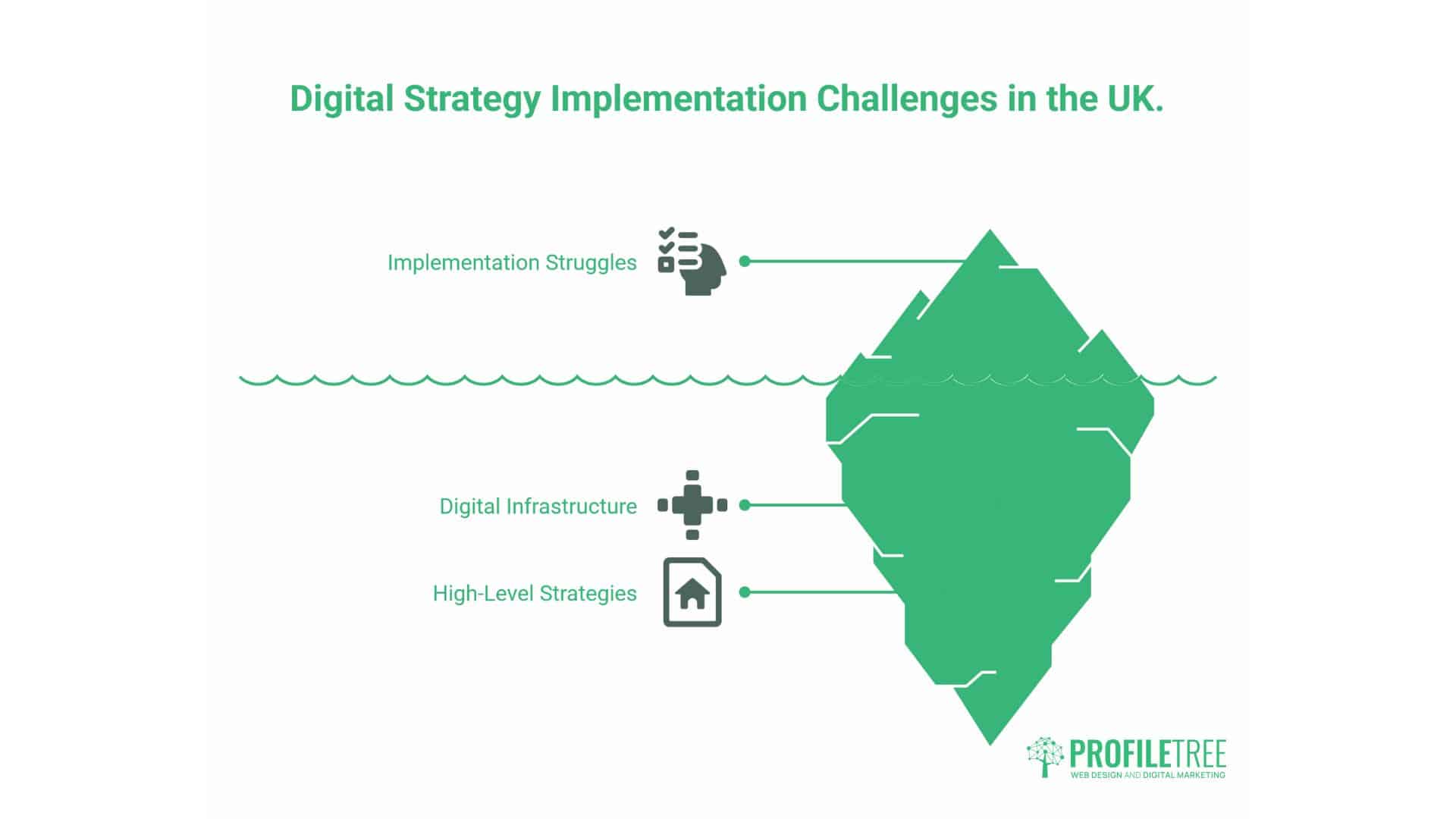
Digital infrastructure has become the primary driver of operational resilience, compliance, and competitive advantage for businesses in the UK. Yet many organisations struggle to translate high-level digital strategies into practical internal implementation.
External Connectivity Requirements
Before optimising internal servers or cloud infrastructure, audit the connectivity entering your premises. The UK’s digital landscape has undergone significant shifts, driven by the rollout of Project Gigabit and the PSTN switch-off deadline.
Businesses still relying on the Public Switched Telephone Network for analogue lines—whether for legacy systems, lift alarms, or ADSL broadband—face a hard deadline. With Openreach retiring the copper network, migrating to All-IP solutions becomes mandatory rather than optional.
This represents more than a utility upgrade—it’s an infrastructure overhaul. Legacy hardware often fails when switched to digital lines without the use of specific adapters. Conduct a comprehensive copper audit of your premises immediately rather than waiting for forced migration.
The government’s target to achieve 85% gigabit-capable coverage by 2025 has been primarily met in urban centres, but the alternative network revolution has created a fragmented market. Cities like London and Birmingham offer choices of five or more fibre providers, whilst rural areas might remain restricted to FTTC.
Don’t default to incumbent providers. In 2025, alternative networks often offer symmetric speeds at significantly lower price points than traditional leased lines—crucial for cloud backups, video conferencing, and remote team collaboration.
Internal Technology Stack
Once external connectivity is secured, focus shifts to internal architecture. The era of server rooms in cupboards has primarily come to an end for most UK SMEs, replaced by hybrid cloud and hyper-converged infrastructure.
Your technology stack should support current operations whilst enabling future growth. This means selecting scalable solutions rather than just cost-effective ones. Cloud services offer flexibility, but hybrid approaches often provide better performance for specific use cases.
Website hosting represents a critical infrastructure decision. WordPress hosting requires different considerations than hosting static sites or e-commerce platforms. Performance, security, and support quality all impact the effectiveness of your digital presence.
Data Sovereignty Considerations
Since Brexit, the location of infrastructure has become more critical than ever for UK businesses. While global cloud providers remain widespread, defaults in specific industries—particularly legal, financial, and healthcare—must scrutinise exactly where their data resides.
UK digital business infrastructure implies a need for data residency within the UK to maintain seamless compliance with the UK Data Protection Act 2018. When selecting infrastructure partners, UK-based support isn’t sufficient—verify UK-based data residency with explicit sovereignty guarantees in service level agreements.
Cybersecurity Fundamentals
Security cannot be an afterthought as your business grows. Cyber threats evolve constantly, and small businesses often become targets precisely because they invest less in security than larger enterprises.
Moving beyond basic firewall protection means implementing layered security approaches. This includes endpoint protection, regular security audits, staff training on phishing recognition, and incident response planning.
For businesses handling customer data, security breaches not only risk financial loss, but they also damage reputation and erode customer trust in ways that can take years to rebuild. Investing in proper security infrastructure proves far less expensive than dealing with the consequences of a breach.
Green IT and Sustainability
Aligning infrastructure with the UK’s Net Zero 2050 targets is increasingly influencing procurement decisions. Sustainable infrastructure isn’t merely ethical—it’s becoming a commercial necessity as supply chains demand Scope 3 emissions reporting.
Energy-efficient data centres, carbon reporting capabilities, and sustainable hardware lifecycle management all contribute to reducing environmental impact whilst often delivering cost savings through improved efficiency.
Leadership and Culture
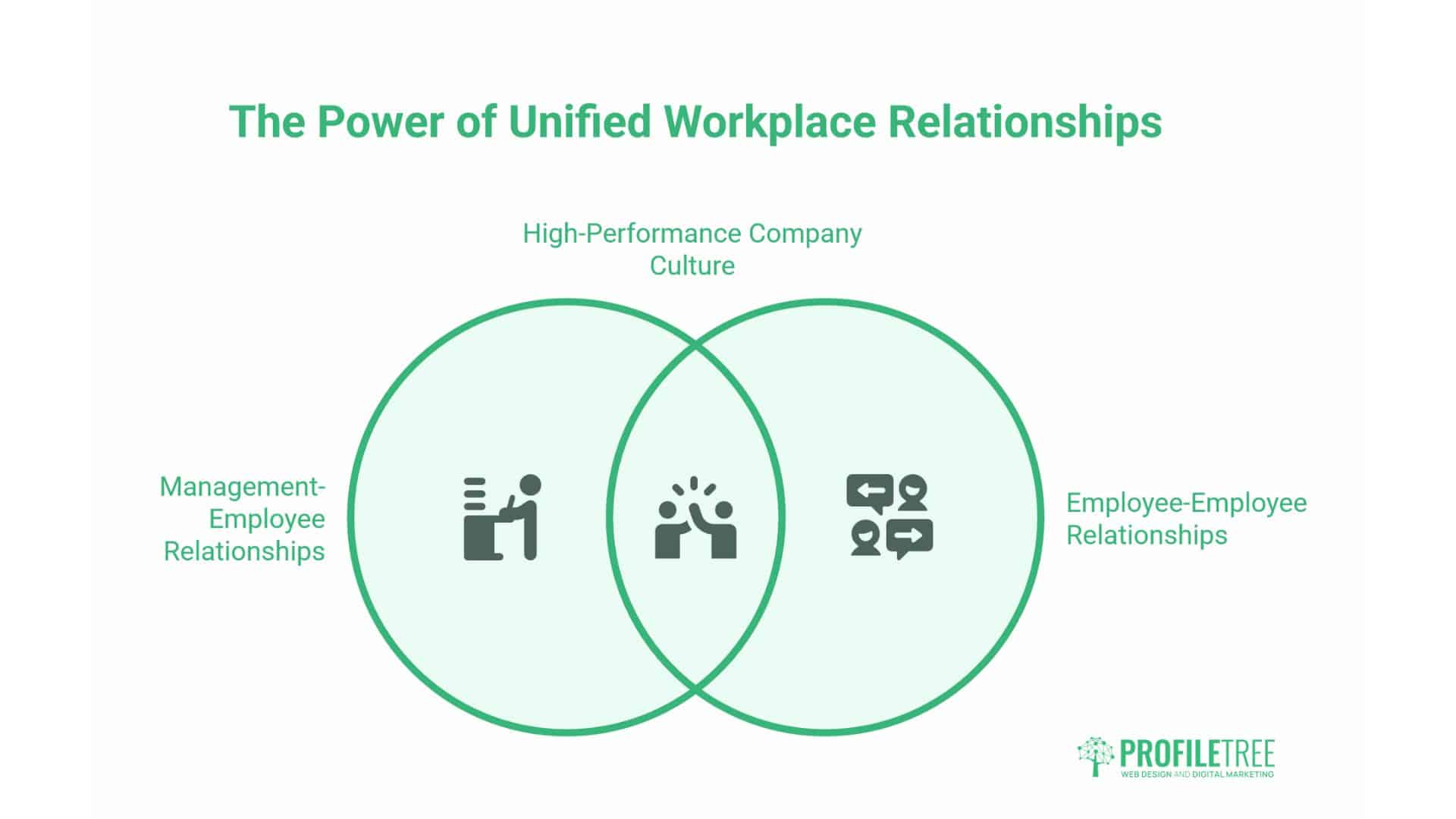
Strong relationships between management and employees, as well as among employees themselves, differentiate companies that merely function from those that excel and build strong reputations in their markets.
Developing Leadership Qualities
True business empires are built on relationships. Wise leadership drives staff to respect you and continue working for your organisation because they believe in your vision. They see themselves growing and contributing to something meaningful.
Without a clear perspective and vision, why should anyone look up to you? People need inspiration and the opportunity for positive change. A typical “boss” is someone employees leave as soon as better opportunities arise. A true leader is someone staff choose to support through challenging times rather than seeking employment elsewhere.
Developing your business environment with strong ethics and moral values, refusing to compromise these principles, surrounds you with more than just employees—you build a team of believers in your vision.
Building Business Culture
Little things matter significantly. Your logo design, tagline, and how you introduce your business all contribute to your overall brand perception and market positioning.
When IBM said “Think,” it introduced itself as a thought leader in a rapidly growing industry. Apple responded with “Think Different,” positioning itself as a game-changer, forcing other enterprises to reconsider their strategies.
Every product Apple produced reinforced this “Think Different” narrative—stories possess a powerful influence. Your business empire must develop its own culture and code, reflected through your products and everything surrounding your business operations.
How you present ideas is just as necessary as generating them. This applies whether you’re pitching to investors, creating marketing content, or producing video explanations of your services. Presentation quality influences how audiences perceive your expertise and professionalism.
Creating Unique Value Propositions
Pioneers like Steve Jobs, Mark Zuckerberg, Elon Musk, and Bill Gates share certain qualities despite their different personal approaches. Each had a unique product that later became essential to their target markets.
They observed markets and identified gaps that most people overlooked. They saw something markets lacked—something extra only they could provide. The best business empires start with innovative product or service concepts that solve real problems in novel ways.
They believed deeply in their products and their revolutionary potential. They proved correct. This belief stems from deep analysis and investigation rather than wishful thinking. None started looking for products that would make them billionaires overnight.
Money followed naturally from creating genuine value. To start your entrepreneurship journey, look for products or services to believe in—not get-rich-quick schemes. Yes, you can generate income online or build passive revenue streams, but these approaches rarely lead to building lasting business empires.
Balancing Growth with Quality
As your empire expands, maintaining quality becomes increasingly challenging. Systems and processes help keep consistency, but they cannot replace the foundational commitment to excellence that defined your early success.
This applies across all business aspects, including product quality, customer service, content production, and employee experience. Rapid growth that sacrifices quality ultimately undermines the reputation you’ve worked to build.
Consider how this applies to digital services. A website rushed to market with a poor user experience damages your brand more than a delayed launch. Video content produced without proper planning fails to engage audiences regardless of the distribution budget. SEO shortcuts may deliver short-term ranking improvements, but they risk long-term penalties.
Adapting to Market Changes
Markets evolve constantly, and businesses must adapt whilst maintaining core identity and values. This means staying informed about industry trends, emerging technologies, and changing customer expectations.
For UK businesses, particularly, staying current with digital marketing trends, SEO algorithm updates, and content preferences helps maintain competitive positioning. What worked brilliantly last year might prove ineffective today.
Regular market analysis, competitor monitoring, and customer feedback collection provide the information needed for intelligent adaptation. This doesn’t mean chasing every trend, but rather identifying which changes represent genuine shifts in customer behaviour versus temporary fads.
FAQ
How long does it take to build a business empire?
Building a sustainable business empire typically requires 5-10 years of consistent effort. The first 1-2 years focus on survival and proving your concept. Years 3-5 involve establishing market position and scaling operations. Beyond year 5, strategic expansion and market dominance become primary objectives. Timeline varies significantly based on industry, market conditions, and execution quality.
What’s the biggest mistake when scaling a business?
The most common mistake is scaling too quickly without proper infrastructure and systems. This includes inadequate cash flow management, hiring the wrong personnel, or expanding into new markets before establishing dominance in existing ones. Many businesses also neglect their digital infrastructure during growth, resulting in websites that can’t handle increased traffic or systems that limit rather than enable expansion.
How much should I invest in digital marketing?
Most growing businesses should allocate 7-12% of revenue to marketing, with digital channels receiving the majority of this budget. For companies focused on online growth, this might increase to 15-20% during expansion phases. Investment should span website development, SEO, content creation, video production, and digital advertising. Track ROI carefully and adjust allocation based on what drives actual business results.
When should I hire professional digital services?
Consider professional services when DIY approaches limit growth or quality suffers. Signs include: your website doesn’t generate leads, you struggle to maintain consistent content production, your search rankings decline, or you lack the time for strategic marketing. Professional web design, video production, and SEO services typically deliver better ROI than spending internal time on areas outside your expertise.
Taking Action on How to Build an Empire
Building a business empire remains challenging but achievable with proper strategy, consistent execution, and a willingness to adapt. The statistics on business failure shouldn’t discourage you—they should inform your approach and highlight the importance of proper planning.
Every stage of business growth presents different requirements and challenges. Taking time to analyse options and plan strategically before moving to new stages prevents costly mistakes and positions you for sustainable success.
Be attentive to feedback from customers, employees, and partners. Don’t risk everything simultaneously—strategic risk management means determining how much to risk and when, based on solid strategy rather than optimism.
Your digital presence has become fundamental to business success. Whether starting or scaling existing operations, investment in professional web design, strategic content marketing, video production, and SEO delivers measurable returns through increased visibility, improved credibility, and enhanced customer acquisition.
For businesses ready to scale, ProfileTree offers comprehensive digital services designed specifically for growth-focused organisations. From AI implementation and training to comprehensive digital transformation strategies, our team helps businesses build the infrastructure necessary for sustainable growth across Northern Ireland, Ireland, and the UK.
Begin by evaluating your current digital capabilities against your growth objectives. Identify gaps in your website performance, content strategy, or technical infrastructure. Then prioritise investments that deliver the most significant impact on your ability to attract, convert, and retain customers.
Building an empire isn’t about achieving overnight success—it’s about making consistent progress toward clearly defined goals. With proper digital infrastructure, strategic marketing, and strong leadership, your business can achieve the sustainable growth that defines true business empires.
This is classic information
Simply amazing. I hunger for more untill my business empire reaches the global level.Thanks very helpful indeed.