
Digital Marketing Consultant for UK and Ireland SMEs
Table of Contents
A digital marketing consultant gives independent strategic advice on how to grow a business online, usually working alongside your existing team rather than replacing it. For SME owners across Northern Ireland, Ireland and the UK, the harder question is rarely “what does a consultant do?” It’s whether a consultant, a full-service agency, or a fresh in-house hire is the right fit for the stage you’re at.
This guide answers that. It covers what a digital marketing consultant actually delivers, how the consultant route compares to an agency or a fractional marketing lead, realistic UK pricing, and how to brief and manage one so the work translates into leads rather than a report nobody acts on.
What a digital marketing consultant actually does
A digital marketing consultant is a strategic advisor who helps a business grow its online presence and generate measurable results through digital channels. They are not employees. They work as independent contractors or as part of an outside firm, brought in to set direction and, in many cases, to upskill the people already on your team. That last part matters more than most owners expect. A good consultant should leave your business more capable than they found it, not more dependent on them.
Most consultants work with fewer clients than a large agency does, which usually means closer attention and a sharper read of your business. They analyse your objectives, identify the online opportunities worth chasing, and map digital activity to commercial goals. Their work spans search, paid media, content and email, though many specialise heavily in one discipline rather than claiming mastery of all of them.
The role has changed over the past decade. Early consultants tended to focus on a single tactic, often search rankings or website builds. The work now sits across connected channels, because a customer rarely travels in a straight line from one ad to one purchase. They might find you through a search, read a blog post, watch a video, sign up for an email list, and convert weeks later. A consultant worth hiring understands how those touchpoints feed each other, and they should understand your customers well enough to say who buys from you and why.
Strategic advice versus tactical delivery
There is a real distinction between a consultant who tells you what to do and a team that does it. Strategic support means audits, channel selection, positioning, and measurement frameworks. Tactical delivery means building the website, managing the ad accounts, creating the content, and running the campaigns. Some consultants do both. Many do not, and that gap is exactly where SME engagements stall.
Picture a common scenario. A consultant audits a Belfast service business and concludes the site is the problem: slow, poorly structured, and invisible in terms of what actually converts. The advice is sound. But the consultant doesn’t build websites, so the owner now has a strategy document and a fresh problem, sourcing a developer who understands the SEO logic behind the recommendation. Two suppliers, two briefs, two timelines, and plenty of room for the original intent to get lost in translation. If a consultant recommends an SEO overhaul but cannot make the technical website changes it needs, the advice cannot earn its keep until someone else picks it up.
The disciplines a consultant typically covers
An experienced consultant will usually advise across several areas, even if they personally deliver only one or two. Understanding what each involves helps you judge whether a candidate genuinely knows the discipline or is repeating surface-level points.
Search engine optimisation gets a business found by the people most likely to buy. A good SEO consultant analyses the competition, identifies the keywords worth targeting, and decides how to improve visibility for terms with genuine commercial intent rather than vanity phrases that bring traffic but no enquiries. This is slower and more technical than most owners expect, and anyone promising first-page results in a fortnight is selling something other than SEO.
Pay-per-click advertising draws traffic quickly. You pay each time someone clicks, so the early work is about testing ad setups and landing pages to find a cost-effective formula before scaling spend. PPC and SEO work best as a pair: paid covers you while organic builds over time.
Social media demands consistent attention to grow a following and keep it engaged. A consultant should know which platforms actually matter for your industry rather than spreading effort thinly across all of them. For a B2B manufacturer in County Antrim, that calculation looks nothing like it does for a Dublin lifestyle brand.
Email remains one of the highest-return channels when handled properly. The craft sits in list building, segmentation, and automation, not in sending more messages to more people. A well-segmented list of 800 engaged subscribers usually outperforms a neglected list of 8,000.
Content marketing ties the rest together. Strong content feeds your blog, your social posts, your email campaigns, and increasingly your video output, since the same core idea can become an article, a short clip, and a newsletter feature. For most SMEs, the bottleneck is producing enough of it to a consistent standard, which is where content marketing support or in-house digital training earns its place.
Link building still matters, though the bar has risen. Search engines reward genuine authority signals, and a handful of relevant, credible links does more than a pile of low-quality ones. This is slow, relationship-driven work, and consultants who specialise in it tend to have strong content skills and real industry contacts.
Consultant vs agency vs fractional marketing lead
Choosing between these three comes down to budget, the capability you already have in-house, and the level of hands-on delivery you need alongside the thinking. Most owners frame it as a consultant versus agency choice, but a third option has grown quickly and deserves a place in the decision.
| Option | What you get | Best for | Watch out for |
|---|---|---|---|
| Independent consultant | Strategy, direction, specialist advice | Focused projects, businesses with people who can execute | Limited or no delivery capacity |
| Fractional marketing lead | Part-time senior leadership, ongoing ownership | Growing SMEs needing direction but not a full-time hire | Availability is split across clients |
| Full-service agency | Strategy plus implementation under one roof | Growing SMEs need direction but not a full-time hire | Account layers can dilute direct contact |
A consultant suits you when the problem is direction, and you already have people who can act on it. You buy expertise and an outside perspective, and you handle the doing. The risk is the gap described above: a plan with no delivery to back it up.
A fractional marketing lead is the option many SMEs miss. This is a senior marketer, often someone who has held a head of marketing or marketing director role, working part-time across a small number of businesses. You get strategic ownership and accountability without a full-time director’s salary, which, for a growing SME, can be the difference between affordable senior input and none at all. The trade-off is availability: their week is split, so they suit businesses that need steady direction rather than daily firefighting.
A full-service digital agency makes sense when you need strategy and delivery together, because the alternative is coordinating a consultant, a web developer, a content producer, and a video team yourself. The honest downside is that larger agencies sometimes put account-management layers between you and the people doing the work, so ideas can lose something in the relay. The better integrated agencies keep that chain short.
ProfileTree, the Belfast-based digital agency, works in this combined way: strategy, web design and development, SEO, content, video production, animation, and AI implementation sit together, so a recommendation can move into execution without a new vendor search each time. The point of an integrated model is not that it suits every business; it’s that it removes the coordination tax that catches owners out when a consultant’s advice requires four different specialists.
When is the right time to hire a consultant?
Bring in outside help when growth has stalled, and you cannot pinpoint why, when you are about to enter a new market, or when you have budget to invest but no clear plan for spending it well. A consultant is also worth considering when you suspect your marketing is busy but not effective, plenty of activity, little to show for it, and you need someone to tell you which half of the effort is wasted.
The honest counterpoint: consulting is collaborative, and the value rises with how much groundwork you have already laid. The better your starting position, the more a consultant can build on it. Bringing someone in to fix fundamentals you could have sorted yourself is an expensive way to do basic housekeeping.
Signs your business is ready
You are likely ready when you have a clear sense of who your customer is, when your website and analytics are working well enough to give a consultant real data to read, and when you can commit time internally to act on what they recommend. If nobody on your side has the hours to implement a plan, a consultant will not fix that; you need delivery capacity, whether in-house or outsourced.
What to sort before you spend
You can cover a fair amount yourself first. Make sure your website is search-engine friendly and that analytics are tracking properly, since a consultant’s first job is reading your data, and missing data slows everything down. Run basic market research, even informal polls with your existing audience, to sharpen your sense of direction. Keep a business blog ticking over if you can, because consistent content gives any future strategy something to work with. Doing this groundwork means you pay a consultant to advance your marketing, not to set up the basics. If hiring a consultant feels premature, building internal skills through digital training is often the more sensible first step.
What does a digital marketing consultant cost in the UK
UK day rates vary widely by seniority and specialism, and Northern Ireland and regional rates generally sit below central London. Some consultants charge by the hour, others by the day, and ongoing relationships often move to a monthly retainer once the scope settles. A junior or generalist sits at the lower end, an experienced specialist in a competitive discipline sits considerably higher, and a senior strategist with a strong track record commands more again.
Treat the headline rate as only part of the picture. A higher day rate over a tight, well-scoped project can cost less in total than a cheaper rate spread across months of vague work. The expensive engagements are rarely the ones with the highest rate; they’re the ones with no defined endpoint, where hours accumulate without deliverables. Ask for a fixed scope and a clear set of outputs before agreeing to anything open-ended, and be specific about what “done” looks like.
Retainers suit ongoing relationships where the consultant carries continuing responsibility, such as a fractional lead managing your marketing month to month. Project rates apply to defined pieces of work with a beginning and an end, such as an audit, a strategy build, or a campaign launch. Where a quote feels hard to compare against another, the examples in a structured marketing audit give a sense of what a thorough piece of diagnostic work should actually contain, which makes it easier to judge whether you are being quoted for real depth or a light skim.
How to vet a consultant: questions that matter
Vague goals like “increase our online presence” make it impossible to judge whether a consultant is any good, because there is nothing to measure them against. Set specific, measurable objectives first, then test candidates against them. Aim for targets you can put a number on: a percentage lift in qualified leads, a reduction in cost per acquisition, page-one rankings for a defined set of commercial terms.
Ask how they would audit your current position before proposing anything. Be wary of anyone who recommends tactics like “let’s do more on TikTok” before they have looked at your data. Strategy should precede spend, and a consultant who reaches for tactics before diagnosis is guessing. The audit is where genuine expertise shows, because it forces them to engage with your specific situation rather than recite a generic playbook.
Ask about the UK and Ireland market experience. US-centric approaches miss local search behaviour, the realities of regional buying, and the compliance obligations that apply here. A consultant working with UK and Irish businesses should be comfortable with GDPR and with PECR, the Privacy and Electronic Communications Regulations that govern email marketing, cookies, and electronic contact. Getting this wrong is not a minor detail; it carries real legal and reputational risk, and a consultant who waves it away is a warning sign.
Finally, ask to see real examples of their work and the outcomes those projects produced. Anyone can describe a strategy; fewer can point to results. ProfileTree’s own project portfolio is the kind of evidence worth asking any candidate to match: actual work, for actual businesses, with a clear sense of what was delivered.
The onboarding roadmap: the first 90 days
Most consultant relationships fail not at hiring but at handover, when a strategy document lands and nothing happens next. The report sits on a shelf, the momentum fades, and six months later the owner concludes that consultants don’t work. A sensible first quarter avoids that by building delivery into the plan from the start.
Month one is the audit and deep dive: data review, customer insight, competitor analysis, and a clear read of where you stand. This is the foundation, and rushing it produces a strategy built on assumptions rather than evidence. Expect the consultant to request access to your analytics, ad accounts, and sales data, and to spend time understanding how your business actually makes money.
Month two is strategy and channel selection, deciding where effort and budget go and why. The output should be a plan you understand and agree with, not a dense document full of jargon. If you cannot explain the strategy back in plain terms, it isn’t finished.
Month three is execution and early optimisation, when the plan starts producing activity you can measure. Set the timeframe and the expected outputs at the start so everyone knows what the first quarter should deliver. The businesses that get the most from a consultant treat the relationship as an ongoing partnership rather than a one-off report, reviewing and adjusting as real data comes in.
Where execution needs a capability your team does not yet have, that is the decision point: build the skills internally through digital training, or hand delivery to a team that can run it. Increasingly, SMEs are also using AI tools to handle reporting, content drafting, and campaign analysis that used to swallow days of manual work. There is no wrong answer here, only the one that fits your resources and how much you want to keep in-house.
Measuring ROI: how to tell if it’s working
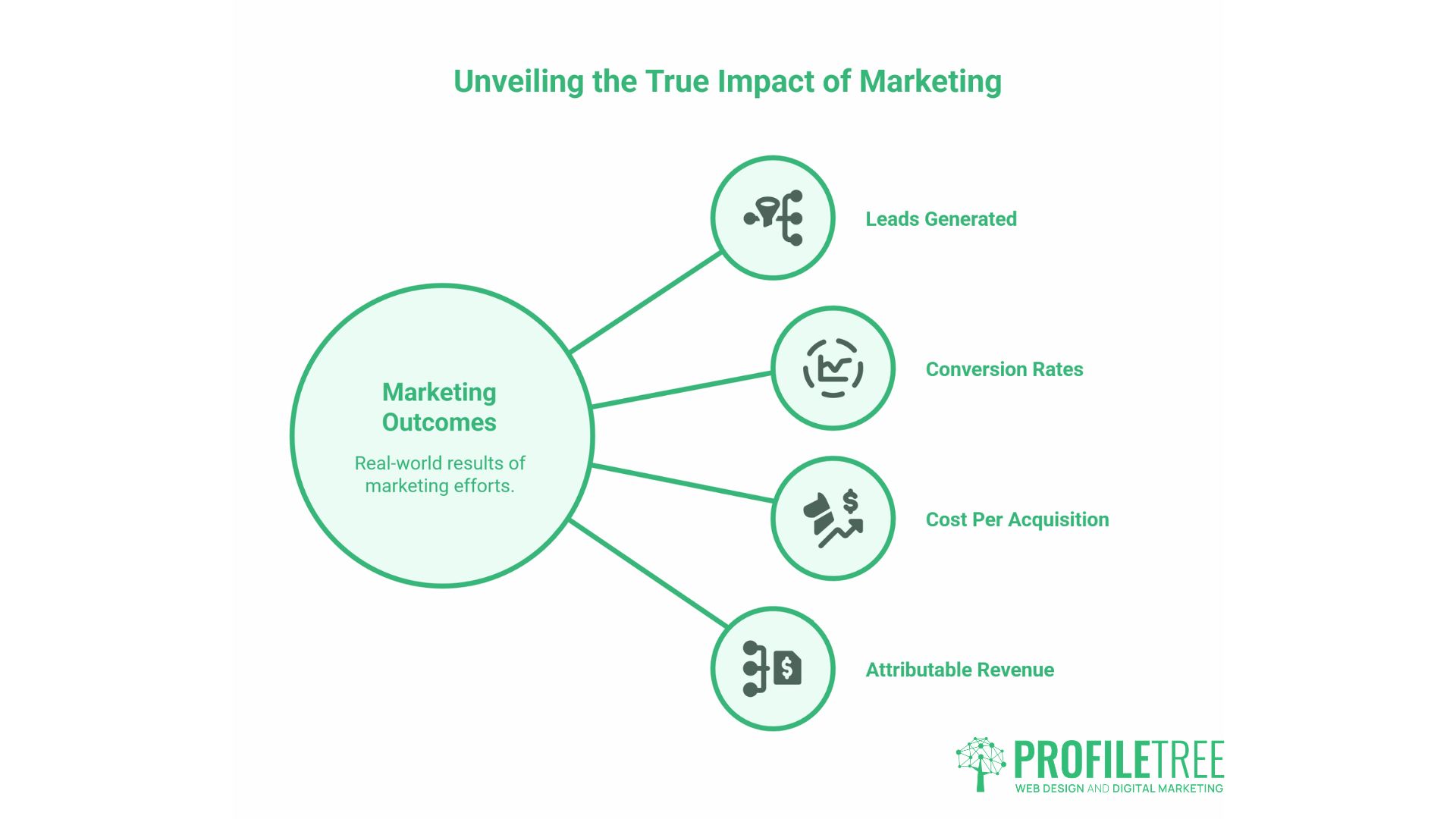
Judge the work on business outcomes, not vanity metrics. Followers and impressions feel good and rarely pay wages. The metrics that matter connect marketing activity to money: leads generated, conversion rates, cost per acquisition, and revenue you can attribute to the work.
Well-run digital marketing typically aims to return several pounds in revenue for every pound invested, though the figure varies widely by industry, competition, and execution quality, so treat any fixed multiplier with caution. E-commerce businesses tend to see faster, more trackable returns because the path to purchase is short and measurable. B2B and service businesses often run longer sales cycles, so the early focus shifts to lead quality and cost per acquisition rather than direct sales. Many UK businesses report meaningful improvements in lead quality when they move from scattered tactics to a coordinated strategy, simply because effort stops leaking across channels that were never going to convert.
The longer-term return sits in assets you keep: search rankings, an email list, a content library, and growing brand recognition. These compounds. A blog post that ranks well keeps bringing visitors for years; an email list keeps generating sales every time you use it. Early investment in these assets tends to look better in hindsight than it does at the time.
“The metric that matters is pipeline, not applause,” says Ciaran Connolly, founder of ProfileTree. “A consultant who reports on followers instead of customer acquisition cost is reporting on the wrong thing.”
Tracking this properly means proper measurement from day one, with baseline figures recorded before the work starts, so improvement can be shown rather than claimed. The principles in this guide to maximising digital marketing ROI apply whether the work is run by a consultant, an agency, or your own team, and they’re worth understanding before you commission anyone, because they tell you what good reporting should look like.
Conclusion
A digital marketing consultant is worth hiring when you need direction and a clear path to act on it. The choice between a consultant, a fractional lead, and a full-service agency turns on one question: who executes the plan once it exists? For SMEs across Northern Ireland, Ireland, and the UK seeking strategy and delivery in one place, ProfileTree combines advisory services with web, SEO, content, and video production under one roof. To talk through which route fits your business, book a strategy session.
FAQs
How much does a digital marketing consultant cost in the UK?
Rates vary widely by experience and specialism, and regional UK and Northern Ireland rates are usually lower than London rates. Many ongoing relationships move to a monthly retainer once the scope is agreed.
What is the difference between a consultant and an agency?
A consultant provides strategy and advice; an agency provides strategy plus the team to execute it. The right choice depends on whether you have people who can implement the plan.
Do I need a consultant if I already have a marketing manager?
Often yes. A consultant can give your manager senior direction, a second perspective, and specialist input without the cost of another permanent hire.
How long should I hire a consultant for?
Most engagements run three to six months for a defined project, or ongoing, where you need fractional leadership rather than a one-off piece of work.