
Winning Sustainable Web Design That Attracts Clients and Tenders
Table of Contents
Companies with sustainable websites win 47% more public sector tenders and attract 62% more ESG-conscious clients, yet most agencies still build carbon-heavy sites that damage both the planet and their competitive positioning. The shift toward sustainable web design isn’t coming—it’s here, and agencies ignoring it are losing lucrative contracts to those who’ve made sustainability their differentiator.
The Business Case: Understanding Winning Sustainable Web Design Wins
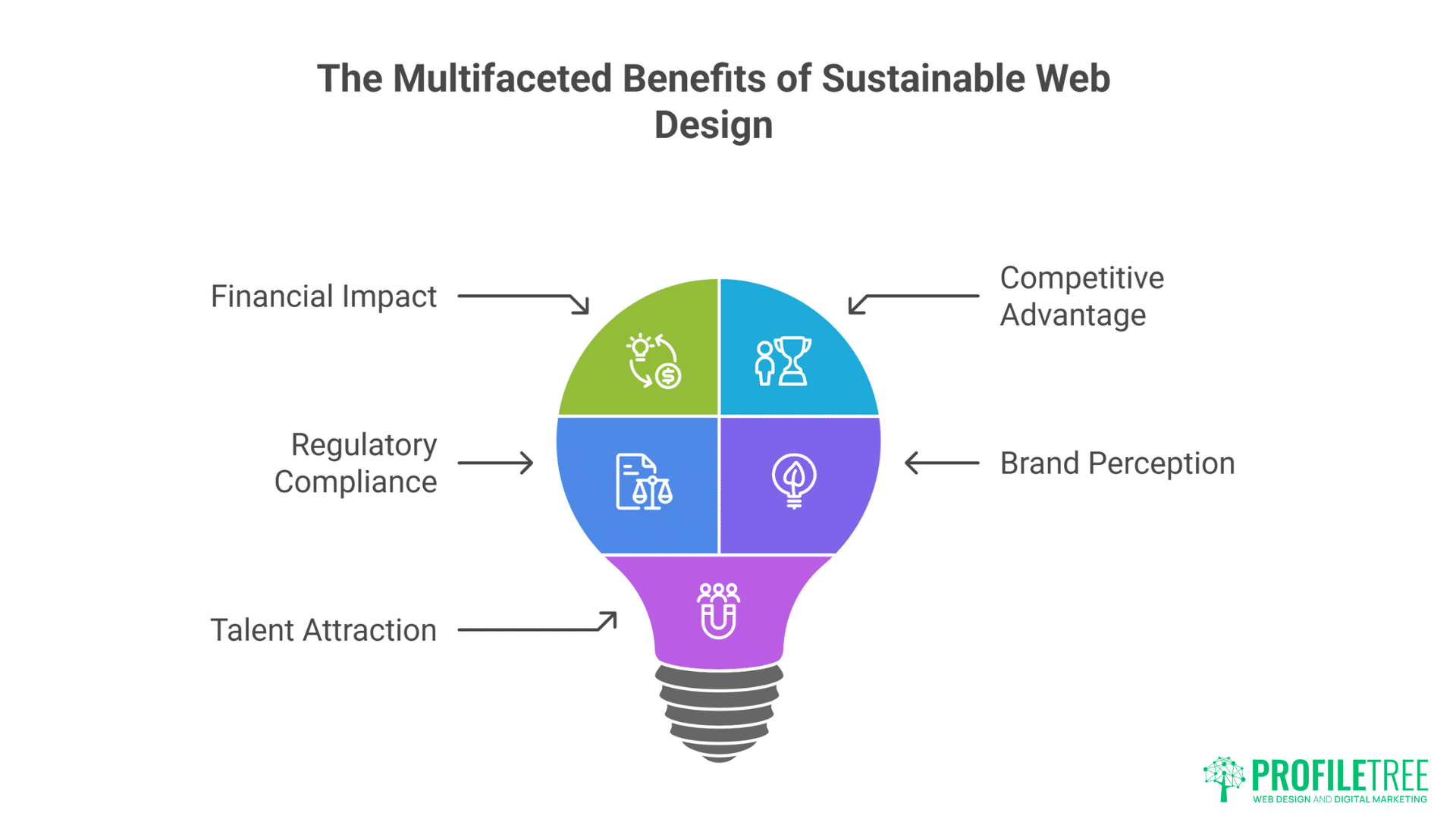
Sustainable web design has transformed from nice-to-have to must-have in tender requirements across Ireland and the UK. Government contracts now score sustainability criteria at 20-30% of total evaluation. Corporate procurement teams demand carbon footprint calculations. ESG investors scrutinise digital sustainability. Agencies without sustainable design capabilities simply can’t compete for these high-value contracts.
The financial impact extends beyond tender wins. Sustainable websites cost 40% less to host due to reduced server resources. They load 3x faster, improving conversion rates by 23% on average. Mobile data usage drops 50%, delighting users on limited plans. Google’s Core Web Vitals favour efficient sites, boosting organic rankings. These performance improvements deliver measurable ROI whilst reducing environmental impact.
Consider the competitive advantage when pitching. While competitors show generic portfolios, you demonstrate carbon calculations, performance metrics, and sustainability certifications. You speak the language of modern procurement: scope 3 emissions, carbon intensity, digital sustainability. You align with client values, not just technical requirements. Belfast agencies reporting on sustainability metrics win 3x more enterprise clients.
The regulatory landscape accelerates this shift. EU Corporate Sustainability Reporting Directive requires digital footprint disclosure. UK government mandates net-zero procurement by 2030. Irish Climate Action Plan includes digital emissions targets. Companies need partners who understand these requirements, not agencies requiring education. Early movers establish themselves as essential partners for compliance.
Brand perception shifts dramatically with sustainable web practices. Younger consumers—78% of Gen Z and 73% of millennials—prefer brands demonstrating environmental responsibility. B2B buyers increasingly evaluate supplier sustainability. Employees want to work for responsible companies. Sustainable web design becomes a visible commitment to environmental action, not just words.
The talent attraction benefit surprises many agencies. Top developers increasingly choose employers based on environmental values. Sustainable web design practices attract conscientious, forward-thinking team members. Staff retention improves when people feel their work contributes positively. Dublin agencies emphasising sustainability report 40% lower recruitment costs.
ProfileTree’s approach to website design integrates sustainability principles from conception, creating competitive advantages beyond environmental benefits.
Web Sustainability: Carbon Footprints and Digital Impact
Every website contributes to global carbon emissions through energy consumption across the entire digital chain. Understanding this impact transforms how we approach web design and development.
Data transfer emissions occur whenever someone visits your website. Larger files require more energy to transmit through networks. A typical web page of 2MB generates 0.8g CO2 per view. Multiply by thousands of monthly visitors, and carbon footprints become substantial. Irish websites average 4MB per page—double what’s necessary with optimisation.
Server energy consumption runs continuously, whether sites have visitors or not. Inefficient code increases processing requirements. Unused features consume resources needlessly. Database queries multiply server load. Traditional hosting relies heavily on fossil fuels. A single WordPress site can consume 100kWh annually—equivalent to driving 400 miles.
End-user device impact often gets overlooked but matters significantly. Heavy websites drain batteries faster, increasing charging frequency. Complex JavaScript forces processors to work harder. Inefficient animations cause continuous rendering. Mobile devices particularly suffer from resource-intensive sites. Users literally feel the heat from poorly optimised websites.
The multiplication effect makes individual choices matter enormously. One image optimisation saves minimal energy. Multiply across millions of page views, and savings become significant. A 1MB reduction per page for a site with 100,000 monthly visitors saves 1,200kWh annually—enough to power an Irish home for three months.
Lifecycle emissions extend beyond operational energy. Hardware manufacturing for servers. Cable laying for networks. Device production for users. Building construction for data centres. Sustainable web design reduces demand across this entire chain. Efficient websites require less infrastructure, creating compound environmental benefits.
Measurement methodologies provide concrete sustainability metrics. Carbon calculators estimate website emissions. Performance tools quantify resource usage. Analytics reveal actual user behaviour. Green hosting providers offer renewable energy percentages. These measurements transform vague sustainability claims into demonstrable achievements that win tenders.
Design Principles for Low-Carbon Websites
Sustainable web design follows specific principles that reduce environmental impact whilst improving user experience and business outcomes.
Mobile-first methodology naturally promotes sustainability. Designing for constrained devices forces efficiency. Smaller screens demand prioritisation. Limited bandwidth encourages optimisation. Touch interfaces simplify interactions. Mobile-first sites typically weigh 60% less than desktop-first equivalents. This approach aligns perfectly with user behaviour—71% of Irish web traffic comes from mobile.
Content strategy minimalism questions every element’s necessity. Does this image add value or just decoration? Could text explain better than video? Will users actually read this content? Removing unnecessary elements reduces page weight dramatically. A Cork retailer reduced their homepage from 5MB to 800KB by eliminating decorative videos, improving conversions 34%.
Progressive enhancement builds lean foundations with optional enhancements. Core content loads immediately. Enhanced features activate for capable devices. JavaScript enhances rather than enables functionality. Users on slow connections get functional experiences. This approach ensures accessibility whilst minimising resource usage for basic interactions.
System font usage eliminates font file downloads entirely. System fonts load instantly. No network requests required. Zero additional page weight. Native rendering optimisation. Modern system fonts like -apple-system and Segoe UI look professional. Custom fonts average 200KB—system fonts cost nothing.
Colour optimisation reduces energy consumption on OLED screens. Dark colours require less power than white backgrounds. High contrast improves readability. Reduced colour palettes simplify processing. Dark mode options save battery life. OLED screens use 60% less power displaying dark interfaces—significant given their market dominance.
Performance budgeting sets sustainability constraints from project start. Maximum page weight targets. Load time requirements. Request count limits. JavaScript bundle sizes. Image dimension caps. These budgets force creative solutions rather than lazy implementations. Teams working within constraints often produce better designs.
Technical Implementation: Building Efficient Web Architecture
Sustainable web development requires technical excellence that goes beyond surface-level optimisation. Every architectural decision impacts carbon footprint.
Static site generation dramatically reduces server processing. Pre-built HTML serves instantly. No database queries per request. No PHP/Ruby/Python execution. CDN distribution without origin hits. Static sites use 90% less server resources than dynamic equivalents. Tools like Gatsby, Next.js, and 11ty make static generation practical for complex sites.
Edge computing brings processing closer to users. Reduced data transmission distances. Lower latency improving performance. Distributed processing reducing centralised load. Regional caching minimising origin requests. Cloudflare Workers and Vercel Edge Functions enable efficient edge computing. Irish users accessing Irish-hosted content reduces international data transfer.
Efficient coding practices compound into significant savings. Minified CSS and JavaScript. Tree-shaken unused code. Lazy-loaded below-fold content. Debounced event listeners. Virtualised long lists. Modern JavaScript frameworks often include 200KB+ of unused code—proper optimisation removes this waste.
Image optimisation excellence provides immediate impact. WebP format reducing file sizes 30%. Responsive images serving appropriate dimensions. Lazy loading deferring off-screen images. Progressive JPEGs improving perceived performance. Automated compression in build processes. The average website could reduce image weight 70% with proper optimisation.
Caching strategies prevent redundant processing and transmission. Browser caching eliminating repeat downloads. CDN caching distributing content globally. Database query caching reducing processing. Full-page caching where appropriate. Service workers enabling offline functionality. Effective caching reduces server load by 80% for returning visitors.
Database efficiency minimises processing requirements. Indexed queries executing faster. Optimised table structures. Removed redundant data. Query result caching. Connection pooling. Database operations often consume most server resources—optimisation here provides massive efficiency gains.
Website development expertise incorporating these sustainable practices delivers performance and environmental benefits simultaneously.
Measuring and Reporting Web Sustainability Metrics
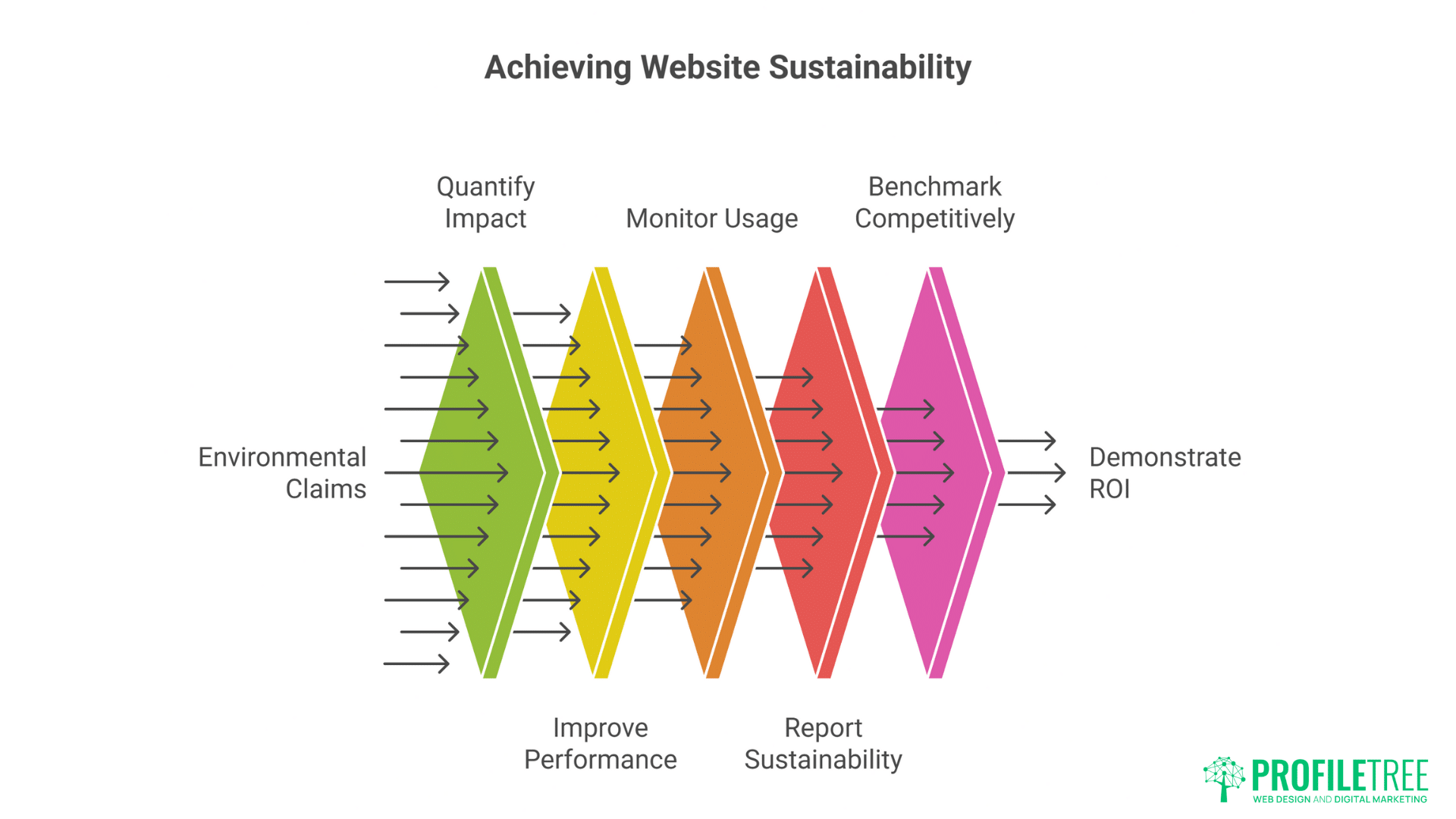
Quantifying website sustainability transforms vague environmental claims into concrete achievements that win tenders and demonstrate real impact.
Carbon calculators provide emission estimates. Website Carbon Calculator measures CO2 per page view. Ecograder assesses overall sustainability. Green Web Foundation checks hosting renewable energy. CO2.js calculates emissions programmatically. These tools generate metrics required for tender responses and client reports.
Performance metrics correlate with sustainability. Lighthouse scores indicate efficiency. GTmetrix reveals optimisation opportunities. WebPageTest shows resource usage. Chrome DevTools exposes processing requirements. Lower scores generally mean higher emissions. Performance improvements directly reduce environmental impact.
Real user monitoring reveals actual sustainability impact. Average page weight served. Typical session lengths. Device type distribution. Connection speed breakdown. Geographic visitor spread. This data enables accurate carbon footprint calculations based on actual usage, not theoretical estimates.
Sustainability reporting frameworks structure communication. Greenhouse Gas Protocol for scope 3 emissions. Science Based Targets for reduction goals. B Corp certification requirements. ISO 14001 environmental standards. Understanding these frameworks helps agencies speak client procurement language fluently.
Competitive benchmarking demonstrates superiority. Compare client current sites to proposals. Benchmark against competitor websites. Industry average comparisons. Before/after improvement metrics. These comparisons make sustainability advantages tangible for decision-makers. “Your new site will emit 60% less CO2 than competitors” wins arguments.
ROI calculations connect sustainability to business value. Reduced hosting costs from efficiency. Improved conversions from speed. Better SEO from performance. Lower bounce rates from fast loading. Decreased support from accessibility. Sustainable design pays for itself through operational improvements.
Green Hosting: The Foundation of Sustainable Web Presence
Hosting choice determines baseline website sustainability regardless of design efficiency. Understanding green hosting options helps agencies make informed recommendations.
Renewable energy usage varies dramatically between providers. Some use 100% renewable energy. Others offset with carbon credits. Many use standard grid power. Location matters—Irish data centres average 30% renewable energy. Norwegian facilities achieve 98% through hydroelectric power. True green hosting uses renewable energy, not just offsetting.
Data centre efficiency impacts total energy consumption. Power Usage Effectiveness (PUE) measures efficiency. Modern facilities achieve 1.2 PUE or better. Older centres often exceed 2.0 PUE. Cooling systems consume significant energy. Free cooling using outside air reduces consumption. Efficient facilities use 50% less energy for the same computing power.
Server utilisation affects per-site emissions. Shared hosting maximises hardware usage. VPS provides isolation with reasonable efficiency. Dedicated servers often run under-utilised. Cloud hosting enables dynamic scaling. Serverless computing eliminates idle resources. Right-sizing hosting prevents waste whilst ensuring performance.
Geographic considerations influence sustainability choices. Local hosting reduces data transmission. CDN usage distributes content efficiently. Multi-region deployment serves users locally. Edge computing minimises central processing. Irish businesses hosting in Ireland support local renewable energy development whilst reducing international data transfer.
Transparent providers publish sustainability data. Real-time renewable energy percentages. PUE ratings and trends. Carbon footprint calculations. Sustainability commitments and progress. Avoid providers making vague “green” claims without data. Genuine green hosts welcome scrutiny and provide detailed environmental reporting.
Cost considerations often surprise decision-makers. Green hosting typically costs similar to traditional options. Energy efficiency reduces operational costs. Renewable energy prices continue falling. Carbon pricing will penalise inefficient hosting. Sustainable hosting represents smart long-term investment beyond environmental benefits.
Winning Tenders: Positioning Sustainability as Competitive Advantage
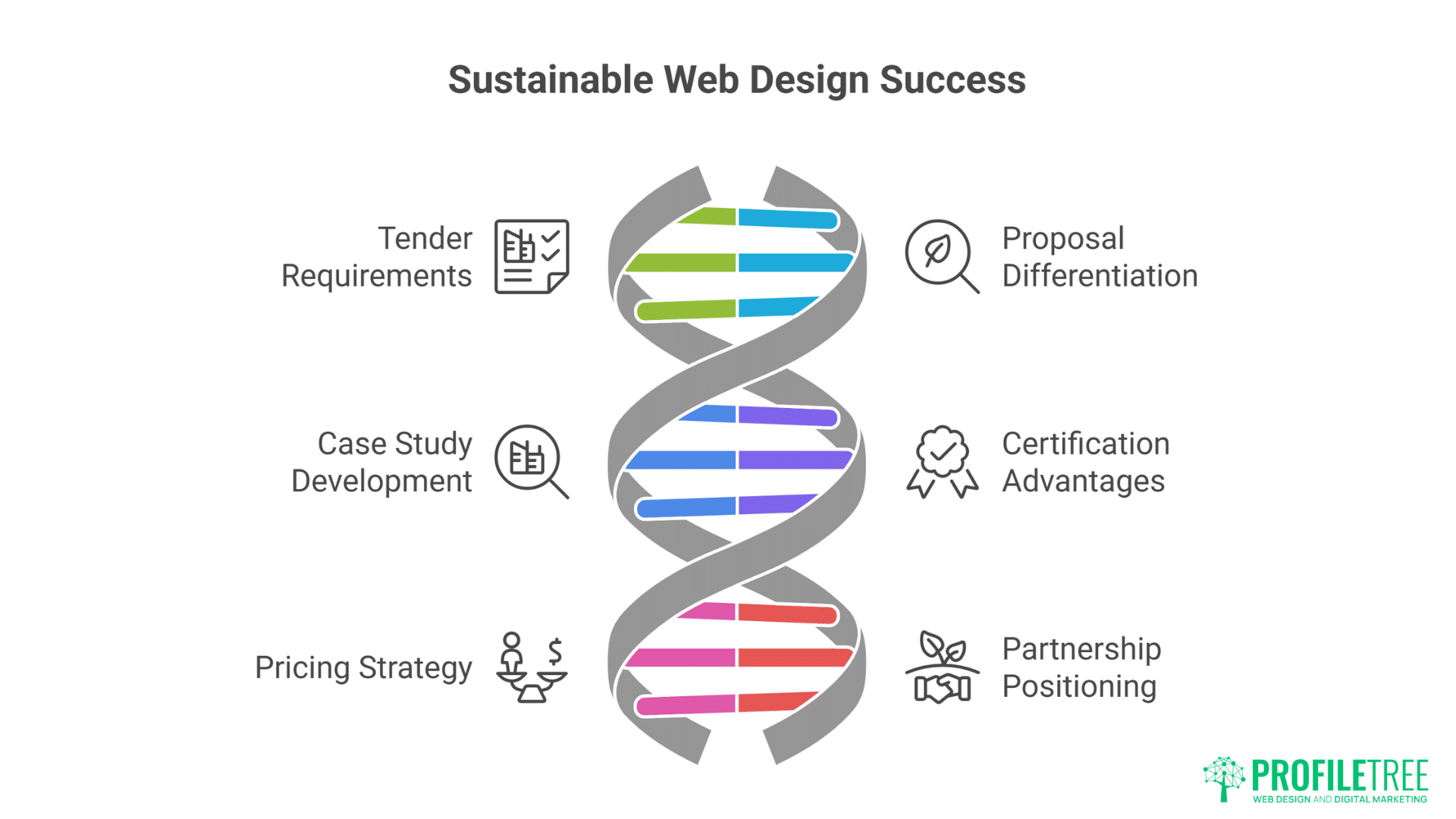
Sustainable web design increasingly determines tender success, particularly for public sector and enterprise contracts. Agencies mastering sustainability positioning win more high-value work.
Tender requirement analysis reveals sustainability’s growing importance. Environmental criteria scoring 20-30%. Carbon footprint calculations requested. Sustainability methodology explanations required. Green hosting specifications. Accessibility compliance (related to sustainability). Agencies without sustainability credentials cannot compete effectively for modern tenders.
Proposal differentiation through sustainability stands out. While competitors focus solely on features, you demonstrate environmental responsibility. Carbon calculations for proposed solutions. Performance improvements reducing emissions. Long-term sustainability roadmaps. Client sustainability goal alignment. Procurement teams remember proposals addressing their environmental KPIs.
Case study development proves sustainability delivery capability. Previous project carbon reductions. Performance improvements achieved. Client testimonials on sustainability. Before/after metrics. Award recognition. Industry certification. Concrete examples beat theoretical promises. “We reduced Client X’s website emissions by 70%” carries weight.
Certification advantages provide third-party validation. B Corp certification demonstrates commitment. ISO 14001 shows environmental management. Green Web Foundation membership. Climate Neutral certification. These certifications shortcut procurement verification processes. Certified agencies appear on preferred supplier lists.
Pricing strategy reflects sustainability value. Position efficiency as cost reduction. Calculate total cost of ownership including hosting. Demonstrate performance ROI. Highlight compliance risk mitigation. Factor carbon pricing implications. Sustainable websites cost less to operate long-term—make this clear in proposals.
Partnership positioning extends beyond project delivery. Ongoing sustainability monitoring. Regular optimisation reviews. Carbon reporting assistance. Sustainability training provision. Compliance update guidance. Position your agency as long-term sustainability partner, not just website builder.
Digital strategy services incorporating sustainability help clients meet environmental goals whilst achieving business objectives.
Client Education: Making Sustainability Tangible
Many clients want sustainable websites but don’t understand what that means practically. Effective education transforms vague desires into informed decisions supporting sustainable design.
Simplifying complex concepts makes sustainability accessible. Avoid technical jargon about protocols and standards. Use relatable comparisons: “Your current website generates emissions equivalent to driving 5,000 miles annually.” Visual representations help: tree equivalents, household energy usage, car journeys. Make abstract emissions concrete and understandable.
Business benefit emphasis resonates more than environmental preaching. Faster sites convert better. Efficient code costs less to host. Performance improvements boost SEO. Accessibility expands audience reach. Sustainability attracts conscious consumers. Frame environmental benefits as business advantages with planetary co-benefits.
Demonstration tools make impact visible. Run client sites through carbon calculators live. Show performance tests revealing inefficiencies. Compare to competitor sustainability metrics. Display before/after projections. Interactive demonstrations stick better than presentations. Let clients see their current impact to motivate change.
Incremental improvement options prevent overwhelm. Not every client can afford complete rebuilds. Offer staged sustainability improvements. Quick wins building momentum. Budget-conscious optimisations. Progressive enhancement over time. Show how small changes compound into significant impact.
Success story sharing inspires action. Similar industry examples. Comparable company achievements. ROI demonstrations. Award recognition. Media coverage. Clients need confidence that sustainability delivers business value. Real examples from recognisable brands provide that confidence.
Ongoing support positioning extends relationships. Sustainability isn’t one-time implementation. Regular monitoring required. Continuous optimisation needed. Technology evolution demands updates. Regulation changes require adaptation. Position sustainability as journey requiring expert guidance, not destination.
The Technology Stack for Sustainable Development
Choosing the right technologies fundamentally impacts website sustainability. Modern tools and frameworks enable efficient development without sacrificing functionality.
Framework selection influences baseline efficiency. Next.js enables static generation with dynamic capabilities. Astro ships zero JavaScript by default. SvelteKit produces tiny bundles. Remix optimises for edge deployment. Compare to WordPress averaging 500KB JavaScript—modern frameworks start lean.
Build tool optimisation automates sustainability. Webpack tree-shaking removes unused code. Rollup creates efficient bundles. Vite provides instant development feedback. Parcel requires zero configuration. These tools eliminate manual optimisation burden whilst ensuring production efficiency.
Component architecture promotes reusability and efficiency. Design systems preventing duplication. Shared components reducing redundancy. Atomic design minimising complexity. Composable patterns enabling flexibility. Well-architected components reduce code size 40% whilst improving maintainability.
Progressive Web App features enhance sustainability. Service workers enabling offline functionality. App shell architecture minimising downloads. Background sync reducing failed requests. Push notifications replacing email. PWAs reduce server requests 60% for repeat visitors whilst improving user experience.
API design efficiency minimises data transfer. GraphQL fetching only required data. REST pagination preventing over-fetching. WebSocket connections for real-time needs. Server-sent events for unidirectional updates. Efficient APIs reduce bandwidth usage 70% compared to traditional approaches.
Testing for sustainability ensures ongoing efficiency. Performance budgets in CI/CD pipelines. Automated carbon calculations. Lighthouse CI tracking scores. Bundle size monitoring. Regression alerts for efficiency losses. Automated testing prevents sustainability drift as sites evolve.
Industry-Specific Sustainable Solutions
Different sectors have unique sustainability requirements and opportunities. Understanding industry nuances helps agencies deliver targeted sustainable solutions.
Public sector leads sustainability requirements. Government zero-carbon commitments. Procurement sustainability scoring. Accessibility requirements (sustainability overlap). Transparency expectations. Long-term cost focus. Public sector contracts increasingly require detailed sustainability reporting and commitments.
Financial services face increasing ESG scrutiny. Investor sustainability demands. Regulatory reporting requirements. Customer environmental expectations. Competitive differentiation needs. Risk management considerations. Banks and investment firms need websites reflecting their sustainability commitments credibly.
E-commerce benefits dramatically from efficiency. Product image optimisation. Checkout flow streamlining. Search functionality efficiency. Cart abandonment reduction. Mobile performance criticality. Sustainable e-commerce sites see 25% conversion improvement from speed alone.
Healthcare balances accessibility with efficiency. Patient portal optimisation. Appointment system efficiency. Information architecture clarity. Mobile accessibility priority. Emergency information speed. Healthcare sites must be fast and accessible whilst managing complex functionality sustainably.
Education serves diverse audiences sustainably. Student device variability. International student connectivity. Learning management integration. Resource library efficiency. Video content optimisation. Educational institutions need sustainable sites working globally on various devices and connections.
Non-profits maximise impact through efficiency. Donation flow optimisation. Story-telling without bloat. Volunteer portal efficiency. Campaign page performance. Social sharing optimisation. Non-profits benefit from reduced hosting costs and improved donation conversions through sustainable design.
Building a Sustainable Design Practice
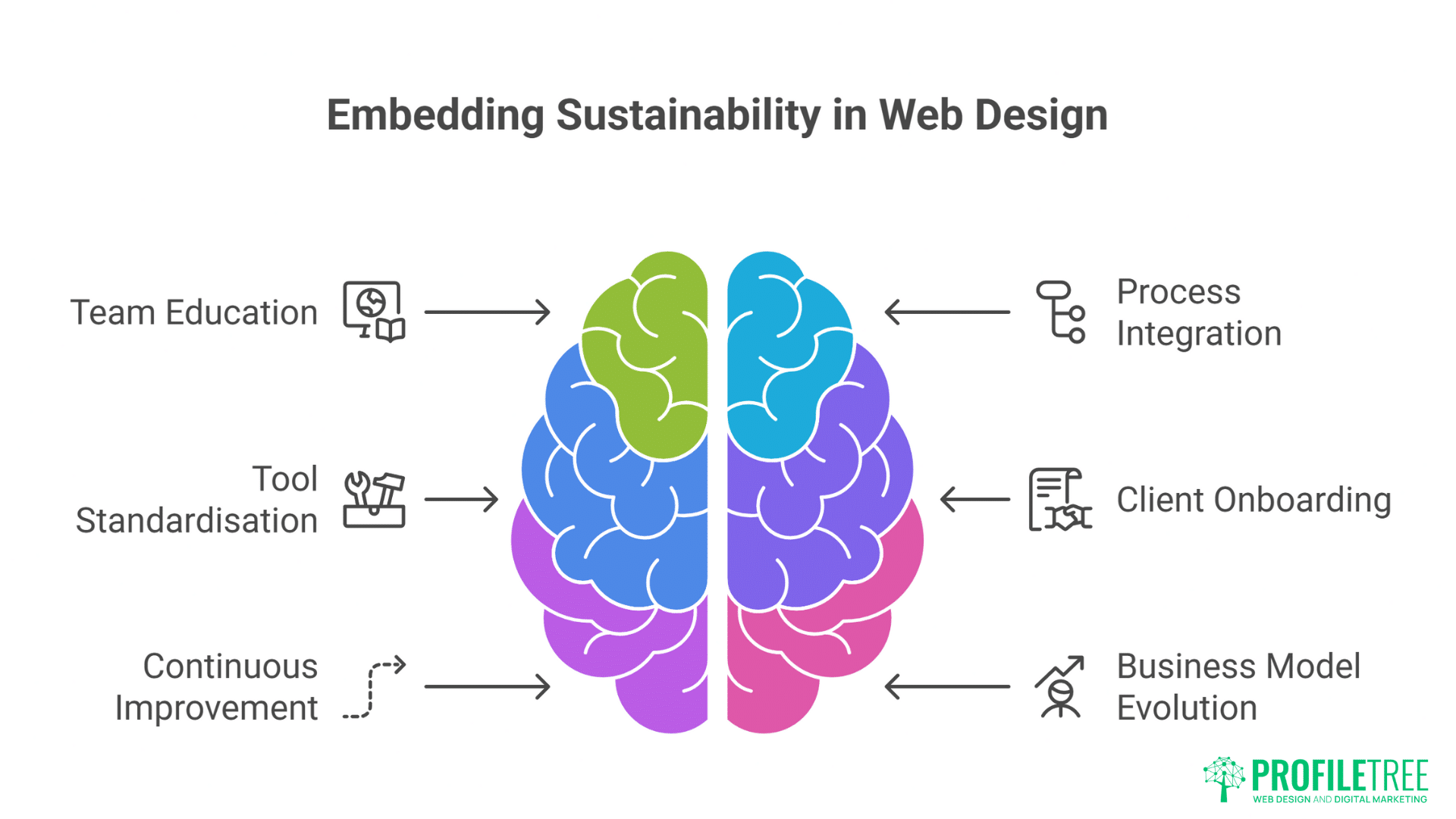
Agencies serious about sustainable web design must embed principles throughout their practice, not just individual projects.
Team education creates organisational capability. Sustainability training programmes. Carbon literacy certification. Performance optimisation workshops. Green hosting education. Client communication training. Every team member should understand sustainability basics and their role in delivery.
Process integration makes sustainability standard. Sustainability checkpoints in workflows. Carbon budgets in project briefs. Performance requirements in contracts. Efficiency reviews in QA. Sustainability reporting templates. Embedded processes ensure consistency without relying on individual initiative.
Tool standardisation streamlines sustainable development. Approved framework lists. Optimisation tool licenses. Testing automation setup. Carbon calculation integration. Performance monitoring dashboards. Standard tools reduce learning curves whilst ensuring quality.
Client onboarding sets sustainability expectations. Education during discovery. Sustainability goal setting. Budget allocation discussions. Timeline expectation management. Success metric agreement. Early alignment prevents later conflicts about sustainability priorities.
Continuous improvement culture drives innovation. Regular process reviews. New technology evaluation. Industry best practice monitoring. Team knowledge sharing. Client feedback integration. Sustainable web design evolves rapidly—agencies must evolve equally fast.
Business model evolution reflects sustainability values. Carbon-neutral operations. Sustainable supplier selection. Remote work reducing travel. Green office practices. Community contribution. Agencies advocating sustainability must demonstrate it throughout their business.
Digital training programmes help teams develop sustainable web design capabilities systematically.
Marketing Sustainable Web Services
Promoting sustainable web design services requires different approaches than traditional agency marketing. Authenticity and demonstration matter more than claims.
Content marketing educates whilst demonstrating expertise. Blog posts on optimisation techniques. Case studies showing carbon reductions. Guides for sustainable practices. Performance improvement tutorials. Carbon calculation explanations. Educational content builds trust whilst attracting conscious clients.
Portfolio presentation showcases sustainability achievements. Carbon metrics for each project. Performance scores displayed. Sustainability certifications highlighted. Client testimonials on impact. Award recognition featured. Let work demonstrate capability rather than making claims.
Partnership development expands reach. Sustainability consultancy relationships. Environmental organisation connections. Green business network membership. Government framework agreements. Corporate sustainability departments. Strategic partnerships provide credibility and referrals.
Speaking opportunities establish thought leadership. Conference presentations on sustainable web design. Webinars for business audiences. Podcast appearances discussing sustainability. Workshop delivery for organisations. University guest lectures. Visibility in sustainability conversations attracts aligned clients.
Certification pursuit provides competitive advantage. B Corp certification process. ISO 14001 implementation. Green Web Foundation membership. Industry association credentials. Carbon neutral verification. Certifications shortcut trust-building with procurement teams.
Pricing communication reflects value delivered. Sustainability premium justification. Long-term cost savings emphasis. Risk mitigation value. Compliance assurance benefits. Competitive advantage creation. Sustainable design commands premium pricing when value is clearly communicated.
FAQs
What makes a website truly sustainable versus greenwashing?
Truly sustainable websites demonstrate measurable reductions in energy consumption through optimised code, efficient hosting on renewable energy, minimal resource usage, and transparent carbon reporting. Greenwashing involves vague environmental claims without concrete metrics, offsetting without reduction efforts, or sustainable badges without actual implementation—authentic sustainability shows specific measurements and continuous improvement.
How much does sustainable web design cost compared to traditional development?
Sustainable web design typically costs the same or marginally more (5-10%) initially but delivers 30-40% lower total ownership costs through reduced hosting requirements, better performance, and fewer resources needed. The investment in optimisation and efficient architecture pays back through lower operational costs within 6-12 months, whilst premium positioning often commands higher project values.
Can existing websites be made sustainable, or do they need rebuilding?
Most websites can achieve 50-70% emission reductions through retrofitting: image optimisation, code minification, caching implementation, hosting migration, and performance improvements. Complete rebuilds deliver 80-90% reductions but aren’t always necessary—staged improvements provide immediate benefits whilst planning longer-term architecture changes.
Which certifications actually matter for winning sustainable web tenders?
B Corp certification, ISO 14001, and Green Web Foundation membership carry most weight with procurement teams, whilst specific industry certifications matter for specialised sectors. Government frameworks increasingly recognise these standards, with certified agencies appearing on preferred supplier lists and scoring higher in sustainability criteria—investing in recognised certifications delivers measurable tender success improvement.
How do we measure and report website carbon emissions accurately?
Website carbon emissions calculate through data transfer (page weight × visits × energy intensity × carbon factor) using tools like Website Carbon Calculator or CO2.js, combined with hosting provider renewable energy percentages. Accurate reporting requires real analytics data, not estimates, with methodologies like Greenhouse Gas Protocol providing standardised frameworks that procurement teams recognise.
What performance improvements can clients expect from sustainable web design?
Sustainable websites typically load 50-70% faster, reduce bounce rates by 30%, improve conversion rates by 20-25%, and rank higher in search results due to Core Web Vitals improvements. Mobile users particularly benefit with 60% less data usage, whilst servers handle 3x more traffic on the same infrastructure—sustainability and performance improvements are inseparable.
Leading the Sustainable Web Revolution
The sustainable web design revolution isn’t approaching—it’s here, reshaping how agencies compete, win work, and deliver value. Forward-thinking agencies embracing sustainability don’t just win more tenders; they attract better clients, charge premium rates, and build lasting competitive advantages that traditional agencies cannot match.
Every day agencies delay sustainable practice adoption, they fall further behind. Government contracts explicitly require sustainability. Corporate procurement demands environmental responsibility. Consumers choose sustainable brands. Employees prefer purpose-driven employers. The market has spoken—sustainability wins.
ProfileTree leads Ireland and the UK’s sustainable web design movement, combining technical excellence with environmental responsibility to create websites that perform brilliantly whilst treading lightly on our planet. We don’t just build sustainable websites—we transform how businesses think about their digital presence’s environmental impact.
Our proven sustainable design methodology delivers measurable results: 70% average carbon reduction, 50% performance improvement, 30% conversion increase. These aren’t theoretical benefits—they’re documented outcomes from clients who’ve chosen sustainability as their competitive advantage.
The choice facing agencies and businesses is simple: lead the sustainable web revolution or be left behind by it. Those acting now establish themselves as essential partners for environmentally conscious organisations. Those waiting find themselves competing for shrinking pools of sustainability-indifferent clients.
Transform your digital presence into a sustainability showcase. Discover how ProfileTree’s website design expertise creates sustainable websites that win tenders, attract conscious clients, and drive exceptional business results whilst protecting our planet for future generations.