
Inside the UK AI Upskilling Revolution: From Retail to SMEs
Table of Contents
The UK workforce faces its most significant transformation since the industrial revolution. With 7.4 million British jobs set to be augmented by artificial intelligence within five years, businesses across Northern Ireland and the UK are racing to upskill their teams. The choice is stark: adapt or become obsolete.
From Debenhams’ £1.35 million AI Skills Academy to Belfast tech startups training entire workforces in ChatGPT, the upskilling revolution transforms how businesses operate, compete, and grow. This isn’t about replacing workers – it’s about giving them superpowers.
UK AI Upskilling Revolution: Debenhams’ £1.35 Million Leading the Charge
When Debenhams.com invested £1.35 million in their AI Skills Academy, they weren’t just training staff – they were securing their future. The programme, delivered in partnership with FutureDotNow, targets 1,000 employees across customer service, digital marketing, and operations.
The Debenhams Transformation:
- Customer service agents now handle 40% more queries using AI assistance
- Marketing teams create personalised campaigns at 3x the previous speed
- Inventory predictions improved by 25% through AI analytics
- Employee satisfaction increased as mundane tasks disappeared
“We’re not replacing our people, we’re amplifying their capabilities,” explains their transformation lead. Customer service representatives who once managed 20 conversations daily now handle 30-40 with AI support, while providing more personalised, empathetic service.
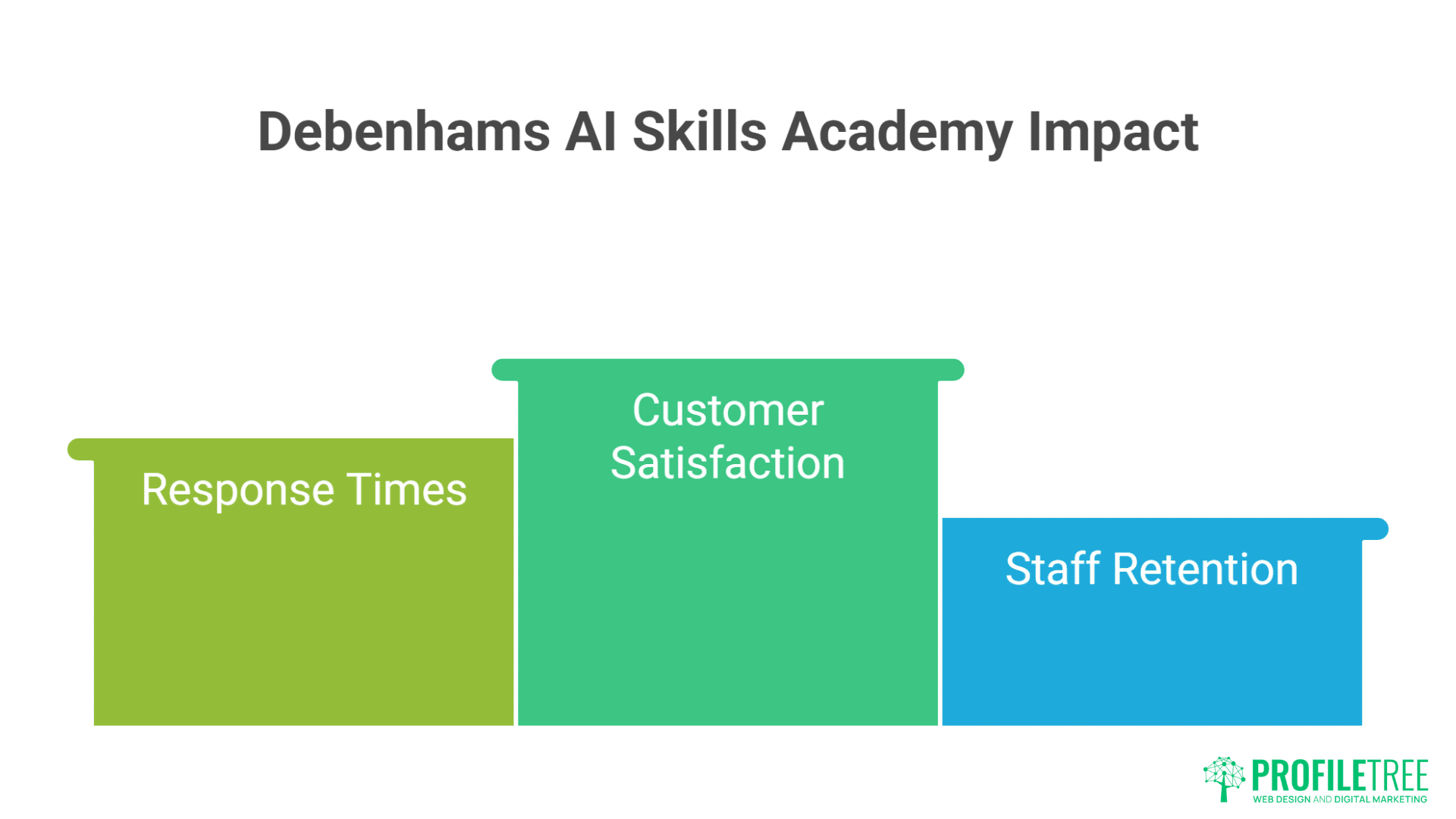
The results speak volumes: customer satisfaction scores up 18%, response times down 60%, and staff retention improved by 22%. When employees feel empowered rather than threatened by technology, everyone wins.
Northern Ireland’s Hidden AI Revolution
While the spotlight often falls on London and major UK hubs, Northern Ireland is quietly emerging as a leader in AI skills and innovation. Its blend of talent, universities, and agile businesses is driving a transformation few are talking about.
Kainos: Belfast’s Billion-Pound AI Pioneer
Belfast-based Kainos, now valued at over £1.5 billion, invested £2 million in AI training across their 2,800-strong workforce. Every employee, from developers to finance teams, completed mandatory AI literacy programmes.
The Kainos Approach:
- 40 hours of AI training per employee annually
- Internal AI hackathons driving innovation
- Client delivery times reduced by 35%
- New AI-powered service lines generating £15 million annually
Their “AI First” strategy means project managers use Claude for requirements gathering, developers leverage GitHub Copilot for coding, and sales teams employ AI for proposal generation. The result? Revenue per employee increased 28% within 18 months.
Liberty IT: 500 Belfast Jobs Transformed, Not Lost
Liberty Information Technology, employing 500 people in Belfast, faced a crossroads when AI threatened to automate insurance processing. Instead of redundancies, they launched “Project Amplify” – a comprehensive reskilling initiative.
Project Amplify Results:
- Claims processors became AI trainers and quality controllers
- Processing capacity increased 300% without adding headcount
- Error rates dropped 78% through human-AI collaboration
- Employee engagement scores hit record highs
Workers who spent years manually reviewing insurance claims now supervise AI systems processing thousands daily, focusing on complex cases requiring human judgment. The transformation took 18 months and cost £800,000 – less than redundancy packages would have cost.
The SME Revolution: Small Businesses, Big Transformations
Small and medium-sized enterprises are at the heart of the UK economy, and AI is giving them new ways to scale and innovate. By investing in upskilling, SMEs are not only streamlining operations but also discovering fresh opportunities to compete with larger rivals, transform customer experiences, and future-proof their growth.
Flawless Finish: Lisburn Beauty Salon’s AI Makeover
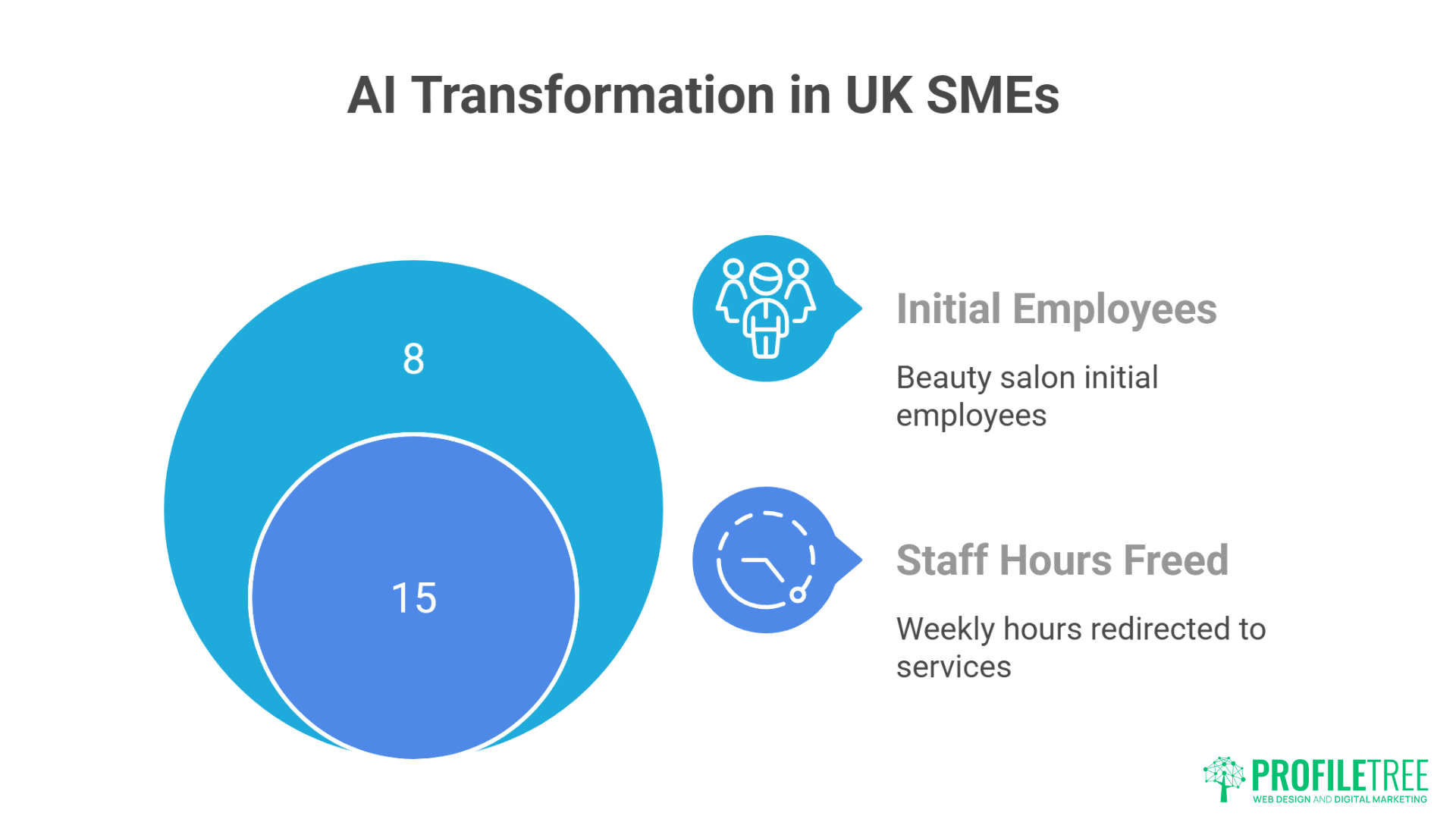
This Lisburn beauty salon with eight employees seemed an unlikely AI pioneer. Yet after investing £3,000 in AI training through ProfileTree, they transformed their business model.
AI Implementation at Flawless Finish:
- Online bookings increased 250% through AI chatbot
- Social media engagement up 400% using AI content tools
- Customer retention improved 35% via personalised AI email campaigns
- Staff hours freed up: 15 weekly hours redirected from admin to services
“We thought AI was for tech companies,” admits owner Sarah Mitchell. Now our therapists use ChatGPT for treatment descriptions, Canva’s AI for social posts, and our booking system practically runs itself. We’re earning 40% more while working fewer hours.”
McGrath’s Meats: Armagh Butcher Goes Digital
Traditional butcher shop McGrath’s Meats in Armagh employed six people when they began their AI journey. Skeptical at first, they discovered AI could preserve their craft while expanding their reach.
The McGrath’s Transformation:
- AI-powered inventory management reduced waste by 30%
- Recipe blog created with AI attracts 5,000 monthly visitors
- Personalised email marketing drives 20% of sales
- Online orders increased 600% through AI-optimised website
“AI doesn’t replace the butcher’s skill,” owner Pat McGrath explains. “It handles the paperwork, marketing, and logistics so we can focus on what we do best – providing quality meat and personal service.”
Sector-Specific AI Transformations
AI is not a one-size-fits-all solution — its impact looks very different across industries. From retail and finance to manufacturing and education, each sector is redefining workflows, retraining staff, and discovering new efficiencies through tailored AI upskilling. Understanding these unique transformations reveals how deeply AI is reshaping the UK economy.
Retail: Beyond Customer Service
Marks & Spencer: £15 Million AI Investment
M&S invested £15 million in AI upskilling across 65,000 employees. Their “Sparks” programme trains everyone from shop floor to boardroom in AI applications.
Key achievements:
- Stock availability improved 23% through AI predictions
- Personalised marketing drives 31% of online sales
- Customer service resolution time down 40%
- Food waste reduced by £8 million annually
Store associates use AI tablets for instant product information, style recommendations, and stock checking. The human touch remains crucial – AI handles data while humans provide empathy and expertise.
Next PLC: The Quiet Revolution
Next quietly trained 3,000 head office staff in AI tools, focusing on practical applications rather than theory.
Results after 12 months:
- Product descriptions written 5x faster
- Photography editing time reduced 60%
- Demand forecasting accuracy up 35%
- Returns processing streamlined by 45%
Financial Services: From Threat to Opportunity
Santander UK: 20,000 Employees Upskilled
Santander’s “Future Skills” programme reaches all 20,000 UK employees, with particular focus on branch staff whose roles face automation pressure.
Transformation highlights:
- Branch staff became “digital champions” helping customers with online banking
- Mortgage advisors use AI for instant decision support
- Fraud detection teams supervise AI systems catching 3x more suspicious activity
- Customer satisfaction increased as staff spend more time on complex queries
First Trust Bank: Northern Ireland’s AI Pioneer
First Trust Bank trained 400 Northern Ireland employees in AI applications, focusing on practical, daily use cases.
Programme outcomes:
- Loan application processing 70% faster
- Customer query resolution improved 50%
- Compliance reporting automated saving 2,000 hours annually
- Staff satisfaction up 25% as repetitive tasks eliminated
Manufacturing: The Unexpected AI Adopter
Bombardier Belfast: Aerospace Meets AI
Bombardier’s Belfast facility, employing 3,500 people, launched “Digital Wings” – an AI upskilling programme for manufacturing workers.
Manufacturing transformation:
- Quality control inspectors use AI vision systems
- Production planners leverage predictive analytics
- Maintenance teams employ AI for predictive repairs
- Design engineers accelerate development with AI simulation
Workers feared redundancy; instead, they gained skills commanding higher salaries. The programme cost £4 million but saved £12 million in the first year through efficiency gains.
Almac Group: Craigavon’s Pharmaceutical Pioneer
Pharmaceutical giant Almac trained 6,000 Craigavon employees in AI applications, from lab technicians to logistics teams.
Results:
- Drug discovery timelines reduced 30%
- Supply chain optimisation saved £5 million
- Quality control accuracy improved 99.9%
- Research productivity doubled
The Hidden Crisis: SMEs Falling Behind
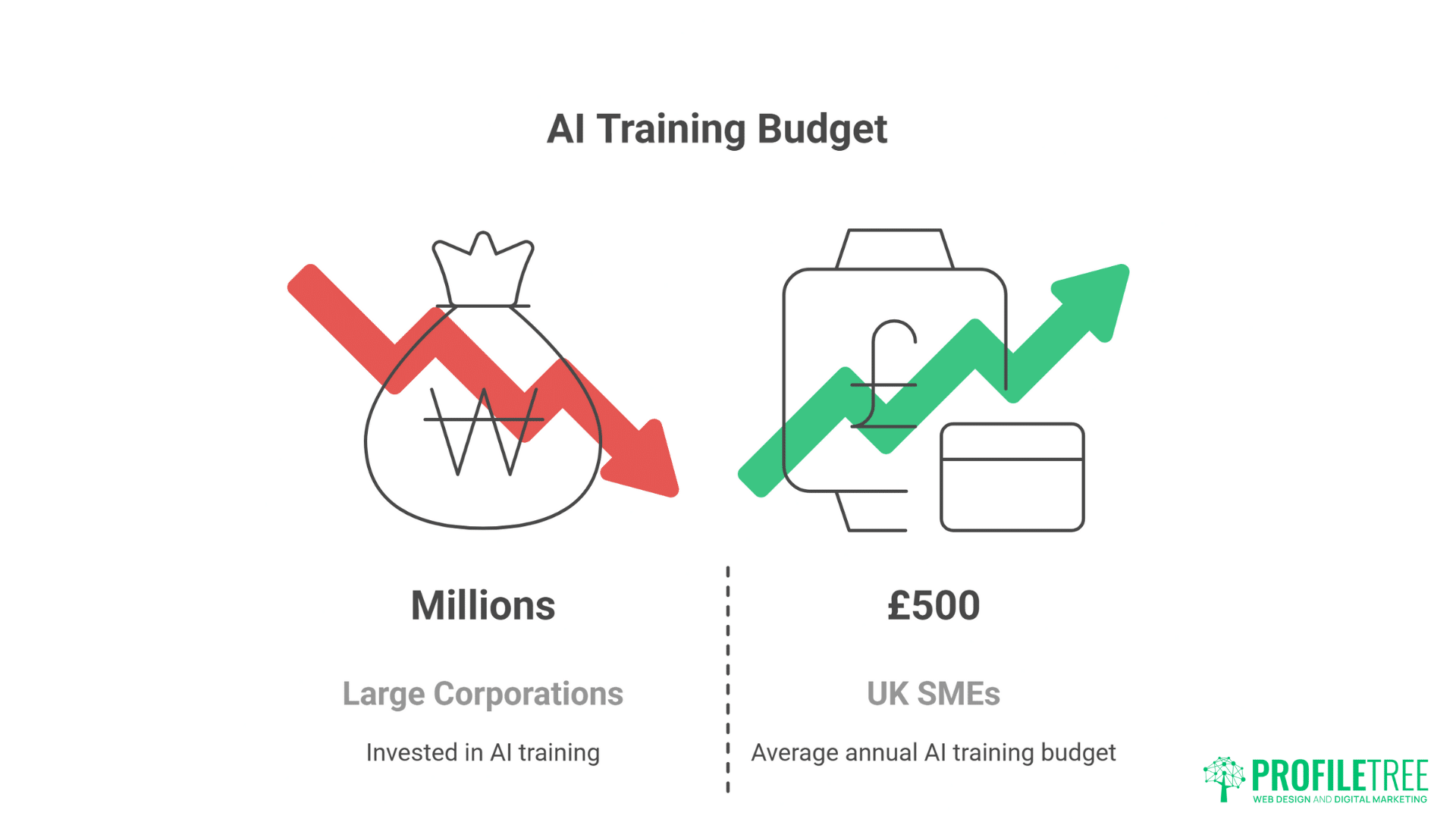
While large corporations invest millions, smaller businesses struggle to keep pace. Research shows:
- Only 23% of UK SMEs have any AI training programme
- 67% of small business owners feel “overwhelmed” by AI
- Average SME AI training budget: £500 annually
- 45% believe AI is “too complex” for their business
This digital divide threatens Northern Ireland’s economy, where SMEs employ 75% of the private sector workforce.
Breaking Down Barriers: Affordable AI Training
ProfileTree is redefining how businesses access AI skills by making training practical, affordable, and tailored to real-world needs. Their approach removes cost and complexity as obstacles, helping SMEs and organisations of all sizes empower their teams with the tools to grow in an AI-first economy.
The ProfileTree Approach
Recognising this gap, ProfileTree developed affordable AI training specifically for SMEs. Our programmes start from £275, making enterprise-level training accessible to corner shops and multinational corporations alike.
Recent success stories:
- Belfast restaurant group: 300% increase in bookings through AI
- Derry construction firm: Tender writing time reduced 70%
- Newry retailer: Stock management costs down 40%
- Bangor dental practice: Appointment scheduling automated
“We remove the mystery from AI,” explains ProfileTree founder Ciaran Connolly. “A hairdresser in Ballymena needs AI just as much as a bank in Belfast – they just need it explained differently.”
Government Initiatives: Progress and Problems
The UK government has launched a wave of programmes to boost AI adoption and workforce skills. While these initiatives signal real progress, challenges remain — including uneven access, limited awareness among SMEs, and questions about long-term sustainability.
UK-Wide Programmes
Across the UK, national schemes are helping businesses and workers build AI skills through bootcamps, training hubs, and funding support. Their success, however, depends on how well they meet local needs.
The National AI Skills Fund: £100 Million Investment
The government’s £100 million AI Skills Fund targets 200,000 workers by 2025. Early results show:
- 45,000 workers completed basic AI literacy
- 12,000 received advanced AI training
- SME participation remains low at 18%
- Northern Ireland receives 3% of funding despite having 4% of UK workforce
Digital Skills Partnership
This public-private partnership between government and tech companies provides free AI training. Partners include:
- Google: AI Essentials course (50,000 UK completions)
- Microsoft: AI Business School (30,000 participants)
- Amazon: Machine Learning University (15,000 enrolled)
- IBM: AI Skills Academy (20,000 certified)
Northern Ireland Specific Support
Northern Ireland is developing its own AI training ecosystem, with universities, local agencies, and private firms driving specialised support. These efforts are tailored to the region’s unique economic and business landscape.
Invest NI’s Digital Transformation Programme
Invest NI allocated £10 million for digital skills, including AI training:
- 500 businesses received AI consultancy
- 2,000 individuals completed AI courses
- Average productivity gain: 22%
- ROI: £4.50 for every £1 invested
Belfast City Council’s Innovation Factory
The Innovation Factory offers free AI workshops for Belfast businesses:
- 150 workshops delivered annually
- 3,000 business owners trained
- 80% implement AI within six months
- Average revenue increase: 18%
The Real Impact: Customer Service Revolution
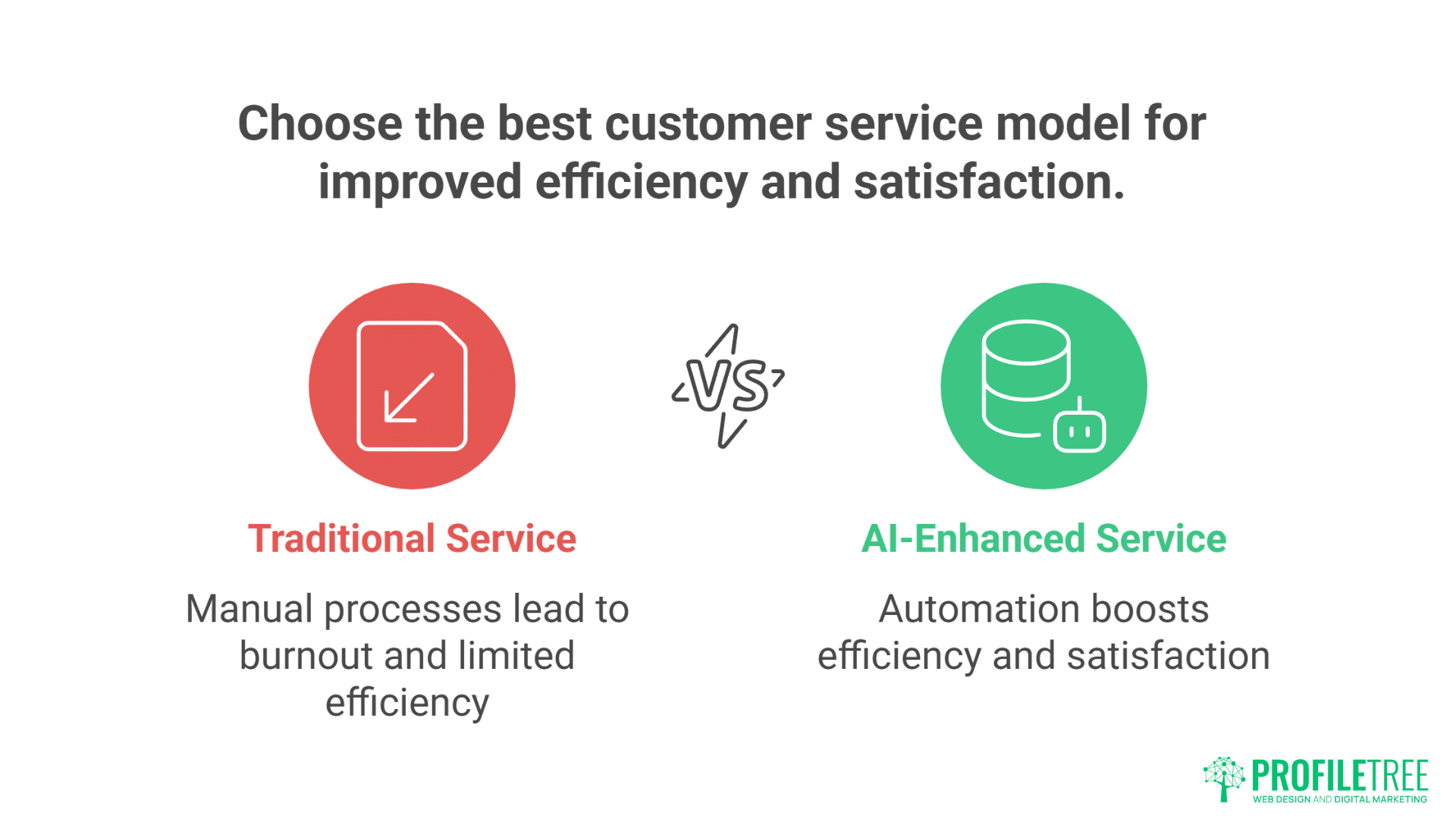
Customers today expect instant, seamless support — and AI is making that possible. Businesses are using chatbots, automation, and predictive tools to resolve issues quickly and personalise interactions. The result is a service model that boosts satisfaction while allowing human staff to focus on higher-value tasks.
How AI Transforms Customer Interactions
By analysing data and automating responses, AI enables faster, more personalised engagement. This shift strengthens customer relationships and raises expectations for service.
Traditional Service Model:
- Agent handles one query at a time
- Searches knowledge base manually
- Types responses from scratch
- Manages 20-30 queries daily
- Burnout from repetitive questions
AI-Enhanced Service Model:
- Agent supervises multiple AI conversations
- AI suggests instant solutions
- Responses personalised automatically
- Manages 60-80 queries daily
- Focus on complex, meaningful interactions
Case Study: EE Customer Service
EE trained 6,000 customer service agents across the UK and Ireland in AI tools:
- First-contact resolution up 43%
- Average handling time down 35%
- Customer satisfaction increased 28%
- Agent satisfaction improved 31%
- Annual savings: £25 million
Agents now use AI for:
- Sentiment analysis during calls
- Real-time solution suggestions
- Automatic call summarisation
- Next-best-action recommendations
- Predictive customer needs
Digital Marketing: The AI Advantage
AI is giving marketers powerful tools to understand audiences and predict behaviour with greater accuracy. From content creation to targeted campaigns, automation is helping businesses reach the right people at the right time. The result is smarter strategies that maximise impact while reducing wasted effort.
Content Creation at Scale
Before AI Training: Marketing teams struggled with:
- Blog posts taking days to write
- Social media requiring constant attention
- Email campaigns consuming weeks
- SEO optimisation overwhelming small teams
After AI Training: The same teams now:
- Produce 10x more content
- Personalise campaigns automatically
- Generate ideas instantly
- Optimise SEO in real-time
- Focus on strategy, not execution
The Coca-Cola Approach
Coca-Cola trained their UK marketing teams in AI tools:
- Campaign creation time reduced 75%
- Personalisation increased 300%
- Cost per acquisition down 45%
- Creative output up 500%
“AI doesn’t replace creativity,” notes their UK marketing director. “It eliminates the boring bits so humans can be more creative.”
Business Automation: Beyond the Hype
Automation is often surrounded by bold promises, but its real impact lies in how it reshapes daily operations. Repetitive tasks can be streamlined, while employees gain time to focus on more complex, higher-value work. Looking past the hype reveals both the opportunities and the practical challenges of making automation work.
What Gets Automated vs What Gets Augmented
Fully Automated:
- Data entry and processing
- Basic customer queries
- Appointment scheduling
- Invoice processing
- Inventory management
- Report generation
Human-AI Collaboration:
- Complex problem solving
- Creative development
- Strategic planning
- Relationship building
- Ethical decisions
- Innovation and ideation
Tesco: Automation Without Job Losses
Tesco’s approach proves automation doesn’t mean redundancy:
- 300,000 UK employees trained in digital skills
- Checkout staff became “Customer Experience Leaders”
- Warehouse workers supervise automated systems
- Data entry clerks became data analysts
- No compulsory redundancies despite 40% automation
The Skills Gap: What Businesses Actually Need
While AI adoption is accelerating, many companies still lack the right skills to use it effectively. Technical expertise alone isn’t enough — businesses also need problem-solvers, strategic thinkers, and employees who can adapt quickly. Bridging this gap is essential for turning AI investment into real-world results.
Most In-Demand AI Skills for 2025
As AI adoption grows, certain skills are emerging as essential for the future workforce. From data literacy to prompt engineering, these capabilities will define competitiveness in 2025 and beyond.
Technical Skills:
- Prompt engineering
- AI tool selection
- Data interpretation
- Process automation
- AI ethics understanding
Soft Skills Enhanced by AI:
- Critical thinking (evaluating AI output)
- Creativity (using AI as creative partner)
- Emotional intelligence (the human differentiator)
- Adaptability (keeping pace with change)
- Ethical reasoning (AI governance)
The ProfileTree Training Framework
Our AI training addresses real business needs:
Foundation Level (£275):
- AI literacy and terminology
- ChatGPT for business
- Basic automation tools
- Ethics and best practices
Professional Level (£550):
- Advanced prompt engineering
- Multi-tool integration
- Process automation
- Performance measurement
Enterprise Level (£1,200):
- Custom AI strategies
- Team transformation
- Implementation roadmaps
- Ongoing support
Success Metrics: Measuring AI Impact
Adopting AI is only the first step — understanding its true value comes from measuring results. Businesses can track everything from efficiency improvements to customer satisfaction to see how well their efforts are working. Tracking these outcomes helps refine strategies and maximise long-term impact.
Key Performance Indicators
KPIs provide a clear way to evaluate the success of AI initiatives. By focusing on measurable outcomes, businesses can track progress and adjust strategies effectively.
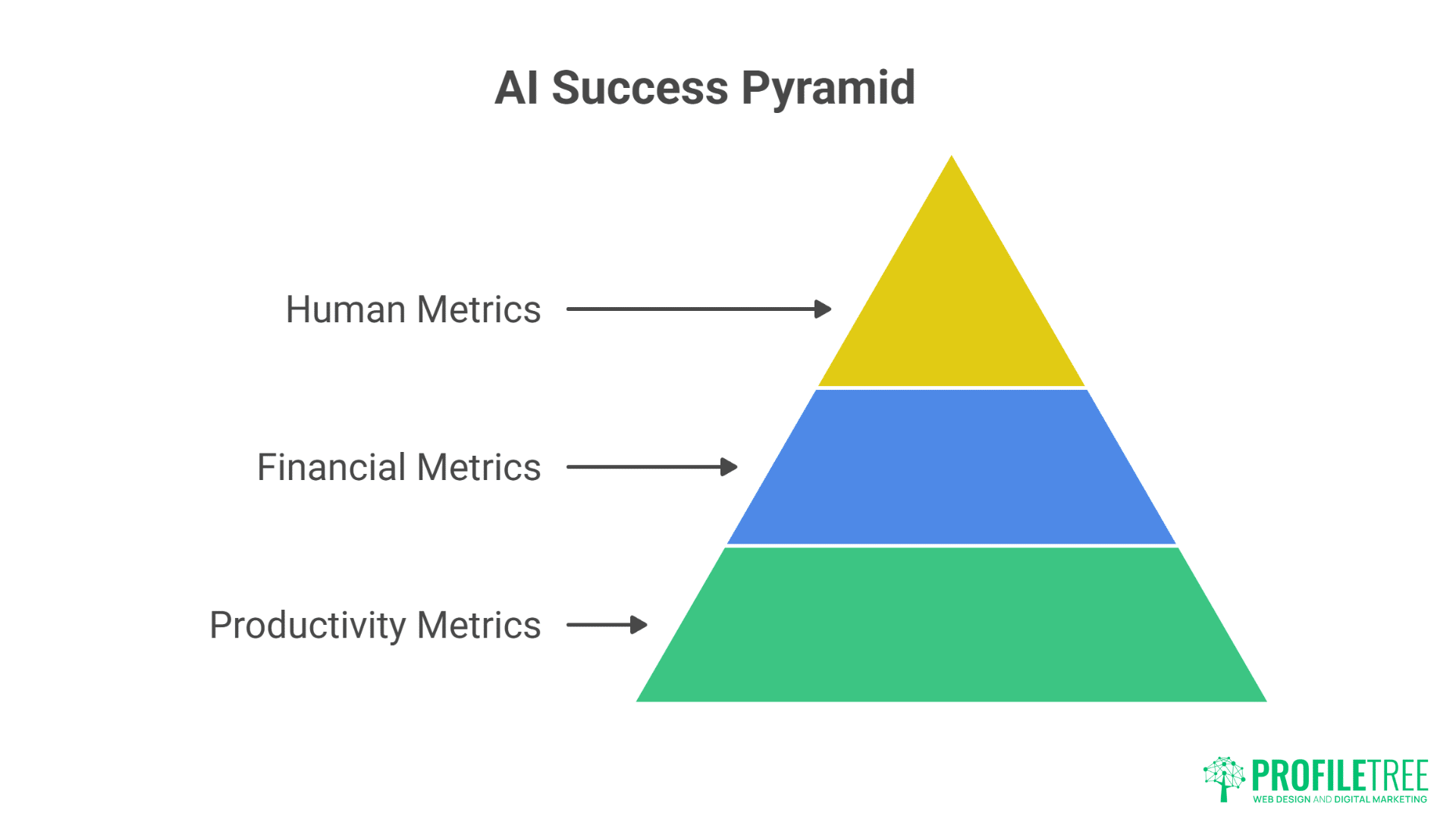
Productivity Metrics:
- Output per employee increased average 35%
- Task completion time reduced 40-60%
- Error rates decreased 50-70%
- Customer handling capacity doubled
Financial Metrics:
- Revenue per employee up 25-40%
- Operating costs reduced 20-30%
- Customer acquisition costs down 35%
- Lifetime value increased 45%
Human Metrics:
- Employee satisfaction improved 30%
- Skills confidence up 50%
- Career advancement opportunities increased 40%
- Work-life balance improved 25%
The Road Ahead: 2025 and Beyond
AI is moving from experimentation to everyday business reality, and the pace of change will only accelerate. Companies that invest in continuous upskilling will be best placed to adapt, innovate, and stay competitive. The future belongs to organisations that see AI not as a tool, but as a mindset for growth.
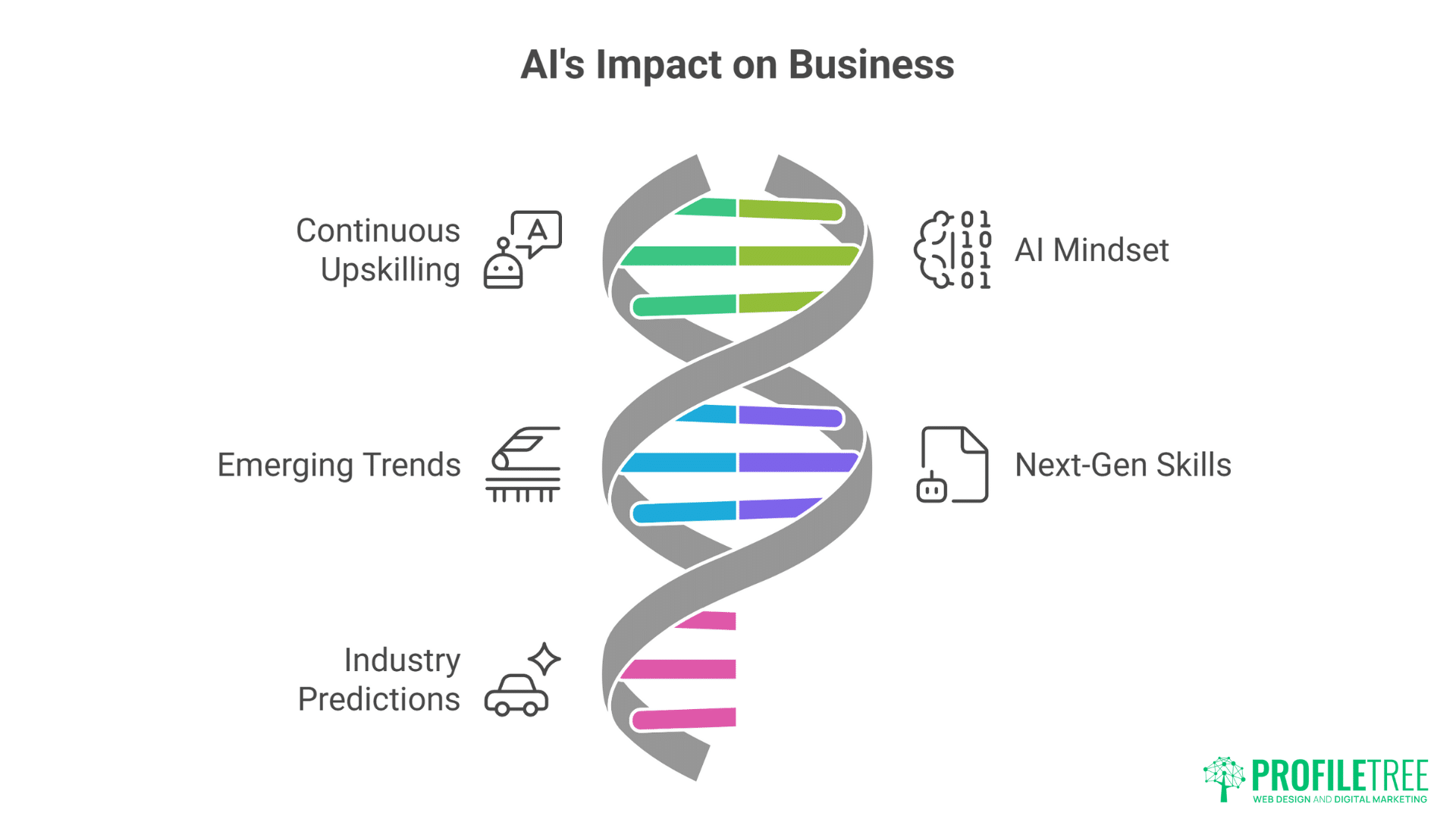
Emerging Trends
AI is evolving rapidly, bringing new tools and practices that are reshaping how businesses operate. Keeping pace with these trends is key to staying competitive and future-ready.
Next-Generation AI Skills:
- Multimodal AI (text, image, video, audio)
- AI agent management
- Synthetic data creation
- AI-human team leadership
- Ethical AI governance
Industry Predictions:
- 60% of UK workers using AI daily by 2026
- AI training becoming mandatory like health and safety
- New job categories emerging monthly
- Traditional roles evolving, not disappearing
- Skills half-life dropping to 2.5 years
Taking Action: Your AI Upskilling Roadmap
AI upskilling can feel overwhelming, but breaking it down into clear steps makes the process manageable. From assessing current skills to choosing the right training programmes, businesses can chart a path that suits their needs. With the right roadmap, teams can confidently integrate AI and unlock long-term growth.
For Business Owners
AI adoption is no longer just a tech decision — it’s a strategic one. Business owners must lead the way by aligning upskilling efforts with long-term growth goals.
Immediate Steps:
- Assess current AI readiness
- Identify quick wins
- Start with willing early adopters
- Measure and share successes
- Scale gradually
Investment Priorities:
- Basic AI literacy for all staff
- Department-specific training
- Leadership AI strategy sessions
- Continuous learning programmes
- External expert support
For Employees
Personal Development Plan:
- Start with free resources (Google, Microsoft)
- Practice daily with ChatGPT
- Join AI communities
- Share learnings with colleagues
- Seek formal certification
The Northern Ireland Opportunity
Northern Ireland stands at a crossroads. Our skilled workforce, competitive costs, and strategic location position us perfectly for the AI revolution. But success requires action now.
Competitive Advantages:
- English-speaking workforce
- Strong education system
- Growing tech sector
- Government support
- Lower operating costs
Challenges to Address:
- Limited AI investment
- Skills gap widening
- SME participation low
- Rural connectivity issues
- Awareness lacking
Conclusion: Evolution, Not Extinction
The AI upskilling revolution isn’t coming – it’s here. From Debenhams’ million-pound investment to McGrath’s Meats’ practical applications, businesses across the UK prove that AI amplifies human capability rather than replacing it.
The question isn’t whether your business needs AI training, but how quickly you can implement it. Every day of delay widens the gap between AI-enabled competitors and those clinging to yesterday’s methods.
Start Your AI Transformation Today
ProfileTree has trained hundreds of Northern Ireland businesses in practical AI implementation. From solo entrepreneurs to large corporations, we make AI accessible, understandable, and profitable.
Our AI Training Delivers:
- Immediate productivity gains
- Practical, applicable skills
- Ongoing support and guidance
- ROI within 90 days
- No technical jargon
Book Your AI Consultation.
Don’t let the AI revolution pass you by. The businesses thriving tomorrow are training today.
ProfileTree is Northern Ireland’s leading digital transformation agency, specialising in practical AI training for businesses of all sizes. Our programmes have helped hundreds of companies integrate AI successfully, improving productivity, profitability, and employee satisfaction.