
WordPress vs Web Hosting: Key Differences Explained
Table of Contents
“I need hosting for my WordPress site.” The sales rep responds, “Great! Do you want WordPress hosting or web hosting?” You pause, confused. Aren’t they the same thing? The rep launches into technical jargon about PHP versions and MySQL databases while you wonder if this is a scam to charge you twice for the same service.
This confusion costs UK businesses thousands annually. They either overpay for specialised WordPress hosting they don’t need, or struggle with generic web hosting that makes WordPress crawl like a snail through treacle. The hosting industry deliberately maintains this confusion—confused customers spend more money.
This guide definitively explains the difference: WordPress vs web hosting. We’ll reveal which you actually need, and expose why choosing wrong could cripple your business website. After helping over 500 UK businesses navigate this decision since 2010, we know exactly where the confusion lies and how to clear it up permanently.
The Fundamental Difference Nobody Explains Properly
Here’s the truth hosting companies dance around: WordPress hosting IS web hosting, but web hosting ISN’T necessarily WordPress hosting. Confused? Let’s fix that.
Web Hosting: The Generic Solution
Web hosting is like renting an empty warehouse. You get space, electricity, and a loading dock. What you put inside and how you organise it? That’s your problem. The warehouse owner doesn’t care if you’re storing furniture or frozen fish—they just provide the space.
Web hosting provides:
- Server space for files
- Bandwidth for traffic
- Basic security (doors and locks)
- Email capabilities
- Database access
- Support for various platforms
It’s designed to run ANY website—WordPress, Joomla, Drupal, custom HTML, Python applications, whatever you want. This flexibility sounds great until you realise it means nothing is optimised for anything specific.
A Middlesbrough manufacturer put their WordPress site on generic web hosting. It worked, technically. But pages loaded slowly, updates broke things regularly, and their developer spent hours fixing problems that WordPress-specific hosting would prevent automatically.
WordPress Hosting: The Specialised Solution
WordPress hosting is like renting a fitted restaurant kitchen. Everything’s designed specifically for cooking—commercial ovens, preparation stations, extraction systems, refrigeration. You couldn’t efficiently use it as a warehouse, but for running a restaurant? It’s perfect.
WordPress hosting provides:
- Servers configured specifically for WordPress
- Automatic WordPress updates
- WordPress-specific security measures
- Optimised database configurations
- WordPress expert support
- Pre-installed WordPress tools
Everything’s tuned for one purpose: making WordPress run brilliantly. A Sheffield florist moved from generic to WordPress hosting. Same site, same content, but 60% faster loading and zero update problems. The difference? Purpose-built infrastructure.
WordPress vs Web Hosting: The Technical Differences That Actually Matter
Let’s decode the technical distinctions without the jargon overload.
Server Configuration: Generic vs Optimised
Generic Web Hosting Configuration:
- PHP: Whatever version (often outdated)
- MySQL: Standard configuration
- Memory: Minimal allocation
- Caching: Basic or none
- Security: Generic rules
WordPress Hosting Configuration:
- PHP: Latest stable version WordPress recommends
- MySQL: Tuned for WordPress queries
- Memory: Optimised for WordPress operations
- Caching: Multiple layers specifically for WordPress
- Security: WordPress-specific protections
Real-world impact? A Birmingham blog on generic hosting took 4.2 seconds to load. Moved to WordPress hosting: 1.3 seconds. No other changes. The server configuration alone delivered 300% performance improvement.
Database Handling: The Hidden Performance Killer
WordPress uses databases intensively. Every page load, every search, every comment—all database operations. Generic hosting treats all database queries equally. WordPress hosting optimises specifically for WordPress query patterns.
Generic Hosting Database:
- Standard MySQL configuration
- No query optimisation
- Generic indexing
- Standard memory allocation
- Basic maintenance
WordPress Hosting Database:
- WordPress-optimised indexes
- Query caching for common operations
- Automatic table optimisation
- Increased memory for WordPress tables
- Regular WordPress-specific maintenance
A Leicester e-commerce site suffered slow checkout pages on generic hosting. The database couldn’t handle WooCommerce queries efficiently. WordPress hosting resolved it immediately—same database, optimised configuration.
Update Management: Automatic vs Manual
Generic Hosting Updates:
- You update everything manually
- Risk breaking your site
- Security patches delayed
- Compatibility unchecked
- Your responsibility entirely
WordPress Hosting Updates:
- Automatic WordPress core updates
- Staged plugin updates
- Compatibility testing
- Automatic rollback if problems
- Managed by experts
A Coventry charity’s site got hacked because they didn’t update WordPress for six months on generic hosting. Nobody told them updates were critical. WordPress hosting would have updated automatically, preventing the breach.
Security Measures: Generic vs WordPress-Specific
Generic Hosting Security:
- Basic firewall
- General malware scanning
- Standard access controls
- Generic attack prevention
- You figure out WordPress security
WordPress Hosting Security:
- WordPress application firewall
- WordPress-specific malware signatures
- Brute force login protection
- Plugin vulnerability scanning
- Automatic security hardening
The difference is like having a general security guard versus one trained specifically to protect jewellery stores. Both provide security, but specialist knowledge prevents specialist attacks.
When You Actually Need WordPress Hosting
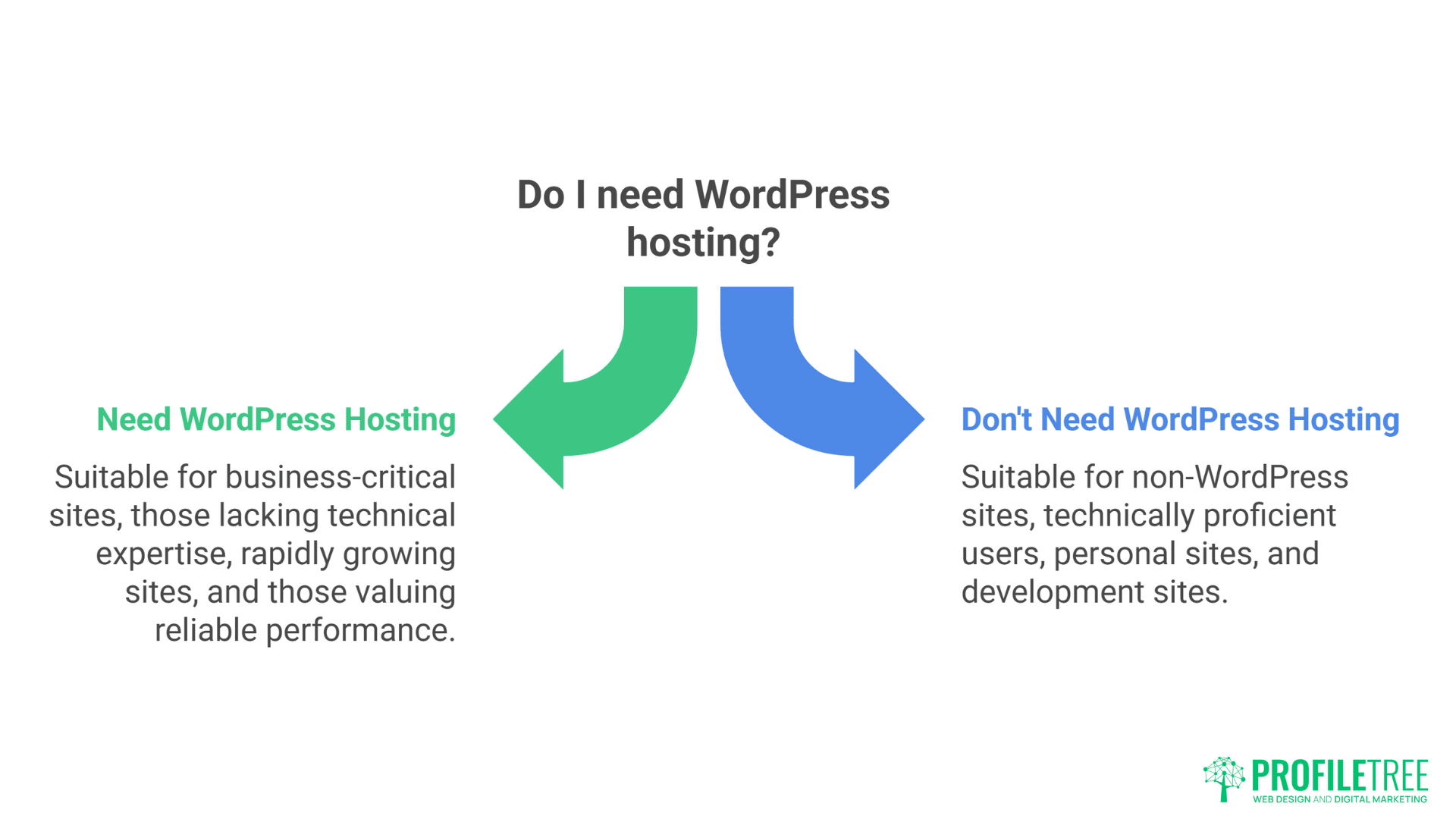
Not everyone needs WordPress hosting. Here’s who does and who doesn’t.
You NEED WordPress Hosting If:
Your Website Is Business-Critical: If your website generates revenue, leads, or reputation, WordPress hosting’s reliability and performance justify the cost. Downtime or slow loading directly impacts your bottom line.
A Manchester restaurant generates 60% of bookings online. Generic hosting crashes meant lost revenue. WordPress hosting’s reliability paid for itself in prevented losses.
You Lack Technical Expertise: WordPress hosting handles technical complexities. Updates, security, optimisation—all managed. Generic hosting leaves you googling solutions at midnight.
A Derby consultant spent 10 hours monthly maintaining WordPress on generic hosting. At their £75/hour rate, that’s £750 of billable time lost. WordPress hosting at £50/month saved them £700 monthly.
You’re Growing Rapidly: WordPress hosting scales with you. Traffic spikes, content growth, feature additions—all handled smoothly. Generic hosting requires manual intervention and often migration.
A Glasgow startup’s product went viral. Generic hosting crashed immediately. WordPress hosting would have auto-scaled, capturing the opportunity instead of losing it.
You Value Your Time: Time spent fighting hosting problems is time not spent on your business. WordPress hosting eliminates most technical time drains.
You Need Reliable Performance: If conversion rates, user experience, or SEO rankings matter, WordPress hosting’s optimisation delivers measurable improvements over generic alternatives.
You DON’T Need WordPress Hosting If:
- You’re Not Using WordPress: Obviously. If you’re running Shopify, custom HTML, or other platforms, WordPress hosting offers no benefits and might cause problems.
- You’re Technically Proficient: If you enjoy server management and have time for it, generic hosting with manual optimisation might work. But calculate the real cost of your time.
- Your Site Is Purely Personal: Personal blogs with no commercial aspect might not justify WordPress hosting costs. But even hobbyists appreciate not dealing with technical problems.
- You’re Testing or Developing: Development sites can use generic hosting. But test on infrastructure similar to production to avoid surprises.
The Cost Comparison Reality
Let’s expose what each really costs UK businesses.
Generic Web Hosting Costs
Advertised Price: £2-10/month
Reality After Essentials:
- Base hosting: £5/month average
- SSL certificate: £40/year (£3.33/month)
- Backup service: £5/month
- Security scanning: £8/month
- CDN service: £10/month
- WordPress maintenance: 5 hours/month (£250 value)
- Emergency fixes: £50/month average
- True cost: £331/month
WordPress Hosting Costs
Advertised Price: £15-75/month
Everything Included:
- Base hosting: £35/month average
- SSL included free
- Backups included
- Security included
- CDN included
- Maintenance automated
- Fixes rare
- True cost: £35/month
A Nottingham agency thought WordPress hosting was expensive at £45/month. They calculated their generic hosting actually cost £380/month including their time and fixes. They saved £4,140 annually by “upgrading” to WordPress hosting.
Real Business Impact Stories
Let’s see how the choice between generic and WordPress hosting affects actual UK businesses.
Case Study 1: The Fashion Retailer
Background: Bristol-based online fashion boutique, £500k annual revenue, WooCommerce store
On Generic Hosting:
- Monthly cost: £8.99
- Page load time: 5.2 seconds
- Conversion rate: 0.8%
- Monthly maintenance: 15 hours
- Downtime: 8 hours monthly
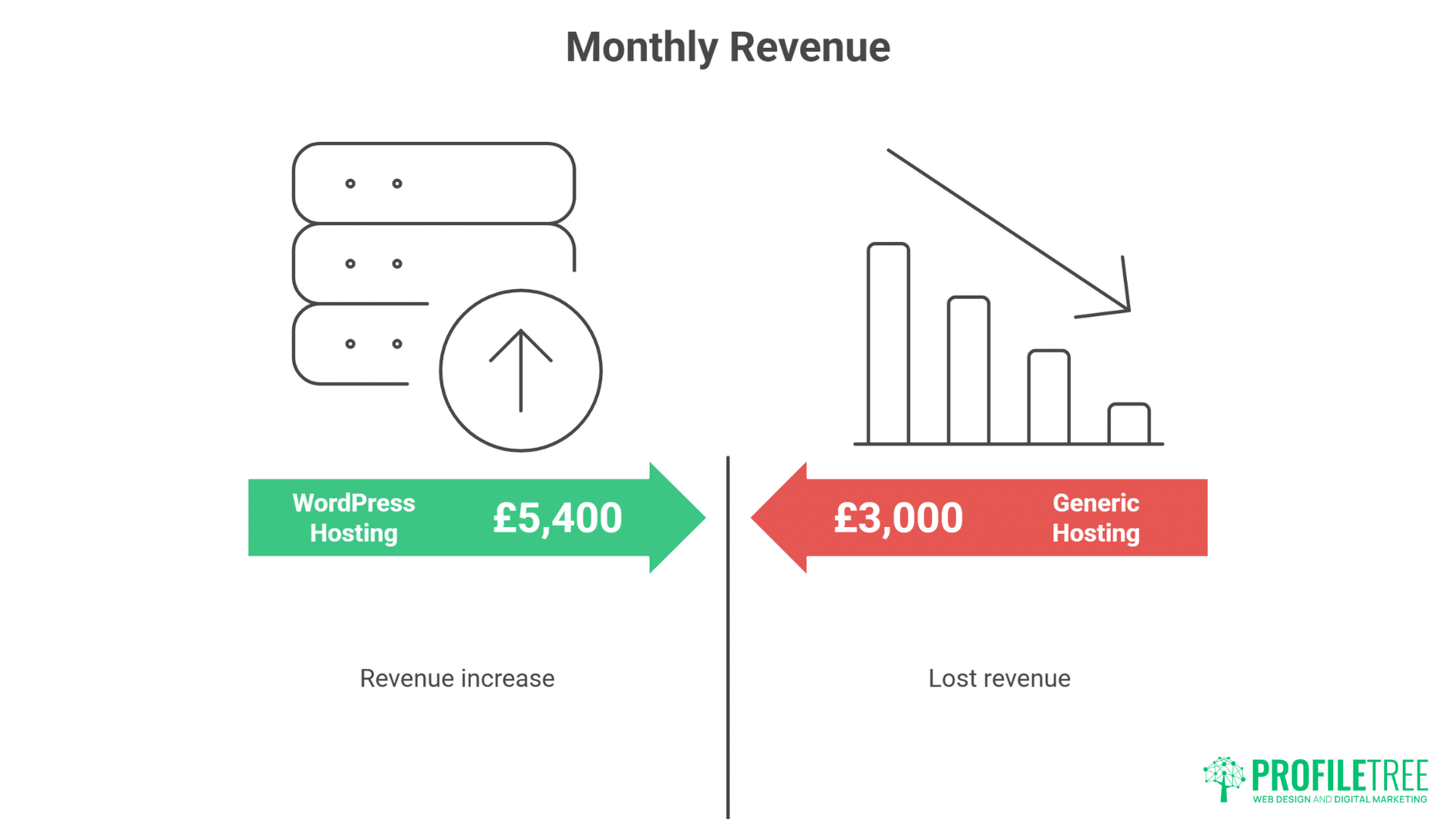
- Lost revenue: £3,000/month
Switched to WordPress Hosting:
- Monthly cost: £65
- Page load time: 1.8 seconds
- Conversion rate: 2.1%
- Monthly maintenance: 30 minutes
- Downtime: Zero
- Revenue increase: £5,400/month
ROI: 8,300%
Case Study 2: The Marketing Agency
Background: Leeds agency managing 20 client WordPress sites
On Generic Hosting (Multiple Providers):
- Monthly cost: £180 total
- Management time: 40 hours/month
- Client complaints: Regular
- Emergency fixes: £500/month average
- Stress level: Extreme
- True cost: £2,680/month
Consolidated to WordPress Hosting:
- Monthly cost: £200
- Management time: 4 hours
- Client complaints: None
- Emergency fixes: None
- Stress level: Minimal
- True cost: £400/month
Savings: £27,360 annually
Case Study 3: The Local Charity
Background: Birmingham charity, limited budget, volunteer-managed
On Generic Hosting:
- Monthly cost: £4.99
- Volunteer hours needed: 20/month
- Security breaches: 2 in one year
- Recovery costs: £2,000
- Donation platform downtime: Regular
- Lost donations: Estimated £5,000
Moved to WordPress Hosting:
- Monthly cost: £25 (charity discount)
- Volunteer hours needed: 2/month
- Security breaches: None
- Recovery costs: None
- Downtime: None
- Donation increase: £500/month
Impact: More time for charity work, increased donations
The Migration Question: Moving from Generic to WordPress Hosting
If you’re on generic hosting with WordPress, should you move? Usually yes, but let’s be strategic.
Signs You Should Migrate
Performance Problems:
- Slow loading times
- Database errors
- Memory limit errors
- Timeout errors
- Plugin conflicts
Security Concerns:
- Outdated WordPress version
- No automatic updates
- Previous security incidents
- No backup system
- Basic security only
Support Frustrations:
- Support doesn’t understand WordPress
- Every problem is “contact your developer”
- No WordPress-specific help
- Long resolution times
- Scripted responses
- Increasing traffic
- Adding functionality
- Revenue depending on website
- Competition heating up
- SEO becoming important
Migration Best Practices
Choose Timing Carefully:
- Avoid busy periods
- Plan for Tuesday-Thursday
- Never migrate before weekends
- Allow testing time
Document Everything:
- Current configurations
- Custom code
- Integration points
- Email settings
- Database customisations
Test Thoroughly:
- All functionality
- Forms and checkouts
- Email delivery
- Speed improvements
- Mobile experience
Most quality WordPress hosts offer free migration. Use it. They’ve migrated thousands of sites and know every potential issue.
The Hybrid Approach: When You Need Both
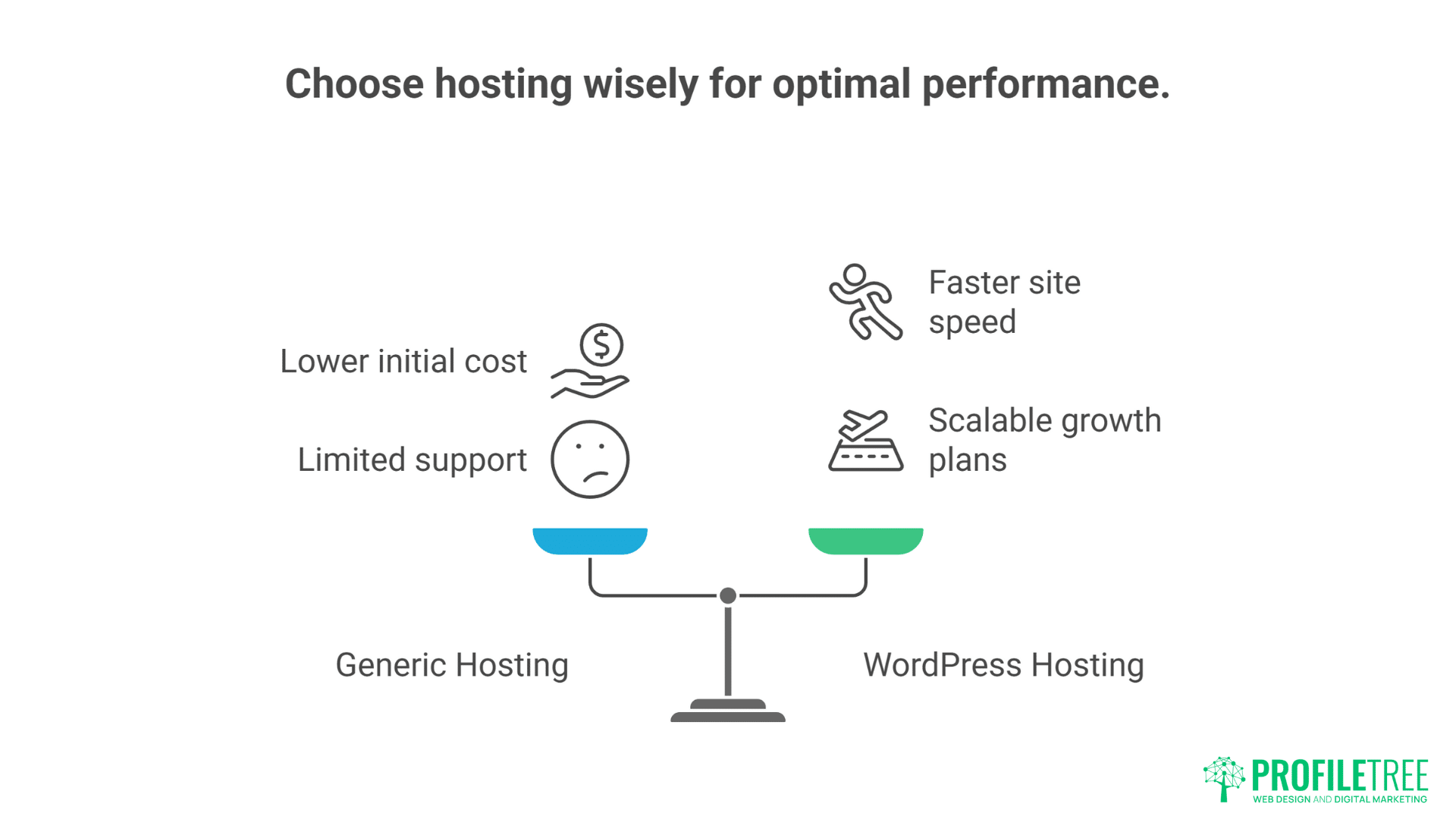
Some businesses need both generic and WordPress hosting. Here’s when and why.
Legitimate Hybrid Scenarios
- Main Site WordPress, Applications Elsewhere: Your marketing site runs WordPress, but your customer portal runs custom Python. You need WordPress hosting for the main site, generic or specialised hosting for the application.
- Development and Production Separation: Production on WordPress hosting for reliability, development on generic hosting for flexibility and cost savings.
- Multi-Platform Strategy:WordPress blog for content marketing, Shopify for e-commerce, custom application for customer service. Each needs appropriate hosting.
Hybrid Architecture Example
A London software company uses:
- WordPress hosting for marketing site (£65/month)
- Generic VPS for application (£40/month)
- Static hosting for documentation (£5/month)
- Total: £110/month for optimised infrastructure
Trying to run everything on one generic server would cost more in management time and deliver worse performance.
Common Misconceptions Debunked
Let’s destroy the myths that confuse hosting decisions.
Myth 1: “WordPress Hosting Is Just Marketing”
Reality: Genuine WordPress hosting includes specific optimisations that deliver measurable improvements. It’s not just marketing—it’s purposeful engineering.
Myth 2: “Generic Hosting Is More Flexible”
Reality: If you’re running WordPress, you don’t need flexibility—you need optimisation. Flexibility to run anything means optimised for nothing.
Myth 3: “WordPress Hosting Locks You In”
Reality: WordPress sites migrate easily between WordPress hosts. You’re less locked in than with generic hosting’s custom configurations.
Myth 4: “All WordPress Hosting Is the Same”
Reality: Quality varies dramatically. Budget WordPress hosting might be worse than quality generic hosting. Research specific providers, not just categories.
Myth 5: “Technical People Don’t Need WordPress Hosting”
Reality: Technical people’s time is valuable. Why spend it on server management when WordPress hosting handles it automatically?
Making Your Decision: A Framework
Here’s a systematic approach to choosing between generic and WordPress hosting.
Step 1: Assess Your Situation
Platform Check:
- Are you using WordPress? (If no, generic hosting)
- Will you always use WordPress? (If unsure, consider flexibility)
- Do you need other platforms too? (Consider hybrid)
Step 2: Calculate True Costs
Include Everything:
- Monthly hosting fees
- Additional services needed
- Time investment required
- Opportunity costs
- Risk costs
Step 3: Evaluate Expertise
Be Honest:
- Can you manage WordPress technically?
- Do you want to?
- Is it good use of your time?
- What happens if you’re unavailable?
Step 4: Consider Growth
Think Ahead:
- Will traffic increase?
- Will functionality expand?
- Will WordPress remain your platform?
- Will support needs change?
Step 5: Test Support
Before Committing:
- Contact support with WordPress question
- Evaluate response time and quality
- Test during your business hours
- Check escalation procedures
The ProfileTree Perspective
We offer both managed WordPress hosting and can work with generic hosting through our development services. We recommend WordPress hosting for 90% of WordPress sites because:
- Efficiency: Optimised infrastructure delivers better performance immediately
- Reliability: Purpose-built systems prevent WordPress-specific problems
- Support: WordPress experts solve problems faster
- Value: True cost usually lower than generic hosting plus management
- Growth: Scales with your business without technical complexity
But we’ll honestly tell you if generic hosting makes sense for your specific situation. Some businesses need flexibility more than optimisation.
Your Action Plan
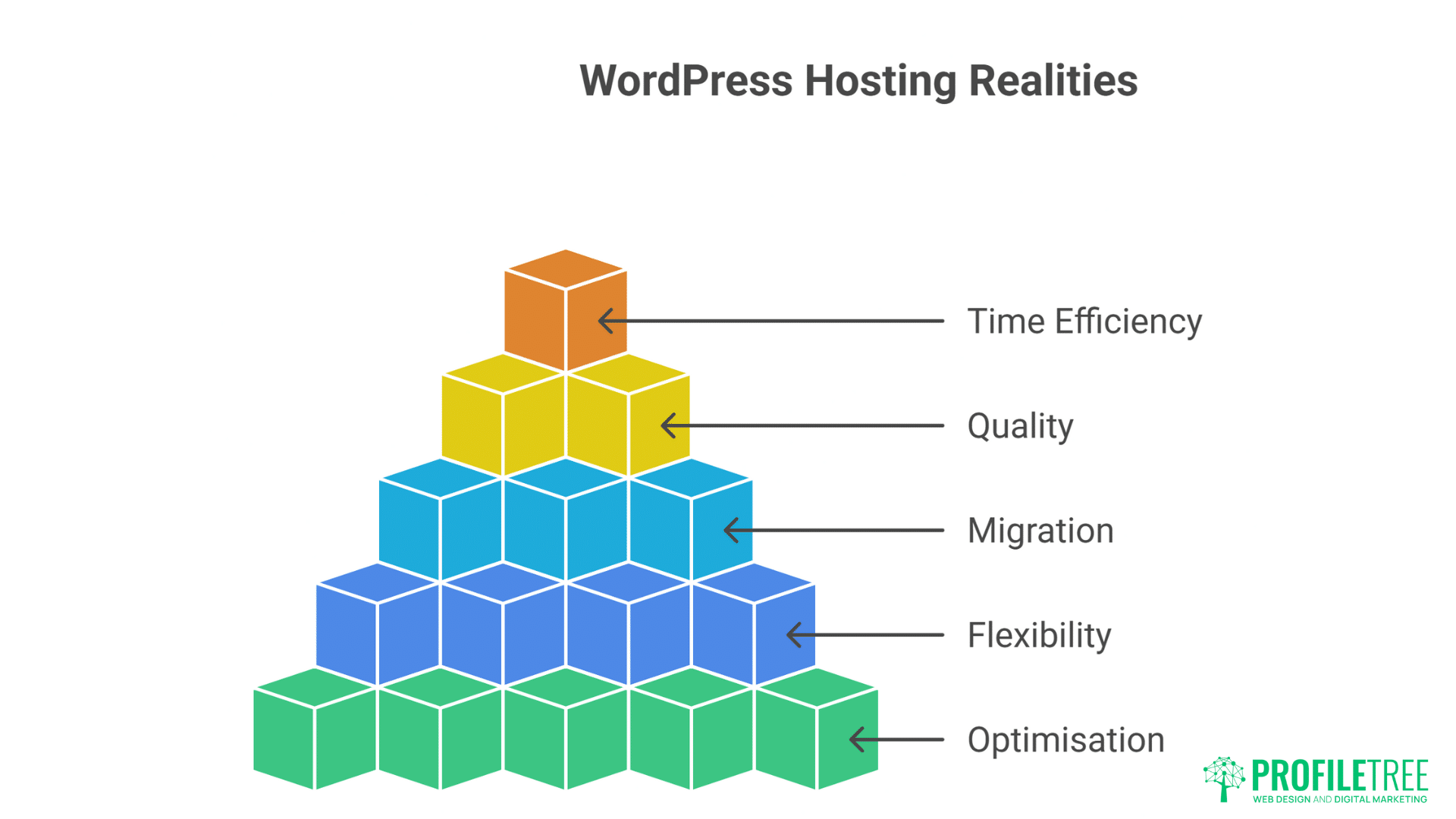
Stop wondering about hosting differences. Take action:
If Currently on Generic Hosting with WordPress:
- Calculate your true monthly cost
- Test your site speed
- Document problems and time spent
- Get WordPress hosting quotes
- Compare total cost of ownership
- Plan migration if beneficial
If Choosing Hosting for New WordPress Site:
- Start with WordPress hosting
- Avoid generic unless specific need
- Choose quality over price
- Factor in growth plans
- Test support before committing
If Unsure About Platform:
- Start with generic if truly unsure
- But commit to platform quickly
- Migrate to appropriate hosting once decided
- Don’t stay in limbo long-term
The Bottom Line
WordPress hosting vs web hosting isn’t about better or worse—it’s about fit for purpose. Using generic web hosting for WordPress is like wearing wellies to run a marathon. They’re perfectly good footwear, just wrong for the task.
If you’re running WordPress (and 43% of the web does), WordPress hosting delivers better performance, security, and reliability for less total cost than generic hosting plus all the extras and management time.
The hosting industry maintains confusion because it’s profitable. Now you understand the difference, you can make informed decisions based on your needs, not their commission structures.
Stop paying for flexibility you don’t need or struggling with generic solutions that don’t serve your specific requirements. Choose hosting that matches your platform, and watch your website transform from a constant headache to a reliable business asset.
Contact ProfileTree for an honest hosting consultation. We’ll assess your needs, explain options clearly, and recommend solutions that serve your business, not our sales targets. Because UK businesses deserve clarity, not confusion, in their hosting decisions.
Your WordPress site deserves WordPress hosting. Your business deserves infrastructure that supports growth. Your stress levels deserve solutions that just work. Make the right choice today.