
Your E-E-A-T Strategy for Sustainable SEO Success
Table of Contents
Google’s search algorithms have evolved beyond simple keyword matching to assess the credibility and authority of content creators. Understanding and implementing E-E-A-T—Experience, Expertise, Authoritativeness, and Trustworthiness—has become essential for businesses seeking long-term search visibility and organic traffic growth.
E-E-A-T strategy represents Google’s framework for evaluating content quality, particularly for topics that could impact users’ health, financial stability, safety, or major life decisions. These “Your Money or Your Life” (YMYL) topics receive heightened scrutiny, but E-E-A-T principles apply across all content types. For business owners and marketing managers, building a strong E-E-A-T foundation means creating content that demonstrates genuine knowledge, first-hand experience, and measurable authority in your field.
Understanding the Four Pillars of E-E-A-T
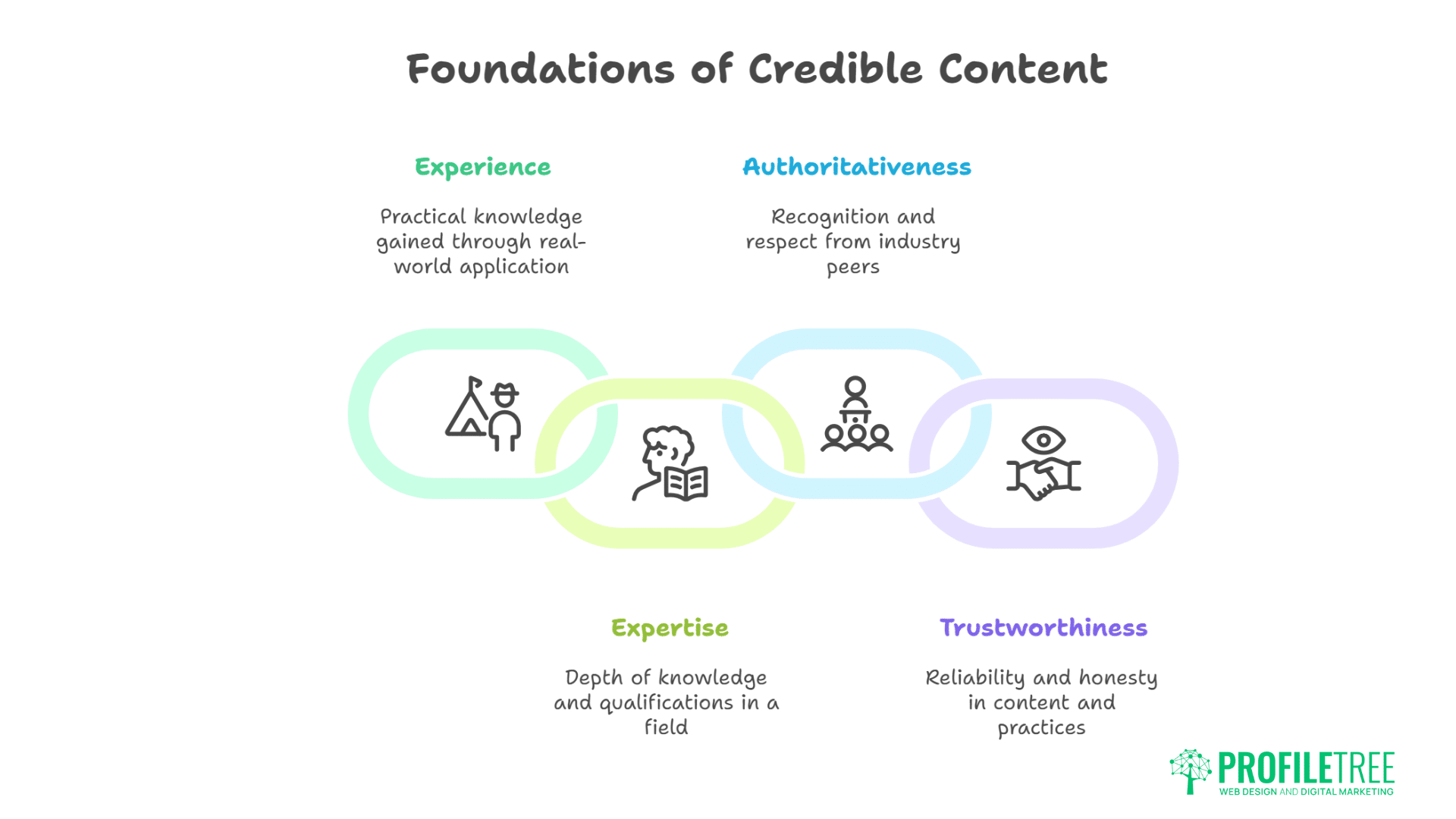
The E-E-A-T framework provides a practical lens for evaluating whether your content serves users effectively. Each pillar addresses a specific dimension of credibility, working together to signal that your content deserves visibility in search results.
Experience: Demonstrating First-Hand Knowledge
Experience refers to the practical, real-world knowledge that content creators bring to their subject matter. Google’s algorithms now prioritise content written by people who have actually used a product, visited a location, or implemented a strategy they’re discussing. This addition to the original E-A-T framework came in December 2022, recognising that theoretical knowledge alone doesn’t always serve users best.
For SMEs and digital agencies, experience manifests through case studies, client testimonials, project portfolios, and detailed process descriptions. When ProfileTree creates content marketing strategies for clients, documenting actual results and challenges faced adds authenticity that generic advice cannot match.
Product reviews gain credibility when they include original photography, detailed specifications, and honest assessments based on extended use. Service-based businesses should showcase real client work, explain problem-solving approaches, and share lessons learned from actual projects rather than theoretical scenarios.
Expertise: Building Demonstrable Knowledge
Expertise encompasses the depth of knowledge and qualifications a content creator possesses. This includes formal education, professional certifications, years of practice, and recognised achievements within a field. Google’s quality raters look for signals that authors have the necessary background to write authoritatively on their topics.
For technical subjects, expertise might mean advanced degrees or professional accreditations. For creative fields, it could involve a portfolio of published work or industry recognition. Even everyday topics benefit from clear expertise—a parent writing about child-rearing brings valuable expertise despite lacking formal qualifications in child psychology.
Belfast-based businesses can demonstrate expertise through detailed author biographies, staff qualification pages, and content that reflects deep industry knowledge. When ProfileTree delivers AI training to SMEs, documenting the trainers’ backgrounds and showcasing successful implementation projects establishes clear expertise in AI adoption for business contexts.
Authoritativeness: Establishing Industry Recognition
Authoritativeness measures how other experts and organisations within your industry view your content and brand. This pillar extends beyond your own website to include mentions, citations, links, and references from respected third-party sources.
Building authority requires consistent publication of high-quality content, active participation in industry discussions, and earning recognition from peers. When industry publications reference your work, when other businesses link to your resources, and when professionals recommend your services, you build authoritativeness that search algorithms recognise.
For digital agencies and SMEs, authority develops through thought leadership content, speaking engagements, industry awards, professional memberships, and media coverage. A digital strategy consultancy gains authority when clients publicly credit their advice, when industry blogs reference their frameworks, and when professional networks acknowledge their expertise.
Trustworthiness: Creating Reliable Content
Trustworthiness represents the accuracy, honesty, and reliability of both your content and your website. This pillar examines whether users can safely trust the information you provide and whether your website handles their data responsibly.
Trust signals include secure HTTPS connections, clear privacy policies, transparent business information, genuine customer reviews, and factually accurate content. Negative trust signals include misleading claims, hidden costs, difficult-to-find contact information, and content that contradicts established facts.
“Building trustworthiness requires consistent honesty and transparency across all digital touchpoints,” says Ciaran Connolly, Director of ProfileTree. Businesses that prioritise user needs over short-term rankings create sustainable SEO success because Google’s algorithms increasingly reward genuine value creation.
Implementing E-E-A-T Across Your Digital Presence
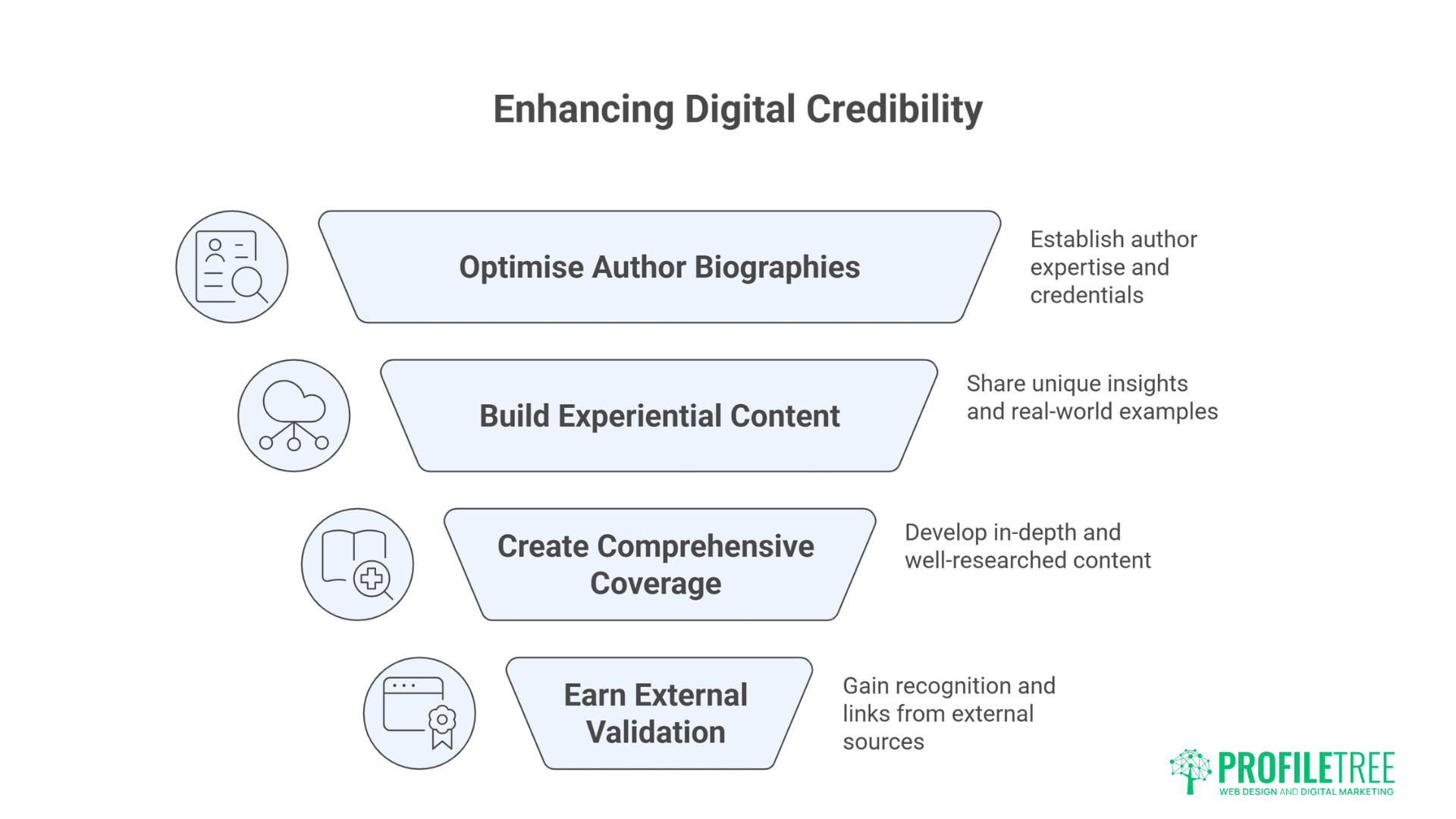
Translating E-E-A-T principles into practical website improvements requires a systematic approach across multiple touchpoints. The following strategies help you embed credibility signals throughout your digital presence, from author profiles to technical infrastructure.
Optimising Author Biographies and Credentials
Every piece of content should clearly identify its author and establish their qualifications to write on the topic. Detailed author biographies should include relevant experience, professional background, industry involvement, and links to social profiles or professional networks like LinkedIn.
For businesses with multiple content creators, individual author pages allow each contributor to build their own E-E-A-T profile. These pages should feature high-quality photographs, comprehensive biographies, links to published work, and any relevant certifications or achievements.
Small businesses where the owner creates most content should prominently display their background and expertise. A Belfast restaurant owner writing about local food culture brings valuable experience and local knowledge that food journalists might lack, despite having less formal culinary training.
Building Content That Demonstrates Experience
Moving beyond generic advice requires sharing specific examples, original data, and unique insights that only come from direct experience. Rather than writing “Five social media tips,” experienced practitioners should explain how they implemented specific strategies, what results they achieved, and what adjustments they made based on real performance data.
Video marketing content particularly benefits from experiential approaches—showing actual production processes, explaining equipment choices based on project requirements, and sharing before-and-after examples from real campaigns creates authenticity that scripted presentations cannot match.
Original research, surveys of your customer base, and analysis of your own performance data all demonstrate experience-based knowledge. Publishing annual industry reports, sharing proprietary methodologies, or documenting multi-year trends within your business establishes you as someone who genuinely works within the field rather than aggregating others’ insights.
Creating Comprehensive Topic Coverage
Expertise shows through thorough, well-researched content that addresses topics from multiple angles. Surface-level articles that rehash common knowledge don’t demonstrate expertise, but comprehensive guides that explore nuances, address edge cases, and provide actionable frameworks do.
When ProfileTree develops search engine optimisation strategies, comprehensive content covers technical SEO, on-page optimisation, content strategy, link building, local SEO considerations, and performance measurement—not just a few basic tips. This depth signals expertise that short, generic posts cannot.
Topic clusters and pillar pages allow businesses to demonstrate comprehensive knowledge across related subjects. A core article on website performance connects to detailed pieces on image optimisation, code efficiency, hosting considerations, and content delivery networks. This interconnected content structure shows both depth and breadth of expertise.
Earning External Validation and Links
Authoritativeness requires recognition from outside your own website. Building relationships with industry publications, contributing guest articles to respected platforms, and earning mentions in media coverage all contribute to authority signals.
Digital PR strategies should focus on creating genuinely newsworthy content—original research, unique perspectives, or innovative approaches that other publications want to reference. Press releases about minor business updates rarely earn quality links, but publishing significant industry data or pioneering new methodologies does.
Professional networking, both online and offline, creates opportunities for natural link building and mentions. Speaking at industry events, participating in podcasts, contributing to round-up articles, and collaborating with complementary businesses all build authority through third-party validation.
For Northern Ireland businesses, local media coverage, regional business awards, and participation in local business organisations provide relevant authority signals. A Belfast company serving UK clients benefits from recognition in both local and national contexts.
Technical Implementation of E-E-A-T Signals
Beyond content quality, technical elements communicate trustworthiness and legitimacy to both search engines and users. Implementing structured data, security protocols, and transparent business information creates the technical foundation for strong E-E-A-T signals.
Schema Markup for Author and Organisation Information
Structured data helps search engines understand the relationships between content, authors, and organisations. Author schema markup explicitly identifies content creators and connects them to their credentials, whilst Organisation schema provides verified business information.
Implementing Article schema with proper author attribution, publishing date, and update information gives search engines clear signals about content freshness and creator identity. Organisation schema, including contact information, social profiles, and business classification, helps establish your entity within Google’s knowledge graph.
Review schema, when implemented correctly with genuine customer feedback, provides trust signals that influence both search rankings and click-through rates. However, manipulating reviews or implementing schema markup for fake testimonials damages trustworthiness and can result in manual penalties.
Website Security and User Safety
Technical trustworthiness starts with basic website security. HTTPS encryption should be standard across all pages, not just checkout or login areas. Website hosting and management services that prioritise security, regular updates, and reliable performance contribute to trust signals.
Clear privacy policies, transparent cookie usage, and GDPR compliance demonstrate respect for user data. Contact information should be easy to find, with multiple contact methods available. Physical addresses, phone numbers, and detailed “About Us” pages all contribute to trustworthiness.
Regular security audits, malware scanning, and prompt addressing of any security issues prevent trust damage that’s difficult to recover from. A compromised website not only loses user trust but can result in search engine warnings or removal from search results entirely.
Transparent Business Practices and Policies
Clear terms of service, return policies, pricing information, and business practices build trust with both users and search engines. Hidden costs, unclear policies, or difficult-to-find important information create friction that damages trustworthiness.
Customer service accessibility matters for trust signals. Multiple contact methods, reasonable response times, and visible customer support create confidence. Displaying genuine customer reviews, including some negative feedback handled professionally, demonstrates transparency that builds trust more than suspiciously perfect ratings.
For service-based businesses like digital agencies, detailed service pages that explain processes, deliverables, and typical project timelines help clients make informed decisions. ProfileTree’s approach to website design and website development includes clear project phases, client involvement points, and realistic timeframe expectations.
Content Strategy for Long-Term E-E-A-T Growth
Sustainable E-E-A-T development requires ongoing content management and strategic planning rather than one-off optimisation efforts. A structured approach to content creation, maintenance, and expansion builds cumulative authority that strengthens over time.
Maintaining Content Accuracy and Freshness
Outdated information damages trustworthiness regardless of how accurate it was when first published. Regular content audits identify pages needing updates, fact-checking ensures continued accuracy, and clear update dates show users when information was last verified.
Statistics should cite current sources, examples should reflect recent developments, and recommendations should account for platform changes or industry evolution. A 2020 social media marketing guide loses credibility in 2025 if it doesn’t acknowledge major platform changes, algorithm updates, or shifting user behaviours.
Content management systems should track update dates separately from publication dates. Showing readers that a comprehensive guide was originally published two years ago but updated last month builds trust more than hiding publication dates or republishing old content with only cosmetic changes.
Building Topic Authority Through Depth
Authority develops through comprehensive coverage of related topics rather than isolated articles. A business writing occasionally about their industry doesn’t build the same authority as one consistently publishing detailed, interrelated content across their field.
Digital training content demonstrates this principle—a single workshop announcement doesn’t establish training authority, but a library of educational resources, methodology explanations, case studies, and participant testimonials does.
Content should progress from foundational topics to advanced applications, creating a learning path that demonstrates deep knowledge. A digital agency might start with basic SEO principles, progress to technical implementation, advance to enterprise-level strategies, and culminate in industry-specific applications. This progression shows expertise across all knowledge levels.
Integrating First-Hand Experience Throughout Content
Every article should reflect genuine experience rather than aggregating others’ work. Original examples, specific scenarios, and detailed explanations based on actual implementation separate experienced practitioners from content aggregators.
When discussing AI chatbots or AI-enhanced marketing, agencies should reference specific implementation projects, explain decision-making processes for choosing technologies, and share measurable results from actual campaigns. Generic advice about AI benefits doesn’t demonstrate the experience that practical implementation guides do.
Photography, screenshots, and visual documentation of real work provide experience signals that stock imagery cannot match. Behind-the-scenes content, process documentation, and work-in-progress sharing all reinforce that content comes from practitioners actively working in their field.
E-E-A-T Considerations for Different Content Types
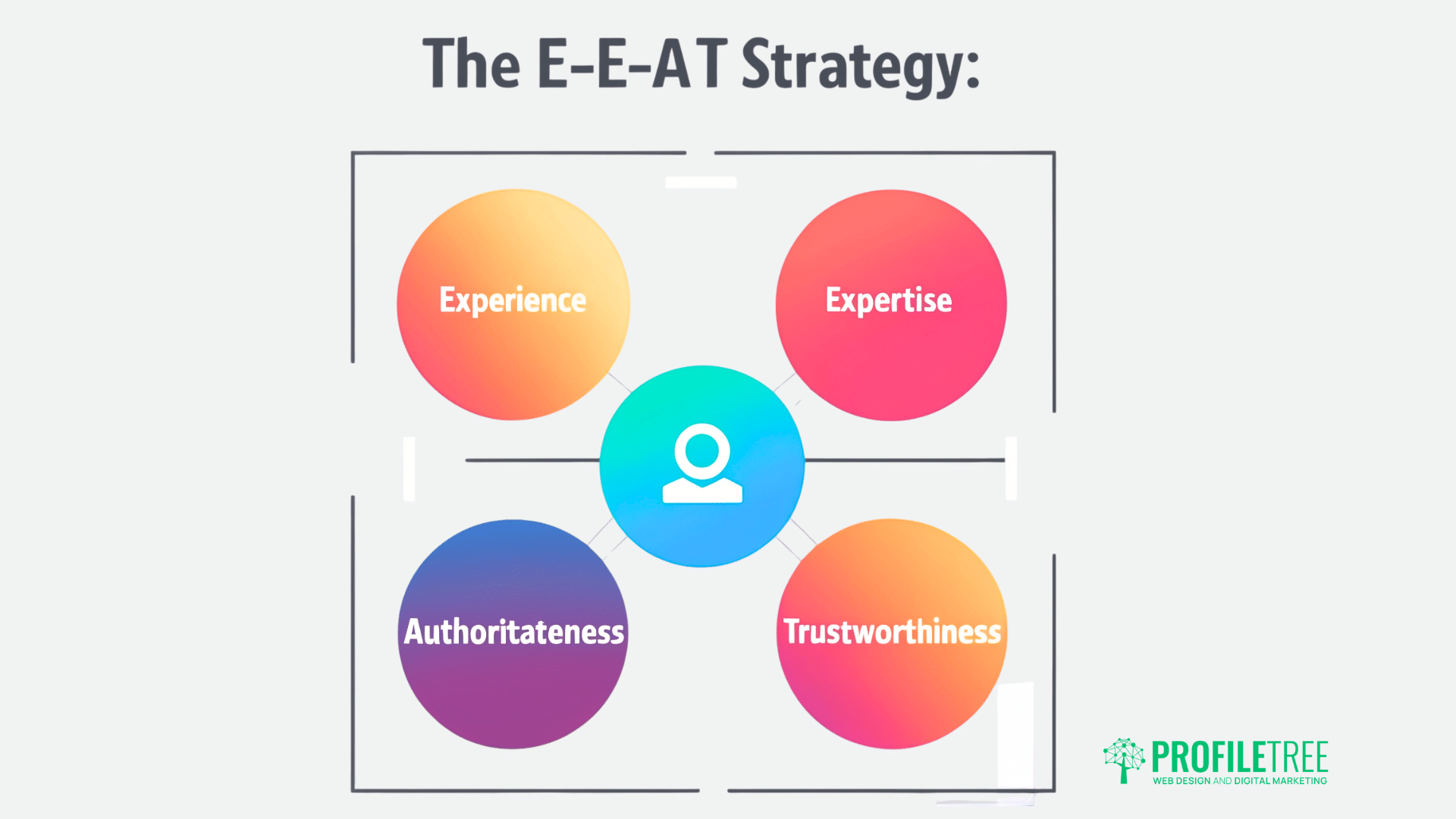
Different content formats require tailored approaches to demonstrating experience, expertise, authority, and trust. Understanding how E-E-A-T principles apply to specific page types helps you optimise each section of your website appropriately.
Product and Service Pages
Commercial pages require strong trust signals—detailed specifications, transparent pricing, genuine customer reviews, clear terms of service, and comprehensive product information. High-quality original images from multiple angles, detailed feature explanations, and honest assessments of limitations or use cases all build trust.
Service pages should explain processes, showcase previous work, provide realistic timeframes, and set clear expectations. Social media marketing services gain credibility through case studies, client testimonials, and detailed explanations of strategy development processes.
Educational and Informational Content
Tutorial content demands practical expertise—step-by-step instructions should reflect actual completion of the process, screenshots should show real interfaces, and troubleshooting advice should address genuine issues users encounter.
Theoretical explanations need grounding in practical application. A guide to content strategy benefits from explaining underlying principles but gains credibility through specific examples, implementation frameworks, and documented results from real campaigns.
Opinion and Analysis Content
Thought leadership content requires a clear authorial voice and well-supported arguments. Original analysis, unique perspectives, and willingness to take positions separate thought leaders from content aggregators who simply summarise others’ views.
Industry trend analysis gains authority from specific examples, data analysis, and a demonstrated track record of accurate predictions. A digital agency commenting on emerging technologies should reference their own experimentation, client implementations, and measured results rather than repeating press release content.
Monitoring and Measuring E-E-A-T Success
Tracking E-E-A-T improvements requires monitoring both direct authority signals and indirect performance indicators. Regular measurement helps you identify which strategies strengthen your credibility and where further development is needed.
Tracking Authority Signals
Brand mention monitoring tools track when other websites reference your business, content, or team members. Increasing mention frequency, particularly from respected industry sources, indicates growing authority.
Backlink analysis reveals which content earns editorial links from quality sources. Content that other websites reference as authoritative sources demonstrates E-E-A-T strength more than content requiring outreach or link exchange for visibility.
Analysing Search Performance for YMYL Terms
Performance on competitive, high-value keywords indicates search engines’ assessment of your E-E-A-T. Gradual ranking improvements for authoritative queries suggest strengthening E-E-A-T signals, particularly when competitors with stronger backlink profiles rank lower.
Click-through rates from search results provide indirect E-E-A-T feedback. High-ranking pages with poor click-through rates may have weak brand recognition or lack trust signals in search result appearance. Improving brand authority and trust should increase clicks even without ranking changes.
User Engagement and Behaviour Metrics
Time on page, pages per session, and return visitor rates indicate whether users find your content trustworthy and valuable. Content that ranks well but shows poor engagement metrics may achieve rankings through technical optimisation without genuine E-E-A-T strength.
Conversion rates for informational content leading to service enquiries suggest users trust your expertise enough to consider business relationships. Educational content that builds trust naturally feeds commercial objectives without aggressive selling.
Building Sustainable E-E-A-T Growth
E-E-A-T development requires long-term commitment rather than quick fixes. Businesses that consistently publish expert content, build industry relationships, and prioritise user value create compound growth in search visibility and organic traffic.
For Belfast-based businesses and UK SMEs, focusing on genuine expertise, transparent communication, and documented experience creates search success that survives algorithm updates and competitive pressure. ProfileTree’s approach to sustainable SEO growth emphasises building real authority through quality service delivery, comprehensive content creation, and active industry participation rather than attempting to manipulate search rankings through technical tricks.
Your E-E-A-T strategy should reflect your actual business strengths and genuine expertise. Authentic demonstration of experience, transparent communication of processes, and commitment to user value create search visibility that supports business growth for years, not just months.
Conclusion
Building a strong E-E-A-T foundation represents one of the most sustainable investments you can make in your digital presence. Unlike technical shortcuts or algorithmic loopholes that become obsolete with each search engine update, genuine expertise, documented experience, industry authority, and earned trust create lasting value for both users and search rankings.
The businesses that succeed in organic search over the coming years will be those that prioritise substance over manipulation. This means publishing content written by qualified authors, documenting real project experience, earning recognition from industry peers, and maintaining transparent business practices. These aren’t quick wins, but they create compounding returns that strengthen over time.