
Shopify SEO Services: Get More Organic Traffic to Your Shopify Store
Table of Contents
Shopify powers over four million online stores worldwide. The platform makes launching an e-commerce business straightforward, but launching and ranking are different things. Most Shopify stores struggle to attract organic search traffic because their owners don’t understand Shopify’s specific SEO requirements and limitations.
Shopify handles some SEO elements automatically – SSL certificates, mobile responsiveness, and basic sitemap generation. But these foundations don’t equal optimisation. Without deliberate Shopify SEO work, your store competes against millions of others with identical default setups.
ProfileTree provides Shopify SEO services for store owners who want organic traffic alongside or instead of paid advertising. We understand Shopify’s architecture, its SEO strengths, and the workarounds required to address its limitations. Combined with our broader e-commerce SEO expertise and Shopify development capabilities, we help Shopify stores rank for searches that drive sales.
Why Shopify Stores Need Specialist SEO
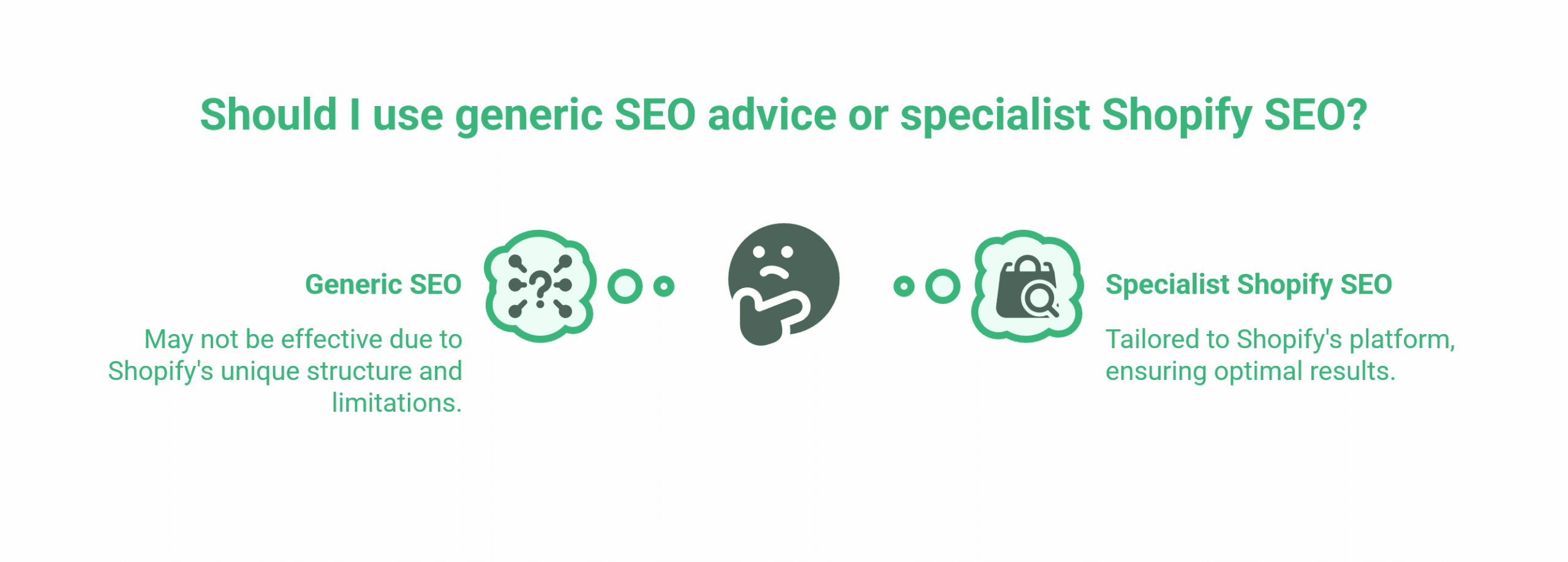
Shopify differs from other platforms in ways that affect SEO strategy. Generic SEO advice often doesn’t apply, and some standard recommendations are impossible within Shopify’s structure.
What Shopify Does Well for SEO
Shopify provides solid SEO foundations out of the box. Every Shopify store gets automatic SSL encryption, mobile-responsive themes from the theme store, automatic sitemap generation, built-in canonical tags for many duplicate content scenarios, and reasonable page speed from Shopify’s CDN infrastructure.
These defaults put Shopify ahead of poorly configured self-hosted stores. A basic Shopify store often outperforms a WordPress site with broken SSL, missing sitemaps, and mobile issues.
But defaults only provide parity with other properly configured stores. Competitive advantage requires optimisation beyond what Shopify provides automatically.
Shopify’s SEO Limitations
Shopify constrains certain SEO elements that other platforms allow full control over.
URL structures follow fixed patterns. Products live at /products/product-name, collections at /collections/collection-name. You cannot change these base structures. Products in collections create additional URLs (/collections/collection-name/products/product-name) that Shopify handles with canonical tags, but the structure remains inflexible.
Robots.txt cannot be fully customised. Shopify generates robots.txt automatically, and while you can add directives through theme files, you cannot modify certain default rules.
Site speed depends partly on Shopify’s infrastructure. You can optimise images and minimise theme code, but you cannot change hosting, implement server-level caching changes, or make certain performance optimisations possible on self-hosted platforms.
Blog functionality remains basic compared to WordPress. Shopify’s blog works for simple content marketing but lacks advanced features for complex content strategies.
Duplicate content from product variants, collections, and tags requires careful management. Shopify’s automatic canonical tags help, but don’t solve every scenario.
Understanding these limitations shapes a realistic Shopify SEO strategy – maximising what’s possible while accepting what isn’t.
Why Generic SEO Advice Fails for Shopify
SEO advice written for WordPress or general websites often frustrates Shopify store owners. Recommendations to “edit your robots.txt” or “change your URL structure” hit walls. Plugins suggested for WordPress don’t exist for Shopify.
Shopify SEO requires Shopify-specific knowledge. What apps actually help versus create problems? How do you implement schema markup within Liquid templates? Which theme code changes improve SEO without breaking functionality?
Generic SEO audits flag “issues” that are simply Shopify’s architecture. Specialist Shopify SEO distinguishes between fixable problems and platform characteristics to work around.
Shopify SEO Services We Provide
Effective Shopify SEO works within the platform’s structure while pushing its capabilities to the limit.
Technical Shopify SEO
Technical optimisation ensures search engines can crawl and understand your Shopify store properly.
The theme SEO audit examines your theme’s code for SEO issues. Many Shopify themes, including popular paid themes, contain SEO problems – missing heading hierarchy, poor schema implementation, render-blocking resources, and inefficient code. We identify issues and recommend theme changes or alternatives.
Site structure optimisation organises your collections, products, and pages for search engines to understand and for user navigation. Flat structures that bury products hurt rankings. Logical hierarchies help both search engines and shoppers.
The canonical tag review checks Shopify’s automatic canonicalisation and identifies scenarios that require manual intervention. Product variants, filtered collection views, and cross-linked products can create gaps in canonicalisation.
Internal linking improvements strengthen connections between products, collections, and content. Shopify’s default internal linking is minimal – related products, collection listings, and navigation links need strategic enhancement.
Page speed optimisation addresses factors within your control – image compression and lazy loading, app audit to remove speed-killing apps, theme code optimisation, and font loading improvements. We set realistic expectations about speed limits inherent to Shopify’s hosted nature.
A mobile experience audit ensures your theme performs well on phones, where most Shopify traffic occurs. Mobile-first indexing means Google primarily uses your store’s mobile version to judge it.
Schema markup implementation adds structured data through theme modifications or apps. Product schema, enabling rich results, organisation schema, breadcrumb schema, and FAQ schema, all improve how your store appears in search results.
Crawl issue resolution addresses problems that prevent search engines from properly crawling your store. Blocked resources, broken internal links, and indexation issues all need to be fixed.
Product Page Optimisation
Product pages drive e-commerce revenue. Each product page represents a ranking opportunity for specific product searches.
Product title optimisation balances keyword targeting with compelling, clear titles. Shopify product titles appear in search results, browser tabs, and throughout your store – they need to work for both search engines and shoppers.
Product description writing creates unique content that sells and ranks. Manufacturer descriptions duplicated across every retailer don’t differentiate your store. Original descriptions improve rankings and conversions.
Meta title and description customisation uses Shopify’s built-in SEO fields to craft search-result-specific messaging. What appears in Google results can differ from on-page content, allowing keyword optimisation without compromising user experience.
Image optimisation ensures product photos have descriptive filenames, appropriate alt text, proper compression, and suitable formats. Shopify’s image handling is decent, but its default settings aren’t optimised.
Product schema enhancement goes beyond Shopify’s basic product markup to include all available product attributes – brand, SKU, GTIN, availability, price, and reviews. Richer schema produces richer search results.
URL handle optimisation cleans up auto-generated product URLs. Shopify creates URL handles from product titles, which often need editing for keyword targeting and readability.
Collection Page Optimisation
Collection pages (Shopify’s category equivalent) often have stronger ranking potential than individual products. A collection ranking for “men’s leather wallets” drives more traffic than any single wallet product page.
Collection descriptions add unique content to collection pages. Empty collection pages with only product grids struggle to rank. Helpful content explaining the collection improves rankings and assists shoppers.
Collection structure review assesses whether your collection hierarchy makes sense for SEO and users. Overlapping collections, missing subcollections, and illogical groupings all affect performance.
Collection metadata optimises titles and descriptions for search results, specifically targeting collection-level keywords that aggregate product searches.
The collection page schema marks pages as product collections, helping search engines understand their purpose.
Tag page management addresses Shopify’s tag URLs that can create thin content and crawl waste. Tag pages need either optimisation, noindexing, or consolidation, depending on their value.
Content Strategy for Shopify
Content beyond products and collections builds authority and captures informational searches.
Blog strategy development plans content targeting keywords relevant to your products and customers. Shopify’s blog functionality, while basic, can support effective content marketing with the right strategy.
Creating a buying guide develops content that helps customers choose products. How to choose a leather wallet” or “complete guide to watch movements” capture research-phase searches before purchase intent crystallises.
FAQ content answers common customer questions, targets long-tail searches, and reduces support burden. FAQ pages with proper schema can earn featured snippets.
Landing page development creates pages targeting specific keyword opportunities outside normal collection structures. Shopify pages allow flexibility for SEO-focused content.
Shopify App Assessment and Optimisation
Shopify apps extend functionality but often damage SEO. We assess your current apps and recommend changes.
SEO app evaluation reviews whether your SEO apps actually help or just create busywork. Many Shopify SEO apps duplicate built-in functionality or implement changes incorrectly.
Speed-killing app identification identifies apps that are dragging down page speed. Some apps add significant JavaScript overhead despite providing minimal value.
App conflict resolution addresses situations where multiple apps create SEO problems through conflicting code, duplicate schema, or competing functionality.
Recommended app stack suggests apps that genuinely improve SEO – image compression apps, proper schema apps, and redirect management tools that work correctly.
Link Building for Shopify Stores
External links build authority, helping Shopify stores compete for commercial keywords.
Product-led outreach gets your products featured in roundups, gift guides, and recommendation content in your niche. Editorial links to product pages carry significant value.
Content-based link building earns links to blog posts, guides, and resources through outreach, digital PR, and relationship building.
Brand mention conversion identifies unlinked mentions of your brand and products and requests link additions where appropriate.
Competitor link analysis examines where competing stores earn links, identifying opportunities for your store.
Shopify SEO Process
A systematic process ensures comprehensive coverage and measurable progress.
Shopify SEO Audit
Every engagement starts with a thorough assessment of your current Shopify store.
Technical crawl examines your entire store for crawl issues, indexation problems, duplicate content, and technical SEO gaps.
Theme analysis reviews your theme’s code for SEO issues beyond what crawling reveals – heading structure, schema implementation, and code efficiency.
Content assessment evaluates product descriptions, collection content, and blog posts for thin content, duplication, and optimisation opportunities.
App audit reviews installed apps for SEO impact, both positive and negative.
Competitive analysis benchmarks your store against competing Shopify and non-Shopify stores, ranking for your target keywords.
The audit produces prioritised recommendations specific to your store, not generic Shopify advice.
Strategy Development
Audit findings shape a strategy matched to your business goals and resources.
Keyword research and mapping identify what searches your store should target and which pages should target which terms. Product pages, collection pages, and content each have appropriate keyword types.
Priority setting sequences work for maximum impact. Some stores need technical fixes before content investment makes sense. Others have solid foundations needing content development.
Resource planning matches ambition to available investment. Larger budgets allow faster progress across more areas. Smaller budgets require a tighter focus on the highest-impact opportunities.
Timeline expectations set a realistic understanding of when results appear. Shopify SEO results typically emerge over 3-6 months, with competitive niches taking longer.
Implementation
Strategy becomes action through hands-on implementation.
Theme modifications implement technical SEO improvements directly in your Shopify theme code. Schema markup, heading fixes, and performance improvements all require work in the Liquid template.
Content creation produces optimised product descriptions, collection content, and blog posts in line with the strategy.
Metadata optimisation updates titles, descriptions, and URL handles across products, collections, and pages.
Install and configure helpful apps, and remove problematic apps identified in the audit.
Redirect implementation handles URL changes, discontinued products, and structural modifications without losing existing rankings.
Ongoing Optimisation
Shopify SEO requires continuous attention as your store evolves.
New product optimisation ensures products added to your store get proper SEO treatment immediately, rather than sitting unoptimised.
Performance monitoring tracks rankings, traffic, and sales from organic search, identifying what’s working and what needs adjustment.
The algorithmic response addresses ranking changes from Google updates, diagnoses causes, and implements fixes.
Competitor monitoring watches how competing stores evolve their SEO, identifying threats and opportunities.
Quarterly strategy review assesses progress and adjusts priorities based on results and changing business needs.
Common Shopify SEO Problems We Fix
Shopify stores commonly face specific issues that our services address.
Thin Product Content
Product pages with only specifications, bullet points, or copied manufacturer descriptions struggle to rank. Unique, valuable product content differentiates your store from competitors selling identical items.
Thin content problems compound across catalogues. A store with 500 products and short descriptions has 500 weak pages, dragging down the overall site quality.
Duplicate Content From Collections
Products appearing in multiple collections create multiple URLs. Shopify’s canonical tags help, but don’t resolve every situation. Products in “New Arrivals,” “Best Sellers,” and category collections simultaneously can fragment ranking signals.
A proper collection strategy and canonical management consolidate authority for primary product URLs.
Bloated App Stack Killing Speed
Shopify stores often accumulate apps over time, each adding JavaScript, CSS, and functionality overhead. Apps installed for abandoned trials, deprecated features, or marginal benefits significantly slow stores.
App audits typically find substantial speed improvements available through app removal alone, before any other optimisation.
Poor Theme SEO Implementation
Many Shopify themes, including premium ones, have SEO implementation issues. Multiple H1 tags, missing schema markup, inefficient code, and poor mobile performance are common.
Theme SEO audits reveal whether your theme needs modification, replacement, or can be improved with configuration changes.
Missing or Broken Schema Markup
Schema markup enables rich results showing prices, availability, reviews, and ratings directly in search results. Stores without proper schema lose clicks to competitors whose listings look more compelling.
Shopify’s basic schema often misses attributes or implements them incorrectly. Implementing a custom schema in theme code or apps produces richer search results.
Collection Pages Lacking Content
Empty collection pages showing only product grids have little content for search engines to understand. Adding collection descriptions, buying guidance, and FAQs transforms thin collection pages into ranking assets.
Tag Page Proliferation
Shopify’s tag system generates a URL for each tag applied to a product. Stores with extensive tagging can have hundreds of thin tag pages that waste crawl budget and dilute site quality.
Tag page strategy involves either optimising valuable tag pages, noindexing low-value ones, or reconsidering the tagging approach entirely.
Shopify SEO Pricing
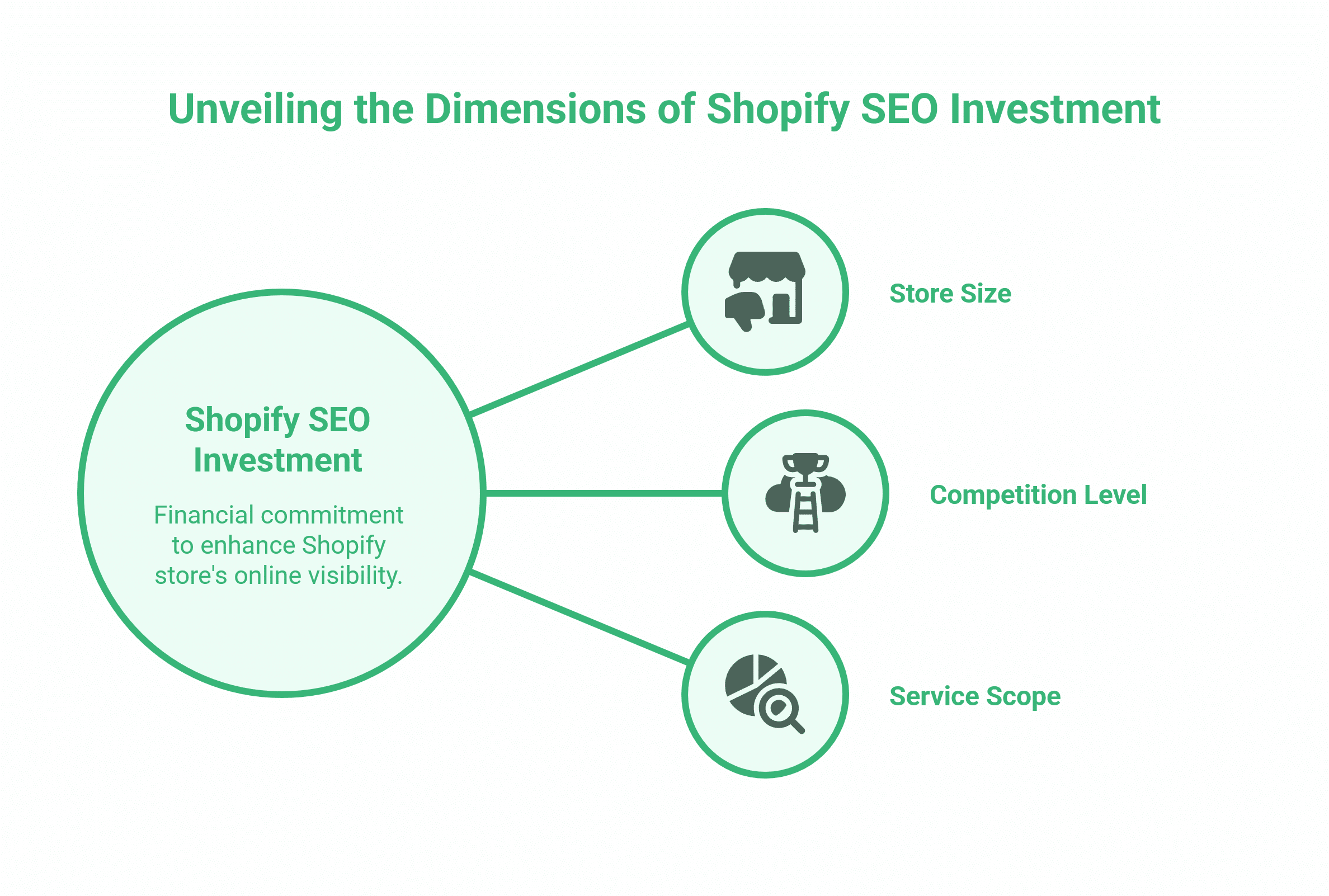
Shopify SEO investment varies with store size, competition level, and service scope.
One-Time Shopify SEO Projects
Shopify SEO audit: £600-1,200 Comprehensive technical, content, and competitive assessment with prioritised recommendations.
Technical SEO implementation: £1,000-2,500 Theme modifications, schema implementation, speed optimisation, and technical fixes from audit recommendations.
Product content development: £1,500-5,000+ Original product descriptions for catalogue optimisation. Pricing depends on the product count and the depth of the description.
Collection content development: £800-2,000 Unique content for key collection pages, including descriptions, FAQs, and buying guidance.
Ongoing Shopify SEO Management
Starter stores (under 200 products): £600-900/month. Technical monitoring, new product optimisation, basic content guidance, and monthly reporting.
Growing stores (200-1,000 products): £1,000-1,500/month. Active optimisation, content development, link building foundations, and comprehensive management.
Established stores (1,000+ products): £2,000+/month Full-service SEO management including content strategy, link building, and dedicated support.
Why ProfileTree for Shopify SEO
Choosing a Shopify SEO provider means finding genuine platform expertise, not generic SEO applied to Shopify.
Shopify Development Background
ProfileTree builds Shopify stores alongside providing SEO services. We work in Liquid templates, understand Shopify’s app ecosystem, and know what’s technically possible versus platform limitations.
When SEO recommendations require theme modifications, we implement them correctly. When clients ask about Shopify capabilities, we answer from direct experience rather than speculation.
E-commerce SEO Specialism
Shopify stores compete against all e-commerce sites, not just other Shopify stores. Our broader e-commerce SEO experience means strategies informed by what works across platforms, adapted to Shopify’s specific context.
Realistic About Platform Constraints
We won’t promise results requiring capabilities Shopify doesn’t offer. Recommendations work within Shopify’s architecture rather than fighting against it. Where limitations exist, we explain workarounds or alternative approaches rather than ignoring constraints.
Results Measured in Revenue
Shopify SEO success means more organic sales, not just rankings or traffic. Reporting connects SEO activities to store revenue, showing actual return on investment.
UK and Ireland Focused
Belfast-based with clients across the UK and Ireland, we understand these markets. For Shopify stores selling in the British and Irish markets, local knowledge of consumer behaviour and the competitive landscape adds value.
FAQs
Is Shopify good for SEO compared to other platforms?
Shopify is adequate for SEO with proper optimisation. It’s not as flexible as WordPress/WooCommerce for technical SEO, but it’s more reliable than poorly maintained self-hosted stores. Shopify’s SEO limitations rarely prevent success – most stores underperform due to poor optimisation rather than platform constraints.
Which Shopify SEO apps do you recommend?
We recommend apps based on specific store needs rather than universal suggestions. Generally useful apps include proper image compression tools and schema apps that enhance Shopify’s default markup. We’re cautious about “all-in-one” SEO apps that duplicate built-in functionality and add unnecessary complexity.
How do you handle duplicate content from Shopify’s URL structure?
Shopify’s automatic canonical tags handle most scenarios. We review canonicalisation across your store, fix cases where defaults fall short, and structure collections to minimise problematic duplication. Some duplication is inherent to Shopify – we manage it rather than eliminate it entirely.
Can Shopify stores rank against bigger competitors on WordPress or Magento?
Yes. Platform matters less than execution. Well-optimised Shopify stores regularly outrank poorly optimised enterprise stores. Shopify’s limitations become relevant only at high levels of competition, where marginal advantages matter. For most stores, optimisation quality determines rankings more than platform choice.
Ready to improve your Shopify store’s organic visibility? Contact ProfileTree to discuss Shopify SEO for your store.