
SEO for Hotels: Drive Direct Bookings, Cut OTA Costs
Table of Contents
Every hotelier knows the frustration. You’ve invested in beautiful rooms, trained excellent staff, and created memorable guest experiences—then watch online travel agents take 15-25% commission on bookings they’ve captured from guests who were searching for you anyway.
The dominance of Booking.com, Expedia, and other OTAs in hotel search results isn’t inevitable. Hotels with a strong direct SEO presence capture bookings, build guest relationships, and keep significantly more revenue per stay. The difference between a hotel paying £25 commission per night and one booking directly is the difference between surviving and thriving.
SEO for hotels operates in a fiercely competitive environment. OTAs spend billions on advertising and have sophisticated SEO operations. But they have a fundamental weakness: they can’t know your hotel as you do. They can’t create content about your unique character, your local area expertise, or the specific experiences you offer. That’s where independent and boutique hotels can compete—and win.
ProfileTree works with hospitality businesses across Northern Ireland, Ireland, and the UK to build search visibility that generates direct bookings. For hotels, that means appearing when travellers research destinations, competing effectively for brand searches, and providing compelling reasons to book directly.
Why Direct Bookings Matter
Understanding the economics of hotel distribution clarifies why SEO investment makes sense.
The Commission Problem
OTA commissions typically range from 15% to 25% of booking value. On a £150 room night, that’s £22.50 to £37.50 going to an intermediary. Over a year, a 50-room hotel with 70% occupancy might pay £200,000 or more in OTA commissions.
Some OTA presence is necessary—they provide genuine reach to travellers who wouldn’t otherwise find you. But every direct booking you can capture represents significant margin improvement. Even shifting 10% of bookings from OTAs to direct can transform profitability.
Beyond Commission Savings
Direct bookings provide advantages beyond commission savings:
Guest relationship ownership: When guests book directly, you capture their details for future marketing. OTA bookers remain the OTAs’ customers.
Upselling opportunity: Direct bookers are easier to upsell on room upgrades, packages, dining, and experiences before and during their stay.
Rate control: Direct rates can include added value (breakfast, parking, flexible cancellation) that OTAs don’t offer, making it easier to book directly without undercutting OTA prices.
Loyalty building: Direct relationships drive repeat business that sustains hotels in the long term.
The Search Landscape
When someone searches for your hotel by name, OTAs often appear above your own website in results. They bid on your brand name and have optimised pages specifically to capture that traffic.
Strong SEO ensures your website appears prominently for brand searches, destination searches, and the specific queries that indicate high booking intent. You can’t stop OTAs from bidding on your name, but you can ensure that bookers who want to book directly can find you easily.
Google Business Profile for Hotels
Your Google Business Profile is foundational for hotel local SEO. It appears in local search results, displays key information directly, and increasingly integrates booking functionality.
Profile Setup
Categories: Select appropriate categories:
- Hotel (primary for most properties)
- Boutique Hotel
- Bed and Breakfast
- Guest House
- Inn
- Resort Hotel
- Motel
Choose based on what you actually are. A boutique property should use “Boutique Hotel” rather than generic “Hotel” to appear for specific searches.
Attributes: Google offers extensive hotel attributes:
- Star rating
- Amenities (pool, gym, spa, restaurant, bar)
- Room features (air conditioning, Wi-Fi, parking)
- Accessibility features
- Check-in/check-out times
- Pet policy
- Service options
Complete every relevant attribute. These appear in search results and filter options, helping you appear for specific searches like “hotels with pool Belfast” or “pet-friendly hotels Donegal.”
Photos That Convert
Hotel photography directly impacts booking decisions. Invest in quality images:
Room photography: Every room type, well-lit and professionally shot. Show beds, bathrooms, views, and any distinctive features. Customers need to visualise their stay.
Public areas: Lobby, restaurant, bar, lounge areas. Show the atmosphere and spaces guests will enjoy.
Facilities: Pool, gym, spa, meeting rooms—whatever amenities you offer.
Exterior and grounds: Building exterior, gardens, parking, and surrounding area. Help guests picture arriving.
Food and dining: If you have a restaurant, appetising food photography matters significantly.
Local area: Nearby attractions, views, beaches, and landscapes. Sell the destination alongside the hotel.
Add photos regularly. Google favours active profiles, and fresh images keep your listing engaging. Encourage guest photos too—authentic guest content builds trust.
Managing Reviews
Hotel reviews powerfully influence booking decisions. A property with 4.5 stars and 500 reviews dramatically outperforms one with 4.0 stars and 50 reviews.
Generating reviews:
- Send post-stay emails requesting feedback
- Train the front desk to mention reviews at checkout for satisfied guests
- Include review links in departure communications
- Respond to every review, encouraging others to share experiences
Responding to reviews:
- Thank positive reviewers specifically, mentioning highlights of their stay
- Address negative reviews professionally and empathetically
- Acknowledge problems, explain any remedial actions, and invite return visits
- Never argue or become defensive
- Show you genuinely care about guest experience
Your responses demonstrate to potential guests how you handle feedback. Professional, caring responses to criticism often impress more than the criticism concerns.
Google Hotel Search Integration
Google increasingly displays hotel prices and booking options directly in search results. Ensure your hotel appears correctly:
Google Hotel Centre: If you use a channel manager or booking engine that integrates with Google, ensure your rates appear correctly.
Free booking links: Google offers them alongside paid placements. Ensure your booking engine is configured to appear in these free listings.
Price accuracy: Ensure Google displays accurate rates. Price discrepancies frustrate users and can result in removal from hotel search features.
Website Strategy for Hotels
Your website must compete with OTAs for direct bookings. That means exceptional user experience, compelling content, and frictionless booking.
Essential Website Elements
Booking engine: Prominent, easy-to-use booking functionality on every page. Don’t make visitors hunt for how to book. The booking button should be visible without scrolling on every page.
Room pages: Comprehensive pages for each room type with multiple photos, detailed descriptions, amenities lists, and clear pricing. Help guests confidently choose the right room.
Rates and packages: Clear rate information with any direct booking benefits (best rate guarantee, included breakfast, flexible cancellation). Give reasons to book directly rather than through OTAs.
Location and area: Detailed information about your location, nearby attractions, transport links, and local area. Sell the destination and the property.
Facilities and services: Comprehensive information on amenities, dining, spa, meeting facilities, and any other services.
Gallery: Extensive photo gallery organised logically (rooms, facilities, dining, events, local area).
Contact and directions: Multiple contact options, detailed directions, parking information, and transport links.
Direct Booking Incentives
Give guests reasons to book directly:
Best rate guarantee: Promise the best available rate for direct bookings.
Added value: Include benefits OTAs don’t offer—breakfast, parking, room upgrades, welcome amenity, late checkout.
Flexible policies: More generous cancellation terms for direct bookers.
Loyalty recognition: Points or benefits for returning direct guests.
Exclusive packages: Packages only available through direct booking.
Display these benefits prominently. Many guests don’t realise direct booking offers advantages—tell them clearly.
Mobile Excellence
Hotel websites must work flawlessly on mobile. Many travel decisions happen on phones—during commutes, in meetings, while travelling. If your website is slow or difficult to navigate on mobile, you lose bookings to competitors.
Test booking flow on various devices. Can guests easily:
- Browse room options?
- View photos effectively?
- Check availability and rates?
- Complete a booking without frustration?
Any friction in mobile booking drives guests to OTAs that’ve invested heavily in the mobile experience.
Technical Foundations
Solid technical SEO supports visibility:
Speed: Hotel websites with many images often load slowly. Optimise images, use efficient hosting, and ensure fast page loads.
HTTPS: Security is essential for any site that takes payment details.
Schema markup: Implement Hotel schema with your star rating, amenities, price range, and location data.
Our SEO basics guide at profiletree.com/seo-basics/ covers these technical foundations in detail.
Content Strategy for Hotels
Content marketing helps hotels compete for destination and experience searches that OTAs don’t prioritise.
Destination Content
Create comprehensive content about your location:
Area guides: Detailed guides to your town, city, or region. What to see, where to eat, how to get around. Position your hotel as the base for exploring.
Attraction content: Individual articles about nearby attractions, events, and experiences. “Visiting Giant’s Causeway,” “Guide to Titanic Belfast,” “Walking the Causeway Coast.”
Itinerary content: Suggested itineraries for different trip types. “Weekend in Belfast,” “Family week in Portrush,” “Romantic break in Fermanagh.”
Seasonal content: What to do in your area by season. Events calendars, seasonal attractions, and weather expectations.
This content captures travellers researching destinations before they’ve decided where to stay. If your guide to the area is helpful, your hotel becomes the natural choice for accommodation.
Experience Content
Content around specific experiences and occasions:
Trip type content: “Family hotels in [area],” “Romantic getaways [region],” “Golf breaks [location]”
Event content: Content around local events, festivals, and concerts. “Where to stay for [event]”
Special occasions: Wedding accommodation, anniversary breaks, celebration packages
Business travel: Meeting facilities, conference accommodation, corporate rates
Target the specific reasons people visit your area and position your hotel as the ideal choice.
Behind-the-Scenes Content
Content that builds connection and differentiates from faceless OTA listings:
Team stories: Profiles of key staff, their expertise, their recommendations
Hotel history: Your story, heritage, renovation journey
Sourcing and sustainability: Where your food comes from, environmental initiatives, and community involvement
Guest experiences: Testimonials, guest stories, memorable moments (with permission)
This content humanises your hotel and provides reasons to choose you over generic alternatives.
Seasonal and Tactical Content
Timely content around booking patterns:
Advance booking: Content targeting guests planning ahead for peak seasons, holidays, events
Last-minute: Pages targeting spontaneous bookers searching for immediate availability
Shoulder season: Content promoting quieter periods with value positioning
Special offers:Landing pages for promotions, packages, and deals
“Hotels have a content advantage OTAs can never match—you actually know your property, your area, and your guests. The hotels winning direct bookings translate that knowledge into content that helps travellers plan trips, not just compare prices.” — Ciaran Connolly, ProfileTree
Local SEO for Hotels
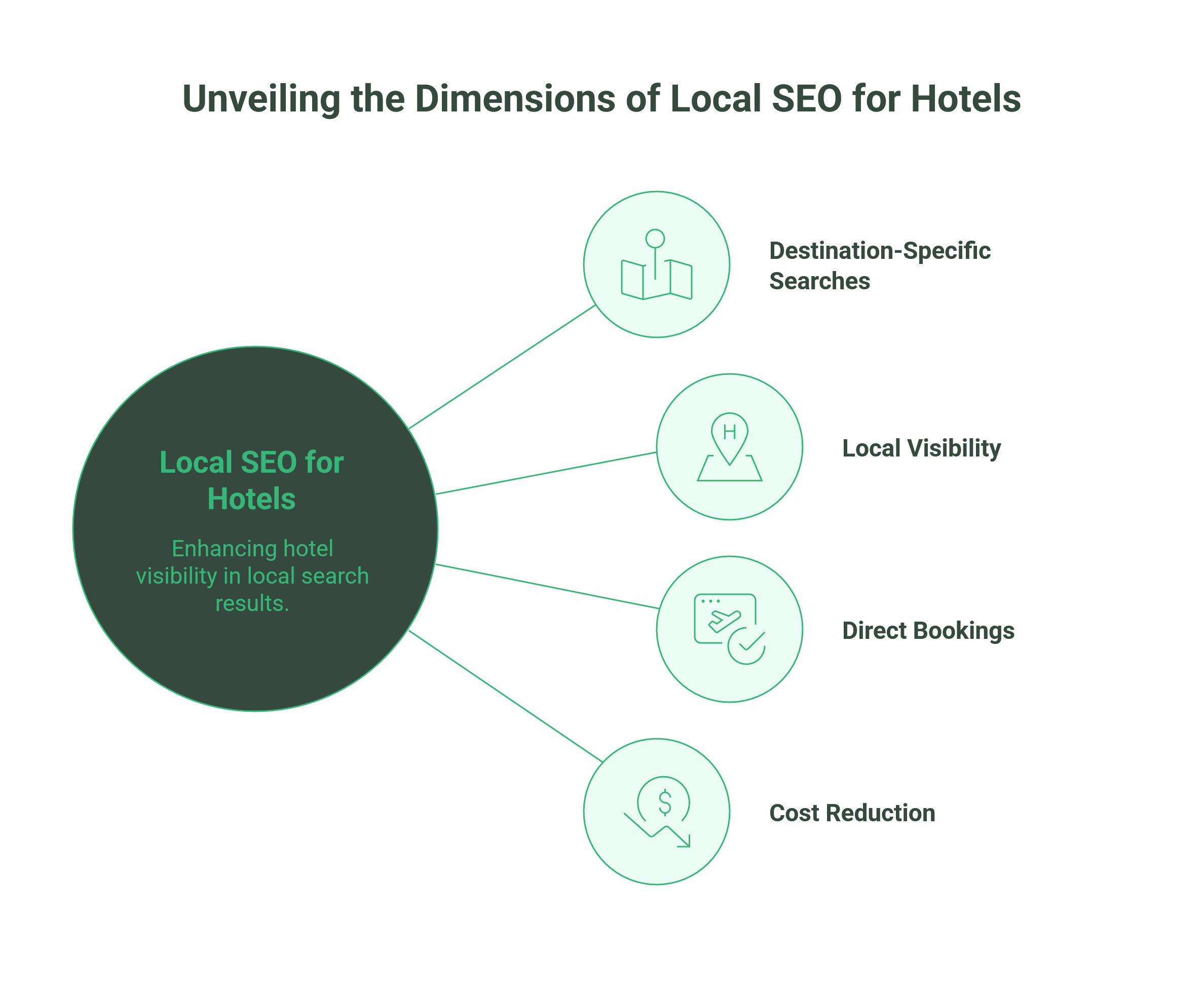
While hotels serve travellers from everywhere, local SEO remains crucial for visibility in destination searches.
Geographic Targeting
Target searches for your specific location:
Town/city + hotel: “Hotels Belfast,” “Derry accommodation,” “Portrush guest houses”
Area/region + hotel: “Causeway Coast hotels,” “Fermanagh lakelands accommodation”
Landmark proximity: “Hotels near Giant’s Causeway,” “Accommodation near Titanic Belfast”
Postcode/neighbourhood: More specific targeting for cities with distinct areas
Create dedicated pages for these searches, each with relevant content about staying in each area.
Building Local Citations
Directory listings reinforce presence:
Travel-specific directories:
- TripAdvisor
- Booking.com (for visibility, even if preferring direct)
- Expedia
- Hotels.com
Tourism directories:
- Tourism NI / Discover Northern Ireland
- Tourism Ireland
- VisitBritain
- Regional tourism boards
- Local tourism associations
Business directories:
- Yell.com
- Thomson Local
- Local chamber of commerce
Hospitality directories:
- AA Hotel Guide
- Quality in Tourism
- Guest accommodation associations
Ensure consistent Name, Address, and Phone across all listings. Our guide at profiletree.com/check-backlinks/ explains citation management.
Local Link Building
Local links strengthen geographic visibility:
Tourism partnerships: Links from tourism boards, visitor guides, and destination websites
Attraction partnerships: Reciprocal promotion with nearby attractions
Event partnerships: Links from events you sponsor or support
Wedding venue directories: If you host weddings, links from wedding planning sites
Local press: Coverage in local publications about your hotel, events, or renovations
Business networks: Chamber of commerce, tourism association memberships
These relationships generate links while building a genuine presence in your tourism ecosystem.
Our hyperlocal SEO guide at profiletree.com/hyperlocal-seo/ covers geographic targeting strategies in detail.
Competing with OTAs
OTAs dominate many hotel searches. An effective strategy works around their dominance rather than fighting it directly.
Searches You Can Win
Focus your effort where you can compete effectively:
Brand searches: Your hotel name. OTAs bid on these, but your website should rank organically. Strong Google Business Profile and website optimisation ensure visibility.
Long-tail destination: Specific searches OTAs don’t optimise for. “Pet-friendly hotel Portstewart with sea views” rather than “hotels Portstewart.”
Experience searches: “Romantic weekend Fermanagh,” “Golf break Newcastle County Down”—searches where trip context matters more than price comparison.
Content searches: Destination guides, attraction information, itinerary planning. OTAs don’t create helpful destination content.
Direct intent: “Book [hotel name] direct,” “[hotel name] official website”—searches from people who want to book directly.
Your Advantages Over OTAs
OTAs have scale and marketing budget. You have:
Property knowledge: You know your hotel intimately. Every room, every view, every detail. This enables content that OTAs can’t create.
Local expertise: You know your area—the best restaurants, hidden gems, practical tips. This positions you as the local expert.
Personality: Boutique and independent hotels have character. OTA listings are standardised and generic. Your story differentiates.
Guest relationships: Direct guests become your customers, not the OTAs. You can build relationships, loyalty, and repeat business.
Rate flexibility: You control direct rates and can add value that OTAs can’t match.
Working With OTAs Strategically
OTAs aren’t the enemy—they’re an expensive but useful distribution channel. Strategic approach:
Maintain presence: Being on major OTAs provides visibility and captures guests who only book through platforms.
Manage rate parity: Understand your contracts. Many allow value adds (breakfast, parking) for direct bookers without violating rate parity.
Use OTA for reach, convert to direct: Guests who discover you on OTAs may book directly next time. Capture their details during stay, provide an excellent experience, and market directly afterwards.
Monitor billboard effect: Some guests find you on OTAs, then search for your website to book directly. This “billboard effect” has value even without OTA bookings.
Technical SEO for Hotel Websites
Technical foundations ensure search engines can properly crawl, understand, and rank your content.
Schema Markup for Hotels
Implement comprehensive structured data:
Hotel schema: Property type, star rating, amenities, address, contact details
LodgingBusiness: Opening hours, price range, accepted payments
Room markup: Individual room types with descriptions and features
Review schema: Display your review rating in search results
Event schema: For weddings, conferences, and events you host
FAQ schema: For common questions about your property
Site Architecture
Organise content logically:
Clear hierarchy: Home → Rooms → Individual room types; Home → Location → Area guides
Internal linking: Connect related content—room pages to facilities, location pages to nearby attractions
Booking access: Booking functionality is accessible from every page
Mobile navigation: Clear, thumb-friendly navigation on mobile devices
Image Optimisation
Hotels rely heavily on imagery. Optimise for both quality and performance:
File size: Compress images without visible quality loss
Alt text: Descriptive alt text including room types and features
Lazy loading: Load images as visitors scroll rather than all at once
Multiple sizes: Serve appropriately sized images for different devices
If your current website needs technical improvement, ProfileTree’s development team builds hotel websites designed for both guest experience and search performance—see profiletree.com/services/website-development/.
Measuring Hotel SEO Success
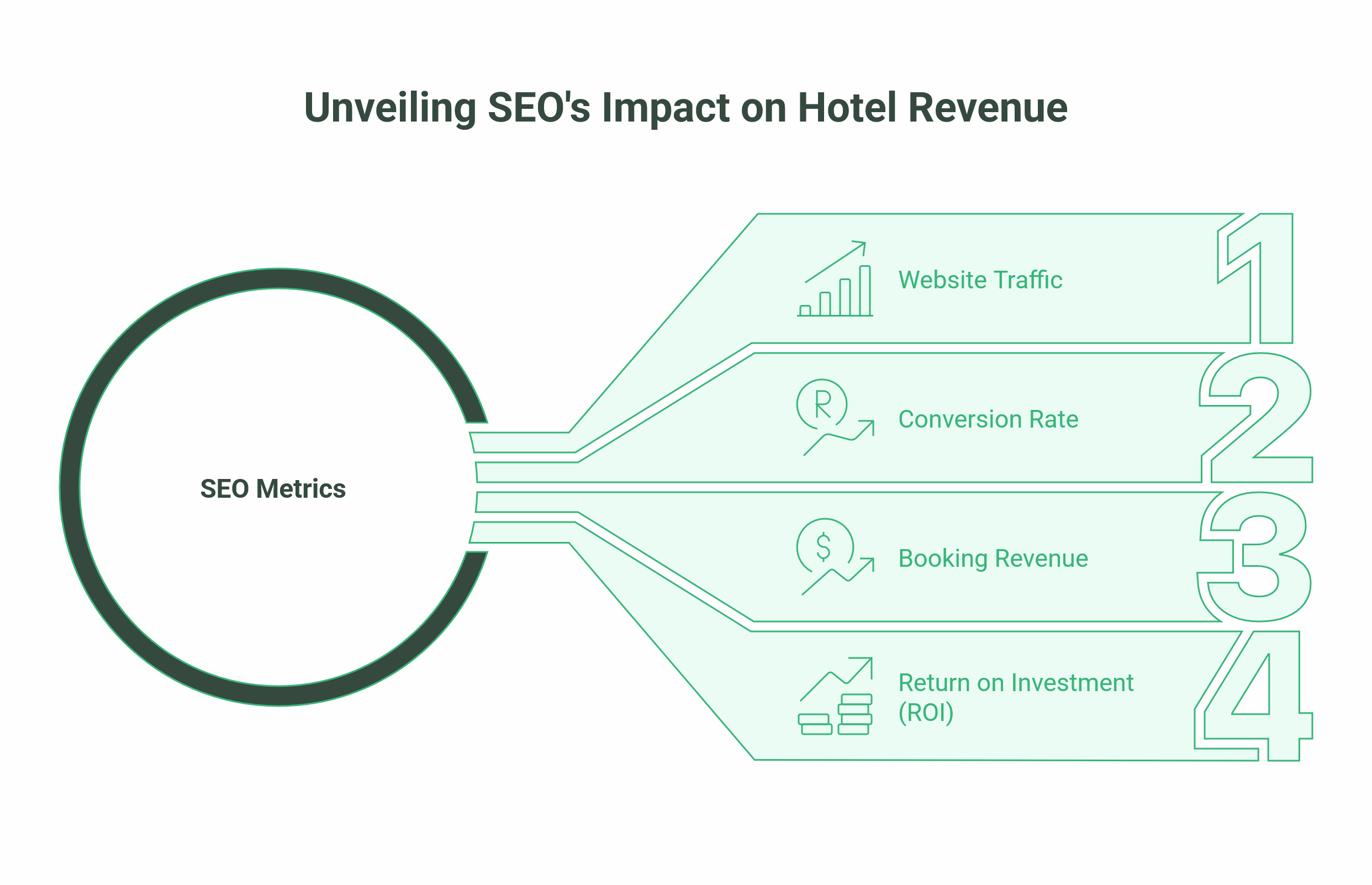
Track metrics connecting SEO activity to booking revenue.
Key Metrics
Visibility:
- Rankings for brand name searches
- Rankings for destination searches
- Organic traffic to the website
- Google Business Profile views and actions
Engagement:
- Time on site
- Pages per session
- Room page views
- Booking engine entries
Conversion:
- Direct bookings from organic search
- Booking engine conversion rate
- Revenue from organic search visitors
- Email sign-ups from organic traffic
Business impact:
- Direct booking percentage vs OTA
- Commission savings
- Average booking value (direct vs OTA)
- Repeat booking rate from direct guests
Attribution Complexity
Hotel booking journeys are often complex:
- Search on phone, book on desktop later
- Research across multiple sessions over weeks
- Multiple people are involved in group bookings
- Influence from reviews, social media, and word of mouth
Track what you can, but accept that precise attribution is impossible. Focus on trends: is direct booking percentage increasing? Is organic traffic growing? Are brand searches finding your website?
Google Analytics for Hotels
Configure analytics for hotel-specific tracking:
Booking funnel: Track progression from website to booking engine to completed booking
Revenue tracking: Attribute revenue to traffic sources where possible
Room page performance: Which room types attract the most interest?
Content performance: Which destination content drives traffic and engagement?
Common Mistakes Hotels Make
Avoid these frequent errors:
Neglecting brand searches: Allowing OTAs to capture guests searching specifically for you. Ensure your website ranks prominently for your hotel name.
Poor booking experience: Difficult or slow booking process loses guests to OTAs. Make direct booking as easy as possible.
No direct booking incentive: Failing to give guests reasons to book directly. Clearly communicate direct booking benefits.
Weak photography: Poor-quality images make your hotel look worse than it is. Invest in professional photography.
Ignoring reviews: Unresponded reviews suggest you don’t care about guest experience. Respond to every review.
Outdated information: Wrong rates, unavailable room types, or outdated amenities frustrate guests and damage trust.
Generic content: Content that could describe any hotel provides no competitive advantage. Highlight what makes you unique.
Mobile neglect: A poor mobile experience costs bookings. Test and optimise mobile booking flow.
OTA over-dependence: Accepting OTA dominance as inevitable. Improving direct booking is achievable with consistent effort.
Getting Started with Hotel SEO
If you’re beginning SEO or reviewing existing efforts:
Immediate priorities:
- Claim and fully complete the Google Business Profile
- Ensure the website has clear, working booking functionality
- Display direct booking benefits prominently
- Verify consistent NAP across all platforms
First month:
- Upload quality photos to Google Business Profile
- Respond to all existing reviews
- Audit website for mobile experience issues
- Implement basic schema markup
First three months:
- Develop destination content for your area
- Build citations in tourism directories
- Create room pages with comprehensive detail
- Establish a review request process
Ongoing:
- Regular photo updates
- Prompt review responses
- Seasonal content and offers
- Monitor the direct vs OTA booking ratio
FAQs
How can we compete with Booking.com and Expedia in search results?
You can’t outrank OTAs for generic “hotels [city]” searches. Focus on brand searches (your hotel name), long-tail destination searches, experience-based queries, and content searches. Your advantage is depth of knowledge about your property and area—use it.
How long before SEO increases direct bookings?
Initial improvements from Google Business Profile optimisation and website fixes can show results within weeks. Broader content and visibility building typically takes 3 to 6 months to have a meaningful impact on booking patterns.
Should we remove ourselves from OTAs to drive direct bookings?
Rarely advisable. OTAs provide genuine reach to travellers who wouldn’t otherwise find you. The goal is to improve the direct booking percentage while maintaining a useful OTA presence—not eliminating OTAs entirely.
How much should we invest in photography?
Professional photography is one of the highest-ROI investments for hotels. Quality images directly influence booking decisions. Budget for comprehensive initial photography plus annual updates.
Building Sustainable Direct Booking Growth
Hotel SEO is a long-term investment that reduces distribution costs and builds guest relationships. The fundamentals are clear: complete Google Business Profile, compelling photography, responsive review management, excellent website booking experience, and content that demonstrates your unique value.
Hotels that execute these basics shift bookings from OTAs to direct over time. Each percentage-point improvement in the direct booking ratio represents thousands in saved commissions—and the beginning of direct guest relationships that generate future value.
The hotels thriving aren’t necessarily the fanciest or most expensive. They’re the ones visible when travellers search, appealing when travellers look, and easy to book when travellers decide. Make sure your property is one of them.
If you’re ready to improve your hotel’s search visibility and direct booking performance, ProfileTree’s team works with hospitality businesses across Northern Ireland, Ireland, and the UK. We understand both the technical requirements of effective SEO and the specific challenges hotels face competing with OTAs. Get in touch at profiletree.com/contact-us/ to discuss how we can help your property capture more direct bookings through search.