
Local SEO for Healthcare Clinics: UK & Ireland Guide
Table of Contents
When patients need a doctor, dentist, or physiotherapist, they reach for their phone. 77% of patients search online before booking a healthcare appointment, and the vast majority choose providers from the first few results. For medical and dental practices across Northern Ireland, Ireland, and the UK, local SEO determines whether you fill appointment slots or watch patients walk into a competitor’s clinic.
Local SEO for Healthcare clinics differs from standard local search optimisation in several critical ways. Google applies heightened scrutiny to medical content through its YMYL (Your Money or Your Life) guidelines, meaning your practice faces stricter quality requirements than a café or plumber. You’re also working within the professional regulations of bodies such as the GMC, GDC, and various healthcare oversight organisations. Getting this right means more patients finding your practice when they need care most.
ProfileTree has worked with healthcare providers throughout Belfast and beyond to build search visibility that translates directly into patient appointments. This guide covers everything from Google Business Profile setup to review management, giving you a practical framework for improving your practice’s local search presence.
Why Local SEO Matters More for Healthcare Than Most Industries
Healthcare searches carry higher intent than almost any other local query. When someone searches “dentist near me” or “GP accepting new patients Belfast,” they’re not browsing—they’re ready to book. Research shows that 87% of patients who find healthcare providers online go on to schedule an appointment, compared to much lower conversion rates in other service industries.
Google treats healthcare websites as YMYL content, applying extra evaluation criteria around expertise, experience, authoritativeness, and trustworthiness. Understanding Google’s YMYL guidelines is essential for any healthcare provider serious about search visibility—we cover these in detail in our guide to Google’s YMYL update at profiletree.com/seo-guide-google-ymyl-update/. A restaurant with thin content might still rank reasonably well locally, but a medical practice with the same approach will struggle. Google’s quality raters specifically assess whether health content is created by qualified professionals and whether the information could impact someone’s wellbeing.
The local element intensifies this further. Patients overwhelmingly prefer healthcare providers within a reasonable distance. “Near me” searches for healthcare services have doubled since 2015, and this trend continues to accelerate. Mastering hyperlocal search strategies gives healthcare practices a significant advantage in capturing this patient intent—our hyperlocal SEO guide at profiletree.com/hyperlocal-seo/ explains these tactics in depth. Your practice could offer excellent care, but if you’re invisible in local search results, patients will book with whoever appears first.
For practices in Northern Ireland specifically, local SEO offers opportunities that larger UK markets don’t. Competition for healthcare-related searches in Belfast, Derry, and surrounding areas remains less intense than in London or Manchester. Our Belfast-based team works with healthcare providers across the region, understanding the specific dynamics of the Northern Ireland healthcare market. A well-optimised practice can dominate local results with less effort than would be required in major metropolitan areas—but only if you actually invest in doing it properly.
Setting Up Google Business Profile for Medical Practices
Your Google Business Profile acts as the digital front door to your practice. It populates the Map Pack—those three prominent listings below the map in local search results—and often generates more patient enquiries than your website does. Studies suggest a well-managed GBP can drive up to 70% of a practice’s organic search visibility.
Choosing the Right Categories
Google offers specific healthcare categories, and selecting the most accurate primary category significantly impacts which searches trigger your listing. For medical practices, common primary categories include:
- General Practitioner
- Medical Clinic
- Family Practice Physician
- Specialist (Cardiologist, Dermatologist, etc.)
For dental practices:
- Dentist
- Cosmetic Dentist
- Dental Clinic
- Orthodontist
Choose your primary category based on your main service. A general dental practice should use “Dentist” rather than “Cosmetic Dentist” even if you offer cosmetic procedures. Add secondary categories for additional services; you can select up to 10.
NAP Consistency
Your Name, Address, and Phone number must match exactly across your GBP, website, and every other online directory. Even minor variations—”Street” versus “St” or including “Ltd” in one place but not another—can confuse search engines and dilute your local ranking signals.
For healthcare practices operating within NHS frameworks alongside private services, choose a single, consistent business name and use it everywhere. If you trade under a name other than your registered company name, use that trading name consistently across all platforms.
Healthcare-Specific Profile Elements
Complete every available field, paying particular attention to:
Services: List each service you offer using patient-friendly language. Instead of relying solely on clinical terminology, include terms patients actually search for. “Root canal treatment” alongside “endodontic therapy,” for example.
Attributes: Mark relevant attributes, including wheelchair accessibility, whether you accept walk-ins, whether you offer telehealth appointments, and payment methods accepted. These attributes appear directly in search results, helping patients quickly assess suitability.
Opening Hours: Include special hours for bank holidays and any extended hours for urgent care. Inaccurate hours frustrate patients and generate negative reviews.
Photos: Upload high-quality images of your reception area, treatment rooms, and team. Practices with photos receive 42% more requests for directions and 35% more website clicks than those without. Ensure images show a clean, professional, welcoming environment.
Appointment Links: Add direct booking links if you offer online scheduling. Reducing friction between search and booking increases conversion rates substantially.
NHS Versus Private Considerations
Practices offering both NHS and private services face additional complexity. Your GBP should accurately reflect which services fall under each category. Consider noting in your business description whether you accept NHS patients, as this is often the first question potential patients ask.
Some practices maintain separate GBP listings for NHS and private services when operated as genuinely distinct entities. However, creating multiple listings for the same physical location violates Google’s guidelines and risks suspension. If you offer both service types from a single location under a single business entity, use a single profile with clear descriptions of both offerings.
On-Page SEO for Healthcare Websites
Your website needs to satisfy both patients seeking information and Google’s algorithms evaluating your expertise. This requires a structure that balances clinical accuracy with accessibility for people without medical training.
Service Page Architecture
Create dedicated pages for each distinct service rather than listing everything on a single page. A dental practice might have separate pages for:
- General dentistry and check-ups
- Cosmetic dentistry
- Dental implants
- Orthodontics and braces
- Emergency dental care
Each page should target specific search terms patients use. “Dental implants Belfast” and “teeth whitening Belfast” represent different services with different patient intents—they deserve separate, optimised pages.
Structure each service page with:
- A clear H1 incorporating the service and location
- An opening paragraph defining the service and who it helps
- Detailed information about the procedure, timeline, and what patients can expect
- Practitioner credentials relevant to that service
- Clear calls to action for booking
Location Pages for Multi-Site Practices
Practices with multiple locations need individual pages for each site. A physiotherapy group with clinics in Belfast, Lisburn, and Bangor should create three distinct location pages, each with:
- Unique content about that specific location
- The local address, phone number, and opening hours
- Directions and parking information
- Staff profiles for practitioners at that location
- An embedded Google Map showing the exact location
Avoid duplicate content across location pages. Each should contain genuinely unique information reflecting the character and services of that specific clinic.
Schema Markup for Healthcare
Structured data helps search engines understand your content and can generate rich results in search listings. Healthcare practices should implement:
LocalBusiness or MedicalBusiness schema: Include your NAP, opening hours, accepted payment methods, and geo-coordinates.
Physician schema: Mark up individual practitioner profiles with their credentials, specialities, and medical affiliations.
MedicalOrganization schema: Appropriate for larger practices or those affiliated with hospital groups.
FAQPage schema: Structure your FAQ content so it can appear as rich results in search listings.
Here’s a simplified example of the LocalBusiness schema for a dental practice:
{
  "@context": "https://schema.org",
  "@type": "Dentist",
  "name": "Example Dental Practice",
  "address": {
    "@type": "PostalAddress",
    "streetAddress": "123 High Street",
    "addressLocality": "Belfast",
    "postalCode": "BT1 1AA",
    "addressCountry": "GB"
  },
  "telephone": "+44 28 9012 3456",
  "openingHours": "Mo-Fr 09:00-17:30",
  "priceRange": "££"
}
Work with your web developer to implement a comprehensive schema across your site, ensuring the markup validates correctly using Google’s Structured Data Testing Tool. If your current website lacks proper structure for healthcare SEO, ProfileTree’s website development team can help create a site built for both patient experience and search visibility—see profiletree.com/services/website-development/ for more details.
Building Trust Signals for Medical Practices
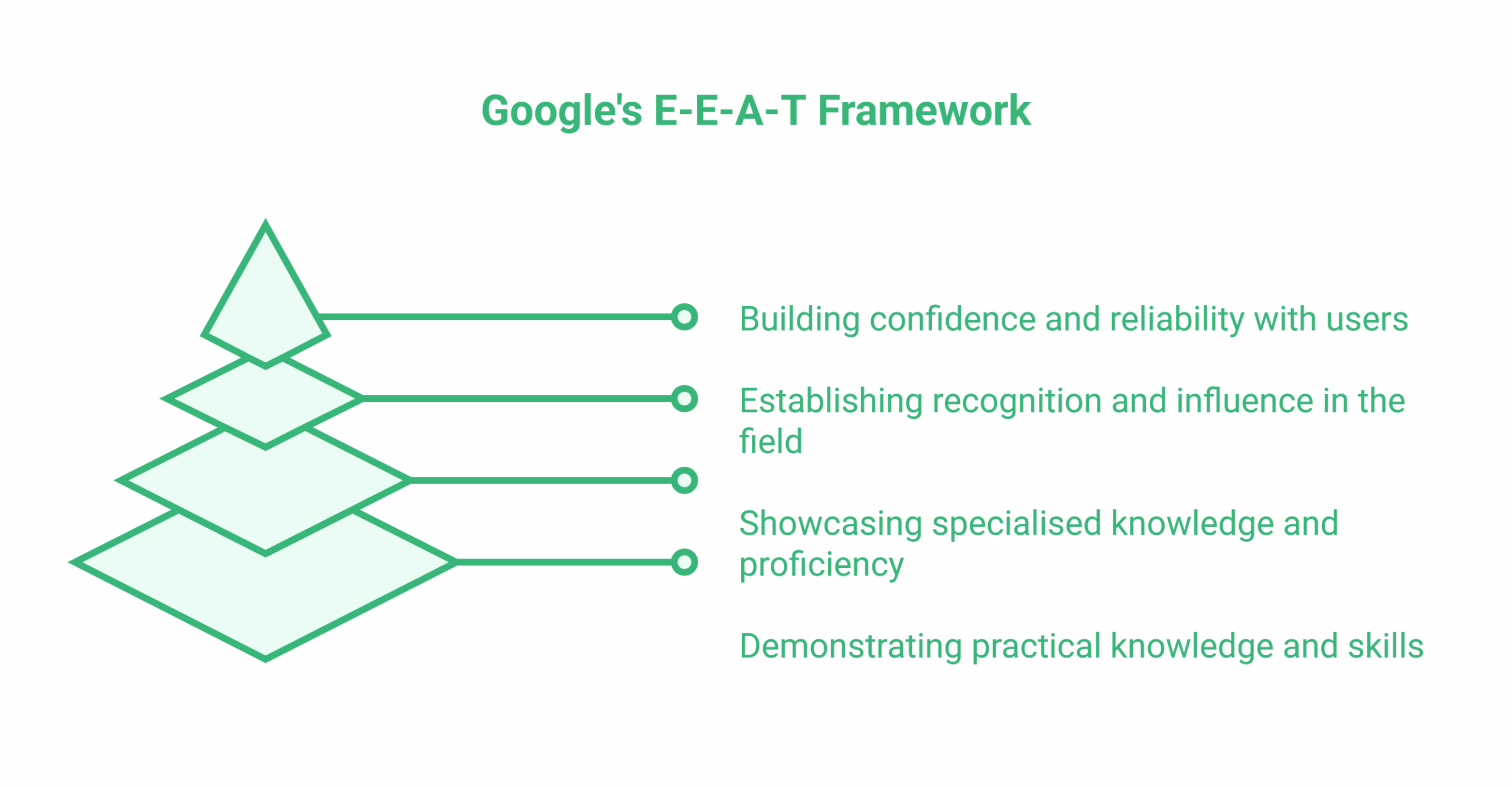
Google’s E-E-A-T framework—Experience, Expertise, Authoritativeness, and Trustworthiness—applies with particular force to healthcare content. Our comprehensive guide to Google’s E-E-A-T update at profiletree.com/seo-guide-google-e-a-t-update/ explains how these factors influence rankings. Demonstrating these qualities throughout your website improves both search rankings and patient confidence.
Professional Credentials
Display practitioner qualifications prominently. For medical professionals, this includes:
- GMC or GDC registration numbers (these are publicly verifiable)
- Medical degrees and postgraduate qualifications
- Specialist training and certifications
- Professional memberships (Royal Colleges, specialist societies)
- Years of experience and areas of special interest
Create individual profile pages for each practitioner with comprehensive credential information. Link these profiles from service pages and blog content to establish clear authorship.
Practice Accreditations
Highlight any practice-level accreditations:
- CQC registration (England)
- RQIA registration (Northern Ireland)
- HIQA registration (Republic of Ireland)
- Private healthcare accreditations
- Quality standards certifications
These registrations serve as third-party validation of your practice’s standards and should appear in your website footer and About page. ProfileTree’s approach to professional services demonstrates how credentialing and trust signals can be woven throughout a website without appearing heavy-handed—see our About page at profiletree.com/about-profiletree/ for an example.
Content Authorship
Every piece of clinical content on your website should have clear authorship from a qualified professional. Include:
- Author name and credentials
- Date of publication
- Date of last review
- Medical reviewer details for content written by non-clinical staff
This transparency signals to Google that your content comes from genuine expertise rather than being generated without professional oversight.
“Healthcare providers face unique challenges with local SEO—you’re dealing with YMYL scrutiny, patient privacy concerns, and often multiple locations. But the fundamentals remain the same: make it easy for Google to understand what you do, where you do it, and why patients trust you.” — Ciaran Connolly, ProfileTree
Managing Patient Reviews for Healthcare Providers
Online reviews directly influence both search rankings and patient decisions. Research indicates that 94% of patients use reviews when evaluating healthcare providers, and practices with higher ratings consistently outperform competitors in local search results.
Where Reviews Matter Most
Focus your review-building efforts on platforms patients actually use:
Google Reviews: The most important platform for local SEO. Google reviews appear directly in search results and Maps, influencing both rankings and click-through rates.
NHS Choices / NHS.uk: Relevant for practices offering NHS services. While less SEO impact than Google, many UK patients check NHS reviews as part of their research.
Doctify: Increasingly popular for specialist consultants and private healthcare. Reviews here can enhance credibility with patients researching specific procedures.
Trustpilot: Some healthcare practices use Trustpilot, particularly those with significant private patient volumes.
Facebook: While declining in SEO relevance, Facebook reviews still influence patient perceptions, particularly among older demographics.
Requesting Reviews Ethically
Healthcare practices must balance review solicitation with professional standards and patient confidentiality. Effective approaches include:
- Sending follow-up emails after appointments with review links
- Including review requests on discharge paperwork
- Training reception staff to mention reviews to satisfied patients
- Displaying review platform QR codes in waiting areas
Never offer incentives for reviews or request only positive reviews—both violate platform guidelines and potentially professional regulations.
Responding to Reviews Without Breaching Confidentiality
Every review deserves a response, but healthcare practices face unique constraints around patient confidentiality. When responding:
For positive reviews: Thank the reviewer generally without confirming details of their care. “Thank you for your kind feedback. We’re glad you had a positive experience with our team.”
For negative reviews: Acknowledge the concern without confirming the person was a patient or discussing specifics. “We take all feedback seriously and would welcome the opportunity to discuss your concerns directly. Please contact our practice manager at [email] so we can address this properly.”
Never confirm someone was a patient, discuss their treatment, or reveal any clinical information in a public review response—even if they have already disclosed it themselves.
Dealing with Unfair Reviews
Healthcare practices occasionally receive unfair reviews—from patients unhappy about clinical decisions, people who never visited, or even competitors. Google allows you to flag reviews that violate their policies, including:
- Reviews from people who weren’t customers
- Reviews containing false information
- Reviews with conflicts of interest
Document problematic reviews and report through Google’s review flagging process. Response rates vary, but obviously fake or malicious reviews often get removed.
Local Link Building for Healthcare
Backlinks remain a significant ranking factor for local SEO. Healthcare practices have natural opportunities for link building through professional networks, community involvement, and industry associations.
Healthcare Directories
Ensure your practice appears in relevant directories with consistent NAP information:
General healthcare directories:
- NHS Choices / NHS.uk (if applicable)
- Private Healthcare UK
- WhatClinic
- Doctify
- TopDoctors
Professional body directories:
- GMC/GDC practitioner listings
- Royal College member directories
- Specialist society listings
Local business directories:
- Yell.com
- Thomson Local
- Yelp
- Local chamber of commerce
Northern Ireland specific:
- Discover Northern Ireland business listings
- Belfast City Council business directory
- Local council directories
Each directory listing sends signals to Google about your practice’s legitimacy and location. Ensure information remains up to date across all platforms. Running a backlink audit periodically helps identify directory listings that need updating and spots opportunities for additional citations—our guide at profiletree.com/check-backlinks/ explains how to conduct this analysis.
Professional Association Links
Memberships in professional organisations often include directory listings that provide valuable backlinks:
- British Medical Association
- British Dental Association
- Chartered Society of Physiotherapy
- Royal College memberships
- Specialist society memberships
Claim and complete your profile on each organisation’s member directory.
Community and Local Partnerships
Healthcare practices often have natural connections to community organisations:
- Sponsorship of local sports teams or events
- Partnerships with schools for dental education
- Charity involvement and fundraising
- Local business networking groups
- Health awareness campaigns with community organisations
These relationships can generate local press coverage and backlinks from community websites, strengthening your local search presence.
Content-Based Link Building
Creating genuinely valuable content attracts links naturally:
- Comprehensive guides on common conditions
- Local health statistics and analysis
- Expert commentary on health news
- Free resources for patients (downloadable guides, symptom checkers)
When local journalists need expert commentary on health stories, being known as a responsive, quotable source generates media mentions and valuable links.
Content Strategy for Medical Practices
Content marketing builds authority, answers patient questions, and creates opportunities for ranking beyond your core service pages. For healthcare practices, content must balance accessibility with clinical accuracy.
Blog Topics That Attract Patients
Focus content on questions patients actually ask:
Symptom and condition information: “What causes tooth sensitivity?” or “Signs you might need to see a GP”
Treatment explanations: “What to expect during a root canal” or “How physiotherapy helps back pain”
Preparation and aftercare: “How to prepare for your first dental implant consultation” or “Recovery after minor surgery”
Local health topics: “Flu vaccination availability in Belfast” or “How to register with a GP in Northern Ireland”
Avoid overly technical content that serves practitioners rather than patients. Your blog should help potential patients understand their options and feel confident choosing your practice.
Video Content for Healthcare
Video works exceptionally well for healthcare content. Patients appreciate seeing practitioners and facilities before visiting. Effective healthcare videos include:
- Practice tours showing facilities and a welcoming environment
- Practitioner introductions building personal connection
- Procedure explanations reducing patient anxiety
- Patient testimonials (with proper consent)
- FAQ responses addressing common concerns
Keep videos professional but approachable. Patients want to see the real people who will care for them, not slick corporate production. Effective video storytelling for healthcare focuses on authenticity and building genuine connections with potential patients—our guide at profiletree.com/video-storytelling/ covers these principles in detail.
ProfileTree’s video production team regularly works with healthcare clients to create content that builds trust and improves engagement. Video content also performs well in search results, with healthcare websites using video seeing significant increases in organic traffic.
Content Compliance Considerations
Healthcare content carries regulatory implications. Ensure all content:
- Makes no false or misleading claims about treatments
- Includes appropriate disclaimers where necessary
- Doesn’t guarantee outcomes
- Meets Advertising Standards Authority requirements
- Complies with professional body guidance on advertising
Have clinical content reviewed by qualified practitioners before publication. The GMC and GDC both provide guidance on appropriate advertising and social media use that applies to website content.
Measuring Healthcare Local SEO Success
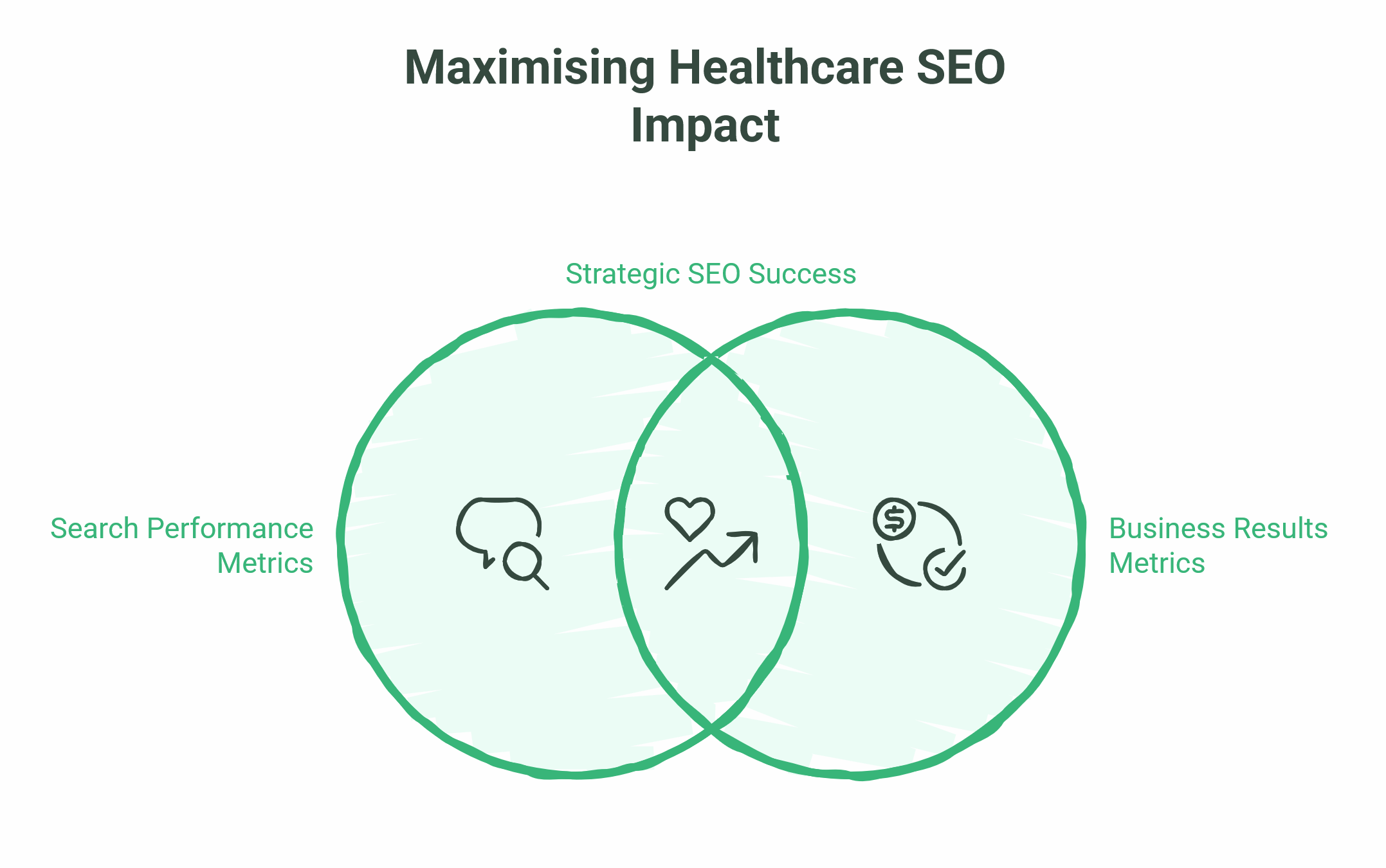
Tracking the right metrics helps you understand what’s working and where to focus future efforts. Healthcare practices should monitor both search performance and business outcomes.
Key Performance Indicators
Google Business Profile Insights:
- Search queries triggering your listing
- Views on Search versus Maps
- Customer actions (calls, direction requests, website clicks)
- Photo views compared to competitors
Website Analytics:
- Organic traffic to service and location pages
- Geographic breakdown of visitors
- Conversion rates on contact forms and booking systems
- Time on page for key content
Business Metrics:
- New patient registrations attributed to online sources
- Appointment requests from the website
- Phone calls from GBP versus direct
- Revenue from new patients acquired through search
Tracking Tools
Google Search Console shows which queries bring visitors to your site and your average positions for healthcare-related searches. Monitor:
- Impressions and clicks for target keywords
- Position changes over time
- Pages receiving organic traffic
- Mobile versus desktop performance
Google Analytics (GA4) tracks user behaviour once they reach your site. Configure conversion tracking for:
- Contact form submissions
- Phone number clicks
- Online booking completions
- PDF downloads (patient forms, etc.)
Call tracking services can attribute phone calls to specific sources, distinguishing calls from your GBP listing, your website, and other channels.
Benchmarking Progress
Healthcare SEO typically shows meaningful results within three to six months, with the strongest returns building over six to twelve months. Track progress against:
- Your own historical performance
- Competitor visibility for target searches
- Industry benchmarks for conversion rates
Document baseline metrics before starting optimisation work to demonstrate concrete improvements.
Getting Started: Priority Actions for Healthcare Practices
If you’re starting from scratch or reviewing an existing strategy, prioritise these actions:
Week 1-2:
- Audit and complete your Google Business Profile
- Verify NAP consistency across major directories
- Ensure your website has dedicated pages for each service and location
Month 1:
- Implement basic schema markup
- Create or update practitioner profile pages with credentials
- Establish a review request process
Months 2-3:
- Develop content addressing common patient questions
- Build directory citations across healthcare-specific platforms
- Optimise service pages for target keywords
Ongoing:
- Respond to all reviews promptly
- Publish regular blog content
- Monitor rankings and adjust strategy based on data
- Update GBP with posts, photos, and current information
FAQs
How long does local SEO take to show results for medical practices?
Most healthcare practices see initial improvements within 2 to 3 months, with more significant results appearing between 3 and 6 months. The strongest, most sustainable returns typically build over six to twelve months of consistent effort. Practices in less competitive areas often see faster results than those in major cities.
Should NHS practices invest in SEO if they’re already listed on NHS directories?
Yes. While NHS directory listings provide baseline visibility, they don’t help you stand out when patients compare options. Local SEO helps NHS practices appear in Google’s Map Pack, attract positive reviews, and provide information that helps patients choose your practice over alternatives. Many patients search Google rather than the NHS directories directly.
What’s the difference between SEO for dentists versus GPs?
The fundamentals are similar, but dentists typically compete for more commercially focused searches (cosmetic procedures, specific treatments), while GP practices often focus on geographic visibility and new patient registration. Dental SEO tends to involve more service-specific content, while GP SEO emphasises accessibility and registration processes.
How do I get my medical practice to appear in Google Maps?
Claim and verify your Google Business Profile, ensuring your address, categories, and services are accurate. Complete every available field, add high-quality photos, and encourage patient reviews. Consistent NAP information across directories and relevant website content reinforces your location signals to Google.