
Irish Websites: Building Successful AI Chatbots-Complete Guide
Table of Contents
Building successful AI chatbots for Irish websites is now essential for businesses that want to remain competitive in the digital marketplace. Every Irish business website without a chatbot is missing potential customers after hours – losing conversations with prospects browsing at 10pm, missing leads who can’t find quick answers, and allowing competitors to capture customers they could have converted.
This comprehensive guide shows you exactly how to implement AI chatbots that transform your website into a 24/7 sales and support machine. You’ll learn how to maintain GDPR compliance while delivering genuine value to Irish customers through conversational AI that understands local market needs, handles cross-border queries, and provides immediate assistance when your team is unavailable.
Why Irish Businesses Need AI Chatbots Right Now
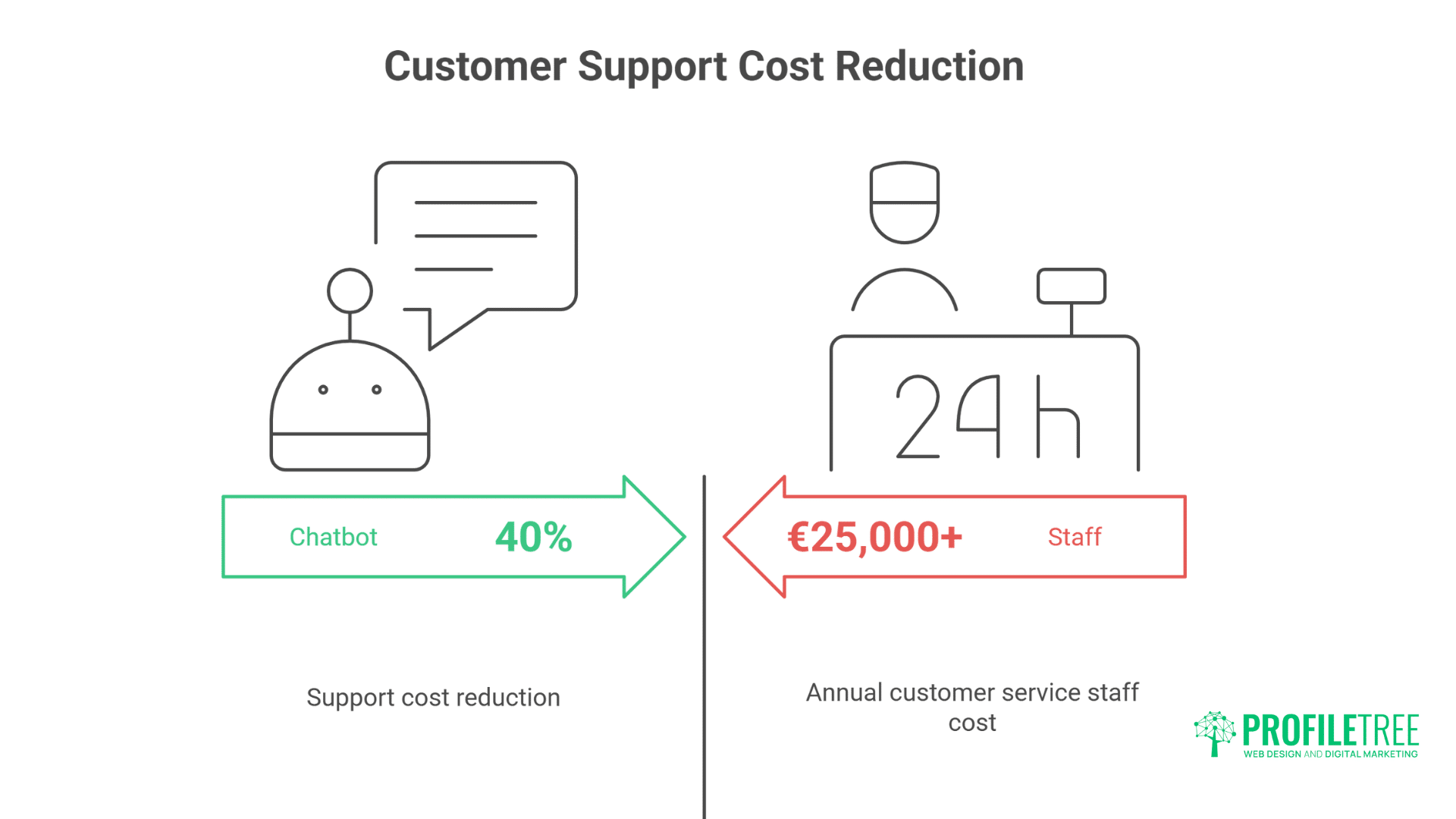
Irish SMEs face unique challenges that make chatbots particularly valuable for their websites. Your customers expect instant responses, but hiring round-the-clock support staff isn’t financially viable for most businesses. With 68% of Irish consumers preferring to research purchases online outside business hours, you’re losing opportunities every evening and weekend without proper automation.
The Irish market presents specific opportunities for chatbot implementation on Irish websites. Your customers often search in both English and Irish, navigate between euro and sterling pricing, and expect local knowledge about Irish business practices. Smart chatbot implementation addresses these requirements, reducing your support costs by up to 40%.
Belfast-based businesses particularly benefit from chatbots that handle cross-border queries on their Irish websites. When customers from Dublin, Cork, or Galway visit your site, they want immediate answers about shipping, VAT differences, and service availability. Your chatbot becomes the first point of contact that never gets frustrated with repetitive questions about delivery to different counties.
“AI chatbots on Irish websites deliver exceptional return on investment for SMEs across all sectors,” says Ciaran Connolly, Director of ProfileTree. “Our clients typically see conversion rates increase by 25-30% after implementing properly configured chatbot solutions that address the specific needs of the Irish market.”
The cost-benefit analysis for Irish SMEs shows clear advantages. Rather than paying €25,000+ annually for additional customer service staff, you can implement a chatbot solution for €200-500 monthly. This investment typically returns itself within three months through increased conversions and reduced support tickets.
Platform Comparison: Choosing the Right Chatbot for Irish Websites

Tidio: The SME-Friendly Option
Tidio dominates the Irish SME market for good reasons. Starting at €29 monthly, it offers multilingual support, GDPR-compliant data handling, and integration with popular e-commerce platforms used on Irish websites. The platform’s strength lies in its simplicity – you can have a functioning chatbot live within two hours without technical expertise.
For Irish retailers, Tidio’s abandoned cart recovery feature proves particularly powerful on e-commerce websites. When visitors leave items in their basket, the chatbot automatically engages them with personalised messages, recovering an average of 15% of abandoned sales. The platform integrates seamlessly with WooCommerce and Shopify, platforms used by thousands of Irish online shops.
The visual chatbot builder requires no coding knowledge. You drag and drop conversation flows, creating paths for common queries about shipping to Irish counties, return policies, and product availability. Irish businesses report average response accuracy rates of 85% for basic queries, significantly reducing support team workload.
However, Tidio shows limitations for complex B2B sales processes on Irish websites. If you’re selling high-value services requiring detailed consultation, the platform’s conversation capabilities may feel restrictive. The AI struggles with nuanced technical queries and cannot handle complex multi-step authentication processes that some enterprise clients require.
Intercom: The Premium Enterprise Solution
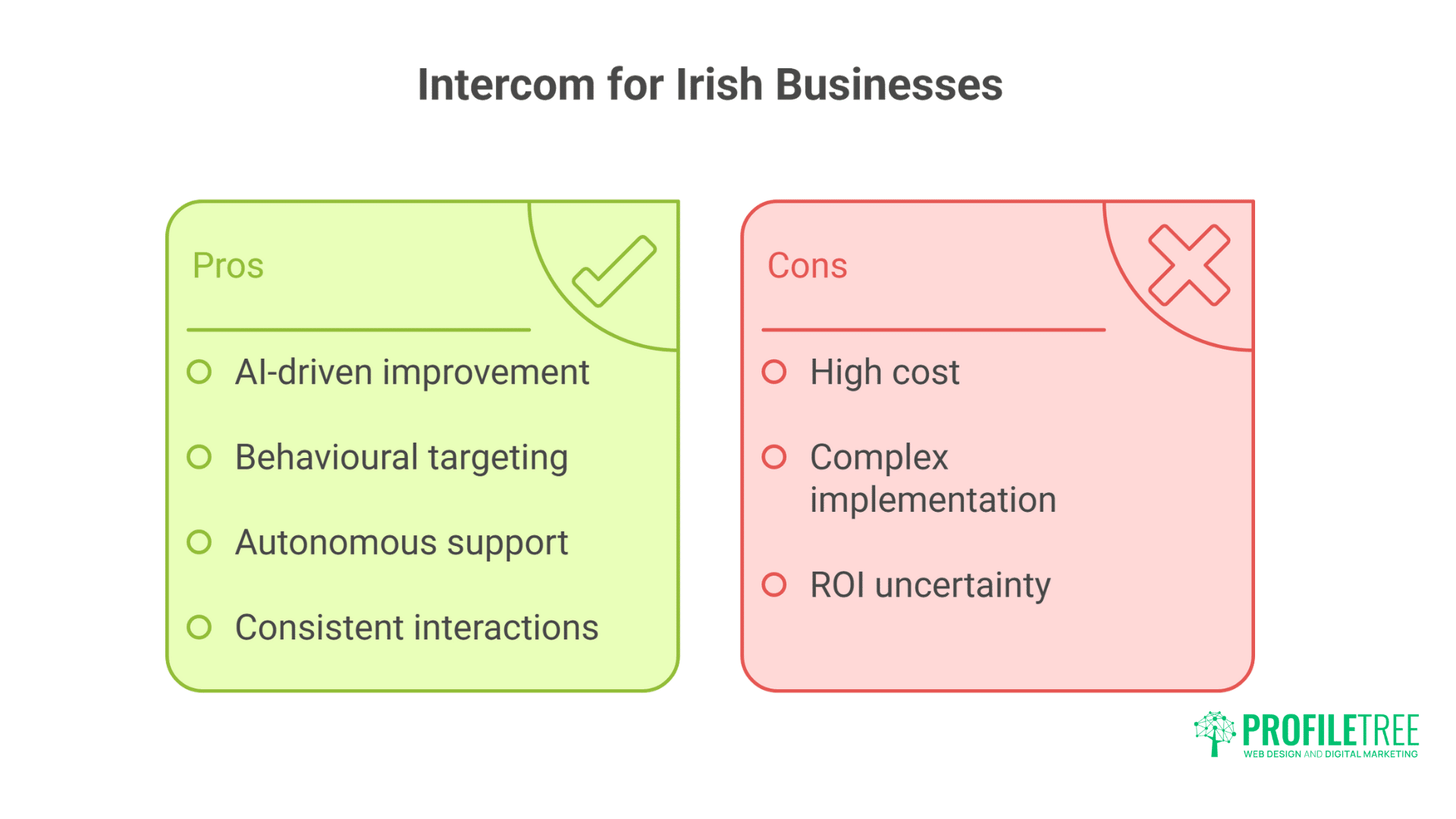
Intercom, founded in Dublin, understands Irish business needs intimately. Their platform starts at €74 monthly but scales to thousands for enterprise features. You’re paying for sophisticated AI that learns from every conversation, improving response quality continuously.
The platform excels at handling complex customer journeys. When prospects visit your website, Intercom tracks their behaviour, triggering targeted messages based on specific actions. A visitor spending five minutes on your pricing page receives different messaging than someone reading blog content. This behavioural targeting increases conversion rates by an average of 23%.
Intercom’s Resolution Bot handles tier-one support autonomously, resolving 33% of queries without human intervention. For Irish businesses with established knowledge bases, the bot pulls answers directly from your documentation, maintaining consistency across all customer interactions. The platform’s machine learning continuously improves response accuracy, learning from support agent corrections.
The investment requires careful consideration for smaller Irish businesses. Beyond the base subscription, you’ll pay for additional seats, advanced features, and potentially implementation support. Total first-year costs often exceed €2,000, making ROI calculations essential before commitment.
Drift: The Sales-Focused Alternative

Drift positions itself as conversational marketing rather than traditional support. Starting at €40 monthly, it focuses on converting website visitors into qualified leads through intelligent engagement. Irish B2B companies find particular value in Drift’s account-based marketing features.
The platform’s calendar integration streamlines appointment booking directly through chat. When qualified prospects express interest, they can schedule meetings without leaving the conversation. Irish sales teams report 30% increases in demo bookings after implementing Drift’s conversational booking system.
Drift’s playbooks automate complex sales qualification processes. You define criteria for marketing qualified leads (MQLs) and sales qualified leads (SQLs), with the chatbot routing conversations accordingly. High-value prospects connect immediately with sales representatives, making them appropriate for Irish websites targeting specific industry sectors.
The platform’s weakness appears in post-purchase support scenarios. Excellent for sales conversations, Drift lacks robust ticketing and knowledge base features that support teams require. Irish businesses often need secondary platforms for customer service, increasing overall costs and complexity.
Budget-Friendly Alternatives for Irish Websites
Several platforms offer capable chatbot features for Irish businesses with limited budgets. Chatfuel provides Facebook Messenger automation for €15 monthly, which is perfect for businesses with a strong social media presence. ManyChat offers similar functionality with superior Instagram integration, which is crucial for Irish fashion and hospitality brands.
WordPress users should consider free plugins like WP-Chatbot, which provides basic functionality without monthly fees. These solutions handle common queries effectively on Irish websites. Combined with professional website development, even basic chatbots significantly improve user experience.
HubSpot’s free tier includes basic chatbot functionality sufficient for many Irish startups. You create simple conversation flows handling appointment booking, basic FAQs, and lead capture. The limitation comes in customisation and advanced routing, but free tools provide a valuable testing ground before investing in premium solutions.
GDPR Compliance and Data Protection for Irish Chatbots

GDPR compliance isn’t optional – it’s fundamental to legal chatbot operation on Irish websites. Your chatbot collects personal data with every conversation, creating obligations under data protection law. Non-compliance risks fines up to €20 million or 4% of global turnover, potentially devastating for Irish SMEs.
Essential GDPR Requirements
Your chatbot must obtain explicit consent before processing personal data. This means clear opt-in mechanisms, not pre-ticked boxes or assumed consent. Display your privacy policy prominently, explaining what data you collect, why you collect it, and how long you retain it. Irish customers have become increasingly privacy-conscious, with 74% checking privacy policies before engaging with chatbots.
Data minimisation principles require collecting only necessary information. Your chatbot shouldn’t request email addresses for simple product queries or store conversation histories indefinitely. Implement automatic data deletion after defined periods – typically 12-24 months for support conversations, less for marketing interactions.
The right to erasure means customers can request complete data deletion. Your chatbot platform must support user data export and deletion functionality. When customers exercise these rights, you have one month to comply, including removing data from backups and integrated systems.
Practical Implementation Steps
Start with a comprehensive privacy notice specifically for chatbot interactions. Explain that conversations may be reviewed for quality purposes, outline data retention periods, and clarify whether human agents might take over conversations. Irish consumers appreciate transparency, and clear privacy practices actually increase engagement rates.
Configure your chatbot to request minimal information initially. Only ask for email addresses when necessary for follow-up, and explain why you need this information. For example: “I’ll need your email to send the detailed pricing guide you requested. We’ll only use it for this purpose and won’t share it with third parties.”
Implement age verification for certain industries. If you sell age-restricted products or services, your chatbot must verify that users meet minimum age requirements before proceeding. This proves particularly important for Irish alcohol retailers and gambling operators.
Document your data processing activities comprehensively. Maintain records of what data your chatbot collects, for processing purposes, retention periods, and security measures. These records prove compliance during audits and help identify improvement areas.
Security Considerations
Choose chatbot platforms with robust security credentials. Look for ISO 27001 certification, SOC 2 compliance, and explicit GDPR compliance statements. Verify data storage locations – many Irish businesses prefer EU-based servers for additional legal protection.
Implement strong authentication for chatbot administration panels. Use two-factor authentication, limit access to necessary personnel, and maintain audit logs of configuration changes. Regular security reviews ensure your chatbot doesn’t become a vulnerability in your broader digital strategy.
Train staff on chatbot security protocols. Human agents accessing chatbot conversations need an understanding of data protection obligations. Create clear procedures for handling sensitive information shared through chat, including health data, financial information, or personal circumstances.
Multi-Language Setup: Serving Ireland’s Diverse Market on Irish Websites
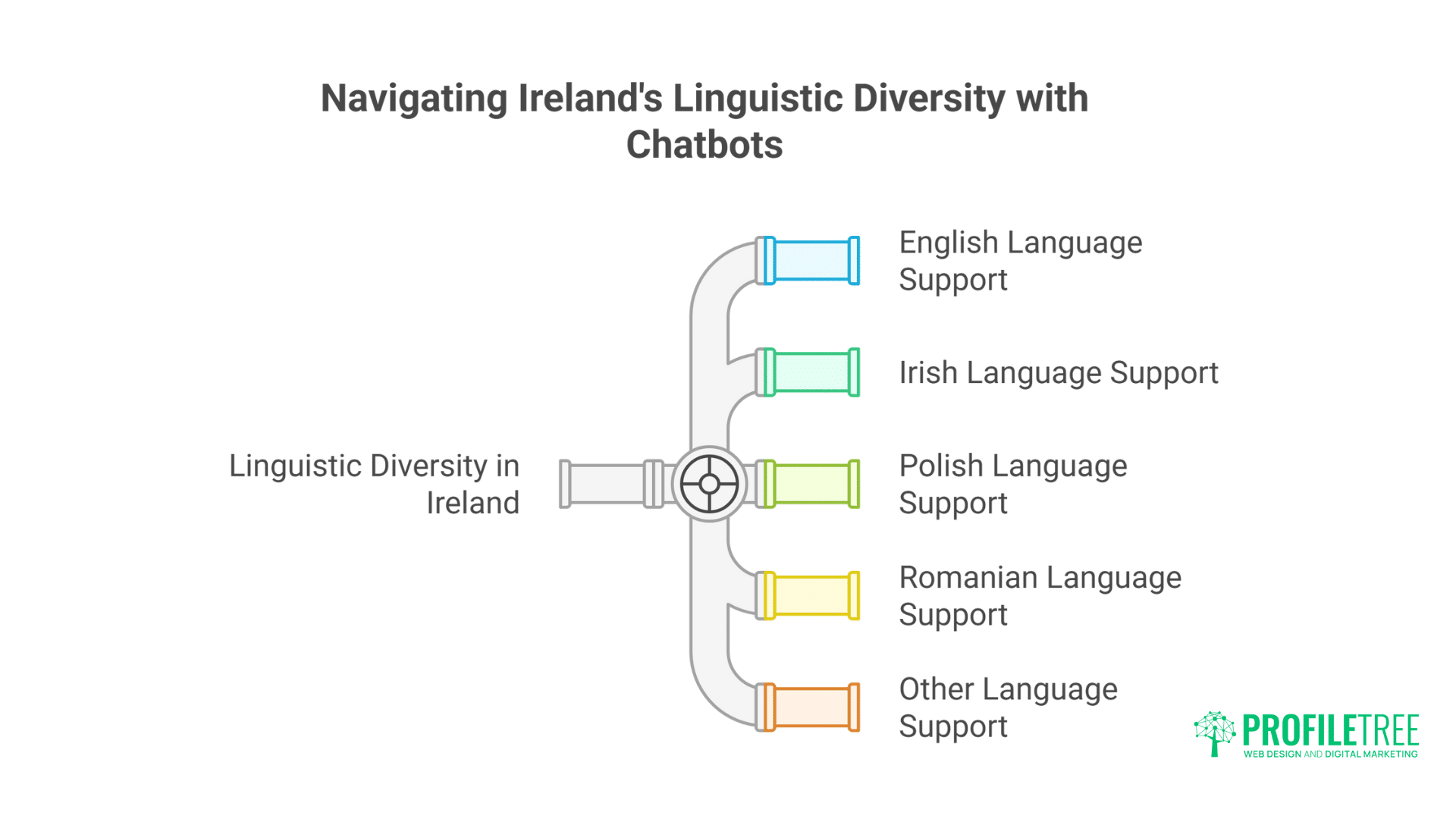
Ireland’s linguistic landscape requires thoughtful chatbot configuration for Irish websites. English dominates business communication, Irish language support demonstrates cultural respect and may be legally required for certain organisations. Additionally, your chatbot might need to handle queries from Polish, Romanian, and other communities representing significant Irish demographics.
Implementing Bilingual English/Irish Support
Start with professional translation of key chatbot messages and responses. Machine translation produces awkward Irish phrases that damage credibility. Invest in native Irish speakers to translate welcome messages, common responses, and error messages accurately.
Create separate conversation flows for Irish language interactions. Simple word-for-word translation doesn’t work because Irish sentence structure differs from English. Your Irish conversation paths need independent logic reflecting natural Irish communication patterns.
Consider context-aware language switching. When users initiate conversations in Irish, they maintain that language throughout unless they switch to English. However, provide subtle options to change languages, recognising that users might prefer English for complex technical discussions.
For government contractors and public sector organisations, Irish language support may be mandatory. The Official Languages Act requires certain public bodies to provide Irish language services. While private businesses face no such requirement, offering Irish language support can differentiate your business in competitive markets.
Managing Multiple Languages Efficiently
Structure your chatbot architecture to support easy language additions. Use variable-based responses where language-specific content populates dynamically rather than creating entirely separate chatbots for each language. This approach simplifies maintenance and ensures consistency across languages.
Implement language detection for automatic routing. Modern chatbot platforms can identify user language from initial messages, automatically presenting appropriate language options. This creates seamless experiences for international visitors to Irish websites.
Quality assurance becomes crucial with multilingual chatbots. Test each language version thoroughly, ensuring translations maintain meaning and tone. Pay particular attention to industry-specific terminology that might lack direct translations.
Consider cultural adaptation beyond literal translation. Polish customers might expect more formal communication styles, while American visitors might prefer casual conversation. Adapting tone and approach for different audiences improves engagement rates significantly.
Integration with Existing Irish Websites
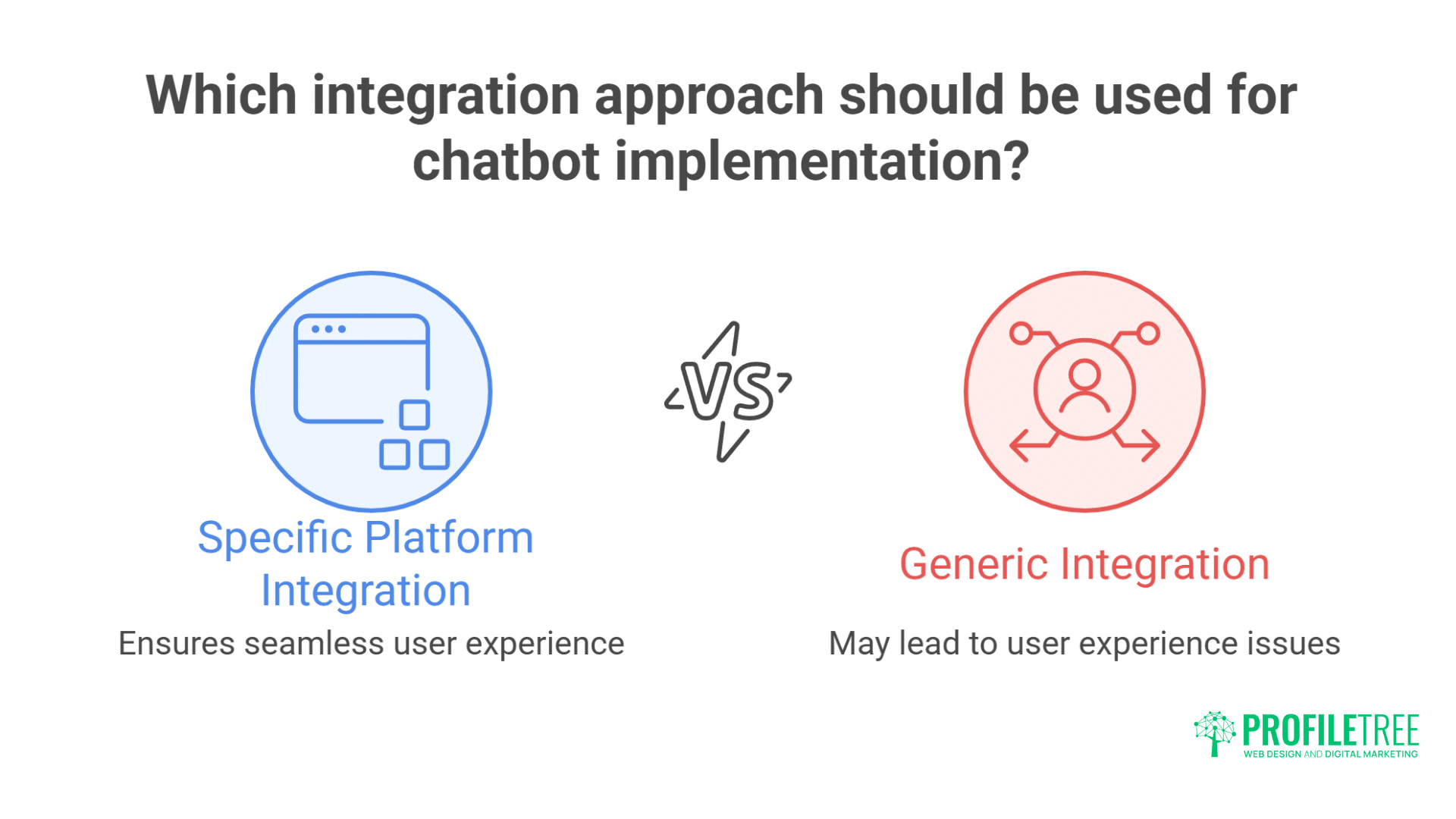
Your chatbot must integrate seamlessly with your current website infrastructure. Poor integration creates jarring user experiences that damage brand perception and reduce conversion rates. Irish businesses typically use WordPress, Shopify, or custom-built platforms, each requiring specific integration approaches.
WordPress Integration Strategies
WordPress powers 43% of Irish business websites, making smooth integration essential. Most chatbot platforms provide WordPress plugins, simplifying installation. However, proper configuration extends beyond basic plugin activation.
Position your chatbot strategically on different page types. Product pages might trigger product-specific conversations, while blog posts could offer content recommendations. Your web development team can implement conditional logic, displaying different chatbot configurations based on page context.
Integrate chatbot data with WordPress user systems. When logged-in users interact with your chatbot, pre-populate their information to avoid repetitive data entry. Connect conversation histories to user profiles, creating comprehensive customer interaction records.
Optimise chatbot performance within WordPress environments. Lazy loading prevents chatbots from slowing initial page loads. Implement asynchronous loading so chatbot scripts don’t block other page elements. Cache static chatbot elements while keeping conversation functionality dynamic.
E-commerce Platform Integration
Shopify stores require chatbots that understand product catalogues, inventory levels, and order statuses. Configure your chatbot to access Shopify’s API, enabling real-time product availability checks and order tracking directly through chat.
WooCommerce integration offers capabilities similar to those of WordPress environments. Your chatbot can check stock levels, calculate shipping costs to specific Irish counties, and even process simple orders without users navigating to traditional checkout pages.
Connect your chatbot to inventory management systems for accurate product information. Nothing frustrates customers more than chatbots confirming availability for out-of-stock items. Real-time inventory integration prevents disappointment and maintains trust on Irish websites.
Implement abandoned cart recovery sequences through chatbot interactions. When customers leave items in their cart, your chatbot can engage them with personalised messages, offer discount codes, or address concerns preventing purchase completion.
Custom Website Considerations
Custom-built Irish websites offer maximum integration flexibility but require careful planning. Your development team needs to create API endpoints enabling chatbot communication with backend systems. This includes user authentication, data retrieval, and action execution.
Security becomes paramount with custom integrations. Implement proper authentication tokens, rate limiting, and input validation to prevent chatbot interactions from becoming security vulnerabilities. Regular penetration testing ensures your custom integration remains secure.
Design a modular integration architecture allowing easy updates and modifications. As your chatbot platform evolves and your business requirements change, modular design enables adjustments without complete system overhauls.
Document all custom integrations thoroughly. Future developers need an understanding of how your chatbot connects to various systems. Comprehensive documentation reduces maintenance costs and accelerates troubleshooting when issues arise.
Cost Analysis for Irish SMEs
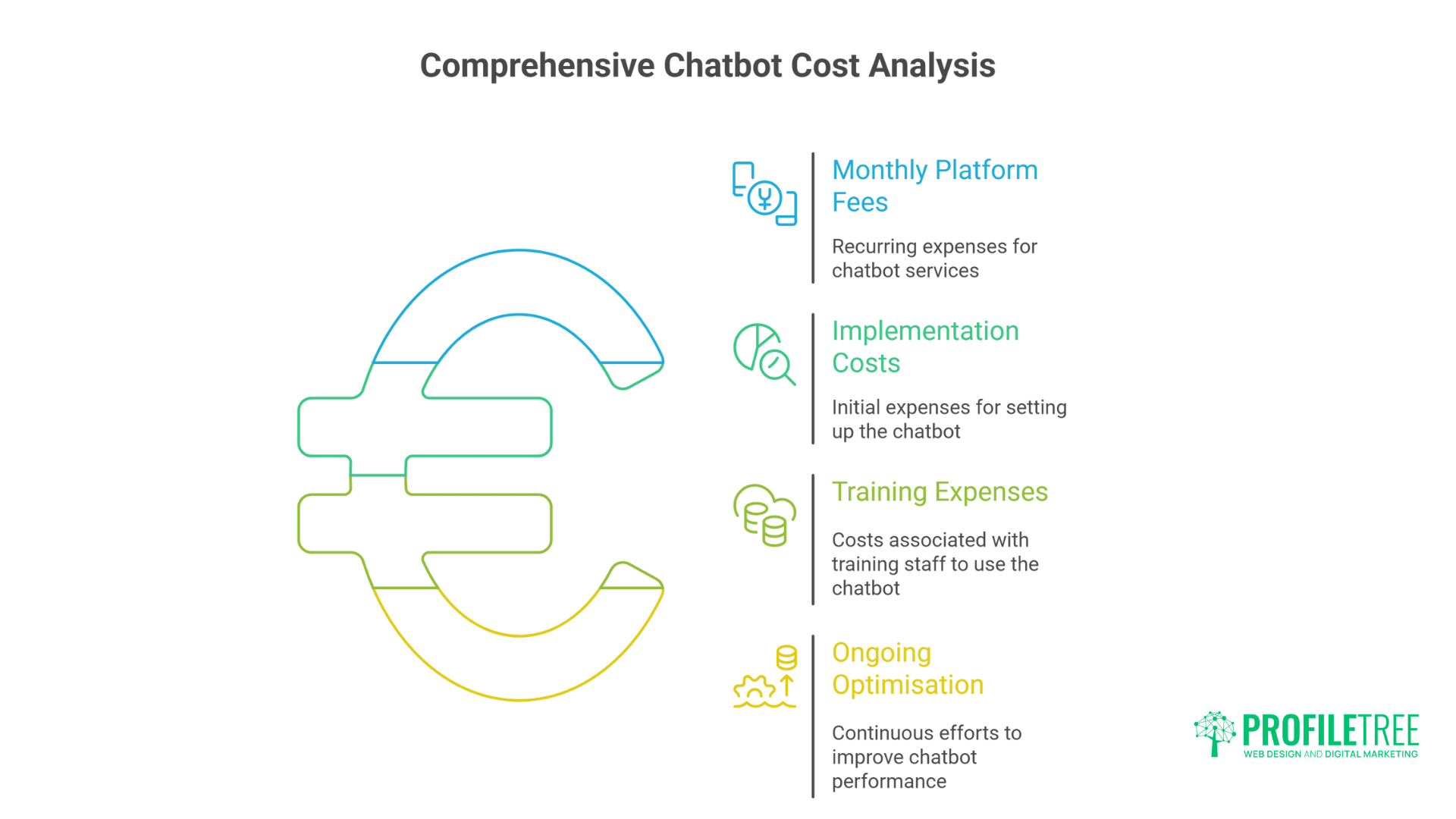
Understanding total chatbot costs helps Irish SMEs make informed investment decisions. Beyond monthly platform fees, consider implementation, training, and ongoing optimisation expenses.
Initial Investment Breakdown
Platform selection significantly impacts initial costs. Basic platforms like Tidio require €29-89 monthly with minimal setup costs. Enterprise solutions like Intercom can require €5,000-15,000 for proper implementation, including consultation, configuration, and training.
Professional setup accelerates deployment but increases costs. Agencies charge €1,500-5,000 for comprehensive chatbot implementation, including conversation design, integration, and testing. DIY implementation saves money but requires 40-80 hours of internal time, potentially costing more in lost productivity.
Content creation represents a hidden cost many businesses overlook. Writing comprehensive FAQ responses, creating conversation scripts, and developing personality guidelines requires significant time investment. Budget 20-40 hours for initial content creation, whether handled internally or outsourced.
Training costs vary based on platform complexity and team size. Simple platforms require 2-4 hours of training per team member. Complex systems might need 2-3 days of comprehensive training, potentially costing €500-1,500 per participant.
Ongoing Operational Expenses
Monthly platform fees represent just one ongoing cost component. As your business grows, you’ll likely need higher-tier plans supporting more conversations, advanced features, or additional team members. Budget for 20-30% annual platform cost increases as usage scales.
Conversation optimisation requires continuous investment. Analysing chatbot performance, identifying improvement opportunities, and implementing changes requires 5-10 hours monthly. Whether handled internally or through digital marketing services, this optimisation proves essential for maintaining effectiveness.
Content updates keep your chatbot relevant and accurate. Product changes, policy updates, and seasonal adjustments require regular content revision. Allocate 3-5 hours monthly for content maintenance, increasing during busy periods or major business changes.
Integration maintenance ensures continued functionality. Platform updates, API changes, and security patches require technical attention. Budget €200-500 quarterly for technical maintenance, whether through internal resources or external support.
ROI Calculation Framework
Calculate chatbot ROI by comparing total costs against quantifiable benefits. Start with direct cost savings from reduced support tickets. If your chatbot handles 100 queries daily that would otherwise require 5-minute human responses, you save approximately 8 hours daily in support time.
Measure revenue increases from improved conversion rates. If your chatbot increases conversion rates by just 1% on a website generating €10,000 monthly revenue, that’s €100 additional monthly revenue. Over a year, this €1,200 increase might cover your entire chatbot investment.
Factors in indirect benefits include improved customer satisfaction and 24/7 availability. While harder to quantify, these benefits contribute to long-term business growth. Customer lifetime value often increases 10-15% when businesses provide superior support experiences.
Consider the opportunity costs of not implementing chatbots on Irish websites. Competitors using chatbots capture customers you’re losing outside business hours. Calculate potential revenue from currently missed opportunities to understand the true cost of inaction.
Advanced Implementation Strategies for Irish Websites
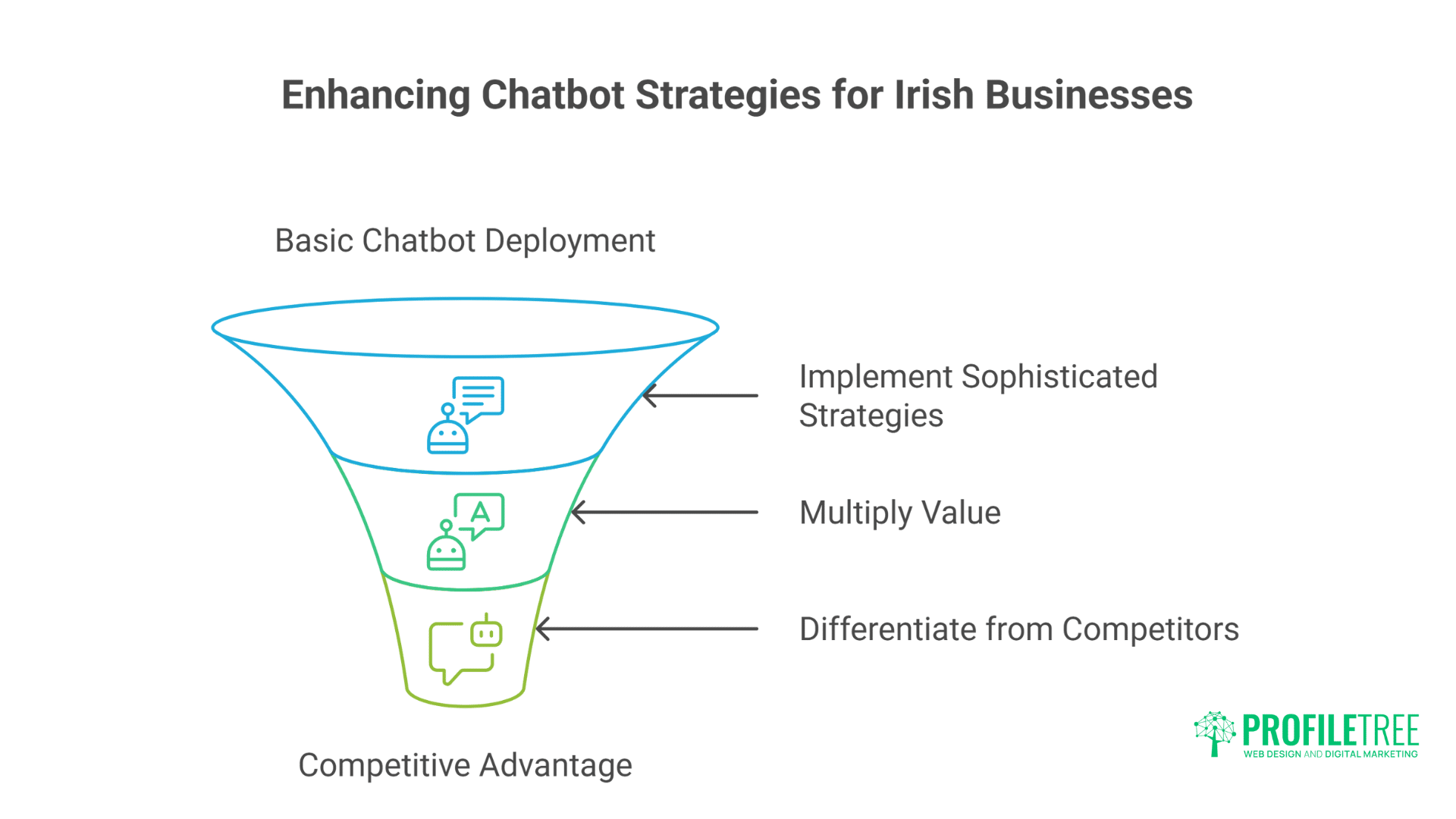
Moving beyond basic chatbot deployment, Irish businesses can implement sophisticated strategies that multiply value and differentiate from competitors.
Conversational AI vs Rule-Based Systems
Rule-based chatbots follow predetermined conversation paths and are suitable for straightforward queries with predictable responses. They’re easier to implement and control, but struggle with unexpected questions or complex conversations. Irish SMEs often start with rule-based systems before graduating to AI-powered solutions.
Conversational AI understands context and intent, providing more natural interactions. These systems learn from conversations, improving response quality over time. However, they require more substantial initial investment and ongoing training to maintain accuracy.
Hybrid approaches combine both methodologies effectively. Use rule-based flows for critical processes like order placement or appointment booking, ensuring consistency and accuracy. Deploy conversational AI for general queries, allowing flexible, natural conversations that adapt to user needs.
The choice depends on your business requirements and customer expectations. B2B companies selling complex services benefit from conversational AI’s flexibility. Retail businesses might find rule-based systems sufficient for handling product queries and order support.
Proactive Engagement Strategies
Don’t wait for visitors to initiate conversations. Proactive engagement significantly increases interaction rates and conversions. However, timing and context prove crucial – aggressive pop-ups annoy users and increase bounce rates.
Implement behaviour-based triggers that identify engaged visitors. Someone spending three minutes on your pricing page shows purchase intent. Your chatbot can offer assistance, answer pricing questions, or provide competitor comparisons at precisely the right moment.
Exit-intent technology identifies when users prepare to leave your site. Your chatbot can trigger targeted messages addressing potential concerns, offering discounts, or requesting feedback. Irish e-commerce sites report 5-7% conversion rate improvements from exit-intent chatbot engagement.
Time-based triggers work well for content consumption. After visitors read blog posts for two minutes, offer related content recommendations or invite newsletter subscriptions. This approach builds engagement without interrupting the reading experience.
Personalisation and Customer Journey Mapping
Map typical customer journeys through your website, identifying key decision points where chatbot intervention adds value. Irish customers researching products follow predictable patterns – awareness, consideration, decision, and purchase. Your chatbot should provide appropriate support at each stage.
Personalise conversations based on visitor data. Returning customers receive different messaging than first-time visitors. Geographic location enables county-specific delivery information. Traffic source provides context – visitors from Google Ads might need information different from organic search traffic.
Integrate chatbot data with your CRM system for comprehensive personalisation. When existing customers interact with your chatbot, reference previous purchases, support tickets, and preferences. This continuity creates superior experiences that strengthen customer relationships.
Progressive profiling gradually builds customer understanding without overwhelming initial interactions. Start with anonymous support, then request email addresses for follow-up, eventually building complete customer profiles through natural conversation progression.
Training Your Team for Chatbot Success
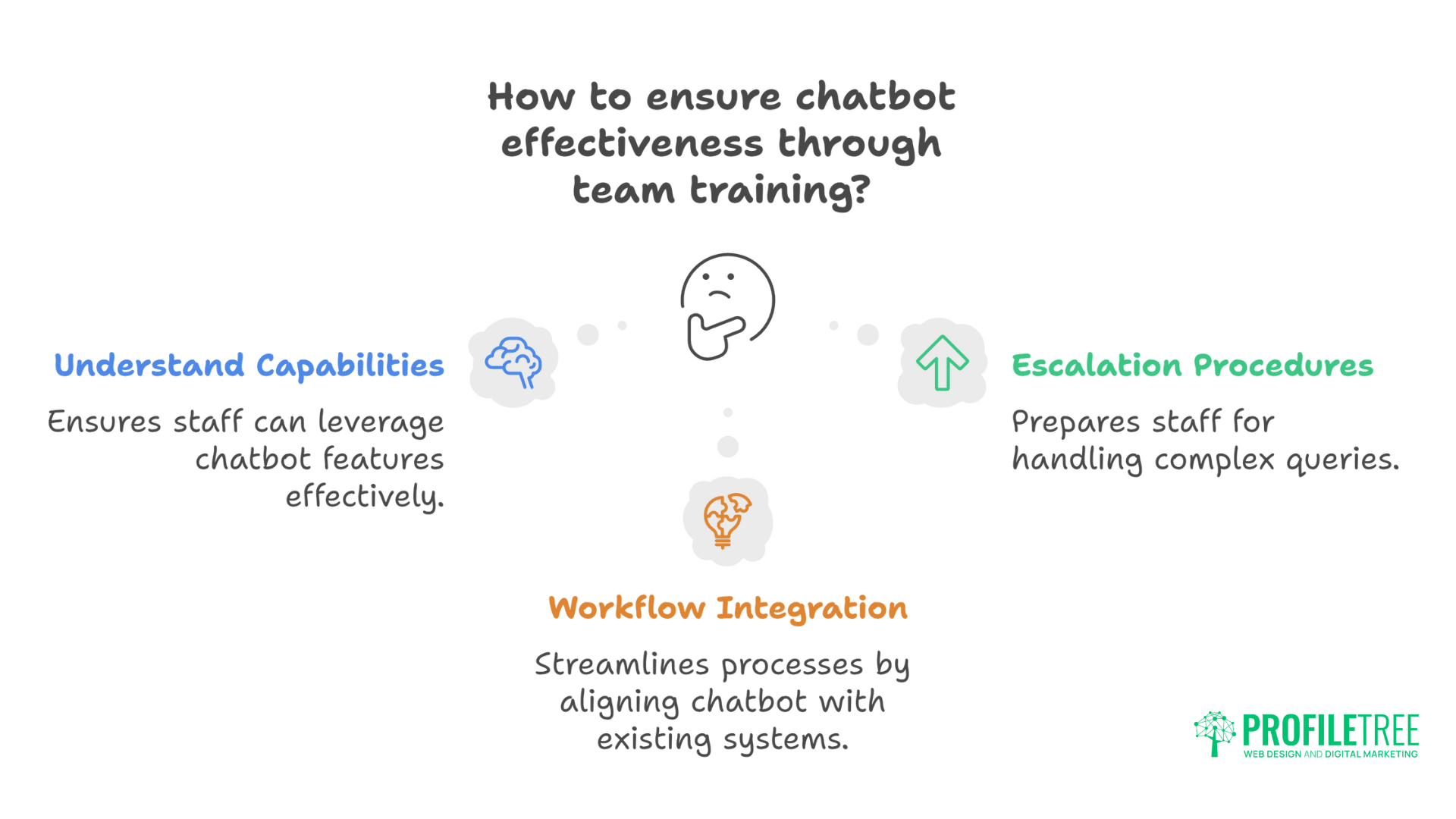
Your chatbot’s effectiveness depends heavily on proper team training. Staff need an understanding of chatbot capabilities, escalation procedures, and integration with existing workflows.
Customer Service Team Adaptation
Support agents must understand when and how to take over chatbot conversations. Create clear escalation triggers – complex technical issues, upset customers, or high-value sales opportunities. Agents need seamless handover processes maintaining conversation context.
Train agents to review chatbot conversations before responding. Understanding the context of the previous exchange prevents repetitive questions from frustrating customers. Your team should view chatbot transcripts as valuable conversation primers, not additional work.
Develop hybrid support models where agents and chatbots collaborate. Agents can monitor multiple chatbot conversations simultaneously, intervening only when necessary. This approach maximises efficiency while maintaining human oversight for quality assurance.
Regular feedback sessions help agents identify chatbot improvement opportunities. Support teams observe conversation patterns, identifying common failures or confusion points. This frontline feedback proves invaluable for continuous chatbot optimisation.
Sales Team Integration
Sales teams need chatbot training different from that of support staff. Focus on lead qualification criteria, handover processes, and follow-up procedures. Your chatbot should identify sales-ready leads without overwhelming sales teams with unqualified prospects.
Train sales staff to leverage chatbot-gathered intelligence. Conversation histories reveal prospect pain points, budget indicators, and decision criteria. Sales representatives entering conversations with this context close deals more effectively.
Establish clear ownership of chatbot-generated leads. Define routing rules, response timeframes, and follow-up requirements. Nothing damages conversion rates more than qualified leads receiving no follow-up because ownership remained unclear.
Create feedback loops between sales outcomes and chatbot optimisation. When sales teams identify why leads don’t convert, adjust chatbot qualification criteria accordingly. This iterative improvement gradually increases lead quality.
Marketing Team Responsibilities
Marketing teams should own chatbot content strategy and personality development. Your chatbot represents your brand in thousands of conversations – its tone, style, and messaging need careful cultivation and alignment with a broader content marketing strategy.
Train marketing staff on conversation analytics interpretation. Chatbot platforms provide rich data about customer queries, pain points, and interests. This intelligence should inform content creation, campaign messaging, and product positioning.
Develop chatbot-specific marketing campaigns leveraging conversational capabilities. Promote exclusive chatbot-only offers, create interactive quiz campaigns, or launch conversational product finders. These campaigns differentiate your brand while showcasing chatbot capabilities.
Marketing teams should regularly audit chatbot conversations for brand consistency. Review response quality, ensure messaging aligns with current campaigns, and identify opportunities for improved engagement.
Measuring Success and Optimisation
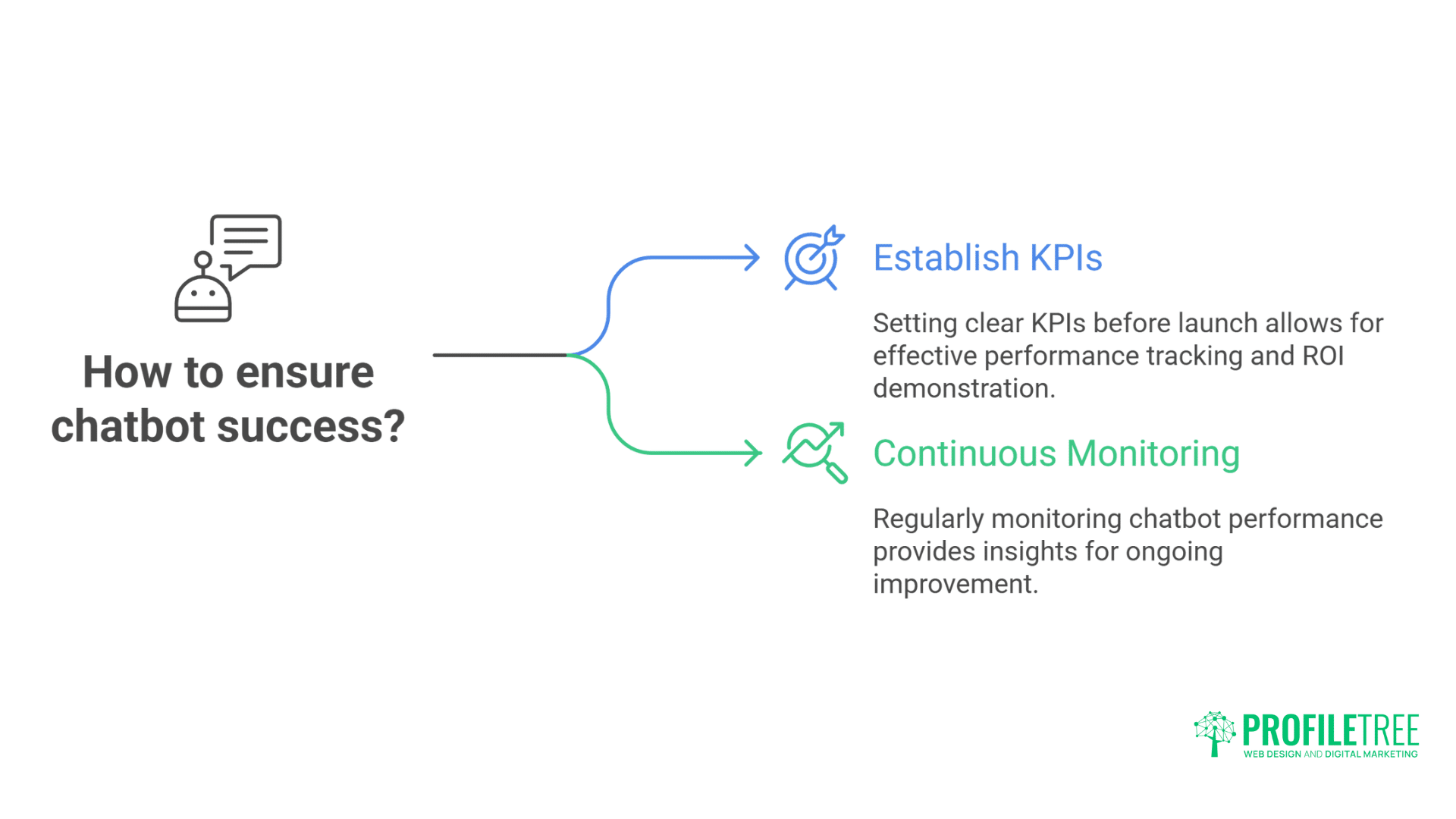
Without proper measurement, you cannot optimise chatbot performance or demonstrate ROI. Establish clear KPIs before launch, then continuously monitor and improve based on data insights.
Essential Metrics to Track
Resolution rate measures the percentage of conversations successfully concluded without human intervention. Target 60-70% for initial deployment, improving toward 80% as your chatbot learns. Low resolution rates indicate content gaps or conversation flow problems.
Customer satisfaction scores provide direct feedback on chatbot performance. Implement post-conversation surveys asking users to rate their experience. Maintain scores above 4.0/5.0, investigating any significant drops immediately.
Conversion impact quantifies business value. Track conversion rates for visitors who engage with chatbots versus those who don’t. Most Irish businesses see 20-30% higher conversion rates among chatbot users, justifying continued investment.
Average handling time indicates efficiency. While chatbots shouldn’t rush conversations, excessive duration suggests confusion or inefficiency. Target 3-5 minute average conversations for support queries, less for simple FAQs.
Continuous Improvement Process
Implement weekly conversation reviews identifying failure points and improvement opportunities. Random sample 50-100 conversations, categorising issues and prioritising fixes based on frequency and impact.
A/B test different conversation approaches measuring impact on key metrics. Test greeting messages, conversation flows, and response styles. Small improvements compound over time, significantly enhancing overall performance.
Regular content audits ensure information remains accurate and relevant. Review all chatbot responses quarterly, updating product information, prices, policies, and seasonal content. Outdated information damages trust and creates support tickets.
Monitor emerging query patterns indicating new customer needs or concerns. When multiple users ask similar questions that lack good responses, new conversation flows addressing these topics are created. This proactive approach prevents frustration and demonstrates responsiveness.
Advanced Analytics Integration
Connect chatbot analytics with broader business intelligence systems. Understanding how chatbot interactions influence customer lifetime value, retention rates, and purchase frequency provides strategic insights beyond operational metrics.
Implement attribution modelling to understand the chatbot’s role in conversion paths. Customers might interact with chatbots multiple times before purchasing. Proper attribution ensures you understand and value these touchpoints appropriately.
Cohort analysis reveals how chatbot improvements impact different user segments. New visitors might respond differently to chatbot engagement than returning customers. Segment performance data to optimise experiences for each group.
Predictive analytics can identify customers likely to need support before they request it. By analysing behavioural patterns, your chatbot can proactively offer assistance to users who are showing confusion or frustration signals.
Future-Proofing Your Chatbot Investment
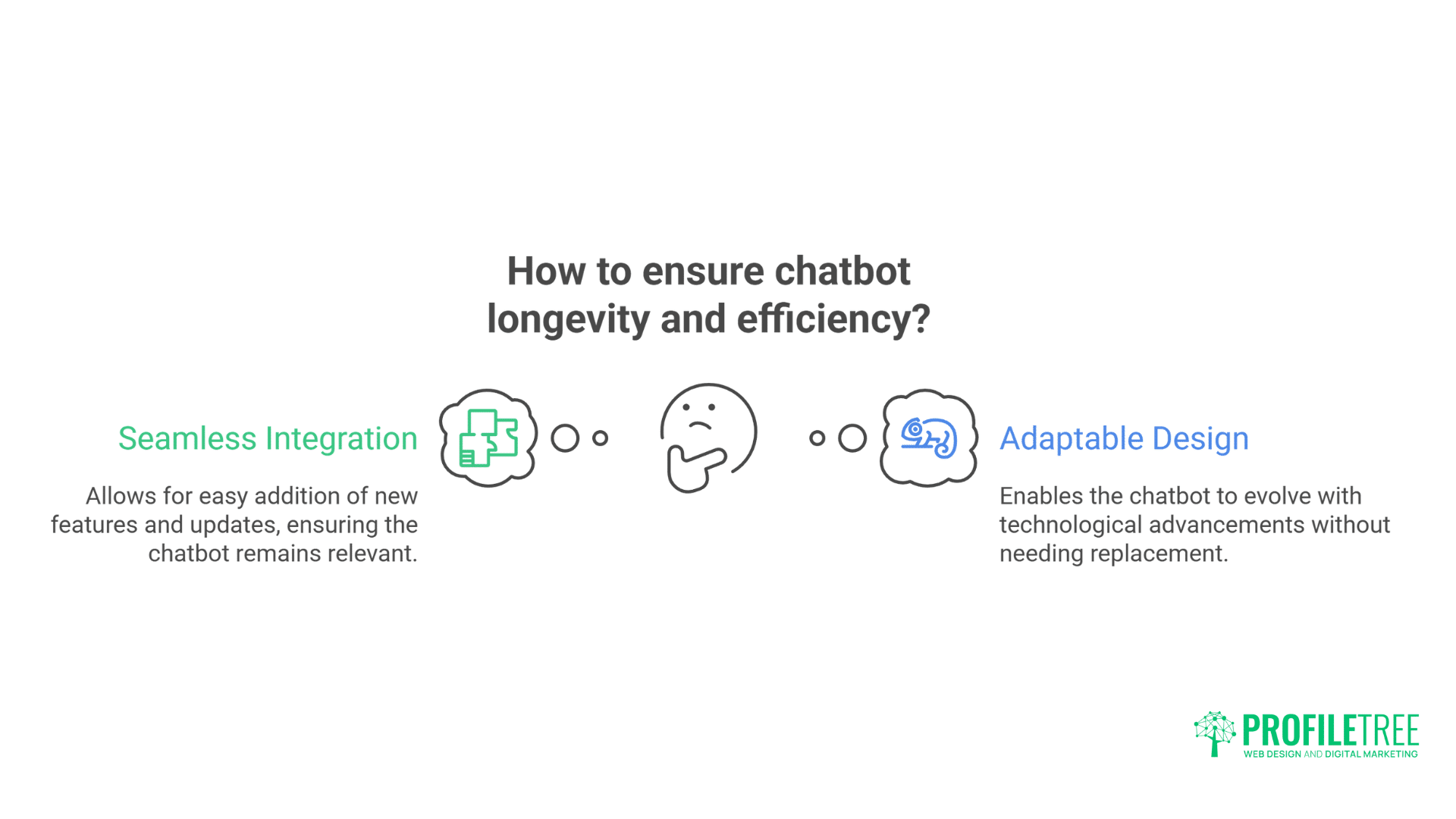
The chatbot landscape evolves rapidly. Your implementation should accommodate future developments without requiring complete replacement.
Emerging Technologies
Voice-enabled chatbots represent the next frontier. Irish consumers increasingly expect voice interaction options, particularly on mobile devices. Choose platforms with voice capability roadmaps, even if not implementing immediately.
Augmented reality integration enables visual product support through chatbots. Customers can share photos of problems, receiving annotated responses showing solutions. Fashion and furniture retailers find particular value in visual chatbot interactions.
Emotional intelligence capabilities improve conversation quality. Advanced chatbots detect user sentiment, adjusting tone and approach accordingly. Frustrated customers receive empathetic responses, while happy customers encounter enthusiastic engagement.
Multilingual voice processing will become standard. Irish businesses serving international markets need chatbots that understand accented English, code-switching between languages, and cultural communication nuances.
Platform Evolution Considerations
Avoid vendor lock-in by choosing platforms with data portability. You should be able to export conversation flows, training data, and analytics if platform changes become necessary. Open standards and API-first platforms provide maximum flexibility.
Modular architecture enables gradual capability additions. Rather than replacing entire systems, add new features as they become available and valuable. This approach minimises disruption while maintaining competitive advantages.
Regular platform evaluation ensures you’re getting value. Annual reviews comparing your current platform against alternatives identify potential improvements or cost savings. Don’t hesitate to switch platforms if better options emerge.
Stay informed about platform roadmaps and industry developments. Subscribe to vendor newsletters, attend webinars, and participate in user communities. Understanding future capabilities helps you plan strategic implementations.
Frequently Asked Questions
How much does it cost to implement a chatbot on an Irish website?
Basic chatbot implementation costs between €200-500 monthly for platforms like Tidio or Drift, while enterprise solutions like Intercom can cost €1,000+ monthly. Implementation costs range from €500 for a DIY setup to €5,000+ for a professional configuration. Most Irish SMEs achieve positive ROI within 3-4 months through reduced support costs and increased conversions.
Do I need technical expertise to build and maintain a chatbot?
Modern chatbot platforms require minimal technical knowledge for basic implementation. Visual builders let you create conversation flows without coding. However, advanced features like API integration, custom workflows, and CRM synchronisation benefit from technical expertise. Consider starting simple and expanding capabilities as you gain experience.
How do I ensure my chatbot complies with GDPR requirements?
Start by choosing GDPR-compliant platforms with EU data storage. Implement clear consent mechanisms, provide transparent privacy notices, and enable data deletion requests. Document your data processing activities, limit data collection to necessary information, and establish retention periods. Regular audits ensure ongoing compliance as regulations evolve.
What’s the difference between rule-based and AI chatbots for Irish businesses?
Rule-based chatbots follow predetermined conversation paths, which is perfect for structured processes like appointment booking or FAQ responses. AI chatbots understand context and intent, handling unexpected queries more naturally. Most Irish SMEs benefit from hybrid approaches – using rules for critical processes while deploying AI for general support.
How long does it take to see results from chatbot implementation?
Initial results appear immediately – 24/7 availability and instant responses improve customer experience from day one. Conversion rate improvements typically emerge within 2-3 weeks as you optimise conversion flows. Full ROI realisation occurs within 3-4 months after fine-tuning based on performance data and customer feedback.
Can chatbots handle both English and Irish language queries?
Yes, modern platforms support multiple languages, including Irish. However, quality Irish language support requires professional translation and separate conversation flows. Machine translation produces poor results for Irish. Budget for native speaker involvement if Irish language support is important for your audience.
What happens when chatbots can’t answer customer questions?
Well-designed chatbots recognise their limitations and escalate appropriately. They should gracefully hand over to human agents, capture contact information for follow-up, or direct users to relevant resources. Never let chatbots guess or provide potentially incorrect information – acknowledge limitations and provide alternative support paths.
Take Action: Transform Your Website Today
Your competitors already use chatbots to capture leads you’re missing. Every day without chatbot implementation means lost opportunities, frustrated customers finding answers elsewhere, and revenue walking out your digital door. The question isn’t whether to implement a chatbot, but how quickly you can deploy one effectively.
ProfileTree helps Irish businesses navigate chatbot implementation complexities. Our AI training services equip your team with skills for successful chatbot deployment and management. We understand the unique challenges facing Northern Ireland businesses and provide practical, actionable guidance tailored to your specific needs.
Start with a clear implementation plan addressing platform selection, GDPR compliance, and team training. Whether you choose DIY implementation or professional support, taking action today positions your business for tomorrow’s success. Your customers expect instant responses – chatbots deliver that expectation while freeing your team for high-value activities that truly require human expertise.
Ready to revolutionise your customer experience? Contact ProfileTree to discuss how AI-enhanced marketing and intelligent chatbot implementation can transform your digital presence. Your future customers are searching for answers right now – make sure your website is ready to provide them.