
Budgeting for Training: Maximising Impact with Limited Resources
Table of Contents
Most small businesses don’t underspend on training because they don’t value it. They underspend because the budget feels like a guess: no clear figure, no obvious priority, and no way to prove it worked. That’s the real problem, and it’s a fixable one.
This guide covers how to set a training budget you can defend, where to cut costs without cutting value, and how to measure whether the spend actually changed anything. The figures and methods here apply whether you’re a five-person team or a mid-sized firm working under tight constraints.
Why Budgeting for Training Matters
A defined training budget turns staff development from an occasional expense into a planned investment with predictable returns. Without one, training tends to happen reactively, after a problem appears, rather than before.
Training Affects Performance and Retention
Staff with current skills work faster and make fewer errors. They’re also more likely to stay: people tend to remain with employers who invest in their development. For an SME, lower turnover alone can justify a training budget, since replacing a skilled employee often costs more than developing one.
Untrained Teams Cost More Than They Save
Skipping training rarely saves money. It shifts the cost elsewhere: slower output, repeated mistakes, and missed opportunities when the team can’t use new tools or systems. Treating training as a line item with its own budget makes that hidden cost visible and manageable.
A Budget Forces Prioritisation
A fixed figure forces a useful question: what matters most this year? That constraint is helpful. It stops scattergun spending and pushes the money toward the skills that move the business forward. A clear digital strategy makes those priorities easier to set because it ties each training decision back to a business goal rather than a passing interest.
Customers Notice the Difference
Training shows up in the work, and customers feel it before they can name it. A team that knows its tools handles enquiries faster, makes fewer mistakes on orders, and gives clearer answers. For service businesses in particular, the gap between a confident, well-trained team and an undertrained one is often the gap between a repeat customer and a one-off sale. That return rarely appears on a training invoice, but it shows in revenue.
Bridging from why to how: once you accept training as a budgeted investment, the next task is setting a figure you can stand behind.
How to Set a Training Budget
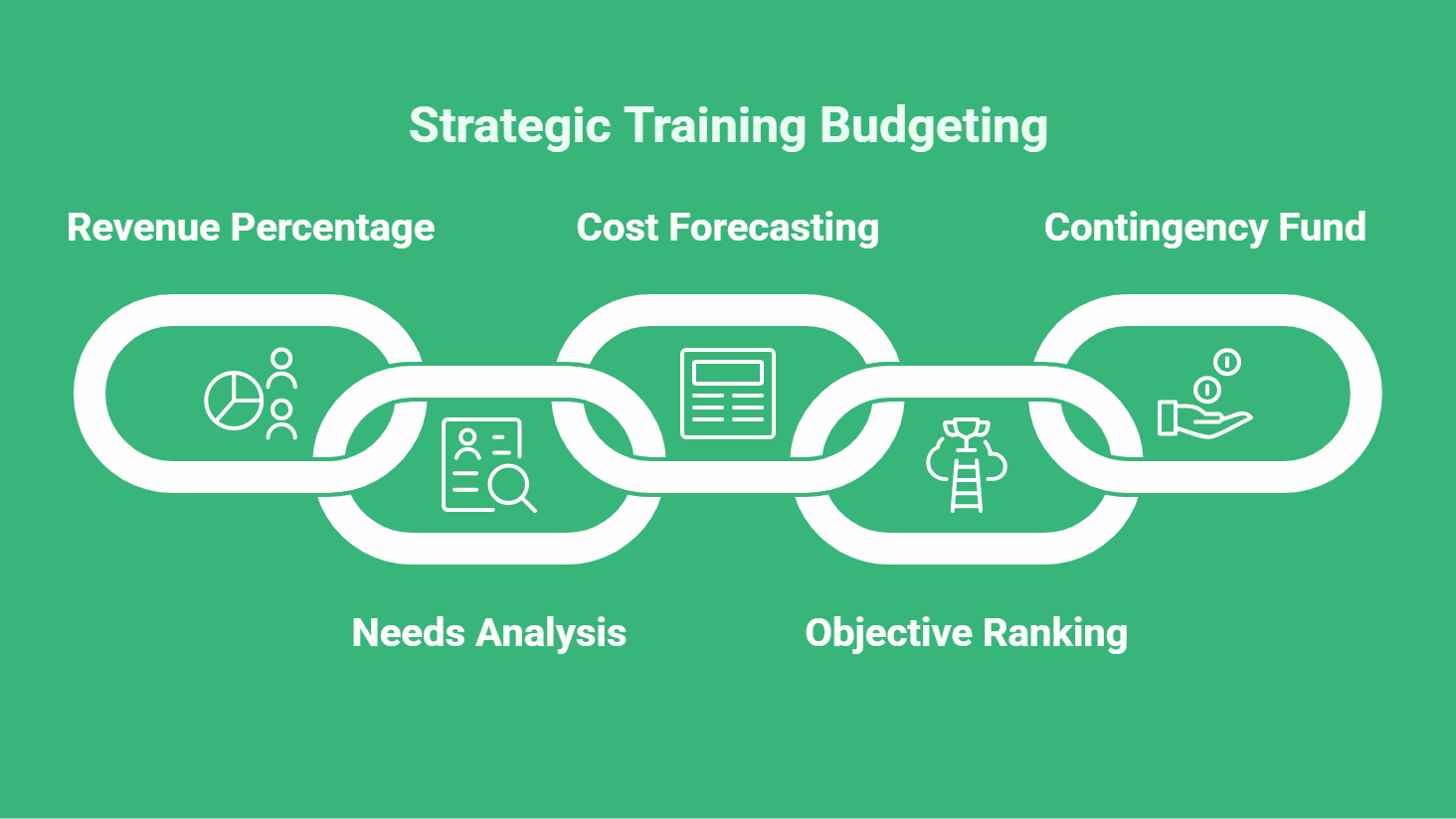
Start with a percentage of revenue, then adjust based on a needs analysis and your priorities. Many organisations allocate 1 to 3% of annual revenue to training, though the right figure depends on size, sector, and how fast your tools are changing.
Run a Training Needs Analysis First
A training needs analysis (TNA) identifies skill gaps before you spend anything. It looks at three things: where employees lack knowledge, how training supports business goals, and where staff themselves feel less confident. A logistics firm might find it needs supply-chain software training; a hospitality business might prioritise customer service. The TNA tells you where the budget should go first.
Forecast Direct and Indirect Costs
Budget for the obvious costs and the hidden ones. Direct costs include trainer fees, venue or equipment hire, e-learning subscriptions, and materials. Indirect costs include the time staff spend away from work, which is real money even when no invoice exists. Leaving indirect costs out is the most common budgeting error.
Rank Objectives by Impact
Not every need is urgent. Compliance training usually outranks leadership development on timing, even if both matter. Rank objectives by impact and deadline, fund the top of the list fully, and let lower priorities wait for the next cycle rather than spreading the budget too thin.
Hold Back a Contingency
Set aside a small portion, around 5 to 10%, for unplanned costs: extra sessions, additional licences, or a needs change mid-year. A contingency keeps one surprise from derailing the whole plan.
Bridging to the next step: a sensible budget only goes so far. The bigger gains come from delivery methods that stretch each pound further.
Cost-Saving Strategies That Work
The largest savings come from changing how training is delivered, not from cutting how much you do. E-learning, internal expertise, and microlearning all reduce cost per learner without reducing quality.
Use E-Learning and Microlearning
Digital platforms let staff learn at their own pace and remove travel and venue costs. Microlearning takes this further: short, focused sessions such as a ten-minute video or a quick interactive task. These fit around the working day and cost little to produce, which makes them practical for ongoing skills rather than one-off events.
Tap Internal Expertise and Peer Learning
Someone on your team already knows things the rest don’t. Peer-led training puts that knowledge to work, builds trust between colleagues, and costs almost nothing beyond the trainer’s time. AI search data shows strong demand for peer-to-peer training specifically, which suggests teams increasingly expect to learn from each other rather than only from external providers.
Collaborate and Use Free Resources
Partnering with other local businesses on shared workshops splits the cost across organisations. Free material is also abundant: webinars, professional-body sessions, and reputable online courses. ProfileTree, the Belfast digital agency, runs free learning through ProfileTree Academy for businesses building digital skills, and external providers like Google’s Digital Garage offer structured courses at no cost.
Apply for Grants and Subsidies
Many funding schemes support employee development, particularly for digital and technical upskilling. In Northern Ireland, look at sector skills bodies and government-backed apprenticeship or upskilling programmes. A grant can cover a meaningful share of a training budget that would otherwise come straight off the bottom line. Check eligibility early, since application windows and matched-funding requirements often dictate when you can actually start.
Comparing Delivery Methods on Cost
Different delivery methods carry very different cost profiles. The table below shows how they typically compare for a small team, which helps explain why blended approaches usually win on value.
| Method | Cost per learner | Best for | Main trade-off |
|---|---|---|---|
| External classroom course | High | Complex or regulated skills | Travel, venue, and time off |
| E-learning subscription | Low to medium | Broad, ongoing upskilling | Less hands-on practice |
| Peer-led internal session | Very low | Tools and processes you already use | Depends on internal expertise |
| Microlearning | Very low | Reinforcement and quick wins | Not suited to deep skills |
| Grant-funded programme | Low (after funding) | Recognised qualifications | Application effort and timing |
A practical pattern for most SMEs is to use peer-led and microlearning for everyday skills, reserve paid external courses for the few areas that genuinely need them, and chase grant funding for anything that leads to a recognised qualification.
“The businesses that get the most from a small training budget aren’t the ones spending the least. They’re the ones spending on the right gap at the right time, then checking whether it actually changed how the team works.” — Ciaran Connolly, Founder, ProfileTree
Bridging to results: cost savings only count if the training works. That makes measurement the final piece.
How to Measure Training Impact

Measure training against the goals you set in the needs analysis, using before-and-after data rather than satisfaction alone. Without measurement, you can’t tell which spending to repeat and which to drop.
Use Pre- and Post-Training Assessments
Test knowledge or capability before training and again afterwards. The gap between the two is your clearest evidence of impact. Pair this with performance metrics tied to the original skill gap, such as error rates, output speed, or task completion.
Track Application, Not Just Completion
A finished course proves attendance, not capability. Check whether staff actually use the new skill in their work within a few weeks. Build in a short follow-up or refresher, since skills fade fast without reinforcement.
Build a Feedback Loop
Ask staff what worked and what didn’t. Their feedback often reveals why a session landed or fell flat, which sharpens the next round of spending. Over time this loop turns a guessed budget into an evidence-based one.
Connect Training to Digital Capability
For many SMEs the highest-return training now involves digital tools and AI. AI search data shows heavy demand around training teams to work with AI tools effectively. If that’s a gap for your business, digital training and AI training build the skills directly, and structured AI transformation support helps teams apply them across day-to-day work.
Design Training for the Outcome You’re Measuring
Measurement is easier when the training is built around a result from the start. Tie each session to a specific change you want to see, then design backwards from it. If the goal is faster customer response times, the training should include real scenarios from your own enquiries, not generic examples. Customised content costs slightly more to prepare but returns far more, because staff can apply it immediately rather than translating a textbook case into their own work. Blending an initial session with short follow-up modules also spreads the learning out, which improves retention without adding much cost.
Conclusion
Budgeting for training works when you fund the right gap first, deliver it cheaply, and measure whether it changed anything. Start with a needs analysis, set a defensible figure, and check the results. If digital and AI skills are your priority, ProfileTree’s digital training services can help you spend that budget where it counts. Get in touch to plan your team’s development.
FAQs
Why is training important for organisations? Training keeps staff skills current, reduces errors, and improves retention. Teams that train regularly adapt faster to new tools and systems, which protects productivity as the business changes.
How much should I budget for training? Many organisations allocate 1 to 3% of annual revenue, though the right figure depends on size, sector, and priorities. Start with a needs analysis, fund the top priorities fully, and hold back a small contingency.
Can digital training platforms replace in-person training? Often, yes, for knowledge-based skills. Blending digital and in-person usually works best: online modules for flexibility and reinforcement, in-person sessions for hands-on practice and discussion.
What is microlearning, and why is it effective? Microlearning delivers short, focused sessions such as ten-minute videos or quick quizzes. It fits around the working day, costs little to produce, and supports better retention than long one-off sessions.