
Digital Media Consumption in Australia: Marketing Guide 2026
Table of Contents
As we progress through 2026, digital media consumption in Australia continues to reshape how businesses connect with their audiences. Australian consumers are increasingly integrating digital platforms into their everyday lives, seeking content that entertains, informs, and creates meaningful connections. The proliferation of devices and technological advancements has made media accessible in ways that seemed impossible just a decade ago.
For businesses and content creators aiming to engage effectively with Australian audiences, understanding these patterns isn’t optional—it’s essential for success. Consumer behaviour in Australia reflects a deep integration of digital media, influenced by demographic factors such as age, location, and lifestyle. The advent of new media platforms and technologies is reshaping content preferences nationwide.
Australians demonstrate a preference for media that aligns with their values and meets their expectations of convenience and personalisation. For international businesses and digital agencies, these insights provide the foundation for successful market entry and sustained engagement. ProfileTree, a Belfast-based web design and digital marketing agency, has helped numerous UK and Irish businesses successfully adapt their digital strategies for the Australian market through targeted SEO services and culturally relevant content creation.
Overview of Digital Media Consumption in Australia
The digital media landscape in Australia has evolved significantly over the years, influenced by technological advancements and societal changes. Understanding how historical events have shaped consumption patterns provides crucial context for businesses developing Australian market strategies.
Historical Context and the Impact of COVID-19
Australia’s digital media consumption has been on a steady incline, but this trajectory was notably altered during the COVID-19 pandemic. Forced indoors, Australians turned to digital platforms for entertainment, work, and communication at unprecedented rates. The impact of this shift is still felt in the media habits that were formed during the pandemic.
Online news, streaming services, and social media experienced spikes in usage that have largely persisted. This acceleration created lasting changes in how Australians interact with digital content. Remote work normalisation drove increased daytime social media usage and video consumption.
E-commerce adoption surged, fundamentally altering shopping behaviours and creating new opportunities for businesses with robust digital presences. For companies looking to establish or strengthen their position in the Australian market, these pandemic-era shifts represent permanent changes rather than temporary adjustments. Our website development services help businesses create e-commerce platforms optimised for these evolved Australian shopping behaviours.
Current State of Internet Penetration and Usage
As of 2023, internet penetration in Australia is among the highest in the world. Figures show that there were over 21.30 million social media users in early 2023. This indicates not just widespread adoption but also deep integration of digital media into daily Australian life.
The internet user base has continued to grow, reaching 25.21 million users in 2024. This results in an impressive penetration rate of 94.9%, according to Digital 2024: Australia data. This high level of connectivity has fostered the consumption of digital media across various platforms.
For businesses targeting Australian audiences, these statistics underscore a critical reality: your potential customers are online, active, and consuming content across multiple platforms throughout their day. Whether you’re developing web design strategies, planning content marketing campaigns, or implementing search engine optimisation, understanding this connected landscape is fundamental to success.
Demographics of Australian Digital Consumers
Understanding who consumes digital media in Australia—and how different demographic groups engage with various platforms—is essential for businesses developing targeted marketing strategies.
Age, Gender, and Regional Usage Patterns
The Australian digital landscape features a diverse user base, with age, gender, and regional differences playing significant roles. The median age of internet users is younger, and the prevalence of digital media consumption is notably high in urban centres. Both men and women engage actively online, but their preferences for certain digital activities can vary significantly.
Understanding these nuances is crucial for effective content marketing and social media strategy. In rural areas, internet penetration is growing thanks to improved infrastructure. However, there is still a tendency for traditional media consumption among these populations.
This creates a hybrid media landscape where businesses must consider both digital and traditional channels. For companies developing SEO strategies or web design projects for Australian markets, accounting for these connectivity variations can significantly impact campaign effectiveness.
Regional Considerations for Digital Campaigns
When planning video production or YouTube marketing campaigns for Australian audiences, regional preferences become particularly important.
Urban vs Rural Content Consumption Patterns:
| Factor | Urban Audiences | Rural Audiences |
|---|---|---|
| Primary Device | Smartphone during commutes | Connected TV at home |
| Preferred Content Length | Short-form (under 2 minutes) | Long-form (10+ minutes) |
| Peak Viewing Times | Morning/evening commute | Evening hours |
| Connection Quality | 5G/NBN high-speed | Variable NBN/4G |
| Platform Preference | Instagram, TikTok, LinkedIn | Facebook, YouTube, BVOD |
These behavioural differences should inform both content creation and distribution strategies. ProfileTree is a digital marketing agency based in Belfast that specialises in adapting UK and Irish business strategies for international markets, including Australia.
Emerging Generations and Media Habits
Emerging generations in Australia exhibit distinct media habits that reflect their fluency and comfort with technology. These younger cohorts not only consume a variety of digital content but also influence broader media trends. They show a strong preference for online streaming services and social media platforms.
Their interaction with digital media is setting the stage for future consumption patterns and preferences that businesses must anticipate. Gen Z and younger millennials in Australia demonstrate particular preferences for visual content, short-form video, and interactive experiences. They expect seamless mobile experiences, instant access to information, and content that aligns with their values.
For businesses developing digital strategies, understanding these generational preferences is crucial. This is particularly important when planning content creation, video marketing, or social media campaigns through our content marketing services.
This McKinsey report delves deeper into the usage statistics and illuminates how Australians are adapting to inflation and economic challenges through their digital consumption habits.
Technological Advancements and Device Adoption
As digital landscapes evolve, we’re witnessing rapid advancements in device technologies and adoption rates in Australia. These technological shifts have profound implications for how businesses design websites, deliver content, and engage with Australian audiences.
Evolution of Devices and Internet Connection Speeds
Australians have enthusiastically embraced a range of devices, with smartphones, tablets, and laptops being integral to everyday life. Equally important to this digital shift is the exponential growth in internet connection speeds. This is powered by infrastructural advancements such as the rollout of the National Broadband Network (NBN) and enhancements to mobile networks.
The adoption of 5G technology has enabled consumers to experience faster, more reliable online access than ever before. This cements Australia’s position as a strong digital economy. For businesses developing websites for Australian audiences, these infrastructure improvements have significantly raised user expectations.
Mobile-first web design is no longer optional—it’s expected. Page load speeds, responsive layouts, and optimised media delivery are critical factors that directly impact user engagement and conversion rates. Our website development approach prioritises these technical considerations, ensuring sites perform optimally across Australia’s mix of NBN connections, 5G mobile networks, and varying rural internet speeds.
Australian Device Landscape Overview
Key device considerations for Australian audiences:
| Device Type | Penetration | Primary Use Cases | Business Implications |
|---|---|---|---|
| Smartphones | 95%+ | Social media, browsing, messaging | Mobile-first design essential |
| Tablets | 60%+ | Content consumption, shopping | Responsive mid-size layouts |
| Laptops | 75%+ | Work, research, complex tasks | Full functionality required |
| Smart TVs | 65%+ | Streaming, BVOD, YouTube | Video content opportunities |
| Wearables | 25%+ | Notifications, fitness, payments | Emerging channel consideration |
These technological capabilities create opportunities for more sophisticated digital experiences. Video streaming quality has improved dramatically, enabling businesses to deliver high-quality video content without buffering concerns. AI-powered personalisation becomes more feasible as processing speeds increase.
The Rise of Smart and Connected TVs
The Australian TV landscape has undergone a significant transformation. Smart TVs, which offer integrated internet connectivity and access to a wide range of streaming services, have become a mainstay in households. These advanced televisions are increasingly favoured for their convenience and the breadth of content they make available.
“Connected TV” devices, such as Chromecast, Apple TV, and gaming consoles, further expand this offering. They transform traditional sets into smart entertainment hubs. This prevalence represents a significant opportunity for businesses planning video marketing campaigns.
Broadcast Video on Demand (BVOD) Opportunities
For businesses planning video marketing campaigns targeting Australian audiences, the prevalence of smart and connected TVs represents a significant opportunity.
Broadcast Video on Demand (BVOD) services like 9Now, 7Plus, and SBS On Demand offer targeted advertising options. These combine the reach of television with the precision of digital marketing. Understanding how Australians consume video content across different devices and platforms should inform your video production strategy and content distribution plans.
We remain committed to educating and empowering businesses to adapt to this ever-changing digital environment. Our digital training and AI training programmes help businesses implement technologies that maintain the authentic, personal tone Australian audiences expect.
Australian Media Platforms and Content Preferences
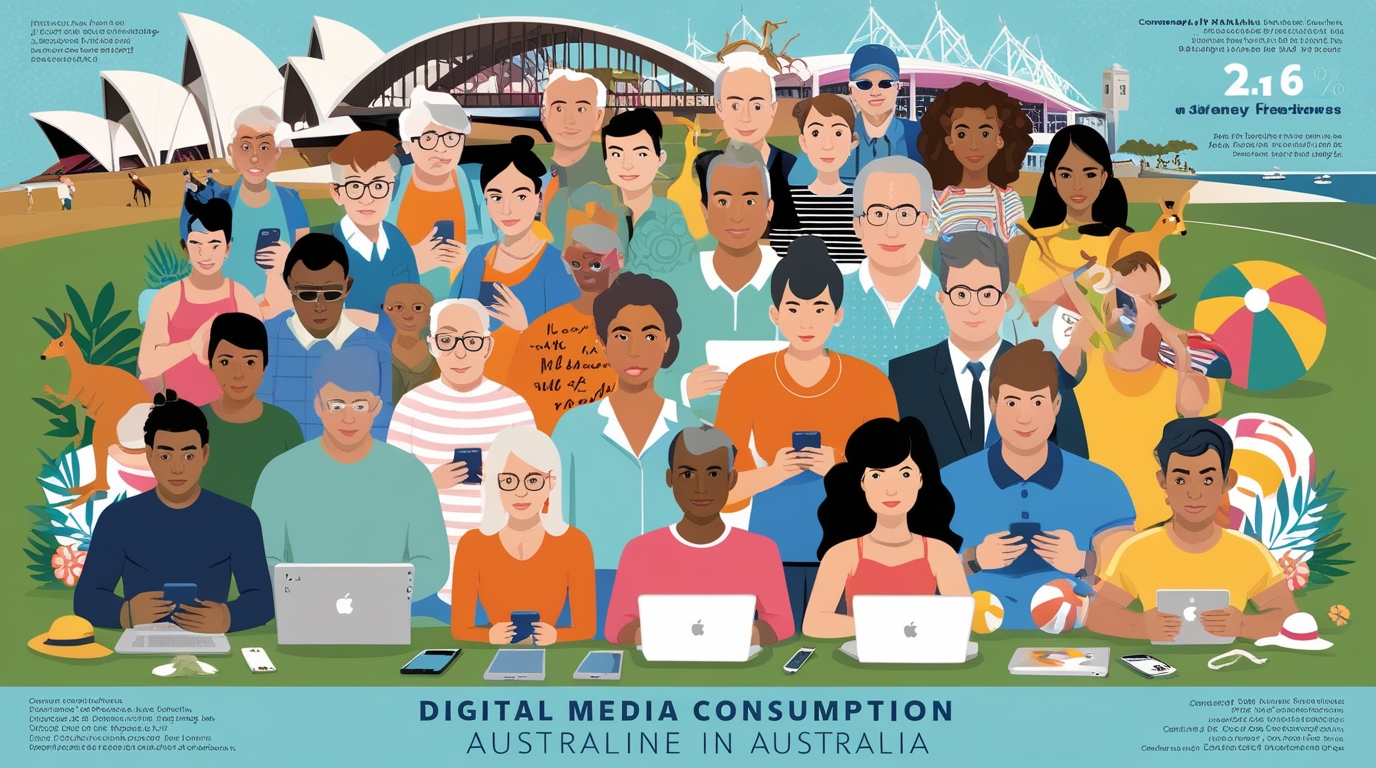
Understanding which platforms Australian audiences prefer and how they consume content on these platforms is fundamental to developing effective digital marketing strategies. The Australian market has unique characteristics that set it apart from other English-speaking markets.
Streaming Services Vs Free-to-Air
Streaming services have significantly reshaped how Australians consume media, offering a wealth of on-demand content that fits seamlessly into busy lifestyles. Spotify has emerged as a leading audio streaming platform, boasting an extensive library of music and podcasts. Netflix and other video streaming services also continue to gain ground.
They provide Australians with a myriad of TV shows, films, and documentaries at their fingertips. Contrastingly, free-to-air television still holds value for a segment of the population who favour it for traditional television viewing. This includes news broadcasts and live sporting events.
However, data suggests that fewer Australians are accessing these traditional broadcast media. This shift has significant implications for businesses planning advertising campaigns or content distribution strategies targeting Australian audiences.
Video Marketing Strategy for Streaming Platforms
For businesses developing video marketing strategies for the Australian market, this streaming-first preference creates both opportunities and challenges. Content must be optimised for on-demand consumption, with attention-grabbing openings that hook viewers quickly.
Video production should account for various consumption contexts—mobile viewing during commutes, tablet viewing in bed, or connected TV viewing in living rooms. Each context demands different approaches to pacing, visual design, and message delivery. Businesses achieving the strongest engagement with Australian audiences create video content specifically optimised for streaming platforms.
This might mean creating multiple versions of content optimised for different platforms and viewing contexts. A 6-second Instagram Story, a 30-second Facebook video, and a 2-minute YouTube explainer all derive from the same core message but are tailored to their respective platforms.
Popular Social Media Platforms in Australia
Australians have shown an inclination towards platforms like Facebook, with a substantial number calling it their go-to social networking site. Visual content is notably popular, as evidenced by the considerable traction platforms like YouTube garner. YouTube is the leading video-sharing service and the second-largest search engine globally.
Each platform caters to distinct content consumption habits and preferences, as evidenced by the different types of engagements it facilitates. Facebook and YouTube do not only act as entertainment sources. They also serve as important channels for news, public discourse, and community engagement.
Instagram has become increasingly important for visual storytelling and influencer marketing. LinkedIn serves as the primary professional networking platform for Australian business audiences.
Platform-Specific Preferences
“We’re witnessing a remarkable shift in how digital media is consumed,” shares ProfileTree’s Digital Marketing Team. “Our strategies must adapt proactively to harness these platforms for reaching wider audiences effectively. The Australian market shows particular responsiveness to authentic, locally-relevant content rather than simply repurposing global campaigns.”
Australian Social Media Platform Overview:
| Platform | Primary Audience | Content Type | Business Use Case |
|---|---|---|---|
| 25-65+ | Mixed media, community | Brand building, community | |
| YouTube | All ages | Video, tutorials | Education, entertainment |
| 18-45 | Visual, Stories, Reels | Lifestyle brands, influencer | |
| 25-55 | Professional content | B2B, recruitment, thought leadership | |
| TikTok | 16-34 | Short video | Viral marketing, brand awareness |
For businesses developing content marketing strategies or planning SEO campaigns targeting Australian audiences, understanding these platform preferences is crucial. Your SEO strategy should account for YouTube as a search engine, optimising video content with Australian-specific keywords and local references.
The Influence of Social Media on Australians
Social media has become an integral part of daily life in Australia, with statistics illustrating a significant impact on communication practices. For businesses, this integration creates both opportunities for engagement and challenges in standing out in increasingly crowded digital spaces.
Statistics and Trends
In Australia, the number of social media users continues to grow, reaching around 20.80 million. This equates to approximately 78.3% penetration of the Australian population. These figures not only underscore the popularity of social media but also highlight the platform’s substantial reach within the country.
In early 2024, internet usage reached 94.9% of Australians. This further indicates an overall shift towards an increasingly digital lifestyle that businesses must account for in their marketing strategies. Social media platforms have seen varied usage, with Facebook Messenger being particularly prominent.
This app allows for instant messaging, sharing stories, and connecting with communities of similar interests. The integration of messaging features into social platforms has blurred the lines between social networking and direct communication. This creates new opportunities for customer service and relationship building.
Strategic Implications for Businesses
For businesses developing digital strategies for the Australian market, these statistics reveal a nearly universal digital presence among potential customers. Whether you’re planning content creation, video production, or website development, your target audience is almost certainly active on multiple social platforms.
The challenge lies not in reaching them but in capturing and maintaining their attention. This requires authentic engagement amidst the constant stream of content competing for their focus.
Messaging and Communication Apps
The rapid adoption of messaging and communication apps underscores a shift in how Australians communicate. These apps have facilitated instant connections and have become vital in both personal and professional spheres. Facebook Messenger has been widely used in Australia for instant messaging, video calls, and group chats.
This reflects a trend towards diversified communication methods that go beyond traditional text and email. WhatsApp, while less dominant in Australia compared to some international markets, still maintains a significant user base. This is particularly true among immigrant communities and international business connections.
Telegram has seen growth among privacy-conscious users and tech-savvy demographics. These varied preferences mean businesses must consider multiple messaging platforms when developing customer communication strategies.
AI-Powered Communication Solutions
We at ProfileTree recognise the importance of these platforms in shaping how businesses reach and engage with their audiences. Through effective digital marketing strategies, we have seen firsthand the transformation in customer relations and brand engagement.
Messaging apps have transcended their original purposes, becoming powerful tools for marketing and customer service. Our AI training programmes help businesses implement chatbots and automated messaging systems that maintain the authentic, personal tone Australian audiences expect while efficiently scaling customer communications.
Advertising and Consumer Behaviour in the Australian Market
Understanding how effective digital marketing strategies and meticulous ad planning can shape consumer behaviour is essential for businesses seeking to maximise their marketing investment. The Australian market demands approaches that balance global best practices with local cultural nuances.
Digital Marketing Strategies for Australian Audiences
Understanding the nuances of Australian consumers is imperative in crafting digital marketing strategies that resonate and convert. Recently, rising inflation concerns have influenced behavioural shifts, leading to more cautious spending habits among Australian consumers.
Under these circumstances, strategies like structured data implementation, voice search optimisation, and local SEO become paramount. By employing advanced techniques, SMEs can proactively tap into consumer needs, demonstrate value, and build trust.
Cultural Considerations: The Tall Poppy Syndrome
Successful Australian campaigns balance global best practices with distinctly local considerations. The “tall poppy syndrome”—a cultural tendency to criticise those perceived as overly successful or boastful—means marketing messages must strike a careful balance.
Overly polished or self-promotional content can backfire with Australian audiences who value authenticity and relatability. This cultural nuance affects everything from ad copy to visual presentation to spokesperson selection.
Our Integrated Digital Marketing Approach
We advocate for a blended approach combining traditional and innovative strategies. For example, integrating local SEO tactics can attract nearby customers searching for services “near me.” The rising trend of video marketing appeals to the Australian audience’s growing appetite for dynamic, visual content.
Our digital marketing team emphasises the power of storytelling and genuine narratives. These create memorable campaigns that resonate deeply with Australian consumers.
Practical strategies for the Australian market:
- Local SEO optimisation targeting Australian-specific search terms and directories
- Video content creation that reflects Australian values and humour authentically
- Mobile-first design ensures websites and content perform flawlessly on smartphones
- Voice search optimisation, adapting content for conversational queries with Australian English
- Social proof integration, incorporating reviews and testimonials from Australian customers
Our SEO services specifically address the unique characteristics of Australian search behaviour. This includes preferences for local results, mobile-first indexing priorities, and the increasing importance of video content in search rankings.
Ad Planning and Audience Reach Optimisation
Ad planning is a multifaceted endeavour requiring a range of tools and analytical techniques specifically calibrated for the Australian market. Utilising platforms that provide insights into consumer online behaviours allows us to understand where and when ads will be most effective.
We reference data from the ACMA’s communication report and digital behaviour reports. These inform the creation of targeted ad campaigns that capitalise on user tendencies and platform-specific engagement patterns.
BVOD and Premium Content Opportunities
Understanding the Australian media landscape means recognising the importance of Broadcast Video on Demand (BVOD) platforms. Services like 9Now, 7Plus, and SBS On Demand exist alongside traditional digital advertising channels. These platforms offer targeting capabilities that rival those of social media while providing access to engaged audiences consuming premium content.
For businesses planning video production campaigns, BVOD represents a significant opportunity. It is often overlooked in favour of purely social media distribution.
Strategic Implementation Framework
“To optimise audience reach, our ad planning tools must be intelligently implemented with a deep understanding of Australian audience segments,” notes ProfileTree’s Digital Marketing Team. We focus on comprehensive ad planning encompassing demographics, interests, online behaviours, and cultural considerations to maximise audience engagement.
By synthesising contemporary insights with solid ad planning methodologies, we enable SMEs to connect with their core audience segments. Our approach includes developing detailed customer personas that account for uniquely Australian characteristics.
These include shopping behaviours influenced by distance, seasonal patterns that differ from those in Northern Hemisphere markets, and cultural values that shape purchasing decisions.
Adapting Digital Strategies for the Australian Market
For international businesses and digital agencies looking to succeed in Australia, simply translating existing campaigns isn’t sufficient. The Australian market requires thoughtful adaptation that accounts for cultural nuances, platform preferences, and unique digital behaviours.
Web Design and Development for Australian Audiences
With 94.9% internet penetration and smartphone dominance, Australian-focused websites must prioritise mobile-first design principles. Fast loading speeds across varying connection qualities are essential. Our web design approach incorporates these regional requirements.
We ensure sites perform optimally across Australia’s mix of NBN connections, 5G networks, and varying rural internet speeds. We specialise in building WordPress and Shopify sites that adapt to Australian consumer expectations.
Critical Web Design Considerations
Technical requirements for Australian web projects:
| Consideration | Requirement | Business Impact |
|---|---|---|
| Page Load Speed | Under 3 seconds | Directly affects bounce rate and conversions |
| Mobile Responsiveness | Flawless across all devices | 70%+ traffic from mobile devices |
| Payment Integration | EFTPOS, PayPal, bank transfers | Reduces cart abandonment |
| Trust Signals | ABN, local contact, reviews | Builds credibility with Australian customers |
| Accessibility | WCAG 2.1 AA compliance | Legal requirement and UX improvement |
Our website development services specifically address the technical challenges of serving Australian audiences. This includes CDN configuration for optimal content delivery, local hosting options when appropriate, and integration with Australian-specific business tools.
Sites built with these considerations perform significantly better in Australian search results. They deliver superior conversion rates compared to generic international approaches.
Video Production and Content Creation for Australian Audiences
Businesses targeting Australian audiences need video content optimised for both global platforms like YouTube and locally significant channels like BVOD services. Our video production services help companies create platform-specific content that resonates with Australian viewing habits.
This ranges from short-form social media clips designed for mobile consumption to long-form YouTube content. It includes polished productions suitable for BVOD advertising.
Adapting International Video Content
We’ve helped UK and Irish businesses adapt their video marketing strategies for the Australian market. This accounts for timezone differences when scheduling content releases. It incorporates regionally relevant visual references.
Pacing and tone are adjusted to match Australian audience expectations. The Australian market responds particularly well to authentic, slightly self-deprecating humour. This is a stark contrast to the confidence-forward approach that works in North American markets.
Video content strategy for Australian audiences should include:
- Platform-specific optimisation with different treatments for Instagram, Facebook, LinkedIn, YouTube, and BVOD
- Cultural adaptation incorporating Australian references, humour, and values without appearing forced
- Technical optimisation ensuring smooth playback across varying connection speeds and devices
- Accessibility features, including captions, transcripts, and audio descriptions, meet Australian standards
- Distribution planning with strategic release timing, accounting for Australian time zones
Our YouTube marketing services help businesses optimise video content for Australian search behaviour. This incorporates locally relevant keywords, understands Australian seasonal patterns, and builds subscriber bases within specific Australian demographic segments.
SEO and Content Marketing for Australian Search Behaviour
Australian search behaviour differs from the UK and US markets in ways that significantly impact SEO strategy. Local terminology, seasonal patterns opposite to Northern Hemisphere markets, and regional preferences all influence how Australians search for products and services online.
Our SEO services include Australian market research, localised keyword strategies, and technical optimisation specifically for Google.com.au.
Australian SEO Best Practices
Key considerations for Australian SEO:
- Spelling and terminology: Using Australian English spelling (colour not colour, optimise not optimise) and local terminology
- Local search optimisation: Claiming and optimising Google Business Profiles for Australian locations
- Seasonal alignment: Accounting for Southern Hemisphere seasons in content planning and keyword targeting
- Mobile-first indexing: Prioritising mobile experience since Australians heavily favour smartphone browsing
- Local link building: Developing backlinks from Australian websites and directories
Our content marketing services create Australia-specific content that addresses local concerns. We reference regional examples and demonstrate genuine understanding of the Australian market.
This authenticity is crucial—Australian audiences quickly identify and dismiss content that feels generically adapted. We help international businesses establish visibility in Australian search results while maintaining their existing market presence elsewhere.
AI Implementation and Digital Training for Australian Market Success
Understanding Australian consumer behaviour requires sophisticated data analysis capabilities. Our AI implementation services help businesses analyse regional consumption patterns. We predict seasonal trends specific to the Australian market.
Content delivery is personalised based on demographic preferences and behavioural signals. We’ve developed AI-driven tools that help SMEs identify optimal posting times for Australian audiences across different states and territories.
Practical AI Applications
With the integration of AI and machine learning, Australian businesses can finely tune recommendations and personalisation,” suggests Ciaran Connolly, ProfileTree Founder. “However, the key is implementing AI in ways that respect Australian privacy expectations while delivering genuine value to customers. We focus on practical applications that deliver measurable ROI rather than chasing technological trends.”
AI applications for Australian market engagement:
- Predictive analytics forecasting demand patterns, accounting for Australian seasons and events
- Content personalisation, tailoring website and email content based on user behaviour
- Chatbot implementation deploying conversational AI that understands Australian English and cultural context
- Sentiment analysis monitoring social media and reviews for the Australian audience responses
- Competitive intelligence tracking competitor activities and market trends in Australian digital spaces
Digital Training for Market Entry
Entering the Australian digital market requires understanding unique cultural nuances and consumption patterns beyond simple translation. Our digital training programmes equip marketing teams with Australia-specific strategies.
This ranges from adapting content for Australian English to understanding regional platform preferences. We provide workshops on Australian social media trends, regional video marketing best practices, and localisation strategies.
These help international brands succeed authentically rather than appearing as outsiders awkwardly attempting to connect.
Digital Platforms and the Australian Economy
The pervasive influence of digital platforms is reshaping Australia’s economic landscape. This drives consumer trends and transforms traditional industries through online shopping, digital payments, and the broader digital transformation of business operations.
Online Shopping and Digital Payments
Australia has experienced a significant shift towards online shopping. Consumers enjoy the convenience of digital platforms for everything from groceries to luxury goods. The rise of digital wallets and various contactless payment options, such as Apple Pay and Google Wallet, is simplifying transactions.
These provide businesses with valuable transaction data and improved security. Retailers and wholesalers have seen a notable increase in online sales. This change was particularly pronounced between 2020-21, as indicated by a 7.8% rise in the value added of digital activity to the economy.
Australian consumers are readily embracing digital payments, often favouring them over more traditional methods. The economy has seen the proliferation of digital wallets, which not only offer ease and security but are also beginning to integrate loyalty programmes.
E-Commerce Optimisation for Australian Consumers
For businesses developing e-commerce strategies targeting Australian consumers, this digital-first payment preference has important implications. Website development must seamlessly integrate multiple payment options. Checkout processes must be optimised for mobile completion.
Security measures must be robust enough to build trust with increasingly security-conscious consumers. Our e-commerce web design services specifically address these requirements. We create shopping experiences that convert browsers into buyers through intuitive design, fast performance, and trustworthy payment integration.
Economic Impacts of Digital Consumption
The integration of digital technologies into everyday commerce has had a substantial impact on the Australian economy. In the 2021-22 financial year, digital activity surged by 8.6%, equivalent to a $10.9 billion increase. This outpaced the total economy’s growth.
With sectors such as support services and software purchases contributing significantly to this rise, the economy is bearing witness to the potent effect of digital consumption. The influence of digital consumption extends beyond increased economic throughput. It is also driving productivity improvements across various sectors.
Businesses are now more interconnected than ever through digital channels. This leads to a more dynamic and responsive economic environment. This shift towards a digital economy is fundamentally altering how Australians interact with businesses and engage with the market.
Opportunities for International Businesses
For businesses considering expansion into the Australian market, this economic context is encouraging. The digital economy’s strong growth trajectory indicates receptiveness to new digital services and products. However, it also means increased competition and higher consumer expectations.
Success requires not just digital presence but excellence in digital execution. This includes fast websites, engaging content, responsive customer service, and seamless transactions across all touchpoints.
Evolving Consumer Attitudes and Expectations
Consumers in Australia are navigating an ever-changing digital landscape, which is driving shifts in media consumption patterns and preferences. These evolving attitudes are transforming how media experiences are delivered and consumed.
Transformative Media Experiences
We are witnessing a significant transformation in media experiences as Australian consumers demand more personalised and immersive content. The 2023 Deloitte Media & Entertainment Consumer Insights highlight a landscape where virtual and augmented realities are becoming increasingly prevalent.
This creates new opportunities for brands to engage with their audience in profound ways. Enhanced interactivity and the blending of physical and digital worlds have set high expectations. Consumers are seeking unique and memorable media experiences.
Immersive Technology Applications
This demand for immersive experiences extends beyond entertainment into practical business applications. Virtual product demonstrations, augmented reality try-before-you-buy experiences, and interactive video content all offer businesses opportunities to differentiate themselves.
Companies investing in these advanced digital experiences often see significantly higher engagement rates. This is compared to those relying solely on traditional digital marketing approaches.
Shifts in Content Formats and Choices
Alongside the demand for innovative experiences, there’s also a notable shift in the content formats and choices available to Australian consumers. Australians are exercising greater control over what they watch, listen to, and interact with. They are steering away from traditional one-size-fits-all solutions.
The range of content formats is expanding rapidly. Short-form video, on-demand services, and podcasting are seeing significant growth across all demographic segments. Insights derived from McKinsey’s findings on Australian consumer behaviour suggest that decision-making behind content consumption is heavily influenced by cost concerns.
The availability of highly curated content that aligns with individual preferences also plays a role.
Multi-Format Content Strategy
For businesses developing content marketing strategies, this evolution demands both breadth and depth. Your content mix should include a variety of formats—written articles, infographics, short and long-form videos, podcasts, and interactive content.
This allows Australian audiences to consume information in their preferred format. However, quality cannot be compromised. Australian audiences have high standards and limited patience for poorly produced or irrelevant content.
Our content creation services help businesses develop comprehensive content strategies. These account for diverse format preferences while maintaining consistent brand messaging and quality across all outputs.
Media and Communications Regulation in Australia
Understanding regulatory measures governing media and communications is pivotal for industry stakeholders and businesses operating in or targeting the Australian market. Compliance isn’t optional—it’s a fundamental requirement.
Government Policies and Industry Data
Government policies in Australia have been proactive in shaping the media and communications sector. Through legislation like the Australian News Media and Digital Platforms Mandatory Bargaining Code, the government has led the world in platform regulation.
This groundbreaking code emerged from industry data and the need to address the imbalance in bargaining power between Australian news media businesses and digital platforms. It sets precedents that other nations have studied and partially adopted.
Regulatory Landscape Changes
Reflecting on the Communications and Media in Australia series highlights, we observe a shifting paradigm in how Australians consume media. The Trends and developments in viewing and listening 2020-21 report discloses significant changes.
These include the decline in Australians using social media as a main source of news. Meanwhile, Gen Z is increasingly seeking traditional news sources online—albeit through digital channels rather than print publications.
These regulatory shifts are indicative of broader trends influencing the digital media landscape. As media infrastructure evolves and services expand, understanding these changes becomes crucial. For businesses developing advertising campaigns or content distribution strategies, staying informed about regulatory requirements isn’t just about compliance; it’s about staying ahead.
Compliance Framework for Businesses
Key regulatory considerations for businesses:
- Privacy regulations: Understanding Australian Privacy Principles and data collection requirements
- Advertising standards: Complying with the Australian Association of National Advertisers (AANA) codes
- Influencer marketing: Following ACCC guidelines on disclosure and sponsored content
- Copyright compliance: Respecting Australian copyright law in content creation and distribution
- Accessibility requirements: Meeting Australian accessibility standards for digital properties
We help businesses navigate these regulatory requirements through our digital strategy services. This ensures campaigns comply with Australian regulations while still achieving marketing objectives. This includes developing privacy-compliant data collection practices.
We create advertising content that meets Australian standards and implement accessibility features.
Future Trends of Media Consumption in Australia

Understanding where Australian media consumption is heading helps businesses make strategic decisions about digital investments. The trajectory of video and audio platforms combined with emerging technologies is creating new possibilities for audience engagement.
Projections for Video and Audio Platforms
The landscape of media consumption among Australian adults is rapidly evolving. Video streaming services and audio platforms are continuously adapting to cater to new generations and emerging preferences. As these services innovate, we expect to observe significant shifts in user behaviour.
Video streaming services, which have already cemented their popularity, are poised to offer even more personalised content. This will be influenced by user interactions, viewing history, and preference signals. Audio platforms are expanding beyond music to include podcasts, audiobooks, and live broadcasts.
This caters to the diverse interests of the population. Podcast consumption in Australia has grown substantially. Australians are increasingly turning to podcasts for entertainment, education, and news.
Strategic Content Planning
For businesses planning video marketing or content creation strategies, these trends suggest several strategic priorities. First, content should be produced with personalisation capabilities in mind. Use metadata, tags, and descriptions that help recommendation algorithms understand and surface your content appropriately.
Second, diversifying content formats to include both video and audio options allows you to reach audiences in different consumption contexts. Third, investing in content series rather than one-off pieces builds audience relationships. It improves algorithmic performance over time.
Innovative Technologies and the Consumer Market
The introduction of wearables and other innovative technologies into the market signals a future where media is consumed in an even more integrated and immersive manner. We anticipate that wearables will significantly change how media is experienced.
They allow Australian adults to consume content in novel ways that integrate seamlessly with their lifestyle. Voice-activated devices and smart home technology are becoming increasingly prevalent in Australian households. This creates new interfaces for content consumption and brand interaction.
Emerging Technology Integration
Businesses must consider how their content and services can be accessed through these emerging channels. This ranges from voice search optimisation for smart speakers to developing skills or actions for voice assistants. These should provide value to Australian users.
“These advancements are not only redefining the user experience but also opening new avenues for content creation and distribution,” observes ProfileTree’s Digital Marketing Team. “The key is identifying which innovations align with your specific audience needs rather than chasing every new technology trend.”
The interplay between emerging technologies and consumer demand will undoubtedly continue to drive the evolution of media consumption. For businesses developing digital strategies, staying ahead of these technological trends requires ongoing investment in learning and experimentation.
Our AI training and digital training programmes help businesses understand these emerging technologies. We identify practical applications that deliver value to Australian audiences. Rather than chasing every new technology, we help businesses evaluate which innovations align with their specific audience needs and business objectives.
Conclusion: Succeeding in the Australian Digital Market
The Australian digital media landscape presents significant opportunities for businesses with 94.9% internet penetration and high engagement across multiple platforms. Success requires thoughtful adaptation respecting cultural nuances, platform preferences, and unique consumption patterns—not simply translating existing international campaigns.
ProfileTree is a Belfast-based web design and digital marketing agency specialising in helping businesses enter and succeed in the Australian market. From web development and SEO services to video production and AI training, we provide the expertise needed to navigate the Australian digital landscape.
Ready to develop your Australian digital strategy? Contact ProfileTree to discuss how our services can help your business connect effectively with Australian audiences.
FAQs
What are the emerging consumer trends in digital media consumption in Australia?
Mobile devices are now the primary tool for digital media consumption, with short-form video content dominating among younger demographics. Personalisation driven by AI algorithms has become expected rather than appreciated. Australians increasingly favour authentic, locally-relevant content over generic international campaigns, with platforms like TikTok, YouTube, and BVOD services seeing significant growth.
Which digital platforms are most popular among Australian users?
Facebook maintains strong penetration across age groups, YouTube dominates video consumption, and Instagram leads in visual content and influencer marketing. LinkedIn remains the primary professional networking platform for B2B audiences. TikTok has seen explosive growth among younger demographics, while BVOD platforms like 9Now and 7Plus are gaining ground for their combination of premium content and targeted advertising capabilities.
How has social media usage evolved in Australia over the past five years?
Video content has become dominant across nearly all social platforms. Ephemeral content (Stories, Reels) has gained prominence, changing how brands approach content creation. Social commerce has emerged as a significant trend, with platforms integrating shopping features. Privacy concerns have increased, influencing how platforms collect data and how users share information.
What are the key drivers behind changes in media consumption patterns?
Key drivers include advancements in technology, increased availability of high-speed internet through NBN and 5G networks, and growing preference for on-demand content. The COVID-19 pandemic accelerated trends around remote work, digital commerce, and streaming entertainment. Economic factors, including cost-consciousness and subscription fatigue, are influencing which platforms and services consumers invest in.