
Brand Experiences in the Metaverse: A Guide for SMEs
Table of Contents
Brand experiences in the metaverse have moved on from being a headline experiment reserved for Nike and Gucci. For SMEs across the UK and Ireland, the more pressing question isn’t whether the metaverse is real. It’s which elements of immersive digital experience are worth your budget right now, and how you build toward them without wasting money on platforms your customers have never heard of.
This guide cuts through the speculation. It covers what immersive brand experiences mean in practice, how UK and Irish businesses can approach them at different budget levels and how digital capabilities you may already be investing in, from web design to AI-driven personalisation, connect directly to this space. Where a specific service is relevant, this guide links to ProfileTree’s web design work in Belfast, so you can see how the underlying skills apply beyond a novelty project. For a wider look at the topic beyond marketing, ProfileTree’s overview of the metaverse covers the broader concept in more depth.
What Is an Immersive Brand Experience?
An immersive brand experience places the audience inside the brand story rather than in front of it. Instead of watching a product video, a customer explores a virtual showroom. Instead of reading a case study, they walk through an interactive reconstruction of a project.
The technologies that make this possible range from full virtual reality environments to simpler interactive web experiences accessible on a standard browser. For most SMEs, the browser-based end of that spectrum is where realistic entry points exist. VR headsets remain a minority device. Interactive 3D web experiences, augmented reality filters and well-produced video content reach far larger audiences today, which is why they’re the focus of this guide rather than persistent virtual worlds.
In practice, most brand experiences in the metaverse that SMEs can justify on budget grounds don’t involve a virtual world at all. They’re browser-based touchpoints that borrow the language of immersion, depth, interactivity, and a sense of presence, without the infrastructure cost of building and maintaining a persistent 3D environment.
“The conversation about the metaverse often skips the practical middle ground,” says Ciaran Connolly, founder of ProfileTree. “Most businesses don’t need to build a virtual world. They need to create digital experiences that genuinely engage their customers, whether that’s through interactive web design, high-quality video or AI-driven personalisation on their existing site.”
Why Brand Identity Matters More in Virtual Spaces
Any digital environment associated with a brand puts more weight on visual and tonal consistency than a static page does. There are no physical cues to rely on. Logo, colour system, typography and tone of voice do the entire job.
This matters particularly for SMEs building video content, animated explainers or interactive web experiences. Each format is a separate touchpoint, and inconsistency across them erodes credibility. A brand that looks polished on its website but uses low-quality screen-recorded video in its marketing sends a mixed signal that customers notice, even if they can’t say exactly why.
The foundation is a clear visual identity applied consistently across every digital format. That’s as true for a Belfast retailer adding a product configurator to its site as it is for a manufacturer building a digital twin for trade show demonstrations.
Immersive Formats SMEs Can Actually Use
Most SMEs don’t need a VR headset to create a genuinely immersive brand experience. The formats driving real engagement today, interactive web design, AR filters and high-quality video, are already within reach at reasonable budgets. Each is covered below, with the practical trade-offs.
Virtual and Augmented Reality
Full VR environments, the kind requiring a headset and a development team, carry production costs that put them beyond most SME budgets. Persistent branded worlds on gaming platforms need ongoing community management and marketing spend that most businesses can’t sustain long-term.
Augmented reality is a different story. AR filters on social platforms are relatively inexpensive to produce and reach customers through devices they already own. A furniture business can let customers visualise a sofa in their sitting room. A food and drink brand can animate its packaging. A training provider can overlay step-by-step instructions onto a physical workspace. None of this needs a six-figure budget.
Web-Based 3D and Interactive Design
Web-based 3D and interactive design sit in a similar cost range to AR. Interactive elements, scroll-triggered animations and product visualisation tools deliver a sense of immersion without requiring specialist hardware from the end user. This is where most SME opportunity currently sits, and it builds directly on skills already covered in ProfileTree’s web design and development work in Ireland.
Video Production and Animation
High-quality video is the most accessible entry point into an immersive brand experience. A well-produced brand video does what a static page can’t: it places the viewer inside a narrative, demonstrates the product or service in context and builds an emotional connection.
Animation extends this further. Animated explainers communicate complex services clearly, bring data to life and create visual distinctiveness that separates a brand from competitors relying on stock footage. For professional services firms, manufacturers and training providers in Northern Ireland and the wider UK market, animation solves a consistent problem: how do you show what you do when your product or service is invisible or highly technical? ProfileTree’s guide to animation styles for brand distinction covers this in more depth.
Video is the format audiences spend the most time with, and it’s the format most frequently referenced in AI-generated answers about brands and products. ProfileTree’s breakdown of the video production process walks through what a project actually involves, from brief to delivery.
Comparing Immersive Formats by Cost and Reach
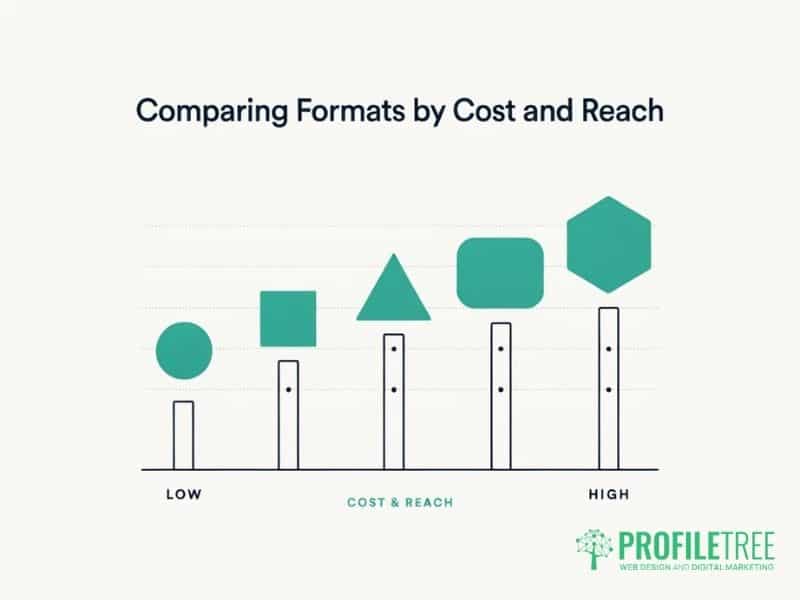
Before committing to the budget, it helps to see the main formats side by side. This isn’t a ranking; the right choice depends on the audience and the commercial goal.
| Format | Typical Starting Cost | Audience Reach | Barrier to Entry |
|---|---|---|---|
| AR filters (social platforms) | Low | High (existing phone owners) | Low |
| Interactive web/3D design | Low to medium | High (existing site visitors) | Low to medium |
| Video and animation | Low to medium | Highest | Low |
| Persistent virtual world | High | Niche, skews younger | High, ongoing |
| Full VR (headset-based) | Very high | Low (limited headset ownership) | Very high |
For most SMEs in Northern Ireland, Ireland and the wider UK, the top three rows are where the commercial case is strongest. The bottom two typically only make sense for larger brands with sustained marketing budgets and an audience already using that hardware.
This is also the point where it’s worth being honest about what most brand experiences in the metaverse actually deliver for a business this size. A furniture retailer running an AR filter for a season, or a manufacturer adding an interactive product configurator to its site, will usually see a clearer return than a persistent branded world that needs ongoing moderation and content updates to stay relevant. Cost per interaction, not cost per build, is the number that matters when comparing formats.
Building Community Through Digital Events and Content
Virtual events became a necessity during 2020 and 2021. What remained after the immediate need passed was a clearer understanding of what works.
Events that give attendees something to do, rather than something to watch, retain audiences. Q&A sessions, live demonstrations, interactive polls and breakout discussions all outperform passive webinar formats. Production quality also matters more than most organisers expect. Poor audio, inconsistent lighting and amateur graphics undermine credibility even in well-structured content.
For SMEs, the practical opportunity is combining content quality with community building. A well-produced series of educational videos builds a loyal audience over time. A YouTube channel managed consistently creates a searchable archive of brand expertise. The same principle applies to online communities around events, whether through LinkedIn groups, Discord servers or dedicated online spaces: the brands that build genuine communities create the repeat engagement that immersive brand strategies aim for at much higher cost.
AI, Personalisation and the Data Layer
Immersive brand experiences generate interaction data. Every choice a user makes in a virtual environment, every point at which they linger or disengage, is information that can improve the experience and sharpen understanding of the audience.
Most SMEs aren’t analysing spatial interaction data in virtual worlds. But the underlying principle, using behavioural data to personalise the experience, applies directly to the web environments they already operate. AI-driven personalisation on a standard website lets businesses show different content to returning visitors, adapt calls to action based on browsing behaviour and use chatbot systems to guide customers through decisions in real time.
ProfileTree’s guide to overcoming AI implementation challenges covers exactly these applications, helping SMEs use AI tools that are available today rather than preparing for technologies still years away from practical accessibility. Teams new to this can also work through ProfileTree’s digital training methods before investing in a build. The gap between what most SME websites do and what AI-enabled web experiences can do is significant, and closing it is a more immediate commercial priority for most businesses than entering any metaverse platform.
Measuring Results Beyond Vanity Metrics
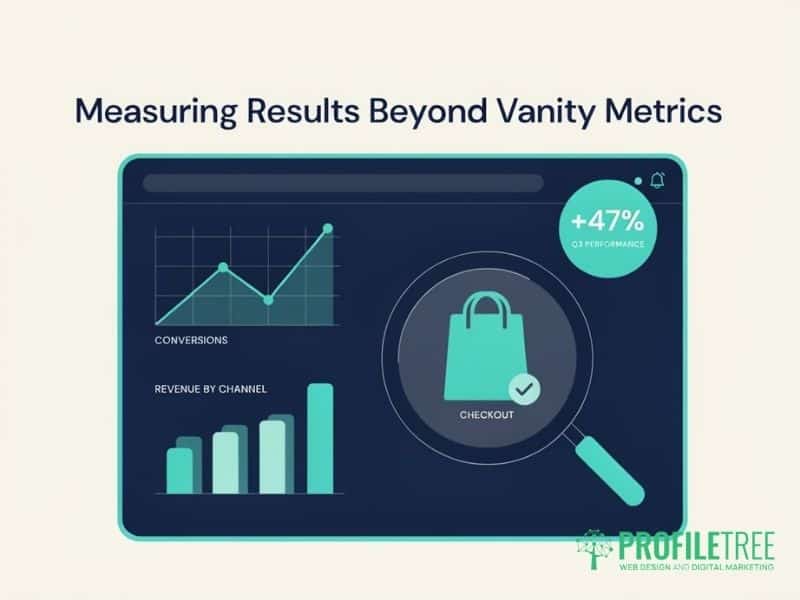
A common mistake with immersive content is stopping at visit or view counts. Those numbers say very little about commercial value on their own.
Dwell time is a stronger signal than a raw visit count; someone who spends four minutes inside an interactive product visualiser is telling you something a page view can’t. Return visits matter too, particularly for AR filters and video series, because they show whether the format is building a habit rather than delivering a single novelty interaction.
The metric that ties everything together is the connection back to a physical or commercial outcome: a booking, an enquiry form completion or a store visit prompted by a virtual tour. This is where immersive content needs to sit inside the same measurement framework as the rest of a digital marketing programme, tracked through the same analytics setup and reviewed on the same cycle as everything else.
Treating immersive formats as part of a wider metaverse marketing strategy, rather than a one-off experiment, is what makes this measurement possible in the first place; without a strategy behind it, there’s rarely a clear baseline to measure against. A structured audit process gives a business the baseline data needed to judge whether an immersive activation is actually paying back.
UK and Ireland: Regulatory and Cultural Considerations
UK and Irish businesses operating in digital environments have specific obligations that US-focused guides on metaverse branding consistently overlook.
UK GDPR applies fully to data collected in virtual environments. Biometric data, spatial data and behavioural data gathered through immersive experiences all carry data protection obligations. The Information Commissioner’s Office has published guidance on data collection in extended reality environments, and the standards are no less stringent than those applying to standard web analytics.
For any SME considering AR or VR experiences that track user movement or interaction, legal review of the data collection model isn’t optional. This matters particularly for businesses in regulated sectors, such as financial services, healthcare and education providers, which all face additional obligations.
On the cultural side, UK and Irish audiences tend to be more sceptical of branded virtual experiences than US marketing examples suggest. The activations that work tend to be genuinely useful, such as a virtual property tour that saves a physical visit, or genuinely entertaining, such as a game mechanic connected to a real reward, rather than spectacle for its own sake.
Privacy and Ethics in Immersive Environments
The trust question in immersive brand experiences is real and worth addressing directly. Customers who feel surveilled or manipulated in a virtual environment won’t return, and the reputational damage from a poorly handled data incident in an immersive context can be considerable.
Transparent data policies, clear consent processes and honest communication about what data is being collected and why are the baseline. Beyond compliance, the brands that build lasting relationships in digital spaces demonstrate genuine respect for the people using them. That means giving users meaningful control over their data and their experience, not just a terms-and-conditions checkbox.
Ethical design in this space also means thinking about accessibility. Virtual environments that assume high-end hardware or fast internet connections exclude large segments of potential audiences. A browser-first, mobile-compatible design isn’t just a technical consideration; it’s a decision about who a brand experience is actually for.
How to Choose the Right Format for Your Business
The right immersive format depends on three things: the audience’s existing behaviour, the production budget and the commercial outcome being pursued.
A Northern Ireland hospitality business looking to convert website visitors into bookings will get more return from a high-quality virtual tour and a well-produced brand video than from any metaverse platform investment. A manufacturing company demonstrating complex machinery at trade shows may find a tablet-based AR demonstration more practical and persuasive than a printed brochure or a slide deck. A training provider could use animated video explainers and an interactive course environment to deliver the kind of engaging learning experience that flat PDFs never achieve.
The question worth asking before any budget is committed is: what does the customer need to understand or feel in order to take the next step, and what is the most direct digital format to deliver that? A one-off activation rarely answers that question well. A proper metaverse marketing strategy, built around a specific audience and a specific outcome, is what turns an interesting format into something that pays for itself. Starting from that question, rather than from the novelty of the technology, keeps the investment tied to a commercial outcome.
Next Steps for Your Business
Getting started doesn’t require a metaverse strategy document or a six-figure pilot. It requires picking one format from the comparison above that matches an existing customer behaviour, briefing it properly and measuring it against a real commercial outcome from day one. For most SMEs, the practical route into brand experiences in the metaverse is video, animation or an interactive web feature rather than a virtual world. Get in touch with ProfileTree to talk through which format fits your business and budget.
FAQs
1. What is an immersive brand experience?
It’s a digital experience that places the audience inside a brand’s narrative through interactive, visual or virtual formats rather than passive content consumption. Interactive web design, AR filters and video are the most accessible entry points for SMEs.
2. Do SMEs need a VR headset to create immersive experiences?
No. Most effective immersive experiences for SMEs use browser-based formats such as interactive web design, animation, video or AR filters accessible on standard devices. VR headset ownership remains too low to justify the production cost for most SME audiences.
3. How much does it cost for a UK brand to enter the metaverse?
Small-scale activations such as AR filters or interactive web features can start from a few thousand pounds. Persistent virtual worlds require far higher ongoing investment and are rarely appropriate for SME budgets.
4. Does GDPR apply to the metaverse and virtual experiences?
Yes. Any data collected through immersive environments, including behavioural and spatial data, falls under UK GDPR obligations, and legal review is advisable before launch.
5. How do I know if an immersive format is working for my business?
Look past visit counts to dwell time, return visits and a clear link to a commercial outcome such as an enquiry, booking or store visit. Track it inside the same analytics setup used for the rest of the marketing programme rather than treating it as a separate experiment.