
How to Use AI in Digital Marketing: Practical Applications
Table of Contents
AI-powered marketing campaigns now deliver 267% better ROI than traditional approaches, yet 68% of businesses still treat AI as experimental rather than essential. After implementing AI solutions for over 400 clients from Belfast tech startups to London enterprises, ProfileTree has witnessed first-hand how artificial intelligence transforms marketing from guesswork into precision science.
The revolution isn’t approaching – it’s actively reshaping how businesses connect with customers. Belfast agencies using AI for campaign optimisation outperform traditional competitors by margins that shouldn’t be possible. Local retailers predicting customer behaviour with 89% accuracy. Service companies automating 70% of marketing tasks whilst improving personalisation. These aren’t future possibilities but current realities for businesses embracing AI strategically.
This comprehensive analysis reveals exactly how AI transforms every aspect of digital marketing in 2026. From automation that eliminates repetitive tasks to creative content generation that maintains brand authenticity, we’ll share the practical applications, real implementations, and measurable results that separate marketing leaders from those falling behind.
The Current State: Using AI in Digital Marketing in 2026
The AI marketing landscape in 2025 bears little resemblance to the experimental chatbots and basic automation of previous years. Machine learning models now understand context, emotion, and intent with near-human accuracy. Natural language processing handles customer interactions indistinguishably from human agents. Computer vision analyses visual content, understanding not just what’s shown but why it matters to audiences.
Integration has become seamless. AI no longer exists as separate tools but embeds within existing marketing platforms. Your CRM thinks predictively. Your email platform writes personally. Your analytics forecast accurately. This integration eliminates the friction that previously prevented adoption, making AI accessible to businesses of every size.
Belfast’s position as a European tech hub provides unique perspective on AI adoption patterns. We see financial services companies achieving 94% accuracy in customer lifetime value predictions. Manufacturing firms automating entire B2B marketing funnels. Hospitality businesses personalising guest experiences before arrival. The common thread? Strategic implementation focused on specific business outcomes rather than technology for technology’s sake.
The democratisation effect proves particularly significant. Previously, only enterprises with massive budgets could afford predictive analytics, personalisation engines, and automated optimisation. Now, a Derry boutique accesses the same AI capabilities as multinational retailers. This levelling of the playing field rewards strategy over spending, creativity over capital.
Data quality has become the primary differentiator. AI systems are only as effective as the data feeding them. Businesses with clean, comprehensive data achieve transformative results. Those with fragmented, poor-quality data see minimal improvement. This reality has shifted focus from acquiring more data to better utilising existing information.
Automation: Beyond Simple Task Completion
Marketing automation in 2025 transcends basic email sequences and social media scheduling. AI-driven automation now handles complex, multi-step processes that previously required entire teams.
Intelligent Campaign Orchestration
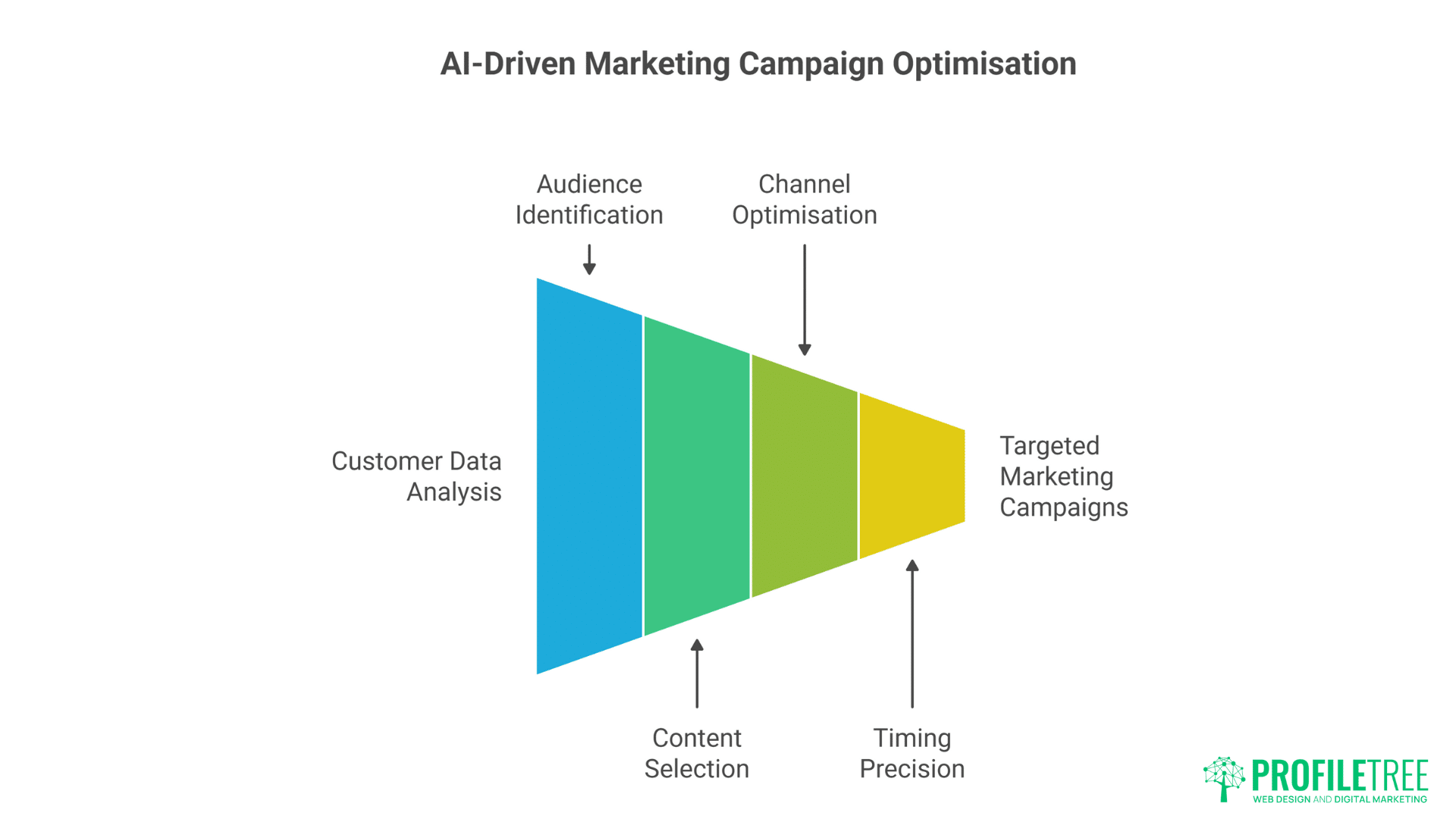
Modern AI orchestrates entire marketing campaigns autonomously:
- Audience identification uses machine learning to identify ideal customer profiles from behavioural patterns, not just demographics. A Belfast software company’s AI identified that customers who read three specific blog posts within a week had 73% purchase probability, automatically triggering targeted campaigns.
- Content selection matches message to moment. AI analyses individual user behaviour, selecting content most likely to resonate at their current journey stage. No more batch-and-blast hoping something sticks.
- Channel optimisation determines where messages deliver best impact. Email for some, SMS for others, in-app notifications for mobile users. AI tests and learns optimal channel mix for each segment.
- Timing precision sends messages when recipients are most likely to engage. Not just time zones but individual activity patterns. Night shift workers receive content during their peak hours, not standard business hours.
Workflow Automation That Thinks
- Lead scoring evolution: Traditional lead scoring assigns points based on actions. AI lead scoring predicts future behaviour based on pattern recognition across thousands of variables. It identifies ready-to-buy signals humans would never notice.
- Customer journey automation: AI maps individual customer journeys in real-time, adjusting touchpoints based on behaviour. Abandoned cart? AI determines whether to send discount, urgency message, or social proof based on user profile.
- Content production workflows: AI doesn’t just create content – it manages entire production pipelines. From ideation through publication and promotion, AI coordinates human and machine contributions seamlessly.
- Reporting and analysis: Forget weekly reports. AI provides real-time insights with predictive recommendations. “Campaign X will underperform unless adjusted. Recommended action: shift budget to Campaign Y for 34% improvement.”
Segmentation: Precision Beyond Demographics
Traditional segmentation – age, location, income – provides broad strokes. AI segmentation paints detailed portraits of individual preferences, behaviours, and intentions.
Behavioural Clustering
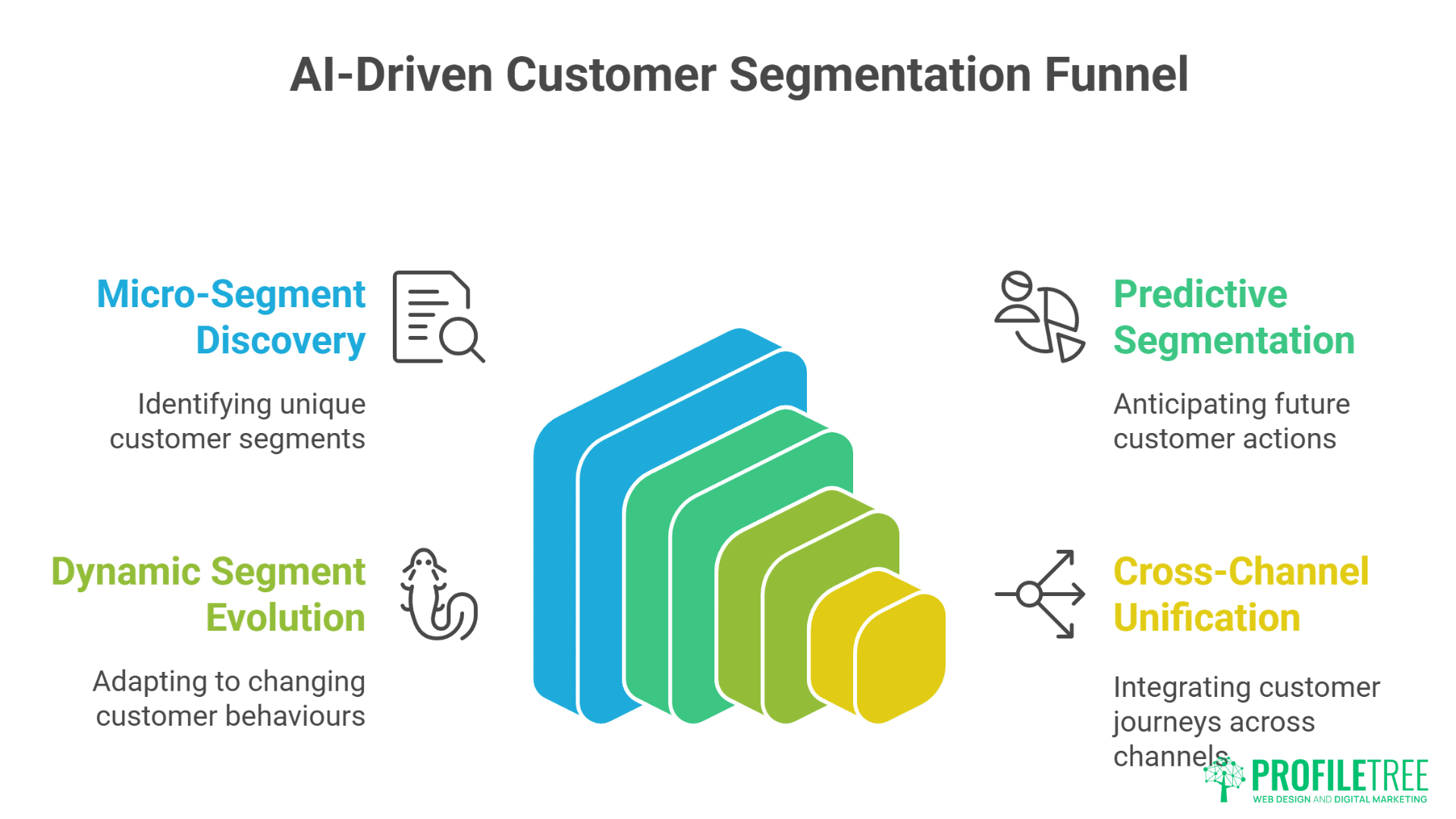
AI identifies patterns humans can’t perceive:
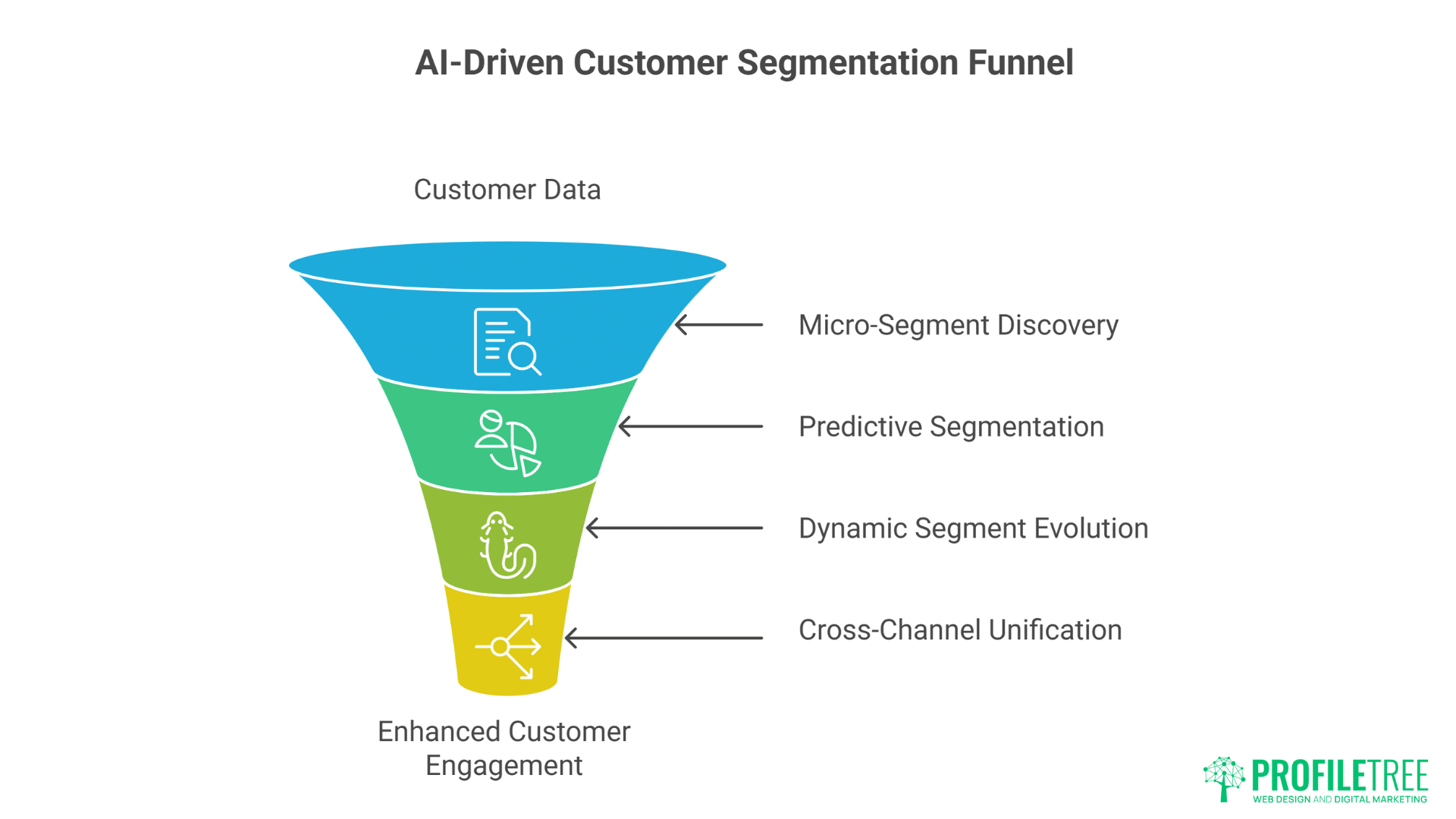
- Micro-segment discovery: AI revealed that customers who browse on mobile during lunch hours but purchase on desktop evenings represent a distinct, valuable segment for a Dublin retailer. This insight led to time-shifted retargeting campaigns increasing conversions 67%.
- Predictive segmentation: Rather than grouping by past behaviour, AI segments by predicted future actions. Likely churners receive retention campaigns. Probable upsellers see premium offerings. Potential advocates get referral incentives.
- Dynamic segment evolution: Segments aren’t static. AI continuously refines groupings as behaviour patterns emerge or shift. Seasonal shoppers might become regular customers. B2B prospects might reveal B2C potential.
- Cross-channel unification: AI recognises the same user across devices and channels, building comprehensive behavioural profiles. The customer researching on mobile, comparing on tablet, and purchasing on desktop is understood as one journey, not three separate users.
Psychographic Profiling
AI understands not just what customers do but why:
- Value identification: AI determines what motivates each customer – price, quality, convenience, status. Marketing messages adjust accordingly. Price-sensitive segments see deals. Quality-focused segments see craftsmanship stories.
- Emotional state recognition: Sentiment analysis on customer interactions reveals emotional states. Frustrated customers receive empathetic service recovery. Excited customers see community engagement opportunities.
- Lifestyle inference: Purchase patterns, browsing behaviour, and engagement timing reveal lifestyle factors. Parent segments identified not through declaration but through Saturday morning cartoon streaming followed by grocery shopping patterns.
Intent Prediction
AI anticipates customer needs before they’re expressed:
- Purchase readiness scoring: Beyond lead scoring, AI predicts purchase probability and timing. A Belfast furniture store knows which browsers will buy within 7 days versus those months from decision.
- Problem anticipation: AI identifies customers likely experiencing issues before they complain. Proactive outreach prevents churn and builds loyalty.
- Need evolution tracking: AI recognises when customer needs change – job changes, life events, preference shifts – adjusting marketing accordingly.
Data Analysis: Insights That Drive Action
The volume of marketing data available in 2025 would overwhelm human analysis. AI transforms this data tsunami into actionable intelligence.
Predictive Analytics Revolution
- Revenue forecasting with 91% accuracy enables confident planning. AI considers seasonality, market trends, competitive actions, and economic indicators, providing forecasts that guide strategic decisions.
- Customer lifetime value prediction identifies high-value customers early. A Limerick subscription service increased profitability 34% by focusing retention efforts on AI-identified valuable segments.
- Churn prediction with intervention recommendations. AI doesn’t just flag at-risk customers – it prescribes specific retention actions based on what’s worked for similar profiles.
- Market trend identification spots emerging opportunities before competitors. AI analysing search patterns, social conversations, and purchase behaviour identified growing demand for sustainable products weeks before traditional research would notice.
Real-Time Optimisation
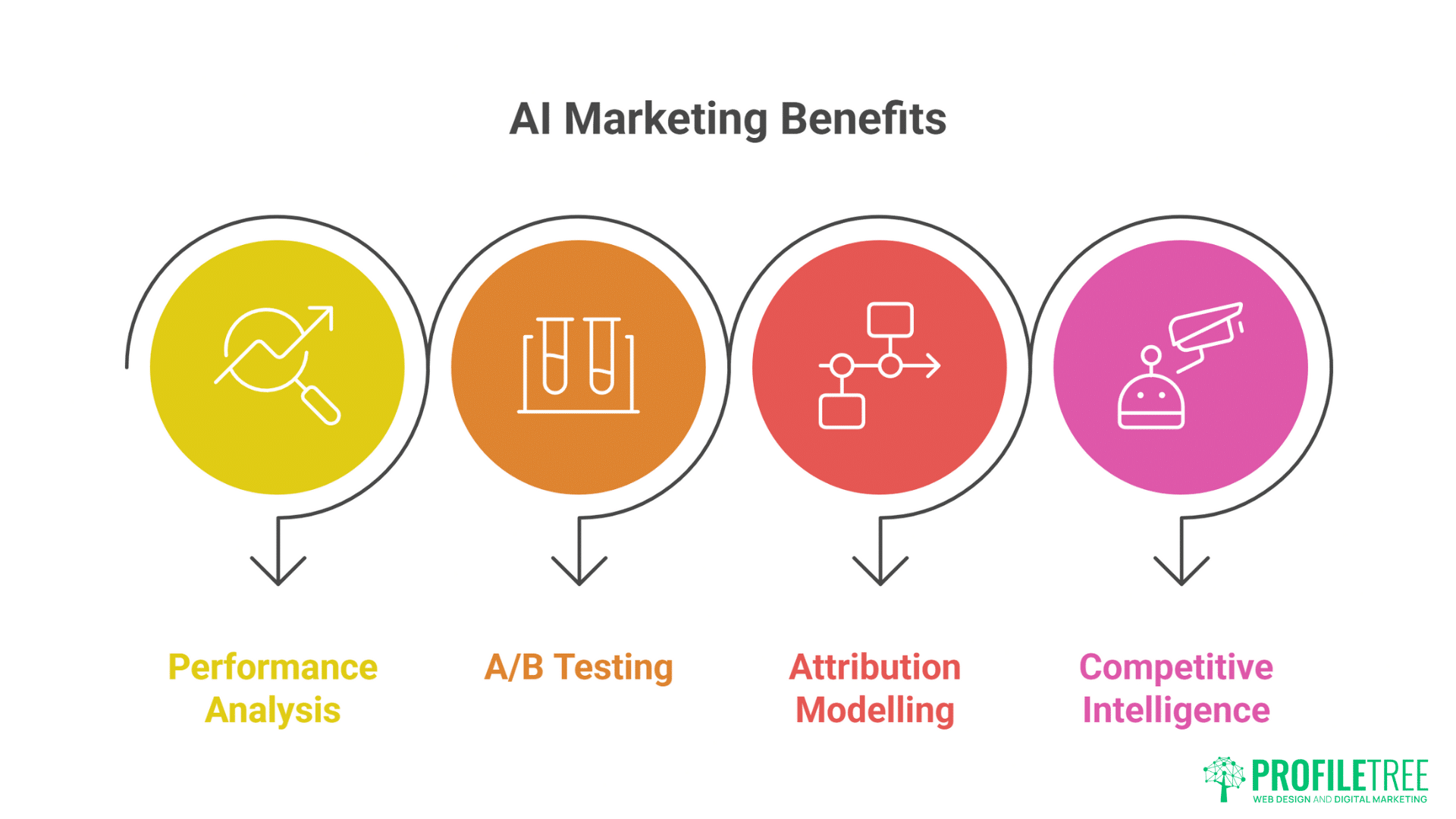
- Campaign performance analysis happens continuously, not weekly. AI monitors hundreds of metrics simultaneously, identifying optimisation opportunities humans would miss.
- A/B testing at scale: AI runs thousands of micro-tests simultaneously, learning optimal combinations of headlines, images, calls-to-action, and timing for each segment.
- Attribution modelling that actually works. AI understands complex, multi-touch customer journeys, accurately attributing value to each interaction. No more last-click oversimplification.
- Competitive intelligence through AI monitoring provides real-time awareness of competitor actions, allowing rapid response to market changes.
Predictive Insights
- Content performance prediction: Before publishing, AI predicts how content will perform based on topic, format, timing, and audience analysis.
- Seasonal demand forecasting: AI predicts demand spikes with precision, enabling inventory and marketing alignment. A Galway retailer reduced stock-outs 78% whilst decreasing excess inventory 45%.
- Price elasticity modelling: AI determines optimal pricing for each segment, maximising revenue without sacrificing volume.
- Channel effectiveness prediction: AI forecasts which channels will deliver best results for specific campaigns, eliminating guesswork from media planning.
Creative Content: AI as Creative Partner
The most surprising AI revolution? Creative content generation that maintains brand voice whilst scaling production infinitely.
Visual Content Creation
- Product photography enhancement: AI transforms basic product shots into lifestyle imagery. Belfast boutiques create seasonal campaigns without reshoots, adjusting backgrounds and contexts digitally.
- Dynamic creative optimisation: AI generates thousands of ad variations, testing combinations to find optimal performers for each audience segment.
- Video content automation: AI creates personalised video content at scale. Customer names, relevant products, and tailored messages integrate seamlessly into video templates.
- Infographic generation: Complex data transforms into compelling visuals automatically. AI understands which visualisation types best communicate specific information.
Written Content Evolution
- Personalised copy at scale: Every customer receives personally relevant messages. Not just name insertion but complete message customisation based on preferences, history, and predicted needs.
- SEO content optimisation: AI writes search-optimised content that ranks whilst remaining engaging for humans. Our SEO services combine AI efficiency with human creativity.
- Email subject line optimisation: AI generates and tests hundreds of subject lines, learning what drives opens for each segment.
- Social media content: AI creates platform-specific content maintaining brand voice whilst optimising for each platform’s algorithm.
Brand Voice Consistency
- Style learning: AI analyses existing content to understand brand voice, maintaining consistency across all generated content.
- Tone adaptation: The same message adjusts tone for different audiences. Professional for B2B, friendly for consumers, urgent for limited offers.
- Cultural localisation: AI adapts content for different markets, understanding cultural nuances beyond simple translation.
- Compliance checking: AI ensures all content meets regulatory requirements, brand guidelines, and platform policies.
Industry-Specific AI Applications
AI is reshaping digital marketing strategies across industries, tailoring solutions to unique sector needs. From retail to healthcare, businesses are using AI to unlock efficiencies and deliver more impactful customer experiences.
E-Commerce Revolution
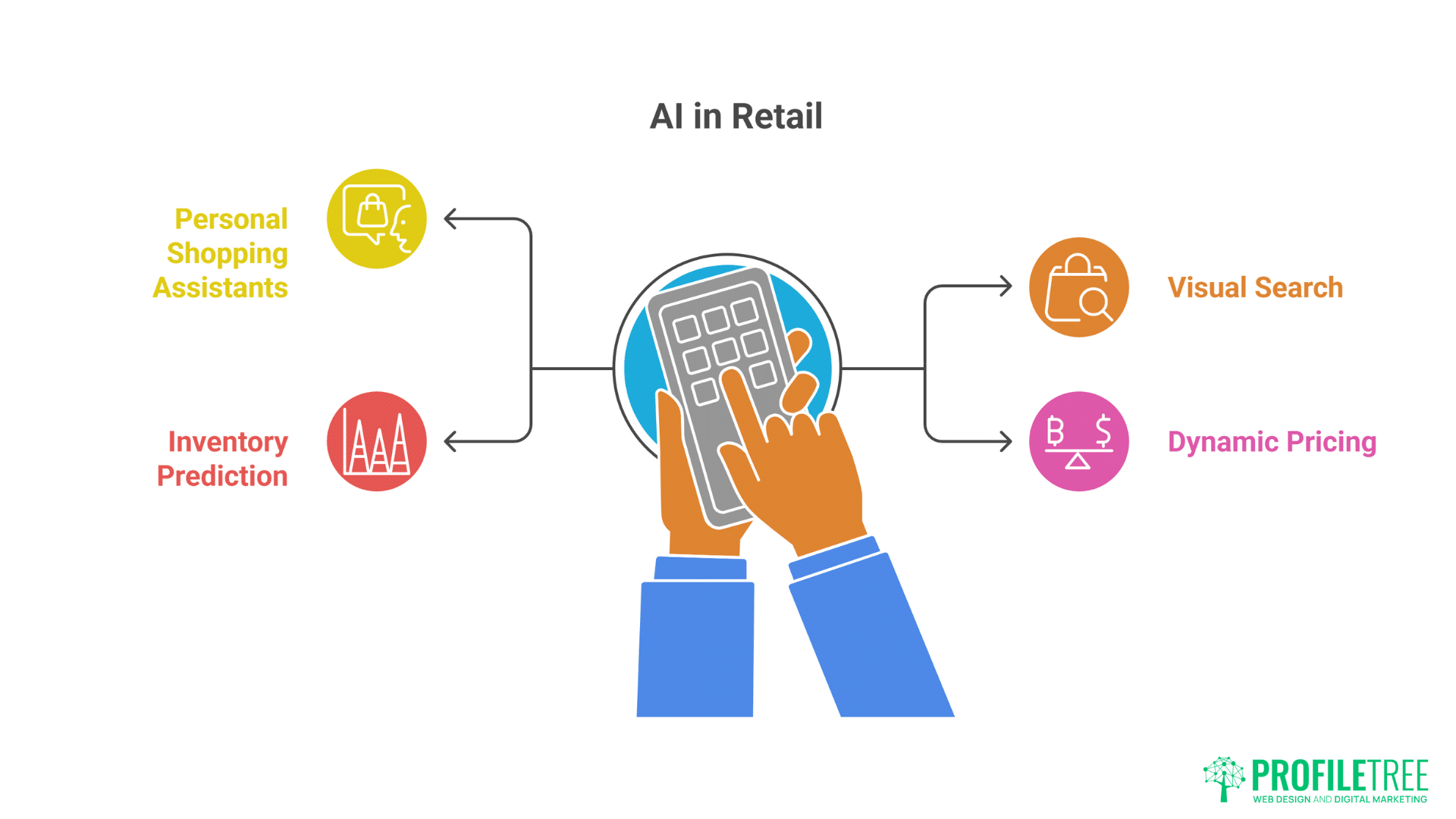
- Personal shopping assistants: AI chatbots that understand style preferences, size requirements, and budget constraints, recommending products like expert stylists.
- Visual search capabilities: Customers upload photos; AI finds similar products in inventory. “Find me shoes like these” becomes a purchasable moment.
- Inventory prediction: AI predicts demand by product, size, and colour, optimising stock levels and reducing markdowns.
- Dynamic pricing: Real-time price adjustments based on demand, competition, and inventory levels maximise revenue whilst maintaining competitiveness.
B2B Transformation
- Account-based marketing precision: AI identifies buying committee members, their roles, and information needs, delivering personalised content to each stakeholder.
- Lead qualification: AI qualifies leads more accurately than traditional scoring, identifying genuine opportunities versus tyre-kickers.
- Proposal personalisation: AI customises proposals based on prospect needs, industry, and decision criteria pulled from CRM data and interaction history.
- Predictive deal scoring: AI predicts deal probability and timeline, helping sales teams prioritise efforts effectively.
Service Industry Innovation
- Appointment optimisation: AI schedules appointments considering travel time, staff expertise, and customer preferences, maximising efficiency.
- Service personalisation: Hotels pre-configure room preferences. Restaurants remember dietary requirements. Salons prepare preferred treatments.
- Review management: AI monitors, responds to, and analyses reviews across platforms, maintaining reputation whilst gathering insights.
- Demand forecasting: AI predicts busy periods, enabling dynamic staffing and targeted promotions during slow times.
Implementation Challenges and Solutions
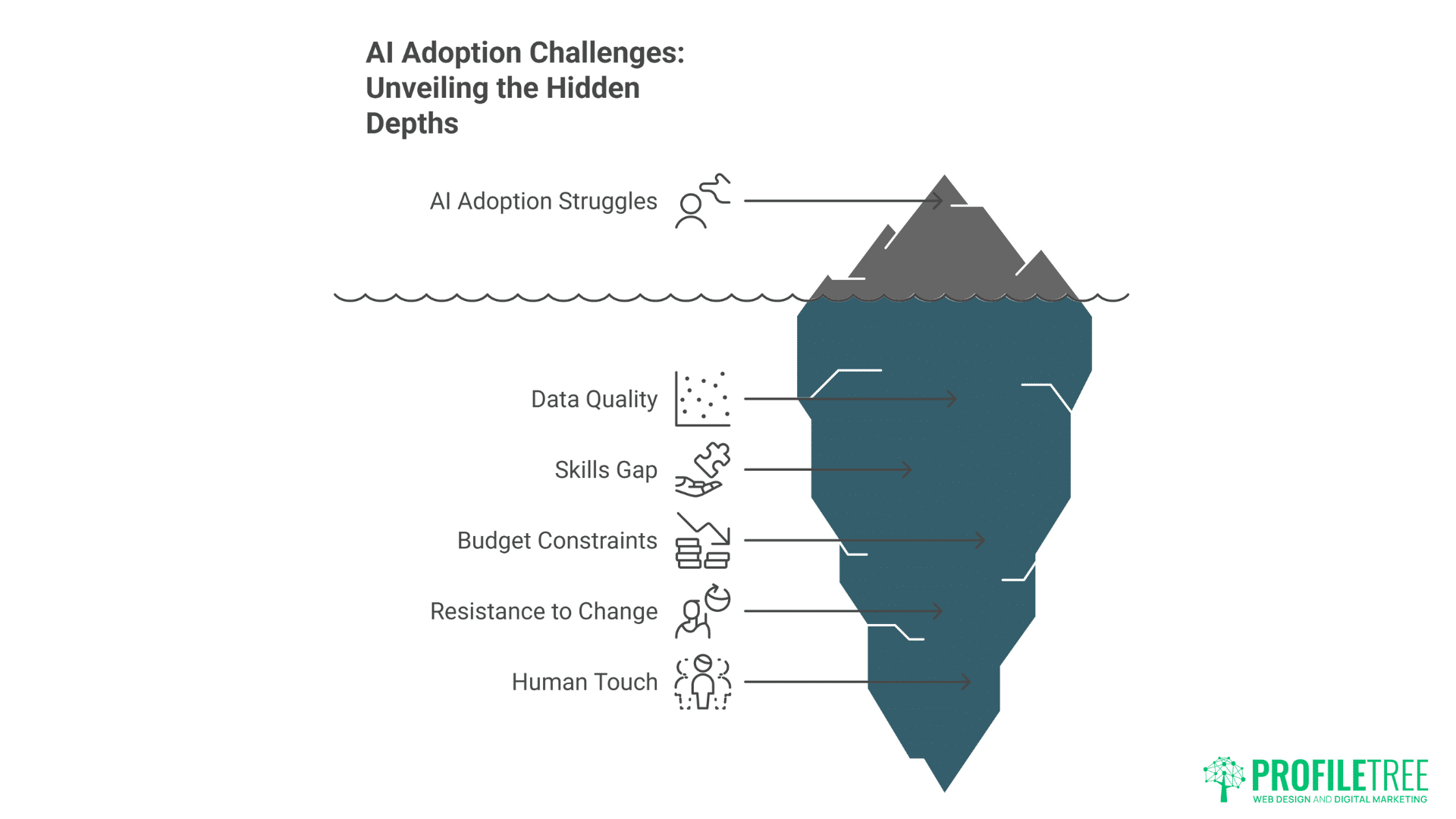
While AI offers transformative potential, many businesses struggle with integration, cost, and talent gaps. Addressing these challenges with practical solutions ensures smoother adoption and long-term success.
Challenge 1: Data Quality and Integration
- Problem: Fragmented data across multiple systems prevents effective AI implementation.
- Solution: Start with data audit and cleansing. Implement data governance protocols. Use integration platforms connecting disparate systems. Begin with high-quality subsets rather than waiting for perfect data.
Challenge 2: Skills Gap
- Problem: Marketing teams lack AI expertise to implement and manage systems effectively.
- Solution: Invest in training programmes. Our AI training services build internal capabilities. Partner with experts for initial implementation whilst building internal skills.
Challenge 3: Budget Constraints
- Problem: AI tools seem expensive for small businesses.
- Solution: Start with free or low-cost tools. Focus on high-ROI applications first. Calculate total cost including time savings. Many AI tools cost less than one employee hour daily.
Challenge 4: Resistance to Change
- Problem: Teams fear AI will replace them or disrupt established workflows.
- Solution: Position AI as assistant, not replacement. Show how AI eliminates boring tasks, allowing focus on creative, strategic work. Celebrate early wins publicly.
Challenge 5: Maintaining Human Touch
- Problem: Over-automation makes brands feel robotic and impersonal.
- Solution: Use AI for efficiency, humans for empathy. Maintain human oversight on sensitive communications. Let personality shine through AI-assisted content.
The ProfileTree Advantage: Belfast’s AI Marketing Leaders
“AI isn’t about replacing marketers – it’s about amplifying their capabilities to achieve previously impossible results,” explains Ciaran Connolly, ProfileTree founder. “We’ve helped hundreds of businesses implement AI strategically, focusing on business outcomes rather than technology adoption.”
Our unique position in Belfast’s tech ecosystem provides advantages:
- Local market understanding combined with global AI expertise
- Proven methodologies refined across 400+ implementations
- Continuous innovation through tech partnerships and research
- Practical focus on ROI rather than theoretical possibilities
Future Trends: What’s Next in AI Marketing
AI in marketing is evolving rapidly, with innovations like generative AI, immersive experiences, and advanced automation shaping the future. Businesses that adapt early to these trends will gain a decisive competitive edge.
Conversational Commerce
AI-powered conversations that complete entire purchase journeys. Customers describe needs; AI recommends, answers questions, and processes orders seamlessly.
Predictive Personalisation
AI anticipating needs before expression. Proactive marketing that feels helpful rather than intrusive.
Augmented Reality Integration
AI-powered AR experiences allowing virtual product trials, space visualisation, and immersive brand experiences.
Voice and Audio Optimisation
AI optimising for voice search and audio content consumption, adapting to screenless interaction growth.
Emotional AI
Systems understanding and responding to emotional states, creating empathetic marketing that resonates deeply.
Blockchain Integration
AI managing blockchain-verified customer data, ensuring privacy whilst enabling personalisation.
Practical Implementation Roadmap
Turning AI potential into real business results requires a clear, step-by-step strategy. A well-structured roadmap helps organisations move from experimentation to measurable impact with confidence.
Phase 1: Foundation (Months 1-2)
- Audit current marketing technology stack
- Assess data quality and availability
- Identify high-impact AI opportunities
- Select initial tools and platforms
- Train core team members
Phase 2: Pilot Implementation (Months 3-4)
- Launch pilot AI projects
- Measure initial results
- Gather team feedback
- Refine processes
- Document learnings
Phase 3: Scale Success (Months 5-6)
- Expand successful applications
- Integrate additional AI tools
- Automate routine processes
- Develop internal expertise
- Establish governance frameworks
Phase 4: Advanced Applications (Months 7-12)
- Implement predictive analytics
- Deploy personalisation engines
- Create AI-driven content
- Optimise across channels
- Build competitive advantages
Measuring AI Marketing Success
Adopting AI is only valuable if its impact can be tracked and quantified. Defining clear KPIs and measuring outcomes ensures marketing investments deliver tangible business growth.
Efficiency Metrics
- Time saved through automation
- Cost per acquisition reduction
- Campaign setup time decrease
- Manual task elimination
Effectiveness Indicators
- Conversion rate improvements
- Customer lifetime value increases
- Engagement rate growth
- Satisfaction score improvements
Innovation Measures
- New capabilities enabled
- Competitive advantages created
- Market opportunities identified
- Revenue streams developed
Getting Started: Your AI Marketing Journey
Embarking on AI-driven marketing begins with small, strategic steps aligned to your business goals. By starting simple and scaling gradually, organisations can unlock value without being overwhelmed.
Quick Wins Available Today
- ChatGPT for content: Start using AI for blog posts, social media, and email content. Cost: £20/month. Time to value: immediate.
- Google Ads Smart Bidding: Enable AI-powered bidding strategies. Cost: free with Google Ads. Results within days.
- Email subject line testing: Use AI tools for subject line optimisation. Multiple free options available.
- Social media scheduling: AI-powered optimal timing for posts. Built into most scheduling platforms.
Investment Priorities
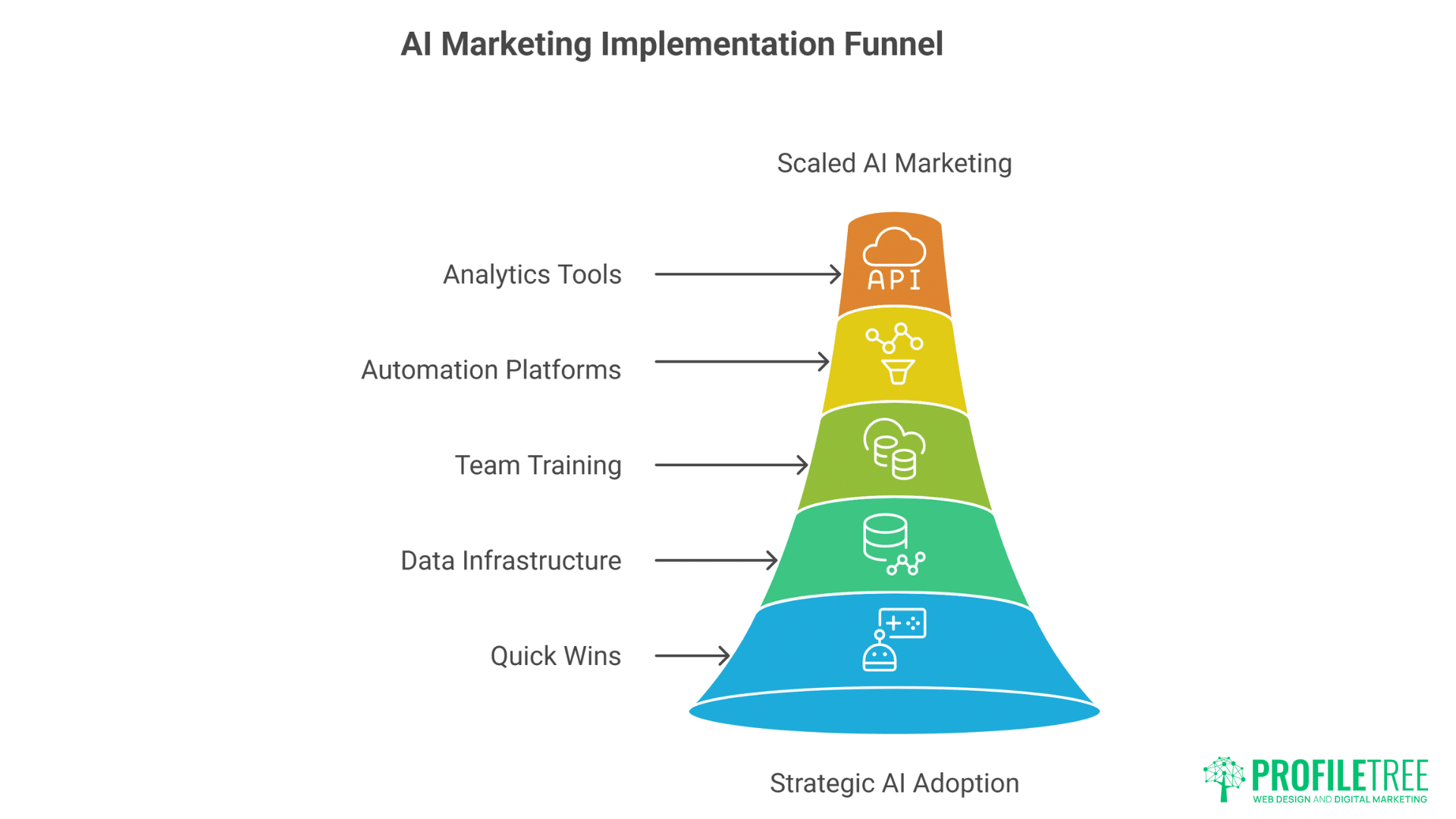
- Data infrastructure: Clean, integrated data enables everything else
- Team training: Skilled people maximise tool value
- Automation platforms: Start with marketing automation
- Analytics tools: Measure and optimise continuously
- Creative AI: Scale content production efficiently
Common Misconceptions Debunked
- “AI will replace marketers”: AI augments human creativity and strategy. The best results come from human-AI collaboration.
- “AI is only for big companies”: Small businesses often see bigger relative improvements due to efficiency gains.
- “AI makes marketing impersonal”: Properly implemented AI enables more personalisation, not less.
- “AI is too expensive”: Many powerful AI tools cost less than coffee daily. ROI typically exceeds 500%.
- “AI is too complex”: Modern AI tools are designed for marketers, not data scientists. User-friendly interfaces hide complexity.
FAQs
How much should businesses invest in AI marketing tools?
Start with 5-10% of marketing budget, scaling based on results. Most businesses see positive ROI within 60 days, justifying increased investment.
Which AI tools are essential for small businesses?
Begin with ChatGPT (content), Google Analytics Intelligence (insights), and marketing automation platform with AI features. Total cost: under £100/month.
How long before seeing results from AI implementation?
Quick wins appear within days. Significant improvements manifest within 4-6 weeks. Transformational results typically take 3-6 months.
Can AI maintain brand voice and authenticity?
Yes, when properly trained on brand guidelines and examples. AI learns and maintains consistency better than multiple human writers.
What skills do marketing teams need for AI?
Basic data literacy, prompt engineering, and strategic thinking matter more than technical skills. Focus on understanding capabilities rather than technical implementation.
Conclusion: The Inevitable AI Advantage
AI has moved from competitive advantage to competitive necessity. Businesses not using AI in 2025 compete against those achieving 267% better ROI, 70% automation rates, and predictive accuracy approaching perfection.
The revolution isn’t about technology – it’s about transformation. AI enables small Belfast agencies to compete globally. Local retailers to match Amazon’s personalisation. Service businesses to predict and prevent problems.
ProfileTree stands ready to guide your AI marketing journey. From strategy through implementation to optimisation, our expertise ensures you achieve maximum value from AI investments.
The question isn’t whether to implement AI marketing but how quickly you can begin. Every day delayed is competitive advantage lost. Start small, measure results, scale success.
Contact ProfileTree today to discover how AI can revolutionise your digital marketing. The future isn’t coming – it’s here, and it’s powered by AI.