
Affiliate Marketing Partnerships: A UK & Ireland Guide
Table of Contents
Affiliate marketing sits in an unusual position among digital revenue channels. It is performance-based, relatively low-risk for the merchant, and scalable without proportional increases in marketing spend. Yet many SMEs in the UK and Ireland either overlook it entirely or set up a programme without the content infrastructure to make it work.
This guide covers how affiliate marketing works, what the UK and Irish regulatory environments require, how to build a programme that attracts quality partners, and where SEO and content strategy fit into the picture. If you are evaluating whether affiliate marketing belongs in your acquisition mix, or trying to improve a programme that is not delivering, start here.
What is Affiliate Marketing?
Affiliate marketing is a performance-based arrangement in which a business (the merchant) pays a third party (the affiliate) a commission for sending traffic or generating sales to its website. The affiliate promotes the merchant’s products or services through their own content, whether that is a blog, a YouTube channel, a comparison site, or a social media account, and earns a fee when a visitor completes a defined action.
That action is typically a purchase, but it can also be a form submission, an email sign-up, or a free trial activation, depending on how the programme is structured.
The Three Parties in Every Affiliate Arrangement
Most affiliate marketing transactions involve three parties. The merchant is the business that sells the product or service and funds the commissions. The affiliate is the publisher or content creator who promotes the merchant’s offering to their audience. The network or tracking platform sits between them, handling link tracking, attribution, and payments.
Some merchants run affiliate programmes directly without using a network, managing tracking and commission payments themselves. This is more common among larger businesses with dedicated performance marketing teams.
How Tracking Works
When an affiliate link is clicked, a tracking cookie is placed on the visitor’s browser. If that visitor completes the target action within the cookie window (commonly 30 or 60 days), the commission is attributed to the affiliate. Server-side tracking, which passes conversion data directly between servers rather than relying on browser cookies, is increasingly used as privacy-first browsers and iOS updates have reduced the reliability of traditional cookie tracking.
For SMEs building a programme from scratch, understanding attribution is worth taking seriously. Last-click attribution (the default in most networks) gives all credit to the final affiliate touchpoint before conversion. This can undervalue affiliates who contribute earlier in the customer journey, particularly content-focused partners like review sites or how-to blogs.
The UK and Irish Regulatory Landscape
Affiliate marketing in the UK and Ireland is not a legal grey area. The requirements are clear, and the consequences of ignoring them are both reputational and financial. Both markets have specific rules for affiliate content, and they differ in meaningful ways from what US-based guides describe.
ASA and CAP Code Requirements in the UK
The Advertising Standards Authority (ASA) and the Committee of Advertising Practice (CAP) Code require that all paid-for or commission-earning content must be clearly identified as such. The standard approach is to label affiliate content with “#ad” or “Affiliate link” at the point of disclosure, before the link itself. Hiding a disclosure below the fold, in the footer, or on a general terms page does not satisfy the requirement.
This applies across formats. A blog post with affiliate links, a YouTube video with commission-earning product recommendations, and an Instagram post with a discount code all require upfront disclosure. The ASA has issued enforcement notices against influencers and publishers who buried disclosures, and the guidance has tightened progressively since 2023.
GDPR and Tracking Consent
Affiliate tracking relies on cookies. Under GDPR, cookies used for advertising or tracking purposes require explicit user consent before they are set. This means any website running an affiliate programme must have a compliant cookie consent mechanism in place. A banner that defaults to “all cookies accepted” or that requires users to opt out rather than opt in does not meet the standard.
For Irish businesses, the Data Protection Commission (DPC) applies GDPR with enforcement authority. Merchants who collect affiliate tracking data without proper consent are subject to complaints under the same rules that apply to any other form of marketing cookie.
Tax Obligations for Affiliate Earners
In the UK, affiliate income is treated as trading income for tax purposes. For individuals earning under £1,000 per year from affiliate activity, the trading allowance means no tax is due, and no Self Assessment filing is required. Above that threshold, income must be declared through Self Assessment. HMRC does not treat affiliate commissions as passive income, as some guides suggest.
In Ireland, affiliate income typically falls under Case IV of Schedule D, covering miscellaneous trading income. Revenue requires that this be declared in the annual tax return. Those earning consistently above the VAT threshold (€42,500 for services as of 2026) may also need to register for VAT, though voluntary registration below that threshold can be beneficial for businesses with significant input costs.
This is a general overview only. Anyone building a meaningful affiliate income stream should take advice from a qualified accountant.
How to Build an Affiliate Programme: A Five-Step Framework
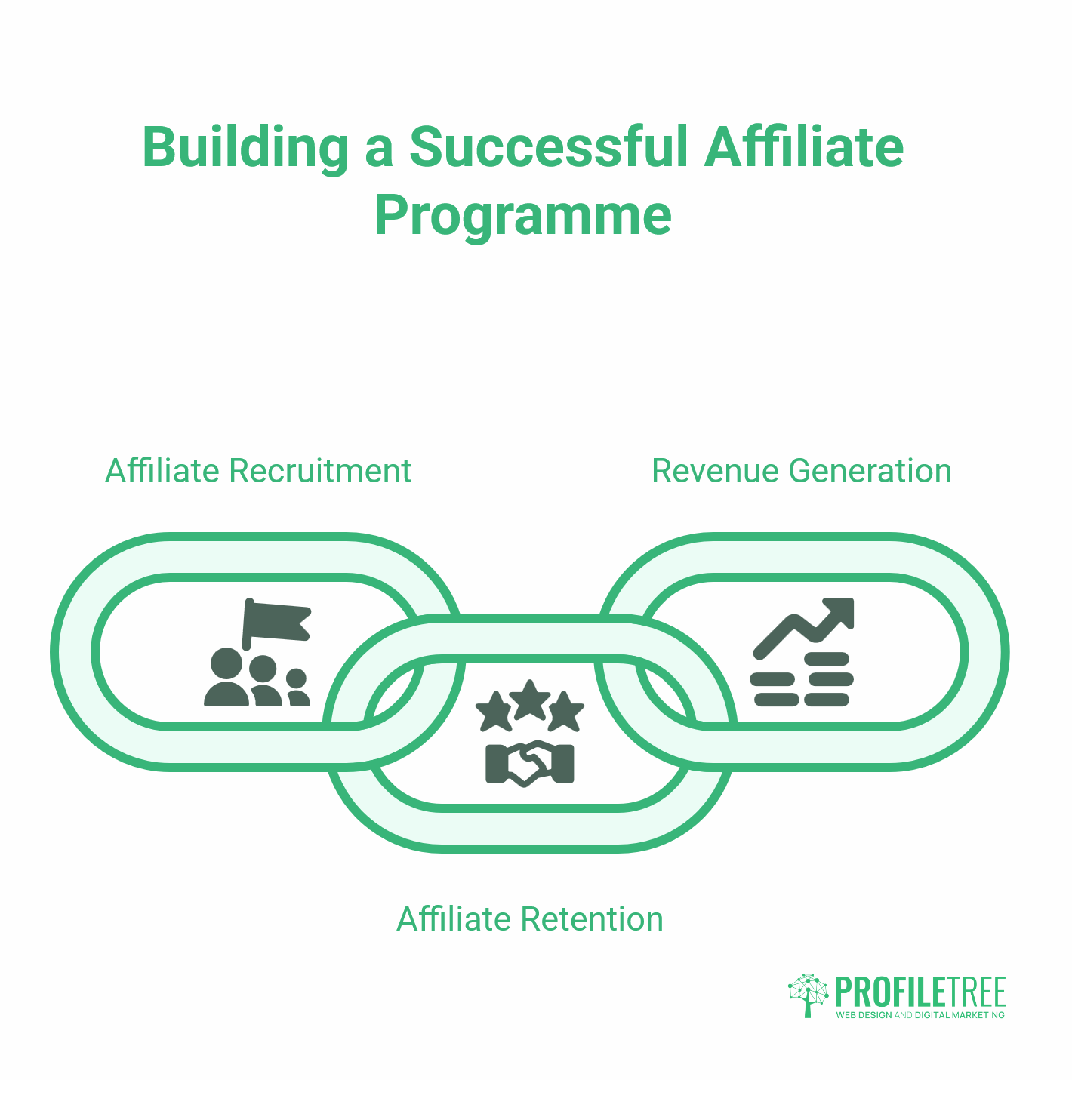
Setting up a programme is straightforward. Building one that recruits good affiliates, retains them, and generates consistent revenue takes more thought.
Step 1 — Decide Whether Affiliate Marketing Fits Your Model
Affiliate marketing works well for products and services with clear margins, defined conversion events, and content that affiliates can build around. An e-commerce retailer selling physical goods with a 40% margin has obvious room for a commission structure. A service business with long, relationship-driven sales cycles is harder to track through standard affiliate attribution.
Before committing to a programme, work out what commission rate you can sustain without eroding profitability, what your average order value or contract value is, and whether you can support affiliates with quality assets. Programmes that pay poorly or provide affiliates with little useful material rarely gain traction.
Step 2 — Choose the Right Network for UK and Irish Markets
The network you choose determines which affiliates can find and join your programme, how tracking is handled, and what reporting is available. For UK and Irish merchants, the most relevant options differ from those commonly cited in US-centric guides.
| Network | Strengths | Payment Currency | Cookie Default |
|---|---|---|---|
| Awin | Largest UK/EU publisher base, strong retail and finance sectors | GBP, EUR | 30 days |
| Amazon Associates (UK) | High consumer trust, broad product range | GBP | 24 hours |
| Daisycon | Strong in Netherlands, Belgium, and Ireland; growing UK presence | EUR, GBP | 30 days |
| AWIN Access | Smaller merchants; lower entry cost than full Awin | GBP, EUR | 30 days |
Running a programme directly (without a network) using tools like Rewardful, Tapfiliate, or a WooCommerce plugin is viable for smaller businesses, particularly those in SaaS or digital services.
Step 3 — Build the Content Infrastructure Before You Recruit
This is where most SME programmes fail. Affiliates, particularly those running review sites, comparison pages, or educational content, need something to write about. A sparse product page, a slow-loading website, and a weak brand presence make it harder for affiliates to build convincing content, and top publishers will simply choose a competitor programme instead.
Before launching a programme, make sure your core product and category pages are optimised, load quickly, and give affiliates accurate, detailed information to work with. A dedicated affiliate landing page that explains the commission structure, cookie duration, payment terms, and available creative assets is expected from any serious publisher. The stronger your organic search presence, the more affiliates will trust that your brand is worth promoting.
ProfileTree’s SEO services and content marketing often support this kind of pre-launch preparation, building page authority and content depth that make an affiliate programme worth joining.
Step 4 — Recruit Partners Who Match Your Audience
The most common mistake in affiliate recruitment is volume over relevance. Approving every applicant regardless of their audience or content quality produces a long list of inactive partners and occasional low-quality traffic. It does not produce revenue.
Focus recruitment on affiliates whose content already reaches your target customer. For a Belfast-based retailer, that might mean NI-focused lifestyle bloggers, UK-wide comparison sites, or YouTube reviewers in your product category. For a B2B service provider, it might mean industry news sites, specialist newsletters, or podcast producers who cover your sector.
Video content is one of the highest-performing formats for affiliate conversion, particularly product reviews and unboxing content. Helping affiliates produce or access quality video assets, or building your own YouTube presence to provide embed-ready content, directly supports programme performance. ProfileTree’s video production and YouTube marketing services are directly relevant here; a library of well-produced product videos provides affiliates with ready-made material and enhances the persuasiveness of their content.
Step 5 — Track, Optimise, and Manage Performance
A live affiliate programme produces data. The question is whether you use it. Most networks provide reporting on clicks, conversion rates, and revenue by affiliate, by content type, and by landing page. Use this to identify which affiliates convert well, which send traffic that bounces immediately, and which landing pages perform.
AI-assisted tools are increasingly used for affiliate programme management, from automated partner communications and fraud detection to predictive modelling of which affiliates are likely to scale. For SMEs without a dedicated performance marketing team, this kind of tooling reduces the manual overhead of running a programme. ProfileTree’s AI implementation work covers this kind of operational application for businesses evaluating where AI genuinely reduces effort without adding complexity.
A useful reference point for understanding the broader digital marketing channel mix is ProfileTree’s guide to digital marketing channels, which covers how affiliate sits alongside SEO, paid search, and social in a balanced acquisition strategy.
SEO and Affiliate Marketing: How They Connect
SEO is the primary traffic source for most affiliate marketers. That relationship runs in both directions: affiliates need organic traffic to make commissions, and merchants need affiliates with SEO-strong platforms to send converting visitors.
Why Organic Traffic Makes or Breaks an Affiliate Programme
Affiliates who rank in Google for product review queries or “best [category] UK” searches deliver high-intent traffic. A visitor who has already researched a purchase and found an affiliate review is far more likely to convert than one driven by a paid social ad. For merchants, this makes SEO-strong affiliates significantly more valuable than those relying entirely on social reach or paid placement.
For affiliates themselves, building organic search authority is the difference between a programme that produces consistent passive income and one that fluctuates with social algorithm changes. This is why SEO consistently ranks as the primary traffic source among established affiliate marketers.
For SMEs wanting to understand how SEO investment translates into measurable returns, maximising ROI from digital marketing campaigns covers the attribution frameworks that apply across channels, including affiliate.
Content Strategy for Affiliate Publishers
The content formats that perform best in affiliate marketing are largely the same ones Google rewards in organic search: in-depth comparison guides, specific product reviews with detailed testing, and “best for” content that helps a reader make a decision. Thin content that simply lists product features without editorial judgement ranks poorly and converts poorly.
Building an affiliate content programme around a coherent topic cluster rather than disconnected individual reviews produces compounding results. A pillar page covering a product category, supported by individual review pages that link back to it, builds topical authority that lifts all pages in the cluster over time.
The connection between content quality and affiliate revenue is direct. Businesses wanting to develop this kind of content infrastructure benefit from working with an agency experienced in both SEO and content strategy. ProfileTree’s content marketing work for SMEs regularly covers this kind of structured approach to affiliate-supporting content.
For publishers building SEO authority in regulated or competitive niches, the ethics and legalities of digital marketing article provides useful context on compliance requirements.
Technical SEO Considerations for Affiliate Sites
Affiliate links should be tagged with the rel="sponsored" attribute. This tells Google the link is commercial in nature and prevents it from passing PageRank to the merchant in a way that could be interpreted as a paid link scheme. Most major networks generate compliant tracking links automatically, but if you are running a direct programme, ensure your technical setup includes this attribute.
Site speed matters more for affiliate publishers than for most content sites, because affiliate traffic is often highly targeted and any friction in the user experience reduces conversion rates. A slow page loses readers at exactly the point where they are most likely to click through to the merchant.
Affiliate Marketing and Video Content
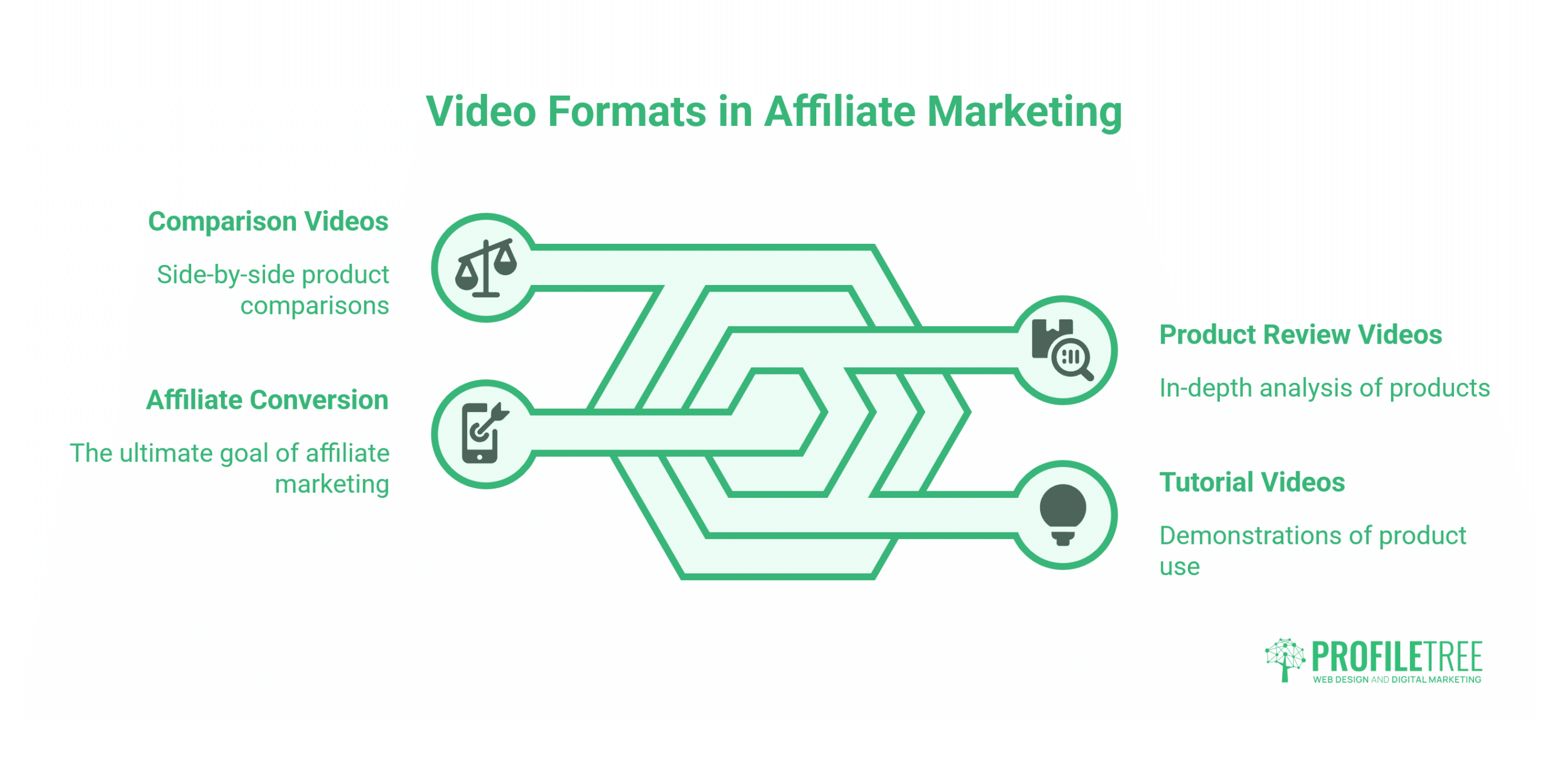
Video has become one of the most effective formats in affiliate marketing, and its role has grown as YouTube and short-form platforms have scaled their reach. Product review videos, tutorials that demonstrate a product in use, and comparison videos comparing two or more products all perform well for affiliate conversion.
YouTube as an Affiliate Channel
YouTube is the second-largest search engine, and product-related queries produce results where affiliate review videos regularly outrank traditional web content. For both merchants and publishers, this creates a clear opportunity. Merchants who produce high-quality explainer or demonstration videos that affiliates can reference or embed in their content give those affiliates a practical advantage in producing credible reviews.
Publishers who build a YouTube presence alongside their written content benefit from ranking in both Google search and YouTube search, doubling exposure for the same topic. The process of building a YouTube audience that converts through affiliate links requires the same fundamentals as SEO: consistent publishing, clear topic focus, and content that answers the questions a buyer has before converting.
For SMEs new to video as a marketing channel, building a structured YouTube presence before investing in production is worthwhile. ProfileTree works with businesses across Northern Ireland and the wider UK on video strategy and production, covering everything from initial concept through to published content.
Short-Form Video and Affiliate Disclosure
TikTok and Instagram Reels have become significant affiliate channels for consumer products. The ASA’s disclosure requirements apply equally to short-form video: the “#ad” or “Paid partnership” label must appear at the start of the content, not buried in a caption or hashtag cloud at the end.
For merchants building affiliate programmes that include creator and influencer content, setting out clear disclosure requirements in the affiliate agreement protects both the brand and the publisher. An affiliate who inadvertently breaches the ASA guidelines can face enforcement action that damages both the merchant’s and their own reputations.
Common Pitfalls in Affiliate Marketing
Running an affiliate programme is straightforward to start and easy to run badly. The issues that hold most SME programmes back are not technical; they are decisions made early on that are rarely revisited. These are the ones worth getting right from the beginning.
Approving Partners Without Reviewing Their Content
Every affiliate who joins your programme represents your brand to their audience. Approving applications without reviewing the affiliate’s site, content quality, and audience fit means you have no control over how your products are described or who they are presented to. Networks default to manual approval; use it.
Setting Commission Rates Too Low to Attract Serious Partners
The affiliate market is competitive. Top publishers in any niche have multiple programme options available. If your commission rate is significantly below the category average, you will attract lower-quality affiliates or none at all. Research what competitors in your sector pay before setting rates, and consider tiered structures that reward higher-performing partners.
Neglecting the Affiliate Relationship
Affiliates who feel ignored or unsupported quietly shift their promotional effort to better-run programmes. Regular communication, fresh creative assets, advance notice of promotions, and responsive support for technical issues all contribute to retention. The affiliates who drive the most revenue for most programmes are a small percentage of the total. Treat them accordingly.
Ignoring Attribution in Favour of Last-Click Only
Last-click attribution understates the contribution of early-funnel affiliates: comparison sites, educational content, and review articles that introduce a brand to a buyer who later converts through a retargeted ad or a brand search. Building a picture of the full customer journey, even at a basic level, produces better decisions about which affiliates to invest in.
Conclusion
Affiliate marketing rewards businesses that invest in the foundations: a strong content presence, a well-structured programme, and quality relationships with the right partners. For SMEs in the UK and Ireland, the regulatory requirements are clear and manageable, provided they are built into the programme from the start rather than retrofitted later. The businesses that generate consistent affiliate revenue treat it as a distribution channel with its own standards, not a passive income tap that runs on its own.
If you are looking to build the content infrastructure and digital presence that makes an affiliate programme worth joining, speak to ProfileTree’s digital marketing team about where to start.
FAQs
Is affiliate marketing legal in the UK?
Yes. Affiliates must clearly label commission-earning content under the ASA’s CAP Code, and tracking must comply with GDPR cookie consent rules. Beyond those obligations, there are no restrictions on operating or participating in an affiliate programme in the UK.
Is affiliate marketing legal in Ireland?
Yes. The CCPC requires disclosure of commercial relationships in consumer-facing content, and GDPR applies to tracking and data collection. Affiliate income must be declared to Revenue, i.e., as taxable trading income.
Do I need a website to do affiliate marketing?
Not strictly. Affiliates operate through YouTube channels, newsletters, podcasts, and social media. That said, a website with consistent organic search traffic is the most durable foundation for long-term affiliate income, as it is not dependent on any single platform’s algorithm.
How much can a UK SME realistically earn from an affiliate programme?
It depends on your margins, commission rate, conversion rate, and the quality of affiliates you recruit. Run the numbers on your own product economics before launch rather than benchmarking against industry averages, which vary too widely to be useful.