
YouTube SEO: A Lead Generation Guide for UK Businesses
Table of Contents
YouTube is the world’s second-largest search engine and, for businesses across Northern Ireland, Ireland, and the UK, it represents one of the most underused lead generation channels available. Most companies that start a channel treat it as a broadcast platform, uploading videos and hoping for views. The ones that grow it into a genuine business asset approach it differently: they treat every video as a searchable piece of content designed to attract the right audience, not the largest one.
YouTube SEO is the practice of optimising your videos and channel so they appear in search results and get recommended to relevant viewers. For a service business in Belfast, that might mean showing up when someone searches “how to improve their website speed” or “what does an SEO audit involve.” For a manufacturer in the Midlands, it could mean being the first result when a procurement manager looks for a supplier explainer. The point is not to go viral. The point is to be found by people who are actually looking for what you offer.
This guide covers how the YouTube algorithm works, how to apply YouTube SEO techniques to rank your videos, and how to measure results in terms that matter to a business rather than a content creator.
Beyond Views: Why YouTube SEO Matters for SMEs
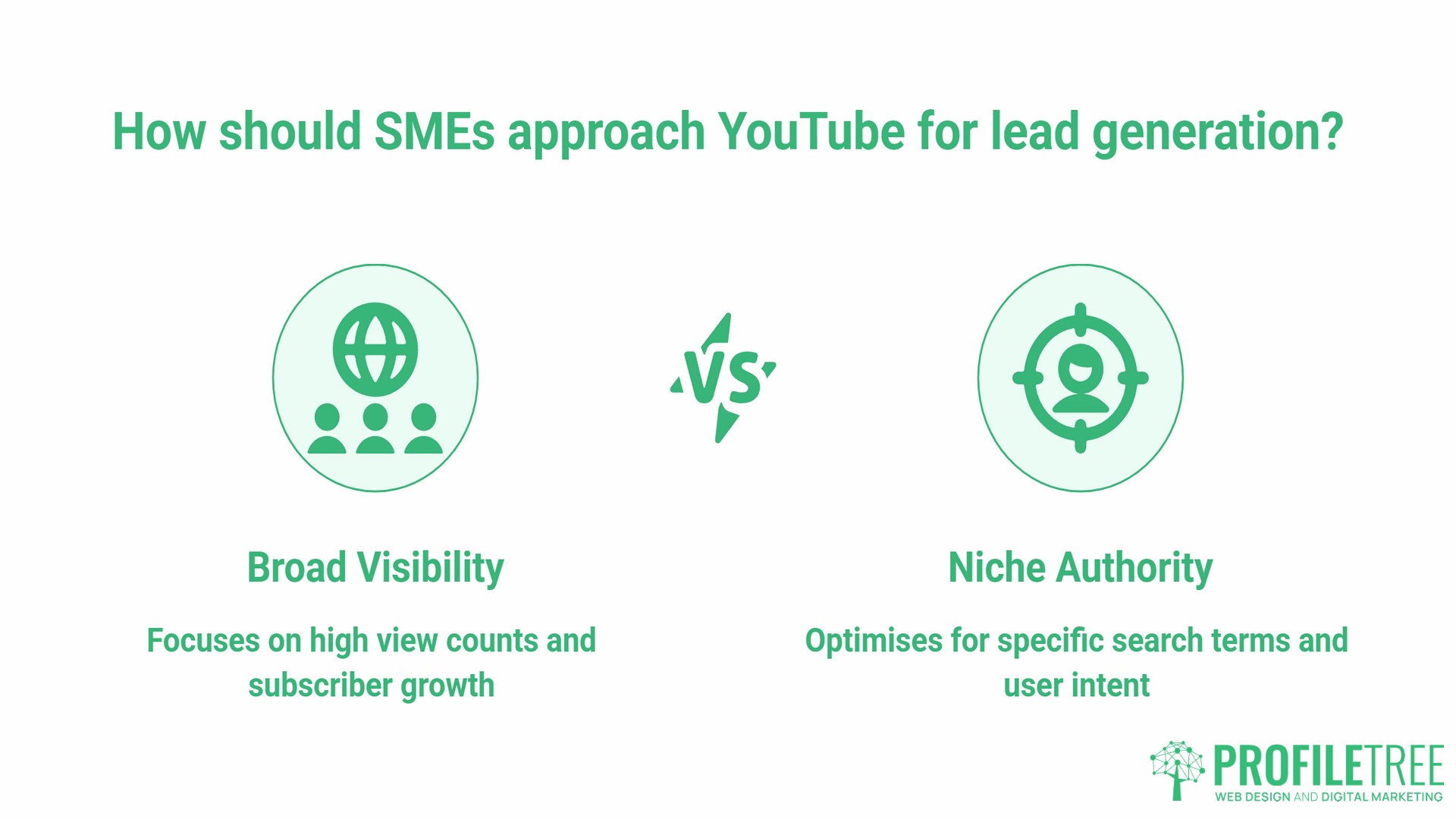
The metrics that most YouTube tutorials focus on, such as subscriber counts, total views, and channel growth rate, are largely irrelevant for a business trying to generate enquiries. What matters is whether the right people are watching, whether they stay long enough to trust you, and whether they take the next step toward becoming a customer.
YouTube SEO changes the frame. Instead of optimising for volume, you optimise for intent. A video that ranks for “web design costs Northern Ireland” and gets 200 views a month from business owners actively researching their options is worth considerably more than a video with 20,000 views from a global general audience who were never going to buy anything.
This is the model that works for SMEs. Niche authority outperforms broad visibility when your goal is lead generation rather than advertising revenue.
YouTube also feeds into wider search performance. Because Google owns the platform, well-optimised videos frequently appear in standard Google search results, often in the video carousel above organic listings. That means a single piece of video content can generate traffic from YouTube search, YouTube suggestions, and Google search simultaneously. For businesses also investing in SEO services, video is a supporting channel worth taking seriously.
How the YouTube Algorithm Works
The YouTube algorithm is not a single system. It operates differently across several surfaces: search results, the homepage, suggested videos, and the Shorts feed. Understanding which surface you are optimising for changes how you approach your content.
YouTube Search vs. Browse Features
When someone types a query into YouTube, the search algorithm evaluates videos based on keyword relevance (title, description, tags, and transcript), click-through rate from search results, watch time and average view duration, and engagement signals including comments and shares.
When someone is scrolling their YouTube homepage or watching a video and sees a suggestion appear in the sidebar, that is the YouTube algorithm operating as a recommendation engine. As YouTube’s Senior Director of Growth and Discovery, Todd Beaupré, has explained publicly, the system does not push videos out to audiences; it pulls the right videos for each individual viewer based on their watch history, satisfaction signals, and how similar viewers have responded to the same content.
For a business trying to attract new customers, search is the higher-value surface. Search captures active intent. Someone searching “how to choose a web design agency” is in research mode. Someone who stumbles across your video in their suggestions may or may not be interested in what you sell.
The practical implication: if your goal is lead generation, optimise primarily for YouTube search. Engagement and watch time will naturally improve your recommendation performance, but the strategic starting point is keyword targeting.
What the YouTube Ranking System Evaluates
YouTube ranking factors fall into three broad categories.
- Relevance signals tell the YouTube algorithm what your video is about. These are drawn from the video title, description, tags, closed captions, and the video’s spoken content. Since 2024, YouTube’s vision and audio models have also read relevance from on-screen text in the first five seconds of a video and the visual content of the thumbnail. Getting these elements to align around a specific search query is the foundation of YouTube SEO.
- Engagement signals indicate how well your video satisfies viewers. Click-through rate and average view duration are the two most heavily weighted engagement factors. YouTube confirmed in 2025 that comments now carry more ranking weight than likes meaningfully, because the algorithm treats each signal as a proxy for how deeply a viewer is invested in the content.
- Satisfaction signals sit above both. YouTube has been collecting viewer satisfaction data through built-in surveys for several years. By 2025, satisfaction scores carry more weight than raw watch time, according to YouTube’s own public statements. A shorter video that leaves viewers satisfied and returning for more will outperform a longer video with good retention but poor satisfaction signals.
Keyword Research for YouTube SEO
Finding the right keywords is where most business YouTube channels fail. They either target terms that are too broad (“web design”) or skip keyword research entirely and title videos based on what they think sounds good.
Using YouTube Autocomplete
The simplest keyword research method for YouTube is the platform’s own search bar. Start typing a query related to your service and observe the autocomplete suggestions. These are drawn from real search data and represent terms with actual search volume. A plumber in Belfast might type “boiler” and find suggestions such as “boiler replacement cost UK” or “boiler service Belfast”. These are potential video titles.
Work through variations systematically. Search your core service, then add qualifying words: “how to,” “cost of,” “best way to,” “what is,” “vs.” Each variation reveals a different query cluster with different intent levels.
Matching Keywords to Business Intent
Not all YouTube keywords have the same commercial value. For a service business, the most valuable queries are those where someone is actively evaluating a purchase decision. Terms like “how to choose,” “what to look for,” “how much does X cost,” and “[service] for [specific business type]” tend to attract people further along the buying journey than general informational queries.
This is where a regional focus pays off. Terms like “SEO agency Northern Ireland” or “video production Belfast” have lower search volumes than their generic equivalents but much higher intent from the audience that matters to a local or regional business. YouTube SEO for UK businesses should incorporate geographic qualifiers wherever they reflect genuine search behaviour.
Analysing the Competition Gap
Look at what the top-ranking videos for your target keyword actually are. If the results are dominated by large media companies or national agencies, that signals a competitive search term that may be difficult to rank for quickly. If the results are mixed in quality and include videos with modest view counts, that suggests an opportunity.
Pay particular attention to the video age. A high-ranking video from several years ago that hasn’t been updated is potentially beatable by a more thorough, recent piece of content covering the same topic.
On-Page YouTube SEO: The Technical Essentials
Once you have identified a keyword, optimising the on-page elements of your video is the most direct lever you have in the YouTube ranking system.
| Element | What to Optimise | Priority |
|---|---|---|
| Title | Include primary keyword near the front; keep under 60 characters for full visibility in Google results | High |
| Description | Front-load keyword in first 125 characters; include secondary terms naturally throughout | High |
| Tags | 10 to 15 tags covering primary keyword, variations, and broader topic | Medium |
| Closed captions | Accurate transcript with keyword appearing naturally | High |
| Thumbnail | Clear, readable text; consistent visual style; face if relevant | High |
| Chapters | Timestamp-based sections improve both UX and search indexing | Medium |
| Category | Choose the most specific applicable category | Low |
Optimising Video Titles
The title is the single most important on-page ranking signal. It needs to do two things simultaneously: tell the YouTube algorithm what the video is about and give a human viewer a clear reason to click.
Put the primary keyword near the start of the title rather than at the end. YouTube allows up to 100 characters for titles, but Google typically displays only the first 60 characters in search results. A title like “YouTube SEO for Service Businesses: How to Rank Your Videos” keeps the key information visible in both environments.
Avoid clickbait titles that misrepresent content. YouTube’s satisfaction signals detect when viewers abandon a video quickly after a misleading title. The short-term click gain from an exaggerated headline is outweighed by the watch-time penalty.
Writing Descriptions That Work for Both YouTube and Google
The video description is indexed by both YouTube and Google. YouTube displays the first 125 characters of a description before the “Show more” prompt, and this visible section is also what appears in search snippets. The keyword and a clear statement of what the viewer will learn should sit within those first 125 characters.
The full description can run to several hundred words. Include secondary keywords naturally, cover related topics the video addresses, and add links to relevant pages on your website. A video marketing strategy page, a related blog post, or a contact page link all belong here.
Do not stuff descriptions with keyword lists. YouTube’s algorithm processes description text using natural language understanding and penalises descriptions written for search engines rather than people.
Tags, Hashtags, and Their Actual Value
Tags provide contextual signals, particularly for niche or technical topics, and remain worth using despite a reduction in relative importance as YouTube has improved its ability to understand content from titles and transcripts. A practical tag strategy uses 10 to 15 tags spanning the specific query (exact match), close variations, and the broader topic category.
Hashtags in the description serve a categorisation function. The first three hashtags in any description appear above the video title when viewers watch the content, providing an additional discovery pathway. YouTube allows up to 15 hashtags per video, though three to five relevant hashtags is the standard recommendation. For UK-focused content, geographic hashtags such as “#digitalmarketingUK” or “#BelfastBusiness” can help signal regional relevance.
Closed Captions and Transcripts
Adding accurate closed captions provides genuine YouTube SEO value. YouTube’s automatic captions are indexed but frequently contain errors, particularly with technical terminology, proper nouns, and regional accents. A manually corrected transcript is more accurate and more useful to the algorithm, which processes spoken content to understand topical relevance.
If a video about local SEO mentions Belfast, Northern Ireland, Google Business Profile, and citation building throughout its transcript, those terms reinforce the video’s relevance for related queries without needing to appear in every metadata field.
High-Retention Video Content for Service Businesses
Technical YouTube SEO can only carry a video so far. Average view duration and audience retention are among the most heavily weighted ranking factors in the YouTube ranking system, and they are determined entirely by the quality and structure of the content itself.
Audience Retention Benchmarks
Retention benchmarks vary by video length. For business and educational content in the five- to ten-minute range, a healthy average percentage viewed is between 40 and 55 per cent, according to publicly available benchmark data from sources including Backlinko’s analysis of 1.3 million YouTube videos and the 2025 Retention Rabbit Benchmark Report. For videos between 10 and 15 minutes, 40 to 50 per cent is a reasonable target. The overall platform average is 23.7 per cent, so consistently hitting 40 per cent puts a business channel well ahead of the majority.
The shape of the retention curve matters as much as the average. A gradual decline is normal. A steep drop in the first 30 to 60 seconds indicates a problem with the opening; more than half of viewers on any video decide whether to stay or leave within the first minute.
The First 30 Seconds
The opening of a business video needs to give the viewer an immediate reason to stay. The most common mistake service businesses make is spending the first 30 to 60 seconds introducing the company, the presenter, and the channel. By the time the actual content starts, a significant portion of viewers have already left.
A more effective approach is to start with the problem the video solves. If the video is about YouTube SEO for UK businesses, open with a specific observation or question that the target viewer will immediately recognise. The context and credentials can come later, once the viewer is invested in the topic.
Using Chapters to Improve Retention
Video chapters, created by adding timestamps to the description, serve two purposes. They improve the viewer experience by allowing navigation within a long video and create additional indexable content that Google can surface as “key moments” in search results, which can drive click-throughs to a specific section of a video rather than the video as a whole.
Long-Form vs. Short-Form for Business
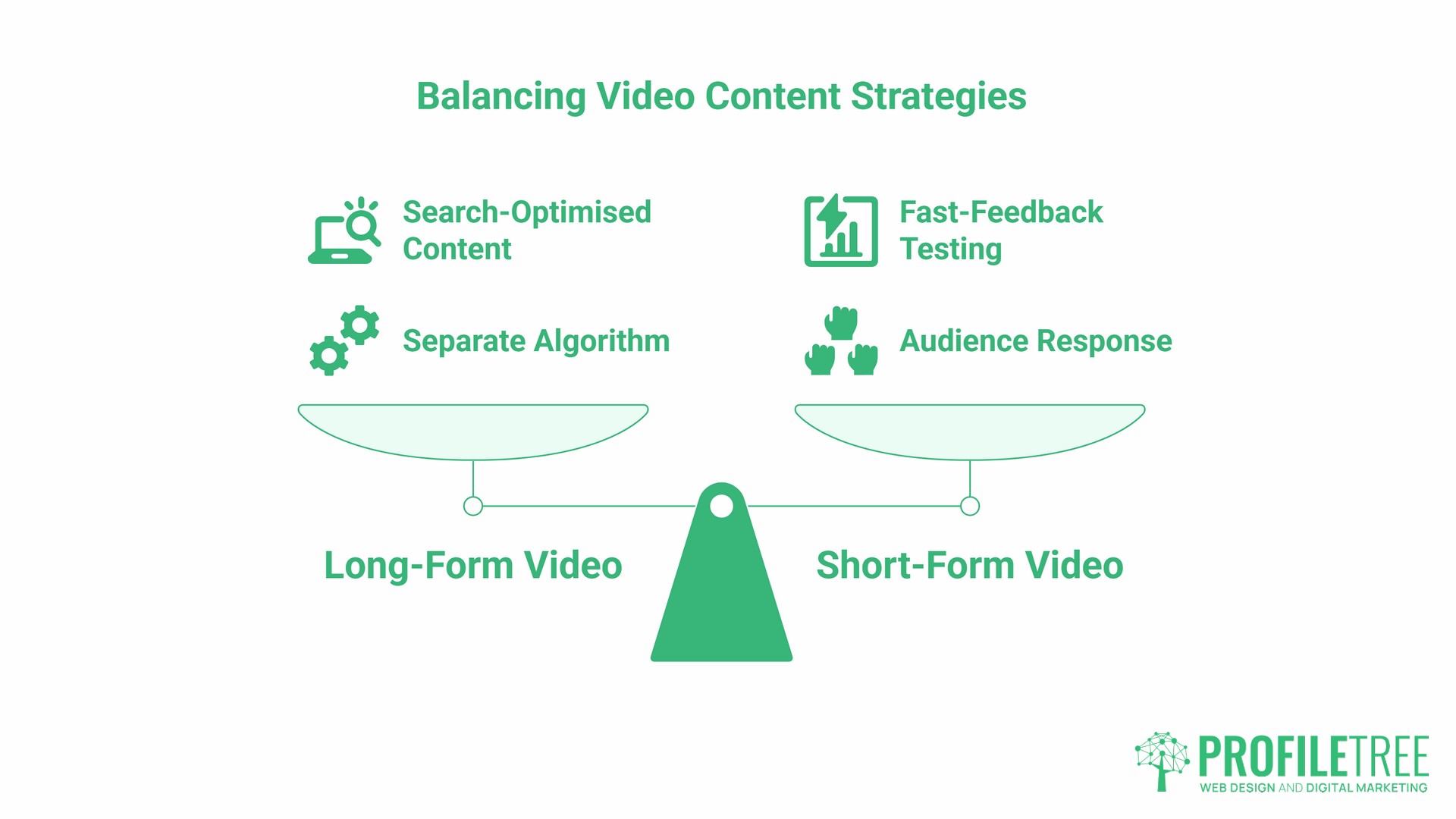
Short-form video content and long-form videos serve different roles in a business content strategy. YouTube confirmed in 2025 that Shorts and long-form videos are now ranked by two completely separate algorithm models with different signal weights. Shorts performance no longer directly affects long-form recommendation performance, and vice versa.
For most SMEs, the practical recommendation is to focus long-form effort on search-optimised content tied to commercial queries, and use Shorts as a fast-feedback testing ground. YouTube uses Shorts to quickly understand which audiences respond to your content style, and that data can inform long-form content planning.
YouTube SEO Checker Tools
Several tools are designed to analyse and improve YouTube SEO performance. The table below compares the most widely used options for business channels.
| Tool | Primary Use | Best For | Free Tier |
|---|---|---|---|
| TubeBuddy | On-page SEO audit, keyword research, tag suggestions | Small business channels needing quick optimisation wins | Yes (limited) |
| vidIQ | Keyword research, competitor analysis, real-time recommendations | Channels actively monitoring competitive keywords | Yes (limited) |
| YTCockpit | Dedicated YouTube keyword research with volume and competition data | Keyword planning before filming | Paid only |
| Social Blade | Channel analytics and growth tracking | Benchmarking against competitors | Yes |
| YouTube Studio (built-in) | Analytics, audience data, traffic sources | Understanding your own channel performance | Free |
The most useful YouTube SEO tool for a business starting out is YouTube Studio itself. Before investing in third-party software, work through your own analytics to understand where existing traffic comes from, which videos retain viewers longest, and which search terms are already driving impressions. That data informs content planning better than any external keyword tool.
Third-party tools become more valuable at scale, particularly for keyword research before filming and for monitoring whether optimisation changes are improving performance over time.
Using Trending Keywords Strategically
One of the faster routes to increased views is creating content around topics, gaining search momentum. For a business channel, this does not mean chasing viral trends unrelated to your services. It means staying close enough to your industry’s conversation to publish useful content when a topic spikes in your sector.
Note that YouTube removed its Trending page in July 2025 and shifted toward personalised recommendations and community-based discovery. This means the YouTube algorithm now surfaces trending content differently from before, making proactive keyword monitoring more important than it was when a single trending page gave a snapshot of what was popular globally.
Practical approaches for finding trending YouTube keywords now include YouTube’s own search autocomplete, which reflects real-time query patterns; Google Trends filtered to YouTube search, which shows whether a topic is rising or declining over time; and your own channel analytics, which will show which content is gaining impressions and may indicate rising search interest in a topic you already cover.
For UK businesses, checking Google Trends against regional data (filtering for the UK or Northern Ireland) reveals whether a trend has meaningful local traction or is primarily a US-driven spike that will not translate into relevant traffic.
Does YouTube SEO Help Your Website Rankings?
The relationship between YouTube and Google search works in both directions. Google frequently places video results on the main search results page, typically in a video carousel, and well-optimised YouTube videos appear alongside organic website listings.
For a query like “how to set up Google Business Profile,” a video from your channel could appear in Google search results even if your website does not rank on the first page for that query. This creates a visibility opportunity that complements rather than replaces your website SEO investment. Identifying which of your target queries trigger video results in Google search tells you where video content is worth prioritising.
YouTube videos can also generate backlinks. When other sites embed your video or link to it as a reference, that builds authority signals that benefit both the video and your website’s overall domain profile. This is one reason businesses working on a digital marketing strategy should treat YouTube as part of an integrated approach rather than an isolated channel.
“The businesses we work with who achieve the best YouTube results understand that success comes from treating video content as part of their complete digital marketing strategy, not as an isolated platform,” says Ciaran Connolly, founder of ProfileTree. “When YouTube SEO aligns with website optimisation and business goals, the results compound across all channels.”
Advanced Analytics: Measuring What Matters for Business
Standard YouTube analytics reports are designed for creators who want to grow an audience. A business needs to interpret those same metrics through a different lens.
KPIs for Service Businesses
- Traffic source breakdown shows where views are coming from. For a business optimising for lead generation, YouTube search traffic is the most valuable source because it represents active intent. If most of your views come from suggested videos or external sources like social media, that audience may be less commercially relevant.
- Average view duration and audience retention indicate content quality and identify drop-off points. If viewers consistently leave at the same moment in a video, that section needs improvement.
- Click-through rate from impressions measures the effectiveness of the thumbnail and title. YouTube states that a typical CTR across the platform falls between 2 and 10 per cent, with successful channels hitting 4 to 10 per cent. A low click-through rate on a video with high impressions means the title or thumbnail is not converting interest into views.
- Geographic performance is particularly relevant for businesses in Northern Ireland, Ireland, and the UK. If a significant proportion of views are coming from outside your service area, the content may need reframing to attract a more local audience.
- Website traffic from YouTube is the metric that most directly connects video performance to commercial outcomes. Setting up proper UTM tracking on links in video descriptions allows you to measure how many website visits, enquiry form completions, or phone calls can be attributed to YouTube content.
Tracking the Lead Journey
A viewer who finds your video via YouTube search, watches most of it, clicks the link in your description to your website, and fills in a contact form represents a completed lead journey from a YouTube SEO investment. Without tracking, that journey is invisible, and the business has no way to attribute the lead or justify further investment in video content.
For businesses running training programmes for their teams or working with an agency on their digital presence, establishing this tracking setup early makes measurement straightforward as the channel grows.
Integrating YouTube with Your Digital Marketing Strategy
YouTube SEO does not work in isolation. The channels that deliver the most consistent business results for SMEs treat video as one layer within a broader content and marketing approach.
- Website integration means embedding relevant videos on service pages, blog posts, and landing pages. This increases page dwell time, a positive signal for website SEO, while also driving video views. A web design agency page that embeds a video explaining the agency’s process gives both the page and the video more exposure.
- Content marketing alignment means planning videos to complement written content rather than duplicate it. An in-depth blog post on a topic can be paired with a shorter video summary that links back to the post. Each piece of content drives traffic to the other. For businesses investing in content strategy, this approach multiplies the return from each piece of content.
- Social media cross-promotion provides early engagement signals that influence algorithm evaluation during the first 24 to 48 hours after a video is published. Sharing a new video on LinkedIn or your business Instagram generates initial views and engagement that help YouTube assess the content’s quality before distributing it more widely.
- AI tools for optimisation are increasingly used by marketing teams to generate title variations, refine descriptions, and identify keyword gaps in existing video content. These tools speed up the optimisation workflow but require human review. Auto-generated metadata should always be checked against your actual content to avoid the kind of keyword mismatch that YouTube’s algorithm now detects and penalises.
YouTube SEO: A Practical Checklist
Before publishing any business video, work through these elements:
| Checklist Item | Done? |
|---|---|
| First 125 characters of description contain keyword and a clear value statement | |
| Timestamps added to the description for videos over 5 minutes | |
| 10 to 15 relevant tags applied, including exact match and variations | |
| 3 to 5 relevant hashtags added to description | |
| Custom thumbnail created at 1280 x 720 pixels with readable text | |
| Closed captions uploaded or auto-captions manually corrected | |
| Video embedded on the relevant website page after publishing | |
| End screen added linking to related video or channel subscription | |
| Link to relevant website page included in description | |
| Video embedded on relevant website page after publishing |
Working with a YouTube Marketing Agency
For many SMEs, the combination of regular filming, editing, keyword research, optimisation, and analytics tracking becomes difficult to sustain alongside core business operations. This is where working with a specialist can significantly improve the return on investment.
An agency approach to YouTube marketing covers the full stack: content strategy aligned to commercial objectives, production quality that reflects the business’s positioning, YouTube SEO and YouTube algorithm optimisation applied systematically at each stage of production, and analytics reporting that connects video performance to actual business outcomes.
ProfileTree works with businesses across Northern Ireland, Ireland, and the UK on YouTube strategy, video production, and integrated digital marketing programmes. If your business is investing in video but not seeing the search visibility or lead generation results you need, get in touch with the team to discuss what a structured YouTube SEO approach could deliver.
YouTube SEO: Frequently Asked Questions
How long does it take to see results from YouTube SEO?
YouTube indexes new videos within 24 to 72 hours. Meaningful search traffic typically takes three to six months to build, particularly for new channels. Videos targeting lower-competition queries with strong on-page optimisation can rank faster. Business channels in niche sectors often see quicker authority building than general content creators because they face less competition for their specific queries. Consistent publishing over six to twelve months is a more reliable growth approach than sporadic uploads of individually well-optimised videos.
Does the algorithm disadvantage small channels?
No. The YouTube algorithm’s recommendation system is viewer-interest-based, not subscriber-based. Todd Beaupré, YouTube’s Senior Director of Growth and Discovery, has publicly explained that the platform is not pushing your video to an audience but rather finding the right videos for each individual viewer. A small channel with high retention and strong engagement from a specific audience can rank above a large channel with weaker engagement for a specific service-related query if the smaller channel’s content is more relevant. YouTube also confirms that only a fraction of subscribers (typically 10 to 30 per cent) are notified of new uploads; every video must earn its own reach independently.
How do I rank my YouTube video in Google search results?
Target queries that Google recognises as having “video intent.” You can identify these by typing your target query into Google and checking whether a video carousel appears in the results. To appear in those results, the video title should closely match the query, and the video should have strong watch time and engagement signals. Keeping the video title under 60 characters ensures full visibility in both YouTube and Google search displays. Embedding the video on your own website also helps Google associate the content with your domain.
Are hashtags still useful for YouTube SEO?
Hashtags contribute to content categorisation and discovery, but are a secondary factor compared to title, description, and transcript optimisation. Three to five relevant hashtags per video is the standard recommendation. The first three hashtags in a description appear above the video title for viewers, so they should be the most relevant to the video’s core topic. YouTube ignores all hashtags if a video uses more than 60, so keeping the number low and relevant is the practical approach.
How do you address a drop in views on an established channel?
A drop in views often reflects a change in audience expectations, a change in YouTube’s ranking signals, or a shift in the competitive environment rather than a permanent penalty. The most effective recovery approach involves reviewing which videos have lost the most traffic, updating their titles, descriptions, and thumbnails to reflect current search behaviour, and publishing new content that addresses gaps. Narrowing the channel’s topical focus rather than widening it tends to help: channels with clear subject matter authority tend to perform better in recommendations than channels covering a wide range of unrelated topics.
How does YouTube SEO differ from traditional website SEO?
The underlying principles are similar: keyword relevance, content quality, and authority signals. The execution differs significantly. YouTube weighs engagement metrics like watch time and viewer satisfaction more heavily than traditional web SEO. The clickable elements are different: thumbnails replace title tags as the primary click driver, and video descriptions replace meta descriptions. YouTube is also its own search engine with its own query patterns, so a keyword that drives significant traffic in Google search may have very different volume or competition dynamics on YouTube. Businesses that treat YouTube SEO and website SEO as entirely separate strategies will underperform relative to those that integrate them.