
Short-form Video Marketing for SMEs in Ireland
Table of Contents
Most small businesses in Ireland already know they should be making short videos. The hard part is working out which platform to back, what to film, and whether any of it will move the needle on sales rather than just vanity metrics.
This guide on short-form video marketing is written for owners and marketing managers weighing that decision. It covers where Irish audiences actually spend their attention, how to plan content that supports business goals, the production reality for a small team, and what to measure once videos go live.
There is also a frank look at when to handle this in-house and when a content partner earns its fee. By the end, you should have a clear view of where to start.
Where Irish Audiences Watch Short-form Video
Short-form video has settled into a small set of dominant platforms, and each one rewards a slightly different style. Picking the right home for your content matters more than chasing every channel at once. The sections below break down the three platforms that carry the most weight for Irish SMEs, plus the one most service businesses overlook.
TikTok: Reach and Discovery
TikTok reached roughly 1.9 billion monthly active users globally in early 2026, and its own Digital Services Act reporting put average monthly users across the EU at about 169 million between January and June 2025. The draw for a small business is organic reach: a new account with no following can still land in front of a sizeable audience, which is rare on other platforms.
Content here works best when it feels unpolished and quick. The first three seconds decide whether a viewer stays, so lead with the hook, not the logo. Local accents, recognisable Irish settings and trending audio all help a clip travel further within the feed.
If you want a deeper read on the platform itself, our breakdown of UK TikTok statistics covers demographics that broadly mirror patterns across these islands.
Instagram Reels: Polish and Loyalty
Reels carries Instagram’s full audience of around 1.8 billion monthly users, and over half of the time people spend in the app now goes on Reels. The expectation here is a cleaner finish than TikTok: consistent branding, good lighting and a clear visual identity.
For businesses that already have an Instagram following, Reels is the fastest way to put that audience to work. Tutorials, before-and-after clips and product walkthroughs perform reliably, especially when filmed in a real setting rather than a studio.
YouTube Shorts: Search and Staying Power
Shorts has grown into the largest short-form format by audience, passing 2 billion monthly users and 200 billion daily views in early 2026. What sets it apart is searchability: a Short answering a specific question can keep surfacing for months, unlike the fast decay on other feeds.
That makes Shorts a strong fit for how-to and explainer content tied to what customers actually type into search. It also feeds viewers toward longer videos on the same channel, which suits businesses building a fuller content library over time.
LinkedIn Video: The B2B Channel Most SMEs Ignore
For professional services, LinkedIn is the channel worth a second look. DataReportal recorded around 3.40 million LinkedIn members in Ireland in early 2025, and short videos on the platform reach decision-makers that the consumer feeds rarely touch.
An accountant, solicitor or engineering firm will get more value from a 60-second explainer on LinkedIn than from chasing TikTok trends. The tone is practical and informative, and a single clip reposted from a longer talk can do real work in front of the right buyers.
Building a Short-form Strategy That Supports Sales
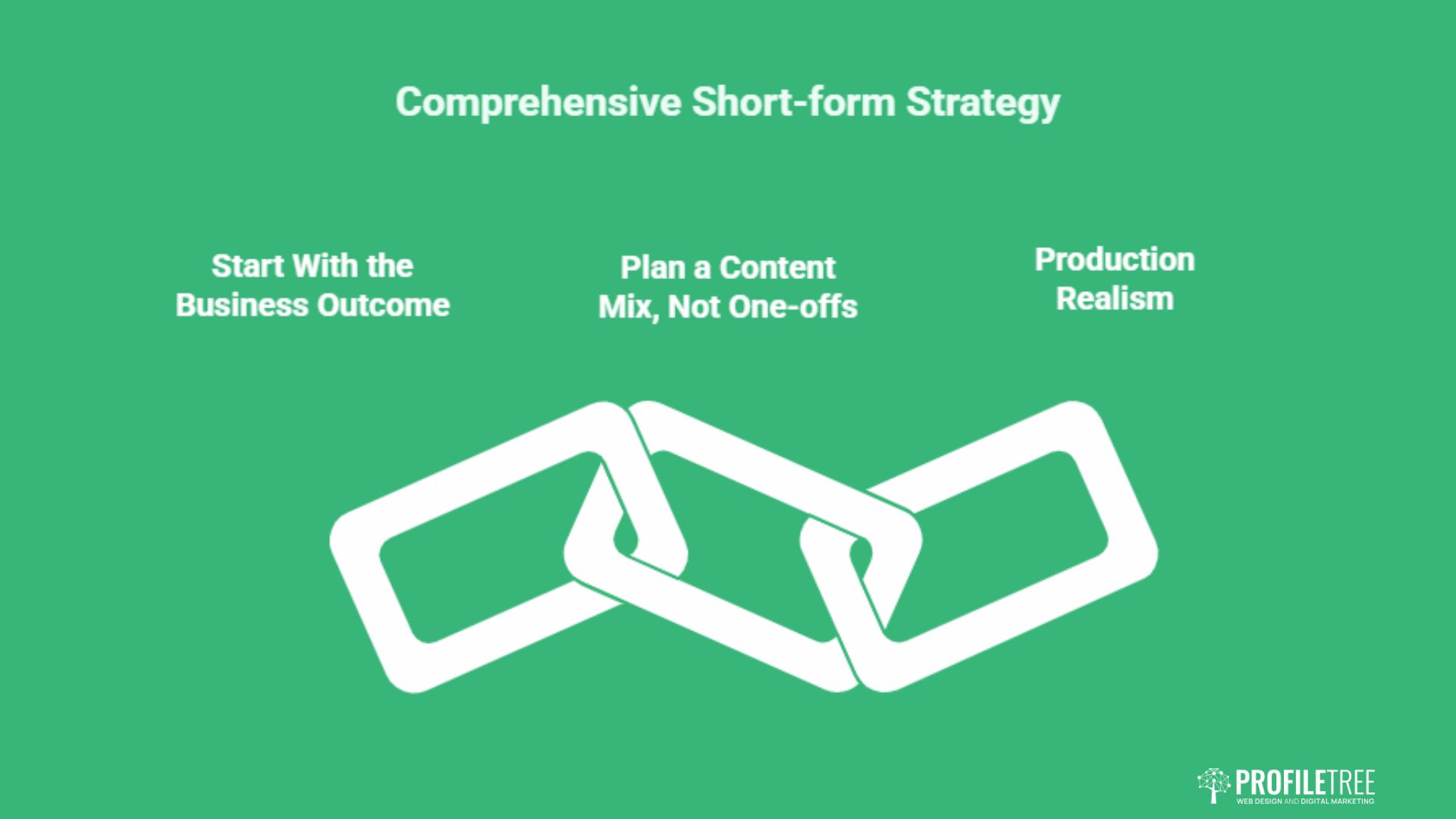
A pile of videos is not a strategy. The businesses that see a return start with the outcome they want and work backwards. This section covers how to set goals you can defend, plan a content mix, and keep production sustainable for a small team.
Start With the Business Outcome
Decide what the videos are for before filming anything. Brand awareness, engagement and direct conversion each call for different content and different yardsticks. Trying to serve all three at once usually means none of them land.
For most Irish SMEs, the honest goal is lead generation or footfall, not follower counts. If a video does not plausibly connect to an enquiry, a booking or a sale, it is entertainment rather than marketing. That distinction keeps a content calendar disciplined.
Tying video to wider commercial results is where many owners get stuck. Our guide on how social media drives more sales is a useful companion when you are mapping content to revenue.
Plan a Content Mix, Not One-offs
A workable ratio for a small business is roughly 40% educational, 30% entertaining or behind-the-scenes, 20% product or service focused, and 10% reactive to whatever is trending locally. The educational slice carries the most weight because it builds trust and tends to keep performing.
Plan in themes rather than single posts. A solicitor might run a recurring “common legal mistakes” series; a café might document a dish from delivery to plate. A series gives viewers a reason to follow and gives you a repeatable format that gets faster to produce each time.
Storytelling is the thread that holds a series together. The examples in our piece on brand storytelling show how a consistent narrative lifts otherwise ordinary clips.
Keep Production Realistic
Most short-form videos for SMEs can be shot on a recent smartphone. A basic tripod, a clip-on microphone and decent natural light cover the essentials, and viewers on these platforms forgive rough edges far more than they forgive a boring opening.
Batch your filming. Setting aside a single morning to shoot several videos in one go, then editing and scheduling them across the following weeks, is the only sustainable rhythm for a team that also has a business to run. Consistency beats production value almost every time.
Selling Directly Through TikTok Shop in Ireland
For retailers and product businesses, short-form video now connects straight to a checkout. TikTok Shop launched in Ireland in December 2024 and is into its second year, turning shoppable clips and LIVE sessions into a genuine sales channel rather than just a discovery one. This section covers who can sell, what the setup involves, and whether it suits your business.
Who Can Sell and How to Join
TikTok Shop in Ireland is open to businesses and shoppers based in the country, not invite-only. Any Ireland-based registered business can sign up through the TikTok Seller Centre using a phone number, email or existing TikTok account, then verify its identity and address.
Approval typically takes one to three days. You will need business details and, depending on your seller type, a VAT number, so it pays to have your registration and tax paperwork to hand before you start rather than stalling halfway through.
What the Setup Actually Involves
The practical work splits into three parts: listing your catalogue, linking products to video content, and handling fulfilment. Shoppable videos place a product link at the foot of a clip, while LIVE shopping lets you demonstrate items and answer questions in real time, which works especially well for skincare, food and fashion.
Fulfilment is the part that owners underestimate. Orders need reliable stock, packaging and a returns process before you drive any traffic, because a strong video that leads to a slow or messy delivery does more harm than no video at all.
Is It Worth It for Your Business?
TikTok Shop suits product businesses with visual, impulse-friendly items and the capacity to fulfil orders quickly. A craft food producer, a clothing boutique or a homeware maker fits the model far better than a service firm, which will get more from lead-focused content than from a storefront.
Treat it as one channel within a wider plan, not a standalone fix. The shop performs best when it sits alongside a steady content calendar and a clear view of margins, which is where folding it into your broader digital strategy keeps the effort honest.
Short-form Video Across Different Irish Sectors
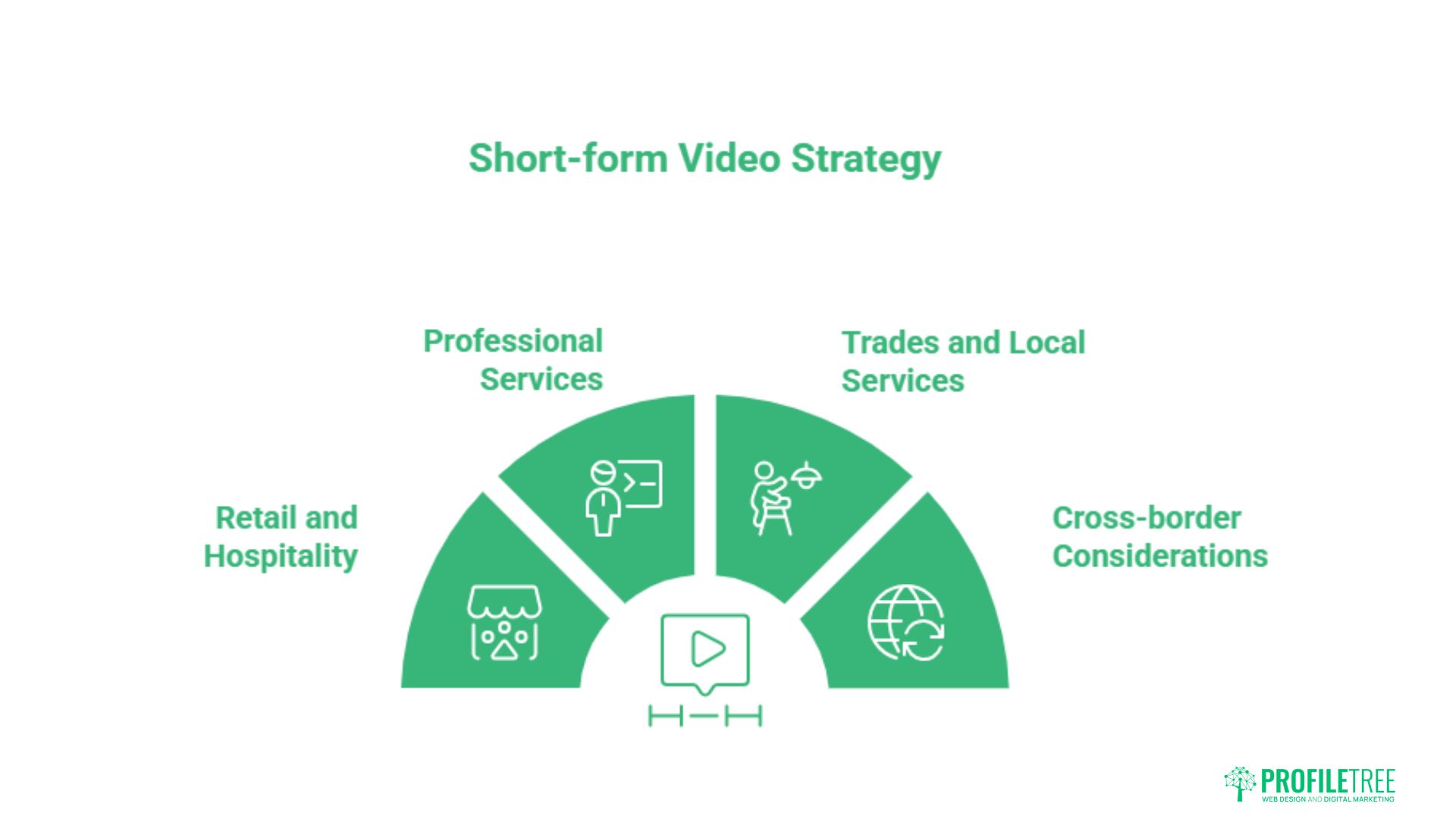
The right approach shifts depending on what you sell. A retailer chasing impulse buys has little in common with a solicitor building credibility. The examples below show how four common Irish business types can use short-form video without copying a formula that does not fit them.
Retail and Hospitality
For shops, cafés and restaurants, short-form video sells atmosphere as much as product. Quick demonstrations, kitchen preparation clips and genuine customer reactions all convert browsing into visits. Limited-time offers create urgency that the format handles well.
TikTok and Reels are the natural primary channels here, with food and drink among the strongest performing categories across short-form platforms. A tracked offer code is the simplest way to tie a video to actual footfall.
Professional Services
Accountants, solicitors and consultants often assume video is not for them. The opposite is true: short clips that answer a common client question position the firm as the obvious place to call. The aim is credibility, not virality.
LinkedIn and YouTube Shorts suit this work best. A series of plain-English answers to questions clients ask every week will quietly generate enquiries long after posting, because the content keeps surfacing in search.
Trades and Local Service Businesses
Plumbers, electricians and landscapers have a natural advantage: their work is visual and satisfying to watch. Before-and-after clips, quick maintenance tips and honest “here is what went wrong” videos build the trust that wins local jobs.
Location tagging matters more for these businesses than for anyone else. A clip tagged to a specific town or county is far more likely to reach the people who can actually book the service.
Cross-border Considerations
Businesses serving both the Republic and Northern Ireland face a quiet complication: currency, trending audio and even the dominant platform can differ across the border. A single feed treated as one market often underperforms in both. A homeware brand in Newry, for instance, sells in sterling to customers in Belfast and in euros to customers in Dundalk, so a single price overlay on a video confuses half the audience.
The practical fix is to separate what genuinely differs from what does not. The creative idea, the hook and the product can stay the same; the price, the call to action and sometimes the trending sound should change by audience. A short workout routine looks like this:
Film the core clip once. Produce two cut-downs: one tagged to a Northern Ireland location with a sterling price and a “shop now” link to the relevant store, the other tagged to a Republic location in euros. Schedule each to the audience it suits, using location tags and county-level hashtags rather than a blanket “Ireland” tag that dilutes both.
Watch which side performs and shift effort accordingly, since border-county audiences often behave differently from the national average. For service businesses, a video that reinforces local visibility pairs well with the tactics in our overview of how social media supports local marketing efforts.
Measuring Results and Knowing When to Get Help
Filming is the easy part. Knowing whether any of it worked, and deciding what to keep doing, is where most SMEs lose momentum. This final section covers the metrics that matter, the honest trade-off between doing it yourself and outsourcing, and where a content partner adds value.
The Metrics Worth Tracking
Ignore likes as a primary measure. Watch time and completion rate tell you whether the content holds attention; click-throughs and tracked enquiries tell you whether it drives business results. For a small business, the second pair is what justifies the effort.
YouTube Shorts currently leads short-form platforms in engagement at around 5.91%, with TikTok close behind. Useful context, but your own completion and conversion data should always outrank platform averages when you decide what to film next.
In-house Versus a Content Partner
Plenty of SMEs run short-form video well on their own, particularly once a repeatable format clicks. The point where outside help pays off is usually strategy, consistency or reporting: knowing what to make, keeping the cadence going, and proving the return to whoever holds the budget.
This is where a partner earns its place. ProfileTree, a Belfast-based digital agency, works with SMEs across Northern Ireland, Ireland and the UK on exactly this kind of programme, from video marketing through to the wider digital strategy that gives the content a job to do.
If the gap is skills rather than time, structured digital training can bring an in-house team up to speed without handing the work over entirely.
A View From the Field
The agencies that watch this market closely tend to agree on one thing: authenticity outperforms polish for local businesses.
“Short-form video has changed marketing for Irish SMEs, giving smaller businesses a way to compete with much larger ones. The companies that win approach it strategically, understand their specific audience within the Irish market, and lean into their authentic local identity in a way multinational competitors simply cannot match.” — Ciaran Connolly, founder of ProfileTree
That local edge is the whole argument. A small Irish business does not need to look like a global brand; it needs to look like itself, on the platform where its customers already spend their time. For more on the format’s trajectory, our look at the rise of short-form video sets the wider scene, and the common pitfalls in our guide to TikTok marketing mistakes are worth reading before you post.
Ireland’s appeal as a backdrop is part of the opportunity, too, as this guide to the top cities to visit in Northern Ireland illustrates.
Conclusion
Short-form video gives Irish SMEs a genuine route to compete with bigger budgets, but only with a clear goal, the right platform and honest measurement behind it. Start with one channel, commit to a steady cadence, and judge results by enquiries rather than likes. If strategy or consistency is the sticking point, talk to ProfileTree’s team about a video marketing plan built for your business.
FAQs
Is TikTok Shop available to businesses in Ireland?
Availability has been rolling out gradually, and access can still be limited for some Irish sellers. Check the current onboarding requirements directly with TikTok, as eligibility and the rules around business accounts and tax registration change frequently.
How often should an Irish small business post short-form video?
Three to five times a week is a sensible target for steady growth. Consistency matters more than volume, so a cadence you can sustain for months beats a burst of daily posting that fizzles out after a fortnight.
Do I need a professional camera to make short-form video?
No. A recent smartphone is enough for almost all short-form content, and audiences on these platforms value authenticity over high production values. Spend on a tripod and a clip-on microphone before you think about a camera.
How do I target only customers in a specific city, like Dublin or Cork?
Use location tags and local hashtags, and reference the area in your captions and on-screen text. Filming in recognisable local settings also signals relevance to the platform’s algorithm and to nearby viewers.
Is short-form video worth it for B2B companies?
Yes, particularly on LinkedIn and YouTube Shorts. Short clips that answer real client questions humanise a professional firm and build the credibility that wins enquiries, even though they rarely chase viral reach.