
WordPress Agency Hosting: Scale Client Sites Profitably
Table of Contents
Running a digital agency means juggling dozens of client websites. Each needs updates, backups, security monitoring, and that one client who always calls at 5 PM on Friday with an “emergency.” You’re spending more time managing hosting than growing your agency. Sound familiar?
After working with over 50 UK agencies, we’ve seen the same pattern repeatedly. Agencies start by hosting clients on separate accounts, thinking it’s simpler. Six months later, they’re drowning in login credentials, juggling invoices from five different providers, and losing money on every £30/month hosting plan they resell for £25 because a client negotiated hard.
There’s a better way. Professional agency hosting transforms website management from a necessary evil into a profitable service line. This guide reveals exactly how successful UK agencies structure their hosting, price it profitably, and deliver brilliant client service without burning out their team.
The Real Economics of WordPress Agency Hosting
Let’s address the elephant in the room: most agencies lose money on hosting. They treat it as a loss leader, hoping to make profits on development work. But hosting done right generates 40-60% profit margins with minimal effort.
Here’s what hosting actually costs UK agencies:
The Amateur Approach (What Not to Do):
- 20 clients on separate shared hosting: £100/month
- Time managing separate accounts: 10 hours/month
- Developer time for issues: £500/month
- Lost revenue from downtime: £1,000+/month
- Total cost: £1,600/month for chaos
The Professional Approach:
- Agency hosting platform: £200-400/month
- Management time: 2 hours/month
- Automated systems handle updates
- Downtime near zero
- Total cost: £400/month for control
The maths is undeniable. Professional agency hosting costs less, while delivering more. But the real opportunity isn’t cost savings—it’s revenue generation.
Turning Hosting into Profit
Successful agencies charge £50-150 per site monthly for hosting and maintenance. Clients gladly pay because they’re buying peace of mind, not server space. Package it properly, and hosting becomes your most profitable service.
Typical Agency Hosting Pricing (UK Market):
- Basic hosting only: £30-50/month
- Hosting with updates: £75-100/month
- Full care plan: £150-300/month
With 20 clients on care plans at £100/month, that’s £2,000 monthly recurring revenue. Costs? Around £400. Profit? £1,600 monthly for largely automated work.
The key is positioning hosting as a professional service, not a commodity. Clients aren’t paying for disk space—they’re paying for your expertise, reliability, and the ability to sleep soundly knowing their site won’t explode.
Choosing the Right Agency Hosting Platform
The WordPress agency hosting market offers dozens of options, each claiming to be “perfect for agencies.” Most aren’t. After testing every major platform, here’s what actually matters for UK agencies.
Essential Agency Hosting Features
- Centralised Management Dashboard: One login to rule them all. Access every client site without juggling passwords. The dashboard should show at a glance which sites need attention, who’s using excessive resources, and where problems lurk.
- White-Label Options: Your clients should see your brand, not your hosting provider’s. Custom login pages, branded emails, and white-label reporting maintain your professional image. Some providers even offer custom nameservers (ns1.youragency.com instead of ns1.hostingcompany.com).
- Staging Environments: Every site needs a staging area for testing changes. One-click staging creation and pushing to production saves hours weekly. Agencies without staging waste time fixing problems that proper testing would prevent.
- Client Billing Integration: Automatic invoicing through your existing systems. Whether you use Xero, QuickBooks, or FreeAgent, integration eliminates manual billing. Some platforms handle direct client billing, removing you from payment processing entirely.
- Developer-Friendly Tools: Git deployment, SSH access, WP-CLI, local development synchronisation. Your developers shouldn’t fight the hosting platform. The best agency hosts understand developers need flexibility, not restrictions.
The Platforms That Actually Work
WP Engine Agency Partner Programme
- Starting at £235/month for 10 installs
- Excellent staging and deployment tools
- Strong US presence, growing UK support
- Best for: Agencies focused on performance
Kinsta Agency Plans
- From £260/month for 20 sites
- Google Cloud infrastructure
- Brilliant dashboard and analytics
- Best for: Tech-savvy agencies
Flywheel by WP Engine
- From £96/month for 10 sites
- Designer-friendly interface
- Free migrations and demos
- Best for: Design-focused agencies
GridPane (Self-Managed)
- From £30/month plus server costs
- Complete control over infrastructure
- Requires technical knowledge
- Best for: Technical agencies wanting control
ProfileTree Agency Partnership
- Custom pricing based on needs
- Local UK support and infrastructure
- Managed service options available
- Best for: Agencies wanting a true partner
Each platform has strengths. WP Engine offers rock-solid reliability. Kinsta provides cutting-edge performance. Flywheel simplifies designer workflows. GridPane gives complete control. ProfileTree’s hosting adds local expertise and genuine partnership.
Setting Up Your Agency Hosting Infrastructure
Moving from chaos to control requires systematic setup. Here’s the exact process we’ve refined with dozens of agencies.
Phase 1: Audit Your Current Situation
Document Everything: Create a spreadsheet listing:
- Every client site you host
- Current hosting provider
- Monthly cost
- Renewal dates
- Login credentials (in a password manager)
- Traffic levels
- Special requirements
This audit often reveals surprises. Agencies discover they’re paying for dormant sites, duplicate services, and premium features nobody uses. One Manchester agency found £400 monthly in forgotten hosting accounts.
Assess Client Needs: Not every client needs premium hosting. Categorise sites:
- Critical: E-commerce, high-traffic, revenue-generating
- Important: Active business sites, regular updates
- Basic: Brochure sites, minimal changes
- Archive: Old sites maintained but not developed
This categorisation informs your hosting tiers and pricing strategy.
Phase 2: Choose Your Platform Architecture
Option 1: Single Premium Provider: All clients on one platform (WP Engine, Kinsta, etc.)
- Pros: Simplicity, consistent performance, single invoice
- Cons: Higher costs, less flexibility
- Best for: Agencies prioritising simplicity
Option 2: Tiered Approach: Different platforms for different client tiers
- Critical clients: Premium managed hosting
- Standard clients: Quality shared platform
- Basic clients: Efficient bulk hosting
- Pros: Cost optimisation, appropriate resources
- Cons: Multiple platforms to manage
- Best for: Agencies with diverse clients
Option 3: Self-Managed Infrastructure: Your own servers with management panel (GridPane, ServerPilot, RunCloud)
- Pros: Complete control, lowest unit costs
- Cons: Requires technical expertise, you’re responsible for everything
- Best for: Technical agencies with server experience
Most successful agencies start with Option 1, evolve to Option 2, and some eventually graduate to Option 3. Starting simple prevents overwhelm.
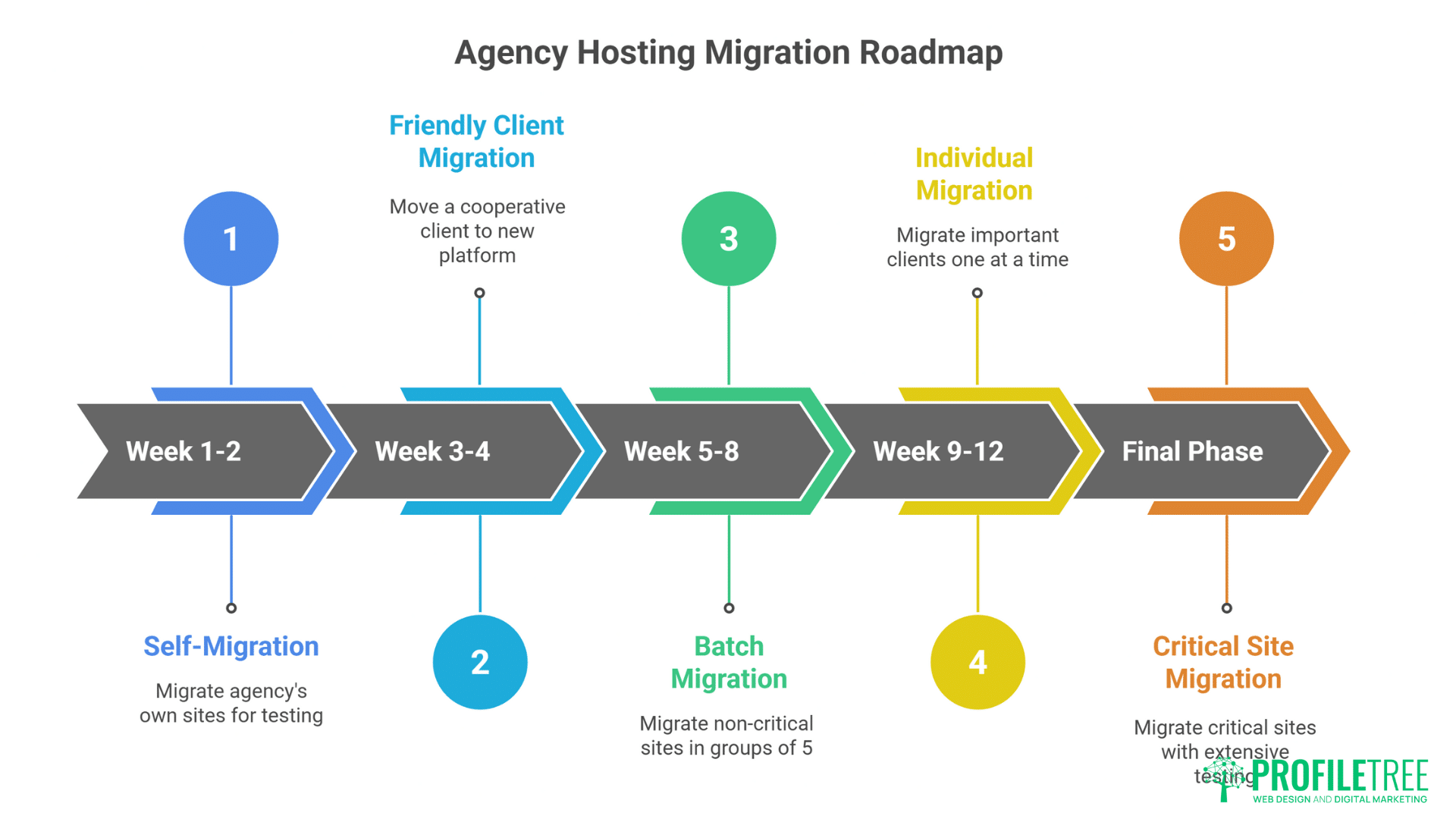
Phase 3: Migration Strategy
Never migrate all clients simultaneously. That’s how agencies end up working weekends and losing clients.
The Smart Migration Schedule:
- Week 1-2: Migrate your own sites first (testing ground)
- Week 3-4: Move your friendliest, most understanding client
- Week 5-8: Migrate non-critical sites in batches of 5
- Week 9-12: Move important clients individually
- Final Phase: Critical sites with extensive testing
Migration Communication Template: “We’re upgrading your hosting to a faster, more secure platform. This improvement includes improved security monitoring, faster loading speeds, and better reliability. We’ll handle the entire migration at no cost. The transition happens [date] at 3 AM, with no expected downtime.”
Clients appreciate proactive improvements. Frame migration as an upgrade, not an inconvenience.
Profitable Pricing Strategies for Agency Hosting
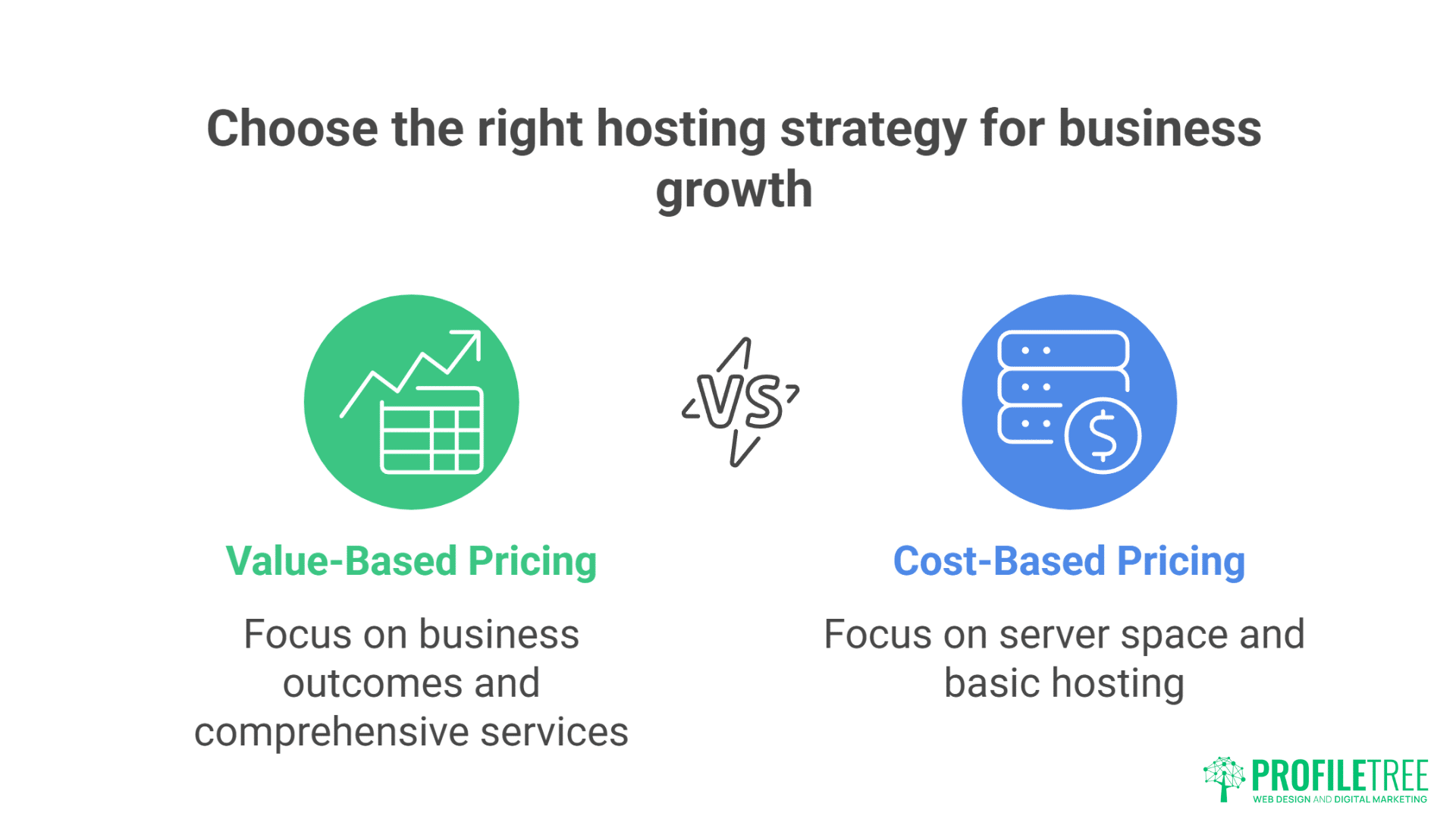
Most agencies undercharge for hosting because they’re selling the wrong thing. Stop selling server space. Start selling business outcomes.
The Three-Tier Pricing Model
Tier 1: Essential Hosting (£30-50/month)
- Secure, optimised hosting
- Daily backups
- SSL certificate
- Basic monitoring
- For: Archived sites, minimal-change brochures
Tier 2: Managed Hosting (£75-125/month)
- Everything in Essential
- Weekly plugin updates
- Security scanning
- Performance monitoring
- Monthly reports
- Priority support
- For: Active business sites
Tier 3: Complete Care (£150-300/month)
- Everything in Managed
- Daily monitoring
- Content updates (30-60 minutes)
- Proactive optimisation
- Emergency response
- Quarterly reviews
- For: Critical business sites
Price based on value, not costs. A £200/month care plan preventing one hack or outage pays for itself annually.
Bundling for Higher Value
Development + Hosting Bundle: Include first year’s hosting in website projects. Clients expect ongoing costs, and bundling prevents hosting price objections. After year one, convert to monthly billing.
Hosting + Maintenance + Marketing: Create comprehensive digital packages:
- Hosting & maintenance: £100/month
- Plus basic SEO: £300/month
- Plus content creation: £500/month
Clients prefer single invoices and comprehensive service. Bundles increase average revenue per client, while reducing administrative overhead.
Handling Price Objections
- “I can get hosting for £3/month elsewhere” “Absolutely, and you can buy a Vauxhall Corsa instead of a BMW. Our hosting includes professional management, security monitoring, and expert support. When your £3 hosting fails at midnight, who answers the phone?”
- “My nephew says hosting should be free” “Free hosting is like free healthcare—great until you actually need it. We provide professional infrastructure ensuring your site generates revenue, not headaches.”
- “Can you match GoDaddy’s price?” “We can’t match their price because we don’t match their service. They provide commodity hosting. We provide peace of mind. Which matters more for your business?”
Never apologise for professional pricing. Clients who balk at £50/month hosting aren’t clients you want long-term.
Security and Compliance for Client Sites
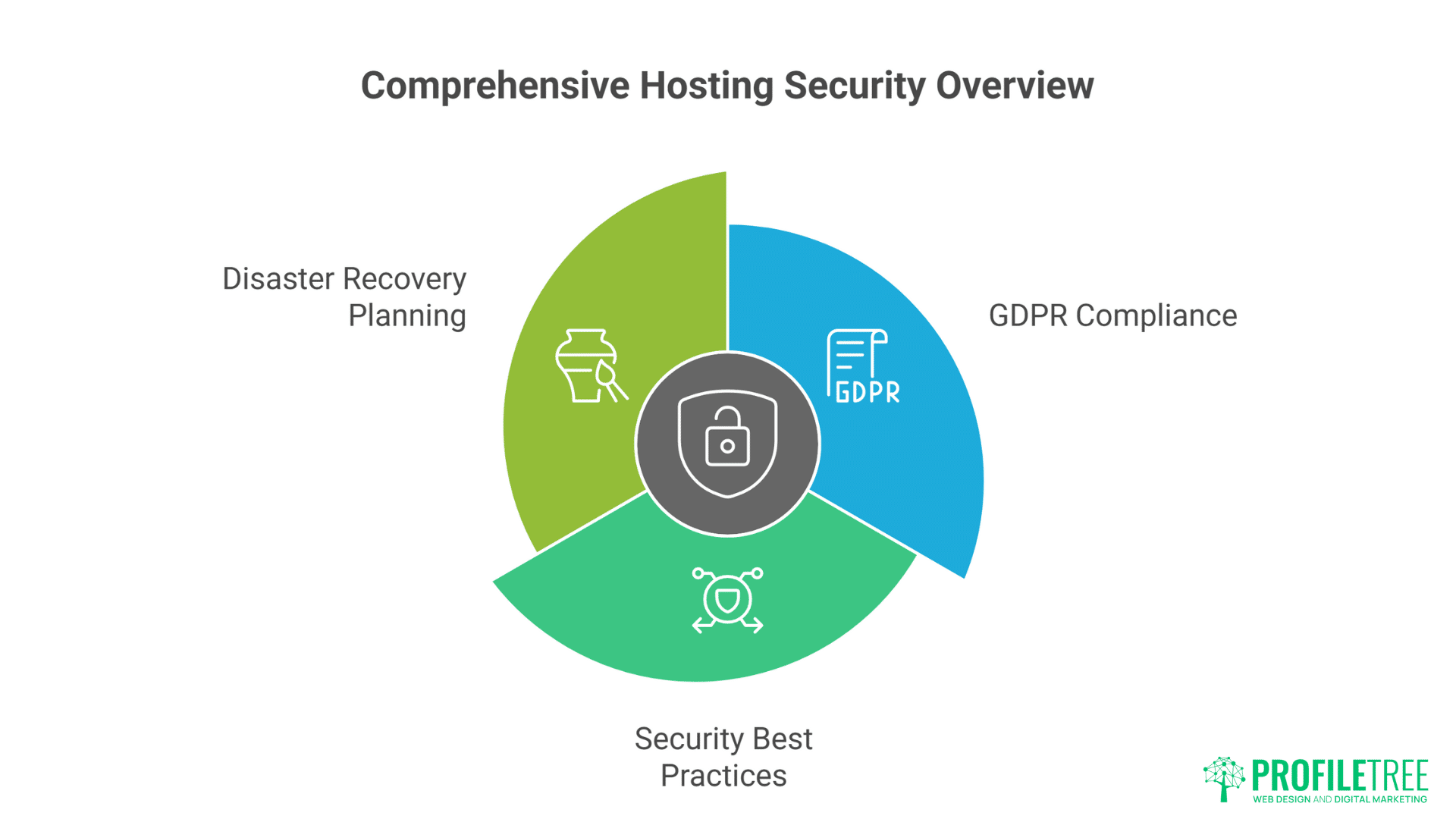
Hosting client sites means accepting responsibility for their digital presence. One security breach destroys trust instantly. UK agencies face additional compliance requirements that American hosting guides ignore.
GDPR Compliance for Agencies
As a data processor, you’re legally responsible for client website security. GDPR non-compliance fines reach €20 million or 4% of annual turnover. Taking security seriously isn’t optional.
Essential GDPR Requirements:
- Data Processing Agreements with all clients
- Sub-processor agreements with hosting providers
- Documented security measures
- Breach notification procedures (72 hours)
- Data location transparency
Most quality agency hosting platforms provide GDPR-compliant infrastructure, but you must document policies and procedures. Create standard agreements covering your responsibilities and limitations.
Security Best Practices
Segregation of Client Sites: Never host multiple clients on one WordPress installation. WordPress Multisite seems efficient but creates a massive risk. One compromised site infects all sites. Use separate installations always.
Access Control
- Unique logins per developer
- Two-factor authentication mandatory
- Regular access audits
- Revoke access when developers leave
- Client admin accounts separate from agency accounts
Monitoring and Response Implement automated monitoring for:
- Uptime (checked every 5 minutes)
- Security threats (daily scans)
- Performance degradation
- SSL certificate expiry
- WordPress core/plugin vulnerabilities
When issues arise, your response speed matters more than prevention perfection. Clients forgive problems but not poor communication.
Disaster Recovery Planning
Hope for the best, plan for the worst. Every agency needs documented disaster recovery procedures.
The 3-2-1 Backup Rule:
- 3 copies of important data
- 2 different storage media
- 1 offsite backup
Quality agency hosting includes automated backups, but verify restoration regularly. One agency discovered their “daily backups” were corrupted for six months. Test monthly.
Recovery Time Objectives: Define and communicate recovery expectations:
- Critical sites: 1-hour recovery
- Important sites: 4-hour recovery
- Basic sites: 24-hour recovery
Document procedures for common scenarios:
- Site hacked
- Server failure
- Accidental deletion
- Plugin conflict causing white screen
- Database corruption
Having written procedures prevents panic during crises.
Scaling Your Agency Hosting Operation
Success brings challenges. Managing 20 sites differs vastly from managing 200. Here’s how successful agencies scale without losing quality.
Automation Is Essential
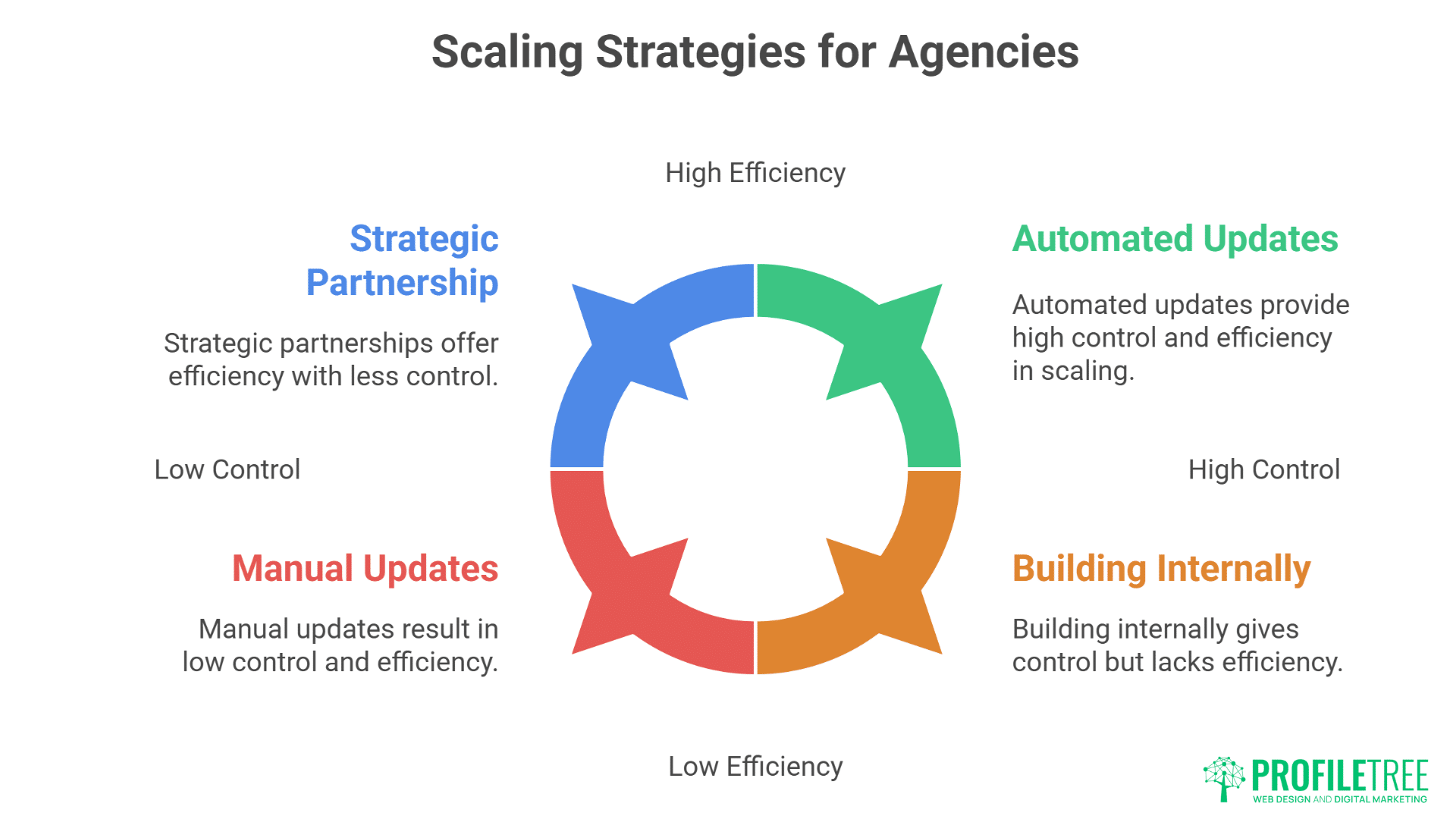
Automated Updates: Manual plugin updates don’t scale. Implement systems for:
- Automatic minor plugin updates
- Scheduled major updates with testing
- Rollback procedures for failures
- Client notification of updates
Tools like MainWP, ManageWP, or InfiniteWP centralise WordPress management. Better agency hosts include management tools, eliminating additional subscriptions.
Automated Monitoring: You can’t watch 100 sites manually. Automated monitoring must track:
- Uptime and response times
- Security threats
- Performance metrics
- SEO issues
- Broken links
- Form submissions
Configure alerts for critical issues only. Alert fatigue leads to ignored warnings.
Automated Reporting: Clients love updates proving you’re working. Monthly automated reports should include:
- Uptime percentage
- Security threats blocked
- Updates performed
- Performance improvements
- Traffic statistics
Professional reports justify hosting fees and reduce “what am I paying for?” questions.
Building Your Support Team
Around 50 client sites, you need dedicated hosting support. One person can effectively manage 100-150 sites with proper systems.
Hiring Your First Hosting Manager: Look for:
- WordPress expertise (obviously)
- Server administration basics
- Customer service skills
- Problem-solving ability
- Documentation mindset
Technical skills can be taught. Attitude and reliability can’t. Hire for character, train for skill.
Structuring Support Efficiently:
- Level 1: Basic issues, updates, monitoring
- Level 2: Technical problems, performance optimisation
- Level 3: Development team for complex issues
Clear escalation paths prevent senior developers wasting time on password resets.
Partnering vs Building
Eventually, agencies face a choice: build infrastructure internally or partner with specialists?
Building Internally: Pros:
- Complete control
- Higher profit margins
- Custom solutions
Cons:
- Significant time investment
- Ongoing maintenance burden
- Responsible for everything
- Distraction from core services
Strategic Partnership: Pros:
- Immediate expertise
- Reduced responsibility
- Focus on core strengths
- Scalability included
Cons:
- Less control
- Lower margins
- Dependency on partner
Many successful agencies use hybrid approaches. They partner for infrastructure (ProfileTree’s managed hosting handles the technical heavy lifting,) while maintaining client relationships and adding value through design and development services.
White-Label Solutions That Actually Work
White-labelling hosting sounds simple: resell someone else’s service under your brand. Reality proves more complex. True white-label success requires careful partner selection and clear boundaries.
Evaluating White-Label Partners
- Technical Capability: Can they handle your most demanding client? Test with your toughest requirements first. If they pass that test, everything else is manageable.
- Support Quality: How quickly do they respond? Do they understand WordPress deeply or just follow scripts? Test their support before committing. Send complex questions and evaluate responses.
- Business Stability: Changing hosting partners traumatises agencies. Research their history, funding, and growth trajectory. Avoid newly launched services promising the moon.
- Cultural Fit: You’re trusting them with client relationships. Do their values align with yours? A bargain-basement provider makes you look cheap by association.
Structuring White-Label Agreements
Define Boundaries Clearly:
- Who handles what support?
- Response time expectations?
- Escalation procedures?
- Client communication rights?
- Billing arrangements?
- Termination procedures?
Document everything. Verbal agreements cause problems when staff changes.
Maintain Control:
- Keep domain registration separate
- Maintain backup copies independently
- Document all customisations
- Regular exports of client data
- Alternative provider identified
Never become completely dependent on one provider. Always have an exit strategy.
Making White-Label Profitable
Add Value Beyond Hosting: Pure reselling isn’t sustainable. Add services that differentiate your offering:
- Local phone support
- Content updates
- Performance optimisation
- Marketing integration
- Business consulting
Clients pay premium prices for premium service, not repackaged commodity hosting.
price Strategically: Your white-label cost: £10/site Your break-even (with overhead): £20/site Minimum viable price: £30/site Value-based price: £50-150/site
Price based on value delivered, not costs incurred.
Common Agency Hosting Mistakes to Avoid
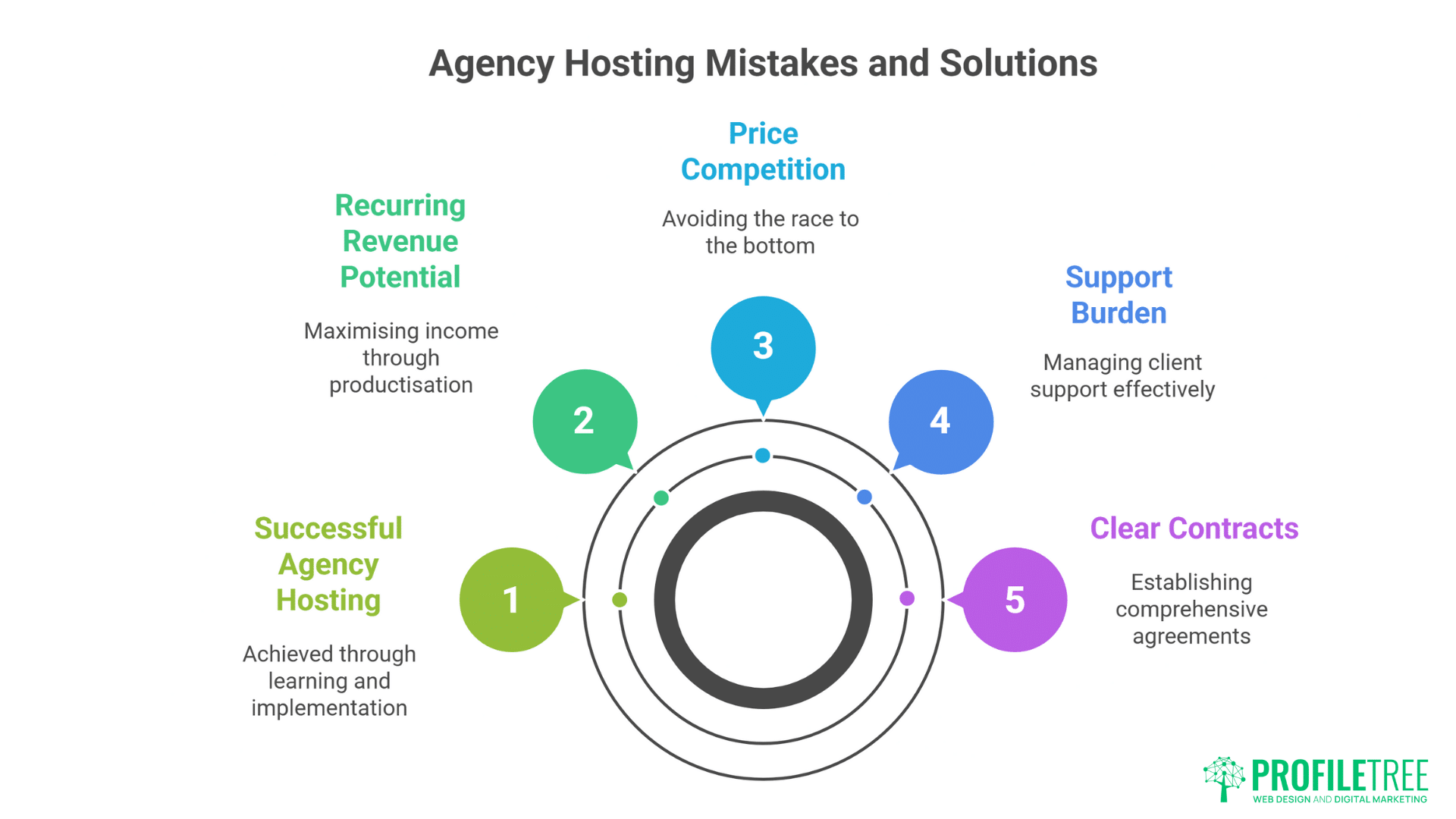
Learn from others’ expensive mistakes. These errors cost agencies thousands and sometimes client relationships.
Mistake 1: Hosting Clients on Your Own Account
Seems logical—one account, volume discounts, simple billing. Then a client wants to leave. Extracting one site from a shared account becomes a nightmare. Worse, if payment fails, all sites go down simultaneously.
Solution: Separate accounts or proper agency hosting with individual site isolation.
Mistake 2: No Clear Contracts
Verbal hosting agreements work until they don’t. One agency learned this when a client demanded two years of hosting refunds after their site was hacked (on the client’s insistence of keeping an outdated plugin).
Solution: Written agreements covering:
- Service scope
- Response times
- Liability limitations
- Termination procedures
- Data ownership
- Payment terms
Mistake 3: Underestimating Support Burden
“It’s just hosting” becomes “why is my contact form not working at 11 PM on Christmas Eve?” Without boundaries, hosting support consumes your life.
Solution: Define support scope clearly:
- Business hours only (or charge premiums)
- What’s included vs billable
- Emergency definitions
- Response vs resolution times
Mistake 4: Racing to the Bottom on Price
Competing on price attracts price-sensitive clients who’ll leave for someone £5 cheaper. You can’t win the race to the bottom.
Solution: Compete on value:
- Expertise
- Reliability
- Local presence
- Comprehensive service
- Business results
Mistake 5: Ignoring Recurring Revenue Potential
Agencies often view hosting as a necessary evil rather than revenue opportunity. This mindset leaves money on the table.
Solution: Productise hosting services:
- Create clear tiers
- Bundle with valuable services
- Focus on outcomes
- Implement annual increases
- Upsell additional services
Building Long-Term Client Relationships Through Hosting
Hosting creates unique client touchpoints. Used strategically, these interactions strengthen relationships and generate additional revenue.
Proactive Communication
Monthly Performance Reports: Send automated reports highlighting:
- Site improvements made
- Threats prevented
- Uptime maintained
- Traffic growth
- Recommended improvements
Reports remind clients of your value, while identifying upsell opportunities.
Quarterly Business Reviews: Schedule 30-minute calls reviewing:
- Website performance against goals
- Upcoming opportunities
- Recommended improvements
- Industry trends affecting them
Position yourself as a strategic partner, not just a hosting provider.
Using Hosting as a Gateway
Hosting gives you unparalleled insight into client needs. Site analytics reveal opportunities for:
- SEO services when traffic plateaus
- Development work when functionality limits growth
- Design updates when bounce rates increase
- Content strategy when engagement drops
You’re perfectly positioned to identify and solve problems before clients notice them.
Creating Upgrade Paths
Start clients on basic hosting, then upgrade based on success:
- Launch with Essential hosting
- Add maintenance after three months
- Include security monitoring after six months
- Upgrade to full care plan after one year
Gradual increases feel natural. Clients see value before cost increases.
The Future of Agency WordPress Hosting
The agency hosting landscape evolves rapidly. Understanding trends helps you prepare for tomorrow’s challenges.
Headless WordPress Growing
Decoupled architectures with WordPress as a backend and React/Vue frontends are increasingly popular. Agencies need hosting supporting both traditional and headless setups. Providers like Kinsta and WP Engine already offer edge computing for headless sites.
Performance Expectations Increasing
Google’s Core Web Vitals make performance non-negotiable. Agencies can’t hide behind “hosting limitations” anymore. Edge computing, advanced caching, and global CDNs become standard requirements.
Security Threats Escalating
WordPress attacks grow more sophisticated. Agencies need enterprise-grade security previously reserved for large corporations. Expect AI-powered threat detection and automated response systems.
Sustainability Matters
Clients increasingly ask about carbon footprints. Green hosting powered by renewable energy becomes a differentiator. Providers like Kinsta (Google Cloud) already claim carbon neutrality.
Automation Accelerating
Manual processes won’t scale. Successful agencies automate everything possible:
- Provisioning
- Updates
- Monitoring
- Reporting
- Billing
- Support ticketing
Invest in automation now or drown in manual tasks later.
Making Your Decision: Build, Buy, or Partner?
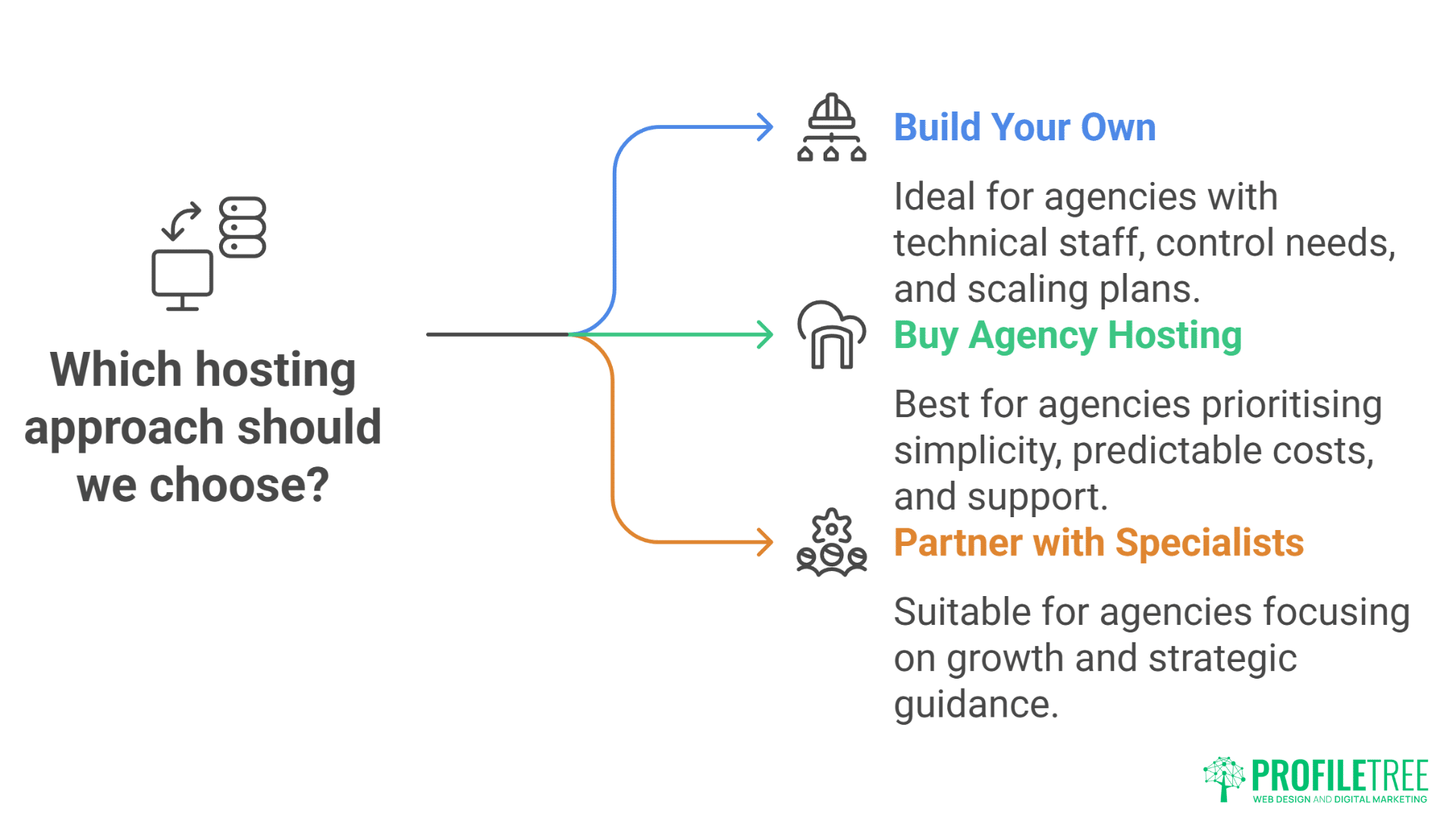
Every agency faces this choice. There’s no universal answer, but there are clear indicators for each path.
Build Your Own If:
- You have dedicated technical staff
- Control is paramount
- You enjoy infrastructure challenges
- Margins justify investment
- You’re scaling beyond 200 sites
Buy Agency Hosting If:
- Simplicity matters most
- You prefer predictable costs
- Support is readily available
- You’re managing 20-200 sites
- Technical infrastructure isn’t your passion
Partner with Specialists If:
- You want hosting handled completely
- Local relationships matter
- You’re focusing on growth
- Technical complexities distract you
- You value strategic guidance
ProfileTree offers all three approaches. Our agency hosting provides infrastructure. Our team can manage your hosting completely. Or we’ll consult on building your own solution. The choice depends on your goals, not our revenue targets.
Your Next Steps
Agency hosting transformation doesn’t happen overnight, but delay costs money daily. Start with these concrete actions:
This Week:
- Audit current hosting costs and time investment
- List all client sites and their requirements
- Calculate true hosting profitability (or losses)
This Month:
- Research agency hosting platforms
- Test with your own sites
- Develop pricing strategy
- Create service tiers
This Quarter:
- Begin controlled migration
- Implement automation tools
- Document procedures
- Train support staff
This Year:
- Achieve 90% hosting profitability
- Reduce management time by 75%
- Increase client retention through better service
- Generate predictable recurring revenue
Stop letting hosting chaos constrain your agency’s growth. Whether you build, buy, or partner, professional agency hosting transforms a necessary evil into a competitive advantage. The question isn’t whether to professionalise your hosting—it’s how quickly you can start.
Ready to scale your agency hosting professionally? Contact ProfileTree to discuss your needs. We’ve helped dozens of UK agencies transform their hosting operations. Your clients deserve better than budget hosting. Your agency deserves predictable, profitable recurring revenue. Let’s make both happen.