
What To Do When You Feel Like a Failure: Overcoming Self-Doubt
Table of Contents
Life is all about ups and downs. Sometimes things go well and you feel right on track. Unfortunately, what goes up, must come down. Feeling like a failure is a very common occurrence when life isn’t going as planned.
It happens to everyone at some point in life. Here’s how to deal with it and get right back on track.
When you’re caught up in your daily life of work, meetings and draining personal relationships, your mental health is often overlooked. Not taking care of your mental wellbeing can be very dangerous and can let your thoughts get the best of you. “In this article, we’ll explore practical ways to overcome self-doubt, rebuild your confidence, and regain control when feelings of failure start to take over.”
Why Do I Feel Like a Failure?
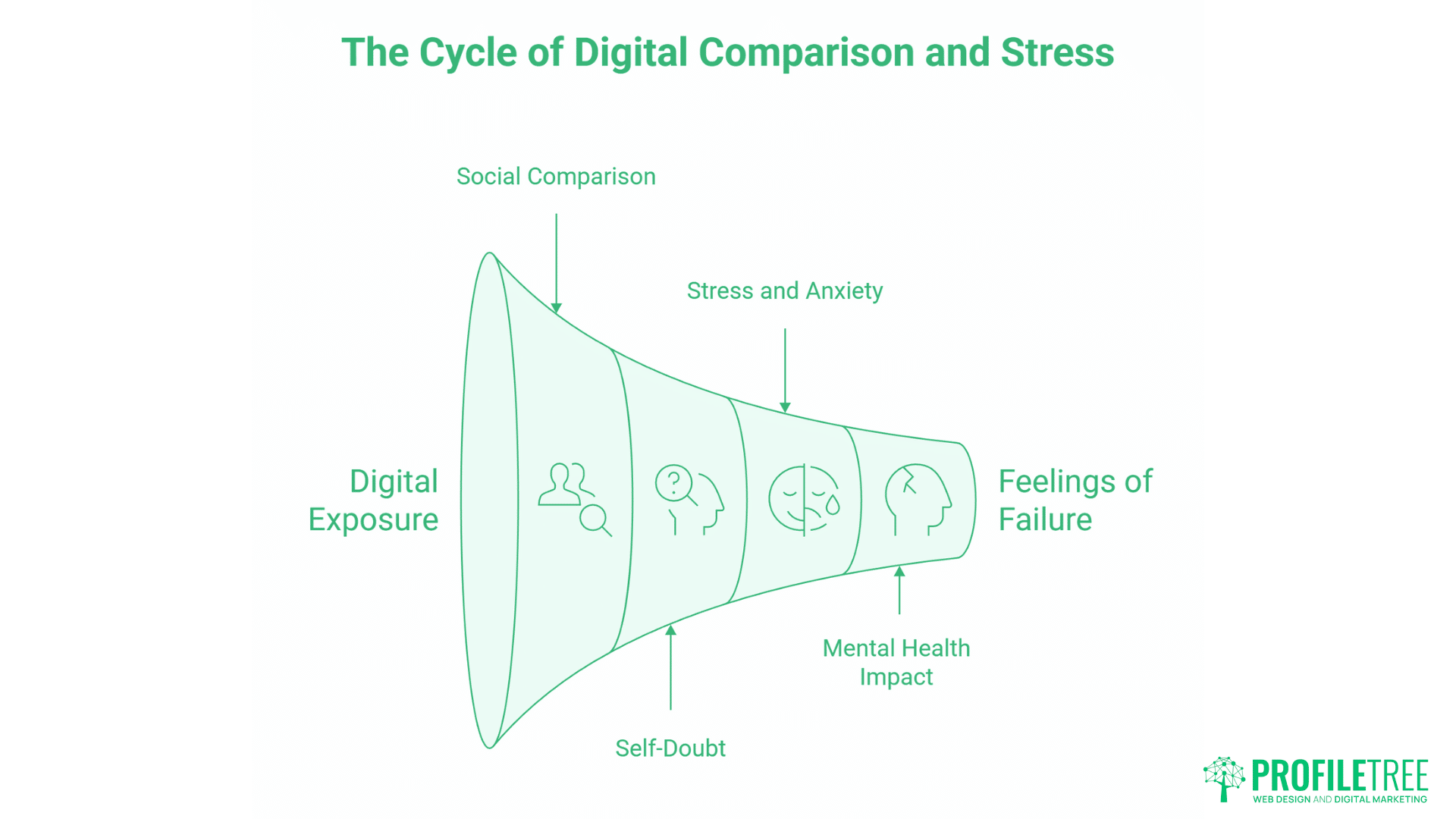
If you are not maintaining your mental health and emotional well being, you may end up feeling like a failure when you fail to achieve any goal.
Seeing public figures, celebrities or even your friends online on a day to day basis can also lead to you feeling like a failure. On social media, people tend to show their best selves and share their personal achievements with their followers.
As you scroll through Instagram and Facebook, it is natural for you to subconsciously compare yourself to their achievements without giving credit to your own. When you know that you’ve worked your hardest to achieve a specific target, not achieving it appears as a fault of your own.
The Reality of Modern UK Life
The traditional markers of success have shifted dramatically. As of April 2024, a record 4.5 million children in the UK are growing up in relative poverty. If you’re measuring your success against the milestones your parents reached at your age, you’re using an outdated metric.
For business owners and professionals, this pressure intensifies. You’re not just comparing yourself to friends on social media—you’re measuring your business performance against competitors who may have significantly more resources.
UK adults aged 18 to 24 reported feeling stressed for an average of 11.3 days per month. Much of this stress comes from constant digital comparison. When you’re building a website or developing content, it’s easy to look at successful competitors and feel inadequate. What you don’t see is their years of effort, failed attempts, and resources invested.
Overview of the Psychology of Failure
Failure is an inevitable part of human experience. It is a natural consequence of taking risks, trying new things, and pushing ourselves beyond our comfort zones.
Understanding the psychological mechanisms behind feelings of failure helps you address them more effectively. This applies whether you’re struggling with personal setbacks or business challenges.
Prevalence of Failure
Failure is a common experience for people of all ages and backgrounds. Research suggests that up to 90% of people experience some form of failure in their lives. This includes both personal failures, such as not getting a desired job or relationship, and professional failures, such as making a mistake at work or losing a business.
For those running digital businesses, failure can feel particularly visible. When a website doesn’t generate traffic, a video campaign underperforms, or SEO efforts don’t yield results, these metrics provide concrete evidence of what didn’t work—which your brain can easily interpret as personal inadequacy.
Impact and Benefits of Failure
Failure can lead to feelings of sadness, anxiety, shame, and self-doubt. One in five workers in the UK needed time off work in 2024 due to mental health struggles caused by pressure or stress.
“Business owners often judge themselves against impossible standards,” says Ciaran Connolly, Director at ProfileTree. “The most successful people I work with understand that failure is feedback, not identity. When we help clients develop their digital presence, we see this shift happen—they move from ‘I can’t do this’ to ‘I’m learning how to do this better.'”
Despite its negative connotations, failure can be a valuable source of growth. When we experience failure, we can reflect on what went wrong and identify areas for improvement.
Key benefits include increased self-awareness, development of resilience, greater creativity, enhanced humility, and deeper appreciation for success. In digital marketing and web development, this iterative approach is fundamental. Your first website design won’t be perfect. Your initial SEO strategy will need refinement. This isn’t failure—it’s the natural learning curve.
Tackling Feeling Like A Failure
To get rid of the problem, you must identify the root of it. Feeling like a failure is usually a result of feelings of inadequacy that arise once you realise you are not good at something as you expected.
You must keep in mind that in order for you to learn and improve, you need to fail and make mistakes. We can learn more from our losses and failures than our victories.
Understanding Failure Versus Being a Failure
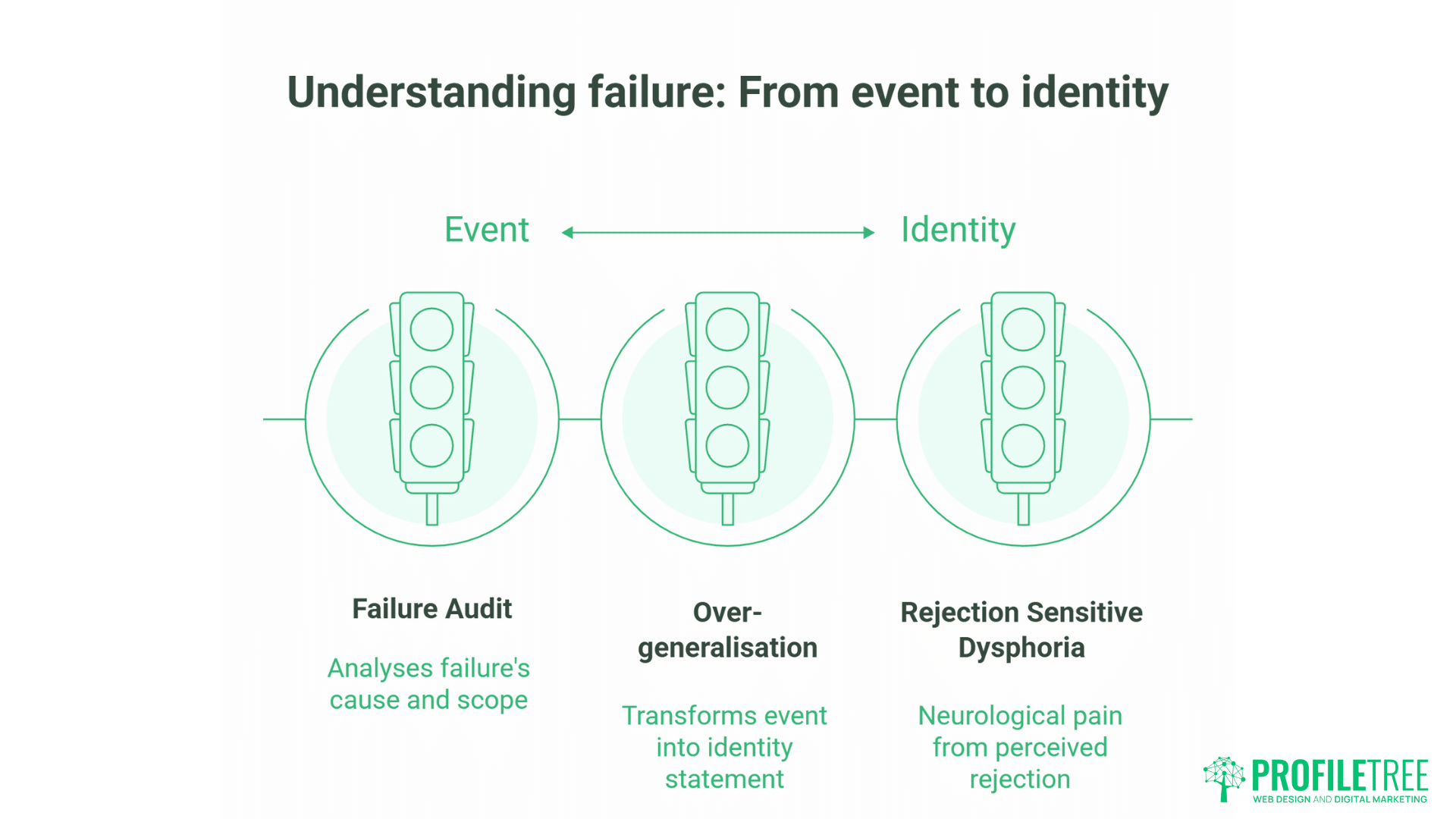
The distinction between experiencing failure and being a failure represents the most important mental shift you can make. Failure is an event; being a failure would be a permanent identity.
Our minds are pattern-seeking machines. When faced with a setback, the brain searches for explanations. Too often, it transforms a specific event (“My website didn’t get traffic”) into a sweeping identity statement (“I am a failure”). Psychologists call this over-generalisation.
Before you accept the label “failure,” conduct a Failure Audit. Ask yourself three questions:
- Is this failure internal or external? Did the outcome result from your actions, or was it dictated by market forces, algorithm changes, or circumstances beyond your control?
- Is this permanent or temporary? Does this setback represent an unchangeable flaw, or is it a specific moment you can learn from?
- Is this global or specific? Does this one failure negate your skills in other areas of your life?
Most failures are external, temporary, and specific. When your website doesn’t rank immediately, that’s not a reflection of your worth—it’s feedback about your current SEO strategy.
Brighten Up Your Bubble
Surrounding yourself with people who care about you and motivate you to always do your best becomes an essential factor in getting rid of your self doubt and feelings of failure.
On the other hand, having people who are constantly criticising you and diminishing your accomplishments, the image you have of yourself will reflect these opinions. This applies in business networking as well. Connecting with other business owners and finding mentors who understand digital transformation challenges can make an enormous difference.
You Are Your Own Self
When you’re constantly bombarded with posts about millionaires in their twenties and child prodigies, you can easily feel like your own accomplishments are worthless. Feeling like a failure is inevitable in our world of shareable social media.
Understand that you are your own self, and working at your own pace is never a bad thing. The same applies to building a digital business. Some companies achieve rapid growth, but you don’t see their years of preparation or established networks.
Don’t Push Yourself Too Hard
You might not be directly comparing yourself to people online, but your ideal image of yourself may be heavily influenced by what you see on TV and in magazines. You need to acknowledge the fact that these standards are more often than not based on unreasonable standards.
If there’s one thing to take away from this section, failure is a result of comparing yourself to others. Learn to be satisfied with yourself and your achievements in order to maintain your mental health and live up to your potential.
Neurodivergence and Rejection Sensitive Dysphoria
For neurodivergent individuals, particularly those with ADHD or autism, feelings of failure can be intensified by Rejection Sensitive Dysphoria (RSD). RSD is when you experience severe emotional pain because of a failure or feeling rejected.
Research indicates that up to 90% of people with ADHD experience RSD, which can trigger intense emotional reactions such as anger, sadness, or despair. These reactions are neurological, not character flaws. If you’re a business owner with ADHD and experience overwhelming emotional pain in response to criticism of your work, understanding RSD can be transformative.
Self Motivation: How to Get Up and Go
Since feeling like a failure is usually a mental dilemma, it needs to be mentally tackled with positive thoughts and encouraging ideas. Building self-motivation becomes particularly important when working on digital projects with delayed gratification.
Here are some ideas to always remember on a daily basis and when you’re feeling down.
Your Weaknesses Are Your Strengths
Nobody is perfect at everything, we all have our weaknesses. You need to be aware of your weaknesses and find enjoyment in working to improve them. Don’t get stuck in the loop of drowning in your failures.
For example, if you lack public speaking skills, make it your goal to improve and keep the bigger picture along the way of reaching it. Don’t get stuck in the loop of drowning in your failures and shaming yourself because of what you can not do.
Perfect Imperfections
The image you have of yourself is often flawed, and that is why you become susceptible to feeling like a failure.
To get rid of these feelings of insecurities, understand that your imperfections are more often than not imposed on you by societal standards. Rather than aspiring to fulfil an unrealistic image of greatness, and find the beauty in being yourself.
Visualise
If you’re working towards a goal, or a certain image of yourself, start visualising! Create a mental picture of what you aim to become and work towards it.
This will help you assess your progress and push you to your limits. Feeling like a failure will become miles away when you can notice how much you’ve accomplished and how fast you’re doing it too!
Be Grateful
To feel grateful, you need to start thinking like you’re blessed, talking like you’re blessed and acting like it too.
Making yourself believe that you are blessed with everything you have, will generate feelings of gratitude and self worth. That way, when you’re feeling like a failure, it will be easy for you to count your blessings rather than your problems.
Take Control
You can’t take control of everything. Identify what you can change and what you can not change. Then, begin from there. Focus on changing what you can change. This includes your mindset, your daily routine and your attitude towards life.
You can not change what people think, you can’t change the past and it certainly does you no good to dwell over what you can not change.
Only YOU Can Motivate You
Lastly, motivation comes from you, not from anywhere else. You can watch as many motivational YouTube speakers and TED talks on self motivation and empowerment, but if you do not want to improve you will not improve.
Your own image of yourself is the most powerful tool to find self motivation.
Physical Self Motivation
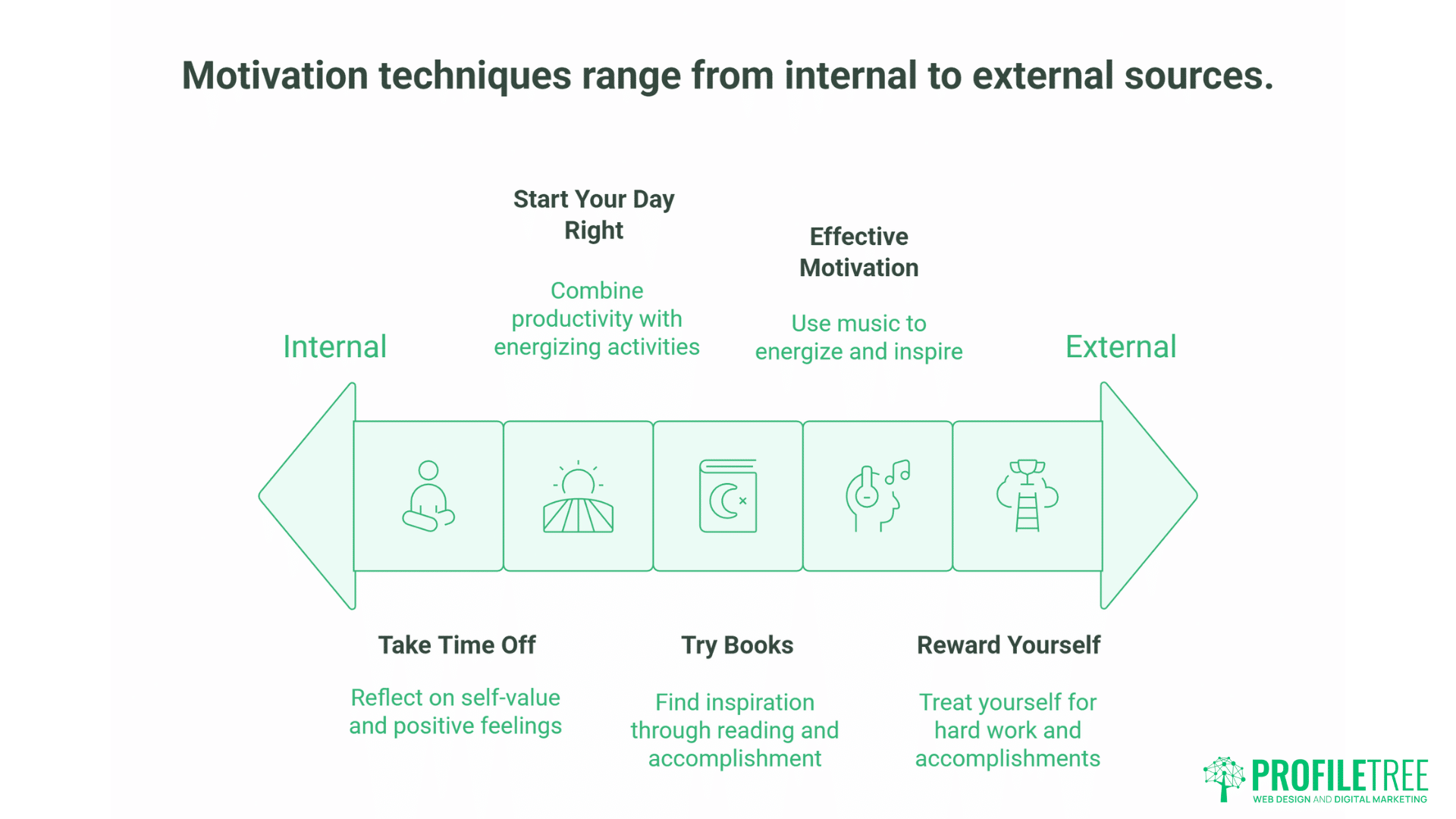
Although they are truly powerful, sometimes just thoughts and ideas are not enough. We all need some physical reinforcement to get going.
Seeing your own self motivation play out in front of your eyes can be very powerful, and generate more motivation along the way. If you’re looking for something to specifically do to gain some self motivation, take a look at these techniques.
Start Your Day The Right Way
As soon as you wake up, start doing something productive. Once you get your daily dose of productivity, you will not want to get rid of that feeling throughout the day. This will improve your approach to challenges and the way you deal with difficulties along the way.
Now, you might be thinking what kind of productive thing I could do first thing in the morning? This could easily be a morning jog or making yourself breakfast to get yourself energised and feeling accomplished.
In an article called ‘Top of Mind: 7 Way to Boost Self-Motivation’, Ekaterina Lyapustina, founder and CEO of JetNest starts her day like this:
“I start the day with 15 minutes of meditation, followed by asking myself a series of questions: What do I plan to achieve today? How can I be more successful than yesterday? Which of my various qualities and abilities will be most useful? I then challenge myself by trying something new every day. I exercise and try to get out of the house to attend events and meet positive, interesting and successful people who can teach me new things.”
Take Some Time Off
It doesn’t have to be a long time, but you can make some time for yourself during your daily routine to find some time to think about your value and what makes you you.
Reflect on how you feel about yourself, nurture the positive images you have of yourself and always remember these feelings. Developing these feelings on a day-to-day basis will help when you are facing an emotional crisis.
On the other hand, if you decide to do this under negative circumstances, it would be difficult to find the positive feelings you have for yourself if they have not already been generated.
Effective Motivation All Day Long
Keep your earphones in and tune into your favourite songs to hype you up everywhere you go. Find the songs that make you feel energised, inspired, and motivated and add them to a playlist.
Keep updating the playlist and listen to it when you’re feeling down, and on a daily basis to get your daily dose of inspiration.
Try Books As Well
There are many online and hard copy books that could help inspire you. Finding phrases or ideas that speak to you can help you regenerate a sense of motivation.
Sometimes, the act of reading a book and going through the chapters and the sense of accomplishment when you complete an entire book can be very rewarding and help you become productive.
Whether the text itself is meant to be motivational, or the story speaks to you on a certain level, books are definitely able to help when you feel like a failure.
Reward Yourself
Remember to always treat yourself and for your hard work. If you’re working hard on a project, and it doesn’t turn out the way you expected, don’t beat yourself up about it.
Instead, take a break and give yourself credit for the work you put in and point out your mistakes to steer away from them next time. Also, even though it seems childish, working towards a reward from yourself at the end of an accomplishment can help you get a lot done!
Five Key Steps for Overcoming Feelings of Failure
Overcoming feelings of failure can be a challenging but rewarding journey. It requires a shift in mindset, a willingness to confront self-doubt, and the courage to take action. Here are five key steps for overcoming feelings of failure:
Reframe Perspective
The way we perceive failure significantly impacts our emotional response. When we view failure as a permanent setback, it reinforces feelings of inadequacy and self-doubt. Instead, adopt a growth mindset, recognising failure as a temporary hurdle and an opportunity for learning and improvement.
Challenge negative self-talk by replacing self-deprecating thoughts with more neutral or positive self-statements.
Identify Strengths
In the midst of self-doubt, it’s easy to overlook our strengths and achievements. Take time to reflect on your past successes, both big and small.
Make a list of your strengths, skills, and talents. Recognising your strengths can boost your self-confidence and remind you of your capabilities.
Set Realistic Goals
Setting unrealistic goals can lead to discouragement and feelings of failure when they are not met. Instead, establish achievable goals that are aligned with your abilities and resources. Break down larger goals into smaller, more manageable steps.
Celebrate your progress along the way, no matter how small.
Seek Support
Surround yourself with supportive individuals who believe in your potential. Share your struggles with trusted friends, family members, or mentors. Their encouragement and guidance can help you navigate challenges and maintain a positive outlook.
Consider seeking professional support from a therapist or counsellor if you need additional guidance in managing negative emotions and developing coping strategies.
Embrace Self-Compassion
Self-compassion involves treating yourself with kindness and understanding, especially in the face of setbacks. Avoid self-criticism and harsh judgement. Instead, acknowledge your feelings, validate your experiences, and forgive yourself for past mistakes. Engage in self-care practices that promote your well-being, such as exercise, relaxation techniques, and mindfulness exercises.
Sleep deprivation directly impacts emotional regulation and decision-making. Prioritising adequate sleep isn’t luxury—it’s basic mental health maintenance. Physical activity releases endorphins and reduces stress hormones. Even 20-30 minutes of walking daily can significantly improve mood.
Remember, overcoming feelings of failure is a process, not an overnight transformation. Be patient with yourself, practise self-compassion, and celebrate your progress along the way. With consistent effort and a growth mindset, you can overcome self-doubt, embrace challenges, and achieve your goals.
When Professional Support Becomes Necessary
Sometimes self-help strategies aren’t sufficient. Consider seeking professional help if feelings of failure persist for several weeks, you experience thoughts of self-harm, your daily functioning is significantly impaired, you’re using substances to cope, or you experience panic attacks or severe anxiety.
UK Mental Health Resources
The NHS provides multiple pathways to mental health support. Your GP serves as the first point of contact. NHS Talking Therapies offers free psychological therapies for anxiety and depression—you can self-refer without seeing your GP first. Crisis Support is available 24/7 through the Samaritans on 116 123.
Digital Skills Development as Confidence Building
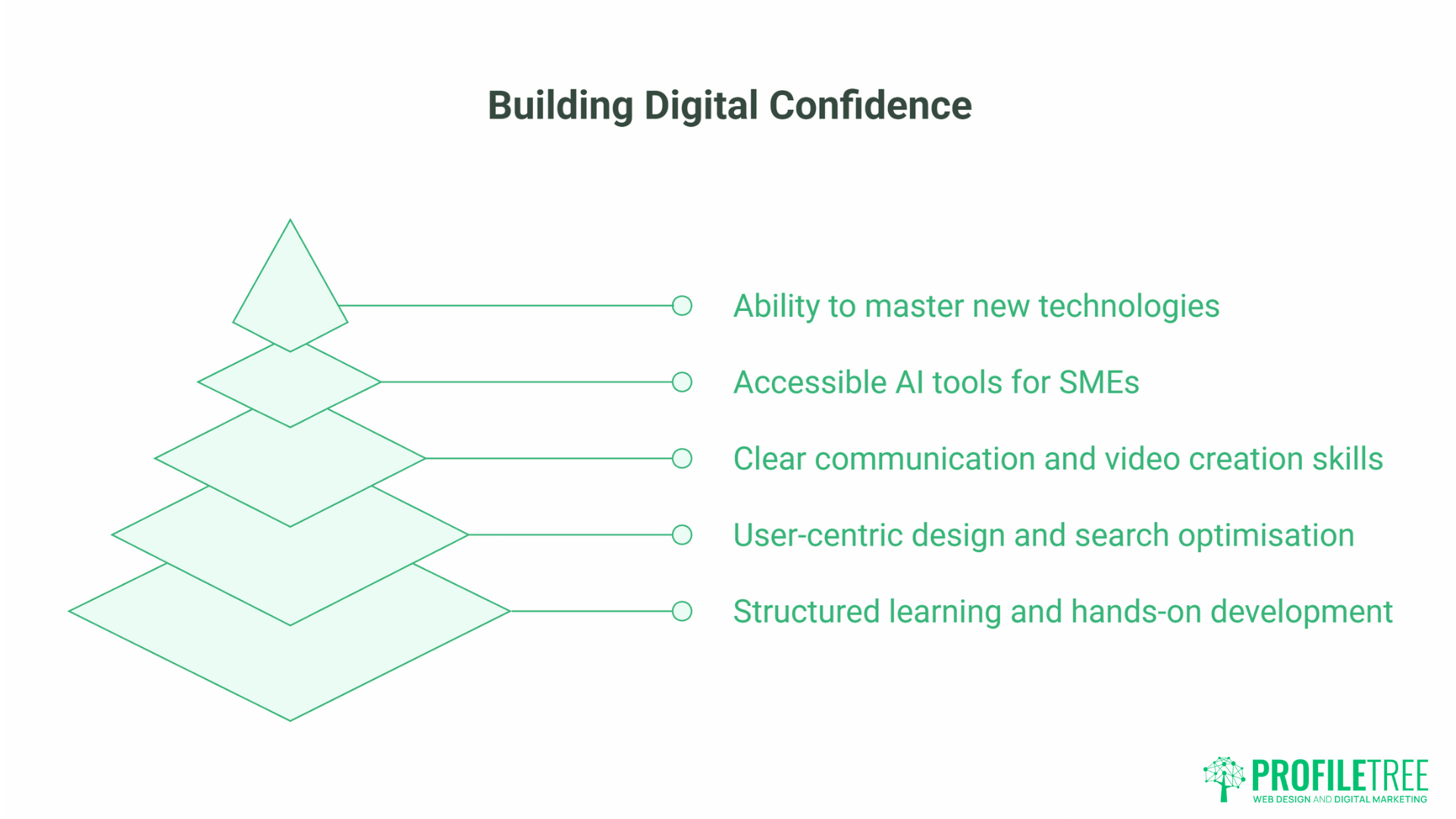
Modern professional life demands constant adaptation to new technologies. Many people feel like failures not because they lack capability, but because they haven’t received proper training in essential digital skills.
This is where working with experienced digital agencies becomes transformative. ProfileTree specialises in helping business owners overcome technological anxiety through practical training and implementation support. Rather than feeling overwhelmed by what you don’t know, you gain confidence through structured learning and hands-on development.
Web Design and Development
Learning web design provides tangible, visible progress. Each enhancement—better page load speeds, improved mobile responsiveness, clearer navigation—represents measurable achievement. ProfileTree builds websites focused on ranking, traffic, leads and sales rather than just aesthetics. This approach helps business owners understand that effective web design isn’t about having the fanciest features—it’s about serving your customers and communicating clearly.
Whether working with WordPress, Wix, Shopify, or Squarespace, the key is understanding your audience and creating user-centric, accessible solutions. When you see your website attracting visitors and generating enquiries, that’s concrete proof of capability that directly combats feelings of inadequacy.
SEO and Local SEO
Search engine optimisation provides concrete metrics that show progress over time. ProfileTree’s SEO services help businesses in Northern Ireland, Ireland, and the UK optimise for higher search visibility, including local and regional targeting. Every improvement in search rankings represents a skill you’ve developed successfully.
Local SEO offers particular advantages for SMEs and retailers who serve specific geographic areas. When you start ranking for “Belfast SEO” or “digital marketing Northern Ireland,” you’re not just improving business performance—you’re proving to yourself that you can master complex technical skills. This measurable progress transforms vague anxiety into concrete achievement.
Content Marketing and Video Production
Creating content develops multiple skills simultaneously. You learn to communicate clearly and provide value to others. The act of publishing content requires courage that directly combats feelings of inadequacy.
Video creation feels intimidating to many people, but ProfileTree’s video production team helps business owners create professional content without requiring Hollywood-level expertise. When you create your first video, edit it, and publish it on YouTube, you’ve accomplished something that felt impossible. YouTube strategy teaches you about audience analysis, content planning, and iterative improvement—all skills that build confidence beyond just marketing.
AI Implementation and Training
Artificial intelligence represents one of the most significant technological shifts in recent years. Many professionals feel left behind as AI tools become standard in their industries. ProfileTree focuses on introducing AI into SMEs, not enterprise-level organisations, making this technology accessible to businesses of all sizes.
AI training for business owners helps you understand how these tools support rather than replace human expertise. ProfileTree provides extensive training in this area, helping you use AI for marketing automation, accessibility enhancements, and data insights. For businesses in Northern Ireland, Ireland, and the UK, AI adoption doesn’t require massive budgets or technical expertise.
The process of learning AI tools through proper training proves you can master new, complex technologies. This builds confidence that extends far beyond the specific tools you learn—it demonstrates your ability to adapt to change successfully.
Conclusion
Self-doubt is common, but it doesn’t have to control your life. By cultivating self-awareness, mindfulness, and positive self-talk, you can effectively manage self-doubt and build resilience.
Feeling like a failure is painful, but it’s temporary. These feelings are emotional states, not permanent verdicts on your worth. Understanding the root causes—cognitive distortions, unrealistic comparisons, external pressures—helps you address the actual problem.
You are not your failures. You are a person who has experienced failures, learnt from some of them, and continues to grow. That’s not a failure story—that’s a human story, and a successful one.
FAQs
How do I identify patterns of self-doubt in my thinking?
Pay attention to your thoughts and emotions in different situations. Notice when you engage in self-criticism or negative self-talk. What are the triggers that lead to these negative thoughts? Identifying these patterns can help you anticipate and address self-doubt before it takes hold.
What are some practical mindfulness exercises I can practise to manage self-doubt?
Mindfulness practices like meditation, deep breathing exercises, and mindful movement can help you ground yourself in the present moment and reduce the impact of negative self-talk. Find a mindfulness practice that resonates with you and incorporate it into your daily routine.
How can I replace negative self-talk with positive affirmations?
Start by identifying specific negative self-talk patterns. Then, formulate positive affirmations that directly address those negative thoughts. Repeat these affirmations regularly, especially when you’re feeling self-doubtful.
What are some additional strategies for building resilience?
Developing a strong support system, practicing self-care, and engaging in activities that boost your self-esteem can all contribute to building resilience. Embrace challenges as opportunities for growth, learn from setbacks, and celebrate your achievements along the wa
If technology feels overwhelming, you’re not alone. ProfileTree helps business owners build confidence through practical support in web design, SEO, content marketing, video, and AI. We work with SMEs across Northern Ireland, Ireland, and the UK to deliver clear, measurable digital results. Contact ProfileTree to strengthen your online presence with confidence.