
Solicitor Website Design: Compliance and Successful Conversion
Table of Contents
Solicitor websites face unique challenges that no other industry encounters. You must balance Solicitors Regulation Authority (SRA) compliance with modern user expectations, maintain client confidentiality while showcasing expertise, and build trust without making promises about outcomes. Most web designers do not understand legal sector requirements, creating websites that either risk regulatory violations or fail to convert visitors into clients.
Professional legal website design requires specialist knowledge combining regulatory compliance, conversion optimisation, and the gravitas befitting legal practice. Without this expertise, law firms risk potential regulatory issues and missed opportunities to connect with prospective clients at critical decision points. A strategically designed solicitor website is both a compliance safeguard and a robust business development tool.
Understanding SRA Website Compliance Requirements

The legal sector operates under strict regulatory guidelines that directly impact every aspect of online presence. Meeting these requirements while creating an effective website requires specialised knowledge that most general web designers lack.
Mandatory Transparency Rules and Implementation
The SRA Transparency Rules fundamentally changed solicitor website requirements in 2018, yet many firms still don’t fully comply. Price and service information must be displayed for certain practice areas, including residential conveyancing, uncontested probate, motoring offences, employment tribunals, immigration, and debt recovery. This isn’t optional – it’s mandatory for firms offering these services.
Publishing prices require more than listing fees. You must clearly explain what’s included and excluded, identify likely additional costs, and specify whether VAT applies. Conveyancing pages need example quotes for different property values. Probate sections must show fees for various estate sizes. Employment tribunal representation requires precise staging of costs through different claim phases.
Complaints procedure information must be easily accessible, not buried in footer links. The procedure needs to explain internal complaint handling, Legal Ombudsman contact details, timeframes for complaints, and alternative dispute resolution options. Many firms mistakenly believe a simple “complaints” page suffices—the SRA requires comprehensive, clear information to help clients understand their rights.
Regulatory Information Display Requirements
Every solicitor’s website must display specific regulatory information prominently. Your SRA number needs to appear clearly, typically in headers or footers. The SRA digital badge, whilst not mandatory, demonstrates credibility and links directly to your regulatory record. Firm authorisation status and regulated entity details must be accurate and current.
Professional indemnity insurance information requires careful presentation. Whilst you needn’t publish policy details, you must confirm coverage and explain how clients can request details. The name and contact details of your insurer should be readily available. Territorial coverage needs a clear explanation, particularly for firms handling international matters.
Terms of business must be accessible before engagement. Modern practice involves publishing these online rather than sending PDFs. Key information includes complaint procedures, fee structures, client money handling, and limitation of liability. Privacy policies need GDPR compliance whilst remaining comprehensible to non-lawyers. Cookie policies must accurately reflect your website’s data collection practices.
Client Money and Data Protection Considerations
Websites accepting payments or holding client information face additional requirements. Payment pages need SSL certificates and PCI compliance for card processing. Client portals require robust security, including two-factor authentication, rest and transit encryption, and access audit trails. Data breach procedures must be documented and accessible.
GDPR compliance extends beyond privacy policies. Contact forms need explicit consent checkboxes. Email newsletter sign-ups require double opt-in processes. Client testimonials need documented permission. Staff photos and biographies require internal consent procedures. Third-party services like chat widgets or analytics need proper data processing agreements.
Client confidentiality affects design decisions. Case study presentations must anonymise client details properly. Success stories need careful vetting to avoid identifying individuals. Before-and-after scenarios in personal injury or family law require particular sensitivity. Even seemingly innocuous information can breach confidentiality if clients are identifiable.
Conversion Optimisation for Legal Services

A compliant website without converting visitors into clients provides limited business value. The challenge lies in balancing regulatory requirements with effective marketing strategies.
Building Trust Through Professional Design
Solicitor websites must immediately convey professionalism and competence. This starts with typography – clean, readable fonts suggesting authority without appearing antiquated. Colour schemes typically favour conservative palettes: deep blues, greys, and limited accent colours. However, modern legal websites increasingly incorporate warmer elements to appear approachable whilst maintaining professionalism.
Professional website design for solicitors balances gravitas with accessibility. Hero sections should communicate expertise without overwhelming visitors with legal jargon. Clear value propositions explain how you solve client problems. Trust signals like accreditations, memberships, and awards need prominent placement without appearing boastful.
Photography makes a significant impact. Generic stock photos of gavels and scales of justice appear clichéd and impersonal. Professional team photography showing real solicitors in your actual offices builds authentic connections. Well-photographed client-facing areas will demonstrate your professional environment. Local landmark imagery connects you with your community.
User Journey Optimisation for Different Practice Areas
Different legal services require distinct user journeys. Conveyancing clients want quick quotes and transparent processes. Personal injury victims need immediate reassurance and clear next steps. Family law clients require sensitivity and discretion. Business clients expect efficiency and commercial awareness. Each journey needs careful optimisation.
Where possible, conveyancing journeys should provide instant online quotes. Calculators showing stamp duty, search fees, and total costs build transparency. Process timelines set realistic expectations. Document checklists help clients prepare. Online instruction forms streamline onboarding. Progress tracking portals reduce enquiry calls.
Personal injury pathways prioritise immediate contact options. Click-to-call buttons, callback forms, and live chat provide instant connection. Free consultation offers reduce barriers. Claims calculators set compensation expectations. Success stories (properly anonymised) build confidence. No-win-no-fee explanations clarify financial risks.
Conversion Elements That Comply With Regulations
Call-to-action buttons must avoid prohibited terminology. “Guaranteed results,” “We always win,” or “Best solicitors” violate advertising rules. Instead, use “Get expert advice,” “Discuss your options,” or “Free initial consultation.” CTAs should create urgency without misleading claims about outcomes.
Contact forms need careful construction. Required fields should capture essential information without being burdensome. Optional fields can gather practical context. Clear explanations of hodataon will be used to build trust. Immediate confirmation messages set expectations about response times. GDPR-compliant consent checkboxes are mandatory.
Live chat implementation requires consideration. Operators need training on what they can and cannot say. Disclaimers must clarify that the initial chat doesn’t create client relationships. Transcripts need secure storage. Out-of-hours messages should set clear expectations. Integration with case management systems improves efficiency whilst maintaining compliance.
Technical Requirements for Legal Websites
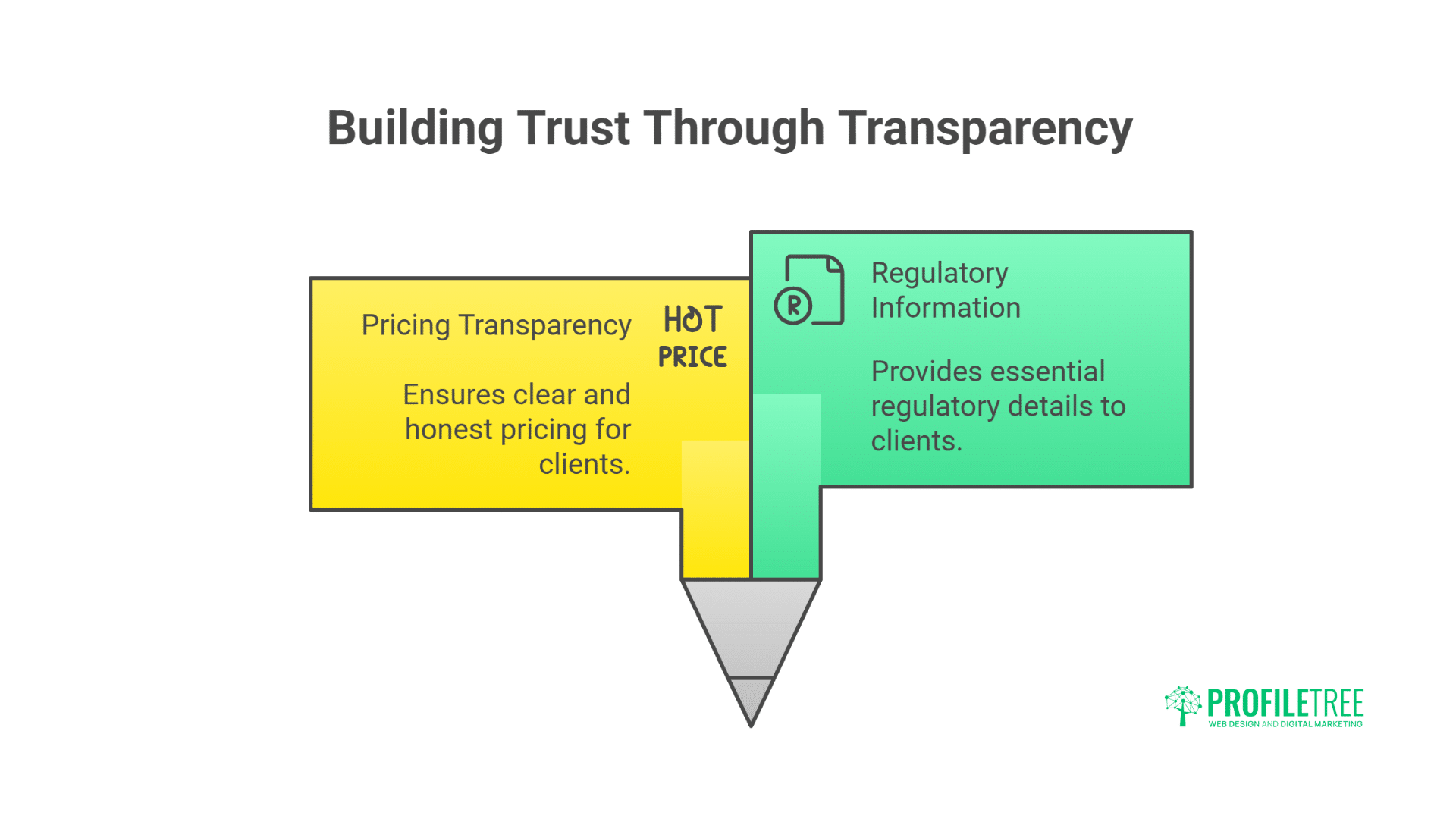
Beyond pricing transparency, your website must also showcase specific regulatory information that establishes your firm’s legitimacy and builds client trust.
Security Standards and Client Portal Development
Legal websites handling sensitive information require enterprise-level security. SSL certificates are the minimum requirements, and Extended Validation (EV) certificates provide additional trust indicators. Web Application Firewalls (WAFs) protect against common attacks. Regular security audits identify vulnerabilities before exploitation, and penetration testing validates defences.
Client portals demand particular attention. Document upload facilities need virus scanning and file type restrictions. Secure messaging systems require end-to-end encryption. Payment processing must achieve PCI DSS compliance. Audit logs need to track all access and actions. Role-based permissions control information access appropriately.
Website hosting and management for legal firms require specialist consideration. Servers should be located within the UK jurisdiction for data protection compliance. Backup systems need regular testing with documented recovery procedures. Uptime guarantees should exceed 99.9%. Support teams need an understanding of legal sector requirements.
Mobile Responsiveness and Accessibility Compliance
Mobile devices generate over 60% of legal website traffic, particularly for personal injury and criminal law searches. Responsive design isn’t optional – it’s essential for capturing these clients. Mobile interfaces need simplified navigation, thumb-friendly buttons, and quick-loading pages. Click-to-call functionality becomes critical on mobile devices.
Accessibility compliance serves both ethical and legal obligations. WCAG 2.1 Level AA compliance should be the minimum standard. Screen reader compatibility helps visually impaired users. Keyboard navigation assists motor-impaired visitors. Colour contrast ratios need careful attention. Alt text for images requires thoughtful writing. Video content needs captions and transcripts.
Page speed significantly impacts mobile conversion. Google’s Core Web Vitals now directly affect search rankings. Legal websites with heavy content need particular optimisation. Image compression, lazy loading, and CDN implementation become essential. Website development focusing on performance ensures fast loading across all devices.
Integration With Legal Practice Management Systems
Modern solicitor websites should integrate with practice management systems for efficiency. Case management system integration enables online instruction forms to create matters automatically. Document management system connections allow secure client document uploads. Time recording integration tracks website-generated enquiries. Billing system connections streamline payment processing.
Popular systems like Clio, LEAP, and Proclaim offer API access for integration. Custom development may be needed for legacy systems. Middleware solutions can bridge incompatible systems. Real-time synchronisation prevents data inconsistencies. Automated workflows reduce administrative burden.
CRM integration effectively captures and nurtures leads. Website forms populate CRM records automatically. Email automation sequences follow up on enquiries appropriately. Lead scoring identifies high-value prospects. Analytics tracking measures conversion paths. Marketing automation must respect SRA rules about client communications.
Content Strategy for Solicitor Websites
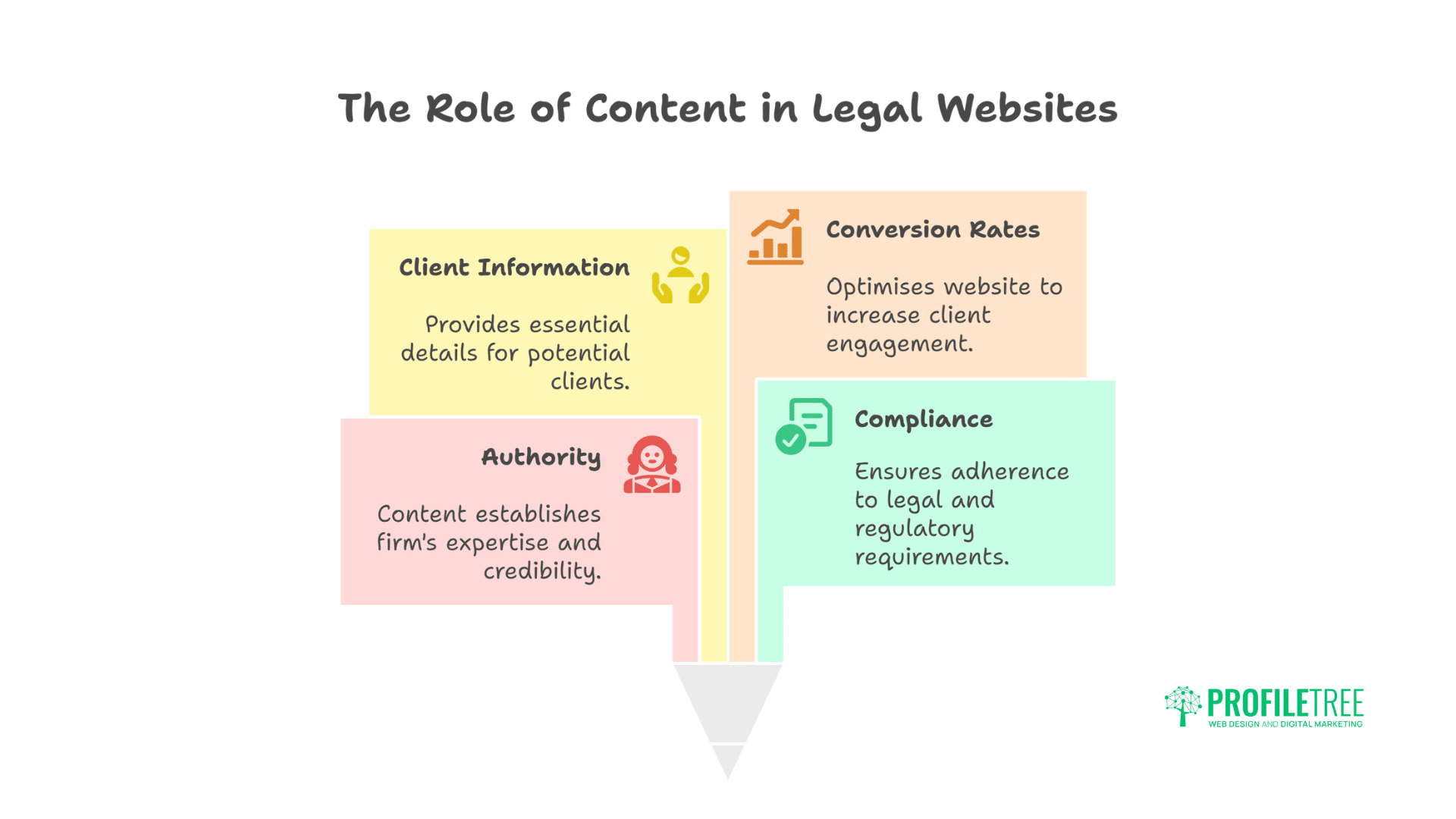
Content serves multiple critical functions for legal websites: demonstrating expertise, fulfilling regulatory requirements, educating potential clients, and driving conversions.
Practice Area Pages That Convert
Practice area pages form your website’s commercial core. Each page must balance comprehensive information with readability. Opening paragraphs should identify client problems and position your firm as the solution. Clear explanations of your service approach build understanding. Process descriptions set expectations. Fee information meets transparency requirements.
Content marketing strategies for legal websites require careful planning. Avoid overwhelming visitors with legal complexity whilst demonstrating expertise. Use subheadings to break complex information into digestible sections. Bullet points highlight key information. FAQ sections address common concerns. Call-to-action placement encourages contact without appearing pushy.
Local SEO optimisation helps capture geographic searches. Solicitors in Belfast,” “Employment lawyers Northern Ireland,” and similar terms drive valuable traffic. Location pages for multi-office firms need unique content, not duplicates. Local case studies and news demonstrate community involvement. Google Business Profile optimisation supports local visibility.
Blog Content That Demonstrates Expertise
Legal blogs serve multiple purposes: demonstrating expertise, improving SEO, and providing client value. Topics should address real client concerns using accessible language. Recent legal changes need timely coverage. Case law analysis shows deep understanding. Practical guides help clients navigate legal processes.
Writing style requires careful balance. Overly academic writing alienates potential clients. Oversimplification undermines credibility. The sweet spot explains complex matters clearly without condescension. First-person perspectives humanise your firm. Case studies (properly anonymised) illustrate successful outcomes—opinion pieces on legal developments position partners as thought leaders.
Content calendars ensure consistent publishing. Weekly posts maintain website freshness. Monthly deep dives explore complex topics thoroughly. Seasonal content addresses timely issues. News responses demonstrate agility. Guest posts from partners showcase individual expertise. Video content adds variety and engagement.
Video Content for Legal Services
Video marketing increasingly differentiates progressive law firms. Partner introduction videos humanise your practice. Service explanation videos clarify complex processes. Client testimonial videos build trust powerfully. FAQ videos answer common questions efficiently. Webinar recordings demonstrate thought leadership.
Video production for solicitors requires a professional approach. Office settings should appear professional but welcoming. Audio quality matters enormously—poor sound undermines credibility. Lighting should be flattering but natural. Editing needs to maintain pace while allowing complex explanations. Captions ensure accessibility and silent viewing.
Professional video production elevates your firm’s image significantly. Investment in quality video content provides lasting value. Videos can be repurposed across social media, email campaigns, and presentations. YouTube presence captures video search traffic. LinkedIn video performs exceptionally well for B2B legal services.
Local SEO for Solicitor Firms
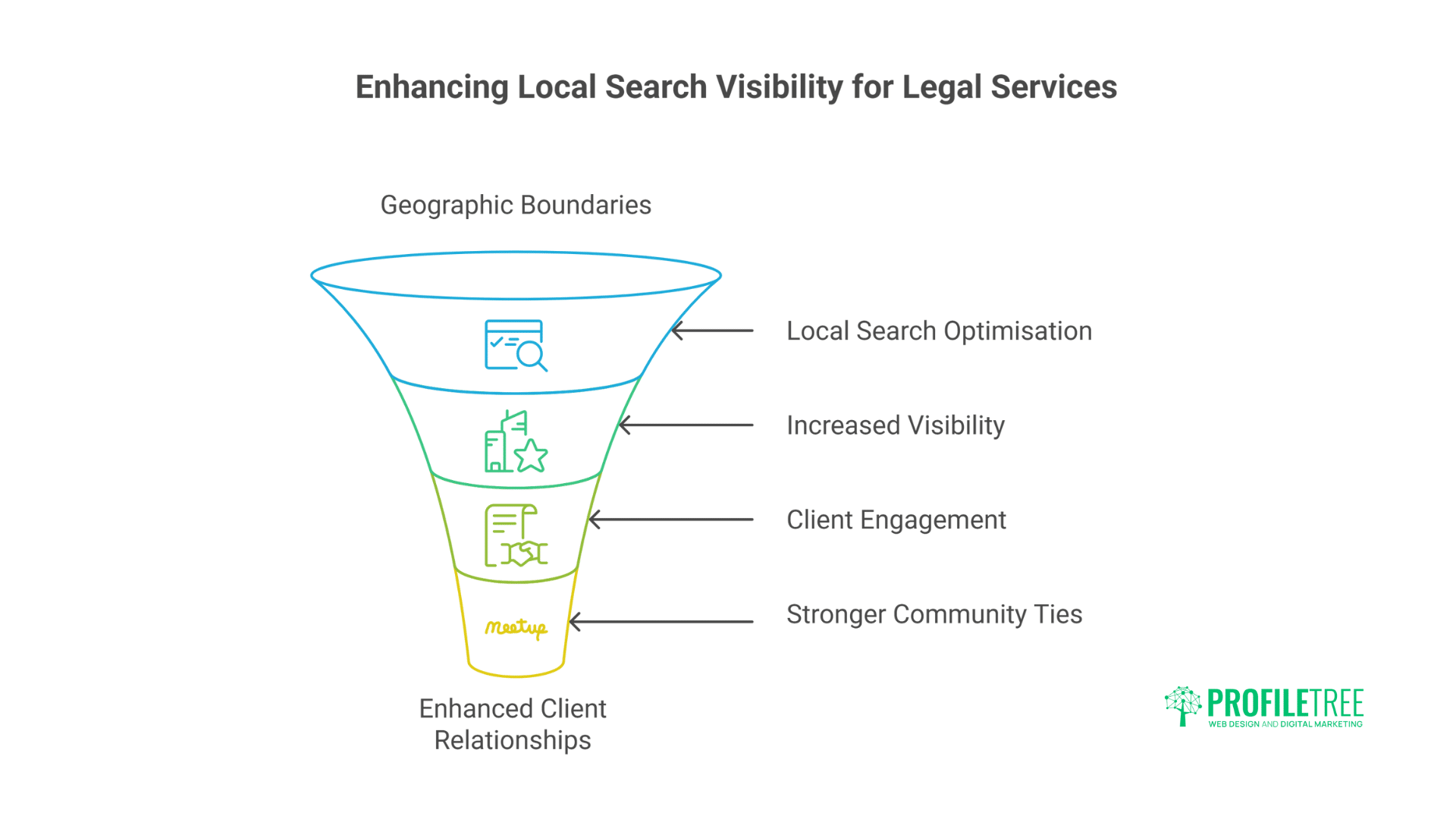
Most legal services operate within geographic boundaries, making local search visibility crucial for connecting with potential clients in your service area.
Google Business Profile Optimisation
Google Business Profile (GBP) optimisation drives significant local enquiries. Complete every profile section thoroughly. Select appropriate categories—primary and secondary. Upload high-quality photos of offices, teams, and facilities. Regular posts keep profiles active and engaging. Q&A sections address common queries preemptively.
Review management requires active attention. Respond to all reviews professionally, including negative ones. Thank positive reviewers genuinely. Address concerns raised constructively. Never argue or reveal confidential information. Regular review acquisition maintains fresh feedback. Email follow-ups requesting reviews need careful timing and wording.
Local SEO services for solicitors extend beyond GBP. Citation consistency across directories ensures accurate information. NAP (Name, Address, Phone) alignment prevents confusion. Local link building from chambers of commerce, law societies, and community organisations builds authority. Sponsorships and charitable involvement create natural local links.
Location-Specific Landing Pages
Multi-office firms need individual location pages, not single contact pages listing addresses. Each location page should include unique content about that office, team members based there, local case studies, community involvement, and specific services offered. Avoid duplicating content across location pages.
Geographic service pages capture wider area searches. “Employment solicitors County Down” or “Conveyancing lawyers North Belfast” target specific localities. These pages need substantial, unique content justifying their existence. Local knowledge demonstrations, area-specific legal issues, and community connections provide differentiation.
Schema markup helps search engines understand location relationships. The LocalBusiness schema identifies office locations, the service area schema clarifies geographic coverage, the attorney schema highlights individual solicitors, and the review schema displays ratings in search results. Proper implementation improves visibility significantly.
Solicitor Website Design Best Practices

Effective legal website design applies universal best practices through the specific lens of legal sector requirements and client expectations.
Homepage Structure and Messaging
Homepage design must immediately communicate who you help and how. Hero sections should state your value proposition clearly. “Belfast’s Employment Law Specialists” beats “Welcome to Smith & Associates.” Supporting text explains your unique approach. Trust indicators like accreditations appear above the fold.
The navigation structure requires careful planning. Practice areas need logical grouping. About sections should highlight team expertise. Resource sections provide valuable content. Contact information stays consistently accessible. Mega-menus can organise complex service offerings effectively. Mobile navigation needs particular attention to usability.
Professional web design considers user psychology throughout. F-pattern scanning behaviour informs layout decisions. Colour psychology influences emotional responses. White space improves readability and focus. Visual hierarchy guides attention strategically. Loading sequences prioritise critical content.
Team and Expertise Presentation
Team pages significantly influence solicitor selection decisions. Individual profile pages outperform single team listings. Professional photography creates strong first impressions. Comprehensive biographies showcase expertise without overwhelming. Personal touches humanise solicitors appropriately. Contact details enable direct connection.
An expert presentation goes beyond listing qualifications. Case highlights demonstrate practical experience. Published articles show thought leadership. Speaking engagements indicate industry recognition. Professional memberships build credibility. Languages spoken can be differentiators. Pro bono work shows values.
Ciaran Connolly, ProfileTree founder, observes: “Solicitor websites that successfully balance compliance with conversion share common traits: they prioritise user needs whilst respecting regulations, demonstrate expertise without intimidating visitors, and build trust through transparency and professionalism. The best legal websites make complex services accessible without diminishing the gravitas of legal practice.
Client Resources and Self-Service Options
Resource centres provide value whilst demonstrating expertise. Downloadable guides address common legal questions. Document templates assist client preparation. Calculators help estimate costs and outcomes. Glossaries explain legal terminology. Process guides set clear expectations. These resources also generate leads through gated content strategies.
Self-service elements reduce administrative burden. Appointment booking systems let clients schedule consultations. Document upload portals streamline information gathering. Payment portals enable easy fee payment. Case tracking systems provide transparency. Secure messaging reduces phone calls. These features improve efficiency whilst meeting client expectations.
Legal chatbots require careful implementation. Rule-based bots can handle basic enquiries and appointment booking. AI chatbots need training on compliant responses. Clear disclaimers must explain limitations. Human handover should be seamless. Chat transcripts need secure storage. AI integration can significantly improve client service when properly implemented.
Marketing Automation for Law Firms
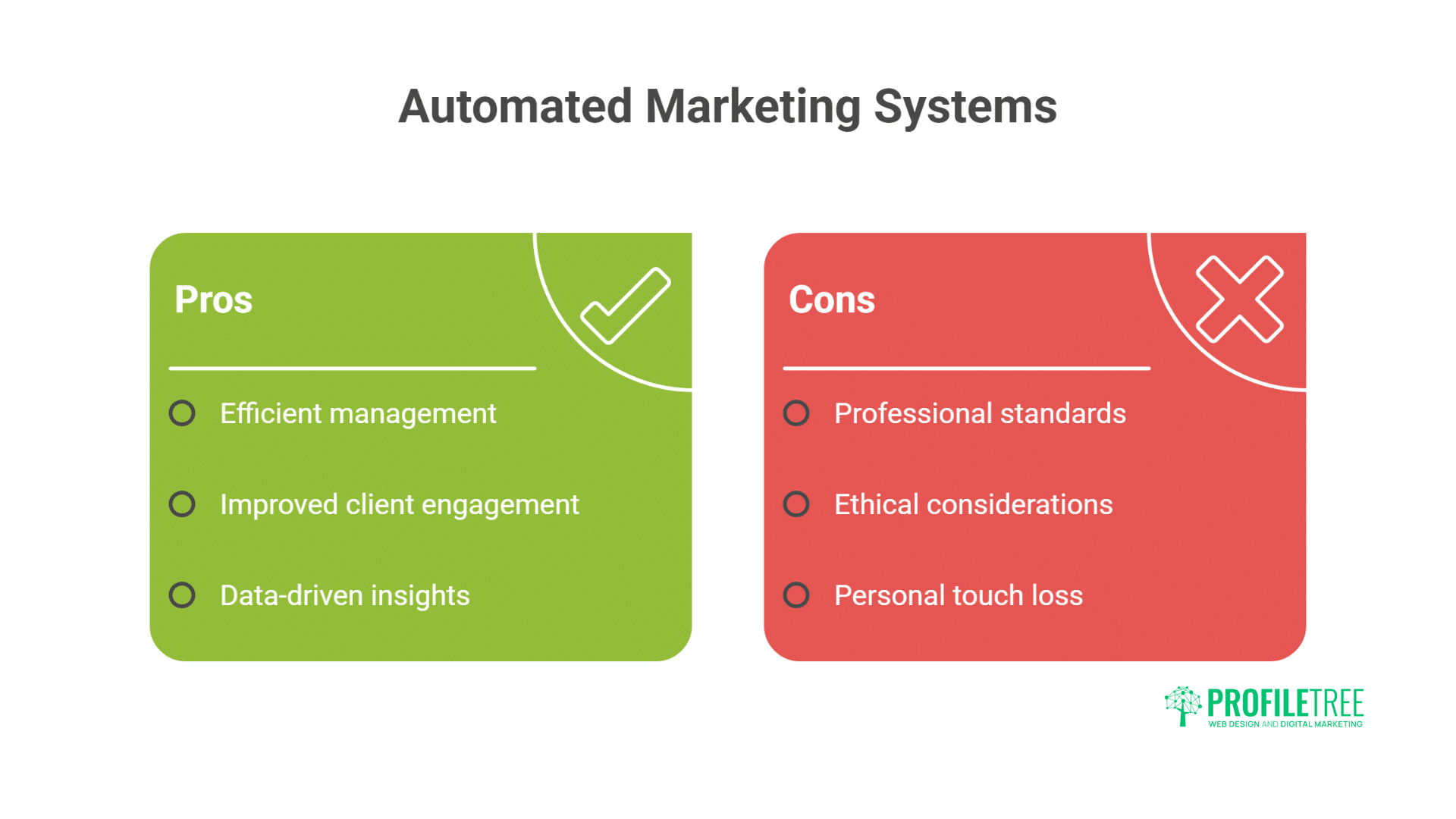
Automated marketing systems help manage the typically long decision cycles in legal services, but must be implemented with careful attention to professional standards.
Email Marketing Within SRA Guidelines
Email marketing for solicitors must respect strict regulations. Client communications need precise categorisation between marketing and service messages. Opt-in requirements are absolute – no pre-ticked boxes or assumed consent. Unsubscribe mechanisms must work immediately. Email frequency should respect professional relationships.
Newsletter content provides value without selling aggressively. Legal updates keep clients informed. Case law analysis demonstrates expertise. Practical tips help clients help themselves. Firm news maintains relationships. Event invitations build community. Success stories (anonymised) showcase capabilities.
Segmentation improves relevance and engagement. Practice area interests guide content selection. Client lifecycle stages determine messaging. Geographic location enables local event promotion. Industry sectors allow targeted business development. Engagement levels identify interested prospects. Automation must maintain a personal touch.
Lead Nurturing and Follow-Up Systems
Lead nurturing for legal services requires patience and professionalism. Immediate enquiries require a rapid response—ideally within hours. Automated acknowledgements set expectations. Follow-up sequences should provide value, not just chase conversion. Educational content builds trust gradually. Timing respects decision-making processes.
Digital marketing strategies for solicitors must acknowledge long decision cycles. Property transactions follow market timing. Divorce proceedings need emotional readiness. Business disputes require internal consultation. Will writing often gets postponed. Nurturing campaigns must respect these realities whilst maintaining visibility.
Marketing automation platforms need careful configuration. Lead scoring identifies engagement levels. Workflow triggers respond to specific actions. Personalisation tokens maintain individual connection. A/B testing optimises messaging. Analytics reveal conversion paths. Integration with practice management systems ensures smooth handover.
Social Media Integration and Management
Social media requires a professional approach for solicitors. LinkedIn performs best for B2B services and thought leadership. Facebook works for consumer law and community engagement. Twitter suits news commentary and rapid response. Instagram can humanise firms through behind-the-scenes content. TikTok remains largely unexplored territory.
Social media marketing must respect advertising regulations. Success stories need careful vetting. Client testimonials require explicit permission. Case outcomes must avoid misleading implications. Comparative claims need substantiation. Professional boundaries require constant vigilance.
Content planning ensures a consistent presence without overwhelming followers. Educational posts demonstrate expertise. News commentary shows engagement. Team highlights humanise your firm. Community involvement builds local connections. Client resources provide value. Behind-the-scenes content builds relatability.
Measuring Website Performance and ROI
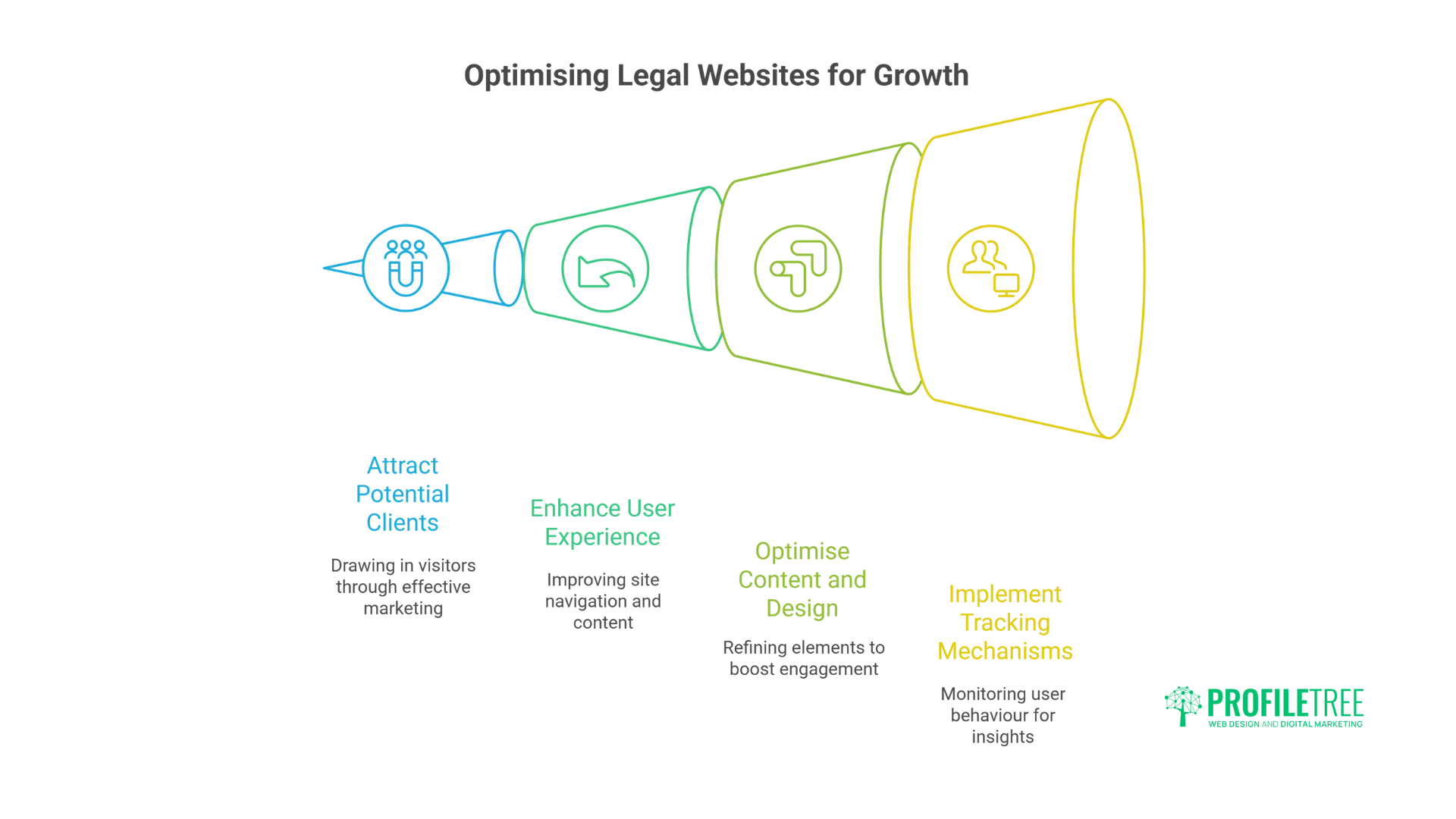
Legal websites represent significant investments that should deliver measurable business results through proper tracking and optimisation.
Key Performance Indicators for Legal Websites
Legal website KPIs extend beyond basic traffic metrics. For optimised sites, conversion rates from visitor to enquiry typically range from 2-5%. The cost per acquisition through organic search should decrease over time. Average case values from web-generated leads indicate quality. Client lifetime value justifies marketing investment.
Engagement metrics reveal content effectiveness. Time on practice area pages indicates interest depth. Document downloads suggest serious consideration. Video completion rates show content quality. Return visitor rates indicate ongoing value. Newsletter sign-ups demonstrate permission for continued contact.
Technical metrics directly affect user experience. Page load speeds under 3 seconds are essential. Mobile usability scores should exceed 90. Core Web Vitals need green ratings. Security scan results must show no vulnerabilities. Uptime should exceed 99.9%. These metrics directly impact conversion and SEO performance.
Analytics Setup and Conversion Tracking
Google Analytics 4 configuration needs careful attention. Goals should track meaningful actions: contact form submissions, phone calls, document downloads, and appointment bookings. E-commerce tracking can measure consultation bookings. Enhanced measurement automatically captures engagement. Custom events track specific interactions.
Call tracking provides crucial attribution data. Dynamic number insertion identifies traffic sources. Call recording enables quality monitoring (with appropriate consent). Integration with CRM systems captures outcomes. Missed call alerts prevent lost opportunities. Call analytics reveal optimal response strategies.
SEO performance monitoring tracks visibility improvements. Ranking positions for target keywords need regular monitoring. Organic traffic growth demonstrates SEO success. Click-through rates from search reveal title tag effectiveness. Featured snippet captures indicate authority. Local pack appearances drive significant traffic.
Continuous Improvement Strategies
Website optimisation requires ongoing effort. Monthly performance reviews identify improvement opportunities. Quarterly deep dives analyse conversion paths. Annual strategic reviews align the website with business goals. Competitor analysis reveals new opportunities. User feedback guides enhancement priorities.
A/B testing validates improvement hypotheses. Landing page variations test different approaches. CTA button colours and text can significantly impact conversion. Reducing the form field might increase completions. Trust signal placement affects credibility. Headlines dramatically influence engagement. Test systematically, not randomly.
Digital training programs empower internal teams to support website success. Understanding basic SEO prevents accidental damage. Content creation training maintains website freshness. Analytics interpretation enables data-driven decisions. Social media training amplifies reach. AI training prepares for future opportunities.
Frequently Asked Questions
What specific SRA compliance requirements must solicitor websites meet?
Solicitor websites must display SRA authorisation numbers, publish price and service information for specified practice areas, provide clear complaints procedures including Legal Ombudsman details, and ensure all advertising is not misleading. Professional indemnity insurance confirmation and terms of business must be accessible.
How much should law firms budget for professional website design?
Professional solicitor websites typically cost £8,000-25,000 for initial development, with ongoing maintenance and hosting adding £200-500 monthly. Complex requirements like client portals or practice management integration increase costs. Investment should align with firm size and growth ambitions – expect to invest 2-5% of annual revenue in digital presence.
What makes solicitor websites different from other professional services sites?
Solicitor websites face unique SRA transparency rules, strict advertising regulations preventing outcome promises, client confidentiality requirements affecting case studies, and mandatory regulatory information display. They must balance professional gravitas with approachability whilst maintaining compliance throughout.
How can law firms improve website conversion rates whilst maintaining compliance?
Build trust through professional design, clear value propositions, and transparent pricing. Use compliant CTAs like “Get Expert Advice” instead of “Guaranteed Results.” Implement live chat with trained operators, optimise user journeys for different practice areas, and provide valuable resources demonstrating expertise without making promises.
What role should video content play in solicitor marketing strategies?
Video content humanises law firms and builds trust more effectively than text alone. Partner introduction videos, service explanation content, and client testimonials (with permission) perform well. Educational webinars demonstrate expertise. Video improves engagement, SEO, and conversion rates whilst differentiating progressive firms from traditional competitors.
Conclusion
Solicitor website design demands specialist expertise, balancing strict compliance requirements with modern conversion optimisation. Generic web designers lacking legal sector knowledge create risks through non-compliance or missed opportunities through over-caution. Professional legal website design requires a deep understanding of SRA regulations, user psychology, and technical requirements unique to law firms.
Successful solicitor websites prioritise user needs whilst maintaining regulatory compliance. Straightforward navigation helps visitors find relevant services quickly. Transparent pricing builds trust whilst meeting SRA requirements. Professional design conveys competence without appearing unapproachable. Mobile optimisation captures growing mobile search traffic. Fast loading speeds prevent visitor frustration.
Investment in professional website design pays dividends through increased enquiries, improved conversion rates, and enhanced reputation. Law firms partnering with specialist agencies like ProfileTree benefit from legal sector expertise, proven conversion strategies, and ongoing support, ensuring continued compliance and performance. Your website represents your firm 24/7 – make sure it represents you well.
The legal sector’s digital transformation accelerates annually. Firms embracing modern website design, marketing automation, and client self-service gain competitive advantages. Those clinging to outdated websites risk being left behind. The question isn’t whether to invest in professional web design, but how quickly you can implement improvements before competitors capture your market share.