
SEO for Therapists and Counsellors: How to Attract More Clients
Table of Contents
When someone needs therapy for anxiety, depression, relationship issues, trauma, or any mental health concern, they search online. “Therapist near me,” “counsellor Belfast,” “anxiety therapy”, these searches happen constantly, often during vulnerable moments, and the therapists appearing in results connect with clients while invisible practitioners miss opportunities to help.
SEO for therapists operates in a uniquely sensitive, trust-critical market. People seeking therapy are often vulnerable. They’re taking a significant step by searching for help, and they need to feel safe before reaching out. The decision to contact a therapist requires feeling understood, accepted, and confident in the therapist’s ability to help.
The mental health landscape has evolved dramatically. More people seek therapy than ever before, and the search for help increasingly starts online. Therapists who build thoughtful, ethical search visibility connect with clients who genuinely need their help.
ProfileTree works with healthcare and professional service businesses across Northern Ireland, Ireland, and the UK to build search visibility that generates quality enquiries. For therapists, that means appearing when potential clients search, building trust through your online presence, and making it easy for people to take that crucial first step.
Why Search Visibility Matters for Therapists
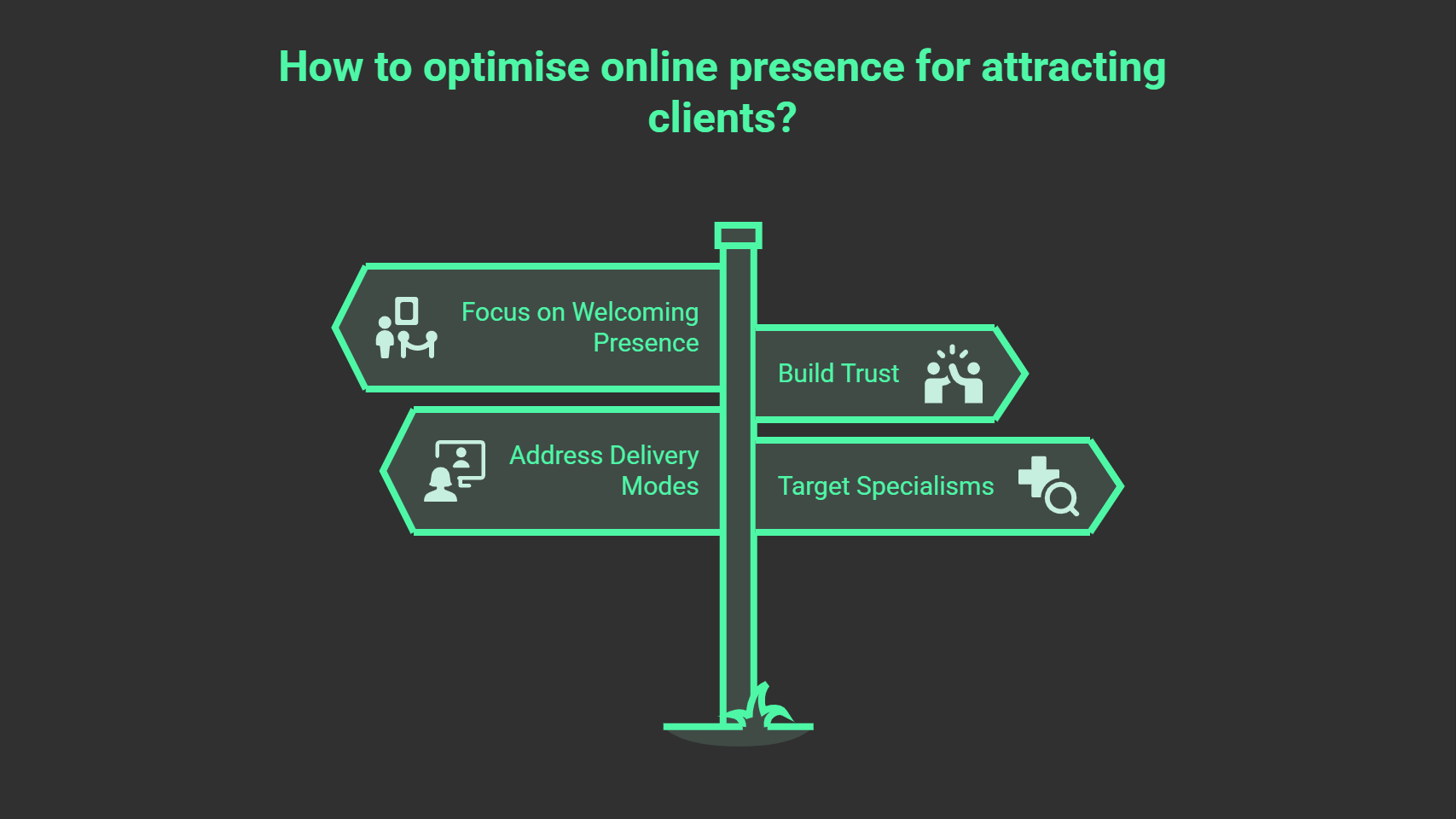
The therapy market has distinct characteristics that shape SEO strategy.
The Vulnerable Decision
People seeking therapy are often in difficult places:
- Experiencing emotional distress
- Taking a brave first step
- Feeling uncertain or scared
- Needing reassurance before contact
- Wanting to feel understood
Your online presence must feel welcoming, safe, and non-judgmental; a reflection of the therapeutic space you provide.
The Trust Imperative
Therapy involves profound trust:
- Sharing deeply personal experiences
- Vulnerability in a professional relationship
- Financial and time commitment
- Hope for genuine help
- Fear of not being understood
Clients research carefully before reaching out. Your online presence must build confidence in your expertise, approach, and ability to help with their specific concerns.
The Local and Online Reality
Therapy spans different delivery modes:
In-person therapy:
- Local clients within the travel radius
- Physical therapy room
- Face-to-face connection
Online therapy:
- Broader geographic reach
- Video session delivery
- Flexible scheduling
- Growing acceptance and demand
Hybrid:
- Offering both options
- Client choice
- Flexibility
Each mode has different search patterns and reaches different clients.
Specialism Diversity
Therapy spans different specialisms:
Issues addressed:
- Anxiety and depression
- Trauma and PTSD
- Relationship issues
- Bereavement and loss
- Addiction
- Eating disorders
- Life transitions
Modalities:
- CBT (Cognitive Behavioural Therapy)
- Person-centred counselling
- Psychodynamic therapy
- EMDR
- Integrative approaches
Client groups:
- Adults
- Children and adolescents
- Couples
- Families
Each specialism has different clients and search patterns.
“Therapists help people during some of life’s most difficult moments. When someone searches for a counsellor, they’re taking a brave step, and they need to feel safe before they reach out. Warm, professional online presence with clear information about how you help builds the trust that leads to that first contact.” Ciaran Connolly, ProfileTree
Google Business Profile for Therapists
Your Google Business Profile is important for therapist SEO local visibility.
Essential Profile Setup
Categories: Select accurate categories:
- Counselor (primary for many)
- Psychotherapist
- Mental Health Service
- Marriage & Family Therapist
- Psychologist (if applicable)
Choose primary based on your main offering and qualifications.
Service areas: Define where you practice:
- Practice location
- Home visit areas (if applicable)
- Online therapy coverage
Special hours: Important for therapists:
- Session availability times
- Evening or weekend availability
- Response time expectations
Attributes: Complete relevant attributes:
- Online appointments
- In-person appointments
- Wheelchair accessible (if applicable)
Business description: Communicate:
- What you help with
- Your approach
- Who you work with
- Qualifications
- What makes your practice welcoming
Photography for Therapists
Visual content builds connection:
What to include:
- Professional, warm headshot
- Therapy room (welcoming, calm)
- Practice exterior (if applicable)
- Qualifications and accreditations
Photo approach:
- Approachable and professional
- Warm, not clinical
- Reflecting who you are
- Showing therapy environment
What good photos communicate:
- Warmth and approachability
- Professional environment
- Safe, comfortable space
- Real person behind the practice
Managing Reviews
Reviews matter but require sensitivity:
The ethical consideration:
- Client confidentiality is paramount
- Never pressure clients for reviews
- Some clients prefer anonymity
- Accept that not all clients will review
When reviews happen:
- Respond warmly and professionally
- Thank reviewers without revealing details
- Maintain confidentiality in responses
- Show your warmth and professionalism
Alternative trust-building:
- Detailed website content
- Professional credentials displayed
- Directory listings with verified information
- Blog content demonstrating expertise
Website Strategy for Therapists SEO
Your website is often the first therapeutic contact: make it welcoming.
Essential Website Elements
What you help with:
- Issues you work with
- Clear, compassionate descriptions
- Who you work with best
- What therapy offers
About you:
- Your background and training
- Qualifications and accreditations
- Therapeutic approach
- Personal statement (appropriate)
- Why you do this work
How therapy works:
- What to expect
- First session explanation
- How therapy progresses
- Practical information
Credentials:
- Professional memberships (BACP, UKCP, etc.)
- Qualifications
- Supervision arrangements
- Insurance
Practicalities:
- Session fees
- Session length
- Cancellation policy
- Location and access
- Online therapy options
Contact:
- How to get in touch
- What happens when they contact you
- Response time expectations
- Confidentiality assurance
Issue-Specific Pages
Create pages for issues you specialise in:
/anxiety-therapy/: Anxiety and worry
/depression-counselling/: Depression support
/trauma-therapy/: Trauma and PTSD
/relationship-counselling/: Couples and relationships
/bereavement-counselling/: Grief and loss
/stress-management/: Stress and burnout
Each page should include:
- Understanding of the issue
- How therapy can help
- Your approach to this concern
- Compassionate, hopeful tone
- Clear call to action
Approach Pages
If relevant to your practice:
/cbt-therapy/: CBT services
/person-centred-counselling/: Person-centred approach
/emdr-therapy/: EMDR treatment
/integrative-therapy/: Integrative approach
Location Pages
Target geographic searches:
/therapist-belfast/: Belfast therapy services
/counsellor-lisburn/: Lisburn counselling
/anxiety-therapy-bangor/: Bangor anxiety support
These pages capture location-specific searches.
Technical Foundations
Basic technical SEO supports visibility:
Speed: Fast loading pages
Mobile: Many people search on phones, often in distress
HTTPS: Essential for confidential services
Schema markup: LocalBusiness, MedicalBusiness, Physician schema
Our guide at profiletree.com/seo-basics/ covers technical fundamentals.
YMYL and E-E-A-T Considerations
Therapy content falls under Google’s YMYL (Your Money or Your Life) category.
Why This Matters
Google holds health content to higher standards because it can affect wellbeing. Your content must demonstrate:
Experience: Real therapeutic experience with the issues you discuss
Expertise: Proper qualifications and training
Authoritativeness: Recognition in your field
Trustworthiness: Accurate, responsible information
Implementing E-E-A-T
Display credentials prominently:
- Qualifications on every page
- Professional memberships visible
- Registration numbers included
- About page with full background
Content standards:
- Accurate, responsible information
- Appropriate caveats and boundaries
- Professional language throughout
- Regular review and updating
Author attribution:
- Your name on all content
- Qualifications visible
- Link to full bio
Our guide at profiletree.com/seo-guide-google-e-a-t-update/ covers E-E-A-T in detail.
Local SEO Strategy for Therapist SEO
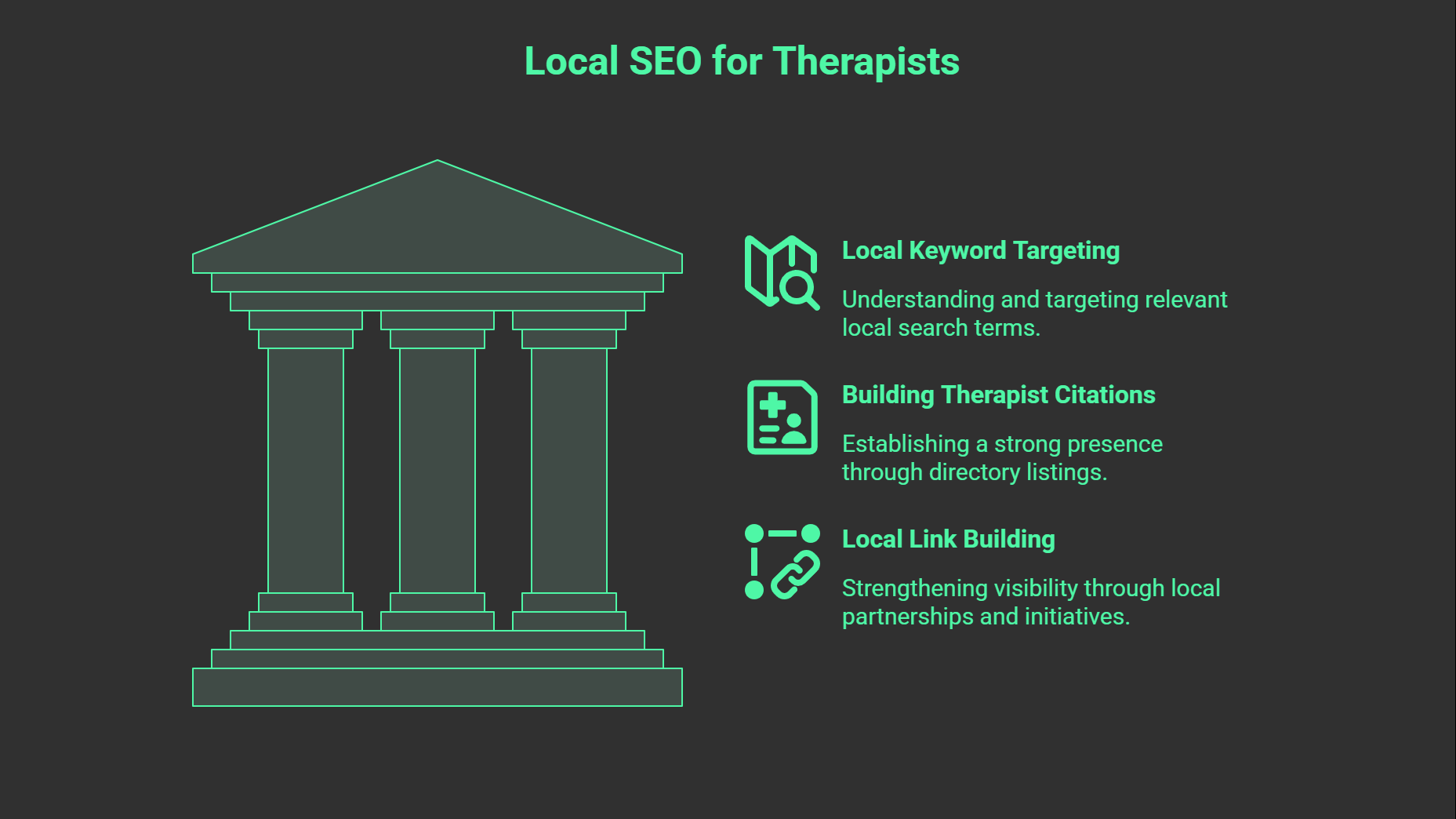
In-person therapists depend on local visibility.
Local Keyword Targeting
Understand how potential clients search:
Generic + location:
- “Therapist Belfast”
- “Counsellor near me”
- “Psychotherapist [location]”
Issue + location:
- “Anxiety therapy [location]”
- “Depression counselling near me”
- “Trauma therapist [location]”
Type + location:
- “CBT therapist [location]”
- “Couples counselling [location]”
- “Child psychologist [location]”
Your Google Business Profile and website should target these patterns.
Building Therapist Citations
Directory listings reinforce presence:
Professional directories:
- BACP therapist directory
- UKCP find a therapist
- Counselling Directory
- Psychology Today UK
- BABCP (for CBT therapists)
General directories:
- Yell.com
- Thomson Local
Specialist directories:
- Relate (for relationship counselling)
- Specialist organisation directories
Ensure consistent Name, Address, and Phone across all listings.
Local Link Building
Local links strengthen visibility:
- Partner with GP practices (referral relationships)
- Connect with local charities and support organisations
- Build relationships with complementary practitioners
- Join local healthcare networks
- Support local mental health initiatives
Issue-Specific SEO Strategies
Different therapeutic specialisms need different approaches.
Anxiety Therapy SEO
High-volume, common search:
Target keywords:
- “Anxiety therapy [location]”
- “Anxiety counselling near me”
- “Help with anxiety [location]”
- “Therapist for anxiety”
Content approach:
- Understanding anxiety content
- How therapy helps anxiety
- Different anxiety presentations
- Self-help alongside therapy
- When to seek help
Depression Counselling SEO
Important, sensitive searches:
Target keywords:
- “Depression counselling [location]”
- “Depression therapist near me”
- “Help with depression [location]”
- “Therapy for depression”
Content approach:
- Understanding depression
- How therapy helps
- Signs and symptoms
- Hope and recovery focus
- When to seek help
Trauma and PTSD SEO
Specialist area searches:
Target keywords:
- “Trauma therapy [location]”
- “PTSD treatment [location]”
- “Trauma counsellor”
- “EMDR therapy [location]”
Content approach:
- Understanding trauma
- Trauma therapy approaches
- EMDR explanation (if offered)
- Recovery journey
- Safety and pacing
Couples Counselling SEO
Relationship-focused searches:
Target keywords:
- “Couples counselling [location]”
- “Marriage counselling near me”
- “Relationship therapy [location]”
- “Couples therapist”
Content approach:
- How couples therapy works
- What to expect
- Common relationship issues
- When to seek help
- Both partners’ perspectives
Online Therapy SEO
Online therapy expands reach significantly.
Online-Specific Keywords
Target keywords:
- “Online therapy UK”
- “Online counselling”
- “Video therapy”
- “Virtual counselling”
- “Online therapist [specialism]”
Content approach:
- How online therapy works
- Benefits of online therapy
- Technology requirements
- Effectiveness of online therapy
- Privacy and confidentiality online
Online Trust Building
Build confidence in online delivery:
- Secure platform information
- Confidentiality measures
- Technical support offered
- First session guidance
- Comparisons with in-person
Content Strategy for Therapists
Content marketing demonstrates expertise while genuinely helping people.
Educational Content
Helpful content about mental health:
Understanding issues:
- “What is anxiety?”
- “Signs of depression”
- “Understanding trauma responses”
- “Relationship patterns”
Self-help content:
- “Managing anxiety tips”
- “Coping with stress”
- “Supporting your mental health”
- “When self-help isn’t enough”
Therapy information:
- “What to expect from therapy”
- “How therapy works”
- “Different types of therapy”
- “Finding the right therapist”
Ethical Content Considerations
Mental health content requires care:
Best practices:
- Accurate, responsible information
- Appropriate disclaimers
- Signposting to emergency services where relevant
- Encouraging professional help
- Avoiding sensationalism
What to avoid:
- Overpromising outcomes
- Detailed symptom lists that could cause distress
- Content that could delay appropriate help
- Insensitive or stigmatising language
Decision-Stage Content
Content for people ready to seek help:
Choosing help:
- “How to choose a therapist”
- “Questions to ask a therapist”
- “What makes therapy effective”
- “First therapy session explained”
Practical content:
- “Therapy costs explained”
- “How long does therapy take”
- “Preparing for your first session”
Trust and Credential Signals
Trust is paramount for therapy: clients share their most vulnerable selves.
Essential Credentials
Display prominently:
Professional registration:
- BACP registered
- UKCP registered
- HCPC registered (for psychologists)
- Registration numbers visible
Qualifications:
- Training and qualifications listed
- Specialist training mentioned
- Ongoing CPD commitment
Professional standards:
- Ethical framework adherence
- Supervision arrangements
- Insurance coverage
Building Trust Through Content
Website tone:
- Warm and welcoming
- Professional but human
- Non-judgemental
- Hopeful without overpromising
Transparency:
- Clear about approach
- Honest about what therapy involves
- Upfront about fees and policies
- Accessible language
Displaying Trust Signals
Website placement:
- Registration badges visible
- Qualifications clear
- Approach explained
- Personal statement authentic
Google Business Profile:
- Credentials in description
- Professional affiliations mentioned
- Welcoming tone
Pricing Strategy for Therapist SEO
Fee transparency helps manage expectations.
Why Display Fees
Client expectations:
- Need to know affordability
- Financial planning for ongoing therapy
- Reduces anxiety about contacting you
- Respect for clients’ time
SEO benefit:
- “Therapy costs [location]” searches exist
- Transparent therapists build trust
How to Display Fees
Recommended approach:
- Session fees clearly stated
- Session length specified
- Sliding scale if offered
- What’s included
Examples:
- “Individual sessions: £X (50 minutes)”
- “Couples sessions: £X (60 minutes)”
- “Reduced rate places available, please enquire”
Measuring Therapist SEO Success
Track metrics connecting to practice growth.
Key Metrics
Visibility:
- Google Business Profile views
- Website organic traffic
- Issue-specific page engagement
- Local keyword rankings
Engagement:
- Enquiries from search
- Phone calls from search
- Contact form submissions
- Initial consultation bookings
Practice outcomes:
- Clients from search enquiries
- Practice capacity utilisation
- Client retention
- Referral sources
Ethical Tracking Considerations
Track appropriately:
- Aggregate data only
- Respect client confidentiality
- Focus on practice health metrics
- Don’t optimise for “conversions” insensitively
Source Tracking
Ask new clients how they found you:
- Search engine
- Directory listing
- Referral
- Other sources
Common Mistakes Therapists Make
Avoid these frequent errors:
Clinical, unwelcoming language: Academic tone that distances potential clients.
No online presence: Relying only on directory listings without own website.
Hidden fees: Not displaying session costs, creating contact friction.
Generic content: Website that could describe any therapist without showing your approach.
No credentials displayed: Missing professional registration and qualifications.
Poor photography: No photo or unfriendly/clinical image.
Incomplete Google Business Profile: Missing services, hours, description.
No specialism pages: All issues lumped together without focus.
Outdated information: Old training dates, expired registrations.
Not mobile-friendly: People in distress often search on phones.
Getting Started with Therapist SEO
If you’re beginning SEO or reviewing existing efforts:
Immediate priorities:
- Claim and complete Google Business Profile
- Add warm, professional photo
- Display credentials prominently
- Ensure contact is easy and clear
First month:
- Create issue-specific pages
- Verify consistent information across directories
- Ensure professional directory listings are complete
- Add clear fee information
First three months:
- Build citations in professional directories
- Create location pages if relevant
- Add helpful educational content
- Develop your unique voice online
Ongoing:
- Regular content updates
- Maintain directory listings
- Keep credentials current
- Monitor practice growth
Frequently Asked Questions
How quickly can SEO help my therapy practice?
Google Business Profile improvements often show results within weeks. Website visibility typically takes three to six months. Therapy is relationship-based, quality of enquiries matters more than quantity.
Should I display my fees on my website?
Yes. Fee transparency respects potential clients and reduces contact anxiety. Hidden fees create unnecessary barriers for people already finding it hard to reach out.
How do I handle reviews as a therapist?
Never request reviews from clients; it’s ethically problematic. If clients choose to review, respond warmly while maintaining confidentiality. Focus on other trust-building: credentials, content, directory listings.
What content works best for therapist SEO?
Issue-specific pages capture targeted searches. Educational content demonstrates expertise. “What to expect” content reduces anxiety about reaching out. Personal but professional about pages build connection.
How do I compete with therapy platforms and directories?
Personal connection, clear specialism, local presence. Many clients prefer finding a specific therapist rather than platform matching. Your unique approach and personality differentiate you.
Is online therapy worth focusing on for SEO?
Yes, online therapy has grown significantly and expands your potential reach. Consider whether you want to offer online sessions and create content accordingly.
How important are professional directory listings?
Very important—BACP, UKCP, and similar directories rank well and provide trusted referrals. Complete profiles thoroughly and keep them updated.
How do I write about mental health ethically?
Accurate information, appropriate caveats, signposting to emergency services where relevant, encouraging professional help, avoiding sensationalism or oversimplification.
Can newly qualified therapists compete with experienced ones?
Yes. Fresh training, enthusiasm, and good online presence can attract clients. Many clients are less concerned about years of experience than about feeling understood and comfortable.
How do I balance professionalism with warmth online?
Be yourself while maintaining boundaries. Write how you’d speak to a potential client. Show genuine care while being clear about what you offer professionally.
Building Long-Term Therapy Practice Success
Therapist SEO rewards authentic presence and trust-building. The fundamentals are clear: complete Google Business Profile, warm professional website, visible credentials, specialism pages, clear fees, and ethical content.
Therapists executing these basics connect with clients who need their help. The opportunity isn’t aggressive marketing, it’s being visible and welcoming when people take the brave step of searching for support.
The thriving therapy practices aren’t necessarily the most established. They’re the ones visible when potential clients search, trustworthy when people research, and easy to contact when someone is ready to reach out. Make sure your practice is one of them.
If you’re ready to improve your therapy practice’s search visibility and connect with more clients who need your help, ProfileTree’s team works with healthcare and professional service businesses across Northern Ireland, Ireland, and the UK. We understand both the technical requirements of effective SEO and the ethical considerations of mental health marketing. Get in touch to discuss how we can help your practice grow through search.