
Marketing in Business: Strategy, Channels and Results
Table of Contents
Marketing does one thing for a business: it connects what you sell to the people who need it. Everything else (the channels, the campaigns, the analytics) is in service of that single outcome. For most SMEs, the challenge isn’t understanding that marketing matters. It’s knowing which parts to prioritise when budgets and time are limited.
This guide covers the core functions of marketing in business, how digital channels have changed the rules, and what a practical approach looks like for companies that want results rather than activity.
What Marketing Actually Does for a Business
Marketing sits between your product or service and the people you want to buy it. Done well, it shortens the distance between those two things. Done poorly, it creates noise without commercial return.
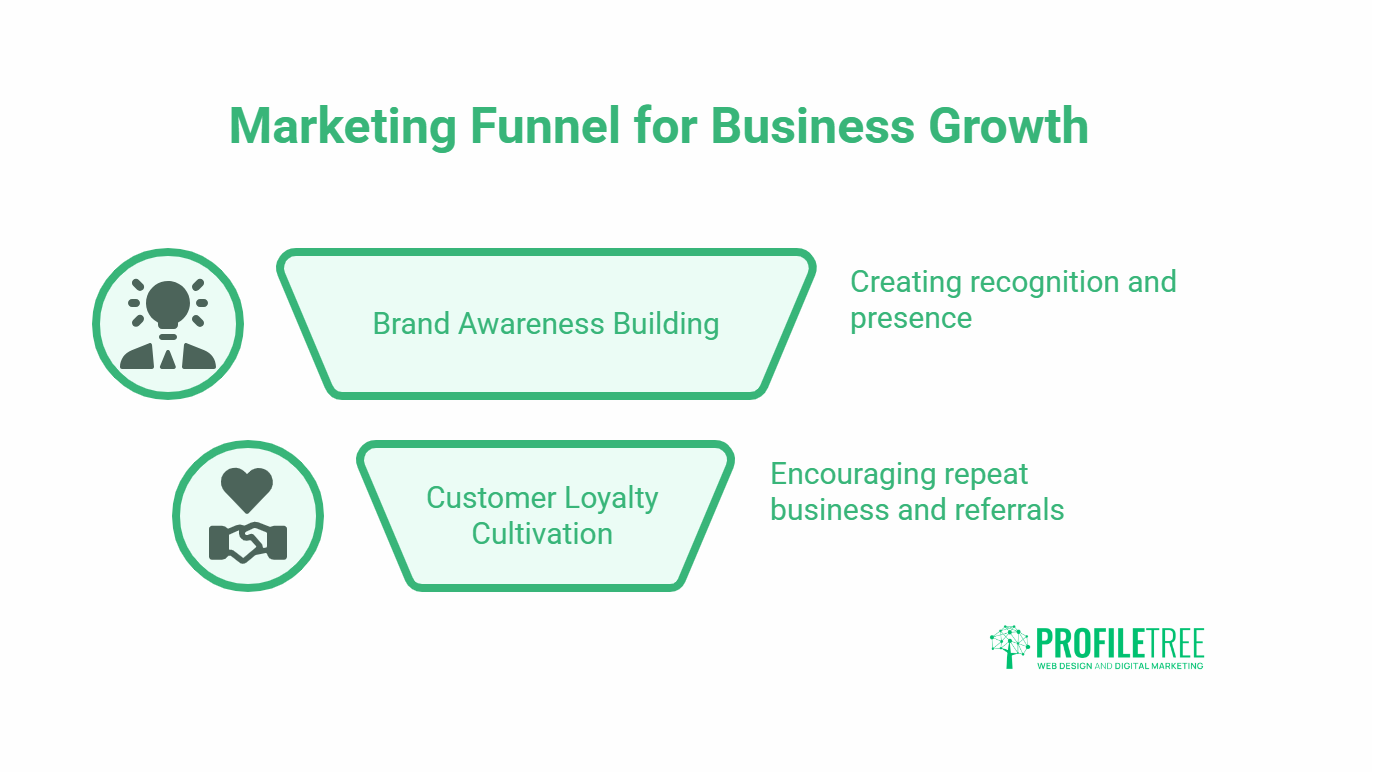
The core functions break down into three areas: attracting new customers, retaining existing ones, and building the kind of reputation that makes both easier over time. Each of these requires different tactics, but they all depend on the same foundation: understanding who you’re trying to reach and what they care about.
Defining Your Target Audience
Before any campaign, channel, or piece of content, a business needs to know who it’s marketing to. That means more than demographics. It means understanding the specific problems your audience is trying to solve, the language they use to describe those problems, and where they go to find answers.
For SMEs in Northern Ireland and across the UK, this often means working with two or three distinct customer types rather than a single monolithic audience. A web design client might be a sole trader needing their first site, or a regional manufacturer needing a full digital rebuild. The product is similar; the marketing message is not.
Building Brand Awareness
Brand awareness is what happens when your target audience recognises your business before they’ve made a decision to buy. It’s built through consistent, repeated exposure across the right channels over time. A business that shows up in Google search results, publishes useful content, and maintains an active presence on the platforms its customers use will generate awareness passively, even between active campaigns.
The goal isn’t visibility for its own sake. It’s being present at the moment someone starts looking for what you offer.
Building Customer Loyalty
Existing customers are your most cost-effective marketing asset. A customer who’s worked with you before is far more likely to return and far more likely to refer others than a cold prospect. Marketing to existing customers, through follow-up communications, relevant content, and service quality, has a direct effect on revenue that many businesses undervalue.
Developing a Marketing Strategy That Works
A marketing strategy isn’t a document. It’s a set of decisions about where to focus effort, which audiences to target, and how to measure whether it’s working. Without those decisions made in advance, marketing becomes reactive and expensive.
The Role of Market Research
A good strategy starts with information. Market research tells you what your customers actually want (which is frequently different from what you assume), where competitors are falling short, and which channels your audience uses to make buying decisions. For a small business, this doesn’t require a formal research agency. It can be as straightforward as reviewing Google Search Console data, reading competitor content, or talking directly to recent customers about how they found you and what made them choose you.
Aligning Your Offer to Customer Needs
Once you understand the market, the job is to position your product or service as the clearest answer to what your customers are looking for. This means communicating benefits, not features. A customer looking for a new website isn’t interested in the technical stack; they want to know it will load fast, look professional on mobile, and bring in enquiries. Professional web design and development services translate those technical decisions into outcomes the client can measure.
The same principle applies across every service category. Customers buy outcomes. Marketing’s job is to make the connection between your offer and their desired outcome as clear as possible.
Digital Marketing and How It Changed the Rules
Before digital channels, marketing was primarily about reach: putting your message in front of as many people as possible and hoping a percentage would respond. Digital marketing changed that. It made targeting specific, measurement precise, and entry costs low enough that small businesses could compete with larger ones.
Search Engine Optimisation
Search engine optimisation (SEO) is what determines whether your business appears when someone searches for what you sell. It operates on a simple principle: Google wants to show the most relevant, trustworthy result for any given query. SEO is the process of making your content and website the best answer to the questions your customers are asking.
For an SME, local SEO is often the most valuable place to start. Appearing in Google’s local results for searches like “web designer Belfast” or “digital marketing agency Northern Ireland” puts your business in front of people who are actively looking to buy, in your area. The digital marketing services that move the needle for SMEs are the ones tied to specific commercial intent, not generic traffic.
Social Media Marketing
Social media gives businesses direct access to their audience without an intermediary. The challenge is that most social media content competes in an attention economy where the bar for stopping a scroll is high. Businesses that perform well on social media treat it as a channel for building relationships and demonstrating expertise, not pushing products.
Platform choice matters. A B2B professional services firm will get more commercial return from LinkedIn than from TikTok. A consumer food brand is the reverse. Spreading effort across every platform is one of the most common and costly mistakes SMEs make with social media marketing.
Content Marketing
Content marketing is the long-game channel. It builds authority, attracts organic search traffic, and creates assets that keep working long after they’re published. A well-written guide that answers a question your customers frequently ask will generate leads months or years after publication, without paid spend.
“Content marketing works for SMEs because it levels the playing field,” says Ciaran Connolly, founder of ProfileTree. “A smaller business that consistently publishes genuinely useful content on a specific topic will outrank and outperform larger competitors who treat content as an afterthought.”
The keyword is genuinely useful. Content that exists to tick a box rather than answer a real question has no commercial value and often dilutes a site’s authority. Content marketing services that focus on topical depth and search intent consistently outperform those built around volume.
Branding: What It Is and Why It Matters
Branding is how your business is perceived when you’re not in the room. It’s the combination of visual identity, tone of voice, values, and customer experience that makes your business recognisable and distinct. A business with strong branding has a consistent identity across every touchpoint: website, social media, email, invoices, and in-person interactions.
Creating a Brand Identity
A brand identity is built around three things: what you do, who you do it for, and what makes you different from everyone else offering something similar. The visual elements (logo, colour palette, typography) express that identity. But they only work if the underlying positioning is clear. Many businesses invest in visual design before they’ve answered the positioning questions, which is why they often end up with websites that look professional but don’t convert.
Maintaining Brand Consistency
Consistency is what turns a brand from a logo into a reputation. When a business uses the same tone, the same visual style, and the same core message across every channel and every interaction, customers begin to trust it. That trust compounds over time. Businesses that change their messaging frequently, rebrand every couple of years, or present differently across different channels make it harder for customers to form a clear picture of what they offer.
Promotion: Reaching Customers at the Right Moment
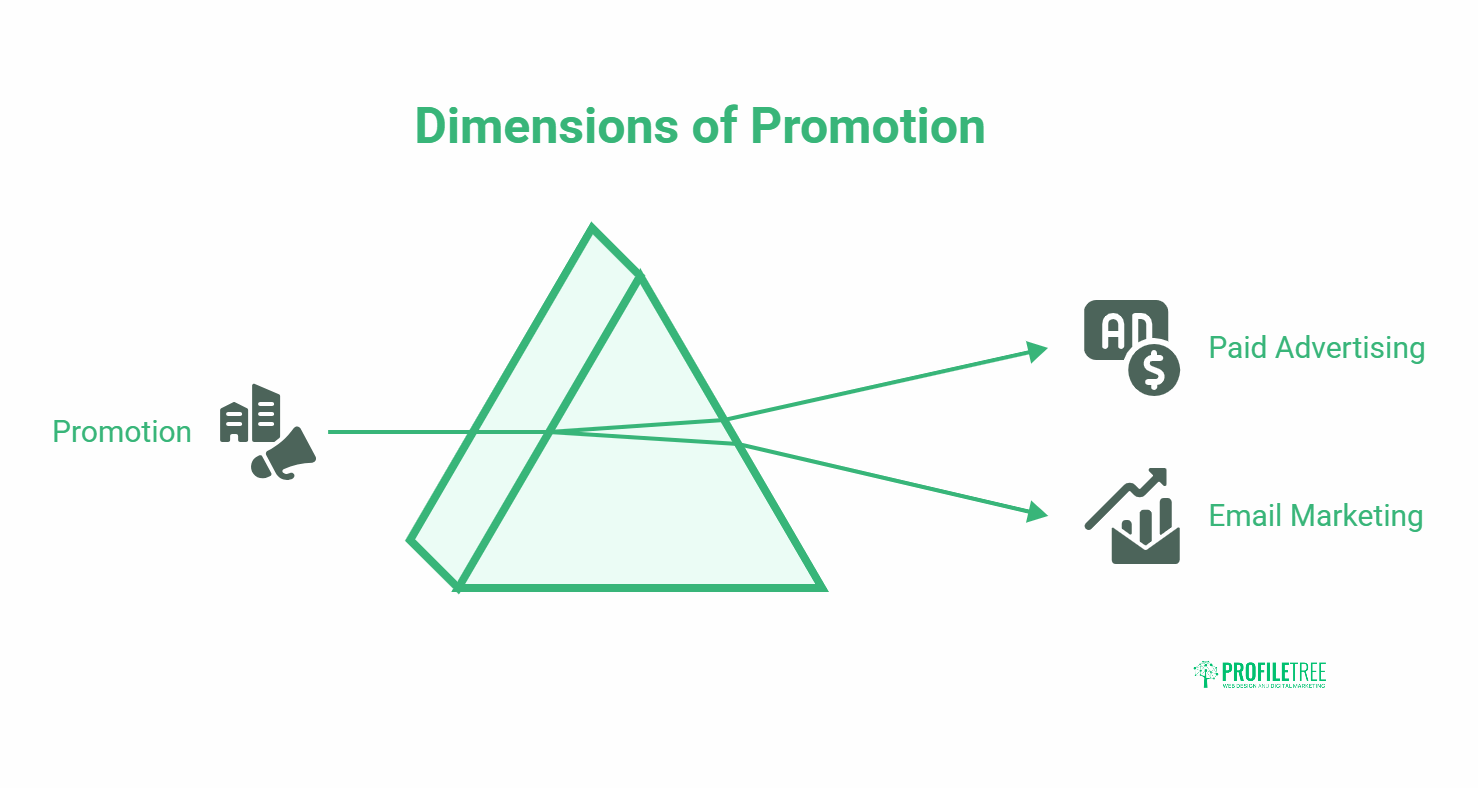
Promotion is the part of marketing most people think of first: the ads, the campaigns, the emails. It’s important, but it works best when it’s built on a foundation of clear positioning, solid content, and a good understanding of where your audience actually is.
Paid Advertising
Paid advertising (whether Google Ads, Meta campaigns, or LinkedIn Sponsored Content) buys reach and speed. It can put your business in front of the right audience immediately, which organic channels cannot. The trade-off is that it stops the moment you stop paying.
For most SMEs, paid advertising works best as a complement to organic strategy, not a replacement for it. Running paid ads to a poorly designed landing page, or targeting the wrong audience with the right creative, produces expensive traffic that doesn’t convert.
Email Marketing
Email remains one of the highest-return channels available to SMEs, largely because it reaches people who have already expressed interest. A list of 500 engaged subscribers is worth more commercially than 5,000 social media followers who’ve never bought anything. The key to email marketing that works is relevance: segmenting your audience and sending content that addresses their specific situation rather than broadcasting the same message to everyone.
AI and Automation in Business Marketing
Artificial intelligence is changing how marketing is planned, executed, and measured. For SMEs, the most practical applications are in content assistance, audience analysis, and campaign automation, not replacing human judgment, but reducing the time required for repetitive tasks.
Businesses that are integrating AI thoughtfully into their marketing workflows are seeing gains in efficiency and speed. Those who adopt it uncritically, without understanding its limitations, are generating content that ranks poorly and converts worse. AI transformation services for SMEs focus on practical implementation, identifying which tasks benefit from automation and which require experienced human input.
Measuring Marketing: What to Track and Why
Marketing that can’t be measured can’t be improved. For SMEs, the most important metrics are the ones tied directly to commercial outcomes: enquiries, leads, and sales. Vanity metrics (follower counts, page views, impressions) tell you about reach, not results.
Key Metrics for SME Marketing
The metrics worth tracking depend on the channel. For SEO, track organic clicks, keyword positions, and the pages driving the most enquiries. For paid campaigns, track cost per lead and conversion rate. For email, track open rate, click rate, and the number of replies or bookings generated. For social media, track engagement on posts that link to commercial pages, not likes on posts that don’t.
Using Analytics to Improve Performance
Analytics data tells you what’s happening. It doesn’t always tell you why. A page that gets a lot of traffic but few enquiries might have the wrong audience, a weak call to action, or content that answers the question before the visitor has a reason to get in touch. Diagnosing the cause requires looking at the data in context, not just reporting numbers.
The businesses that get the most from analytics are the ones that treat it as a continuous process, reviewing performance monthly, making changes based on what they find, and tracking whether those changes move the metrics that matter.
Frequently Asked Questions
What is the main purpose of marketing in a business?
The primary purpose of marketing is to connect a business’s products or services with the customers who need them. This involves identifying the target audience, communicating the value of the offer clearly, and using the right channels to reach those people at the point when they’re ready to buy. Marketing also plays a long-term role in building brand recognition and customer loyalty, both of which reduce the cost of acquiring new customers over time.
What are the key benefits of marketing for a small business?
For SMEs, the clearest benefits of marketing are increased visibility, more predictable lead generation, and stronger brand recognition within the target market. Effective marketing also creates assets (content, email lists, social followings, backlinks) that continue to generate value long after the initial investment. A business that markets consistently tends to be less dependent on word-of-mouth and referrals alone, which makes revenue more stable and easier to plan around.
How does digital marketing differ from traditional marketing?
Traditional marketing (print, radio, outdoor advertising) buys reach without precision. You can choose a publication or station whose audience overlaps with your target market, but you can’t target by specific behaviour or intent. Digital marketing allows a much higher degree of targeting: you can show an ad only to people in a specific location who have searched for a specific term, or send an email only to customers who bought a specific product. It also makes measurement far more straightforward.
How much should an SME spend on marketing?
There’s no universal figure, but a commonly cited benchmark is 7 to 10% of revenue for businesses in growth mode. For businesses maintaining their current position, 5% is more typical. What matters more than the percentage is how the budget is allocated. Concentrating spending on one or two channels that are already generating results tends to outperform spreading a small budget thinly across many channels.
What’s the difference between marketing and advertising?
Advertising is a subset of marketing. Marketing covers the full process of understanding your market, positioning your offer, building your brand, and using channels to reach customers. Advertising refers specifically to paid placements: Google Ads, social media ads, display advertising, and so on. A business can market itself effectively with very little advertising spend, using organic SEO, content, and email. A business that relies only on advertising without an underlying marketing strategy tends to see inconsistent results.
How do businesses measure marketing return on investment?
Marketing ROI is calculated by comparing the revenue generated by marketing activity against the cost of that activity. The formula is: (Revenue from marketing minus Cost of marketing) divided by Cost of marketing. In practice, attribution is rarely clean: a customer might discover a business through organic search, return via a retargeting ad, and convert after an email. Good analytics setups track the full customer journey rather than attributing all value to the last touchpoint.