
Restaurant Digital Marketing: From Instagram Browsers to Booked Tables
Table of Contents
A beautiful Instagram feed means nothing if it never fills a table. Five-star reviews do not help if a hungry customer cannot find your booking link in three taps. The restaurants that grow in Belfast and across the UK are the ones that treat restaurant digital marketing as a single connected journey, from the first thumb-stopping food photo to the confirmation email that lands in someone’s inbox. That is the difference between activity and results, and it is what this guide is built around.
Most advice on this topic stops at “post good photos and reply to reviews”. Useful, but incomplete. The harder question is how each channel hands a customer to the next one without losing them. Instagram sparks the craving. Google answers the practical questions. Your website closes the booking. Email brings them back. Get the handoffs right and your restaurant digital marketing starts paying for itself.
The three things worth fixing first: a booking flow that works on a phone in under a minute, a Google Business Profile that answers the obvious questions before anyone asks, and an Instagram presence that always points somewhere bookable. Everything else builds on those.
How Diners Actually Find and Choose a Restaurant
Effective restaurant digital marketing starts with an honest map of how people decide where to eat. The decision rarely happens when someone is hungry. It builds over days of scrolling, saving, and half-remembering a place a friend mentioned. By the time hunger strikes, the shortlist already exists, and your job was done earlier in the week.
The Discovery Moment
Mobile dominates this stage. According to the AdTheorent Dining Trends Report, conducted by The Harris Poll among more than 2,000 adults, 70% of consumers use their mobile devices somewhere along their restaurant purchasing journey. People browse Instagram on a lunch break and file away dinner ideas. They watch short food videos and plan a weekend. They search “near me” when the moment arrives. Each of these is a touchpoint your restaurant digital marketing either shows up in or misses.
Search intent gives away where someone is in that journey. “Best Italian in Belfast” is research mode, days out. “Open now” is immediate intent, minutes away. Treating those two searchers the same way wastes the chance to meet each one well, and our search engine optimisation work starts there, because ranking for the right intent beats ranking for everything.
Why Social Proof Decides It
People trust other diners more than they trust you. They check Instagram for the room and the plates, scan Google reviews for reassurance, and weigh a friend’s offhand recommendation heavily. User-generated content, a real customer’s wobbly phone photo of your dessert, often converts better than your polished hero shot, because it reads as honest. Strong restaurant digital marketing makes that proof easy to find, which is the heart of effective social media marketing for hospitality.
Instagram as the Front Door
Instagram is where most restaurant digital marketing begins, because food and visual feeds were made for each other. The platform works as a front door: it pulls people in, but a door is only useful if it opens onto somewhere. The mistake restaurants make is treating Instagram as a gallery rather than a route to a booking, which is why disciplined social media management always ties a feed back to a booking action.
Food Content That Earns a Save, Not Just a Like
iPhone snapshots no longer cut through. Natural light beats harsh flash every time, because flash flattens texture and kills appetite appeal. Shoot dishes at a 45-degree angle to show depth. Keep a consistent style, the same colour treatment and framing, so your feed becomes recognisable in a crowded grid. Belfast’s food scene runs from bright and airy to moody and dramatic; pick a lane and stay in it.
Behind-the-scenes content does the heavy lifting people underrate. A chef plating a signature dish, the morning delivery being unboxed, a supplier being named and thanked, these humanise the brand and tend to outperform the perfect plated shot. The save is the metric to chase, not the like. A save is intent.
Stories and Reels With a Job to Do
Stories suit the urgent and the ephemeral: today’s special, the last two covers tonight, a quick poll. Reels reach beyond your followers because the algorithm pushes them, so that is where discovery happens. Quick plating clips, a chef’s technique, a genuine customer reaction. Keep them to 15 to 30 seconds and tie the trending audio to something you can actually deliver.
Balance matters. The rough 80/20 split, four parts useful or entertaining to one part direct promotion, keeps a feed from feeling like a billboard. Every promotional post should still carry a clear next step, and on Instagram that means a booking link in the bio or a sticker that goes straight to your reservation page. Restaurant digital marketing that entertains but never converts is a hobby, not a strategy.
Working With Local Creators
Micro-influencers in the 1,000 to 10,000 follower range usually deliver better value for a local restaurant than a big name, because their audience is local and trusts them. Belfast food bloggers have engaged, regional followings. Agree deliverables and usage rights in writing before anyone eats a free meal, so there are no awkward conversations about what was actually promised.
Google Business Profile: Your Highest-Return Asset
If Instagram is the front door, your Google Business Profile is the shop window on the busiest street in town, and it is free. For most restaurants it is the single highest-return element of their restaurant digital marketing, because it appears at the exact moment someone is deciding where to go tonight. A neglected profile loses bookings silently, with no analytics dashboard flashing red.
Set It Up Properly, Not Just Completely
Completeness drives local ranking, but specificity drives clicks. “Italian Restaurant” beats the generic “Restaurant” as a primary category. Add secondary categories that capture what you also are, a wine bar, a wedding venue. Keep hours exact, including kitchen close times and holiday changes, because Google quietly reduces visibility for profiles it catches being wrong, and a customer who arrives to a dark kitchen does not come back.
Attributes do more than they look like they should. Outdoor seating, wheelchair access, vegan options, dog-friendly: each one matches a specific search and a specific diner. Upload your menu as structured, readable content rather than a PDF, add real interior and food photos, and the profile starts answering questions before they are asked.
Reviews Are a Conversation, Not a Scoreboard
Reply to every review within a day or two. Thank positive reviewers specifically, not with a copy-paste line. Answer criticism calmly, acknowledge the issue, and move the detail offline. The audience for a negative review is not the reviewer; it is the next hundred people reading how you handled it. A measured reply often impresses more than the original complaint stung.
Build a quiet system for earning reviews: a QR code on the receipt, a well-timed follow-up message, staff trained to mention it after a clearly happy meal. Never pay for reviews or offer incentives; it breaches Google’s guidelines and risks the profile. Make it easy, do not make it transactional.
Your Website: Where the Booking Actually Happens
Social media borrows attention; your website owns the transaction. It is the one channel in your restaurant digital marketing where you control the full experience, and it is where an interested browser becomes a confirmed cover. If the booking flow is clumsy on a phone, every pound spent upstream on Instagram and Google leaks away at the last step.
Mobile-first, Because That is Where They Are
The majority of restaurant website visits come from phones, so design for a thumb first. Click-to-call in the header, a booking button that never makes anyone hunt, readable text with no pinch-zooming, and fast loading, because hungry people have no patience. Professional website design services exist to get these basics right, and the basics are what convert. Menu, booking, location, and hours should all be reachable without a scroll.
Booking and Ordering That Protects Your Margin
An integrated booking system with real-time availability prevents the double-booking that sours a Friday night, and getting it working reliably is a job for proper website development rather than a bolt-on plugin. On ordering, the commercial choice matters. Third-party aggregators bring reach but charge in the region of 15 to 30% commission, which eats a thin restaurant margin fast.
Direct ordering through your own site keeps that money and, more valuably, keeps the customer data. A direct system also depends on fast, stable website hosting management, because a checkout that stalls at peak time costs real covers. A sensible hybrid uses aggregators for discovery, then nudges repeat customers toward ordering directly next time. Owning the relationship is the long game of good restaurant digital marketing.
Menus Built for Search and Appetite
A PDF menu frustrates mobile users and tells Google nothing. An HTML menu is searchable, accessible, and can rank for specific dish searches, so “best carbonara Belfast” can land someone directly on your pasta section. Write descriptions that balance appetite appeal with the words people actually search, mark dietary options clearly, and keep it current with the seasons. Getting those dish pages to rank is exactly what ongoing SEO services are built to do.
Content and Email That Bring People Back
Restaurant digital marketing is not only about winning a first visit; the profit is in the second, fifth, and twentieth. Content and email are how you stay in someone’s mind between meals without paying for the privilege every time. This is the quietest, cheapest, and most underused part of most restaurants’ marketing.
Content With a Reason to Exist
Restaurant blogs fail when they read like a press release. They work when they give something away: a recipe for a dish people love, the story behind a local supplier, a seasonal guide that happens to mention your Christmas menu. Aim at real searches such as “best Sunday roast Belfast” and you capture intent that paid social never reaches. Folding this into a wider digital strategy is what turns scattered posts into a plan that compounds.
Video That Earns Its Production Cost
Video holds attention better than a static image, and short-form rules social feeds. A chef demonstration, a thirty-second kitchen clip, an honest customer reaction; each builds a connection a photo cannot. Quality production raises how the brand is perceived and, unlike a single ad, a good signature-dish video keeps working for months. Professional video marketing services turn a one-off shoot into a library of assets you reuse across every channel.
Email: The Retention Engine
Email quietly delivers the best return in restaurant digital marketing because it reaches people who already like you, and a structured approach to email marketing is what keeps that channel earning. Segment it: weekday lunch offers to the office crowd, brunch to weekend diners, pairing dinners to your wine list. Automate the obvious wins, a booking confirmation that builds anticipation, a post-visit note asking for feedback, a gentle win-back to someone who has not been in for three months. None of it needs constant effort once it is set up.
Paid Social and Local Ads That Pay Back
Organic content builds a community slowly; paid promotion reaches the right people at speed. Used well, paid social is the accelerator on a restaurant digital marketing engine that already runs. Used badly, it is a fast way to spend money boosting posts that were never going to convert.
Targeting That Respects the Budget
Meta’s targeting lets you reach local food lovers, special-occasion diners, or the weekday lunch crowd specifically. Geographic radius targeting captures people genuinely close enough to visit. Retargeting brings back people who looked at your site but did not book, often your cheapest conversions. Match the campaign objective to the goal: awareness for a new opening, conversions for bookings, and do not blur the two.
Local and Moment-based Advertising
Local advertising captures the immediate decision. Google Ads catch “restaurants near me” at the point of intent. Lunch campaigns can target office workers within walking distance; evening ads can widen to residential areas; weekend campaigns can stretch the radius for destination dining. UK restaurants running paid food ads also need to check their creative against the government’s less healthy food advertising rules, which restrict paid-for online ads for products high in fat, salt, or sugar. Sharpening targeting and spend is where AI marketing tools increasingly earn their place. Tie spend to what a customer is actually worth over a year, not what a single cover earns, and the budget maths stops feeling frightening.
Measuring What Matters
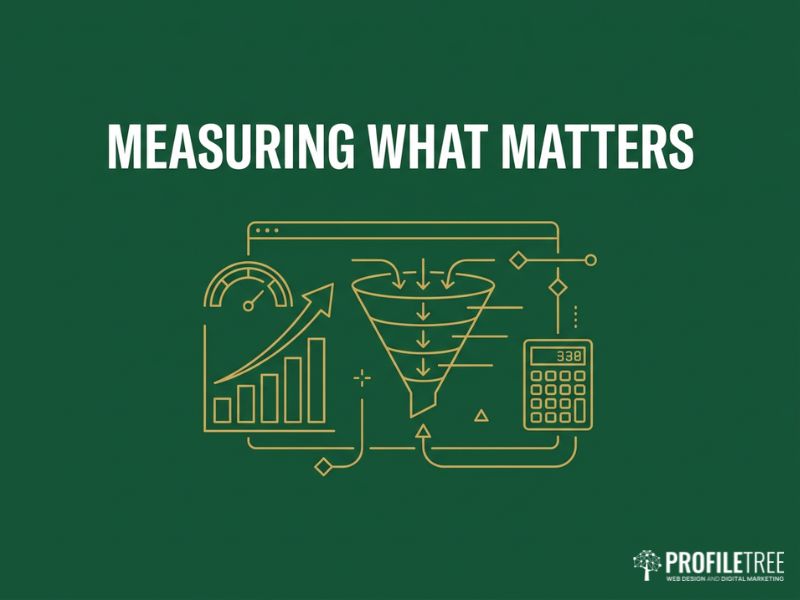
Restaurant digital marketing has to be judged against bookings and revenue, not followers and likes. Vanity metrics feel good and prove nothing. The discipline is connecting each channel to an outcome you can bank, then spending more where the money actually comes from.
The Metrics Worth Tracking
Follower counts and website visits mean little on their own. The ratios matter: visitor-to-booking rate shows whether your site works, social-engagement-to-click shows whether your content is relevant, and cost per acquisition tells you whether a campaign is profitable. Set up Google Analytics, a Meta pixel, and call tracking so phone bookings are not invisible, and the picture sharpens quickly.
Attribution is messy because the journey is messy. Instagram might introduce you, a Google review might reassure, the website might take the booking, and the confirmation email might reduce the no-show. Each step earned part of that cover. Crediting only the last click undervalues the channels doing the early work, and that is how good restaurant digital marketing gets defunded by accident.
Ciaran Connolly, founder of ProfileTree, puts it simply: “The restaurants that win online stop thinking in separate channels. Instagram creates the want, Google answers the practical questions, the website takes the booking, and email earns the next visit. When those four things talk to each other, marketing stops being a cost and starts being the thing that fills the room.”
Test, Then Test Again
Continuous testing beats opinion. A/B test booking button placement, email subject lines, the length of a dish description, the photo that fronts a campaign. Apply menu engineering to the digital menu too, giving high-margin dishes the prominent positions. Small, steady improvements compound into a measurably better return across the whole of your restaurant digital marketing.
What Comes Next: AI and Voice

The tools behind restaurant digital marketing keep shifting, and a couple of changes are worth preparing for now rather than scrambling for later. Neither requires a big budget; both reward restaurants that move slightly ahead of their local competition.
AI in Day-to-day Marketing
AI chatbots can handle reservation enquiries and common questions around the clock, freeing staff for the guests in front of them, and a well-built AI chatbot solution can sit on your site and social channels alike. Marketing automation can schedule posts, trigger emails off customer behaviour, and stop you promoting a dish that sold out at lunch. The point is not novelty; it is giving a small team back its time. For restaurants that want to build the skills in-house, structured digital training courses are usually a better investment than another tool subscription, and focused AI marketing support helps a team apply them.
Voice and Conversational Search
Voice search rewards natural, question-shaped content. Around 58% of consumers use voice search to find local businesses such as restaurants, and those queries are conversational: “where’s the best Italian near me with outdoor seating?” rather than “Italian restaurant Belfast”. Structuring your site to answer full questions, and keeping that Google Business Profile precise, is what makes a restaurant the answer a voice assistant reads back. It folds neatly into the same SEO and local search foundations that already help you rank.
Bringing It Together
Restaurant digital marketing works when the channels stop operating as separate campaigns and start working as one journey. Instagram earns the interest, Google answers the questions, the website takes the booking, and email brings people back. Belfast’s restaurant scene rewards the operators who treat this as essential infrastructure rather than an optional extra, and the gap between them and the “post and hope” crowd widens every year.
Start with an honest audit. Where does your current journey break? Fix the worst leak first, measure the change, then move to the next. ProfileTree, a Belfast-based digital agency holding a 5-star Google rating across 463 reviews, helps restaurants build that connected system, from website development services and video through to local search and the digital marketing strategy that ties them together. The goal was never a prettier feed. It was a fuller room.
FAQs
How much should a restaurant spend on digital marketing each month?
A common benchmark is 3 to 6% of revenue, with most of that going to digital. A restaurant turning over £50,000 a month might spend £1,500 to £3,000 in total. Smaller venues often start at £500 to £1,000, focused on the essentials first.
Which platform works best for a Belfast restaurant?
Instagram usually drives the strongest engagement through food content. Your Google Business Profile often delivers the highest return through local search. The best results come from coordinating both rather than betting on one.
How quickly will digital marketing produce results?
Social engagement can lift within weeks. SEO typically takes three to six months. Paid ads bring traffic immediately but need tuning to be profitable. Expect meaningful return within six to nine months of consistent effort.
Should a restaurant handle marketing in-house or outsource it?
A hybrid usually works best. Keep daily posting and review replies in-house, where your voice lives, and bring in an agency for strategy, advertising, and technical work. Small venues often start internally and outsource as they grow.
What is the first investment a new restaurant should make?
Professional photography, because weak food photos undermine everything else. After that, a complete Google Business Profile, a fast mobile site with working bookings, and a consistent Instagram presence.