
YouTube Features for Marketers: A Practical UK Guide
Table of Contents
YouTube reaches 94% of UK adults, who now spend an average of 51 minutes a day on the platform across phones, tablets and computers, according to Ofcom’s Online Nation 2025 report. For marketers in Belfast, Dublin or London, that scale makes the platform hard to ignore, yet most published guidance still assumes a US audience and a full-time video team.
This guide takes a different line. It works through the YouTube features that matter for marketing goals, shows how to apply each one with a small budget, and covers the UK disclosure rules that American guides skip.
You will find sections on understanding the core features, matching them to brand awareness and lead generation, staying compliant with ASA guidance, and measuring what actually moves the needle.
Understanding the Core YouTube Features
YouTube has expanded well beyond standard uploads. Shorts, the Community tab, Premieres and channel memberships each serve a distinct job, and knowing which feature suits which goal saves wasted effort. Before deciding where to invest, it helps to see what each one does and who it reaches.
YouTube Shorts for Reach
Shorts are vertical videos of up to three minutes, surfaced in a dedicated feed that sits separate from search and subscriptions. The format suits quick demonstrations, single tips and behind-the-scenes clips. For a smaller brand, Shorts offer a route to new viewers without the production cost of a full long-form upload.
The trade-off is retention. A Short can win views without building any lasting connection, so treat it as the top of the funnel rather than the whole journey. Pairing Shorts with deeper content is the practical move, which is where a clear view of short-form versus long-form planning pays off.
Shorts that work for businesses tend to fall into a few buckets: a single tip delivered in under 30 seconds, a quick before-and-after, or a short answer to a question customers ask often. Trending audio can widen reach, but the safer bet for a brand is clarity of message, since a Short with no payoff rarely converts a casual viewer into a subscriber. Captions matter too, because a large share of mobile viewing happens with the sound off.
The Community Tab as a Research Tool
The Community tab lets channels post text updates, polls, images and questions directly to subscribers. Most guides frame it as an engagement feature, and it is, but its quieter value is research. A single poll can tell you which topic your audience wants next, before you commit budget to filming it.
That feedback loop matters for any business planning content on a tight budget. Used well, the tab functions as a low-cost focus group, and the responses often feed straight into the next round of scripts and titles.
The tab also keeps a channel visible between uploads. Filming takes time, and gaps of two or three weeks are common for small teams, so a poll or an image post keeps subscribers engaged without the production overhead of a full video. Posts appear in subscribers’ feeds and notifications, which gives a channel a presence on the days it is not publishing.
Premieres and Live for Appointment Viewing
Premieres schedule a video to debut at a set time with a live chat running alongside it. Live streams go further, broadcasting in real time. Both create a sense of occasion that an ordinary upload cannot, which raises the chance that viewers turn up at a specific moment rather than catching the clip weeks later.
For B2B brands, a scheduled Premiere of a case study or product walkthrough can anchor a wider campaign. The countdown gives your email and social posts something concrete to push towards. A case study film of that kind is the sort of project our Belfast video production team shoots for clients, and the Premiere gives it a fixed launch date to build around.
Live formats also surface questions in real time, which is useful intelligence. A Q&A session or a live demo lets viewers ask what they genuinely want to know, and those questions often reveal objections a sales team has been guessing at. Recording the live stream gives you an on-demand asset afterwards, so the effort works twice: once for the live audience and again for everyone who finds it later through search.
Memberships and Channel Tools
Channel memberships let viewers pay a monthly fee for perks such as badges, exclusive posts or early access. They suit channels with an established following and a reason to reward loyalty. For most SMEs, memberships sit further down the roadmap, after a channel has built a base worth converting, a stage covered in more depth in this guide to monetising YouTube channels.
Matching Features to Marketing Goals
A feature is only useful when it maps to an outcome. Brand awareness, website traffic and lead generation each call for a different mix, and pushing every feature at once spreads a small team too thin. This section connects the tools above to the goals that justify the time spent on them.
Building Brand Awareness
Awareness work favours reach over depth, so Shorts and consistent uploads carry most of the weight here. The aim is repeated, low-friction exposure: short clips that introduce who you are and what you solve. A new channel still needs solid foundations first, and this YouTube channel setup walkthrough covers the basics before you scale output.
Awareness also benefits from cross-posting. A strong Short can live on Instagram and TikTok too, stretching one production session across several channels.
Frequency beats polish at this stage. A channel publishing a steady cadence of decent clips will usually outpace one releasing the occasional flawless film, because the algorithm rewards regular activity because viewers form the habit of seeing the brand. Set a realistic schedule the team can actually sustain, then hold to it.
Driving Traffic to Your Website
YouTube can push viewers towards your site through end screens, cards and description links. The discipline is to give people a clear, single reason to click, not a list of options. A video on a specific problem should link to the page that solves it, with anchor text that names the destination.
For service businesses, that destination is usually a dedicated page rather than a homepage. Connecting video content to your wider plan works best when it sits inside a documented digital strategy rather than running as a standalone experiment.
Description links carry weight because they sit on every view, including those that arrive months later through search. A pinned comment can reinforce the same link for viewers who skip the description. The detail that catches people out is verbal prompting: a viewer rarely clicks a link they were not told about, so a brief spoken cue to check the description lifts click-through more than any on-screen graphic.
Generating Leads and Enquiries
Lead generation on YouTube relies less on subscriber counts and more on intent. Educational videos that answer a buyer’s real question tend to attract people closer to a decision. A walkthrough of how a process works, ending with a route to enquire, often outperforms a polished brand film for actual enquiries.
This is where consistent production matters. Brands that publish regular, useful videos build the trust that shortens a sales cycle, and that output is what a focused video marketing approach is built to support. All prices and figures in this guide are indicative UK examples.
Once a video has shown that it holds viewers, the cheapest way to extend its reach is to put it in front of people who are already interested. Embed it on the matching service page, send it to your email list and feature it at the top of the channel. Each of those routes puts proven content in front of a warmer audience without paying for impressions.
Repurposing Across Channels
One long-form video can become several Shorts, a handful of Community posts and a section of an email. This waterfall approach gets more from each filming day, which suits teams without the capacity to create fresh content for every platform. The principle of reworking a single asset into many also underpins broader content marketing planning.
UK Compliance and Disclosure
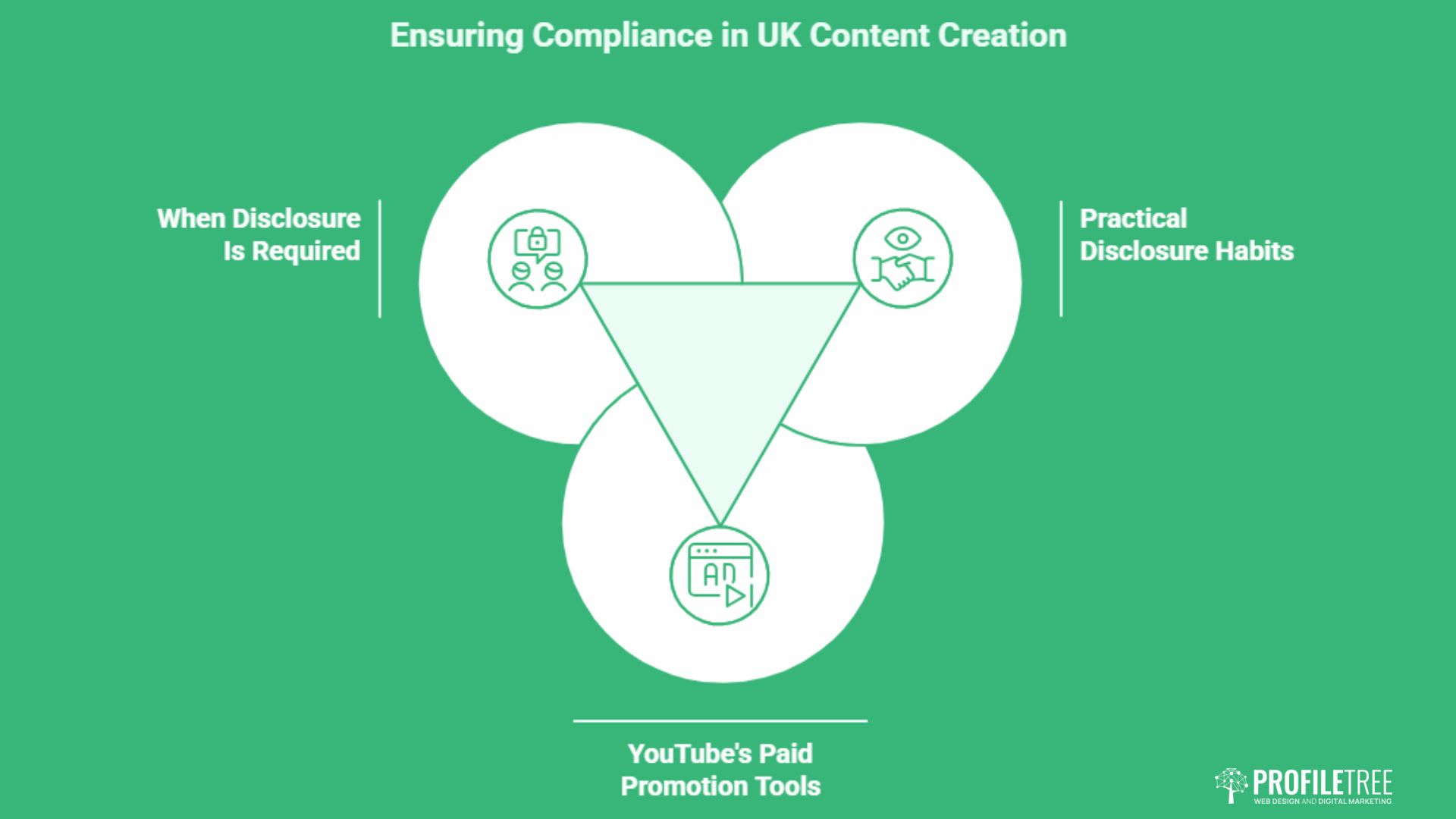
Marketing on YouTube in the UK carries obligations that US-focused guides rarely mention. The Advertising Standards Authority and the Competition and Markets Authority expect clear labelling whenever content is paid for or sponsored. Getting this right protects the brand and keeps the channel in good standing.
When Disclosure Is Required
If you pay a creator, gift a product in exchange for coverage, or promote your own products in a way a viewer might not recognise as advertising, disclosure applies. The test the ASA uses is whether the average viewer would understand the commercial intent. When in doubt, label it.
This applies to brand-owned channels too, not only influencer deals. A clear approach here is part of any well-run social media marketing programme.
Using YouTube’s Paid Promotion Tools
YouTube includes a “paid promotion” checkbox that adds an on-screen disclosure to a video. Ticking it is a useful baseline, but it does not always satisfy ASA expectations on its own. Many brands pair it with a clear verbal mention and an “AD” label in the title or description to remove any ambiguity.
For up-to-date details, the ASA publishes guidance on labelling ads and recognising advertising online, which is the authoritative reference for UK marketers and worth checking before a campaign goes live.
Practical Disclosure Habits
Consistency reduces risk. Decide on a standard disclosure format and apply it the same way every time: a spoken line early in the video, a written note in the description, and the platform toggle where relevant. Documenting this in a simple internal checklist means new team members get it right without guessing.
Measuring What Matters
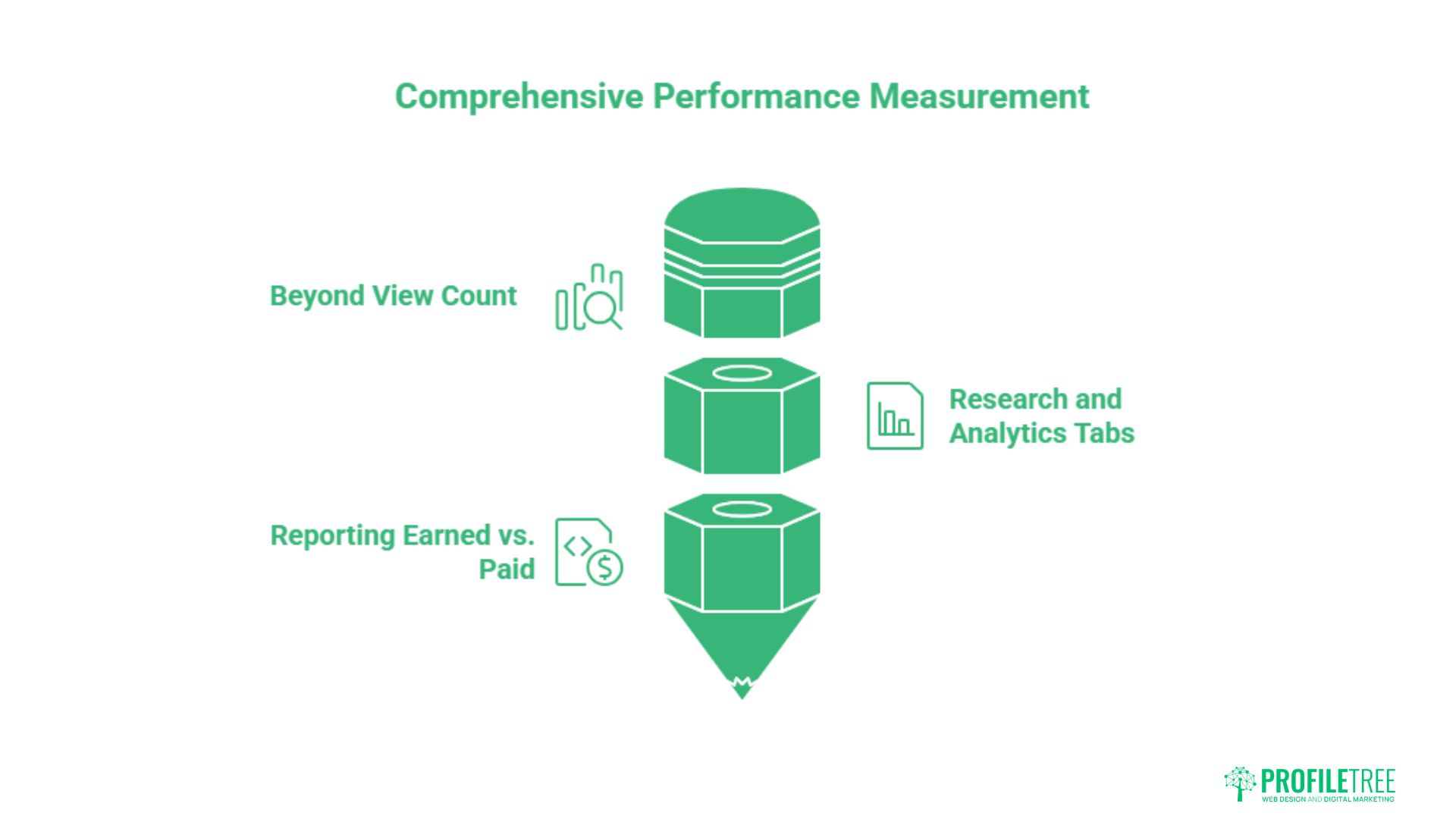
View count is the metric most often quoted and least often useful. The figures that correlate with commercial results sit deeper in YouTube Studio, and learning to read them changes how a channel is run. This section covers the metrics worth tracking and how to act on them.
Beyond the View Count
Average view duration and audience retention tell you whether people actually watch, not just whether they clicked. A video with fewer views but strong retention often does more for a brand than a viral clip people abandon after three seconds. Track retention curves to spot exactly where viewers drop off.
Those drop-off points are practical signals. A sharp fall in the first 15 seconds usually means the opening promised the wrong thing or took too long to deliver. A gentle decline across the whole video is healthy. Spikes upward, where viewers rewatch a section, flag a moment worth expanding into its own video. Reading the curve this way turns a passive metric into a content plan.
Using the Research and Analytics Tabs
YouTube Studio’s Research tab shows what your audience is searching for, functioning as a keyword tool for video planning. Combined with the Analytics tab, it tells you both what to make next and how existing content performs. This pairing turns Studio from an uploader into a planning hub.
Reading this data well is a skill in its own right, and structured digital training can shorten the learning curve for a marketing team taking it on.
A simple monthly routine keeps the data useful. Check which videos gained traffic and why, note the search terms bringing people in, and log one content idea from the Research tab for the next filming session. This habit stops analytics from becoming a dashboard nobody acts on, and over a few months, it builds a clear picture of what the audience actually responds to.
Reporting Traffic Sources Each Month
Splitting views by traffic source gives a truer picture of a channel’s health than the total. Views from YouTube search and browse features show that the platform is putting the channel in front of new people, while views from external sources show which embeds, emails and social posts are pulling their weight. Tracking the split each month shows whether the channel is building its own pull or depending on promotion from elsewhere.
Ciaran Connolly, founder of ProfileTree, the Belfast-based digital agency, puts it directly: “Across the YouTube content we have produced for clients in Northern Ireland, the channels that grow are the ones treating video as an ongoing conversation with a specific audience, not a one-off broadcast. Consistency and relevance beat production budget almost every time.”
Start With One Feature and Measure It
YouTube’s features reward marketers who match each tool to a clear goal, stay compliant with UK disclosure rules, and judge success by retention rather than raw views. Start with one feature, measure honestly, and build from there. For help turning a YouTube channel into a genuine source of enquiries, explore ProfileTree’s video marketing services and build a plan around your audience.
FAQs
Which YouTube features matter most for marketers?
Shorts for reach, the Community tab for audience research, Premieres for timed launches, and Studio analytics for measurement. Most SMEs see results by starting with Shorts and analytics before adding the rest.
How do I label ads on YouTube for UK ASA rules?
Use YouTube’s paid promotion toggle, add an “AD” label in the title or description, and include a spoken disclosure. The test is whether an average viewer would recognise the commercial intent.
Are YouTube Shorts worth it for B2B?
Yes, for brand awareness and humanising a corporate brand. Shorts widen reach cheaply, though B2B lead generation usually comes from longer educational videos that answer buyer questions.
Can I generate leads without 1,000 subscribers?
Yes. Subscriber count does not gate description links, end screens or cards. Focus on intent-driven content that answers real questions and routes viewers to a relevant page.
How do I find video keywords on YouTube?
Use the Research tab inside YouTube Studio. It shows what your audience searches for and highlights content gaps you can fill, working as a planning tool for your next uploads.