
Is Shopify Better Than Your Own Website? The Truth Nobody Tells You
Table of Contents
“Is Shopify better than having your own website?” This question reveals a fundamental misunderstanding that costs businesses thousands. Shopify is your own website—you’re not choosing between Shopify and ownership, you’re choosing between renting and buying. After building 400+ websites across both Shopify and self-hosted platforms, we’re exposing what this choice really means for your business, your budget, and your future.
The Real Question You’re Actually Asking
The fundamental choice between Shopify and self-hosted websites isn’t about quality or capability—it’s about business model alignment and long-term strategic objectives.
When Belfast businesses ask us this question, “Is Shopify better than having your own website?”, they’re really asking:
- Should I rent a platform (Shopify) or own my infrastructure (WordPress/custom)?
- Is convenience worth the ongoing cost?
- Will platform limitations restrict my growth?
- Who controls my business data?
- What happens if I want to leave?
The answer isn’t simple because both options serve different businesses brilliantly—and destroy others completely.
Understanding What You Actually Get
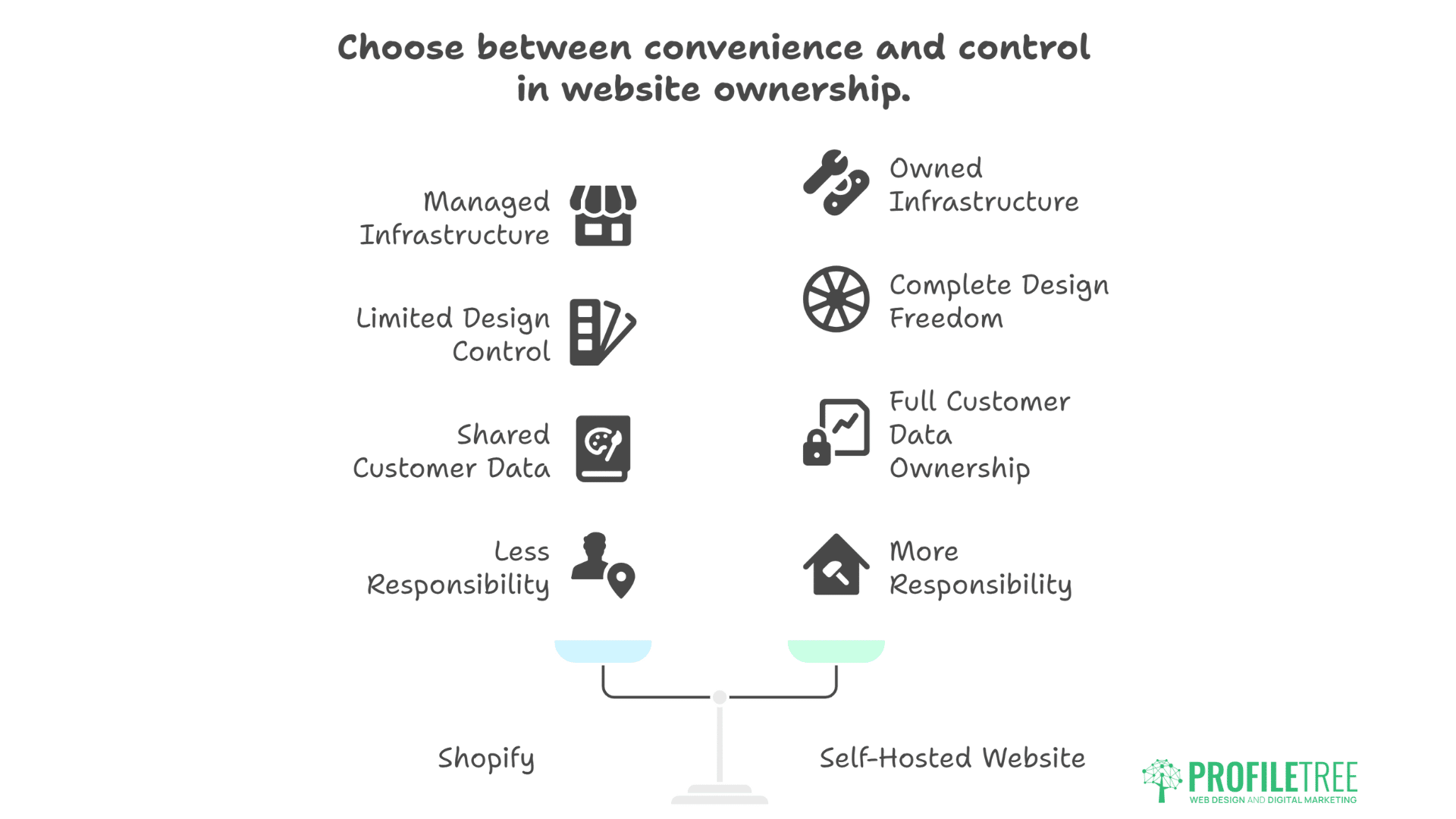
Comparing Shopify and self-hosted websites requires understanding what each option actually provides versus what you assume you’re getting.
Shopify: The All-Inclusive Rental
Think of Shopify like renting a fully-furnished shop in a managed shopping centre. Everything’s provided—security, utilities, maintenance, even the till system. You pay monthly rent and follow centre rules, but you can start selling immediately.
What’s Actually Included:
- Hosting that handles traffic spikes
- SSL certificates and security
- PCI compliance for payments
- Mobile-responsive themes
- Built-in checkout system
- Automatic backups
- CDN for global delivery
- 24/7 infrastructure support
What You DON’T Own:
- Your infrastructure
- Your checkout process
- Complete design freedom
- Your customer data (fully)
- The ability to move elsewhere easily
Self-Hosted Website: The Property You Own
Building your own website (typically WordPress/WooCommerce or custom) is like buying your own shop. You own everything, control everything, but you’re responsible for everything. The freedom is absolute—so is the responsibility.
What You Actually Control:
- Every line of code
- Complete design freedom
- All customer data
- Payment processor choice
- Hosting provider selection
- Feature implementation
- Migration ability
What You’re Responsible For:
- Security updates and monitoring
- Backup management
- SSL certificates
- PCI compliance
- Performance optimisation
- Uptime maintenance
- Technical troubleshooting
Our web development services deliver owned websites with managed support—combining ownership benefits with professional maintenance.
The Money Truth Nobody Discusses
Platform marketing materials carefully obscure true ownership costs—real-world expenses often surprise businesses that base decisions on advertised pricing.
Shopify’s Real Costs
The advertised £25/month is a fantasy. Here’s the actual Shopify costs for UK businesses:
Year One Reality:
- Basic Shopify: £25/month = £300
- Essential apps (10-15): £100/month = £1,200
- Premium theme: £200 one-time
- Transaction fees (2.2%): £880 (on £40k sales)
- Custom development: £2,000-5,000
- Total Year One: £4,580-7,580
Year Two Onwards:
- Monthly platform: £300-900 (as you scale)
- Apps accumulate: £1,200-3,000
- Transaction fees: 2.2% of everything
- Developer costs: £2,000+ annually
- Annual Reality: £3,500-10,000+
Self-Hosted Website Costs
Ownership isn’t free either. Real costs for professional WordPress/WooCommerce:
Year One Investment:
- Professional development: £3,000-8,000
- Quality hosting: £30/month = £360
- Premium plugins: £300-500
- SSL certificate: £0-100
- Maintenance: £100/month = £1,200
- Total Year One: £4,860-10,160
Year Two Onwards:
- Hosting: £360-600
- Plugin renewals: £300-500
- Maintenance/updates: £1,200-2,400
- Improvements: £1,000-2,000
- Annual Reality: £2,860-5,500
The shocking truth? Five-year costs often equalise, but ownership builds equity while rental remains an expense.
Performance and Speed Reality
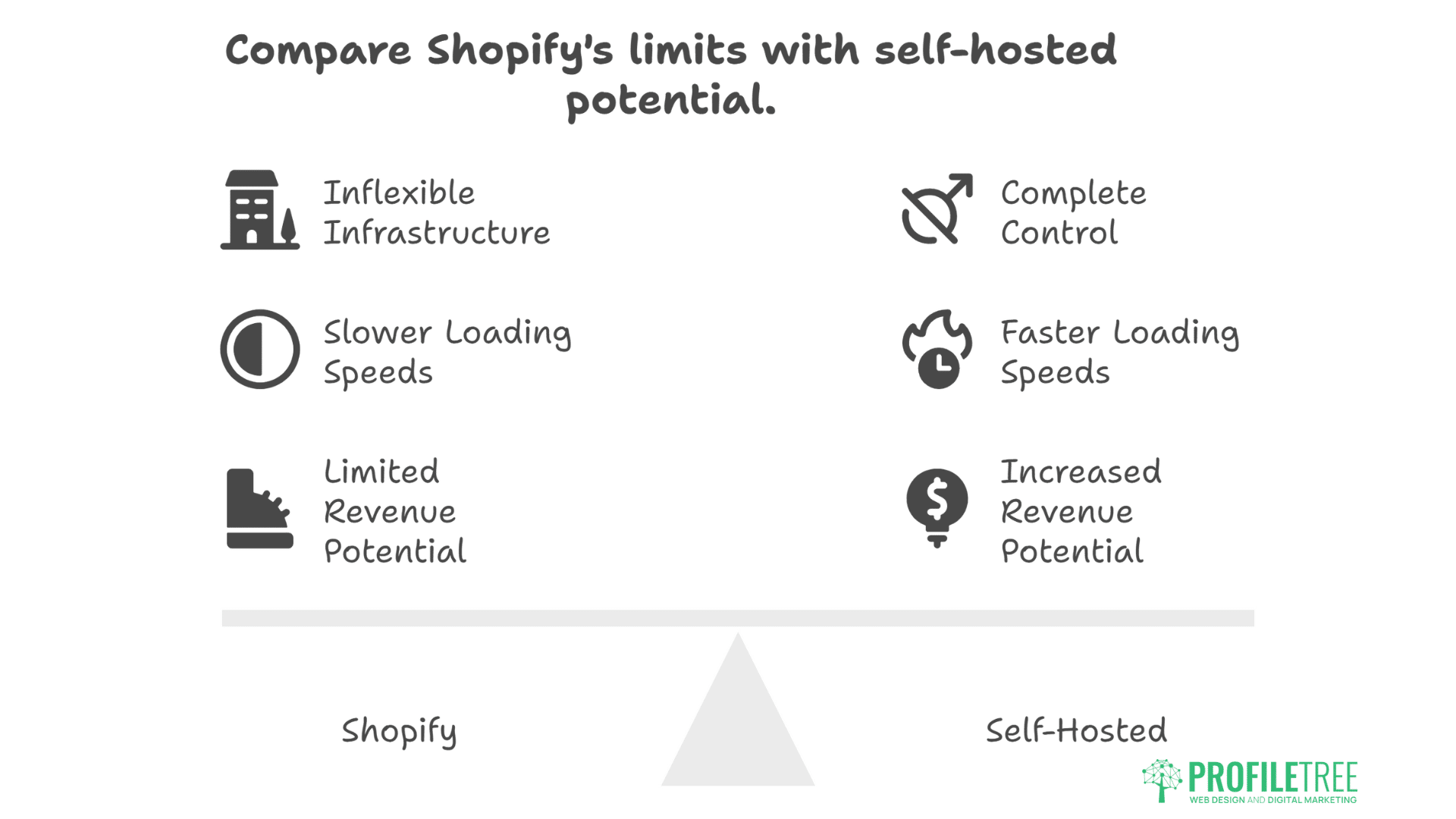
Website performance directly impacts conversion rates and user experience. Platform choice significantly affects your ability to optimise loading speeds.
Shopify Performance Limits
Shopify’s infrastructure is solid but inflexible:
- Liquid template rendering adds overhead
- Apps inject multiple scripts
- Checkout can’t be optimised
- Database queries can’t be refined
- CDN settings can’t be customised
Real-world Shopify speeds:
- Homepage: 2.5-4 seconds average
- Product pages: 3-5 seconds typical
- Checkout: 4-6 seconds standard
You can’t fix fundamental architecture limits, regardless of optimisation efforts.
Self-Hosted Performance Potential
Professional WordPress development achieves:
- Homepage: Under 1.5 seconds
- Product pages: Under 2 seconds
- Checkout: Under 2.5 seconds
Why? Complete control over:
- Server configuration
- Database optimisation
- Caching strategies
- CDN implementation
- Code efficiency
- Third-party scripts
The difference? 1-second faster loading increases conversions by 7%. Over a year, that’s thousands in additional revenue.
SEO and Marketing Control
Search engine optimisation capabilities vary dramatically between platforms. Understanding these limitations prevents businesses from choosing platforms that restrict their organic growth potential.
Shopify SEO Limitations
Shopify handles basics but restricts advanced SEO:
- URL structures partially fixed
- Robot.txt editing limited
- Sitemap customisation restricted
- Schema markup constraints
- Redirect handling basic
- Blog functionality weak
The Killer Limitation: Shopify’s blog is an afterthought. Content marketing—crucial for organic growth—remains challenging. Belfast businesses competing through content struggle on Shopify.
Self-Hosted SEO Freedom
WordPress dominates SEO for good reasons:
- Complete URL control
- Advanced schema implementation
- Sophisticated redirect management
- Powerful blogging platform
- Custom post types
- Full technical SEO control
Our SEO services achieve better results on WordPress because we control every ranking factor.
Design and Functionality Freedom
Visual design and functional capabilities define user experience and competitive differentiation. Platform limitations often become apparent only after significant investment.
Shopify’s Beautiful Prison
Shopify themes look professional, but customisation hits walls:
- Checkout process barely customisable
- Cart functionality restricted
- Product page layouts limited
- Navigation structures fixed
- Search functionality basic
- Filtering options constrained
Developer Frustration: “Every other major website editor has complete drag and drop. Shopify’s website builder is garbage, and our business is suffering.
Want unique functionality? Either it exists as an expensive app, or you can’t have it.
Self-Hosted Design Freedom
WordPress/custom sites offer infinite possibilities:
- Any layout imaginable
- Custom functionality
- Unique user experiences
- Branded checkout processes
- Advanced filtering/search
- Interactive elements
The only limits are imagination and budget. Your competitors can’t copy what’s uniquely yours.
The Scaling Question
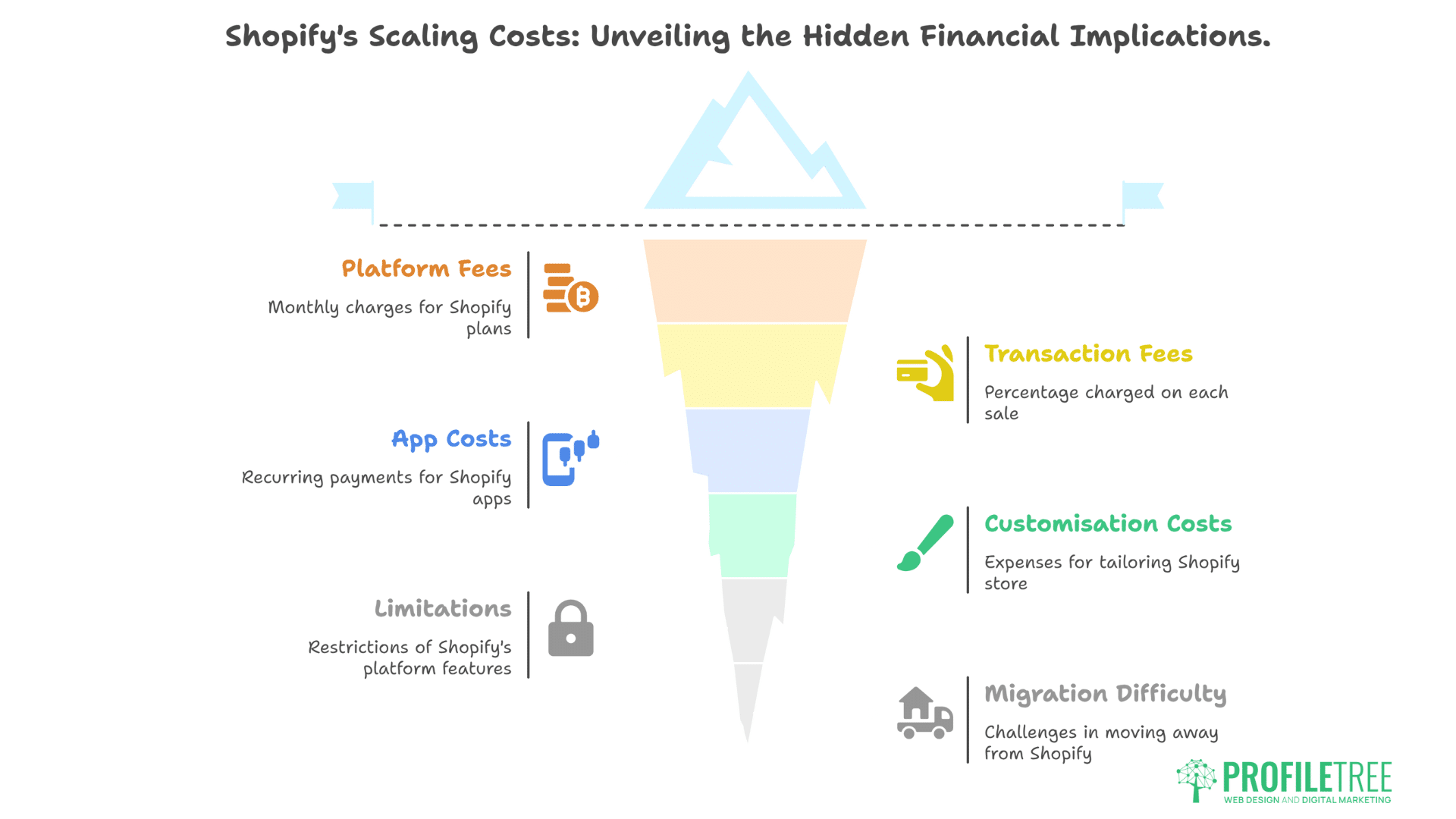
Business growth reveals platform limitations and cost structures that aren’t apparent during initial selection. Understanding scaling implications prevents expensive surprises.
Shopify Scaling Costs
As you grow on Shopify:
- Platform fees increase (£25 → £79 → £299)
- Transaction fees accumulate
- App costs multiply
- Customisation gets expensive
- Limitations become painful
- Migration gets harder
Success Penalty: The more successful you become, the more Shopify costs. A business processing £1M annually pays £22,000 in transaction fees alone.
Self-Hosted Scaling Economics
WordPress/custom sites scale differently:
- Hosting costs increase gradually (£30 → £100 → £500)
- No transaction fees
- One-time development costs
- Features don’t cost monthly
- Optimisation improves with growth
- Full control maintained
Success Reward: Higher revenue doesn’t mean higher platform percentages. You keep what you earn.
Platform Lock-In Reality
Migration between platforms becomes increasingly difficult as businesses establish systems, data, and processes. Understanding exit strategies prevents vendor lock-in situations.
Escaping Shopify
Leaving Shopify is intentionally difficult:
- Product export is basic CSV
- Customer data exports limited
- Order history complicated
- SEO equity hard to transfer
- Apps don’t migrate
- Design must be rebuilt
The Trap: After 2-3 years, you’re so embedded that leaving costs more than staying. They know this.
Self-Hosted Migration Freedom
WordPress/custom sites migrate anywhere:
- Complete database exports
- All content transferable
- Design templates portable
- SEO equity preserved
- Customer data complete
- Choose any host
You’re never trapped. Competition keeps providers honest.
Security and Compliance Considerations
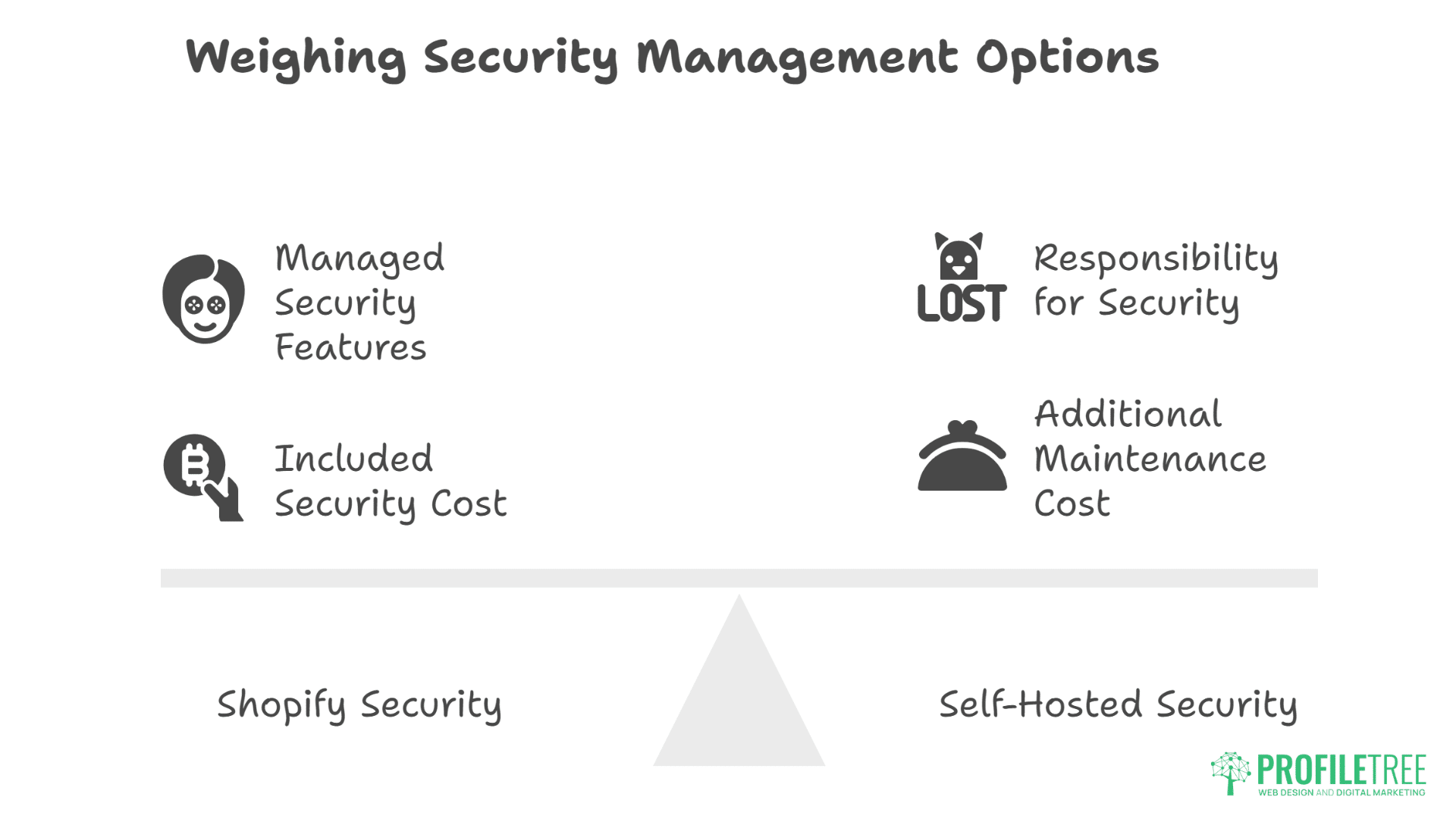
Website security requirements and compliance obligations affect both cost and responsibility. Platform choice determines whether you manage these concerns or delegate them.
Shopify Security Advantage
Shopify handles security professionally:
- PCI compliance included
- Automatic security updates
- DDoS protection standard
- SSL certificates managed
- Fraud detection built-in
- GDPR tools provided
For non-technical businesses, this peace of mind has value.
Self-Hosted Security Responsibility
You’re responsible for everything:
- Security updates
- Malware scanning
- SSL management
- PCI compliance
- Backup systems
- Intrusion detection
Professional maintenance provides Shopify-level security for self-hosted sites—but it’s an additional cost.
Support When Things Break
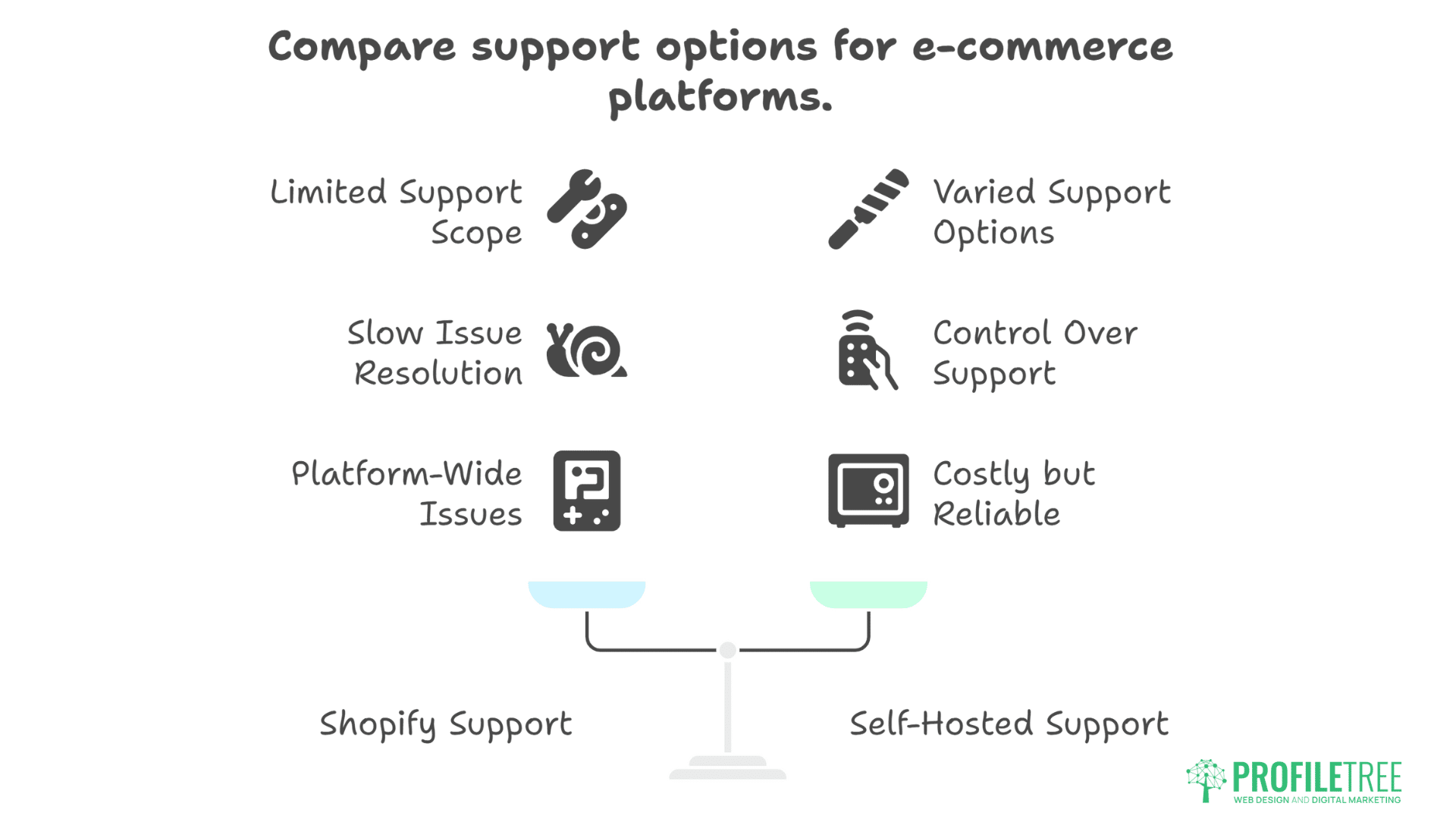
Technical support quality and availability become critical during emergencies and growth phases. Understanding support limitations prevents costly downtime situations.
Shopify Support Reality
Shopify promises 24/7 support, but:
- Chat agents handle basics only
- Complex issues escalate slowly
- Platform problems affect everyone
- Customisation support limited
- App issues aren’t their problem
When your checkout breaks on Black Friday, “24/7 support” might mean 24-hour resolution.
Self-Hosted Support Options
Support depends on your setup:
- Hosting support (varies wildly)
- Developer availability (costly)
- Community forums (free but slow)
- Professional maintenance (reliable but paid)
The difference? With ownership, you can fire bad support and find better. With Shopify, you’re stuck.
Making the Right Choice
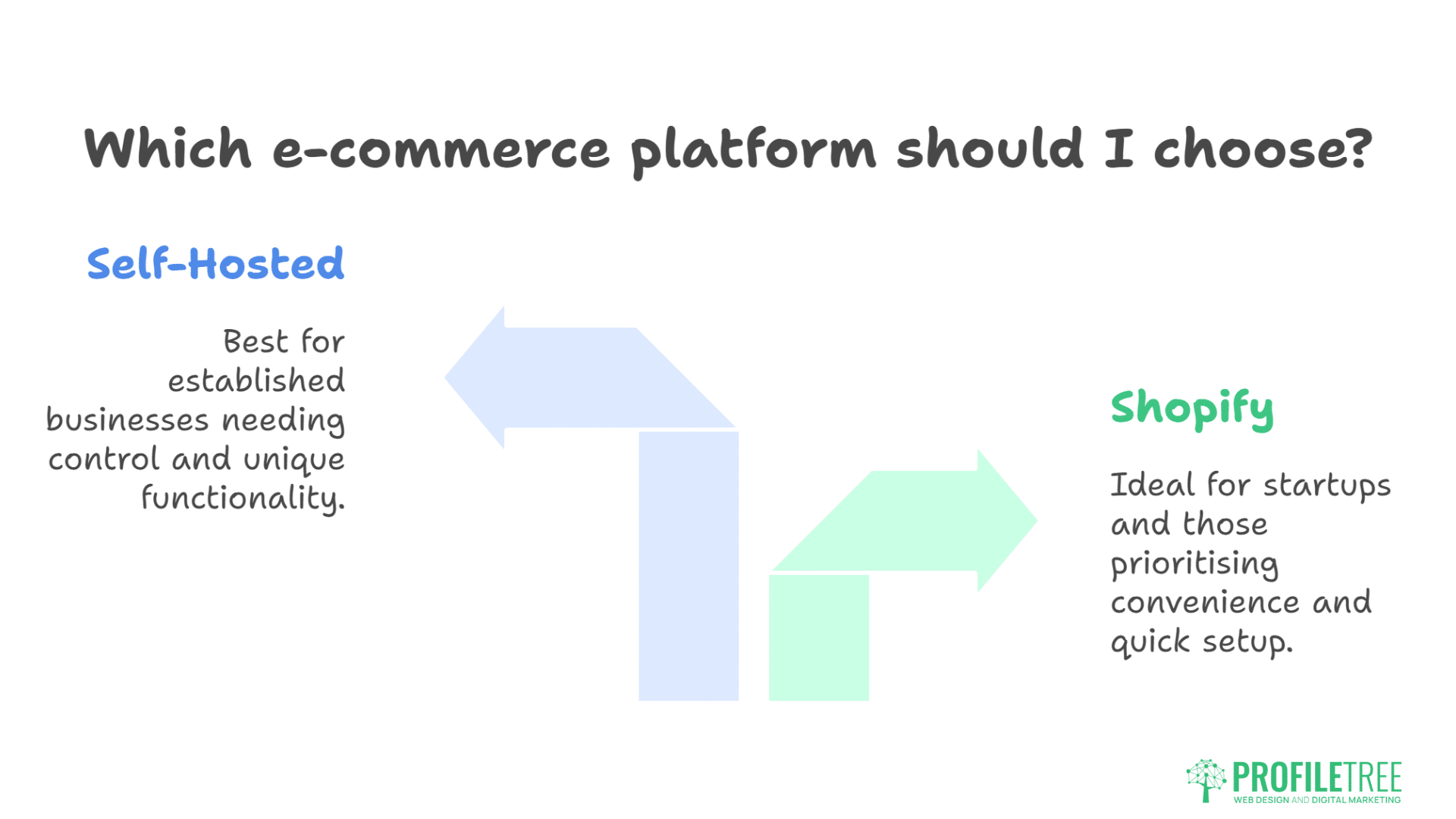
Platform selection requires matching capabilities to specific business requirements rather than following generic recommendations. Understanding your actual needs guides appropriate choices.
Choose Shopify When:
You’re Starting Out
- Need to validate business idea
- Have limited technical knowledge
- Want to start selling immediately
- Have predictable growth plans
- Sell simple products
- Don’t need unique functionality
You’re Time-Poor
- Can’t manage technical aspects
- Need reliable infrastructure
- Want a single point of accountability
- Prefer predictable monthly costs
- Value convenience over control
You’re Testing Markets
- Launching new product lines
- Entering e-commerce for the first time
- Need a temporary solution
- Want minimal commitment
- Require quick deployment
Choose Self-Hosted When:
You’re Growing Seriously
- Process over £50k annually
- Need unique functionality
- Want complete control
- Require content marketing
- Have technical resources
- Plan long-term growth
You’re Established
- Have a proven business model
- Need advanced features
- Want to build equity
- Require integration flexibility
- Value data ownership
- Hate transaction fees
You’re Unique
- Offer complex products
- Need custom checkout
- Require specific workflows
- Want a competitive advantage
- Build brand experience
- Control customer journey
The Hybrid Approach Nobody Mentions
Advanced businesses often discover that combining platforms delivers optimal results despite increased complexity. This approach requires careful planning but offers significant advantages.
Smart businesses often combine both:
- WordPress for main site and content
- Shopify for product sales
- Best of both worlds
- Higher complexity
- Greater flexibility
This approach requires expertise but delivers optimal results for content-driven commerce.
Real Business Case Studies
Real-world business experiences reveal how platform choices play out over time. These cases demonstrate both successful implementations and expensive mistakes.
The Shopify Success
Belfast fashion retailer started on Shopify:
- Month 1: Live and selling
- Year 1: £40k revenue
- Year 2: £120k revenue
- Year 3: Moved to WordPress/WooCommerce
Why they moved: Transaction fees hit £3,000 annually, app costs reached £300/month, and customisation limitations hurt growth.
The WordPress Victory
Belfast food producer chose WordPress:
- Month 2: Site launched
- Year 1: £60k revenue
- Year 2: £200k revenue
- Year 3: Still on WordPress
Why it worked: Content marketing drove traffic, custom subscription system, no transaction fees, complete control maintained.
The Expensive Mistake
Local retailer chose Shopify without research:
- Needed B2B functionality
- Required custom pricing
- Complex shipping rules
- Specific tax requirements
Result: £8,000 in apps and development trying to force Shopify to work. Eventually rebuilt on WordPress for £6,000.
The Decision Framework
Strategic platform selection requires systematic evaluation of long-term costs, capabilities, and business alignment rather than initial convenience or pricing.
Calculate True Five-Year Costs
Shopify Five Years:
- Platform fees: £1,500-7,500
- Transaction fees: £5,000-50,000
- Apps: £6,000-15,000
- Themes/development: £3,000-10,000
- Total: £15,500-82,500
Self-Hosted Five Years:
- Initial development: £3,000-8,000
- Hosting: £1,800-3,000
- Maintenance: £6,000-12,000
- Improvements: £5,000-10,000
- Total: £15,800-33,000
Consider Hidden Factors
Shopify Hidden Costs:
- Platform lock-in
- Limited SEO potential
- Scaling penalties
- Innovation restrictions
- Data control loss
Self-Hosted Hidden Costs:
- Technical complexity
- Security responsibility
- Update management
- Performance optimisation
- Backup requirements
The Brutal Truth
Neither option is universally “better”—they serve different needs at different times. The tragedy is that businesses choose based on marketing rather than mathematics, on promises rather than practicalities.
Shopify sells convenience but delivers dependency. You’ll start quickly but scale expensively. You’ll avoid technical headaches but accept platform limitations. You’ll pay predictably, but percentage-based fees punish success.
Self-hosted websites demand more initially but deliver more eventually. You’ll struggle with setup, but gain complete control. You’ll manage complexity but build equity. You’ll handle security, but keep all profits.
Our Recommendation
For UK SMEs, the path is often:
- Start with Shopify if you need immediate sales
- Migrate to WordPress/WooCommerce when revenue justifies it
- Maintain ownership for long-term growth
The migration point? Usually £50-75k annual revenue, when transaction fees alone justify development costs.
Our e-commerce development services help businesses at every stage—from Shopify optimisation to WordPress migration to custom development. We’ve built both, maintained both, and know exactly when each makes sense.
Conclusion: Choose Based on Business, Not Bias
The Shopify versus own website debate misses the point. You’re not choosing between platforms—you’re choosing between business models. Renting provides speed but costs scale. Owning requires investment but builds value.
Success stories exist on both platforms. Disasters too. The difference isn’t the platform—it’s choosing the right platform for your specific situation, skills, and strategy.
If you’re testing ideas, choose Shopify. If you’re building a business, consider ownership. If you’re scaling seriously, control becomes critical. But whatever you choose, understand the real costs, limitations, and commitments involved.
Your website is your digital business premises. Whether you rent or buy should be a strategic decision based on business reality, not marketing promises. Choose wisely—changing later is always possible, but never cheap.
Remember: Shopify is a tool, not a solution. WordPress is a platform, not a guarantee. Success comes from understanding what you actually need, what you’re actually buying, and what you’re actually building. Everything else is just marketing noise.