
Influencers and Web Marketing: Impact & Strategy Insights
Table of Contents
Influencer marketing has moved well past celebrity partnerships and six-figure brand deals. For SMEs across Northern Ireland and the UK, it now represents one of the more cost-effective ways to reach specific audiences, provided you choose the right creators, set measurable goals, and integrate the approach properly with your broader digital strategy.
This guide covers what actually works for smaller businesses: platform selection, campaign structure, how to identify the right influencers, and how to calculate whether the investment is delivering returns.
What Influencers in Web Marketing Actually Do
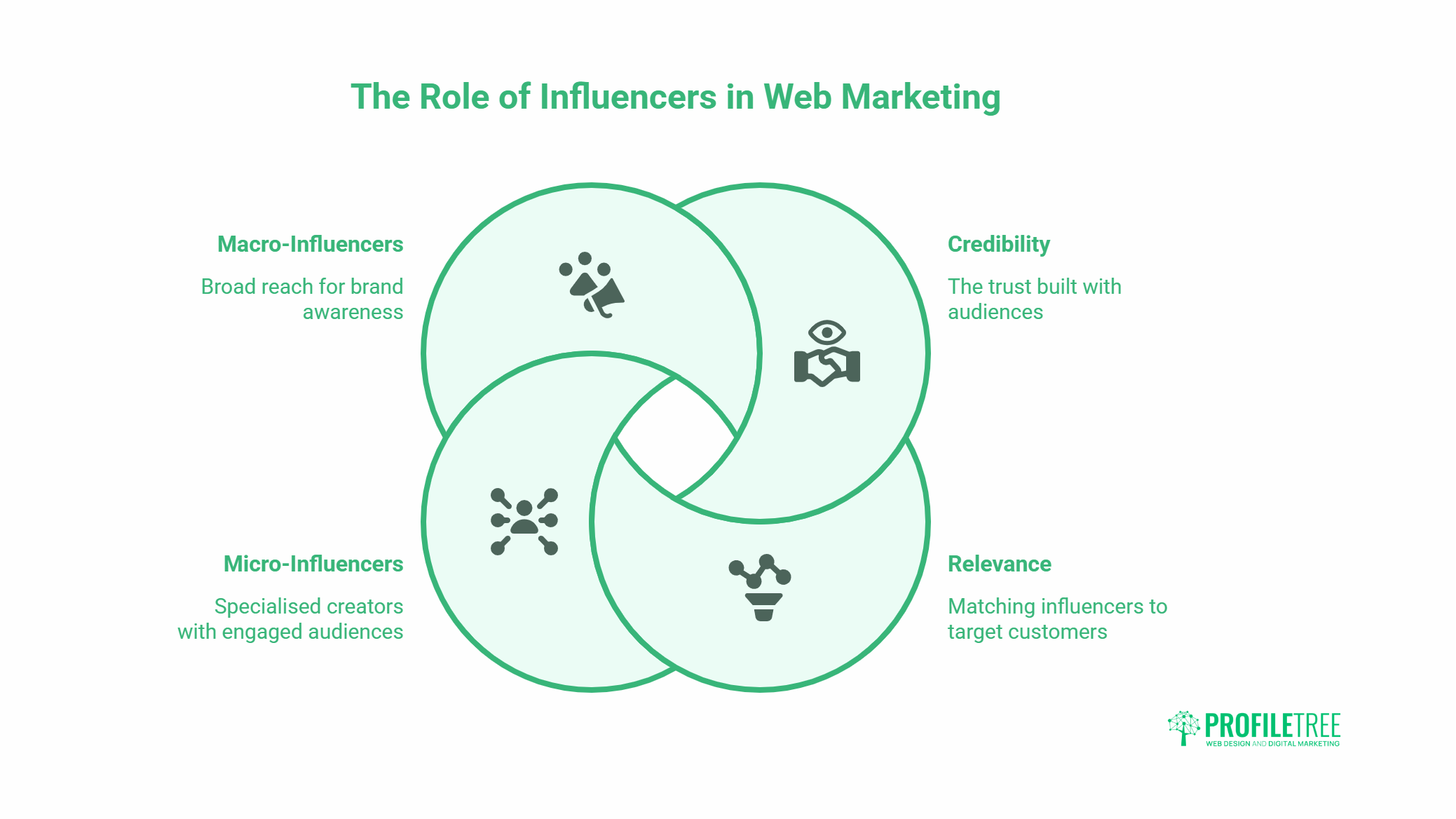
Influencers function as trusted intermediaries between brands and audiences. Their value is not simply reach; it is the credibility they have built with a specific group of people who take their recommendations seriously.
For web marketing purposes, that credibility translates into something traditional advertising struggles to replicate: a recommendation that feels personal rather than promotional. When someone follows a creator for their opinion on a particular topic, a product or service endorsement from that creator carries weight that a banner ad simply does not.
The Difference Between Reach and Relevance
A common mistake is treating influencer selection as a numbers exercise. Follower count tells you how many people might see a post. It says nothing about how many of those people match your target customer.
For most SMEs, relevance matters more than reach. A Belfast restaurant working with a Northern Irish food creator who has 8,000 engaged followers will almost always outperform a deal with a generic lifestyle account posting to 200,000 loosely connected followers across multiple countries. The audience alignment is what drives conversion, not the headline number.
Micro-Influencers vs Macro-Influencers
Micro-influencers typically have between 1,000 and 100,000 followers. They tend to specialise in specific topics (home interiors, sustainable fashion, local food, B2B software) and their audiences are often highly engaged precisely because the content stays focused. Engagement rates for micro-influencers regularly outperform those of macro accounts, and the cost per collaboration is significantly lower.
Macro-influencers, with followings above 100,000, offer broader reach and can be appropriate for brand awareness campaigns where geographic or demographic targeting is less critical. For most SMEs working with constrained budgets, the return from micro-influencer partnerships tends to be more predictable and easier to attribute.
Choosing the Right Platform for Influencer Campaigns
Platform selection should follow audience behaviour, not assumptions about which platform is most popular. Where does your target customer actually spend time? That is the starting point, not where a particular influencer happens to have the largest following.
Instagram for Visual Products and Services
Instagram remains the dominant platform for influencer marketing across sectors where aesthetics matter: food, hospitality, fashion, interiors, beauty, and retail. The platform’s visual format means that high-quality imagery and short video content can stop a scroll in a way that text-heavy posts cannot.
For SMEs, Instagram Stories and Reels offer particularly cost-effective options. A product feature in a Story is less expensive to produce and negotiate than a full grid post, and Stories allow direct link integration, which matters if your goal is traffic rather than awareness.
Average engagement rates on Instagram sit around 1 to 3% for mid-sized accounts, though niche creators with highly aligned audiences often exceed this significantly. When evaluating influencers, look at saves and shares rather than just likes; saved posts indicate that someone found the content genuinely useful.
TikTok for Younger Audiences and Organic Discovery
TikTok’s algorithm distributes content based on engagement signals rather than existing follower relationships. This means that even creators with modest followings can generate substantial organic reach if a video resonates. For SMEs targeting younger demographics (roughly 18 to 34), TikTok influencer partnerships offer access to a platform where content can genuinely go beyond the creator’s existing audience.
The format rewards authenticity over production quality. A creator filming a genuine reaction to a product in their living room will typically outperform a polished promotional video. If you work with TikTok creators, give them significant creative freedom and resist the urge to script the content too tightly.
YouTube for Considered Purchases and B2B Contexts
YouTube suits products and services where the purchase decision involves research. Software, professional services, equipment, travel, and home improvement all perform well here because viewers are actively seeking detailed information before committing.
A dedicated YouTube review or tutorial from a relevant creator can remain discoverable in search results for months or years after publication, making it one of the few influencer formats with genuine long-term SEO value. For businesses with web design and development services or technical offerings, a well-produced explainer from a trusted creator can address objections at scale.
LinkedIn for B2B and Professional Services
LinkedIn influencer marketing is often overlooked by SMEs but is particularly relevant for professional services, SaaS products, recruitment, and anything targeting business decision-makers. LinkedIn’s “creator” accounts have produced a category of B2B influencers (consultants, founders, specialists) who generate strong engagement within tightly defined professional communities.
The conversion path on LinkedIn is longer than on consumer platforms, but the audience quality tends to be higher for B2B purposes. A recommendation from a respected figure in a specific industry carries different weight in a consumer’s lifestyle post.
Building an Influencer Campaign Strategy
Running influencer activity without a clear campaign structure produces results that are difficult to measure and nearly impossible to replicate. These are the steps that matter before you commission any content.
Define Goals Before You Select Influencers
Every influencer campaign needs a primary goal. Brand awareness, website traffic, lead generation, and direct sales each require different influencer profiles, different content types, and different measurement approaches. Trying to achieve all four simultaneously with a single campaign usually means achieving none of them particularly well.
As Ciaran Connolly, founder of ProfileTree, notes: “The SMEs that get the best return from influencer work are the ones that treat it like any other marketing channel: they set a specific outcome, they pick the right platform for that outcome, and they measure against it. The ones who struggle are the ones who commission a post and then wonder why nothing happened.”
Start with one measurable goal. For most SMEs new to influencer marketing, that goal should be either brand awareness (measured by reach and impressions) or traffic (measured by clicks and landing page sessions). Lead generation and direct sales attribution come later, once you understand how your audience responds to influencer content.
Identify Influencers by Audience, Not by Aesthetic
The selection process should start with your target customer, not with a list of people who seem broadly relevant to your industry. Build a description of who you are trying to reach (age range, location, interests, what problems they are trying to solve), then search for creators whose content consistently attracts that specific person.
Look at comment quality as much as comment volume. Engaged comment sections with genuine questions, reactions, and conversations are a better signal than high-volume but shallow responses. Check whether the creator’s audience is predominantly based in the markets you serve; an influencer with 90% of their followers in North America is unlikely to drive meaningful results for a Belfast-based business.
Set Clear Deliverables and Creative Guidelines
The brief you provide should cover what you need, not how to create it. Specify the call to action, the key message, any mandatory inclusions (product features, discount codes, tracking links), and what you are not willing to include. Leave the creative approach to the creator; they know their audience better than you do.
Overly scripted influencer content reads as exactly that. Audiences who follow a creator for their voice and perspective will notice when that voice disappears and is replaced by brand-approved language. The brief should set parameters, not dictate execution.
How Influencers Build Brand Value Over Time
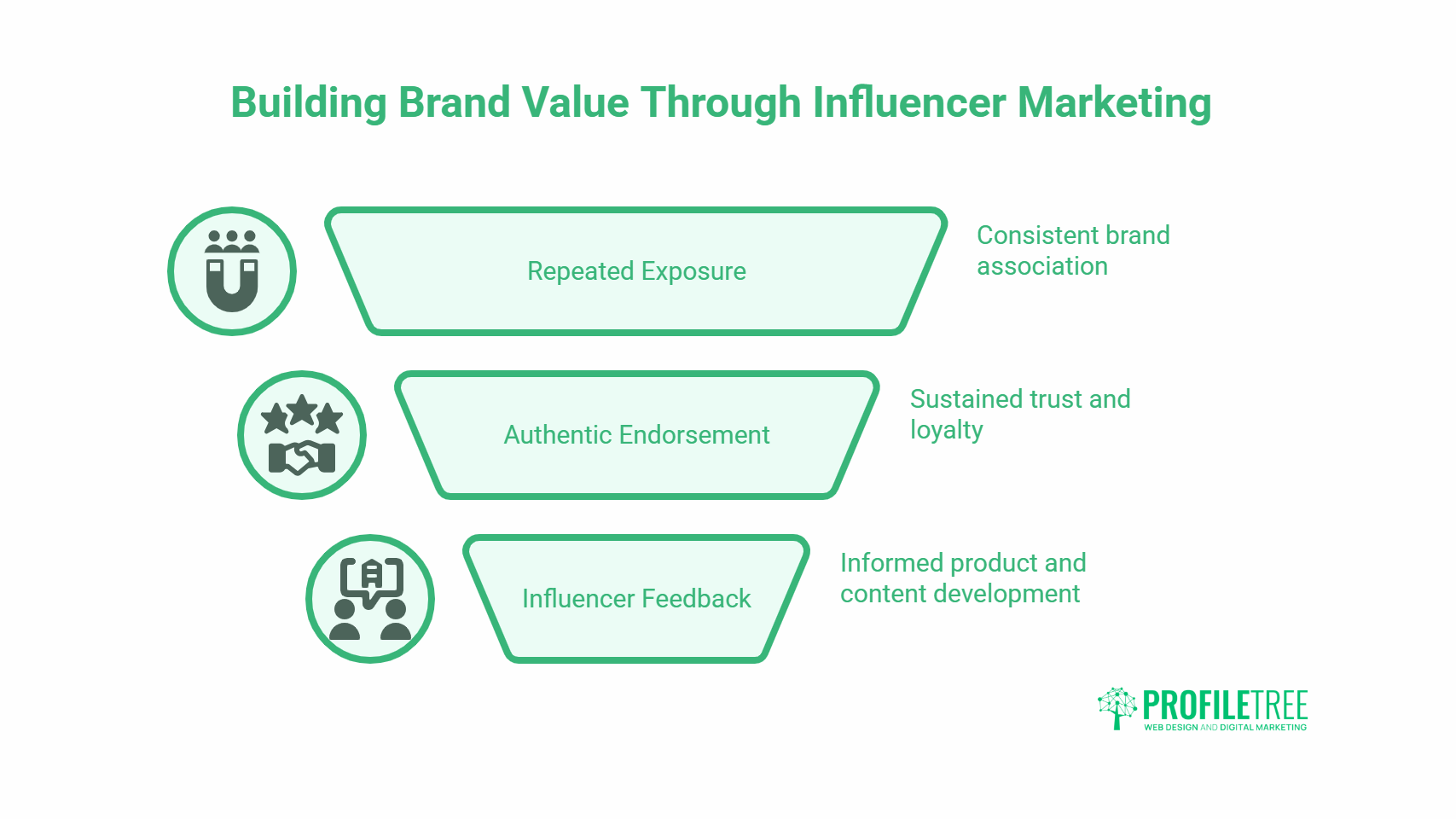
One-off influencer posts generate short-term spikes. The compounding value comes from longer-term relationships that build consistent brand associations over time.
Building Brand Awareness Through Repeated Exposure
A single influencer post produces a single moment of exposure. Brand recognition requires repeated contact across multiple touchpoints. When the same creator references a brand across multiple pieces of content over several months, their audience begins to associate the creator’s endorsement with the brand, even without actively engaging with every post.
For SMEs, this means that three or four posts from a single well-matched creator over a quarter will almost always outperform three or four one-off posts from three or four different creators. Budget concentration with fewer, better-matched partners beats broad dispersal across many superficially relevant ones.
Strengthening Brand Loyalty Through Authentic Endorsement
When a creator speaks about a product from genuine experience, their audience registers it differently than a sponsored post where the relationship is purely transactional. Long-term brand ambassador arrangements (where a creator uses a product regularly and references it naturally across their content) generate the kind of sustained trust that feeds customer loyalty rather than just awareness.
For SMEs working with digital marketing services, an influencer relationship that genuinely integrates your offering into the creator’s workflow is far more valuable than a promotional post that appears once and is never referenced again.
Using Influencer Feedback for Product and Content Development
Creators who work closely with a brand often provide the kind of candid audience feedback that formal market research struggles to generate. Comments on influencer posts, questions from followers, and the creator’s own observations about what their audience asks can inform product development, content strategy, and service positioning.
This feedback loop is a secondary benefit of influencer partnerships that most businesses ignore. Treat it as a genuine intelligence source.
Integrating Influencer Marketing with Your Wider Strategy
Influencer marketing works best when it connects to the rest of your digital activity rather than operating as a standalone channel.
Connecting Influencer Content to Your Content Marketing
Influencer posts create awareness, but they rarely carry enough depth to convert a new audience member into a customer. The conversion path typically runs through your own content. A viewer who sees a creator mention your business will often search for you directly or navigate to your site to find out more. What they find there determines whether awareness converts to action.
Your content marketing services and on-site content need to be strong enough to close the gap between “I’ve heard of this business” and “I want to get in touch.” Influencer activity and your own site content should be telling a consistent story.
Aligning Influencer Campaigns with Paid Media
Boosting influencer content through paid amplification is a cost-effective way to extend reach beyond the creator’s existing audience. Many platforms allow you to run paid promotion using the creator’s post as the ad creative, which typically performs better than a brand-produced ad because the content still reads as organic rather than promotional.
This approach combines the authenticity of influencer content with the targeting precision of paid media. It is particularly effective for time-limited campaigns where organic reach alone will not be sufficient.
Using AI Tools to Support Campaign Planning
AI tools are increasingly useful for influencer research, brief development, and performance analysis. They can help identify relevant creators from niche communities, generate initial campaign frameworks, and analyse engagement patterns across platforms. ProfileTree’s AI transformation services include practical guidance on which AI tools are worth integrating into a marketing workflow and how to use them without replacing the human judgment that effective influencer selection still requires.
Measuring Return on Investment
ROI measurement is the area where most SME influencer activity falls short. Without clear tracking in place before the campaign launches, any retrospective analysis is largely guesswork.
Setting Up Tracking Before You Start
The basic tracking toolkit for influencer campaigns includes: unique UTM parameters for any links shared by the creator, a dedicated landing page (if the campaign has a specific conversion goal), and a discount or referral code that can be attributed to each creator individually. These three tools alone allow you to track traffic, sessions, and conversions back to specific influencer activity.
Influencer marketing platforms such as Creator.co, Grin, and Aspire offer more detailed analytics, but the UTM and landing page approach is sufficient for most SME campaigns.
Calculating ROI Accurately
A basic ROI calculation for influencer marketing: (Revenue Attributed to Campaign – Campaign Cost) / Campaign Cost × 100 = ROI%.
The challenge is attribution. Most influencer-driven purchases do not happen immediately after a post. A viewer might see a creator’s recommendation, visit the site three days later via a direct search, and convert two weeks after that. Last-click attribution will miss this entirely. Use a longer attribution window (14 to 30 days) and compare branded search volume before and after the campaign period alongside direct conversion data.
Long-Term Impact on Website Traffic
Well-executed influencer partnerships produce traffic effects that extend beyond the campaign period. A spike in branded search following influencer activity typically indicates that the content generated genuine interest. Track branded search volume in Google Search Console alongside direct traffic for four to six weeks after any significant influencer campaign. These figures together give a more accurate picture of total impact than platform-reported reach alone.
Working with Niche Markets and Specialist Creators
For many SMEs, niche influencer partnerships are more valuable than mainstream ones. A creator with 5,000 highly engaged followers in a specific professional sector can deliver better-qualified leads than a generalist lifestyle account with ten times the reach.
Finding Niche Creators in Your Sector
Niche creators are often harder to find because they do not appear in the first pages of influencer platform searches. Search by hashtag and topic within your sector, look at who is generating genuine engagement in your space, and ask existing customers who they follow for information relevant to your industry. LinkedIn is particularly useful for identifying B2B niche creators who do not appear on consumer platforms at all.
Building Long-Term Niche Partnerships
In specialist communities, the same creator partnership over an extended period builds stronger brand associations than frequent rotation through different voices. Specialist audiences tend to be more sceptical of one-off endorsements from creators who are clearly cycling through brand partnerships. A creator who references your business consistently, from genuine familiarity with your service, builds the kind of credibility that specialist audiences respect.
FAQs
What is influencer marketing in web marketing?
Influencer marketing in web marketing involves partnering with individuals who have an established, engaged online following to promote a brand, product, or service. Rather than advertising directly to an audience, the brand works through a trusted voice that the audience already follows. For web marketing specifically, influencer activity typically drives traffic, brand searches, and conversions through social media content, video, and linked calls to action.
How much does influencer marketing cost for an SME?
Costs vary significantly by platform, creator size, and content type. Micro-influencer posts on Instagram or TikTok typically range from £50 to £500 per post, depending on engagement rate and niche. Macro-influencer partnerships start from £1,000 upwards. YouTube integrations and long-form content cost more due to production time. Many SMEs start with product gifting or revenue-share arrangements with smaller creators before committing to paid campaigns.
How do I choose the right influencer for my business?
Start with your target audience rather than with a list of creators. Define who you are trying to reach, then identify creators whose established audience matches that profile. Check where their audience is located, review comment quality rather than just follower count, and look at whether the creator’s content style fits naturally with your brand. One well-matched micro-influencer with a genuinely aligned audience will almost always outperform a larger creator whose followers do not match your customer profile.
What metrics should I track in an influencer campaign?
The metrics that matter depend on your campaign goal. For awareness, track reach and impressions. For traffic, track clicks, sessions from UTM-tagged links, and branded search volume in Google Search Console. For conversions, track goal completions on your landing page alongside influencer-specific discount or referral code redemptions. Avoid placing too much weight on likes and follower counts; engagement rate and conversion data are more useful indicators of actual performance.
Can influencer marketing work for B2B businesses?
Yes, though the platforms and creator profiles differ from B2C. LinkedIn is the most productive channel for B2B influencer activity, with professional creators who specialise in industry-specific content generating strong engagement among business decision-makers. YouTube also works well for B2B, particularly for detailed product reviews, case study content, and technical explainers. The sales cycle is longer in B2B contexts, so measuring success requires a longer attribution window.
What is the difference between a brand ambassador and a one-off influencer?
A brand ambassador has an ongoing relationship with a business, typically referencing it regularly across their content over a period of months or longer. A one-off influencer partnership produces a single piece of content and then ends. Brand ambassadors tend to generate stronger long-term brand associations because repeated exposure builds familiarity, while one-off posts create a single moment of awareness. For most SMEs with limited budgets, a small number of long-term ambassador relationships delivers better results than frequent one-off campaigns.
Conclusion
Influencers in web marketing work when the creator matches the audience, the goal is clear, and the results are tracked properly. For SMEs in Northern Ireland and the UK, the opportunity is real, but it requires the same strategic discipline as any other marketing channel. If you want to build an influencer strategy that connects to your wider digital activity, ProfileTree’s team can help you identify the right approach for your business and audience.