
How to Use Audience Data to Build a Content Strategy That Works
Table of Contents
Audience data tells you something most content plans ignore: what your readers actually want, not what you assume they want. For SMEs in Northern Ireland, Ireland and the UK, that distinction matters more than most digital marketing advice acknowledges. Publishing content without first understanding who reads it, why they visit, and what they do next is the equivalent of printing leaflets without knowing where to distribute them.
This guide covers how to collect, interpret and act on audience data, with practical steps any business owner or marketing manager can follow without specialist tools or significant budget.
What Audience Data Actually Tells You
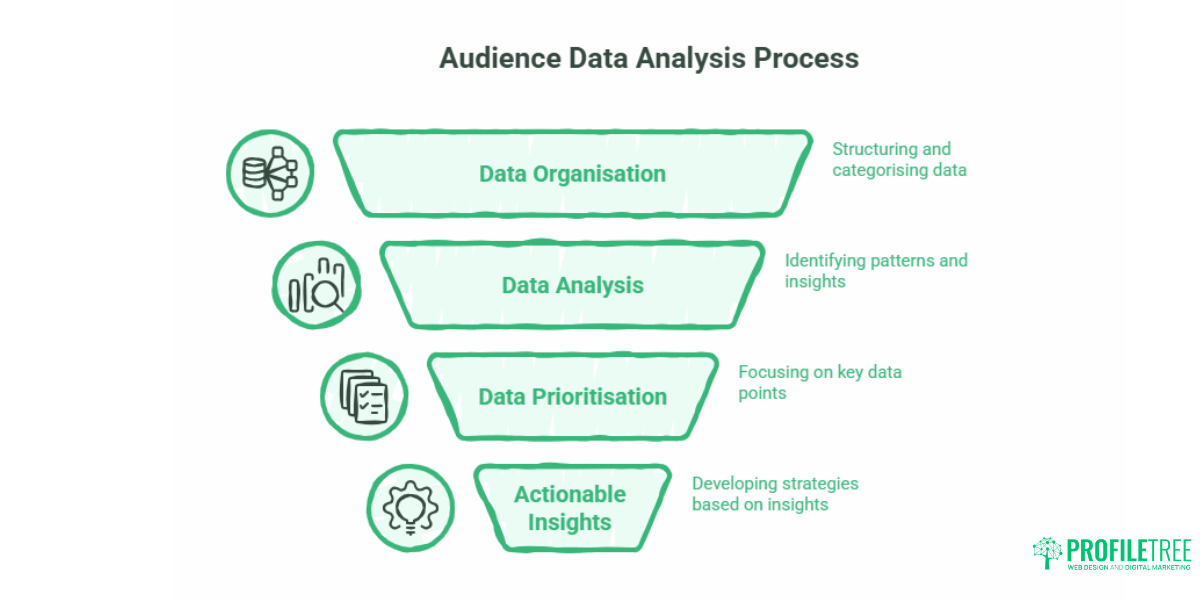
Audience data is the collective information about the people visiting your website or engaging with your content. It spans demographic details (age, location, device type), behavioural patterns (what pages they land on, how long they stay, where they drop off) and content preferences (which topics generate return visits, comments or social shares).
Most SMEs sit on more of this data than they realise. Google Analytics, Google Search Console, and the native insights built into platforms such as Facebook and LinkedIn all capture meaningful signals about your audience, at no cost.
The challenge is not access to data. It is knowing which data points to prioritise and what to do with them once you have them.
The Metrics That Actually Influence Content Decisions
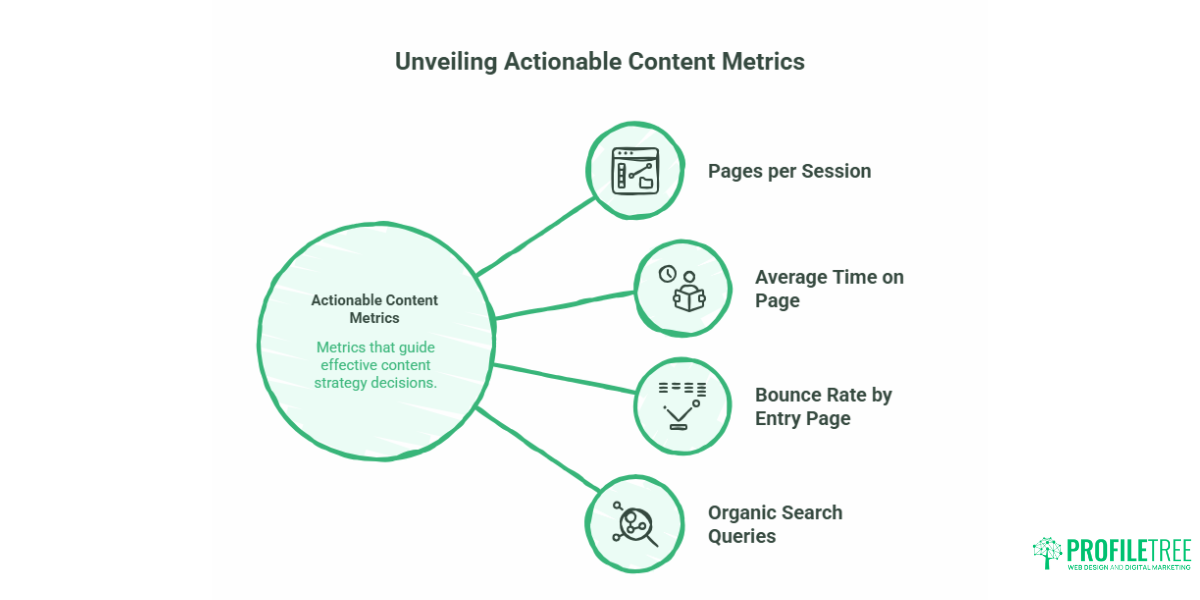
Not every metric in your analytics dashboard deserves equal attention. For content strategy purposes, the following tend to be the most actionable:
Pages per session shows whether visitors are finding enough of interest to explore further. A consistently low figure suggests your content is not prompting readers to continue their journey through the site.
Average time on page indicates engagement. A post with 800 words that holds readers for four minutes is performing well. One with 2,500 words that loses readers after 45 seconds has a relevance or readability problem.
Bounce rate by entry page reveals whether individual pieces of content match the expectations created by the search result or social post that brought the visitor in. High bounce rates on specific posts often point to a mismatch between the promise of the title and the reality of the content.
Organic search queries from Google Search Console show you the exact language your audience uses when looking for what you offer. This is some of the most valuable audience data available to any content team, and it is free.
Demographic Insights and What They Should Change
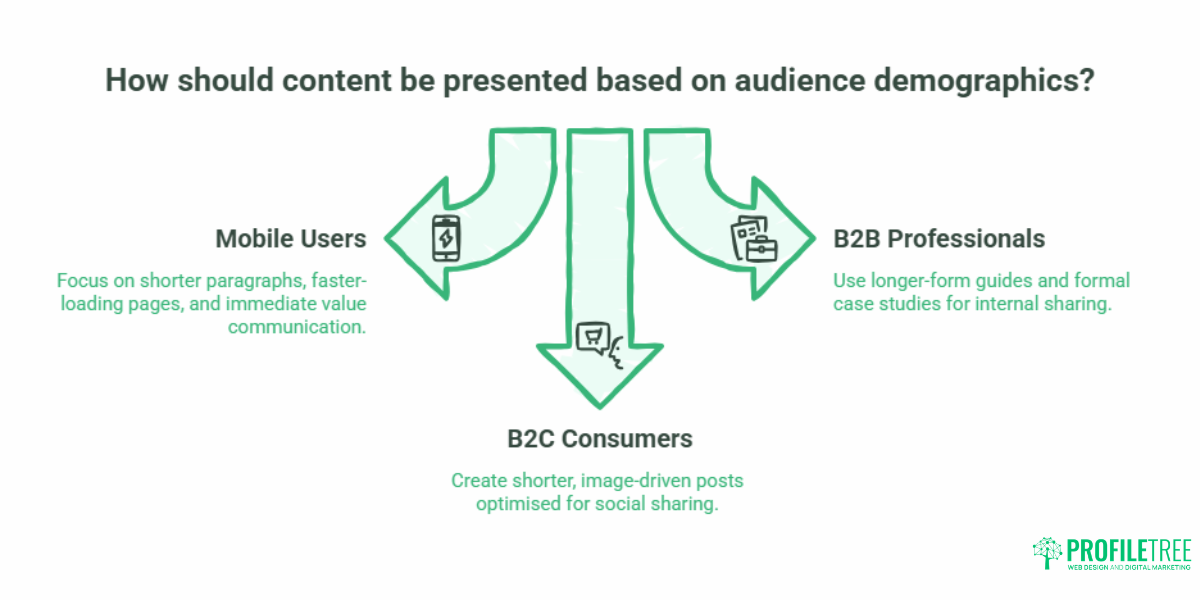
Audience demographics do not determine your content, but they shape how you present it. If your analytics show that a significant portion of your audience accesses your site on mobile between 7 am and 9 am, that tells you something practical: shorter paragraphs, faster-loading pages, and content that communicates its value within the first two scrolls.
For a B2B professional services firm in Belfast targeting procurement managers, this data might point towards longer-form guides and formal case study formats that decision-makers can share internally. For a B2C retailer targeting consumers across Ireland, it might point towards shorter, image-driven posts optimised for social sharing.
The demographic split between B2B and B2C audiences is one of the most consistently underexplored areas in SME content planning. The two require quite different approaches to research, content format and distribution, and conflating them is one of the most common reasons content strategies underperform.
B2B Versus B2C: How Audience Research Changes the Approach
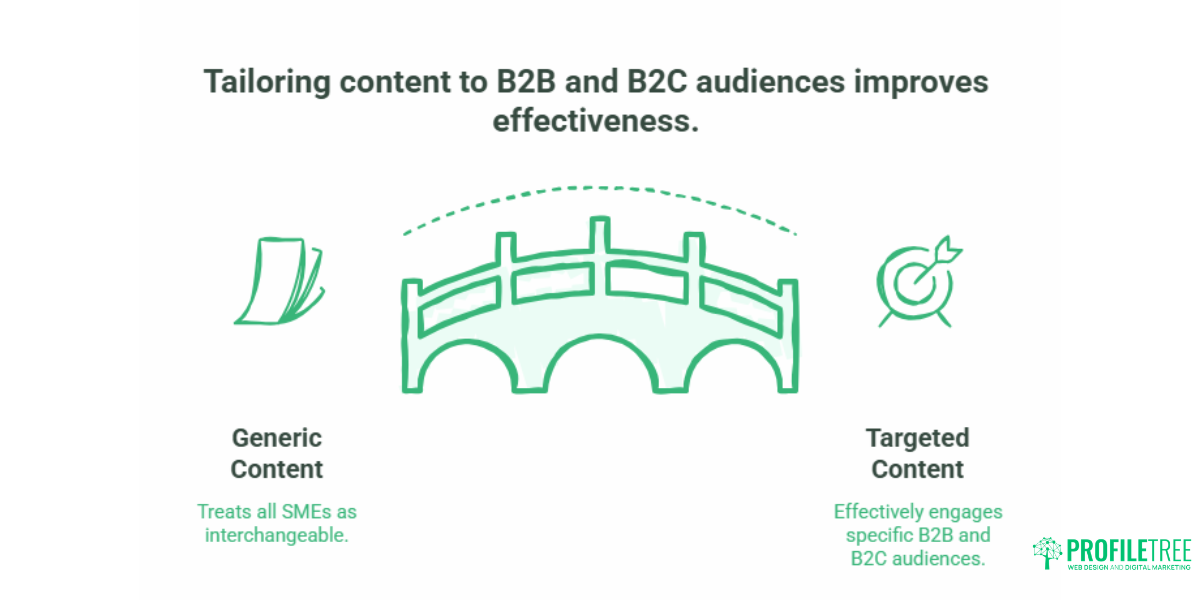
This distinction is worth a section of its own because most generic content marketing advice treats all SME audiences as interchangeable. They are not.
Researching a B2B Audience
B2B audience research starts with identifying the decision-maker, not just the company. A regional accountancy firm pitching to manufacturing businesses in Northern Ireland needs to understand the specific pressures facing the operations director or finance manager, not just the general characteristics of the manufacturing sector.
Practical sources for B2B audience data include:
LinkedIn audience insights, which show job title, seniority, industry and location breakdowns for your page followers and post reach. LinkedIn Boolean search lets you map the profile of a target buyer type with reasonable precision before you ever publish a word.
Sales call notes and CRM data. The questions that come up repeatedly in sales conversations are almost always content opportunities. If three prospects in the last quarter asked the same question about pricing transparency or implementation timelines, that question belongs in your content plan.
Google Search Console query data, filtered for longer-tail searches (seven or more words), often surfaces the specific, intent-heavy queries that B2B buyers use when they are close to a decision.
Researching a B2C Audience
B2C audience research for SMEs tends to rely more on social analytics, customer feedback, and publicly available demographic data.
The Office for National Statistics (ONS), the Northern Ireland Statistics and Research Agency (NISRA), and the Central Statistics Office (CSO) in Ireland all publish free, detailed demographic data that SMEs can use to validate assumptions about their local customer base. These resources are consistently overlooked in favour of expensive third-party tools that offer similar or lower-quality insights.
Facebook Audience Insights, Instagram analytics and Google Analytics audience reports all provide usable demographic breakdowns at no cost. Combined with direct customer surveys (even a six-question Google Form sent to existing customers can yield significant intelligence), these tools give B2C businesses a solid enough picture to make informed content decisions.
| Research Method | Best for | Cost | Compliance Risk |
|---|---|---|---|
| Google Search Console | Search intent data | Free | None |
| ONS / NISRA / CSO | Demographic validation | Free | None |
| Google Forms survey | Primary audience feedback | Free | Moderate (UK GDPR applies) |
| LinkedIn Audience Insights | B2B decision-maker profiling | Free (organic) | None |
| Social platform analytics | B2C behavioural data | Free | None |
| Third-party SaaS tools | Aggregated intent data | Paid | Low |
How to Build a Content Strategy Using Audience Data
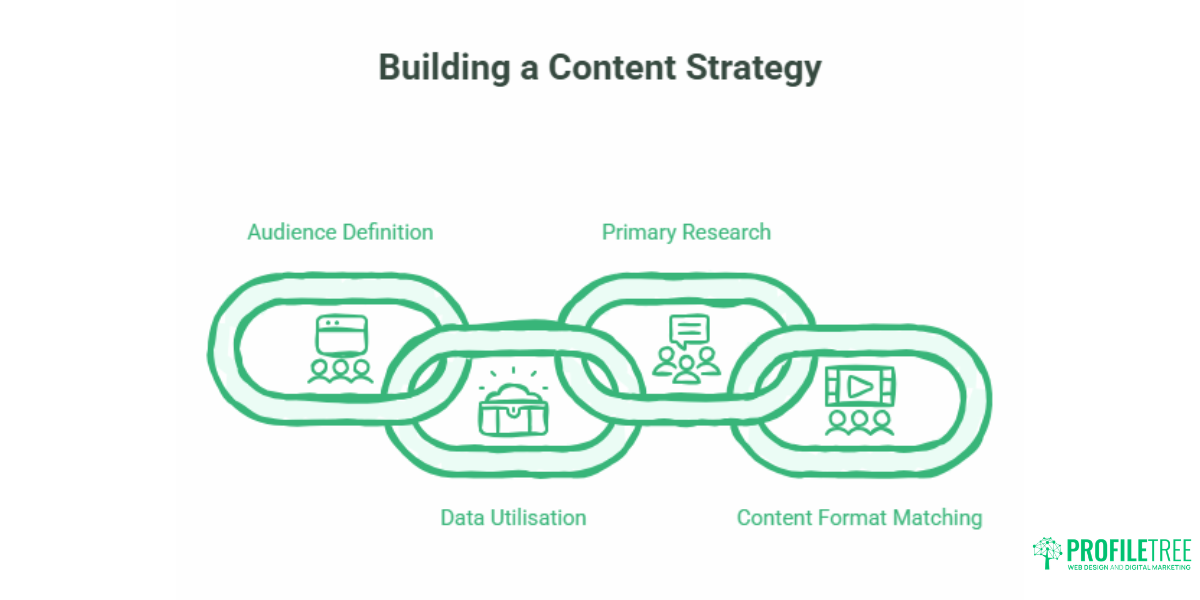
The following steps apply whether you are starting from scratch or auditing an existing content programme that is not performing.
Step 1: Define What You Need to Know
Before collecting data, be specific about the questions you are trying to answer. Vague goals produce vague insights. “Understand our audience better” is not an actionable objective. “Identify which content topics generate the most return visits from small business owners in Northern Ireland” is the question.
Typical questions worth answering before building or rebuilding a content strategy:
Which audience segments currently engage most with our content? Which topics bring in visitors who actually convert to enquiries or purchases? Where does our audience drop off in the buyer journey? What search queries bring visitors to our site, and do those queries match the content we have published?
Step 2: Use Free Public Data Before Paid Tools
The default advice in most content marketing guides points towards SaaS tools that typically require paid subscriptions. For many SMEs in the UK and Ireland, the better starting point is the free public infrastructure that already exists.
The ONS publishes detailed data on consumer behaviour, industry activity and regional economic conditions across the UK. NISRA provides Northern Ireland-specific demographic and economic statistics. The CSO covers the Republic of Ireland. None of these requires a login, a subscription or a credit card.
These datasets help SMEs validate whether their assumed audience profile reflects reality. A Belfast-based recruitment agency might assume its primary audience is 25 to 34 year old job seekers, but ONS and NISRA data might reveal that the fastest-growing employment-age cohort in its area is 45 to 54, which would have direct implications for content tone, platform choice and topic selection.
For identifying what your audience is searching for online, Google Search Console is the single most useful free tool available. It shows exactly which queries are bringing people to your site, at what position, and with what click-through rate. ProfileTree’s guide to free market research tools covers a broader set of options for SMEs working without a specialist budget.
Step 3: Conduct Primary Research the Right Way
Primary research means gathering data directly from your audience rather than relying on existing sources. For most SMEs, this means customer surveys, short interviews with existing clients, or on-site feedback mechanisms.
The most common mistake in primary research is asking too many questions. A survey with 25 questions will be abandoned. A survey with six focused questions, written in plain language, will be completed. Keep it short, keep it specific, and always include at least one open-ended question that allows respondents to say something you did not anticipate.
If your business operates in the UK or Ireland, any primary research that collects identifiable personal data falls under UK GDPR or the Irish Data Protection Act 2018. This applies even to email surveys. The key requirements are obtaining explicit consent before collecting data, explaining clearly how the data will be used, not retaining identifiable responses longer than necessary, and allowing respondents to withdraw their data on request.
Anonymising responses wherever possible removes most of the compliance burden and makes analysis simpler. If you use Google Forms or Microsoft Forms to collect survey responses, both platforms offer settings that allow you to avoid collecting email addresses, making the data automatically anonymous.
For more on how customer-gathered insights feed directly into content planning, see ProfileTree’s guide on using customer feedback for content strategy.
Step 4: Match Content Formats to What Your Audience Actually Consumes
Audience data should inform not just your topics but your format choices. A content strategy that produces only written blog posts is making an assumption about how its audience prefers to consume information, often without evidence.
Analytics data can reveal whether your audience skews towards mobile or desktop, which affects format length and structure. Social platform analytics show whether video posts outperform text posts for your specific audience. Google Search Console shows whether your audience uses voice-search-style queries (conversational and question-based) or short keyword strings, which affects how you write titles and introductions.
Written blog content and video are not competing formats. They serve different stages of the decision journey and different consumption habits. A how-to article and a short explainer video covering the same topic can target different search queries, occupy different positions on the SERP, and reach different segments of the same overall audience.
For SMEs with limited content production resources, the most practical approach is usually to identify two or three topics where audience data shows clear demand, produce longer-form written content for each, and then create shorter video versions of the same material. ProfileTree’s video marketing services can support this if in-house production is not an option.
Turning Audience Insights into a Content Calendar
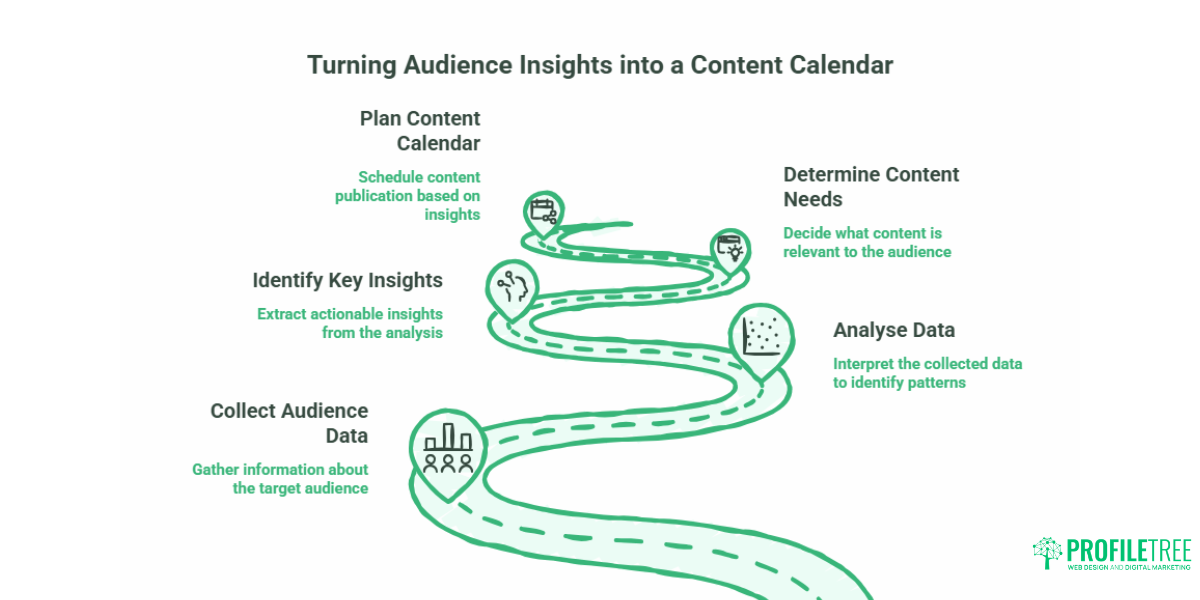
Data collection without a practical output is a waste of time. The purpose of audience research is to make better decisions about what to publish, when, and in what format.
Setting Priorities From Data
Once you have a clear picture of your audience, the content calendar becomes easier to build. High-impression, low-click queries from Search Console are typically the strongest content opportunities: your site is already appearing for these searches, but the content is not compelling enough to earn the click. Publishing a well-structured, genuinely useful piece targeting those exact queries often produces measurable traffic gains relatively quickly.
Topics that generate strong engagement (high time on page, low bounce rate, multiple page visits per session) should form the backbone of your content calendar, because they indicate genuine audience interest rather than accidental traffic.
Topics that attract traffic but produce no conversions should be examined carefully. Sometimes, the audience arriving at that content is simply not a buyer at any stage. Sometimes the content is strong but lacks a logical next step. Understanding which problem you are dealing with requires looking at the data alongside the content itself.
Building a Content Calendar That Holds
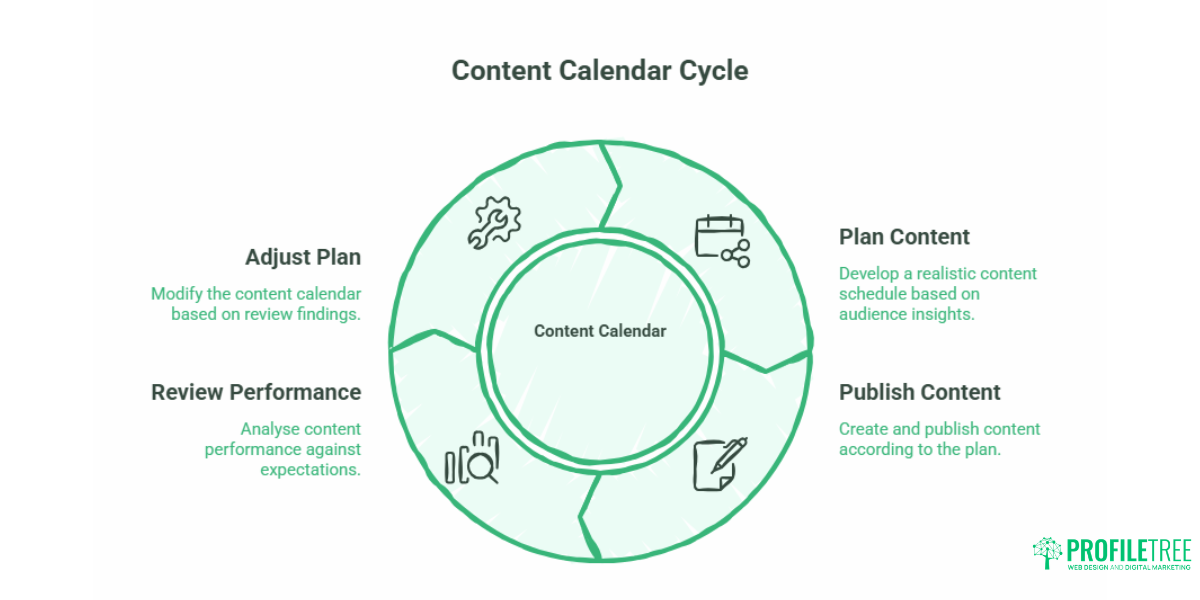
A content calendar is only useful if it is realistic. Over-ambitious publishing schedules are one of the most common causes of SME content strategies stalling within three months.
Start with a frequency you can maintain consistently: one well-researched, properly structured post per fortnight is more valuable than four rushed posts per week. Build the calendar around the audience insights you have gathered rather than around arbitrary dates or trending topics that are not relevant to your business.
Include a review mechanism. Set a recurring date, quarterly works for most SMEs, to check whether the content published in the previous period performed against the expectations you had for it. Use that review to adjust the next quarter’s plan.
| Review Action | Frequency | What to Check |
|---|---|---|
| Analytics performance by post | Monthly | Time on page, bounce rate, organic sessions |
| Search Console query review | Monthly | New queries, position changes, CTR shifts |
| Content calendar adjustment | Quarterly | Drop underperforming topics, expand what works |
| Full audience research review | Annually | Demographic shifts, new segments, platform changes |
The Role of SEO in Content Planning
Audience data and SEO keyword research are not separate activities. The queries your audience uses when searching for what you offer are audience data. The demographic profile of the audience arriving from organic search is audience data. The gap between the queries you rank for and the queries that actually convert is audience data.
SEO keyword research, done properly, is a form of audience research conducted at scale. It maps the language your potential customers use, the questions they ask, and the stage of the buying journey they are at when they search.
For SMEs competing in local markets, this means prioritising location-specific queries alongside broader topic terms. A law firm in Belfast targeting personal injury clients will find that “personal injury solicitors Belfast” behaves quite differently in search than “how to make a personal injury claim,” even though both queries come from the same broad audience. The content strategy needs to address both.
As Ciaran Connolly, founder of ProfileTree, puts it: “Keyword research and audience research are two sides of the same coin. One tells you what people are searching for, the other tells you who they are and what they actually need. When you combine them, content stops being guesswork.”
For businesses that want to build this into a structured approach, ProfileTree’s search engine optimisation services include audience-informed keyword research as part of the initial strategy phase.
Measuring Whether Your Content Strategy Is Working
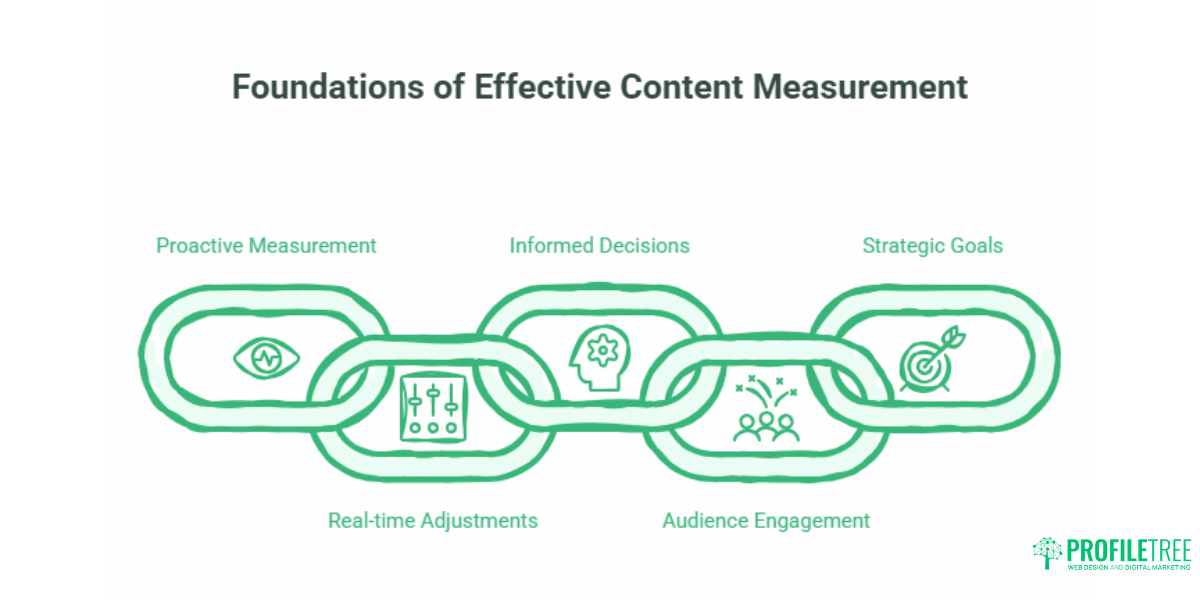
Measurement should be built into the content strategy from the start, not added retrospectively.
The KPIs Worth Tracking
The metrics that matter depend on your goals. For awareness-focused content, organic impressions and first-time visitor rates are the relevant measures. For lead generation content, conversion rate (the percentage of visitors who complete a desired action, whether that is filling in a contact form, downloading a resource, or making a call) is the primary KPI.
For most SME content strategies, a practical baseline dashboard covers: organic sessions by landing page (showing which content is driving search traffic), average time on page (showing engagement quality), assisted conversions by content piece (showing which content supports the buyer journey even if it is not the last touchpoint before a conversion), and bounce rate by traffic source (showing whether visitors from different channels are finding what they expect).
For a deeper breakdown of how to set this up, ProfileTree’s guide to Google Analytics for content marketing covers the reporting configuration in practical terms.
A/B Testing Without a Specialist Team
A/B testing does not require a data science function. At its simplest, it means publishing two versions of a page or piece of content with one key variable changed, then measuring which performs better against a defined metric.
For most SMEs, the most valuable A/B tests involve page titles and meta descriptions (which version generates more clicks from the same search position), call-to-action placement and wording (which version converts more visitors), and introduction length (does a shorter opening section reduce bounce rates?).
Even without a formal testing infrastructure, publishing similar content on different days or in different formats and comparing performance over time provides usable directional data.
Ongoing Audience Research as a Habit
Audience data changes. The profile of your readers in one year may look quite different by the next, particularly if your business has shifted its service mix, entered new markets, or changed its marketing channels. A light annual review of your audience assumptions, cross-referenced with the previous year’s analytics data, is sufficient to keep the content strategy calibrated.
For businesses that want to build the internal capability to do this systematically, ProfileTree’s digital training programmes cover Google Analytics interpretation, Search Console analysis, and content strategy as part of a broader marketing skills curriculum.
Frequently Asked Questions
What is the cheapest way to do audience research for a small business?
The cheapest approach combines free public data with direct conversations. Start with Google Search Console to understand what queries are already bringing people to your site. Layer in Google Analytics for demographic and behavioural data. For primary research, a six-question Google Form survey sent to existing customers costs nothing and typically generates more useful insight than expensive third-party tools. For UK and Northern Ireland businesses, ONS and NISRA also publish detailed demographic data that is publicly available at no cost.
How do B2B and B2C SMEs approach audience research differently?
B2B audience research focuses on identifying the decision-maker within a target organisation: their job title, seniority, specific pressures and information needs. LinkedIn analytics and CRM data are particularly useful here. B2C research tends to draw more on social media analytics, customer survey data, and publicly available census and demographic information. The content formats and distribution channels that follow from each are quite different, so conflating the two produces content that underserves both audiences.
Do I need to comply with GDPR when conducting audience research?
Yes, if you are collecting any identifiable personal data. This includes email addresses gathered through surveys, IP addresses if you link them to individual profiles, and any contact data collected during interviews or focus groups. UK GDPR and the Irish Data Protection Act 2018 both require explicit consent, a clear explanation of how data will be used, and a defined retention period. Anonymising your research data wherever possible removes most of the compliance burden and makes analysis simpler.
What are the four main types of audience research?
Demographic research looks at characteristics such as age, location, gender, occupation and income level. Psychographic research examines attitudes, values, motivations and lifestyle. Behavioural research analyses how audiences interact with your content, website or product. Geographic research identifies where your audience is located, which is particularly relevant for SMEs serving specific regions.
How often should I update my audience research?
For most SMEs, a structured review once a year is sufficient, provided you are monitoring key analytics metrics on an ongoing basis. A full audience research update should also be triggered by any significant change to your business, such as launching a new service, entering a new market, or experiencing a notable shift in where your enquiries are coming from.
Can social media analytics replace Google Analytics for audience research?
No, but they complement each other. Social media analytics tell you about the audience that engages with your content on those platforms, but that audience may not reflect the visitors arriving at your website through organic search. Google Analytics and Search Console capture audience behaviour on-site and through search, which is usually more directly relevant to commercial outcomes. The most complete picture comes from combining both.
Audience data removes the guesswork from content planning. When you understand who is reading your content, what brought them there, and what they do next, every decision from topic selection to content format to publishing frequency becomes easier to justify and easier to measure. Start with the free data you already have access to, build in a regular review habit, and let the results of each publishing cycle inform the next. If you need support building an audience-informed content strategy for your business, get in touch with the ProfileTree team.