
Free E-commerce: Build Your Online Store with Wix Today
Table of Contents
Free e-commerce sounds almost too good to be true. For UK entrepreneurs testing a product idea, launching a side business, or moving a bricks-and-mortar shop online for the first time, the prospect of building a professional online store without a monthly subscription is genuinely appealing. Free e-commerce tools have matured significantly, and platforms such as Wix, WooCommerce, Squarespace, Shopify, and Weebly now offer capable starter options that can get a shop live within hours. But free e-commerce always comes with trade-offs. This guide exists to help you understand exactly what those trade-offs are, which free e-commerce platform suits your business model, and how to build a store that can actually grow into something commercially serious.
At ProfileTree, a Belfast-based web design and digital marketing agency, we have helped hundreds of UK and Irish businesses launch and grow their online presence since 2011. The team has worked across e-commerce builds on Wix, WooCommerce, and Shopify, and the pattern we see repeatedly is the same: businesses choose a free e-commerce plan for the wrong reasons, hit a ceiling faster than expected, and then spend more fixing the problem than they would have spent building it right the first time.
What ‘Free’ Actually Means in E-commerce
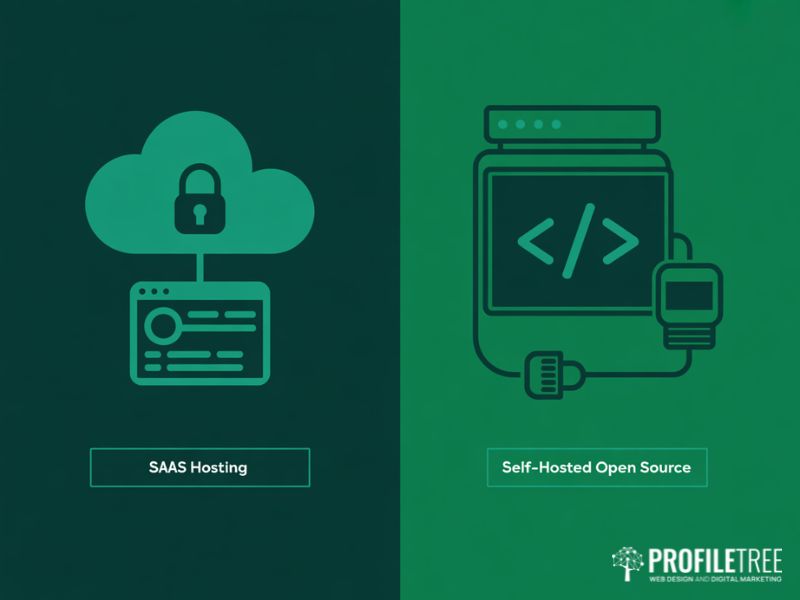
Before choosing any free e-commerce tool, you need to understand what ‘free’ actually covers. Most platforms offer two distinct models, and confusing the two can cost you significantly in time and money.
The Freemium SaaS Model
Platforms such as Wix, Square Online, and Ecwid operate a freemium model. The software is hosted for you, there are no servers to manage, and you can be live within a few hours. The free e-commerce tier typically includes a limited product count, a branded subdomain rather than a custom .co.uk address, and higher transaction fees than paid plans. These tools are well-suited to low-volume sellers and anyone starting an online business before committing to monthly costs.
The Open-Source Model
WooCommerce is the most widely used free e-commerce software in the world. The plugin itself costs nothing, but running it requires a WordPress site, UK-based hosting (typically between £5 and £15 per month), an SSL certificate, and often a premium shipping plugin for Royal Mail or Evri integrations. Businesses that want the full benefits of WooCommerce without the technical overhead often work with an agency for professional web development support. You own the code, the data, and the customer journey outright, with no platform transaction fees on top of your payment processor charges.
The Hidden Cost: Transaction Fees
Most free e-commerce plans carry transaction fees that fall with each paid tier. The table below shows the approximate point at which upgrading to a paid plan becomes the financially rational choice.
| Monthly Revenue | Free Plan Fees (2.9%) | Basic Paid Plan (£25 + 1.5%) | Better Option |
|---|---|---|---|
| £500 | £14.50 | £32.50 | Free plan |
| £1,000 | £29.00 | £40.00 | Free plan |
| £1,800 | £52.20 | £52.00 | Roughly equal |
| £2,500 | £72.50 | £62.50 | Paid plan |
| £5,000 | £145.00 | £100.00 | Paid plan |
If your free e-commerce store is already generating more than £1,800 per month, a free plan is costing you money. That is the most important number in this article.
Data Portability: A Warning Worth Heeding
Before you commit to any free e-commerce platform, check the export settings. Some platforms allow you to export product listings but not customer order history or account data. If you ever need to migrate, you could lose years of customer data. The UK digital compliance requirements for e-commerce websites cover GDPR data portability obligations that apply to every online seller, regardless of platform.
Choosing the Right Free E-commerce Platform for UK Businesses
Not all free e-commerce platforms are equal in the UK context. Royal Mail integrations, UK payment gateways, GDPR compliance, and VAT handling vary considerably between tools. If you are unsure which platform is the right long-term fit, ProfileTree’s web design services include platform recommendation and scoping as part of every project brief. Here is an honest comparison of the main options available to UK sellers.
| Platform | Free Plan Limits | UK Payment Support | Best For |
|---|---|---|---|
| Wix | Up to 5 products, Wix subdomain, no custom domain | Stripe, PayPal, Square | Beginners, small catalogues |
| WooCommerce | Unlimited (self-hosted, hosting costs apply) | Stripe, PayPal, Klarna UK | Growing businesses, full control |
| Shopify | Starter plan from £5/mo, no true free tier | Shopify Payments (UK) | Product-focused stores |
| Square Online | Free tier available, transaction fees apply | Square Payments (UK) | Local businesses, in-person sellers |
| Ecwid | Up to 5 products, embeds into any site | PayPal, Stripe | Businesses with an existing website |
| Squarespace | 14-day trial only, no permanent free tier | Stripe, PayPal | Design-led brands |
Wix is the most accessible starting point for someone with no technical background who needs a free e-commerce store live quickly. WooCommerce suits any business that plans to scale, needs bespoke functionality, or already has a WordPress site. For Northern Irish and Irish businesses considering cross-border selling, our guide to e-commerce opportunities and challenges in Ireland covers the additional platform considerations worth factoring into your choice.
Building a Free E-commerce Store on Wix: A Step-by-Step Guide
Wix is the most widely chosen platform for beginners launching a free e-commerce store. Its editor is genuinely accessible, the template library covers most retail niches, and the built-in analytics give you enough data to make sensible decisions in the early stages.
Sign Up and Choose Your Store Type
Go to Wix.com and create a free account using your email address, or sign in with Google. Once inside the dashboard, select ‘Create New Site’ and choose ‘Online Store’ as your site type. Wix will ask whether you want to use the standard Wix Editor, Wix ADI, or Editor X. For most beginners building a free e-commerce store, the standard Wix Editor is the right choice. Editor X is designed for developers who want CSS grid control and custom breakpoints. Our Wix website tutorial walks through each option in detail.
Choose and Customise Your Template
Wix offers hundreds of templates organised by industry. Filter by ‘Online Store’ and browse the options most relevant to your product category, whether that is fashion, food, automotive parts, or handmade goods. You can rename sections, adjust colours, swap images, and restructure the layout without touching a line of code. The hero section, product gallery, and footer are the three elements most visitors engage with first, so prioritise those before moving to secondary pages.
Set Up Your Header, Navigation, and Logo
A well-structured header includes your logo, main navigation, a search bar, and a basket icon. Open the header section in the Wix editor and add or rearrange these elements using the toolbar. Use the Wix Logo Maker from your dashboard to generate a logo: enter your brand name, select your industry, choose a design style, and customise the colours and fonts. Keep the header clean. Visitors on mobile devices, which account for more than 60% of UK retail browsing, need to find the search bar and basket without scrolling.
Add Your Products
From the left panel in the Wix editor, open the Wix Stores app. The best Wix apps for e-commerce can extend your store’s functionality significantly, but start with the core product setup first. For each product, write a clear title with a keyword your customer would search, a description of at least 150 words, a GBP price, and high-resolution images. Use the Wix SEO panel to write a custom title tag and meta description for every product page. Free e-commerce plans on Wix limit the number of products you can list; the Core plan at around £13 per month removes that cap.
Configure Payment and Delivery
Connect a payment gateway through Wix Payments, PayPal, or Stripe. Wix Payments integrates directly with your dashboard and supports major UK debit and credit cards. For delivery options, our guide to setting up delivery methods on Wix covers free shipping thresholds, flat-rate options, and local delivery zones in full.
Optimise for Mobile
The Wix editor includes a dedicated mobile view. Switch to it using the toggle at the top of the editor and check every page for layout issues. Common problems include oversized images, awkwardly wrapping text, and buttons too small to tap comfortably. Changes made in mobile view do not affect the desktop layout.
SEO and Digital Strategy for Your Free E-commerce Store
Getting your free e-commerce store live is the starting point, not the finish line. Without a digital strategy behind it, even a well-built store will attract very little traffic.
Search Engine Optimisation for E-commerce
Every product page on your free e-commerce store needs a unique title tag, a meta description, and original descriptive content. Avoid duplicating manufacturer descriptions; Google actively downgrades pages with thin or copied content. ProfileTree’s SEO services for UK businesses include full e-commerce SEO audits, keyword mapping, and on-page optimisation for Wix and WooCommerce alike. For category pages, target broader search terms such as ‘handmade ceramic mugs Belfast’. For product pages, go more specific. This layered approach attracts both browsing traffic and high-intent buyers.
Content Marketing as a Long-Term Traffic Driver
A blog attached to your free e-commerce store can drive substantial organic traffic over time. Articles that answer buying-intent questions or explain the provenance of your products work particularly well. ProfileTree’s content marketing services are built around this model: creating content that earns consistent search traffic and supports commercial conversion. As Ciaran Connolly, ProfileTree’s founder, puts it: “The store itself is just the container. What fills it with traffic is consistent, useful content that earns Google’s trust over time. Businesses that invest in content alongside their store see compounding returns; those that don’t are entirely dependent on paid advertising.”
Video, Email, and Paid Channels
Product videos increase conversion rates measurably. Wix allows you to embed YouTube videos directly on product pages, and publishing product tutorials on YouTube creates a secondary discovery channel that can send organic traffic for months. ProfileTree’s video production and marketing services include product video, YouTube strategy, and video SEO for e-commerce businesses across the UK and Ireland. For email, Wix integrates with several platforms, and our guide to connecting Wix with Mailchimp covers the setup in full. A welcome email, abandoned cart reminder, and post-purchase review request can recover a meaningful percentage of lost sales at minimal cost.
Connecting Your Store to a Broader Digital Strategy
Set up Google Analytics 4 to track traffic sources and conversion rates from day one. Add your store to Google Merchant Centre so your products appear in Google Shopping results, which is free to list on and visible to buyers with high purchase intent. Building a coherent digital marketing strategy around your store from the outset is far more efficient than retrofitting one later.
When a Free E-commerce Plan Is Not Enough
Free e-commerce tools are excellent for testing and early-stage selling, but most growing UK businesses outgrow them within 12 to 18 months. Our analysis of AI’s impact on e-commerce conversion rates shows that businesses investing in smarter tools and better-built stores see measurably stronger returns. The table below shows the signals that indicate it is time to upgrade.
| Signal | What It Means | Recommended Action |
|---|---|---|
| More than 50 products | Approaching or exceeding free plan limits | Upgrade or migrate to WooCommerce |
| Revenue above £1,800/month | Transaction fees cost more than a paid plan | Switch to a paid tier immediately |
| Customers asking for accounts | Buyers want order history and saved preferences | Upgrade to a plan with customer accounts |
| You need a .co.uk domain | Branded subdomains damage credibility and SEO | Upgrade or migrate with a redirect plan |
| Sales flat despite traffic | Conversion rate needs professional attention | Commission a web design and CRO audit |
ProfileTree works with businesses at every stage of this journey, from first free e-commerce store to full custom e-commerce development on WooCommerce or Shopify. If you are unsure which direction to take, a digital strategy consultation is usually the most efficient starting point.
UK Compliance: What Your Free E-commerce Store Must Include
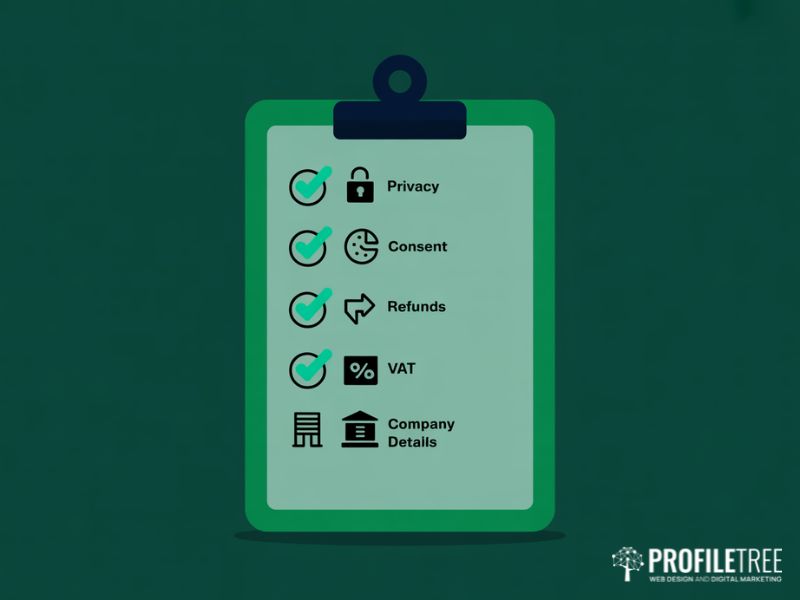
UK law applies to online sellers regardless of which free e-commerce platform they use. Non-compliance carries real risk, including fines from the Information Commissioner’s Office and lost consumer trust. Make sure your store includes the following before you begin taking orders.
- A Privacy Policy explaining how you collect, store, and use customer data in line with UK GDPR.
- A Cookie Consent banner giving visitors meaningful choice before analytics or advertising cookies are set.
- Clear returns and refund information in line with the Consumer Contracts Regulations 2013, which give UK online shoppers 14 days to return most goods.
- VAT registration and display: if your turnover exceeds £90,000, you must register for VAT and display prices inclusive of it.
- Company details: if you trade as a limited company, your registered company number and address must appear on the site.
Wix provides basic template policies, but these are starting points rather than finished documents. Review your policies against the most current ICO guidance, or seek legal advice if your business handles sensitive data categories.
Next Steps for Your Free E-commerce Store
Free e-commerce tools have made it genuinely possible to launch a credible online store without significant upfront investment. Wix offers a practical and accessible starting point for UK sellers, with enough built-in functionality to test products, process payments, and begin building an audience. The key is understanding from the outset where the free tier ends and where it becomes a constraint on your growth.
Treat your free e-commerce store as a proof of concept rather than a permanent infrastructure. Use the time on a free plan to validate your products, understand your customers, and build your content strategy. Then, when the revenue justifies it, invest in a properly built commercial platform with a custom domain, professional design, and a digital marketing strategy behind it.
ProfileTree works with businesses across Northern Ireland, Ireland, and the UK on everything from first free e-commerce stores to full custom e-commerce development, SEO strategy, content marketing, and AI-powered digital transformation. If you want a second opinion on your current setup or a clear plan for what to build next, get in touch with the team.
FAQs
Can I build a completely free e-commerce website in the UK?
Yes, but with limitations. Wix and Square Online offer genuine free e-commerce tiers, though both restrict product numbers, require a branded subdomain, and charge higher transaction fees than paid plans. WooCommerce is free software, but hosting costs apply.
Is Wix or WooCommerce better for a free e-commerce store?
Wix is better if you have no technical experience and need to be live quickly. WooCommerce is better if you want full ownership of your data and the ability to scale without platform restrictions. Most UK businesses end up on WooCommerce or Shopify within two to three years.
Does Wix free e-commerce support PayPal and card payments?
Yes. Wix supports PayPal, Stripe, and Wix Payments on its free e-commerce plan, though transaction fees apply. UK sellers using Wix Payments on paid plans typically pay around 1.9% plus 30p per transaction.
Can I use a custom domain with a free Wix store?
Not on the free plan. Free stores use a Wix-branded subdomain. To connect a custom .co.uk or .com domain, you need to upgrade to at least the Combo plan, which starts at around £10 per month.
What is the best free e-commerce platform for SEO?
WooCommerce on WordPress gives you the most control over technical SEO. Wix has improved significantly and now supports clean URLs, custom meta tags, and schema markup. For a true free tier with reasonable SEO capabilities, Wix is the most practical choice.
How do I get more traffic to my free e-commerce store?
Organic search is the most sustainable long-term channel for a free e-commerce store with a limited budget. Publish keyword-rich product descriptions, list products on Google Merchant Centre, and build a content strategy around buying-intent questions. ProfileTree’s social media marketing services can help build an engaged audience that converts followers into buyers consistently.