
Customer Service Excellence: A Practical UK Guide
Table of Contents
Most businesses say they care about customers. Far fewer can describe, in plain terms, what separates an acceptable interaction from one a customer remembers for the right reasons. That gap is where customer service excellence lives, and closing it is a training problem before it is a technology problem.
This guide sets out what excellence means for UK and Ireland businesses in practical terms, the standards and regulations that now shape it, and how to train a team to deliver it without an enterprise budget.
It also looks at where AI helps, where it gets in the way, and how to measure whether any of it is working. The aim throughout is usable advice for SME owners and managers, not abstract theory.
What follows covers five areas: defining excellence against ordinary service, the standards that apply across the UK, building a training programme that sticks, blending human judgement with automation, and tracking results that matter.
What Customer Service Excellence Actually Means
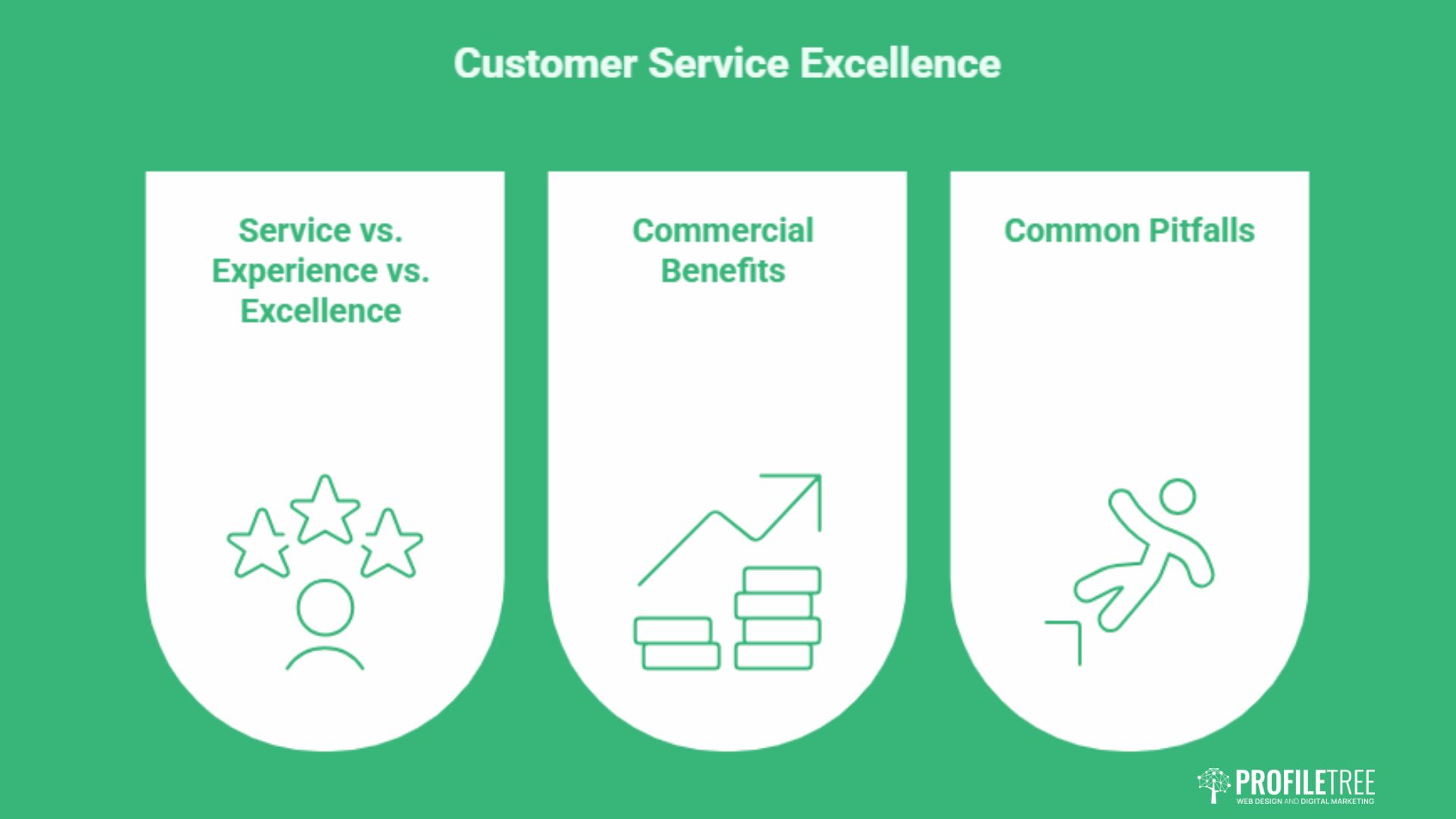
Customer service excellence is the consistent practice of exceeding a customer’s reasonable expectations, not occasionally but as a matter of routine. It is a standard a business chooses to hold itself to, then trains and measures against. The word “consistent” does most of the work in that sentence, because anyone can be brilliant once.
The Difference Between Service, Experience, and Excellence
Plain customer service fulfils the contract: the customer asks, the business answers, and the transaction completes. Customer experience is broader, covering every touchpoint a person has with a brand across the whole relationship. Excellence sits on top of both. It is the emotional surplus, the sense that someone went a step further than they strictly had to.
A useful way to picture the three is a short comparison across the moments that customers actually notice.
| Factor | Basic Service | Good Service | Excellence |
|---|---|---|---|
| Response time | Within the stated SLA | Faster than promised | Pre-empted before asked |
| Tone | Polite, scripted | Warm, natural | Genuinely personal |
| Problem ownership | Passed along | Resolved at the first point | Owned end-to-end |
| Personalisation | None | Name and history used | Context anticipated |
| Outcome | Issue closed | Customer satisfied | Customer becomes advocate |
Why It Pays Off Commercially
Retaining a customer costs far less than winning a new one, and service quality is one of the clearest levers on retention. According to a widely cited Microsoft report, the large majority of consumers say customer service shapes their loyalty to a brand. The point is not the exact figure but the direction: people stay where they feel well looked after, and they leave quietly when they do not.
There is a brand effect too. A customer who feels genuinely helped tends to say so, and word of mouth still moves business in close-knit UK and Irish markets where reputation travels fast. If your team handles enquiries across platforms, our guide to social media customer service covers how public channels change the stakes.
The maths favours retention. Winning a new customer typically costs several times more than keeping an existing one, and loyal customers tend to spend more per order and forgive the occasional slip. A service team that turns a complaint into a saved relationship is, in plain commercial terms, protecting revenue that marketing already paid to acquire. That framing helps when you are arguing for a training budget, because it reframes service spend as protection of an asset rather than a soft cost.
Excellence on an SME Budget
Most service advice assumes an enterprise tech stack and a large team, which leaves smaller businesses feeling locked out. They are not. Lean excellence comes from a handful of cheap habits: a shared document of common issues and the best response to each, a weekly fifteen-minute huddle to review one tricky case, and a single owner for every complaint so nothing falls between people. None of that needs expensive software.
For a small UK firm, the advantage is actually structural. A team of five can know its regulars by name, remember past conversations, and act without three layers of approval. That intimacy is exactly what large competitors spend fortunes trying to simulate, so smaller businesses should lean into it rather than apologise for their size.
Where Most Teams Fall Short
The common failure is not rudeness. It is inconsistent: one customer gets a brilliant resolution, the next gets a flat, by-the-book reply, and the difference comes down to which member of staff happened to pick up. Excellence is mostly about removing that variance, which is squarely a training and systems task rather than a matter of hiring naturally charming people.
UK Standards and Regulations That Shape Excellence
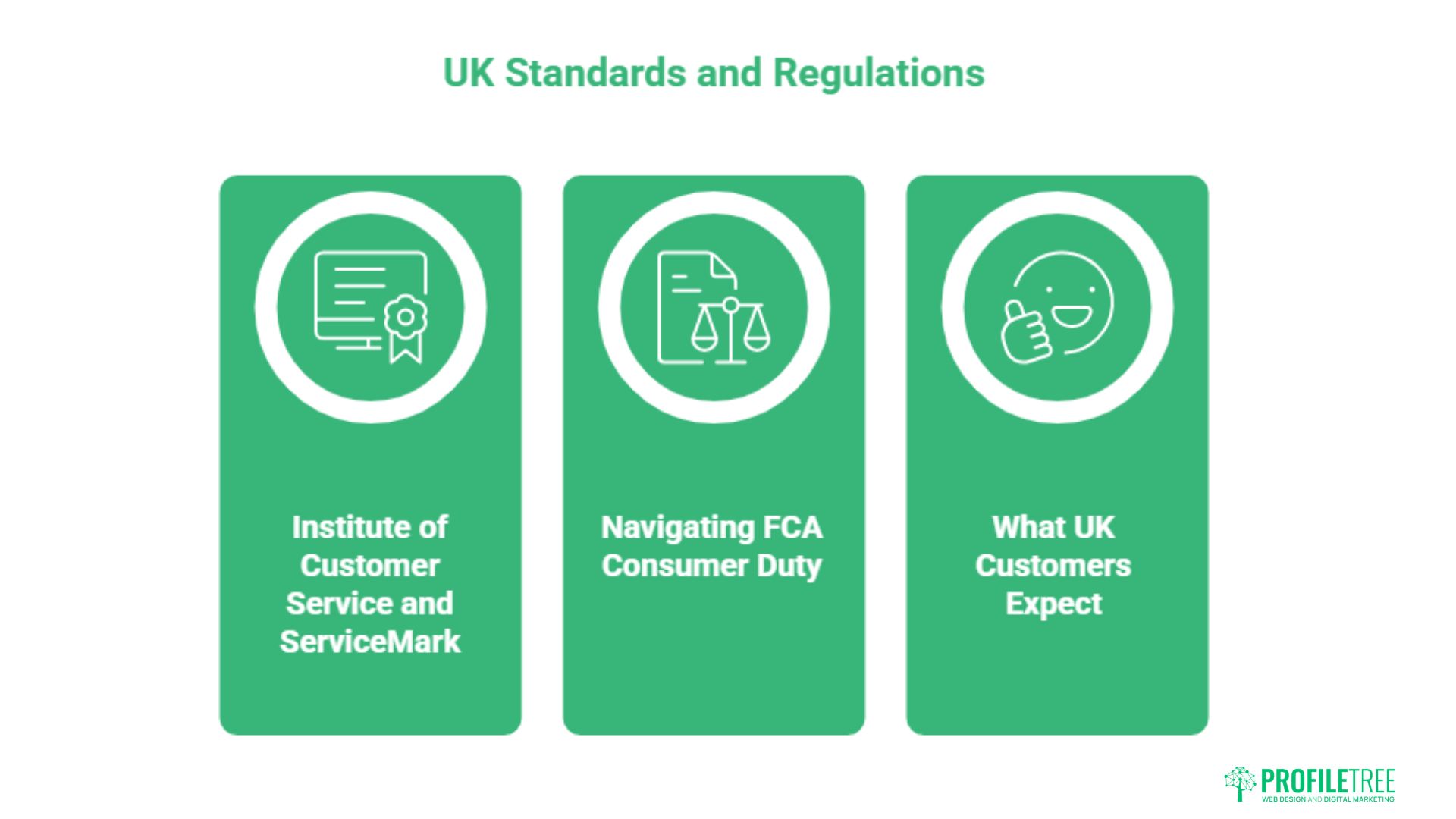
Excellence is no longer purely discretionary in the UK. For several sectors, it is partly defined by formal standards and, in regulated industries, by law. Understanding which of these applies to your business turns a vague aspiration into a measurable obligation.
The Institute of Customer Service and ServiceMark
The Institute of Customer Service runs ServiceMark, an accreditation that assesses an organisation against a defined service standard and customer feedback. There is also a recognised British Standard, BS 8477, which sets out a code of practice for customer service. Pursuing accreditation is not essential for a small business, but the underlying framework is a sound checklist even if you never apply formally.
Navigating FCA Consumer Duty
If you operate in financial services, the Financial Conduct Authority’s Consumer Duty raises the bar from “treat customers fairly” to delivering good outcomes for them. Service quality stops being a marketing choice and becomes a regulatory expectation, with evidence required. Firms in scope need to show that customers can act in their own interest, get clear information, and receive support that does not create unreasonable barriers.
Meeting that bar depends on having staff who understand the rules and apply them in live conversations, which is where structured upskilling earns its place. ProfileTree, the Belfast digital agency, builds this into broader digital training programmes for teams that need both compliance awareness and practical service skills.
What UK Customers Expect
Cultural expectations matter as much as regulation. UK and Irish customers tend to reward businesses that under-promise and over-deliver, and they are quick to notice when warmth is performed rather than meant. Honesty about what can and cannot be done lands better than an over-eager pledge that later collapses. Training should reflect that, teaching staff to set realistic expectations and then beat them, rather than to dazzle and disappoint.
Building a Training Programme That Holds Up
A training programme works when it changes behaviour on the floor, not when it fills a binder. The structure below moves from diagnosis to delivery to reinforcement, because skills fade without practice and without a system that keeps them alive.
Start by Assessing the Real Gaps
Before designing any sessions, find out where the team actually struggles. Performance reviews show patterns over time, customer feedback surfaces recurring complaints, and quietly observing live interactions reveals habits people do not know they have. Spending a week listening to calls or reading chat transcripts usually tells you more than any survey, and it stops you from training people in skills they already have.
The core competencies worth assessing tend to cluster into a handful of areas, and naming them clearly helps managers spot which ones need work.
| Skill area | What it looks like in practice |
|---|---|
| Active listening | Letting the customer finish, reflecting the issue back accurately |
| Clear communication | Explaining solutions in plain language, no jargon |
| Problem solving | Finding the root cause, not just the symptom |
| Emotional regulation | Staying calm and professional with a frustrated customer |
| Product knowledge | Answering confidently without escalating unnecessarily |
Use Practical Methods, Not Lectures
People learn service by doing it, so role-play earns its keep. Pairing staff to work through a difficult complaint, a confused enquiry, or an angry caller builds confidence in a way that a slide deck never will. Real case studies, both good and bad, give a team something concrete to debate, and group workshops let experienced staff pass on the small judgment calls that rarely make it into a manual.
This kind of hands-on approach maps onto how adults actually retain information. Our look at AI simulations for training shows how realistic scenarios can be run at scale without tying up a senior colleague for every session.
Make Learning Continuous
A one-off course produces a short-lived bump and little else. Excellence needs reinforcement: short refresher sessions, mentoring that pairs newer staff with seasoned colleagues, and regular feedback that names both what improved and what still needs work. A light fortnightly rhythm beats an annual all-day event, because skills decay and customer expectations keep shifting. Budgeting realistically for these matters, and our guide to training budgets helps weigh the spend against the return.
Blending Human Judgement With AI
AI has changed customer service faster than almost any other operational area, and the temptation is to automate everything in sight. The businesses delivering genuine excellence in 2026 are doing the opposite: using AI to clear the mundane work so people are free for the moments that need a human.
Decide What to Automate and What to Keep Human
The rule of thumb is simple. Automate the repetitive, low-emotion tasks: order tracking, password resets, opening hours, and routine status updates. Keep humans on anything involving frustration, complexity, money, or a judgment call. A chatbot answering “where is my order” at two in the morning is a gift; a chatbot stonewalling an upset customer who has tried three times to resolve a billing error is how trust gets destroyed.
Designed well, automation handles volume while protecting the human touch. ProfileTree helps businesses set this balance through AI chatbot services that route cleanly to a person the moment a conversation needs one.
Use AI to Solve Problems Before They Surface
The more interesting use of AI is proactive rather than reactive. Systems that flag a delayed shipment, a likely renewal lapse, or a usage drop let a team reach out before the customer even notices a problem. That shift, from answering complaints quickly to preventing them, is the clearest marker of where service excellence is heading. Our analysis of AI in customer relationship management goes deeper on the data side of this.
Train Staff to Work Alongside the Tools
AI only lifts service quality if the people using it understand its limits. Staff need to know when to trust an AI-suggested reply, when to override it, and how to take over a conversation from a bot without making the customer repeat themselves. That is a teachable skill, and it is increasingly central to any modern service role. For a broader view of preparing teams for this, see how to approach training teams on AI.
Measuring Whether Any of It Is Working
Training and tooling mean little without measurement, and service is more measurable than many managers assume. The right metrics tell you not just whether customers are satisfied but how much effort they had to expend, which often predicts loyalty better than satisfaction alone.
The Metrics Worth Tracking
Three measures cover most of what an SME needs. Customer Satisfaction (CSAT) captures how a person felt about a specific interaction. Net Promoter Score (NPS) gauges willingness to recommend. Customer Effort Score (CES) asks how hard the customer had to work to get their issue resolved, and a low effort score is frequently the strongest signal of all. Tracking one of each, rather than a dozen overlapping numbers, keeps the picture honest.
For context on how figures like these support decisions, our piece on business statistics is a useful companion read.
Close the Loop on Feedback
Collecting scores is pointless if nothing changes as a result. The teams that improve fastest review feedback weekly, pick one or two recurring issues, and fix the underlying cause rather than coaching individuals after the fact. A complaint that appears five times in a month is a process problem, not a people problem, and treating it that way removes the friction permanently.
Tie Results Back to Training
The final loop connects measurement to the training programme. If effort scores spike on billing queries, that tells you exactly what next month’s role-play should cover. Treated this way, metrics stop being a report card and become a planning tool, pointing precisely at the skills a team needs to sharpen next. UK businesses can also draw inspiration from the strength of regional service culture, well captured in this overview of the top cities to visit in Northern Ireland, where local hospitality sets a high informal standard.
As Ciaran Connolly, founder of ProfileTree, puts it: “Service excellence is not a personality trait you hire for. It is a system you build, train into people, and measure honestly, and any business willing to do that work can deliver it.”
Conclusion
Customer service excellence comes down to consistency, the right standards, steady training, sensible use of AI, and honest measurement. None of it requires a vast budget, only a deliberate system and the discipline to maintain it. Get those parts working together, and excellence stops being an occasional accident and becomes the way your team operates every day.
Ready to build a service team that delivers consistently? Explore ProfileTree’s digital training and start raising your standard today.
FAQs
What are the five characteristics of customer service excellence?
The five widely recognised characteristics are empathy, speed, personalisation, reliability, and proactivity. Empathy means genuinely understanding how a customer feels, as when a UK retailer apologises sincerely for a delayed order rather than reciting policy. Speed is resolving issues without unnecessary delay. Personalisation uses what you know about the customer to tailor the response.
What is the British Standard for customer service excellence?
The relevant British Standard is BS 8477, a code of practice for customer service. Alongside it, the Institute of Customer Service operates ServiceMark, an accreditation that assesses an organisation against a defined standard and verified customer feedback. Together,r they give UK businesses a formal framework for defining and proving service quality, useful as a benchmark even for firms that never pursue full accreditation.
How do you demonstrate customer service excellence in an interview?
Use the STAR method: Situation, Task, Action, Result. Describe a specific situation where a customer had a problem, the task you faced, the action you personally took, and the measurable result. For example, explain how you handled an angry customer (situation), needed to retain their business (task), listened and offered a practical fix (action), and turned them into a repeat buyer (result). Concrete examples beat general claims about being “a people person”.
What is the difference between customer service and customer excellence?
Customer service fulfils the contract: it answers the question or resolves the issue the customer brought to you. Customer excellence exceeds the emotional expectation, on top of that, leaving the customer feeling genuinely valued rather than merely processed. Service closes the ticket; excellence creates an advocate. The gap between them is almost always down to consistency and training rather than individual personality.
How has AI changed customer service excellence?
AI has shifted the emphasis from reactive speed to proactive and predictive care. Instead of only answering complaints faster, businesses now use AI to spot likely problems, such as a delayed delivery or a lapsing subscription, and reach out before the customer notices. The strongest results come from a hybrid model: AI handles routine, low-emotion queries while humans take anything involving frustration, complexity, or judgment.