
Digital Marketing Channels: A Strategy Guide for UK Businesses
Table of Contents
Every UK business with an online presence is using at least one digital marketing channel, whether they know it or not. Most are using several. The question is whether those choices are deliberate and whether they’re working. This guide cuts through the noise with a practical framework for understanding, selecting, and measuring the channels that genuinely drive results for businesses in Northern Ireland, Ireland, and the wider UK.
If you run a business in Northern Ireland, Ireland, or the wider UK, the question is rarely “should we do digital marketing?” It’s “which channels are actually worth our time and money, and in what order?” The answer depends on your budget, your audience, and whether you’re selling to consumers or other businesses.
This guide gives you a practical framework. We’ll walk through the eight most important digital marketing channels, explain how to select the right mix for your goals, and look at the UK-specific considerations that most US-published guides miss entirely.
What Are Digital Marketing Channels?
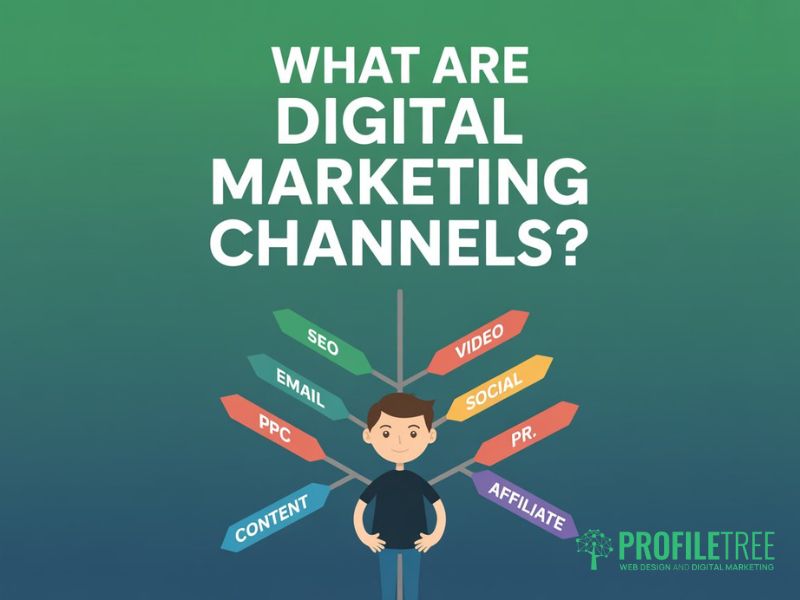
A digital marketing channel is any online platform or method through which a business communicates with its target audience. That covers everything from Google search results to Instagram posts, email newsletters to YouTube videos. The terms “digital marketing channels” and “online marketing channels” are often used interchangeably, though digital is now the more widely used term in the UK.
The term matters because different channels serve different purposes. Some are best for building awareness among people who have never heard of you. Others are built for converting people who are already considering a purchase. Choosing the right channel means matching the tool to the job, not simply using whatever is most familiar or cheapest.
Modern digital marketing channels fall into three broad types: search-based channels that capture intent (SEO and PPC), social and content channels that build relationships (social media, video, content marketing), and direct channels that drive repeat behaviour (email and SMS). The remainder of this guide focuses on the eight channels that consistently deliver results for UK and Irish businesses.
The Core Framework for Digital Marketing Channels: Paid, Owned, and Earned
Before choosing specific digital marketing channels, it helps to understand the three media types that underpin every strategy: paid, owned, and earned.
Paid media includes anything you pay to place in front of an audience, such as Google Ads, Facebook ads, display advertising, and sponsored content. It delivers fast results but stops the moment you stop spending.
Owned media is everything you control: your website, your email list, your YouTube channel, your blog. Building owned media takes longer, but the returns compound over time, and you are not at the mercy of platform algorithm changes.
Earned media is third-party coverage and organic amplification: press coverage, backlinks, social shares, and word-of-mouth referrals. It is the hardest to generate directly, but the most trusted by audiences and the most valuable for long-term authority.
The strongest digital marketing strategies balance all three. Paid media accelerates visibility early on. Owned media provides a foundation that does not disappear when budgets are cut. Earned media multiplies the reach of everything else. For most UK SMEs, the practical starting point is to invest in owned media first, add paid where it accelerates a specific goal, and build earned media gradually through quality content and outreach.
The Eight Essential Digital Marketing Channels
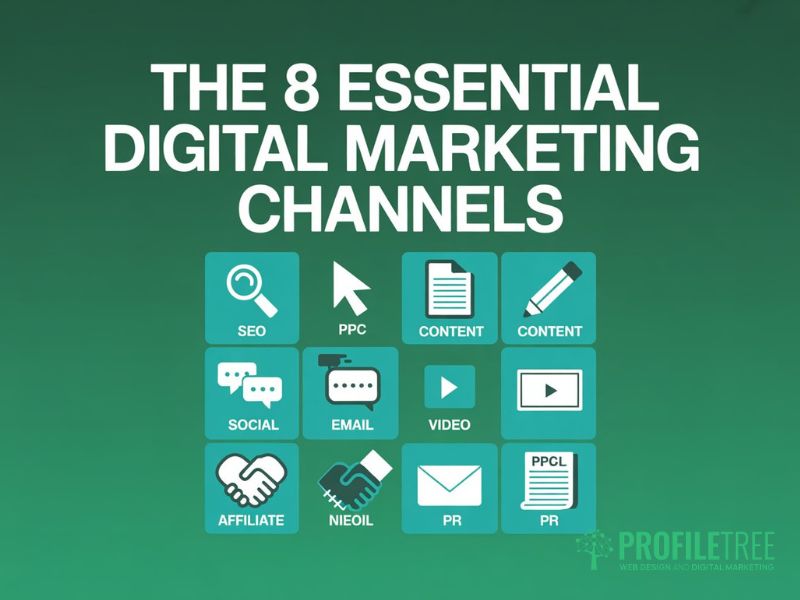
These are the channels with the most consistent track record for UK and Irish businesses across the B2B and B2C sectors. Each section includes a practical overview, what it is best suited to, and where it tends to fall short.
Search Engine Optimisation (SEO)
SEO is the process of improving how your website ranks in organic (unpaid) search results. When someone types “web design Belfast” or “SEO agency Northern Ireland” into Google, the pages that appear have earned those positions through a combination of technical health, relevant content, and external authority signals.
SEO is the single most important long-term digital marketing channel for most businesses because it captures demand at the moment it exists. Someone searching for “accountant in Belfast” is ready to act; showing up at the top of those results puts you in front of a qualified buyer at no cost per click.
The trade-off is time. Meaningful SEO results typically take three to six months to emerge, and competitive terms can take longer. It also requires consistent investment in content, technical maintenance, and link building.
Since 2024, Google’s AI Overviews have begun answering more queries directly in the search results page, which reduces clicks for informational queries. The channels that now drive the most SEO value are authoritative long-form content covering multiple sub-questions and structured pages that AI systems can easily extract information from.
For a practical introduction to improving your search rankings, see our complete guide to SEO for small businesses.
Pay-Per-Click Advertising (PPC)
PPC is one of the fastest-performing digital marketing channels available, placing your business at the top of search results for specific keywords where you pay only when someone clicks. Google Ads is the dominant platform in the UK, though Microsoft Advertising (Bing Ads) is worth considering for certain B2B audiences.
PPC works best when you have a page that converts well and a clear understanding of your customer acquisition cost. It delivers immediate visibility, which makes it useful for launches, time-sensitive promotions, and testing new markets. The downside is that costs can mount quickly if the campaign is not managed carefully, and you get nothing the moment you stop paying.
Average cost-per-click in the UK varies considerably by sector. Legal and financial services routinely see CPCs of £5 to £20 or more. Retail and hospitality are considerably lower. Before committing budget to PPC, it is worth using SEO to establish a baseline conversion rate; sending paid traffic to a page that does not convert is an expensive way to learn nothing.
PPC and SEO work well together. Use SEO for your core traffic and brand authority; use PPC to fill gaps, test new keywords, or capture demand during high-intent buying periods.
Content Marketing
Content marketing is one of the most enduring digital marketing channels available. It means creating genuinely useful material, such as blog posts, guides, case studies, videos, and tools, that attracts and retains an audience over time. It is the engine that powers SEO, provides material for social media, and builds the kind of trust that turns visitors into buyers.
The keyword is “genuinely useful.” Google’s Helpful Content System now evaluates entire sites for content quality, not just individual pages. Publishing thin or lightly researched articles to game search rankings does not work and actively damages domain authority.
What does work: detailed guides that cover a topic better than anything else currently ranking, original research and data, and content that addresses specific questions your actual customers ask during the sales process. A 2,500-word guide that genuinely helps someone make a decision is more valuable than ten 400-word articles that skim the surface.
Social Media: Organic and Paid
Social media is a digital marketing channel that splits into two very different activities: organic activity (posts, stories, community management) and paid advertising across platforms, including Facebook, Instagram, LinkedIn, TikTok, and YouTube.
One thing UK SMEs need to accept: organic reach on Facebook and Instagram is effectively dead for most business pages. Meta has cut organic reach for business pages substantially since 2021. Organic social is still valuable for community building, customer service, and brand personality, but it should not be relied on as a traffic driver.
LinkedIn is the exception for B2B audiences. Organic reach remains much stronger, and the platform’s audience targeting is genuinely useful for reaching decision-makers in specific industries and company sizes.
Paid social is different. Meta’s advertising platform remains one of the most sophisticated audience-targeting tools available, particularly for consumer brands with a well-defined customer profile. The key is having strong creative (video consistently outperforms static images) and a clear objective for each campaign.
Email Marketing
Email marketing remains one of the highest-ROI digital marketing channels available, particularly for businesses with an existing customer base or newsletter audience. It allows direct, personalised communication at low marginal cost and performs especially well for nurturing leads over time.
The main challenge is building and maintaining a quality list. Purchased lists almost always underperform and create compliance risk under UK GDPR and PECR (more on this below). A list built organically through website sign-ups, gated content, or existing customer relationships will consistently outperform a larger list acquired through shortcuts.
Automation has transformed what is possible with email. Behaviour-triggered sequences (welcome series, abandoned basket emails, post-purchase follow-ups) deliver much higher open and click rates than broadcast newsletters because they arrive at a moment of demonstrated interest.
One note for businesses selling to other businesses: 59% of B2B marketers rate email as one of their most effective revenue-generating channels, according to the Content Marketing Institute’s annual B2B report. For service businesses in particular, a well-maintained email list is a commercial asset that continues to deliver without ongoing paid media spend.
Video Marketing
Video is the most consumed content format online, and its importance across digital marketing channels continues to grow. Short-form video (under 60 seconds) now dominates TikTok, Instagram Reels, and YouTube Shorts, while long-form video performs well for tutorials, testimonials, and product demonstrations on YouTube.
For UK businesses, YouTube is particularly valuable because it functions as both a social platform and a search engine. Well-optimised YouTube content can rank in Google’s search results, giving you two sources of organic visibility from a single asset. A video explaining how your service works, sitting on your website and ranking in YouTube search, combines several digital marketing channels in one piece of content.
The barrier to entry for video has fallen considerably. A modern smartphone and good natural lighting produce footage that is more than adequate for social media content. For polished brand videos, testimonials, or product showcases, professional production adds credibility that amateur footage cannot match.
Affiliate and Influencer Marketing
Affiliate and influencer marketing is a performance-based digital marketing channel in which third parties promote your products or services in exchange for a commission on sales or agreed-upon fees. Influencer marketing is a related model in which individuals with established audiences create content featuring your brand.
For most UK SMEs, affiliate marketing is more relevant for e-commerce businesses than service companies. The economics work well when the margin on a product can comfortably absorb a commission while remaining profitable. For service businesses with longer sales cycles, the tracking complexity often outweighs the benefit.
Micro-influencer marketing (working with creators who have between 10,000 and 100,000 followers in a relevant niche) has become genuinely useful for reaching specific audiences in an authentic way. The key is topical relevance: an influencer with 20,000 followers in your exact niche will consistently outperform a celebrity with two million followers who are not your customers.
Online PR and Digital Outreach
Online PR secures editorial coverage, backlinks, and mentions on high-authority websites. This matters for two reasons: it builds the external authority signals that help your website rank in Google, and it places your brand name in front of audiences you could not reach through your own channels alone.
Digital PR in 2025 looks different from the traditional press release model. The most effective approach combines data-driven story angles (original research that journalists want to reference), expert commentary (positioning your team as authoritative sources for media inquiries), and strategic link-building through guest articles and resource placements.
Building backlinks from reputable UK publications takes time and persistence. It is rarely fast, but the authority signals it creates compound over the years in a way that paid advertising cannot replicate.
Choosing the Right Digital Marketing Channels for Your Business
The most common mistake businesses make is trying to be active on every digital marketing channel simultaneously. The result is mediocre execution across the board rather than genuine performance on any single channel. Strategy means choosing where not to invest as much as choosing where to focus.
B2B vs B2C Channel Priorities
Business-to-business and business-to-consumer companies have fundamentally different customer journeys, which means different channels will drive results.
B2B buyers typically conduct extensive research before contacting a supplier. They are looking for proof of expertise, social proof in the form of case studies and testimonials, and clear answers to technical questions. This makes SEO, content marketing, email, and LinkedIn the most effective B2B digital marketing channels. Whether you think of these as digital or online marketing channels, the principle is the same: a well-ranked guide on a topic your prospects search for regularly will attract qualified leads more reliably than paid advertising in most B2B sectors.
In many cases, B2C businesses have a shorter path from awareness to purchase. Paid social, video, and SEO all play important roles. Email is valuable for retention and repeat purchase. The specific channel mix depends heavily on the product category and price point.
| Channel | B2B Priority | B2C Priority | Best For |
|---|---|---|---|
| SEO | High | High | Long-term organic traffic |
| PPC / Google Ads | Medium | High | Fast visibility, high-intent buyers |
| Content Marketing | High | Medium | Authority, trust, SEO support |
| LinkedIn (Organic) | High | Low | B2B lead generation, thought leadership |
| Email Marketing | High | High | Nurture, retention, repeat purchase |
| Paid Social (Meta) | Low–Medium | High | Awareness, retargeting, consumer reach |
| Video Marketing | Medium | High | Engagement, product showcase, tutorials |
| Online PR | Medium | Medium | Authority building, backlinks |
Scaling from Small Business to Enterprise
Budget and team size determine how many channels you can realistically execute well. A business with one person handling all marketing cannot maintain SEO, paid social, email, and LinkedIn simultaneously at a standard that produces results.
For businesses starting out or working with limited budgets, the recommended approach is to pick one or two channels and do them properly. SEO and content marketing are the best starting points for most businesses because they build assets that compound in value. Add email once there is a list worth nurturing. Add paid channels once there is a proven conversion rate to scale.
UK and Ireland: How Digital Marketing Channels Work Differently Here
Most guides to digital marketing channels are written for a US audience. The UK and Irish markets have meaningful differences in regulatory requirements, platform usage patterns, and audience behaviour that affect how channels perform and how they must be used.
GDPR and PECR: What You Need to Know
The UK General Data Protection Regulation (UK GDPR) and the Privacy and Electronic Communications Regulations (PECR) govern how businesses collect and use personal data for marketing purposes. These are not optional, and they are actively enforced by the Information Commissioner’s Office (ICO).
For email marketing, PECR requires that you have either a prior existing commercial relationship with the recipient (for B2C) or that the contact is being made in a genuine business context and they have not opted out (for B2B). In practice, this means building your list through clear opt-in mechanisms and maintaining preference management properly.
For tracking-based channels such as display advertising and paid social retargeting, UK GDPR requires clear cookie consent before placing tracking pixels. A compliant cookie banner is not optional on UK business websites. Third-party advertising platforms such as Meta and Google have their own compliance obligations, but the responsibility for consent on your website remains with you.
The practical implication: if you are using email, SMS, or tracking-based digital marketing channels, you need to review your consent mechanisms, your data retention policies, and your privacy notice. The ICO website provides practical guidance. Non-compliance carries fines of up to £17.5 million or 4% of annual global turnover, whichever is higher.
UK Platform Usage and Regional Targeting
According to Ofcom’s 2024 Online Nation report, 91% of UK adults use the internet daily. YouTube, Facebook, and Instagram remain the dominant social platforms by reach. TikTok has grown rapidly among under-35 audiences. LinkedIn penetration is higher in the UK than in most other markets outside the US, making it particularly valuable for B2B targeting.
For Northern Ireland and cross-border businesses serving both the UK and the Republic of Ireland, paid channel targeting requires care. Google Ads and Meta Ads allow targeting by country, region, or postcode, but audiences in border counties are frequently served ads from both sides of the border. Setting up separate UK and ROI campaigns with appropriate currency and language settings avoids wasted spend and compliance issues around data jurisdiction.
Belfast and other Northern Irish cities have a smaller addressable audience than comparable cities in Great Britain, which makes local SEO and organic digital marketing channels proportionally more valuable. Paid advertising budgets go further when combined with strong organic visibility rather than used as a substitute for it.
Budgeting Across Digital Marketing Channels
Budget allocation is one of the most common sources of confusion for businesses planning their digital marketing. There is no single correct answer, but there are useful frameworks depending on your stage and goals.
Starter Mix: £500 to £1,000 per Month
At this budget level, paid advertising is rarely the best use of funds across your digital marketing channels. The most effective approach is to concentrate on owned media: building out SEO-optimised content on your website, setting up a basic email newsletter, and maintaining an organic presence on one or two social platforms where your audience spends time.
Typical allocation at this level: 60–70% toward content creation and SEO (blog posts, on-page optimisation, technical fixes), 20–30% toward social media management or scheduling tools, and the remainder toward email platform costs and list-building activities. PPC spend at this level is only justified if you have a specific campaign with a clear target CPA (cost per acquisition) and a converting landing page already in place.
Growth Mix: £5,000+ per Month
At higher budgets, a multi-channel approach becomes viable. A well-balanced growth mix typically allocates roughly 35–40% to paid search and social advertising, 30–35% to content production and SEO, 15–20% to email marketing and automation, and 10–15% to video production or digital PR. These proportions shift based on business type and the maturity of each channel.
The critical principle at any budget level is to measure cost per acquisition by channel, not vanity metrics like impressions or follower counts. A channel that costs more per campaign but delivers a lower cost per paying customer is a better investment than a cheaper channel with poor conversion rates.
Digital Marketing Channel Comparison
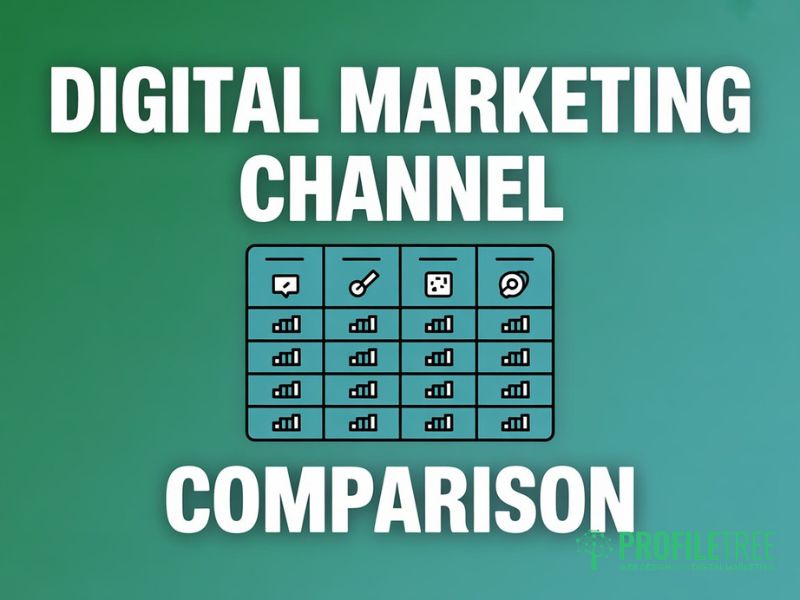
This table summarises the key characteristics of each digital marketing channel to help with planning and prioritisation.
| Channel | Setup Cost | Time to Results | Primary Goal | Skill Level |
|---|---|---|---|---|
| SEO | Low–Medium | Slow (3–6+ months) | Organic traffic, authority | Medium–High |
| PPC / Google Ads | Medium | Fast (days) | Conversions, leads | Medium |
| Content Marketing | Low–Medium | Slow (cumulative) | Traffic, trust, SEO | Medium |
| Social Media (Organic) | Low | Medium (weeks) | Awareness, engagement | Low–Medium |
| Paid Social (Meta/LinkedIn) | Medium–High | Fast (days–weeks) | Awareness, conversions | Medium |
| Email Marketing | Low | Medium (weeks) | Nurture, retention, ROI | Low–Medium |
| Video Marketing | Medium–High | Slow–Medium | Engagement, authority | Medium–High |
| Online PR | Low–High | Slow (months) | Backlinks, brand authority | High |
Measuring Success Across Digital Marketing Channels
Each digital marketing channel has its own meaningful performance indicators. Using the wrong metrics leads to poor decisions; measuring cost per acquisition for a brand awareness campaign, for instance, misses the point of what that channel is doing.
- SEO: organic sessions, keyword rankings, click-through rate from search results, and pages indexed.
- PPC: cost per click, cost per acquisition, conversion rate, quality score, return on ad spend.
- Content marketing: organic traffic, time on page, backlinks earned, and leads generated from content.
- Social media (paid): reach, frequency, click-through rate, cost per result, return on ad spend.
- Email marketing: open rate, click-to-open rate, unsubscribe rate, revenue per email.
- Video marketing: watch time, retention rate, subscriber growth, and traffic referred to the website.
- Online PR: domain rating of placements, number of backlinks, and referral traffic.
The most important cross-channel metric is always cost per acquisition: how much did it cost, across all channels combined, to win one new customer? Build attribution tracking into your analytics setup from the start so you can see which channels contribute at each stage of the customer journey, not just which channel gets the final click.
ProfileTree’s digital marketing strategy services can help you build a measurement framework that connects channel activity to actual business outcomes. See how we approach digital strategy for SMEs.
Building Your Digital Marketing Channels Strategy
The businesses that get the most from their digital marketing channels are not those with the largest budgets. They are the ones who choose channels deliberately, execute consistently, and measure what actually matters to the business.
Start with the channel that best matches where your audience is and what you can genuinely sustain. Build it properly before adding the next one. Connect your channels so that what you learn in one improves performance in the others.
If you’d like a clear picture of which digital marketing channels offer the best opportunity for your specific business, ProfileTree’s digital marketing tools and resources can help you build a plan grounded in real data rather than guesswork.
ProfileTree has been helping UK and Irish businesses build effective, joined-up digital strategies since 2011. Whether you’re starting from scratch or looking to improve what’s already working, the team can help you identify where your effort will have the most impact.
FAQs
1. What are the main digital marketing channels?
The eight core digital marketing channels are SEO, PPC advertising, content marketing, social media (organic and paid), email marketing, video marketing, affiliate and influencer marketing, and online PR. These are also commonly referred to as online marketing channels. Most businesses focus on 2 to 4 channels, depending on their budget, audience, and goals.
2. Which digital marketing channel has the highest ROI?
Email marketing consistently delivers the highest return on investment across most business types, particularly for B2B companies and businesses with an existing customer base. SEO delivers comparable or higher long-term value but takes longer to produce results. The right answer depends on your starting position: a business with no website authority will see faster returns from email than from SEO in the short term.
3. Which digital marketing channels work best for small businesses with limited budgets?
For small businesses with limited budgets, SEO and content marketing offer the best long-term value because they build assets that compound over time without ongoing paid spend. Organic social media and email marketing require mostly time rather than budget. PPC is worth adding once conversion rates are established, but sending paid traffic to an unconverting website is an expensive way to produce no results.
4. How do UK GDPR rules affect my use of digital marketing channels?
UK GDPR and PECR affect any digital marketing channel that involves personal data. For email, you need a lawful basis for contact; for tracking-based channels such as display and retargeting, you need valid cookie consent before placing pixels. If you are unsure about your current setup, the ICO website provides free practical guidance.
5. What is the difference between multi-channel and omni-channel marketing?
Multi-channel marketing means using several digital marketing channels independently, with no connection between them. Omni-channel marketing integrates those channels so the customer experience is consistent and joined-up, for example, using email behaviour to inform paid social targeting or in-store data to personalise website content. It requires more technical setup but delivers better results for businesses with complex customer journeys.
Great read regarding the various types of digital marketing channels and their benefits for continued business success. Thanks for this.