
Facebook Ads and Apple iOS 14: What SMEs Need to Know
Table of Contents
When Apple introduced App Tracking Transparency as part of iOS 14, it changed how businesses run paid social advertising for good. The ability to track users across apps and websites — the foundation of Facebook’s targeting model — became opt-in rather than opt-out. Most users chose not to be tracked.
For SMEs across Northern Ireland, Ireland, and the UK that had built their lead generation on Facebook Ads, the practical consequences were significant: smaller audiences, less reliable attribution data, and conversion reporting that no longer reflected what was actually happening. The businesses that adapted quickest were those that understood what had changed technically and used it as a prompt to build a more resilient digital marketing strategy.
This guide explains what iOS 14’s ATT framework actually changed, how Facebook’s Aggregated Event Measurement protocol works, and — more usefully — how to make your digital advertising less dependent on any single platform’s tracking capabilities.
What iOS 14’s App Tracking Transparency Actually Changed
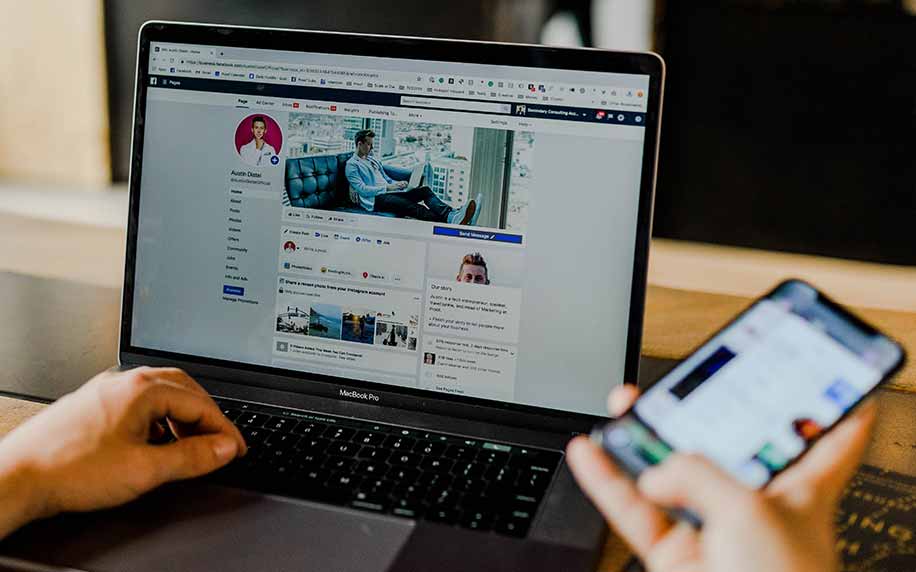
Before iOS 14, apps like Facebook could track user activity across other apps and websites by default. That data feeds targeting algorithms, lookalike audience modelling, and conversion attribution. Users had no straightforward way to see or stop it.
Apple’s App Tracking Transparency framework, which rolled out fully with iOS 14.5 in 2021, changed the default. Apps are now required to display a prompt asking users for permission to track their activity across other apps and websites. Studies consistently showed that the majority of users, when given the choice, opted out.
What the opt-out actually means for advertisers
When a user opts out, Facebook loses the ability to track that person’s off-platform behaviour. It cannot see which pages they visit, which products they browse, or whether they convert after seeing an ad. This affects three things directly.
Audience sizes decrease. Retargeting pools shrink because opted-out users cannot be tracked to your website and matched back into a Custom Audience. Lookalike Audiences built from those same pools become smaller and less accurate.
Attribution windows were cut. Facebook dropped 28-day click attribution and 7-day view-through attribution for iOS 14 users. The maximum available window became 7-day click and 1-day view. For businesses with longer sales cycles — a common reality in professional services across Northern Ireland and Ireland — this means genuine conversions from Facebook campaigns were going unrecorded.
Reporting became modelled, not measured. For iOS users who opted out, Facebook began using statistical modelling to estimate conversions rather than recording them directly. Reports started flagging when modelled data had been used in place of observed data, but many advertisers did not realise that the numbers they were reading were partly statistical estimates.
The domain verification requirement
A practical step that became mandatory: Facebook required advertisers to verify domain ownership before they could prioritise conversion events. For businesses whose Pixel on their site was managed by an agency or third party alongside other tracking tools, this created an unexpected administrative bottleneck. Any business that had not verified its domain by the rollout deadline had its ad sets paused automatically.
How Facebook Responded: Aggregated Event Measurement
Facebook’s answer to the tracking restrictions was the Aggregated Event Measurement (AEM) protocol. Rather than tracking individual user journeys, AEM aggregates conversion data and reports it, allowing some measurement while respecting Apple’s privacy requirements.
How the eight-event limit works
In AEM, each domain can have up to 8 conversion events configured for optimisation at any one time. These events are ranked by priority. If a campaign is optimising for an event that is not in the top eight, the ad set is paused automatically. Changing the priority order or reconfiguring event triggers a 72-hour reset period, during which active campaigns pause while attribution recalibrates.
For most small businesses, eight events are enough if carefully chosen. A typical priority order might be: purchase, add to cart, initiate checkout, lead form submission, page view, contact, schedule, and search. The mistake many advertisers initially made was ranking lower-value events above purchase events, which wasted reporting capacity on activity that did not directly reflect commercial outcomes.
What AEM does not solve
AEM provides aggregate data, not individual user-level data. It cannot tell you which specific users converted, which creative they saw, or which audience segment they belong to. Reports from AEM can also lag by up to 72 hours due to the privacy-preserving mechanisms involved. For advertisers used to near-real-time reporting, this required a change in how they reviewed and acted on campaign data.
Building a More Resilient Paid Social Strategy
The iOS 14 changes exposed a structural vulnerability that many SMEs had not previously considered: over-reliance on a single platform’s tracking infrastructure. When Facebook’s ability to collect data was restricted by Apple’s policy, businesses that had no other way to measure digital performance were left with a reporting gap.
The most durable response is not a technical workaround. It is a more balanced digital strategy.
First-party data as the foundation
First-party data — information collected directly from your own customers and website visitors with their explicit consent — is not subject to Apple’s ATT restrictions or Facebook’s pixel limitations. Email addresses collected through sign-up forms, quote requests, and phone enquiries are yours. They can be uploaded to Facebook as a Customer List for matching, used to build Lookalike Audiences, and retained even if platform policies change again.
Building a meaningful first-party data asset requires a website set up to capture it: clear calls to action, email sign-up forms with a genuine reason to subscribe, and landing pages designed for conversion rather than just information delivery. This is where the quality of your website becomes a direct factor in your paid advertising performance. A business that sends Facebook traffic to a poorly structured site will collect less first-party data regardless of how well the campaigns are set up.
At ProfileTree, our web development team works with SMEs across Northern Ireland and Ireland to build conversion-optimised sites that give paid campaigns a useful landing page. If your Facebook Ads are driving traffic but the site isn’t capturing contacts, the tracking issue is often secondary to a conversion issue.
SEO is a channel that does not rely on third-party tracking
One response to the iOS 14 disruption that many businesses underestimated was the value of organic search. Unlike paid social, SEO does not depend on any platform’s tracking infrastructure. When someone finds your business through Google, the interaction is direct: they searched for something, your page appeared, and they visited. You own that relationship.
For businesses whose Facebook Ads attribution data became unreliable, investing in SEO provided a channel where performance data remained clear and where they were building an asset rather than renting audience access from a platform. Our SEO services for SMEs in Northern Ireland, Ireland, and the UK are built around this principle: organic search as a long-term complement to paid social.
Content marketing and owned audience building
One of the practical lessons from the iOS 14 period was that businesses with an owned audience — an email list, a newsletter readership, a YouTube subscriber base — were less affected than those relying entirely on Facebook’s lookalike modelling. When the lookalike data became less accurate, businesses that could email their existing customers directly had a fallback that worked immediately.
Content marketing is the mechanism for building that owned audience. Useful articles, guides, and video content attract visitors through organic search and social sharing, and give people a reason to subscribe or follow. The ethical and legal dimensions of digital marketing — including data consent and privacy — are also worth understanding as GDPR enforcement in the UK and Ireland continues to develop alongside these platform-level changes.
Video as a tracking-independent format
Video content on platforms like YouTube and short-form video on TikTok and Instagram Reels operates on a different model from traditional display advertising. Engagement with video — views, watch time, clicks — is measured by the platform hosting the video, not by a third-party pixel on your site. This makes video advertising comparatively less affected by the iOS 14 tracking restrictions.
For SMEs that want to maintain visibility on social platforms without the attribution gaps created by ATT, video advertising offers a practical alternative that sidesteps some of the pixel-dependency. ProfileTree’s video production team in Belfast creates content for both organic and paid social distribution.
Conversion Tracking After iOS 14: Practical Steps
If you are still running Facebook Ads and want accurate conversion data, there are several technical steps that are worth completing regardless of how long ago iOS 14 rolled out.
Verify your domain in Facebook Business Manager. This is a prerequisite for using AEM properly. Without it, you cannot control which conversion events are prioritised, and Facebook will default to its own attribution.
Configure your eight priority events deliberately. Think about your actual sales funnel. If your goal is phone enquiries or contact form submissions, make sure these events are ranked above page views or add-to-cart events that do not reflect genuine commercial intent for your business.
Download historical conversion data. If you have campaigns that ran before the iOS 14 rollout, the historical data from the 28-day attribution window is still accessible via the API. This gives you a baseline comparison so you can understand how your current 7-day click reporting relates to what you were seeing before.
Implement the Conversions API where possible. Facebook’s Conversions API sends conversion events directly from your server rather than from the browser, partially bypassing the ATT restrictions. It requires web development work to set up correctly, but for businesses with significant paid social budgets, it significantly improves the reliability of conversion data.
Diversify your attribution view. Rather than relying solely on Facebook Ads Manager reporting, cross-reference with Google Analytics 4, which captures sessions and conversions independently. Where the numbers diverge significantly, the GA4 data is typically closer to what is actually happening on your site.
Digital Training: Understanding the Platform Changes Yourself
One of the recurring issues the iOS 14 changes revealed was that many business owners and marketing managers were entirely dependent on an agency to interpret their ad performance data. When the reporting became more complex — modelled data mixed with observed data, 72-hour reporting delays, paused ad sets triggered by event priority changes — they had no framework to evaluate whether the explanations they were being given were accurate.
Understanding the basics of how paid social attribution works, the difference between click and view attribution, and how to read an AEM report independently is not an advanced skill. It is a practical business literacy skill. ProfileTree’s digital training for SMEs is designed to build this kind of working knowledge so that business owners can make informed decisions about their digital spend rather than approving budgets based on numbers they cannot interpret.
“The businesses we work with that get the most from digital advertising are not necessarily the ones with the biggest budgets,” says Ciaran Connolly, founder of ProfileTree. “They are the ones who understand enough about how the platforms work to ask the right questions and spot when something has changed.”
How SMEs in Northern Ireland and Ireland Are Responding
The iOS 14 changes hit smaller businesses harder than larger ones, for a straightforward reason: big brands had the internal resources and budget to implement technical workarounds like the Conversions API quickly, diversify into other channels, and absorb a period of unreliable reporting while they recalibrated. Most SMEs did not.
What we consistently see when working with small and medium businesses across Belfast, Northern Ireland, and Ireland is that the most exposed businesses are those that have built their entire digital acquisition model around a single channel. A local retailer running Facebook Ads to drive footfall or online sales with no email list, no organic search presence, and no other paid channel had nothing to fall back on when their Custom Audiences shrank, and their attribution data became unreliable.
The businesses that adapted quickly
The pattern among businesses that adjusted well was not that they had superior technical knowledge. Most of them made three practical decisions. They verified their domain and properly configured their AEM events, ensuring that at least their remaining data was accurate. They deliberately started collecting email addresses — through a sign-up offer, a quote form, or a simple newsletter — so their retargeting pool was no longer entirely dependent on pixel tracking. And they started treating Facebook Ads as a top-of-funnel awareness channel rather than a direct-response channel where every pound of spend needed to produce a traceable conversion.
What this means for your digital strategy today
If your business is still running Facebook Ads without having reviewed your attribution setup since 2021, it is worth doing a basic audit before spending more. Check whether your domain is verified in Business Manager, review which eight events are configured in Events Manager and whether they reflect your actual commercial priorities, and compare your Facebook Ads Manager conversion numbers against GA4 to get a sense of how much modelled data is in your reports.
The broader takeaway for any SME considering how to allocate its digital marketing budget is this: a strategy that depends entirely on one platform’s tracking infrastructure is fragile. Spreading activity across owned channels — your website, your email list, your organic search presence — alongside paid social gives you something to work with when any single platform changes its rules.
AI and Automation in Paid Social: What Has Changed Since iOS 14
The iOS 14 period coincided with a significant shift in how Facebook’s own advertising system operates. As individual-level tracking data became less available, Meta leaned harder into machine learning to compensate. The result is an advertising platform that works quite differently from the one that existed before 2021.
Advantage+ and the move away from manual targeting
Meta’s Advantage+ suite of tools — which includes Advantage+ Audiences, Advantage+ Shopping Campaigns, and Advantage+ Placements — represents the clearest expression of this shift. Rather than requiring advertisers to build specific audience segments based on interests, demographics, and behaviours, Advantage+ hands audience selection largely to Meta’s algorithm. The system identifies users it predicts will convert based on your campaign objective and historical performance data, without the advertiser needing to manually define the audience.
For many SMEs, this is actually a more practical approach post-iOS 14 than maintaining manual audience segments built from increasingly limited pixel data. The algorithm has access to signals that individual advertisers do not, and it performs well for campaigns with enough conversion history to train on. The trade-off is reduced control and transparency: you know less about who is seeing your ads and why.
What this means for how you set up campaigns
The practical implication is that campaign structure matters more now than audience selection. Because Meta’s algorithm needs data to optimise, consolidating campaigns and ad sets — rather than splitting budgets thinly across many small audiences — gives the system more signal to work with. A single campaign with a broad audience and a clear conversion event will typically outperform five campaigns, each with narrow audience targeting and small budgets, because the algorithm cannot optimise effectively without sufficient conversion volume.
This is a meaningful change for SMEs used to the pre-iOS 14 model of building tightly defined Custom Audiences and lookalikes. The skill set required to run Facebook Ads well has shifted from audience architecture to creative testing, bid strategy, and conversion event configuration. ProfileTree’s digital training for business owners and marketing managers covers how to work with Meta’s current automated tools rather than against them — a distinction that matters given how significantly platform behaviour has changed.
Where to Go From Here
The practical response to the iOS 14 changes is not a technical fix. It is a shift in how you think about digital advertising: from relying on a single platform’s tracking infrastructure to building a digital presence that generates first-party data, attracts organic traffic, and functions without entirely relying on third-party cookies and cross-app tracking.
If your business needs a digital strategy review — whether that is improving your website’s conversion performance, building SEO alongside paid social, or understanding what your attribution data actually means — speak to the ProfileTree team. We work with SMEs across Belfast, Northern Ireland, Ireland, and the UK on the full range of digital services, from content marketing to web development to digital training.
FAQs
Does the iOS 14 update still affect Facebook Ads in 2026?
Yes. App Tracking Transparency is a permanent feature of iOS, not a temporary rollout. Every iPhone and iPad running iOS 14 or later prompts users to opt in or out of app tracking, and the majority choose to opt out. The audience and attribution limitations introduced in 2021 remain the ongoing reality for Facebook advertisers.
What is Aggregated Event Measurement, and do I need to set it up?
AEM is Facebook’s protocol for measuring campaign performance on devices where users have opted out of tracking. It groups up to eight conversion events per domain and reports on them in aggregate. If you have not configured your priority events in Events Manager, your ad sets may be optimising for the wrong actions or may have been paused without you realising.
Why has my Facebook Ads audience size dropped?
Opted-out users cannot be matched to Custom Audiences built from pixel data, nor can they be included in Lookalike Audiences built from those pools. This is a permanent structural change, not a campaign-level problem that can be fixed by adjusting targeting settings.
Should I stop running Facebook Ads because of iOS 14?
Not necessarily, but run them with realistic expectations about attribution. Facebook Ads remain viable for awareness and reaching audiences who are not actively searching. The practical response is to treat them as one channel within a broader strategy rather than a primary source of tracked conversions.