
Personal Brand Through Vlogging: Practical Guide for Business Owners
Table of Contents
AI Summary Block
Personal branding vlogging is the practice of publishing regular video content to build recognition and trust with the people most likely to hire you. For business owners, the measure of success is not view count but whether a prospect arrives at a sales conversation already familiar with how you think. The format now splits across two lengths: long-form video on YouTube and LinkedIn answering the questions clients actually ask, and vertical clips cut from that same footage for Shorts, Reels and TikTok. Most owners get the best return by filming once and clipping many times rather than producing separately for each platform. Equipment matters far less than consistency, audio quality and a clear idea of who the video is for.
Most business owners who try vlogging make the same mistake: they treat it like a diary rather than a commercial asset. Personal branding through vlogging is one of the most credible ways to build trust with potential clients, show expertise before a sales conversation ever happens, and create content that keeps working long after the camera is off. Done well, it positions a founder or senior professional as the go-to voice in their field. Done poorly, it disappears into a feed with zero impact.
The platforms have shifted, though. Short-form clips on YouTube Shorts, LinkedIn, and TikTok now sit alongside long-form video, and the vlog branding tactics that worked two years ago need adjusting. This guide gives SME owners, consultants, and marketing managers in the UK and Ireland a clear, practical framework, without the approaches built for influencers rather than businesses.
What Vlogging Actually Means for a Business Owner
A vlog is a video-based form of content published regularly to a platform, most commonly YouTube or LinkedIn. For business owners, the purpose is different from that of personal content creators. The goal is not views for their own sake. The goal is credibility, trust, and visibility among the people most likely to hire you or buy from you.
The distinction matters because it changes everything: what you film, how long your videos should be, which platform you prioritise, and how you measure success. A sole trader who posts a weekly two-minute explainer answering a common client question is doing personal branding through vlogging more effectively than someone posting daily lifestyle content with nothing commercially relevant to say.
Vlogging vs Blogging for Business
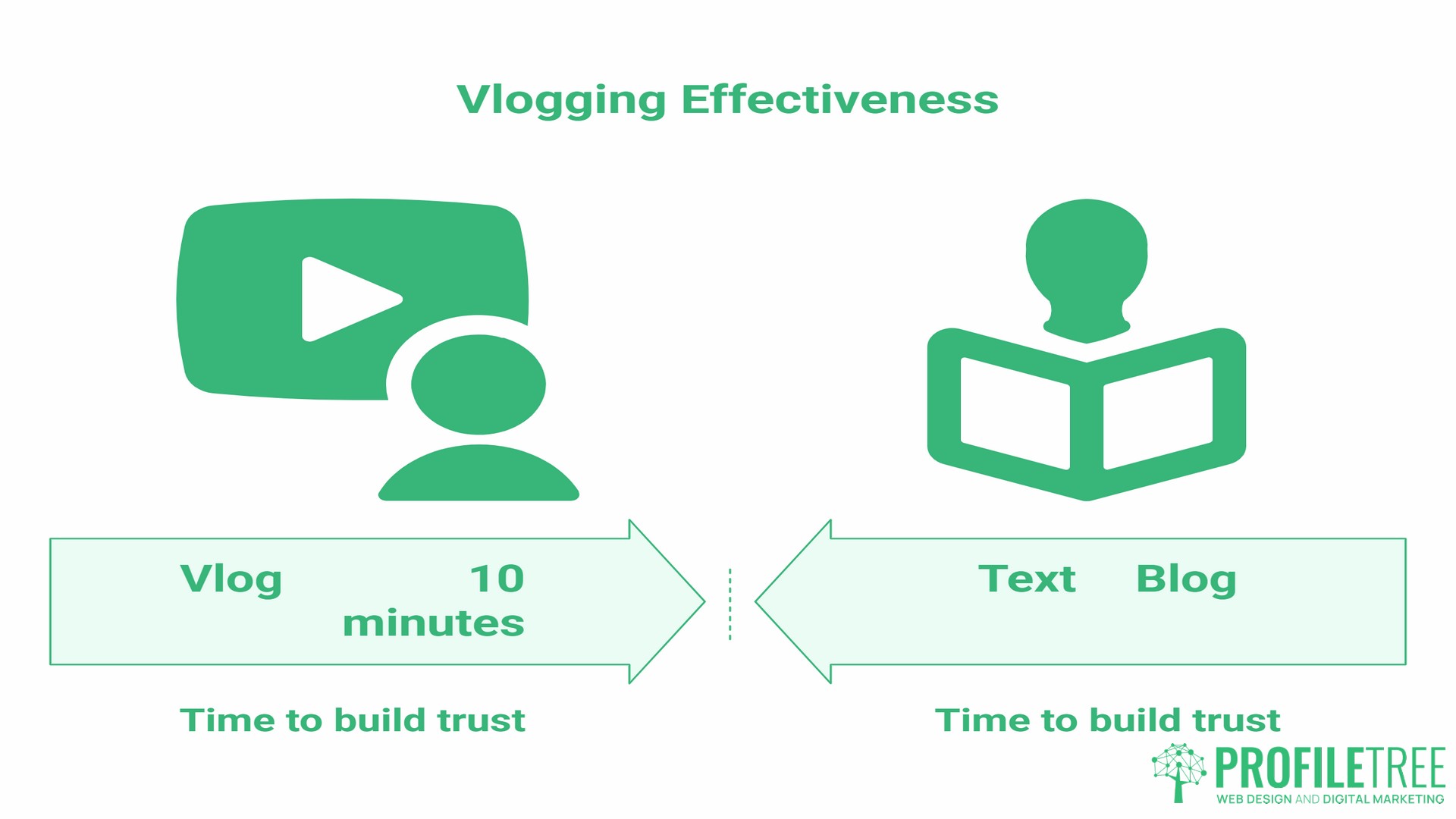
The choice between a blog and vlog is not either/or. For business purposes, they serve complementary roles. A blog post drives text-based search traffic and gives you a URL to share. A vlog builds personality and trust at a pace that written content cannot match. A viewer who has watched ten minutes of you explaining your industry is far closer to a buying decision than someone who has read the same information as text.
For professional services in particular, a vlog works harder than most other content formats. A solicitor, accountant, or consultant who films short explainer videos on the topics their clients ask about most is not just generating content. They are reducing sales friction long before a prospect picks up the phone.
The Business Case: Why Personal Branding Through Vlogging Delivers Results
Video is not new, but the shift in how buying decisions are made has made it more commercially important than ever before. Buyers research extensively before making contact. Strong personal branding through vlogging means you are present during that research phase, not just at the point of enquiry. Before filming anything, it helps to be clear on why personal branding matters to your pipeline in the first place.
Building Trust Before the First Conversation
Trust is the primary currency of professional services. A consistent vlogging presence builds it in a way that a website alone cannot. When a prospect watches several of your videos before calling, they often arrive with a clear sense of who you are, how you think, and whether you are the right fit. That shortens sales cycles and tends to produce better-fit clients.
For SMEs in Northern Ireland, Ireland, and the UK, where referrals and personal reputation carry significant weight in winning new business, video reinforces and extends that pattern into digital channels.
Moving from Service Provider to Thought Leader
There is a meaningful commercial difference between being known as a competent service provider and being recognised as a credible voice in your sector. The latter attracts inbound enquiries, speaking opportunities, media coverage, and higher-level referrals. Consistent vlogging content is one of the most accessible routes to that positioning for business owners who are not yet writing for major publications or appearing on podcasts.
Defining Your Niche and Content Pillars
Before filming anything, you need to be clear on two things: who you are trying to reach and what you are qualified to say.
Identifying Your Audience
Your vlog audience is not “everyone who might buy from you.” It is the specific person who benefits most from your expertise. A digital agency owner talking to other business owners about how to evaluate digital partners is targeting a completely different audience than one talking to marketing managers about campaign performance.
The tighter the audience definition, the more useful your content becomes, and the faster you build a following that actually converts. Define your ideal viewer by their role, the problems they face, and the decisions they are trying to make.
Choosing Content Pillars
Content pillars are the three to five recurring themes your vlog will cover. They should sit at the intersection of what you know deeply, what your target audience is actively searching for, and what demonstrates your commercial expertise.
A marketing consultancy, for example, might build content pillars around evaluating agency proposals, deciding which metrics to report to a board, and building a content strategy on a limited budget. Each of these serves the viewer while showing the consultancy’s expertise without a sales pitch in sight. Pillars also give you a repeatable source of short-form ideas later, because a single pillar can carry a long-form video and half a dozen clips cut from it.
Technical Setup: The Minimum Viable Vlog
The question most people ask first is: what equipment do I need? It is the wrong question to start with, but it is a reasonable one to address.
What You Actually Need to Start
You do not need a professional setup to begin personal branding through vlogging. A modern smartphone, a basic lapel microphone, and decent natural or ring-light lighting is enough to produce watchable content. The priorities, in order, are audio first, then lighting, then camera. A viewer will tolerate average video quality far more readily than poor audio.
A phone also covers both formats you now need. Held horizontally, it gives you long-form YouTube video; held vertically, it gives you short-form clips for Shorts, Reels, and TikTok from the same session. That dual use is one reason a dedicated camera can wait until you are publishing consistently and have confirmed the content is landing. Upgrading equipment before you have a content strategy or a publishing rhythm is an expensive distraction.
Essential starting kit:
- Smartphone with a decent rear camera, or a mirrorless camera at the entry level
- External lapel or USB microphone (the single highest-impact upgrade)
- Ring light or positioning near a window for natural light
- Tripod or stable surface, ideally one that holds the phone both horizontally and vertically
When DIY Production Works Against You
There is a point at which self-produced content actively undermines the brand you are trying to build. For professional services, that point arrives earlier than many business owners expect. If you are positioning yourself as a premium provider and your video production looks like a webcam call from 2012, there is a disconnect your audience will register, even if they cannot articulate it.
“The quality of your video content signals how seriously you take your brand,” says Ciaran Connolly, founder of ProfileTree. “For businesses in professional services, production quality and brand credibility are closely linked in the viewer’s mind. There’s a threshold where DIY stops being authentic and starts being a liability.”
This is where professional video production makes commercial sense: not at the start of your vlogging journey, but once you are clear on what works and ready to scale it.
Strategy: Planning, Scripting, and Distribution
Equipment is the easy part. The harder work is building a vlog content strategy that is sustainable and commercially purposeful.
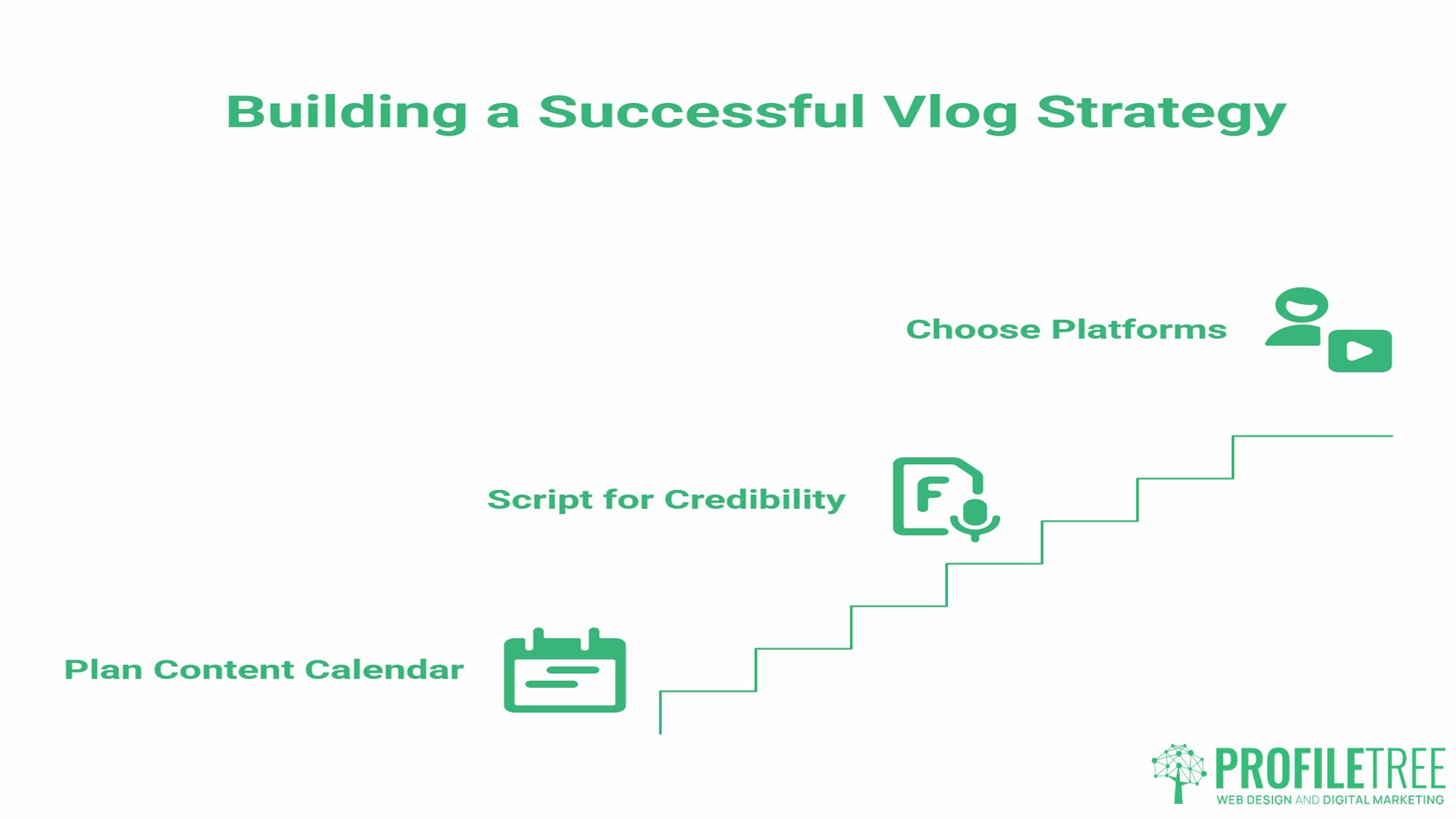
Planning a Content Calendar
Consistency matters more than frequency. Publishing one well-structured video per fortnight for a year does more for your personal branding through vlogging than a burst of daily content followed by three months of silence. A simple content calendar that aligns your video topics with your business cycle (seasonal questions, sector events, product launches) gives you a structure that holds up in weeks when motivation is low.
Scripting for Credibility
Business vlogging does not require a word-for-word script, but it does require preparation. An unstructured ramble damages authority more than no video at all. A simple three-part framework works well:
- Open with the problem or question your viewer is facing
- Give your practical answer with enough specificity to be genuinely useful
- Close with a clear next step (a related article, a call to discuss, or a resource)
This structure keeps videos tight, so every piece of content serves both the viewer and your business objectives. It also travels well: the same three beats work for a ten-minute explainer and for a 40-second vertical clip.
Platform Strategy: YouTube and LinkedIn for B2B
For UK and Ireland SMEs serious about personal branding through vlogging, YouTube and LinkedIn are the two platforms that deliver the most meaningful return.
YouTube functions as a video search engine. A well-optimised video on a topic your clients search for can attract enquiries for years. LinkedIn distributes content directly to a professional audience and has pushed native video hard across the last couple of years, giving well-made B2B clips reach that written posts rarely match. For senior decision-makers who are unlikely to be on TikTok or Instagram during working hours, LinkedIn is where a business vlog meets its buyers. Choosing where to publish is a decision in itself, and it helps to weigh the vlogging platform options against where your specific audience already spends time.
Short-Form Vlog Branding Tactics
Short-form is no longer a side channel. A personal branding vlogging strategy that ignores YouTube Shorts, LinkedIn video, TikTok, and Instagram Reels is leaving discovery on the table, because these formats are where new audiences find a face before they ever search for a service. The vlog branding tactics that work here are different from long-form, and worth treating on their own terms.
The most efficient approach is to clip, not to film twice. One long-form filming session gives you the raw material for six to ten vertical clips: the sharpest 30 to 60 seconds of each point, reframed vertically with captions burned in. This is the core of a workable short-form video strategy, and it turns a single afternoon in front of the camera into weeks of distribution.
A few tactics carry most of the weight in short-form. Lead with the payoff in the first two seconds, because retention is decided almost immediately. Keep your face, framing, and lower-third branding consistent across clips so a viewer recognises you on the third scroll even before they read the handle. Add on-screen captions, since most short-form is watched on mute. And treat TikTok as a genuine option rather than a novelty for B2B: search data shows steady demand from people looking to build a personal brand on TikTok, which tells you the professional audience for short-form is already there for sectors where a founder’s personality is part of the sale.
The point of short-form is rarely the sale. It is recognition. A prospect who has seen a dozen of your clips arrives at your long-form video, or your website, already halfway to trusting you.
Video SEO: Making Your Vlog Findable
A vlog that no one finds does not build a personal brand. Search optimisation for video follows different rules to standard SEO, but the underlying principle is the same: help the platform understand what your content is about so it can surface it to the right people.
Optimising for YouTube Search
YouTube ranks videos based on relevance, engagement, and authority. For each video, your title, description, and tags all contribute to relevance. The title should include the specific phrase your target viewer is likely to search. The description should expand on the topic in natural language, not keyword-stuff. Closed captions or a transcript in the description help YouTube parse the content more accurately, and the same captions do double duty on your muted short-form clips.
Watch time and audience retention are among the primary signals YouTube uses to decide which videos to recommend and rank. YouTube’s own published guidance confirms the platform rewards content that holds attention, and multiple independent analyses of the algorithm show a video with strong retention will consistently outperform one with higher raw view counts but poor drop-off.
Shorts now appear in the main search results and on the home feed as well, so a well-titled vertical clip can pull in viewers who never reach your long-form library. This is the clearest argument for tight scripting and front-loading value: give your best material early rather than building slowly toward it.
Video SEO as Part of a Broader Strategy
A vlog embedded on a relevant page of your website also contributes to that page’s SEO. A solicitor who embeds a video explaining a specific legal process on the corresponding service page gives that page a richer content signal and longer average session time, both of which support search rankings.
For a full picture of how video content fits with broader search strategy, ProfileTree’s approach to YouTube marketing for businesses covers the technical and strategic elements in detail.
UK and Ireland Compliance for Business Vloggers
This section is absent from most vlogging guides. For UK and Ireland business owners, it is not optional.
ASA Guidelines and Sponsored Content
If any element of your vlog content is paid for, gifted, or part of an arrangement where something of value changes hands, it must be disclosed. The ASA’s guidance, developed alongside the Competition and Markets Authority (CMA), is clear: the label “Ad” or “#ad” should appear prominently before the viewer engages with the content, not partway through a video or buried beneath other text. Labels such as “#gifted”, “#spon”, or “in association with” have been ruled inadequate in ASA adjudications, and platform disclosure tools (such as Instagram’s Paid Partnership tag) may be used alongside, but should not be relied on as the only label. This applies to sponsored mentions in otherwise organic-looking content, not just formal advertising placements.
Failure to disclose is not a minor oversight. The ASA maintains a publicly listed register of non-compliant influencers, and where persistent non-compliance continues after warnings, it runs targeted advertising campaigns on the same platforms to alert viewers directly. Under the Digital Markets, Competition and Consumers Act 2024, the CMA also has powers to impose fines of up to 10% of global turnover for serious or repeated breaches of consumer protection law. The reputational consequences of a public ruling tend to outlast the regulatory process itself.
GDPR and Filming
Filming in public spaces or shared offices is subject to data protection obligations when individuals are identifiable. In the UK, the ICO’s guidance on video surveillance under the UK GDPR applies to any business that films for commercial purposes. In Ireland, the equivalent framework is the EU GDPR as implemented under the Data Protection Act 2018, overseen by the Data Protection Commission. The core principles are similar: you need a clear lawful basis for processing identifiable footage, and consent from members of the public in outdoor settings is typically impractical.
The ICO notes that legitimate interests may apply in such cases, provided the filming is necessary and proportionate to the purpose. For filming employees or clients in a controlled professional setting, documented written consent is a straightforward approach. If you are operating as a business rather than in a purely personal capacity, you are likely acting as a data controller and should have a recorded basis for the processing.
Scaling Your Vlog: From DIY to Professionally Produced Content
At some point, the value of your time exceeds the cost of outsourcing production. This is not a milestone most vloggers plan for in advance, but recognising it when it arrives makes a material difference to how consistently you publish.
Repurposing One Video Into Multiple Content Pieces
A ten-minute vlog does not end when you upload it to YouTube. A structured repurposing workflow turns a single filming session into a blog post, several vertical clips for Shorts and Reels, a newsletter excerpt, and potentially a podcast episode. This multiplies the return on each piece of content without multiplying the filming time.
For business owners managing their own content, a structured content marketing approach connects video content logically to the rest of the website and supports, rather than exists in isolation from, commercial objectives. A consistent brand voice across written, video, and social content is one of the structural elements that separates businesses with coherent brands from those producing content without a throughline.
When to Bring in Professional Support
The case for professional production is strongest when your content has validated demand, your time per video is exceeding the commercial return, or you are entering a phase of growth where brand presentation is under greater scrutiny (a funding round, a market expansion, a PR campaign).
ProfileTree’s video production service in Belfast covers the full process: from scripting and location to filming, editing, and distribution across long-form and short-form. For businesses at the point of scaling, professional production removes the ceiling on quality that self-produced content eventually creates.
Measuring What Matters
Vanity metrics are the wrong thing to optimise for in personal branding through vlogging. Total views tell you very little about commercial impact. The metrics that matter for business vlogging differ from those for entertainment channels.
Analytics That Connect to Business Outcomes
Watch time and audience retention are the primary indicators of content quality. If viewers are dropping off in the first 30 seconds, the opening is not working. If they stay to the end, the content is connecting, and the platform will reward it with greater distribution. For short-form, the equivalent signals are average watch percentage and re-watches, both of which reward a strong hook.
Traffic sources tell you where your viewers are finding you, which informs where you should be promoting your videos. Click-through rate on end screens and descriptions tells you whether viewers are taking the actions you want them to take after watching.
For broader content performance tracking, integrating video analytics with your wider digital reporting gives a more complete picture of how vlog content contributes to lead generation.
Personal branding through vlogging takes longer than most business owners expect and converts better than most of them anticipate. The businesses that do it well are not the ones with the best cameras or the largest budgets. They are the ones with a clear audience, disciplined vlog branding tactics across both long-form and short-form, and enough consistency to build trust over time. If you are ready to scale your video content beyond an in-house setup, talk to ProfileTree about professional video production and YouTube marketing support.
FAQs
Do I need a professional camera to start vlogging for my brand?
No. Audio quality matters more than camera quality at the start. A lapel microphone paired with a modern smartphone produces watchable content, and the same phone covers vertical short-form clips too. A dedicated camera becomes a worthwhile investment once you are publishing consistently and have confirmed the content is generating engagement or enquiries. Upgrading equipment before you have an audience is a distraction from the work that actually builds one.
How often should a business owner post a vlog?
Consistency matters more than frequency. One well-prepared video every two weeks, published reliably, does more for your personal branding through vlogging than a burst of daily content that cannot be sustained. Start with a frequency you can maintain without compromising the quality of your preparation, then increase it as your production process becomes more efficient. Short-form clips cut from that video can fill the gaps between longer uploads.
Does short-form video like TikTok or Reels work for business personal branding?
Yes, for recognition rather than direct sales. Short-form on YouTube Shorts, LinkedIn, TikTok, and Instagram Reels is where new audiences find a face before they search for a service. The most efficient method is to clip a long-form video into several vertical pieces, lead with the payoff in the first two seconds, add captions for muted viewing, and keep your framing and branding consistent so viewers recognise you across clips. It works best in sectors where the owner’s personality is part of the decision to buy.
What are the ASA rules for business vlogging in the UK?
Any content that involves a commercial arrangement, paid placement, gifted product, or sponsored mention must be clearly disclosed before the viewer engages with it. The ASA’s preferred label is “Ad” placed prominently and separately from other content. Labels such as “#gifted”, “#aff”, or “in association with” have been ruled inadequate in ASA adjudications. This applies whether the arrangement is formal or informal. The ASA’s published guidance on influencer and creator content, produced alongside the Competition and Markets Authority, is the primary reference point for UK businesses.
Is vlogging better than blogging for SEO?
They serve different purposes. A blog post targets text-based search queries and builds indexable content that ranks over time. A vlog targets video search on YouTube and can generate video rich results in Google. Embedding vlogs on relevant website pages gives those pages an additional engagement signal. The strongest approach combines both: use your vlog content as the basis for a written post on the same topic, and you get the benefit of both channels from a single piece of filming.