
How to Choose a Web Design or iOS Game Development Company
Table of Contents
Choosing a web design or iOS game development company is one of the most consequential decisions a business makes online. Get it right, and you have a long-term digital partner who understands your commercial goals, builds to a proper technical standard, and can grow with you. Get it wrong, and you are looking at costly rebuilds, missed deadlines, and a product that does not perform.
The challenge is that every agency looks credible at first glance. Polished websites, impressive client logos, and confident sales calls are easy to produce. What matters is what you find when you look deeper: their process, their past work, their communication style, and whether they have genuinely solved problems similar to yours.
Whether you are briefing a web design agency in Belfast or evaluating an iOS game development company for a mobile project, the evaluation framework is the same. This guide walks through the key questions to ask before you sign anything, and what the answers should tell you.
Define Your Project Before You Start Talking to Agencies
Before approaching any agency, you need clarity on your own requirements. This is not about writing a detailed technical specification — most SME clients do not have one, and that is fine. But you should be able to answer the following before any first conversation:
What is the primary purpose of this website or digital project? Is it generating enquiries, selling products directly, building authority, or supporting an existing sales process? An agency that does not ask this question early is already telling you something.
Who is your target audience, and what do you want them to do when they arrive? A B2B service business targeting procurement managers needs a completely different user experience from a consumer brand selling directly to the public.
What is your realistic budget? You do not need to open with a number, but you should have a range in mind. Web design projects for SMEs in Northern Ireland and the UK typically range from £3,000 for a straightforward brochure site to £15,000 or more for a custom-built site with e-commerce, booking, or complex integrations. Knowing whether you are at the lower or upper end of that range will save everyone’s time.
What are your timelines? If you have a product launch, trade show, or seasonal deadline driving the project, say so upfront. A responsible agency will tell you whether that is achievable. One who agrees to everything without asking questions should make you cautious.
What does success look like at six months? Ranking for specific search terms, hitting a conversion rate target, reducing customer service calls because the site now answers common questions — these are the kinds of measures that separate a strategic brief from a vanity project.
Agencies like ProfileTree run a structured discovery process before any proposal goes out, precisely because the brief most clients arrive with and the brief they actually need are often different things. Getting alignment at this stage prevents costly scope changes later.
What to Look for in an Agency’s Portfolio
A portfolio tells you far more than a sales deck. When reviewing a web design or development agency’s previous work, look beyond the surface aesthetics and focus on these specifics.
Relevance to your sector or project type. Has the agency worked with businesses in your industry, or on projects of comparable complexity? A strong track record with hospitality clients does not automatically mean the agency understands the requirements of a professional services firm or a manufacturer. Ask directly whether they have experience with your sector and what specific challenges they encountered.
Live sites, not just screenshots. Click through to the live versions of sites in their portfolio. Check page load speed, how the site performs on mobile, whether the navigation makes sense, and whether you can find what you are looking for quickly. A beautiful screenshot can hide a slow, awkward site.
Measurable outcomes, not just aesthetics. The strongest agencies can tell you what happened after a site launched: did organic traffic increase, did the conversion rate improve, did the client see a reduction in bounce rate? If an agency can only show you what a site looks like and not what it did commercially, that is a gap worth noting.
Variety of project types. An agency that has only built brochure sites may not be the right choice if you need e-commerce functionality, a membership area, or a complex booking system. Look for evidence that they can handle the specific technical requirements of your project.
Consistency of quality. Look at ten projects, not two. A portfolio curated to show only the best work is standard practice, but if the agency will only share a handful of examples, ask why.
How to Evaluate an Agency’s Development Process
The quality of a web project is determined as much by how an agency works as by what they produce. A sound development process protects you from miscommunication, missed deadlines, and work that does not match what you asked for.
Discovery and strategy. Does the agency invest time in understanding your business before proposing a solution? A responsible agency will ask about your audience, your commercial goals, your existing brand assets, and your competitors before they write a line of code or design a single page. If you receive a proposal after a 20-minute call, treat that as a flag.
Project management and communication. How will you receive updates? Who is your day-to-day contact? Will you have access to a shared project management system, or will communication happen through email chains? These questions matter because poor communication is the single most common complaint clients have about agencies, regardless of the quality of the output.
Revision process. How many rounds of revisions are included? At what stages can changes be requested? Understanding this upfront prevents disputes later, particularly on design-intensive projects where subjective preferences can lead to scope creep.
Testing and quality assurance. Does the agency test across devices and browsers before handover? Do they run performance checks? Who is responsible for fixing issues identified after launch? Ask for specifics, not reassurances.
Handover and training. What happens after the site goes live? Will you receive training on the content management system? Is documentation provided? An agency that disappears after launch is a common and expensive problem.
ProfileTree’s web development process includes a structured discovery stage, milestone-based approvals, and a post-launch handover with CMS training, because a site that the client cannot update independently is not a finished project.
Assessing Communication and Collaboration Standards
The working relationship with your agency will last months, and potentially years if the engagement extends to ongoing SEO, digital marketing, or content work. How an agency communicates before you become a client is a reliable indicator of how they will communicate once the contract is signed.
Pay attention to response times during the proposal stage. If emails go unanswered for several days when the agency is trying to win your business, that pattern is unlikely to improve once the contract is in place.
Ask how they handle disagreements. Design and development projects involve subjective judgment calls. A good agency will explain the reasoning behind their decisions and listen to your concerns without becoming defensive. Ask them directly: “Can you give me an example of a time a client wanted to go in a direction you disagreed with, and how you handled it?”
Find out who will actually work on your project. It is common for agencies to send their most experienced team members to pitches and then hand work to more junior staff once the contract is signed. Ask specifically who will design, develop, and manage the project day to day.
Check whether they work with subcontractors. There is nothing inherently wrong with subcontracting specialist work — many agencies bring in specific development expertise for complex projects. But you should know this in advance and understand how it affects accountability if problems arise.
Checking References and Past Client Experience
No agency reference will actively recommend someone they are unhappy with, so asking the standard question of “Can you share some client references?” is only the starting point. Ask more specific questions to get genuinely useful information.
Ask for a reference from a project that ran into difficulties, and how the agency responded. Every project encounters unexpected complications. The telling factor is not whether problems occurred but how the agency handled them.
Ask whether the project was delivered on time and on budget, and if not, what caused the variance. Delays and cost increases are common in digital projects; understanding the reasons helps you assess whether the agency manages these professionally.
Ask the reference what they would do differently if they were briefing the project again. This question tends to surface honest observations that a standard reference call would not.
Look beyond formal references. Check the agency’s Google reviews and any independent review platforms. A pattern of reviews mentioning the same strength or the same weakness is more reliable than any individual comment. ProfileTree holds over 450 five-star Google reviews and a track record spanning more than 1,000 projects for businesses across Northern Ireland, Ireland, and the UK.
Timelines, Milestones, and Project Management
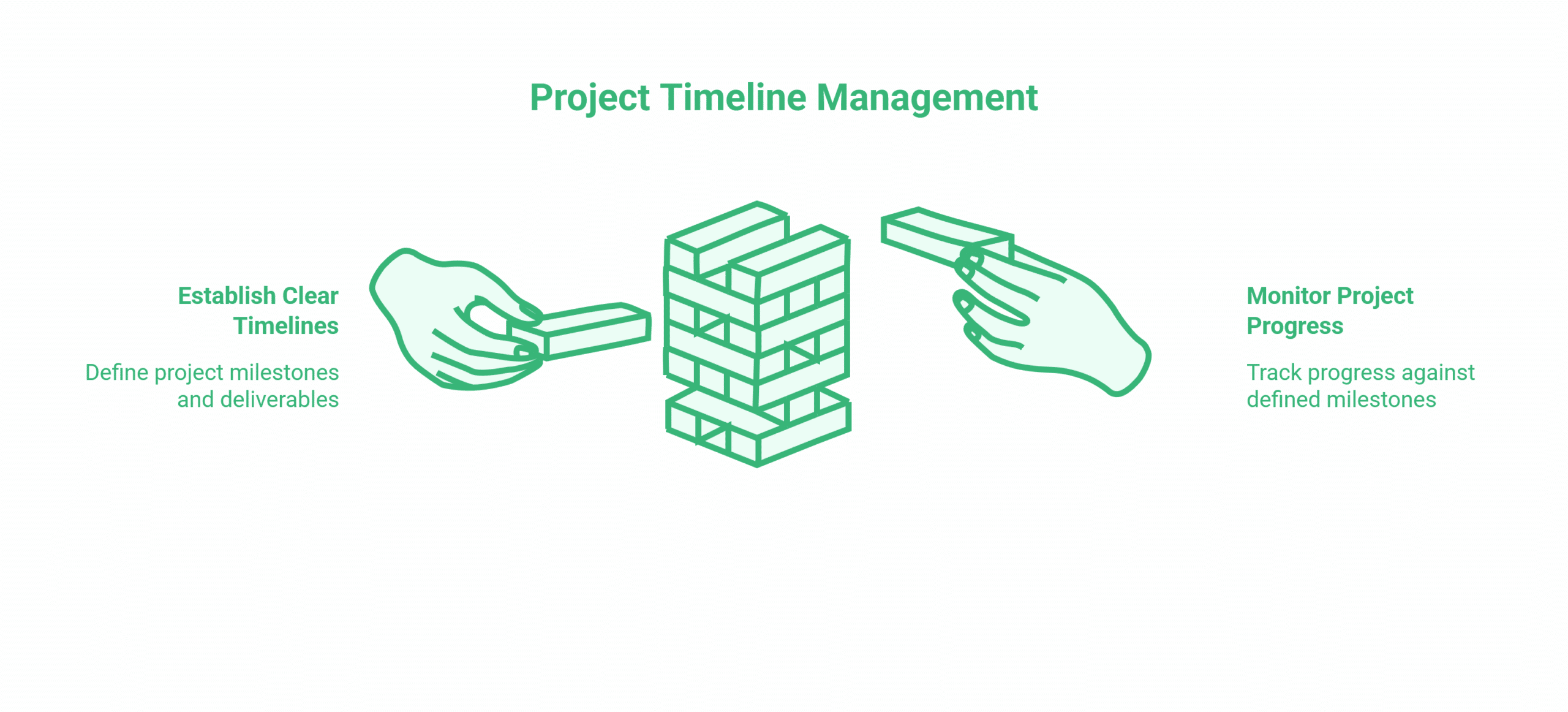
Agreeing on clear timelines before a project starts protects both the client and the agency. Projects without defined milestones tend to drift, and drift is expensive.
A well-structured web project should have milestones at roughly these stages: discovery and strategy sign-off, wireframes or design concept approval, design of key templates, development build, content population, testing and quality assurance, and launch. Each milestone should have a clearly defined deliverable and a sign-off process.
Understand what your own responsibilities are at each stage. Many delays on web projects are caused by clients, not agencies: slow feedback, missing content, and delayed decisions on design direction. An agency that clearly sets out these dependencies at the start of a project is helpful, not presumptuous.
Ask about the agency’s current capacity. An agency that is heavily committed to other projects when yours is due to start is a risk. Ask specifically how many live projects they are currently managing and what their typical response time is during busy periods.
If your project has a hard deadline, get a written commitment on that date and ask what contingency the agency has built into the plan. Realistic timelines with contingency are a sign of experience. Timelines that seem impossibly tight or suspiciously generous both warrant questions.
Digital Training and Ongoing Support
A website is not a one-off project. Once it is live, you need to maintain, update, and develop it as your business evolves. Before choosing an agency, understand what their post-launch relationship looks like.
Can they provide training so your in-house team can manage content updates independently? A WordPress-built site should be straightforward for a non-technical person to update, provided they have received proper guidance. ProfileTree’s digital training service is specifically designed for SME teams who want to manage their own content, run their own social channels, and understand the basics of SEO without relying on an agency for every small task.
What ongoing support packages do they offer? Is there a retainer model for regular updates, SEO work, or digital marketing? Or does every piece of work after launch require a new quote? Understanding this upfront helps you budget accurately.
Do they offer SEO or digital marketing services alongside web design? A site that looks excellent but is not findable in search is a missed opportunity from day one. Agencies that integrate SEO thinking into the build process, rather than treating it as a separate service, tend to produce sites that perform better in organic search from launch.
AI Implementation in Web and Digital Projects
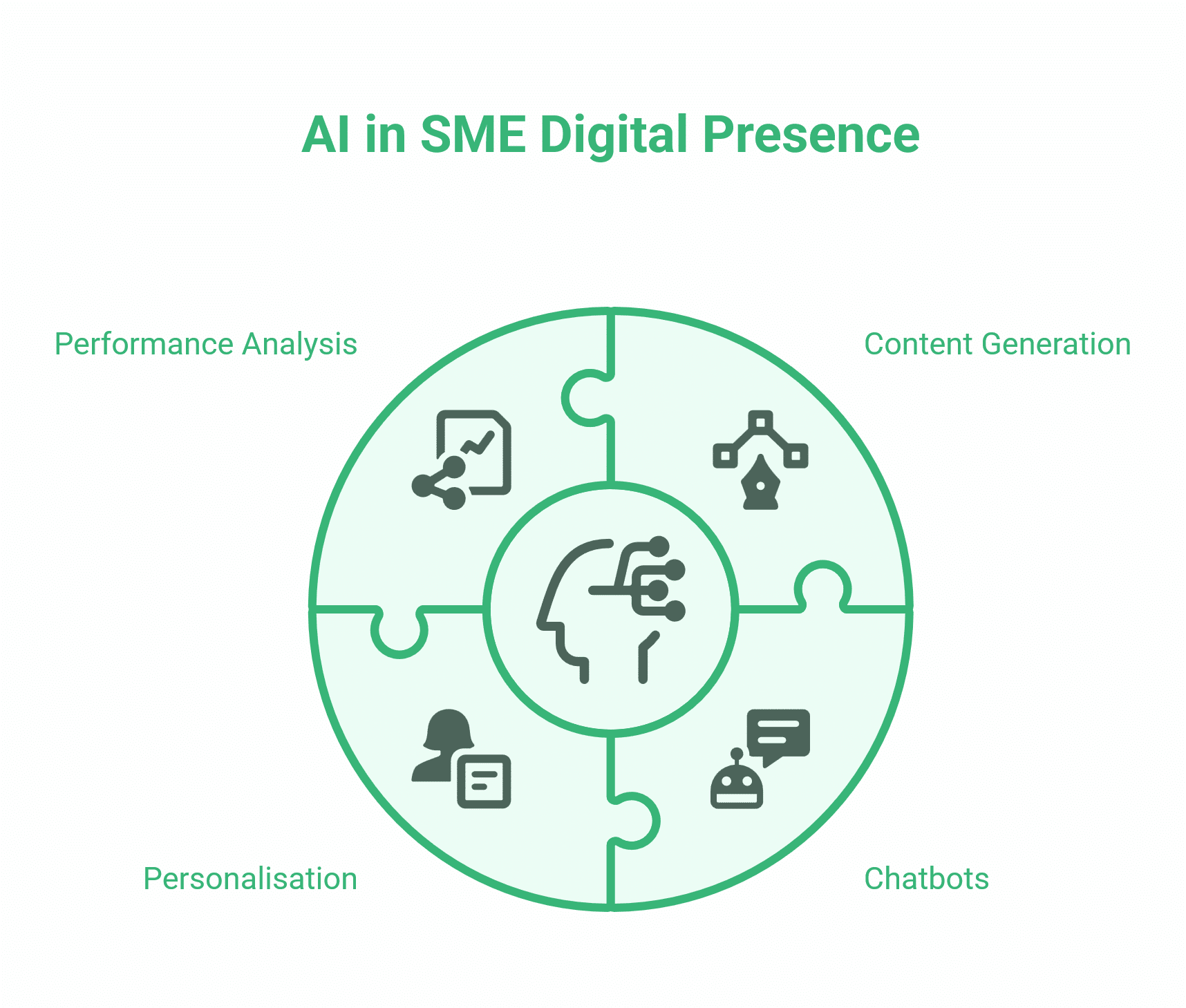
A growing number of SMEs are now asking how artificial intelligence fits into their digital presence. This is a legitimate question, and one worth raising with any agency you are evaluating.
AI tools are increasingly relevant at several stages of a digital project: in content generation and review workflows, in website chatbots and customer service automation, in personalising user journeys, and in analysing site performance data. An agency with working knowledge of AI implementation can advise on where these tools add genuine value, rather than adding complexity for its own sake.
The more useful question is not whether an agency uses AI, but whether they can advise you on how to use it strategically. ProfileTree’s AI implementation service is designed for exactly this: helping SMEs across Northern Ireland, Ireland, and the UK understand which AI tools are worth investing in, how to integrate them into existing workflows, and how to measure their return on investment.
For most SMEs, the practical starting points are relatively straightforward: an AI-assisted content review process, a simple website chatbot to handle common enquiries, or automated reporting on digital marketing performance. The agencies that will serve you best here are those who can scope these realistically, not those who sell AI as a transformational silver bullet.
What Working with ProfileTree Looks Like
Most agency websites describe their process in broad strokes. Here is what the ProfileTree engagement actually involves, from the first conversation to the point where your site is live and your team is confident managing it.
The starting point is always a discovery call, not a sales pitch. Before any proposal goes out, we want to understand your business: who your customers are, what your current digital presence looks like, where the gaps are, and what commercial outcome you are trying to achieve. For some clients, that conversation confirms they need a full website rebuild. For others, it surfaces that a targeted SEO campaign or a content strategy would deliver better results faster. We will tell you which, honestly, even if it means a smaller initial project.
From discovery, we move into a structured proposal that sets out exactly what will be built, in what sequence, at what cost, and by when. Milestones are defined upfront, as are the points where we need your input and sign-off. Ciaran Connolly, ProfileTree’s founder, has been direct about this with clients for years: the projects that run smoothly are almost always the ones where both sides are clear on responsibilities before the work starts, not after something goes wrong.
The build phase runs on agreed timelines with regular progress updates. You are not left waiting weeks for news. Design concepts are presented for approval before development begins, so there are no surprises when you see the finished product.
At handover, your team receives CMS training so that day-to-day content updates do not require an agency request every time. Where clients want ongoing support, whether that is SEO, digital marketing, video production, or AI implementation, those services are available as a continuing relationship rather than a series of disconnected projects. ProfileTree has completed over 1,000 projects for businesses across Northern Ireland, Ireland, and the UK, and the majority of long-term clients came in through a single web project that then expanded as the relationship developed.
Conclusion: iOS Game
Choosing the right web design and development agency comes down to one thing above all: whether they ask the right questions before they start. The agencies most worth working with are those who push back on a vague brief, who want to understand your commercial goals before they open a design file, and who are honest about what is achievable within your budget and timescale. Do your due diligence, check references carefully, and sign only when you are confident in the team and the work.
FAQs
How much does a web design project typically cost for an SME in Northern Ireland or the UK?
Costs vary by scope. A brochure site typically ranges from £3,000 to £7,000; e-commerce or custom-built sites generally start from £8,000. Ongoing SEO and digital marketing are priced separately. Get at least three proposals and make sure each quotes the same brief.
What is the difference between a web design agency and a web development agency?
Web design covers visual presentation and user experience. Web development covers the technical build: code, integrations, and performance. Many agencies, including ProfileTree, offer both as part of an end-to-end service. For complex projects, confirm whether development is handled in-house or subcontracted.
Should I choose a local agency or work with one remotely?
Both can work well. Local agencies offer face-to-face meetings and regional market knowledge, both of which matter for businesses targeting Belfast or specific UK cities. The most important factor is whether the agency’s communication process suits how you prefer to work.
How long does a typical web design project take from brief to launch?
A well-scoped brochure site typically takes eight to twelve weeks. More complex projects take longer. Delays are more often caused by slow client feedback or late content delivery than by the agency. Building your content in parallel with the design phase keeps projects on schedule.