
Business Closure Statistics: UK & Global Analysis
Table of Contents
Every year, tens of thousands of businesses across the UK and Ireland close their doors. Business closure statistics are more than a count of failed ventures; they are a measure of economic health, sector resilience, and the underlying conditions that determine whether businesses survive or fold. Understanding these figures is useful for business owners assessing their own risk, investors evaluating market conditions, and policymakers designing support programmes.
The challenge with most published business closure statistics is that they conflate two fundamentally different outcomes: involuntary insolvency, where a business fails because it cannot pay its debts, and voluntary closure, where an owner winds up a solvent company by choice. This distinction matters. An industry with a high raw closure rate is not necessarily failing; it may simply have high turnover because successful entrepreneurs exit regularly and new entrants replace them.
This analysis draws on UK Insolvency Service data, ONS business demography figures, and Republic of Ireland enterprise statistics to provide a clear, sector-specific picture of business closures by year, industry, and region.
The Survival Timeline: When Do Most Businesses Close?

Business closure statistics become most useful when mapped against time. Survival rates follow a broadly predictable pattern across most economies: the first year filters out undercapitalised ventures, the five-year mark separates operationally sound businesses from those sustained by early momentum, and those that reach ten years tend to show genuine structural resilience. Understanding business closures by year gives owners a clearer sense of which phase carries the most risk.
The One-Year Hurdle: Initial Business Closure Rates
In the UK, approximately 20% of newly registered businesses do not survive their first year of trading, according to ONS business demography data. Business closure statistics at this stage are dominated by a single cause: undercapitalisation. Many businesses launch without sufficient working capital to absorb the lag between initial expenditure and first revenue. The result is a cash flow crisis that arrives before the business has had a realistic chance to establish itself.
This figure remained broadly consistent across the decade preceding 2024, though the post-pandemic period temporarily improved business closure rates as government support schemes (CBILS, Bounce Back Loans, furlough) extended the life of businesses that might otherwise have folded earlier. The consequence of that support became clear in 2023 and 2024: as schemes wound down and interest rates rose sharply, corporate insolvency rates climbed to their highest levels since 2009. The UK Insolvency Service recorded over 25,000 company insolvencies in England and Wales in 2023, a figure not seen since the post-financial-crisis period. Northern Ireland and Scotland recorded proportionally similar increases in business closure rates.
The Five-Year Chasm: Why Business Closures Peak at Mid-Stage
The most-cited figure in business closure statistics is the five-year failure rate. Across the UK, roughly 50% of businesses do not reach their fifth anniversary. This rate appears consistently across ONS data and mirrors patterns in the Republic of Ireland, where Enterprise Ireland reports similar attrition in non-supported SMEs. It is not a pessimistic outlier; it is a structural feature of how markets work.
Cash flow problems, rather than fundamental unprofitability, account for the majority of business closures at this stage. A business can be profitable on paper while running out of cash if it carries too much stock, extends credit unwisely, or grows faster than its working capital allows. Small business closure statistics consistently show that this cash flow timing gap, rather than a failure of the underlying business model, is the proximate cause of most five-year closures.
Our overview of understanding small business failure rates provides a detailed breakdown of the financial mechanisms that drive mid-stage closures.
Long-Term Resilience: Business Closure Rates Beyond Ten Years
Business closure statistics for firms that survive beyond ten years tell a different story. ONS data shows that roughly 40% of businesses registered in any given year survive to their tenth anniversary. These businesses tend to share common characteristics: diversified revenue streams, strong repeat-client relationships, and disciplined cash flow management. Sector matters here too; professional services firms show materially stronger ten-year survival rates than hospitality or retail businesses.
In Northern Ireland specifically, business closure rates beyond year five are shaped by the region’s economic structure: a higher proportion of micro-businesses (fewer than ten employees), a smaller private sector relative to public sector employment, and post-Brexit trade complexities that added cost and administrative burden to businesses operating cross-border. These factors have suppressed new business formation and increased the fragility of early-stage firms since 2021.
UK Business Closure Statistics by Year: Summary Table
| Year Mark | Approx. Survival Rate | Primary Closure Driver | Key Data Source |
| Year 1 | ~80% | Undercapitalisation | ONS Business Demography |
| Year 3 | ~60% | Cash flow management | ONS / Companies House |
| Year 5 | ~50% | Market fit & competition | ONS / Enterprise Ireland |
| Year 10 | ~40% | Economic cycles | ONS longitudinal data |
Industry-Specific Business Closure Statistics: High-Risk vs. Low-Risk Sectors
Aggregate business closure statistics obscure substantial variation between sectors. Industry-level closure rates reveal where structural risk is concentrated and where barriers to entry, recurring revenue, or regulatory protection provide resilience. The industries with the highest business closure rates share common characteristics: thin margins, high fixed costs, and sensitivity to consumer spending cycles.
Hospitality and Retail: The Highest Business Closure Rates in the UK
Hospitality is the most structurally fragile sector in the UK economy, and business closure statistics reflect this clearly. Restaurants, cafes, and bars face closure rates well above the national average, with approximately 60% ceasing to trade within three years. UK Hospitality, the sector’s trade body, reported that energy cost increases post-2022 wiped out the thin operating margins that many operators relied upon. Minimum wage increases, whilst justified on social grounds, compounded the pressure for businesses with payroll-heavy models.
Retail business closure statistics tell an equally stark story. Brick-and-mortar retail has been contracting since 2015, driven by the structural shift to e-commerce. The British Retail Consortium has documented a consistent reduction in occupied retail units across UK high streets. First-year retail closure rates sit around 20-25%, rising to approximately 60-70% by year five for independent operators without a clear differentiation strategy.
Professional Services and Technology: Lower Closure Rates, Different Risks
Professional services firms (accountancy, legal, consultancy, architecture) demonstrate materially better business closure rates than the economy-wide average. Barriers to entry are high: professional qualifications, regulatory registration, and client relationship capital all require significant time investment to build. As a result, business closure statistics for professional services firms within the first five years sit around 10 to 15%, well below the national average.
Technology businesses present a more nuanced picture in business closure statistics. Early-stage tech startups face closure rates of 60-70% within 3 years, driven by product-market fit failures and funding gaps. Those that survive the early phase and reach profitability, however, show strong retention thereafter. Digital resilience cuts across sectors: businesses with an active SEO strategy and content marketing infrastructure tend to show lower customer acquisition costs and better retention over time.
For SMEs assessing how digital investment supports long-term resilience, our business strategy frameworks cover where digital marketing fits into a broader survival plan.
Construction: Business Closure Statistics and the Cash-Flow Domino
Construction is frequently underrepresented in discussions of business closure statistics, yet it consistently ranks among the sectors with the highest absolute insolvency rates. The UK Insolvency Service reported that construction accounted for approximately 17% of all corporate insolvencies in 2023, despite representing a much smaller share of registered businesses.
The reason lies in the sector’s credit-heavy supply chain. Subcontractors extend payment terms to main contractors, who extend terms to developers, who rely on drawdowns from lenders. When one link in this chain fails, business closures cascade rapidly through two or three levels of the supply chain. This pattern is particularly pronounced in Northern Ireland, where a high proportion of construction businesses are micro or small firms with limited financial reserves and no buffer against a major contractor’s collapse.
Sector Business Closure Risk Matrix
| Sector | 5-Year Closure Rate | Primary Closure Driver | Risk Level |
|---|---|---|---|
| Hospitality & Food | ~60% | Margin pressure, energy costs | Very High |
| Retail (independent) | ~60–70% | E-commerce displacement | Very High |
| Construction | ~40–50% | Cash flow, supply chain | High |
| Tech Startups | ~60–70% (yr 3) | Product-market fit | High |
| Professional Services | ~10–15% | Competition, fee pressure | Low |
| Manufacturing | ~25–30% | Export & input costs | Medium |
Regional Business Closure Statistics: UK, Ireland, and Northern Ireland
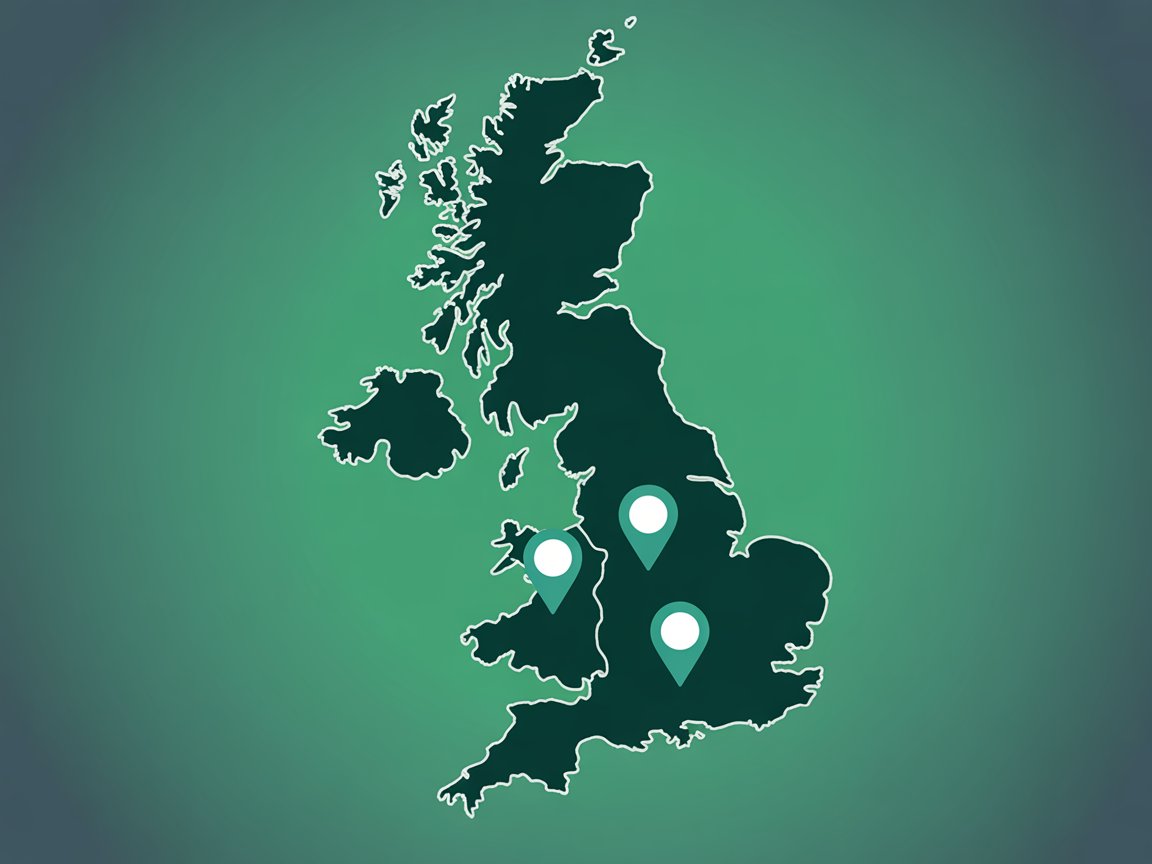
National business closure statistics conceal substantial regional variation. The economic conditions facing a hospitality business in Belfast differ considerably from those facing an equivalent business in London or Bristol. Post-Brexit trade arrangements, devolved economic policy, and regional infrastructure investment all shape regional business closure rates in ways that aggregate UK figures do not capture.
Post-Brexit Business Closure Trends in Great Britain
Great Britain’s business closure statistics since 2021 reflect the cumulative effect of multiple economic shocks: pandemic disruption, supply chain fracture, energy price inflation, rising interest rates, and the withdrawal of COVID support measures. The Bank of England’s successive base rate increases, from 0.1% in late 2021 to 5.25% in mid-2023, directly increased debt servicing costs for businesses carrying variable-rate borrowing, pushing many already-stressed firms over the threshold into insolvency.
A pattern that business closure statistics alone do not reveal is the ‘zombie company’ effect. Throughout the period of near-zero interest rates from 2009 to 2021, many businesses survived by refinancing debt rather than resolving underlying profitability problems. Higher interest rates exposed these businesses, accelerating their closure. The Bank for International Settlements defines zombie companies as firms that cannot cover their interest payments from operating profits over a sustained period; Bank of England analysis estimated that approximately 15% of UK businesses met this definition by 2022. The subsequent rise in business closure rates is, in part, a necessary market correction.
Business Closure Statistics in the Republic of Ireland: An EU Comparison
The Republic of Ireland provides an instructive comparison for UK business closure statistics. Ireland’s closure rates have generally tracked below UK rates over the past decade, partly because of sustained inward investment from multinational technology companies, partly because of Invest in Ireland’s active support for domestic SMEs, and partly because the Irish domestic economy retained EU single market access throughout the post-Brexit period.
Enterprise Ireland’s data indicates that Irish firms supported through its programmes show five-year survival rates well above the national average, reinforcing the role of structured business support in reducing closure risk. The Irish insolvency framework also differs from the UK’s: a stronger culture of informal workout arrangements between debtors and creditors reduces the proportion of business closures that proceed to formal insolvency proceedings.
Northern Ireland Business Closure Statistics: Unique Economic Pressures
Northern Ireland’s business closure statistics reflect a set of pressures specific to the region. The Northern Ireland Protocol (subsequently the Windsor Framework) created regulatory divergence between Northern Ireland and Great Britain, adding administrative costs for businesses with GB supply chains, whilst simultaneously creating an opportunity for those trading with the Republic of Ireland. Business closure data from Invest Northern Ireland indicates that confidence indicators in the region lagged behind Great Britain for much of the post-2021 period.
The result is a mixed picture within Northern Ireland’s business closure statistics. Businesses trading primarily with the Republic of Ireland gained a competitive advantage from NI’s dual-market access. Businesses reliant on GB supply chains faced increased friction costs. Construction and hospitality are the sectors most represented in NI business closures, mirroring the pattern across the wider UK but with the added variable of cross-border trading complexity.
The Anatomy of a Business Closure: Why Firms Fold
Business closure statistics are most actionable when disaggregated by cause. The surface-level reasons recorded in insolvency filings, whether corporate closures of large firms or small business closures of sole traders, mask the underlying mechanisms. Understanding the proximate causes of business closures helps owners identify and address risk before it becomes irreversible.
Cash Flow Versus Profitability: The Silent Driver of Business Closures
The most frequently misunderstood aspect of business closure statistics is the distinction between insolvency and unprofitability. A business can be consistently profitable on its profit-and-loss account while being insolvent in cash terms. This occurs when the timing of income and expenditure is misaligned: large invoices outstanding, stock purchased ahead of sales, or rapid growth that requires working capital investment before revenue arrives.
UK insolvency practitioners consistently identify cash flow timing, rather than fundamental unprofitability, as the proximate cause in the majority of small business closures. This is particularly relevant for businesses in construction (long project cycles), professional services (slow invoice payment), and retail (seasonal revenue with year-round fixed costs). Small business closure statistics at the five-year mark are dominated by this cash-timing problem rather than by businesses that were ever truly unviable.
The Zombie Company Phenomenon and Its Role in Business Closure Rates
Business closure statistics for 2023 and 2024 cannot be read without understanding the zombie company effect. The Bank for International Settlements defines zombie companies as firms unable to cover their interest payments from operating profits over a sustained period. After a decade of near-zero interest rates, many UK businesses survived through debt refinancing rather than operational improvement, and when rates rose sharply from late 2021, this drove corporate closure rates to post-crisis highs.
From a macroeconomic perspective, this rise in business closure rates represents a structural clearance: the removal of unviable businesses frees up labour, premises, and capital for more productive use. From the perspective of affected owners and employees, the consequences are immediate and often severe.
Voluntary Versus Involuntary: Not All Business Closures Are Failures
A proportion of business closures recorded in official statistics are planned, solvent exits. Members’ Voluntary Liquidations (MVLs) allow the directors of a solvent company to wind it down in an orderly fashion, extracting retained capital tax-efficiently. This is common when a business owner retires, when a company is restructured into a different legal form, or when an acquisition has occurred. Business closure statistics that include MVLs, therefore, overstate the proportion of genuine failures.
This distinction matters when reading business closures by year data. An industry with a high raw closure rate is not necessarily failing; it may have high natural turnover because successful entrepreneurs exit regularly and new entrants replace them. The technology sector exhibits this pattern most visibly, where acquisitions are formally recorded in the same category as bankruptcy in aggregate business-closure statistics.
Strategic Lessons From Business Closure Statistics: How to Beat the Odds

Business closure statistics are most valuable when they point toward corrective action. The patterns in survival data suggest that the businesses most likely to survive long term are not necessarily the most profitable in their early years, but those with the strongest financial discipline, clearest market positioning, and most adaptable operating models. Understanding the reasons for business closures is the first step toward avoiding them.
Identifying Early Warning Signs in Business Closure Data
Experienced insolvency practitioners and chartered accountants consistently identify a small number of financial ratios as the earliest reliable indicators of business closure risk. Business closure statistics at a macro level confirm that businesses that act on these signals early have materially better outcomes than those that wait.
Current Ratio
A current ratio (current assets divided by current liabilities) below 1.0 indicates a business cannot cover its short-term obligations from liquid assets. Anything below 1.2 in a cash-constrained sector warrants immediate review. This ratio consistently appears in post-closure analyses as a metric that deteriorated well before the business closure.
Debtor Days
Debtor days measure how long customers take to pay. A rising trend in debtor days, particularly one that outpaces creditor days, is a strong predictor of future cash flow stress. Small business closure statistics repeatedly show that businesses allowing debtor days to creep above 60 in sectors where 30 is the norm are accumulating hidden risk that does not appear on the profit-and-loss account until a crisis point.
Gross Margin Compression
A declining gross margin over two or more consecutive quarters, even while turnover grows, often signals that a business is buying revenue through price competition it cannot sustain. This is a common precursor to business closures in early-stage retail and construction businesses, where winning contracts at unsustainable margins builds a volume problem rather than a profit engine.
Pivot or Exit: Knowing When to Close a Business Gracefully
One of the least-discussed aspects of business closure statistics is the value of a timely, deliberate exit over a prolonged, distressed one. Businesses that continue trading whilst insolvent risk personal liability for directors, damage to supplier relationships, and the erosion of any remaining asset value. The consequences of business closure are materially worse for delayed closures than for those acted on early.
UK Insolvency Service analysis supports this. Voluntary arrangements (CVAs, MVLs, pre-pack administrations) produce materially better outcomes for creditors and employees than compulsory liquidations, which typically recover a fraction of outstanding obligations. Business closure statistics that track recovery rates by closure type consistently favour early, voluntary action over crisis-driven compulsory winding-up.
Conclusion: What Business Closure Statistics Tell Us About Survival
Business closure statistics are not simply a measure of failure. They are a map of economic conditions, sector pressures, and the financial behaviours that determine which businesses survive and which do not. The UK figures for 2023 and 2024 reflect a period of genuine structural stress: the unwinding of artificial support, the exposure of zombie companies, and the combined pressure of cost inflation and rising debt servicing. These business closure rates are elevated, but they are not arbitrary.
The patterns in business closure statistics by sector and by year point to consistent, actionable conclusions. Businesses in hospitality and retail face structurally higher closure risk and need greater financial reserves and clearer differentiation strategies than the averages suggest. Construction businesses face a supply chain credit risk that is distinct from most other sectors and requires active cash flow management at every stage of a project. Professional services businesses face lower closure risk but are not immune, particularly when reliant on a small number of clients.
Business closures by year data consistently show that the businesses which survive are not always the strongest at launch; they are the ones that read their financial signals early, act on them decisively, and build the operational discipline to weather cycles that their competitors do not. Whether a business closure is ultimately a failure or a planned exit depends on choices made months or years before the closure itself occurs.
For businesses looking to reduce their own risk exposure, digital visibility, customer diversification, and cash flow discipline are the three areas where investment consistently shows a return in survival terms. ProfileTree, a Belfast-based digital agency founded in 2011, has supported over 1,000 SME clients across Northern Ireland, Ireland, and the UK in building the digital infrastructure that supports long-term commercial resilience.
For a broader view of the UK small business environment, our small business statistics in the UK provide context on formation rates, employment, and sector distribution that sit alongside business closure statistics.
FAQs
1. What percentage of UK businesses fail in their first year?
Approximately 20% of UK businesses do not survive their first year of trading, according to ONS business demography data. Business closure statistics at this stage are driven primarily by undercapitalisation: businesses that launch without sufficient working capital to bridge the gap between initial expenditure and first revenue. The one-year business closure rate has remained broadly consistent over the past decade, though the post-2022 period saw an uptick driven by the withdrawal of COVID support, rising energy costs, and higher interest rates. Hospitality and retail face materially higher first-year business closure rates than professional services firms, where barriers to entry provide some protection.
2. How have UK business closure rates changed since 2023?
UK business closure statistics for 2023 showed a sharp increase in corporate insolvencies, reaching levels not seen since the post-2008 financial crisis. The UK Insolvency Service recorded over 25,000 company insolvencies in England and Wales in 2023. This reflects the end of pandemic support, interest rate increases from 0.1% to 5.25% between late 2021 and mid-2023, and the exposure of zombie companies that survived on cheap debt rather than operational profitability. Business closure rates have shown some stabilisation since, but insolvency volumes remain above pre-pandemic norms.
3. Which industry has the highest business closure rate in the UK?
Hospitality (restaurants, cafes, bars, and hotels) and independent retail consistently record the highest business closure rates in UK business closure statistics. Approximately 60% of hospitality businesses close within three years, driven by thin margins (typically 3 to 9% for restaurants), high fixed costs, and sensitivity to consumer spending. Construction records the highest absolute number of corporate insolvencies annually, accounting for around 17% of total insolvencies, due to its cash-flow-dependent supply chain structure. Small business closure statistics in construction are particularly severe because subcontractor businesses carry disproportionate credit risk relative to their financial reserves.
4. Is business closure always a sign of failure?
No. A meaningful proportion of business closures recorded in official business closure statistics are planned, solvent exits. Members’ Voluntary Liquidations (MVLs) allow business owners to wind down a solvent company and extract retained capital in a tax-efficient manner. This is common when an owner retires, when a company restructures, or following an acquisition. Business closure statistics do not always distinguish between solvent exits and insolvent closures, which means aggregate figures overstate the proportion of genuine failures. When interpreting business closures by year, the type of closure matters as much as the volume, and treating all closures as failures distorts the overall picture.
5. What are the main reasons for business closure in Northern Ireland?
Northern Ireland’s business closure statistics reflect structural and policy factors specific to the region. The economy is disproportionately dependent on public sector employment, which limits the private sector demand base. Post-Brexit regulatory divergence added administrative costs for businesses with GB supply chains, while rising energy costs and the withdrawal of COVID support drove increased business closure rates in 2023 and 2024. Construction and hospitality are the sectors most affected, mirroring the wider UK pattern but with the additional variable of cross-border trade complexity.