
Data-Driven Insights for Business Strategy: An SME Decision Guide
Table of Contents
Most small businesses already sit on enough data to sharpen their strategy. The problem isn’t collecting more of it. It’s knowing which numbers matter, what question each one answers, and what to change as a result. This guide is written for SME owners and marketing managers who want to use data-driven insights to make practical decisions, not to build a corporate analytics function.
You’ll find a working definition, five uses that apply directly to a small business, and a section on connecting those insights to the digital decisions that move revenue: your website, your search visibility, and your content.
Where Most SMEs Should Start
Start with the data you already own: website analytics, sales records, and customer enquiries. These three sources answer most early strategy questions without any new tools.
For a small business, data-driven insights mean reading patterns in real activity and acting on them. A spike in enquiries after a blog post, a checkout page where visitors drop off, or a product line that sells well online but poorly in person all point to a decision. The skill is asking a specific question first (“which pages bring enquiries?”) rather than staring at a dashboard hoping something jumps out.
What Counts as Useful Data
Useful data is data tied to a decision you can act on. Website traffic by page, conversion points, customer feedback, and repeat-purchase rates are practical. Vanity metrics like raw follower counts rarely change what you do next.
Structured vs Unstructured Sources
Structured data sits in rows and columns: sales figures, order values, Google Analytics reports. Unstructured data includes reviews, support emails, and social comments. Both matter, but structured sources are where SMEs should begin because they’re quicker to read and harder to misinterpret.
Avoiding Analysis Paralysis
Pick three questions that matter this quarter and answer those. A focused review of your business analytics tools beats a sprawling audit you never finish.
Five Practical Uses for Business Strategy
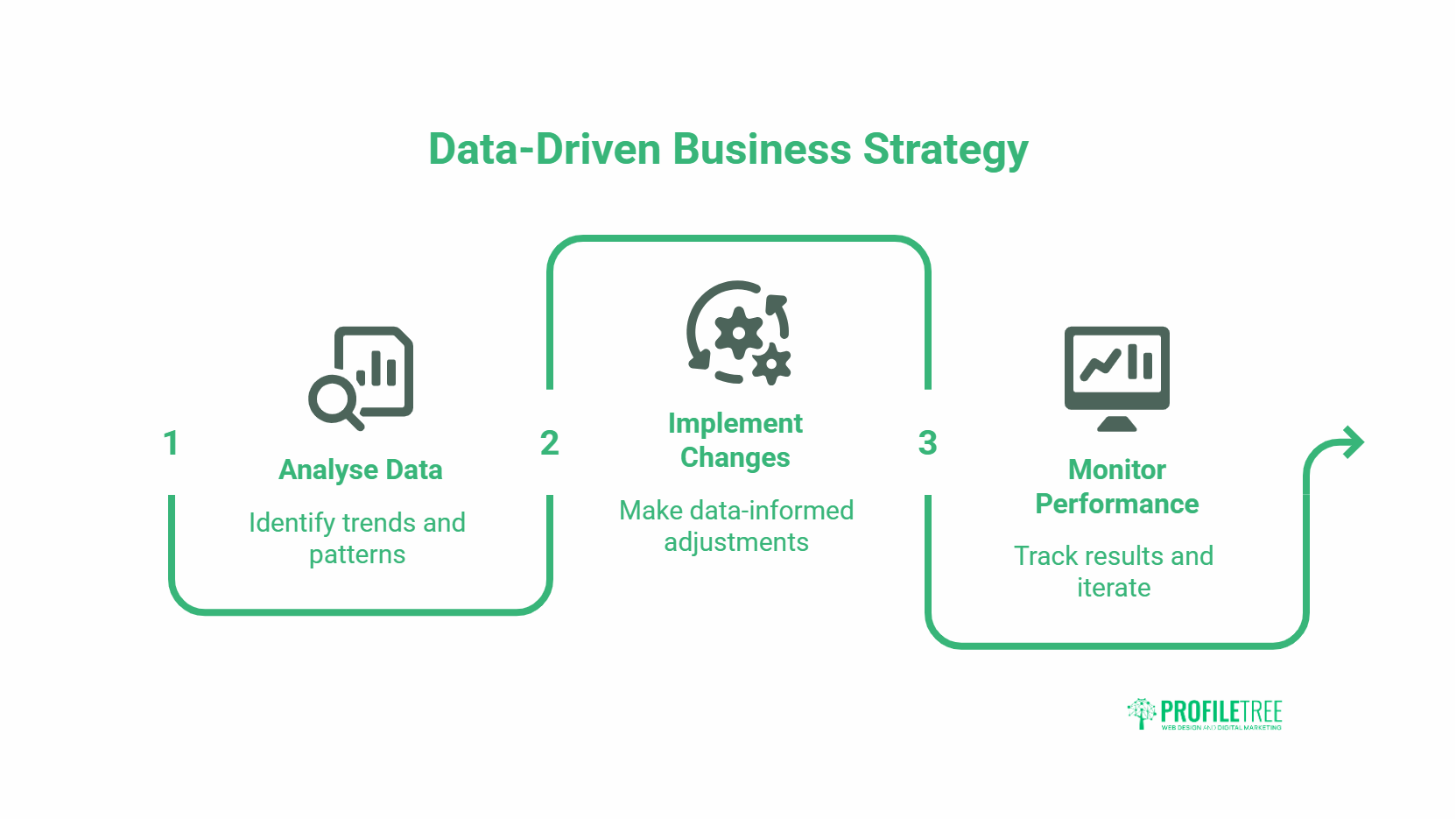
Data earns its place when it changes a decision. Below are five uses that apply to almost any SME, each tied to a clear action.
Find Gaps and Opportunities
Sales and website data together reveal where you’re underperforming. A product with strong interest but weak sales often signals a pricing, messaging, or page problem rather than a demand problem. Reviewing which pages attract visitors but few enquiries is a fast way to spot a fixable gap.
Improve Customer Experience
Purchase history and on-site behaviour show what customers actually want, not what you assume they want. That can mean reordering a navigation menu, rewriting a confusing service page, or adding the FAQ people keep emailing about. Small changes informed by real behaviour usually beat large redesigns based on opinion.
Make Faster Decisions
Dashboards let you adjust mid-campaign instead of waiting for a quarterly review. If one digital marketing channel outperforms another in two weeks, you can shift budget while the campaign is still live.
Manage Risk
Historical data helps you spot trouble early: a seasonal dip, a customer segment going quiet, or rising acquisition costs. Seeing the trend before it becomes a problem buys time to respond.
Sharpen Financial Decisions
Margin and revenue data by product or service guide where to invest. The aim is to put effort behind what’s genuinely profitable, not just what’s busy.
Turning Insights Into Digital Decisions
The clearest commercial payoff from data-driven insights comes from applying them to your digital presence, because that’s where actions are measurable and reversible.
Search Console and analytics data tell you which queries bring people to your site and where they leave. That directly informs search engine optimisation priorities and the topics worth covering in your content marketing. If visitors arrive but don’t convert, the issue often sits in the site itself, which is where website design and website development decisions come in.
Reading Website and Search Data
Look at landing pages, bounce points, and the queries driving impressions versus clicks. Deep impressions with low clicks usually mean a title or page that doesn’t match what searchers want.
Connecting Data to a Strategy
Insights are only as good as the plan behind them. A structured digital strategy turns scattered findings into a sequence of decisions: what to fix first, what to test, and what to measure.
Building the Skills In-House
Many SMEs want to read their own data confidently. Practical digital training and AI training help teams interpret analytics and use tools without depending on an agency for every report.
As Ciaran Connolly, founder of ProfileTree, puts it: “The SMEs that get real value from their data aren’t the ones with the most dashboards. They’re the ones who pick a handful of numbers that matter and check them every week.”
Building a Data-Driven Strategy Without a Data Team
You don’t need a dedicated analyst to be data-driven. You need a routine: a short weekly review of a few defined metrics, a monthly check of trends, and a clear link between what the data shows and what you change.
Start small, keep the questions specific, and connect each insight to a decision about your website, marketing, or services. Over time, this habit does more for an SME than any single advanced tool.
Common Mistakes SMEs Make With Data
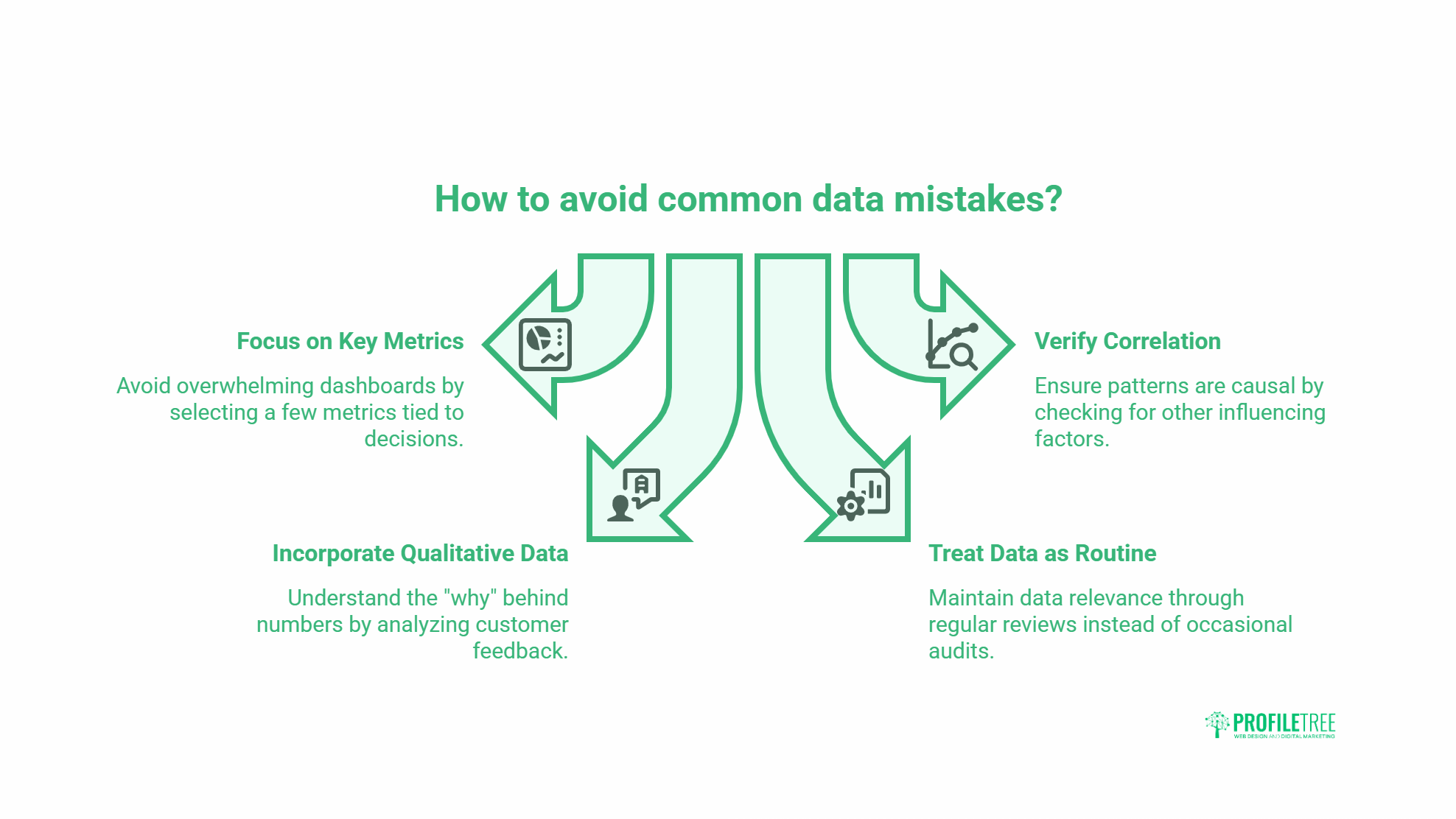
The most expensive data mistakes aren’t technical. Their decisions are made on the wrong number, or no decision is made at all.
Tracking Everything and Acting on Nothing
A dashboard with forty metrics on it usually means none of them gets used. Small teams do better with a short list they check often than a sprawling report nobody opens. Pick the handful that tie to a decision and let the rest sit. If a metric hasn’t changed an action in three months, it probably doesn’t belong on your weekly view.
Confusing Correlation With Cause
Sales rose the same week you ran a social post, so the post worked. Maybe. It was also payday, and a competitor was out of stock. SMEs lose money chasing patterns that were coincidental. Before you scale a tactic, check whether anything else could explain the result, and test it once more on a smaller scale if the stakes are high.
Ignoring Qualitative Signals
Numbers tell you what happened, not why. Support emails, call notes, and reviews often explain a drop that analytics only flags. A page losing conversions might be slow, unclear, or asking for too much information, and your customers will usually tell you which, if you read what they write. Pairing this with your content marketing and email marketing feedback closes the loop between what people do and what they say.
Treating Data as a One-Off Project
A single audit ages fast. The businesses that benefit treat data as a routine, not a quarterly clean-up. A short, repeatable review beats an occasional deep dive that never gets followed up.
How AI Changes Data-Driven Decisions for SMEs
AI tools now let small businesses do analysis that once needed a specialist, but the value still depends on asking good questions and acting on clear answers.
Faster Reading of Messy Data
AI is good at summarising unstructured sources at speed: hundreds of reviews, support tickets, or survey responses condensed into themes in minutes. For an SME, that turns a job nobody had time for into a quick weekly read. Practical AI training and AI tools for marketing help teams use these capabilities without overcomplicating their workflow.
Where AI Helps and Where It Doesn’t
AI handles pattern-spotting and summarising well. It’s weaker at judgment: knowing which findings matter for your business, what’s realistic to change, and what a number means in your market. Treat AI output as a starting point for a decision, not the decision itself.
Keeping a Human in the Loop
Every AI-assisted insight should pass a simple check before it drives action: does this match what you see elsewhere, and does it make sense for your customers? An AI transformation plan works best when it strengthens your team’s judgement rather than replacing it, and when it connects back to a clear digital strategy rather than running as a separate experiment.
Frequently Asked Questions
What are data-driven insights for a small business?
Their conclusions are drawn from your own data, such as sales records and website analytics, that tell you what to change. For an SME, the point is acting on patterns rather than collecting numbers for their own sake.
What data should an SME track first?
Website analytics, sales figures, and customer enquiries. These three answers most early strategy questions and need no specialist tools.
Do I need expensive software to use data-driven insights?
No. Free tools like Google Analytics and Google Search Console cover most SME needs. Spend on tools only once you’ve outgrown the free ones.
How does data-driven insight help with SEO and content?
Search data shows the queries bringing people to your site and where they drop off, which tells you what to optimise and what content to create next.
How often should I review my business data?
A short weekly check of a few key metrics and a monthly trend review suit most small businesses. Consistency matters more than depth.
Conclusion
Data-driven insights help SMEs make sharper strategy decisions by turning everyday data into clear actions. Focus on a few reliable sources, ask specific questions, and tie each finding to a decision about your website, search visibility, or marketing. That habit, kept up week to week, is what separates businesses that use their data from those that merely collect it.