
Creative Business Names: How to Choose One That Works
Table of Contents
Creative business names balance three things: they are memorable, legally available, and a fit for the brand being built. Most names cost only time to develop, though professional naming runs into the low thousands of pounds. ProfileTree, a Belfast digital agency, helps SMEs across Northern Ireland, Ireland and the UK build brands around the right name.
What Your Business Name Actually Does
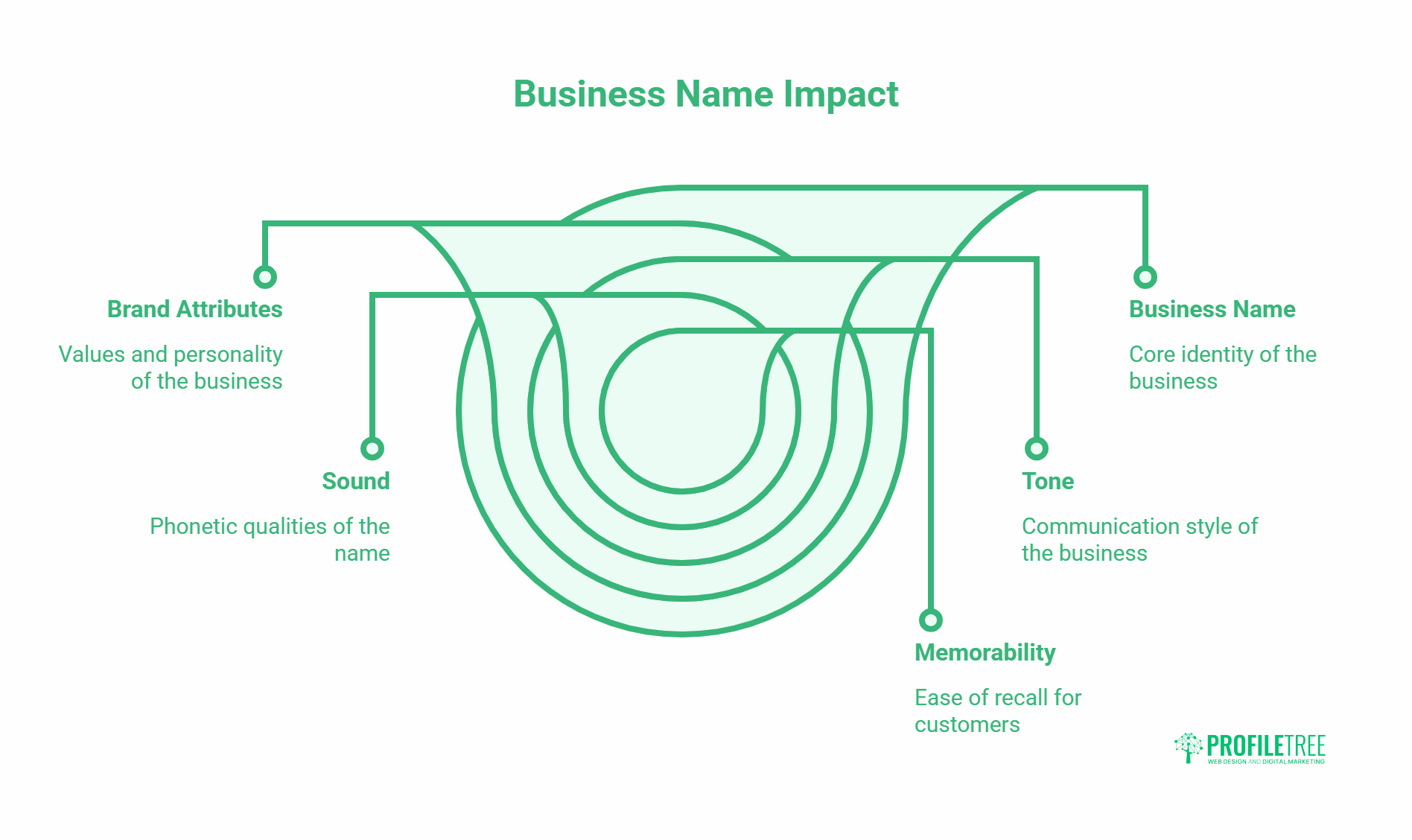
Your name is usually the first thing a customer meets, before the product, the website or the pitch. Get it right and it carries meaning for free for years. Get it wrong, and you spend money and goodwill correcting it later.
Most small firms across Northern Ireland and the UK default to a family name or the founder’s name. That works, but it leaves value on the table. There is a whole industry built around naming, and some companies pay thousands for it. You do not have to, as long as you understand a few principles that make a name stick. Naming sits right next to the wider work of defining your brand attributes and tone, so the decision shapes far more than your signage.
Quick Takeaways
- Short, easy-to-say names spread faster than long descriptive ones.
- Check the domain and the trademark register before you fall in love with a name.
- A name only works if the product behind it delivers.
“A business name is often the first impression potential customers have of your company. It needs to work hard for you: communicating your values, being memorable, and setting the right expectations. We’ve seen clients shift their market position simply by refining their business name and the brand identity built around it.”Ciaran Connolly, founder of ProfileTree
The Hidden Work A Business Name Does Before Anyone Reads It
Linguists talk about fricatives and plosives, the different sounds inside words. A plosive (the hard sound in words like Kodak or Pepsi) tends to feel punchy and energetic. A fricative (the softer sound in words like Vouch or Verso) tends to feel smoother. The arrangement of those sounds nudges how a name feels before a customer has consciously thought about it. You do not need a linguistics degree to use this, but it explains why two business names with the same meaning can land so differently.
There is a practical lesson here for any SME owner. Say your shortlist aloud, ideally to someone who has not seen it written down. If they hesitate, mishear it, or ask you to spell it, the name is adding friction to every future phone call and word-of-mouth referral.
How To Choose Creative Business Names
You don’t need to be a linguist to land a good business name. A handful of practical rules covers most cases.
Keep It Short
People see a flood of adverts every day, from pop-ups to sponsored social posts. A short, easy name cuts through where a long one gets forgotten. If you can’t say it in one breath, trim it.
Lean On Sound Patterns
Names with a consonant-vowel-consonant rhythm are easy to say and easy to recall. Think Amazon or Gatorade. The CVC pattern is the first sound combination infants learn in any language, which is part of why it sticks.
Alliteration and assonance help, too. Coca-Cola repeats the hard C. Juicy Fruit repeats the vowel sound. Both feel pleasant to say, and pleasant-to-say business names get repeated. If you want a deeper view of how sound and tone carry across a brand, ProfileTree’s work on brand voice consistency covers it.
Make It Relevant, Unique And Easy To Spell
The business name should hint at what you do, stand apart from competitors, and survive being said aloud down a phone line. If a customer can’t spell it, they can’t find you online or recommend you to a friend. Check that the domain and the main social handles are free before you commit.
Pick A Naming Approach That Fits Your Goal
Most business names fall into one of a few types, and each trades off differently between instant clarity and long-term brand value. There is no single best option; the right choice depends on how much you plan to invest in marketing and how distinctive you need to be.
| Naming Approach | Example Style | Strength | Trade-off |
|---|---|---|---|
| Descriptive | “Belfast Web Design Co.” | Instantly clear, helps discoverability | Hard to trademark, easy to copy, low distinctiveness |
| Founder or family name | “Connolly & Co.” | Personal, trust-building for local trade | Limits resale and scaling, hard to differentiate |
| Invented or abstract | “Kodak”, “Zappos” | Highly distinctive, easy to trademark and own | Needs marketing spend to build meaning |
| Suggestive or metaphor | “Amazon”, “Nike” | Memorable, room to grow beyond one product | Meaning is indirect, may need explaining early on |
Brainstorming Techniques That Work
- Mind mapping: write your values in the centre, branch out into associated words, and look for unexpected links between branches.
- List storms: build separate lists of descriptive words, rhymes, alliterations and prefixes or suffixes, then mix across the lists.
- Competitor review: study the names of category leaders for patterns, then deliberately go the other way so you stand out.
- Name templates: drop keywords into simple frames such as [keyword] + [product] or [descriptor] + [industry] and see what reads well.
If you would rather start from a generated shortlist than a blank page, this ProfileTree walkthrough shows how a business name generator can speed up the early ideas stage and what to do with the results.
The Pitfalls That Catch People Out
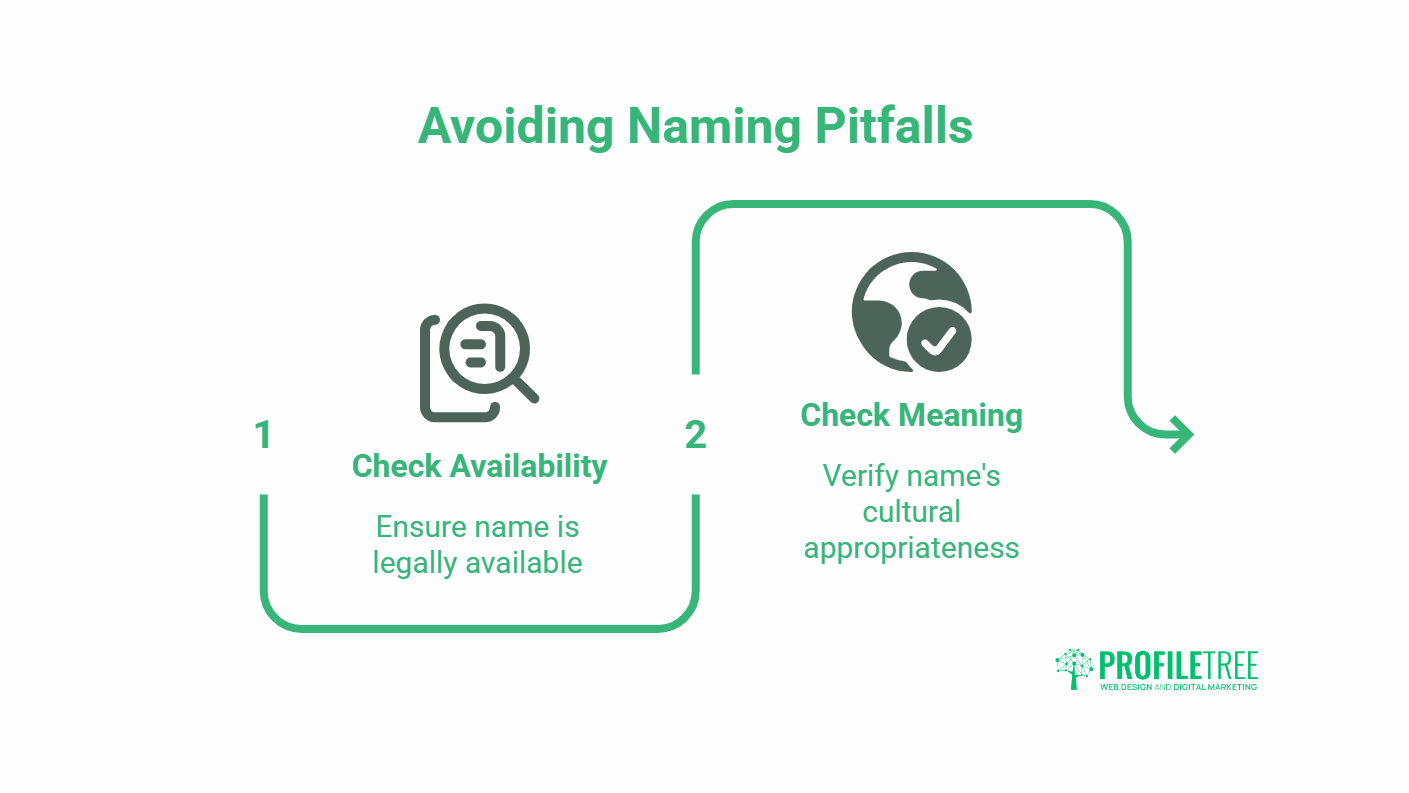
Two problems have nothing to do with creativity and trip up plenty of founders.
The first is availability. A business name you love may already be taken, and company names are protected assets. If you want legal protection, you have to register and confirm nobody else holds it. Trademark rules differ by country, so if you plan to sell abroad, you need to check each market you trade in. An application can be refused even when the business name isn’t identical, if it sits too close to an existing mark and would confuse customers.
There is also “genericide”, where a brand name becomes so common that it loses its link to the original company. Bikini, zipper, kerosene and yo-yo were all once trademarks and are now ordinary words.
Meaning Across Languages And Cultures
The second problem is meaning across languages. Even a corner shop serving one neighbourhood operates in a connected world, and names travel. A few well-known misfires:
- Clairol launched a curling iron called the “Mist Stick” in Germany, where “mist” is slang for manure.
- Colgate sold a French toothpaste called “Cue”, which shared its name with a French adult magazine.
- Ford marketed the “Pinto” in Brazil, where the word is slang for small male genitals.
- Mercedes-Benz first entered China as “Bensi”, which reads as “rush to die”.
You might ask whether you can skip all this and pick something simple. You can. A solo trader doesn’t need to spend tens of thousands on a naming agency. It still pays to run through these checks early, because a name is hard to change later in both the customer’s mind and the trademark register.
Checking Availability And Trademarks
Once you have a shortlist, test each name in three places: domain registrars, social platforms and trademark databases.
Use domain search tools to check the major extensions (.com, .co.uk, .io, .co). The .com still carries the most trust, though .co and .io are widely accepted now. For an exact-match .com you may pay anywhere from £8,000 to £24,000; other extensions cost far less.
For trademarks in the UK, the fastest first step is the free register search run by the Intellectual Property Office. You can search the UK trademark register by word or phrase to see whether an identical or similar mark already exists in your class. Trademark rights in the UK work on a first-to-file basis, so checking early can save an expensive rebrand later. If you plan to trade in the EU or US as well, check TMView and the US TESS system before you commit.
What A UK Trademark Search Will And Won’t Tell You
The IPO database shows registered and pending marks, but it has limits worth knowing. It may not surface every similar mark, and it does not cover unregistered business names that still hold common-law rights through established use. A business name can clear the register and still draw opposition from a business that has been trading under something close to it. For a low-risk local business, this is rarely a problem; for anything you plan to scale or sell, a professional search is worth the cost.
A Short Naming Checklist For Your Website
- List the keywords that describe what you do, who you serve and where you operate.
- Combine those keywords, try alternative spellings, and add a short word before or after.
- Run each candidate through a search engine to see if it is already in use.
- Check which matching domains can be registered, including common misspellings.
- Search trademark registers in every country you plan to trade in.
Why The Right Name Matters For Growth
A name can make or break a young business because so much of a brand is built on top of it. Two examples show how a business name does the heavy lifting. Levi Roots built “Reggae Reggae Sauce” around his Jamaican heritage after a pitch on Dragons’ Den, and the brand now spans sauces, drinks, frozen food and seasonings sold across UK retailers. Amazon’s logo turns its name into a message: the arrow runs from A to Z, signalling that it sells everything in between.
That link between a name, a logo and a wider identity is where naming meets design. ProfileTree’s guidance on graphic design in marketing shows how the visual side reinforces the name once it is chosen.
Turning A Business Name Into A Brand
A name is the start, not the finish. The businesses that get the most from a strong name build a consistent identity around it: a logo, a tone of voice, a website and the marketing that carries all three to customers.
ProfileTree, a Belfast-based web design and digital marketing agency, works with SMEs across Northern Ireland, Ireland and the UK on exactly that stage. The team helps owners move from a chosen business name to a brand that earns recognition, covering web design, content, and the search visibility that makes a new name findable. For founders weighing up the move, ProfileTree also publishes UK startup statistics that put the naming decision in a commercial context.
If your current name is holding the business back, a short conversation about repositioning is usually more useful than a full rebrand. Email hello@profiletree.com to talk it through.
Frequently Asked Questions
How Much Does It Cost To Name A Business Professionally?
Naming agencies typically charge from around £4,000 to £12,000 or more to develop and legally vet a name, depending on scope and how many markets need trademark checks. Doing it yourself costs only your time plus registration and domain fees, which is the route most early-stage SMEs take. The middle ground is to brainstorm in-house and pay a professional only for the trademark search and brand identity work.
How Long Does The Naming Process Take?
Allow two to three months for thorough brainstorming, availability research, trademark checks and a final decision. Rushing tends to produce business names that clash with an existing mark or read badly in another language, both of which cost far more to fix later than the time saved up front.
Should My Name Include Keywords?
Keyword-rich names can help people understand what you do and can support discoverability, but they often lack the distinctiveness that builds a memorable brand. A purely descriptive business name is also harder to trademark. Aim for a balance: enough relevance that customers grasp the category, enough character that the name stands on its own.
Is A .com Domain Essential?
A .com still carries the most trust and authority, so it is worth securing where you can. It is no longer essential, though. Extensions such as .co.uk, .co and .io are widely accepted, and a strong .co.uk can outperform a weak .com for a business trading mainly in the UK and Ireland.
Do I Have To Register A Trademark, Or Is A Company Name Enough?
Registering a company name with Companies House stops another company from registering an identical name, but it does not give you trademark protection. Two different things, often confused. A trademark protects your brand name and logo against use by others in your class of goods or services, and it is what you rely on if you ever need to challenge a copycat. For most growing businesses, both are worth doing.
Can I Change My Business Name Later?
Yes, with the right legal steps: filing new trademarks, updating registrations and transitioning the branding across your website and marketing. It is doable but disruptive, because you also have to rebuild recognition in customers’ minds. That is why it pays to take the time up front to pick a name you can live with.
Choosing A Name You Can Build On
A good name balances creativity, strategy and a few legal checks. Brainstorm widely, test for availability, gather honest feedback, and confirm the trademark position before you commit. The strongest names connect with the people you want to reach while staying clearly different from competitors.
One last point worth keeping in mind: a name opens doors, but the product or service behind it has to deliver on the promise. The brands that last keep their name and their actual customer experience in step.