
SEO for Wedding Venues: How to Get Found When Couples Search for Their Perfect Place
Table of Contents
Few purchases are as emotionally charged as choosing a wedding venue. Couples aren’t just booking a location, they’re selecting the backdrop for one of the most significant days of their lives. They’ll remember this place forever, see it in photographs for decades, mention it in conversations for years to come. The weight of that decision makes venue selection an intensive research process, and that research increasingly happens online.
“Wedding venues near me,” “barn wedding venues Yorkshire,” “castle wedding Ireland”, these searches happen constantly as newly engaged couples begin imagining their celebration. The venues that appear during this research get viewings. Those invisible online miss couples who might have fallen in love with their space, their grounds, their atmosphere.
This guide explores how wedding venues can build search visibility that attracts the right couples, people whose vision aligns with what you offer and who will become advocates for your venue long after their confetti has been swept away.
SEO for Wedding Venues: Understanding the Couple’s Search Journey
The wedding venue search typically begins shortly after engagement and unfolds over weeks or months. Understanding this journey helps you meet couples at the right moments with the right content.
Most couples start with geography. They have constraints, where they live, where family is located, how far guests can reasonably travel. Early searches often combine “wedding venues” with locations: counties, regions, proximity to cities. A couple based in Manchester might search “wedding venues Cheshire” or “barn weddings Peak District,” casting a relatively wide net initially.
As research progresses, style preferences emerge and searches become more specific. The couple who started with “wedding venues Lake District” might narrow to “intimate wedding venues Lake District” or “outdoor ceremony venues Cumbria” as they clarify what they want. These more specific searches indicate couples with clearer vision, often further along in their decision process.
Some couples search by venue type from the start. They’ve always dreamed of a castle wedding, a barn celebration, a country house reception. “Castle wedding venues,” “barn wedding venues,” “manor house weddings”, these style-first searches indicate strong preferences that either match your venue or don’t.
Practical requirements generate their own searches. “Wedding venues with accommodation” matters to couples with guests travelling far. “Exclusive use wedding venues” appeals to those wanting privacy. “Dog-friendly wedding venues” reflects that for some couples, excluding their pet isn’t an option. “Late licence wedding venues” matters to those planning to dance until the small hours.
Capacity considerations drive searches too. Couples with 150 guests need different venues than those planning intimate celebrations for 30. “Small wedding venues” and “intimate wedding venues” capture one end; “large wedding venues” and “wedding venues for 200 guests” capture the other.
Throughout this journey, couples are building mental shortlists. The venues that appear repeatedly, that seem to match their emerging vision, that look trustworthy and beautiful, these make the list of places to actually visit. Your SEO efforts determine whether you’re on those shortlists or invisible to couples who’d love your space.
The Visual Nature of Wedding Venue Marketing
Weddings are profoundly visual occasions, and venue selection is driven largely by imagery. Couples scroll through photos imagining themselves in each space, walking down that aisle, dancing in that room, posing for photos in those gardens. Before they ever visit, they’ve already pictured their day at your venue based on what they’ve seen online.
This visual primacy means your photography isn’t just marketing, it’s the primary way couples experience your venue before visiting. And there’s a crucial distinction between two types of imagery you need.
Professional venue photography shows your spaces at their absolute best. Expert lighting, perfect styling, optimal weather, careful composition. These images demonstrate what’s possible, the potential your venue offers. They belong on your homepage, your gallery pages, your Google Business Profile.
Real wedding photography shows what celebrations actually look like at your venue. These images carry different weight. They’re social proof, evidence that real couples chose your venue and had beautiful days there. They show your spaces in use, decorated by various styles of couples, captured by different photographers. They feel authentic in ways that pristine venue shots cannot.
The most effective wedding venue websites feature both prominently. Professional shots establish the venue’s beauty; real weddings prove that beauty translates into actual celebrations.
Video has become increasingly important for wedding venues. A walkthrough video showing how spaces connect helps couples understand flow in ways photos cannot. Drone footage reveals grounds and context that ground-level images miss. And real wedding films, with couple permission, create emotional connection that static images struggle to match.
For guidance on video content, our video storytelling guide covers approaches that work particularly well for venues.
Google Business Profile for Wedding Venues
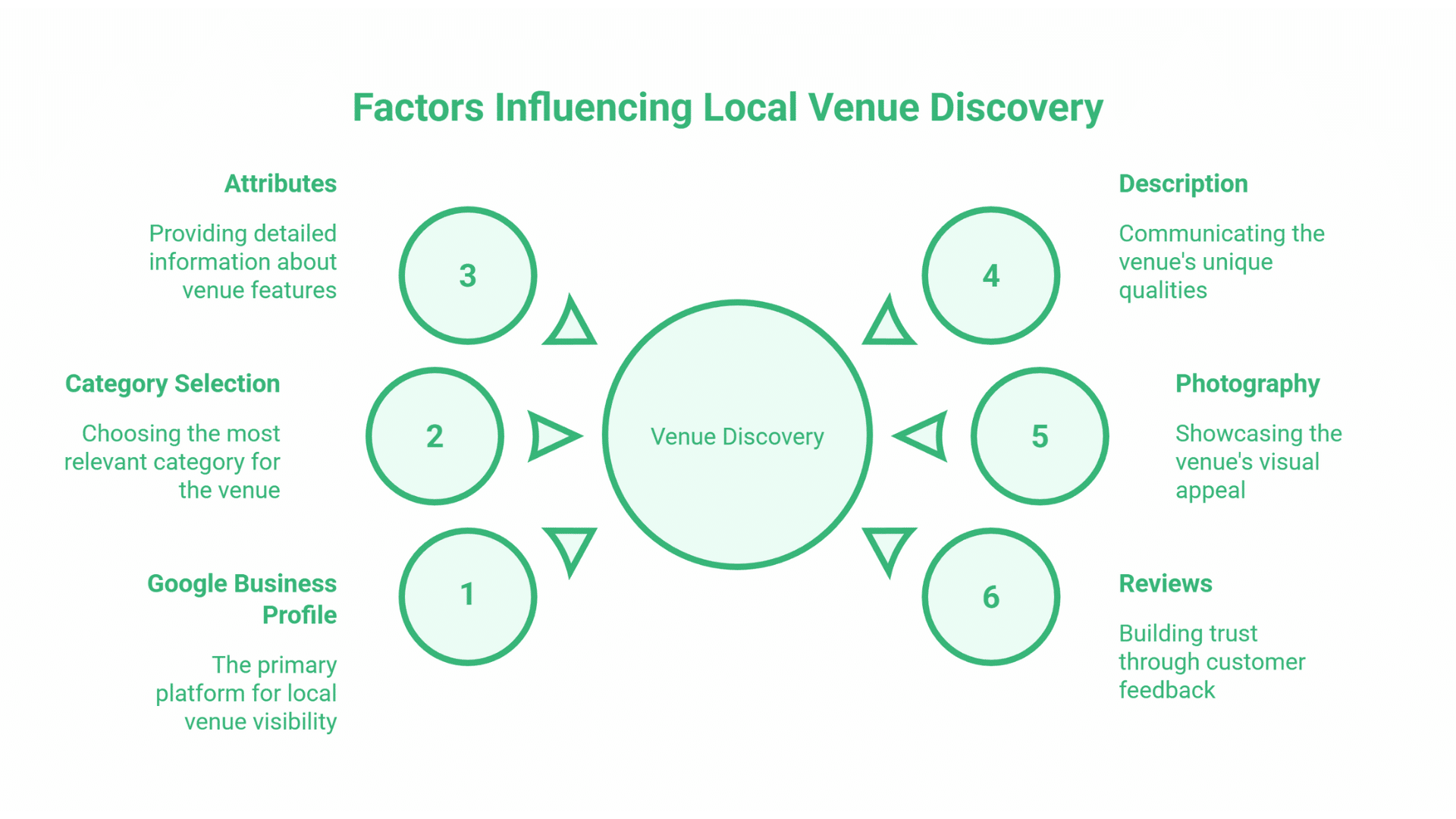
Your Google Business Profile significantly influences local venue discovery. When couples search for wedding venues in your area, map results often appear prominently, and your profile determines whether you’re included and how compelling you look.
Category selection matters. “Wedding Venue” should be your primary category if weddings are your main business. If you’re a hotel or estate that also hosts weddings, consider whether wedding venue or your primary category makes more sense as the primary, with the other as secondary.
Attributes deserve attention. Google offers various attributes for venues, capacity, outdoor space, accommodation, catering options. Complete every relevant attribute; these details help you appear in filtered searches and provide useful information to browsing couples.
Your description should communicate what makes your venue distinctive, not generic wedding venue language that could apply anywhere, but specific details about your setting, your spaces, your character. If you’re a converted barn with original oak beams, say so. If your gardens have been featured in design publications, mention it. If you offer exclusive use meaning couples have the entire property, make that clear.
Photography in your Google Business Profile requires strategic thought. Include your strongest venue images, the shots that make people stop scrolling. Show different spaces: ceremony locations, reception rooms, grounds. Include at least some real wedding imagery; it signals that weddings actually happen here and happen beautifully.
Reviews on your Google Business Profile carry significant weight. Couples making major decisions want reassurance from others who chose the same venue. We’ll address review strategy in detail shortly.
Your Website: From Discovery to Viewing
Your website must accomplish two things: showcase your venue compellingly enough that couples want to visit, and provide enough practical information that they can assess whether visiting makes sense.
The immediate visual impact matters enormously. Couples arriving at your website should see beautiful imagery instantly, not generic welcome text or navigation menus, but stunning photos that create emotional response. Within seconds, they should feel something about your venue.
But beauty alone doesn’t book viewings. Couples need information to decide whether to invest time in visiting. Can you accommodate their guest count? Do you allow outside catering or require using your kitchen? Can guests stay on-site? Is there parking? What’s the general price range?
This creates a design tension: you want visual impact, but you also need to communicate information. The best venue websites manage this through clear structure, immediate visual appeal with intuitive navigation to the practical details couples need.
Create dedicated pages for key information areas. A page about your ceremony options, indoor and outdoor spaces, capacity, what’s permitted. A page about reception dining, your catering approach, dining spaces, menu flexibility. A page about accommodation if you offer it, rooms available, capacity, pricing approach. A page about the grounds, gardens, photo opportunities, outdoor spaces.
Each of these pages serves dual purposes: providing information couples need while creating opportunities to rank for relevant searches. A thorough page about outdoor ceremonies might rank for “outdoor wedding ceremony [your region].” Detailed accommodation information might capture “wedding venues with accommodation [your area].”
Your viewing and enquiry process should be frictionless. Make it immediately clear how couples can arrange a viewing, online booking if you offer it, a simple enquiry form, phone number prominently displayed. Explain what viewings involve and how long they take. Reduce any anxiety about making contact.
For comprehensive website guidance, our website development services cover creating sites that convert.
Real Wedding Features: Your Most Powerful Content
If there’s one content type that wedding venues should prioritise above all others, it’s featuring real weddings. Nothing else combines search value, social proof, and emotional appeal so effectively.
Each real wedding feature is a unique piece of content telling a specific story. “Emma and James | A Summer Celebration at [Your Venue]” becomes a page that can rank for numerous search terms, your venue name, wedding themes mentioned, the season, the style, the suppliers involved. Over time, a library of real wedding features creates extensive, keyword-rich content that search engines reward.
But the SEO value is almost secondary to the trust these features build. When couples see real celebrations at your venue are all couples who look happy, real decorations that look beautiful, real guests having real fun, they can imagine their own day there. Professional venue photography shows potential; real weddings show reality.
Structure your real wedding features thoughtfully. Include the couple’s story, how they met, their vision for the day, why they chose your venue. Feature photographs throughout the day, getting ready, ceremony, reception, evening. List the suppliers involved, photographers, florists, caterers. Include a quote or testimonial from the couple about their experience.
Building a library of real wedding features requires systematic effort. After each wedding, reach out to couples requesting permission to feature their celebration. Work with their photographer to obtain images. Gather the couple’s thoughts while emotions are fresh. Make featuring weddings a routine part of your post-event process rather than an occasional effort.
Aim to publish real wedding features regularly, monthly if your wedding volume supports it. Each feature adds to your searchable content, demonstrates ongoing popularity, and provides fresh social proof.
Content Beyond Real Weddings
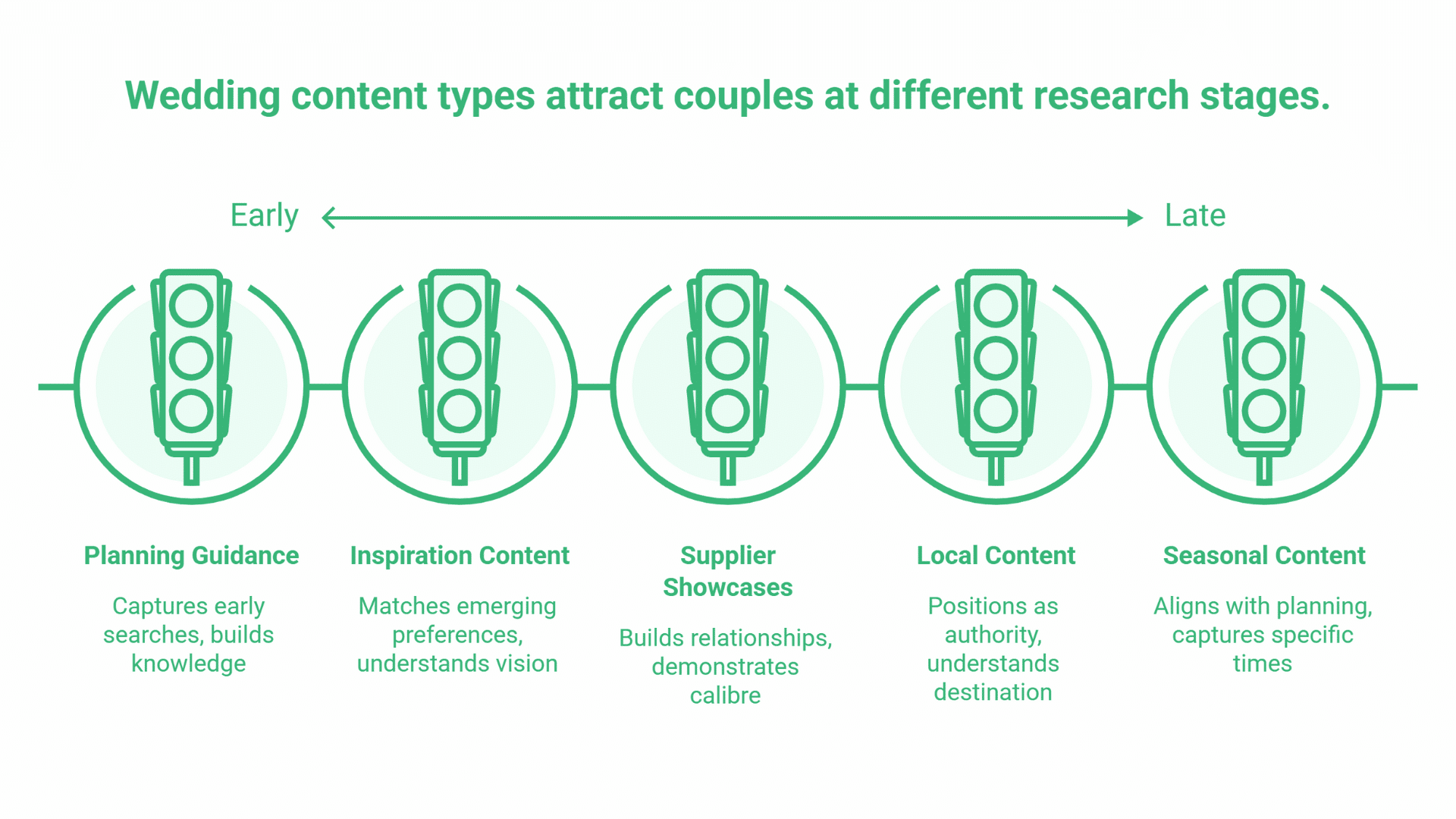
While real wedding features should anchor your content strategy, other content types attract couples at different stages of their research.
Planning guidance demonstrates expertise while capturing research-phase searches. “How to choose a wedding venue” and “questions to ask when viewing venues” attract couples early in their journey, people not yet ready to book but building knowledge that will inform their decisions. Being helpful at this stage creates positive association with your venue.
Inspiration content captures couples seeking ideas. “Winter wedding ideas,” “outdoor ceremony inspiration,” “intimate wedding styling”, these searches indicate couples developing their vision. Content matching their emerging preferences positions your venue as understanding what they want.
Supplier showcases build relationships while creating useful content. Feature your recommended or preferred suppliers, florists, photographers, caterers. These showcase posts demonstrate the calibre of suppliers you work with, help couples with their planning, and often generate backlinks when suppliers share the features.
Local content captures couples researching your area. “Getting married in [your region],” “why couples love [your location],” or guides to your area help couples understand the destination while positioning you as a local authority.
Seasonal content aligns with how couples plan. Many engagements happen over Christmas, driving January research. Couples planning summer weddings research in the preceding autumn. Creating seasonally relevant content, “autumn weddings at [venue name]” or “why winter celebrations are magical here”, captures couples planning around specific times.
For broader content strategy guidance, our content marketing services cover approaches that build visibility over time.
Wedding Directory Presence
Wedding directories drive significant venue traffic and shouldn’t be neglected. Platforms like Hitched, Bridebook, and regional wedding guides have invested heavily in SEO and rank well for many wedding searches. Presence on these platforms captures couples using them as research tools.
Treat directory profiles as seriously as your own website. Complete every field thoroughly, directories with more complete profiles typically display them more prominently. Upload extensive, high-quality imagery. Write compelling descriptions rather than copying and pasting generic text.
Encourage reviews on directory platforms, not just Google. Many couples research specifically through wedding directories, and reviews there influence decisions made within those ecosystems.
However, directory presence should complement your own SEO efforts, not replace them. Directories charge listing fees and control how you’re presented. Your own website, ranking in its own right, gives you control and captures couples without directory intermediation.
Building Trust Through Reviews and Testimonials
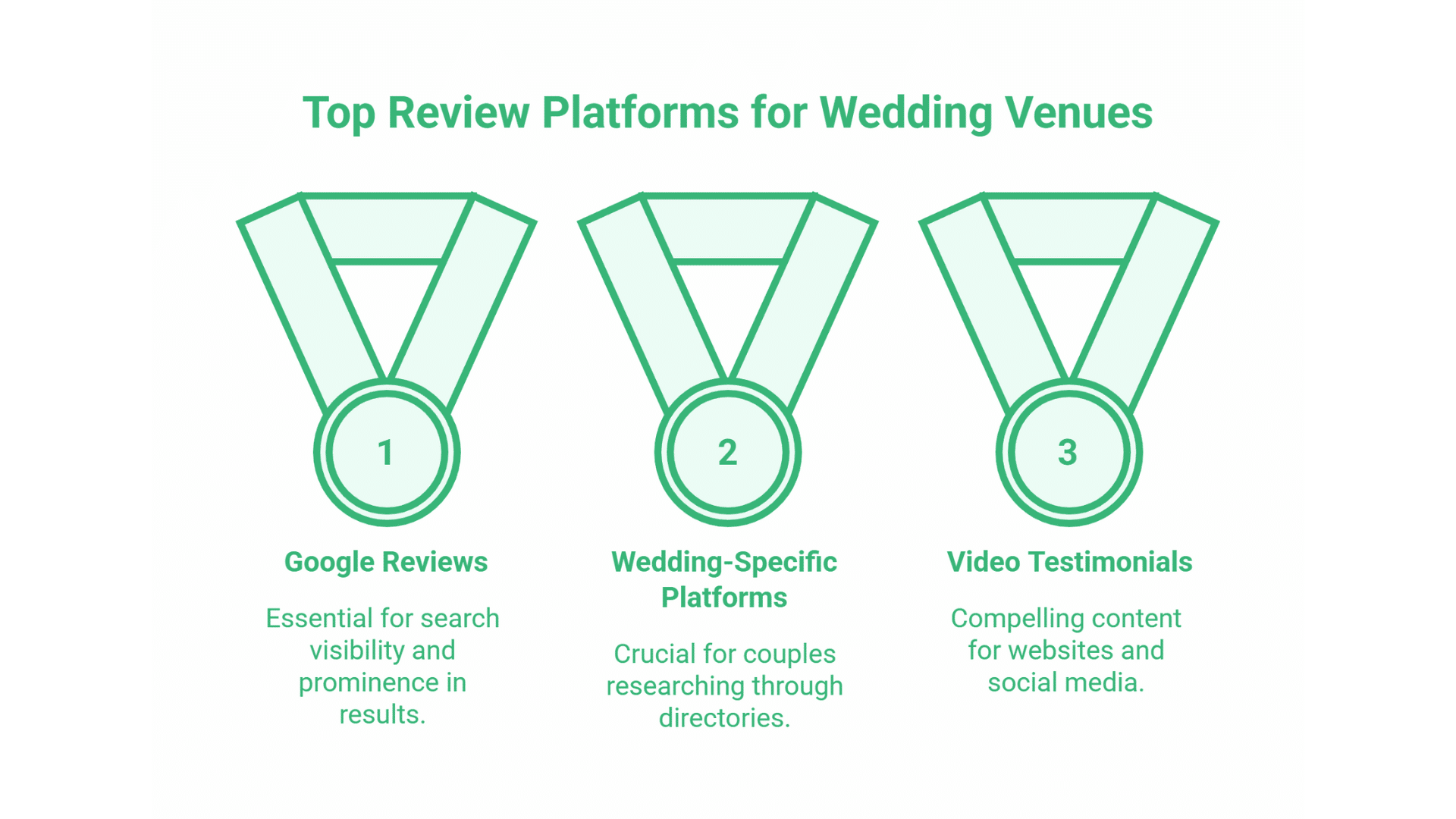
Couples choosing wedding venues face significant commitment, substantial deposits, fixed dates, emotional investment. They want reassurance before committing, and reviews from couples who’ve already celebrated at your venue provide powerful reassurance.
Google reviews matter for search visibility and are increasingly prominent in results. But wedding-specific platforms like Hitched and Bridebook also matter; couples researching through these directories look at reviews there.
The best time to request reviews is shortly after the wedding when emotions are high and the experience is fresh. Some venues include review requests in their post-wedding follow-up communications. Others ask during final contact when couples collect any remaining items or settle final invoices.
What makes wedding venue reviews compelling? Specific details about the experience, how staff handled challenges, how beautiful the venue looked on the day, how guests complimented the setting. Emotional content about how the day felt. Recommendations to other couples considering the venue. These specifics are more persuasive than generic praise.
Consider video testimonials from willing couples. A couple speaking about their wedding day while you show images from their celebration creates compelling content for your website and social media. Not every couple will be comfortable on camera, but some will embrace it.
Respond to every review thoughtfully. Thank couples specifically, referencing details from their day that show you remember them as individuals. Your responses demonstrate how you treat the couples who trust you with their celebrations.
Practical SEO Considerations
Beyond content and imagery, certain practical SEO elements deserve attention for wedding venues.
Page speed matters, particularly for image-heavy sites like wedding venues. Couples browse on various devices and connections; slow-loading galleries frustrate users and hurt search rankings. Compress images appropriately, use modern formats where supported, implement lazy loading so images only load as visitors scroll to them.
Mobile experience is critical. Many couples research weddings on phones, browsing during commutes, sharing options with partners via message, looking at venues while discussing options. Your site must be beautiful and functional on small screens.
Local SEO signals, consistent name, address, and phone across all platforms, local citations, locally relevant content, help you rank for geographic searches that dominate wedding venue discovery.
Schema markup helps search engines understand your content. Event venue schema, local business schema, and review schema can all enhance how your listings appear in search results.
For foundational SEO guidance, our SEO basics guide covers technical elements that support visibility.
Measuring Success
Track metrics that connect to actual bookings, not just visibility.
Organic traffic to your website, particularly to your weddings section, indicates whether your content is being found. Track this over time to see if visibility is growing.
Viewing requests from organic search matter more than raw traffic. Are people who find you through search taking the next step? If traffic grows but viewings don’t, something in your website experience is disconnecting.
Conversion from viewing to booking is influenced by many factors beyond SEO, but understanding the complete funnel helps you identify where improvements are needed.
Source tracking, understanding which bookings originated from which channels, reveals SEO’s contribution to your business. This can be challenging to track perfectly, but asking couples how they found you provides useful data.
The ultimate measure is bookings from couples who found you through search. That’s the business outcome all this effort aims to achieve.
Getting Started
If you’re beginning to address search visibility for your wedding venue, or if you’ve let this slide while focusing on other marketing, here’s where to focus initial effort.
Claim and optimise your Google Business Profile with extensive photography and complete information. This single action improves local visibility immediately.
Audit your website’s information completeness. Can couples find capacity, pricing guidance, and accommodation information easily? Is the viewing request process frictionless? Fill gaps that might lose potential visitors.
Begin systematically featuring real weddings. If you have past weddings with usable photography and willing couples, start publishing features. Then implement a process to capture this content from future celebrations.
Build or improve your presence on major wedding directories. Complete profiles with strong imagery and compelling descriptions.
Implement review collection. Ask every couple for reviews after their wedding. Make it easy by sending direct links to review platforms.
These foundations, maintained over time, build visibility that fills your wedding calendar.
The Couples Looking for Their Perfect Place
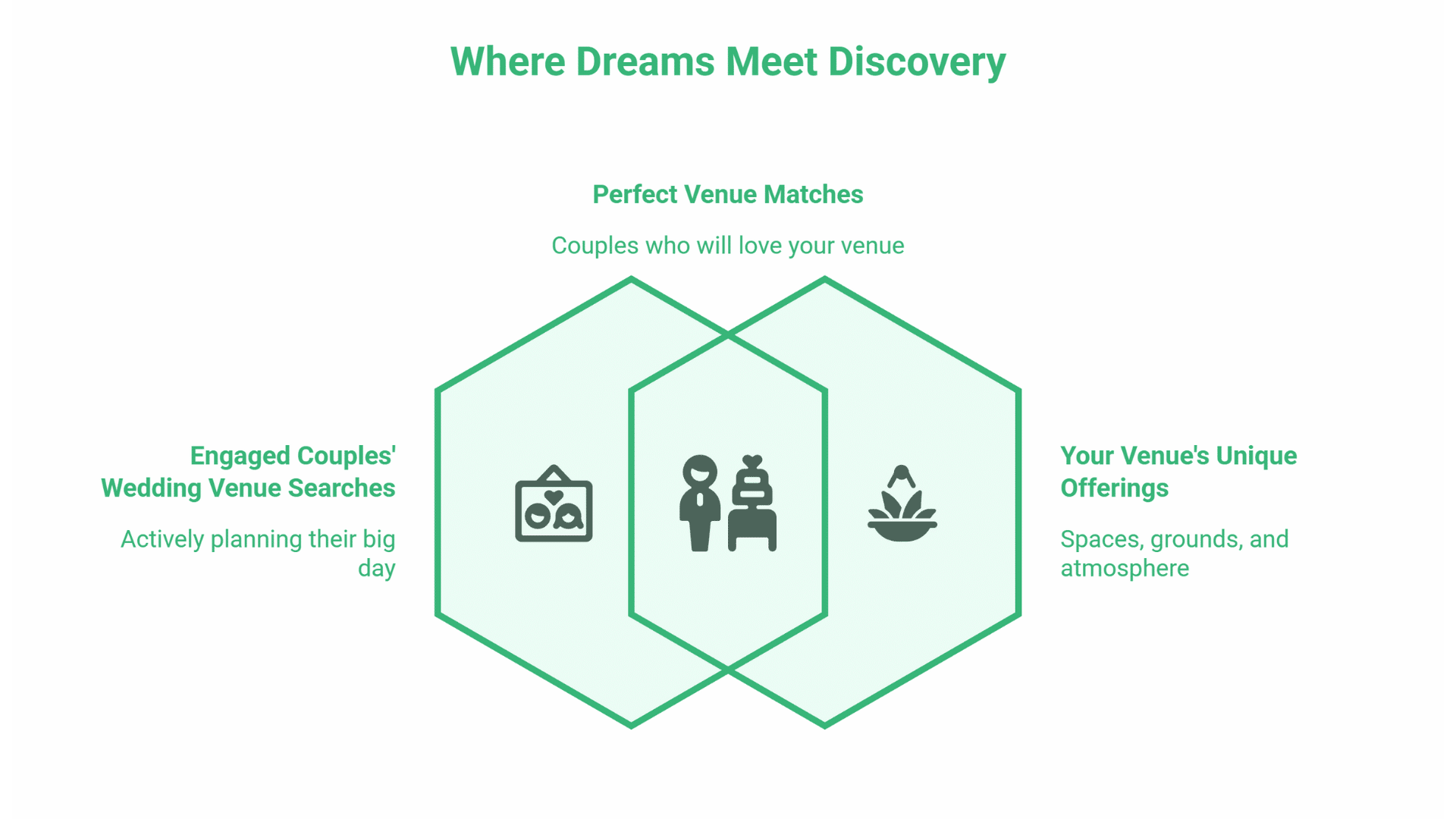
Right now, couples who recently got engaged are searching for wedding venues. They’re imagining their perfect day, scrolling through images, building shortlists of places to visit. Among them are couples whose dreams align perfectly with what your venue offers, couples who would fall in love with your spaces, your grounds, your atmosphere.
The question is whether those couples will find you.
Wedding venue SEO isn’t about gaming algorithms or chasing rankings for their own sake. It’s about visibility that connects you with couples whose vision matches what you offer. When your online presence showcases your venue beautifully, when couples find you during their searches, when your website helps them imagine their day with you, you fill your calendar with celebrations that belong there.
If you’re ready to improve your wedding venue’s search visibility and attract more couples, ProfileTree’s team works with hospitality and event businesses across Northern Ireland, Ireland, and the UK. We understand both the technical requirements of effective SEO and the emotional, visual nature of wedding marketing. Get in touch to discuss how we can help you connect with more couples planning their perfect day.