
Optimising Web Application Scalability: A Guide for Business Growth
Table of Contents
When your Web Application Scalability experiences growing user demand, the infrastructure supporting it must evolve accordingly. Scalability—the ability of your web application to handle increased workloads without performance degradation—becomes a critical business consideration. For organisations across Northern Ireland, Ireland, and the UK, investing in scalable web applications isn’t merely a technical decision but a strategic business imperative that directly impacts customer experience, operational efficiency, and ultimately, revenue.
Business owners and marketing managers who neglect scalability often face serious consequences: slow-loading pages that drive visitors away, system crashes during peak traffic periods, and the inability to capitalise on sudden growth opportunities. This comprehensive guide examines proven strategies for optimising web applications to scale effectively, providing decision-makers with the knowledge needed to support sustainable digital growth and maintain competitive advantage in an increasingly online marketplace.
What Is Web Application Scalability?

Scalability refers to a web application’s capability to accommodate growth in users, transactions, and data volume while maintaining performance standards. This concept extends beyond simply adding more servers—it encompasses architectural decisions, code optimisation, and resource management strategies that allow your digital assets to grow alongside your business.
Horizontal vs. Vertical Scalability
Before diving into specific optimisation techniques, it’s essential to understand the fundamental approaches to scaling:
Vertical Scaling (Scaling Up) involves adding more resources to existing infrastructure. This might include upgrading servers with more powerful CPUs, additional RAM, or expanded storage capacity.
Horizontal Scaling (Scaling Out) distributes your application across multiple servers, creating a cluster that shares the processing load. This approach typically offers greater flexibility and resilience than vertical scaling alone.
“Many business owners come to us with applications that worked perfectly at launch but struggle as user numbers increase,” says Ciaran Connolly, Director of ProfileTree. We help them transform these applications into robust, scalable systems that support business growth rather than hindering it.
Key Strategies for Optimising Web Application Scalability

Achieving optimal scalability requires a multi-faceted approach that addresses potential bottlenecks across your application stack. The following strategies provide a framework for enhancing your web application’s ability to grow with your business.
Implement Load Balancing
Load balancing distributes incoming network traffic across multiple servers, ensuring no single server becomes overwhelmed. This creates a more resilient system that can handle traffic spikes and mitigate the impact of server failures.
Benefits for Business:
- Improved user experience with faster response times
- Enhanced reliability during peak traffic periods
- Greater system uptime, reducing lost revenue opportunities
Adopt Database Scaling Techniques
Databases often become bottlenecks in high-traffic applications. Several strategies can address this challenge:
Database Sharding
This technique involves partitioning your database into smaller, more manageable segments called shards. Each shard contains a subset of your data, distributing the database load across multiple servers.
Read Replicas
For applications with heavy read operations, implementing read replicas allows you to direct read queries to copies of your primary database while reserving the primary database for write operations.
NoSQL Options
Consider whether traditional relational databases are necessary for all aspects of your application. NoSQL databases like MongoDB or DynamoDB often provide better scaling capabilities for certain data types and usage patterns.
Implement Caching Strategies
Caching stores frequently accessed data in high-speed storage locations, reducing the need to regenerate or fetch this information repeatedly.
Client-Side Caching
Browser caching allows returning visitors to load resources from their local cache rather than requesting them again from your servers.
Content Delivery Networks (CDNs)
CDNs cache your content across geographically distributed servers, delivering resources from locations closer to your users and reducing latency.
Application-Level Caching
Implementing Redis or Memcached can dramatically reduce database load by storing frequently accessed data in memory.
Optimise Code and Resources
Even the most powerful infrastructure can be undermined by inefficient code. Regular code reviews and optimisation should be part of your scalability strategy.
Front-End Optimisation
- Minimise and compress JavaScript and CSS files
- Optimise images for web delivery
- Implement lazy loading for non-critical resources
Back-End Efficiency
- Identify and resolve N+1 query problems
- Optimise database indices
- Implement asynchronous processing for non-critical operations
Microservices Architecture: A Scalability Enabler

Traditional monolithic applications can become increasingly difficult to scale as they grow more complex. Microservices architecture offers an alternative approach by breaking down applications into smaller, independently deployable services.
Advantages for Scalability:
- Services can be scaled independently based on specific demand
- Development teams can work on different services simultaneously
- Individual services can be updated without redeploying the entire application
- Different services can use technologies best suited to their specific functions
Practical Implementation Considerations
Transitioning to microservices requires careful planning and may not be appropriate for all applications. Consider starting with a hybrid approach, gradually moving specific functions to microservices while maintaining your core application.
Containerisation and Orchestration
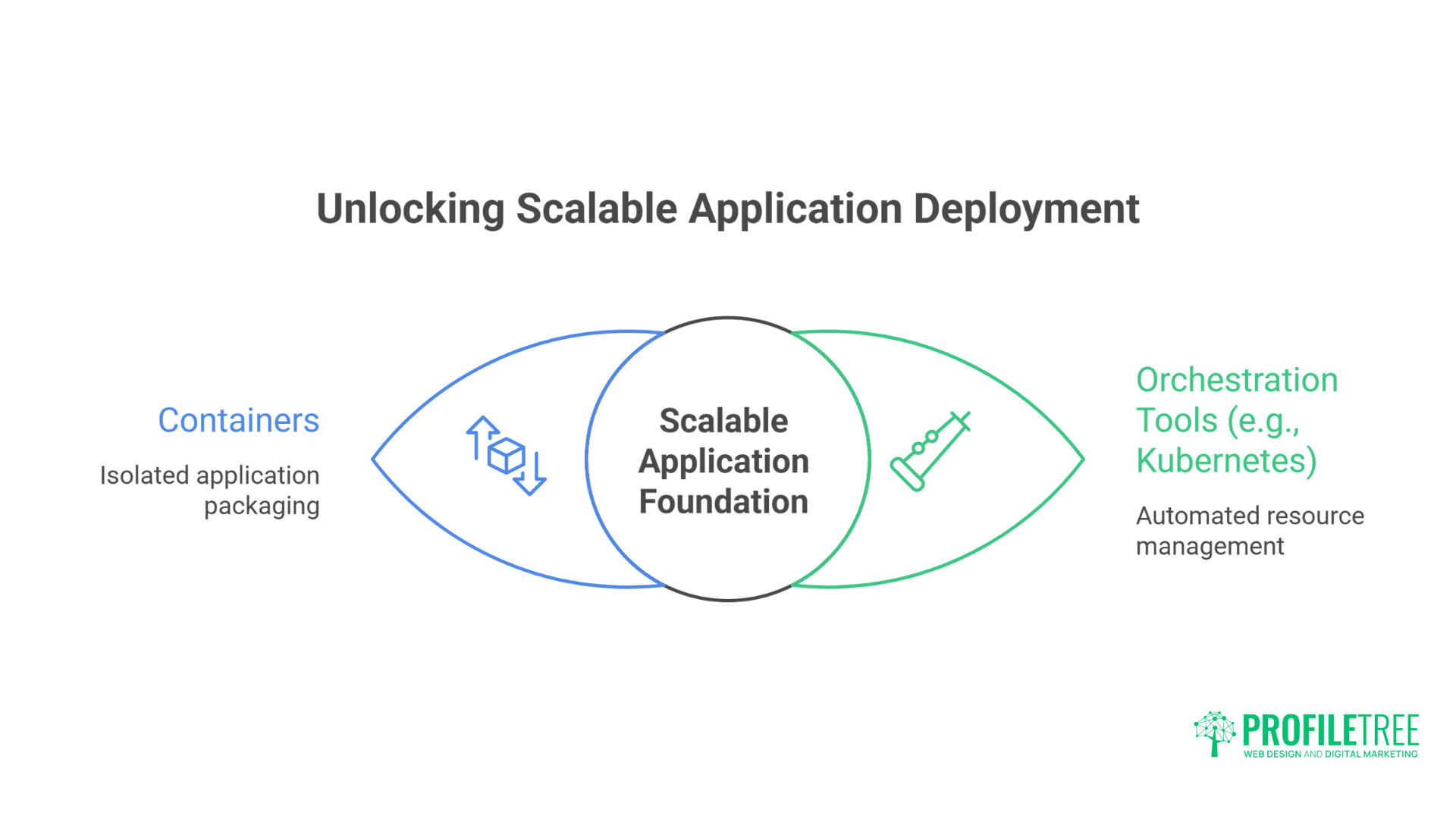
Containers package application code together with all its dependencies, providing consistency across different environments and simplifying deployment. When combined with orchestration tools like Kubernetes, containers become a powerful foundation for scalable applications.
Benefits for Business Decision-Makers:
- More efficient resource utilisation, potentially reducing infrastructure costs
- Faster deployment cycles, allowing quicker response to market opportunities
- Improved application portability across different cloud providers, reducing vendor lock-in
Cloud-Native Scaling Options
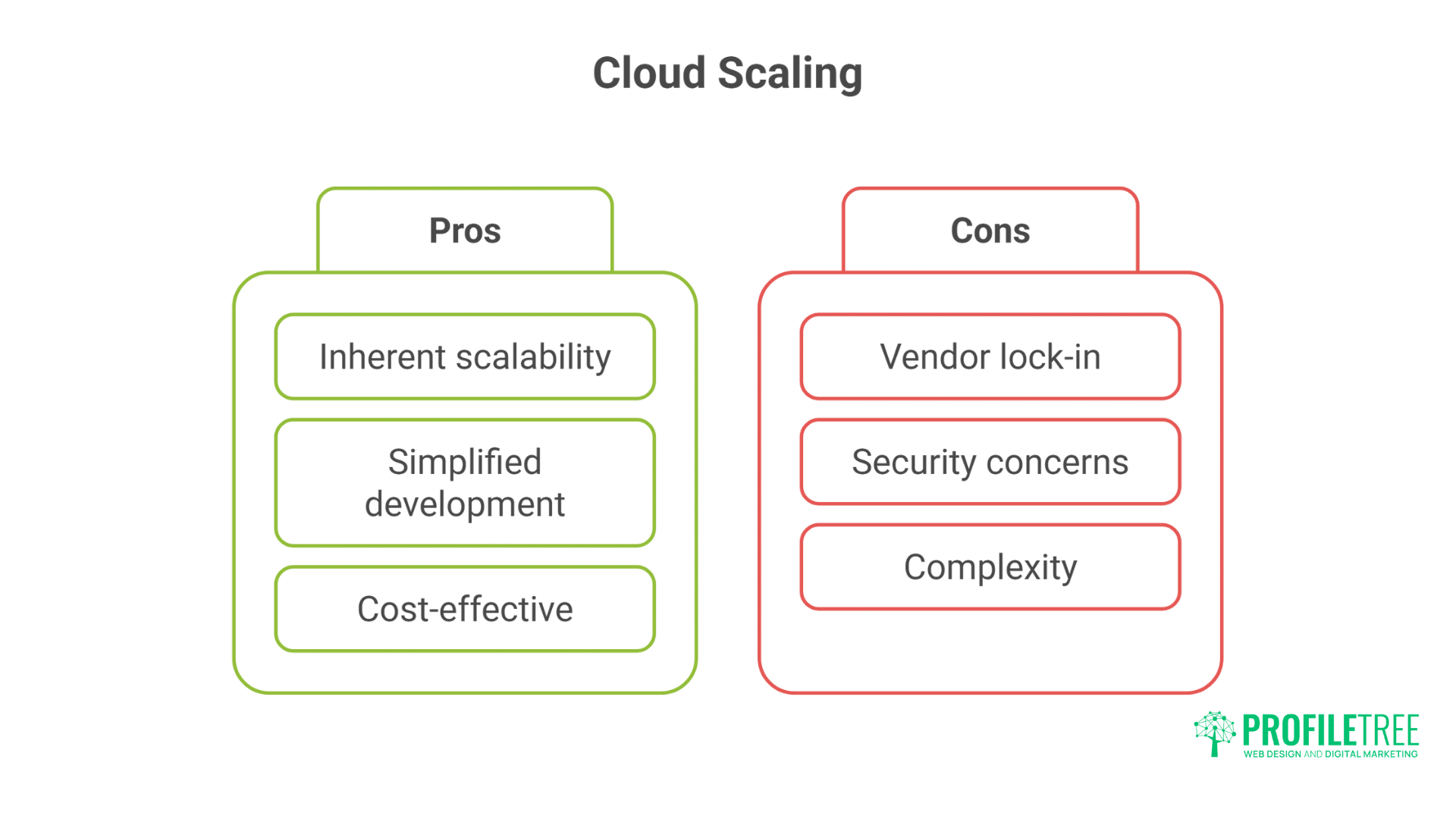
Cloud platforms offer built-in scaling capabilities that can dramatically simplify the process of building scalable web applications.
Auto-Scaling
Services like AWS Auto Scaling Groups or Azure Autoscale automatically adjust your application’s capacity based on actual demand, potentially reducing costs during periods of low traffic while ensuring performance during peak times.
Serverless Computing
Platforms like AWS Lambda, Azure Functions, or Google Cloud Functions eliminate the need to manage servers, automatically scaling your application code in response to events. This can significantly reduce operational complexity for certain types of applications.
Monitoring and Testing for Scalability
Optimising for scalability is an ongoing process that requires continuous monitoring and testing.
Performance Monitoring
Implement comprehensive monitoring solutions that track key metrics such as response times, error rates, and resource utilisation across all components of your application.
Load Testing
Regular load testing simulates high-traffic scenarios, helping identify bottlenecks before they impact real users. Tools like JMeter, Gatling, or cloud-based solutions like LoadNinja or Loader.io can be valuable additions to your testing toolkit.
Building Scalability into Your Web Development Process

For Northern Ireland businesses looking to build new web applications or revamp existing ones, incorporating scalability considerations from the beginning of the development process can save significant time and resources.
Design Phase Considerations
- Identify potential scaling challenges based on projected growth
- Establish clear performance requirements and metrics
- Design data models with scaling in mind
Development Best Practices
- Implement automated testing as part of your development pipeline
- Document scaling considerations for each component
- Regularly review code for optimisation opportunities
Deployment and Operations
- Implement blue/green deployment strategies to minimise downtime
- Establish clear procedures for scaling operations
- Document dependencies between system components
Real-World Scalability Success Stories
The following examples highlight how Northern Ireland businesses have successfully implemented scalability strategies to support growth and improve performance.
E-commerce Growth
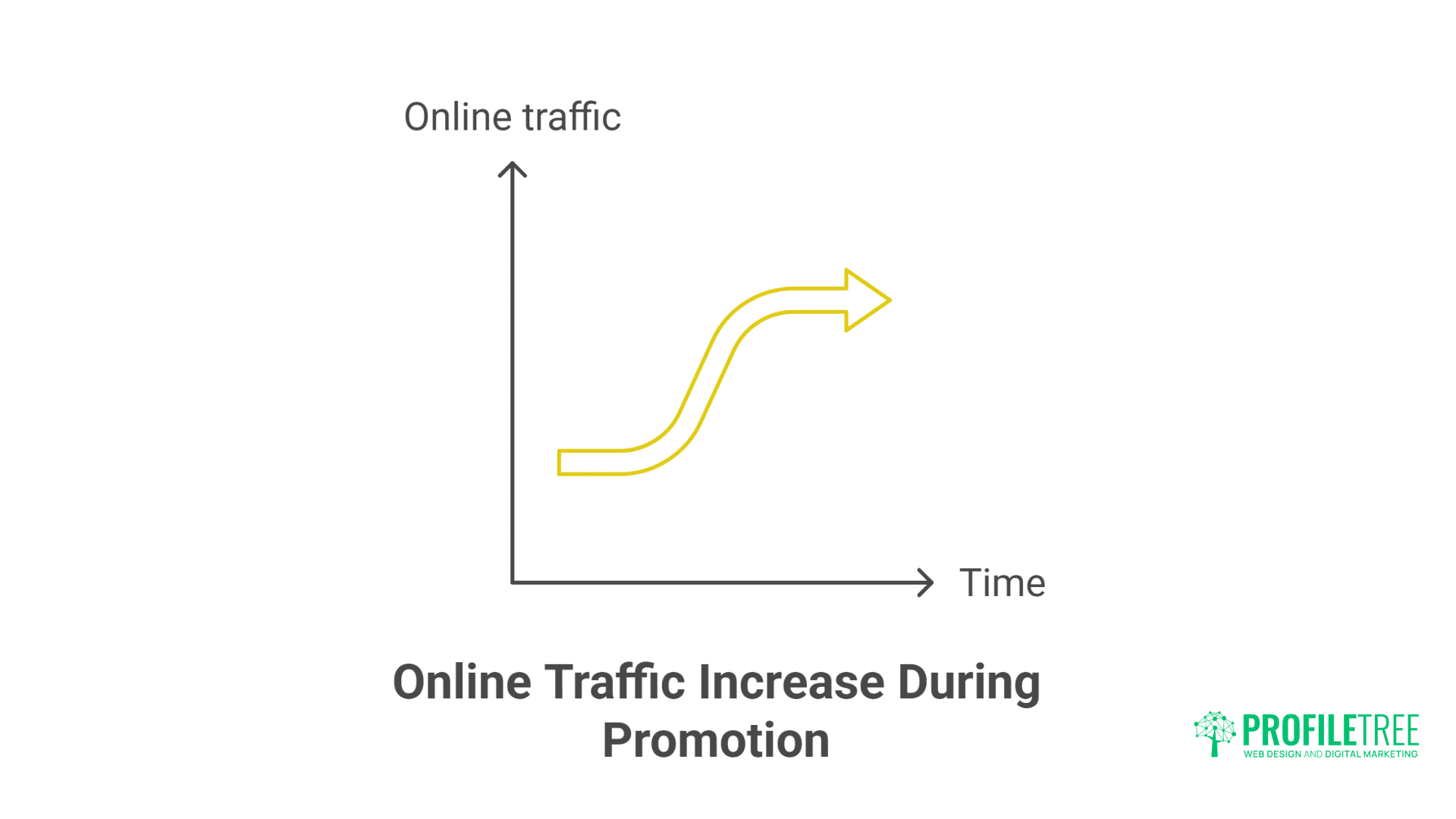
A Belfast-based retailer saw their online traffic increase by 300% during a promotional campaign. By implementing a combination of CDN services, database optimisation, and cloud auto-scaling, they maintained sub-second page load times throughout the event, resulting in a 27% increase in conversion rates compared to previous campaigns.
Public Sector Application
A Northern Ireland public sector organisation needed their citizen services portal to handle unpredictable traffic spikes. By redesigning their application with a microservices architecture and implementing comprehensive caching strategies, they reduced average response times by 67% while supporting three times the concurrent users.
The ProfileTree Approach to Scalable Web Applications
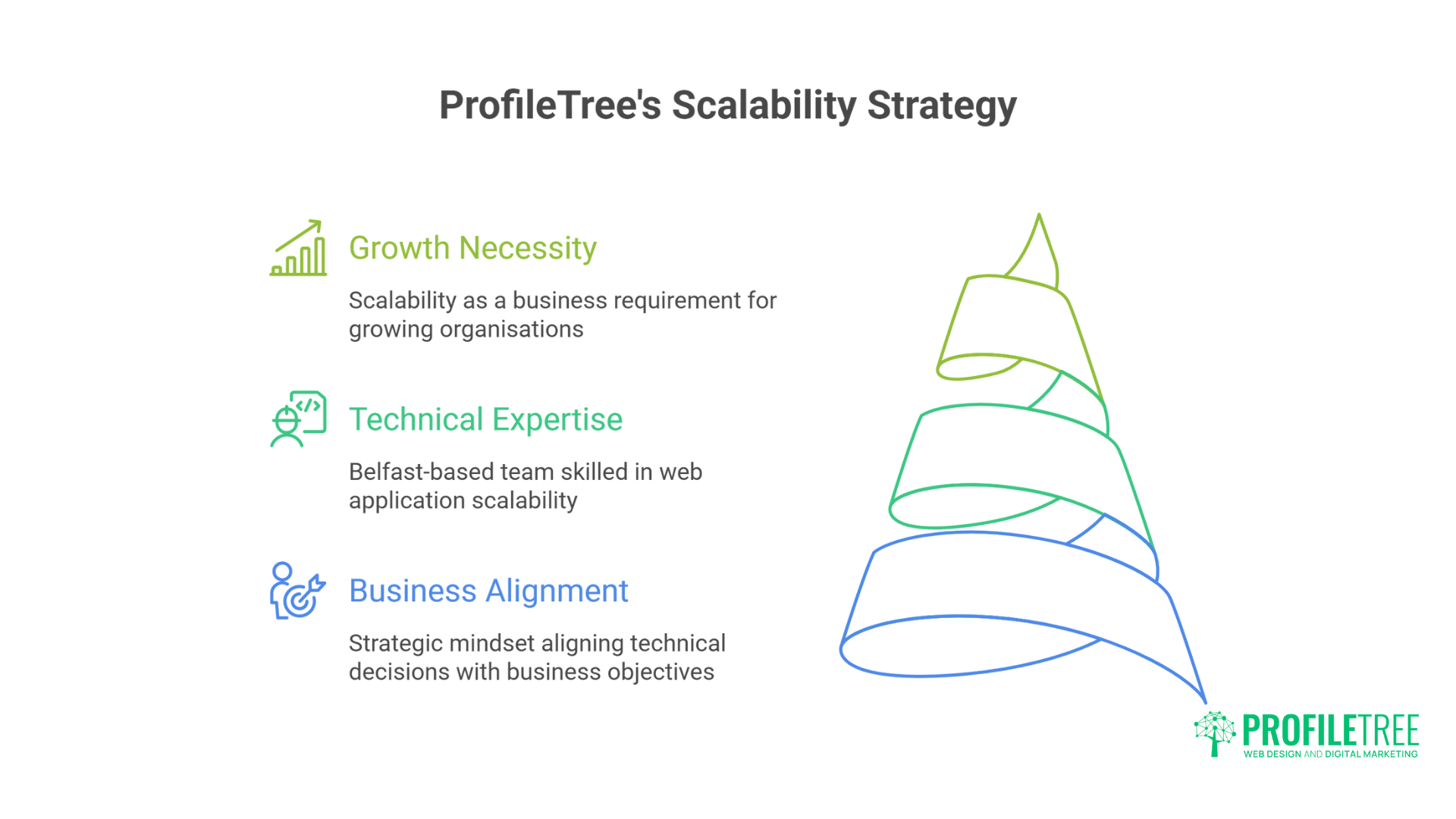
At ProfileTree, we understand that scalability isn’t just a technical requirement—it’s a business necessity for growing organisations across Northern Ireland, Ireland, and the UK. Our Belfast-based development team approaches web application scalability with a strategic mindset that aligns technical decisions with business objectives.
Our Scalability Methodology
Business-First Assessment
We begin by understanding your growth projections, seasonal traffic patterns, and business expansion plans. This information shapes our technical approach to ensure your application can scale in alignment with your business goals.
Architecture Design for Growth
Rather than simply following technical trends, we design application architectures specifically tailored to your unique scalability requirements. For some clients, this means WordPress-based solutions with advanced caching and optimisation; for others, it involves custom-built applications with microservices architectures.
Technology Stack Selection
Our technology recommendations are based on proven scalability patterns that match your specific needs. We specialise in selecting the most appropriate tools for each project rather than forcing every client into the same technology stack.
Continuous Performance Optimisation
Our relationship with clients extends beyond initial development. We offer ongoing performance monitoring, regular optimisation reviews, and scalability planning sessions to ensure your application continues to meet your evolving needs.
Why Belfast Businesses Choose ProfileTree for Scalable Web Applications
- Local Expertise with Global Standards: Our Belfast team combines local business understanding with international technical expertise.
- Performance-Focused Development: Every line of code we write is evaluated for its impact on application scalability and performance.
- Future-Proofed Solutions: We build web applications that can adapt to changing business requirements and growing user demands.
- Transparent Communication: Technical scalability challenges are explained in clear business terms, empowering you to make informed decisions.
Take Action: Scale Your Web Application with ProfileTree
Is your web application prepared to handle your business growth? Don’t wait for performance issues to impact your customers and revenue. ProfileTree’s team of scalability experts is ready to help you build or optimise web applications that support your business ambitions.
Get Started Today
- Schedule a Scalability Assessment: Our team will evaluate your current web application or discuss requirements for a new development project.
- Receive Tailored Recommendations: We’ll provide clear, actionable recommendations specific to your business needs and growth plans.
- Implement Scalable Solutions: Whether you need performance optimisation for an existing application or development of a new scalable system, our Belfast team has the expertise to deliver.
Our Services Include:
- Scalable Web Development: Custom web applications built with growth in mind.
- WordPress Optimisation: Advanced techniques to make your WordPress site handle high traffic volumes.
- Performance Audits: Comprehensive analysis of your current application with actionable improvement recommendations.
- Managed WordPress Hosting: Our £35/month hosting service includes performance monitoring and regular optimisation.
- AI Implementation: Integrate AI solutions to automate scaling processes and improve user experiences.
- Digital Strategy Consultation: Align your technical infrastructure with your business growth plans.
Contact ProfileTree Today
Don’t let technical limitations constrain your business growth. Contact our team at the McSweeney Centre in Belfast to discuss how we can help you build web applications that scale with your success.
Conclusion: Scalability as a Business Advantage
In an increasingly digital marketplace, the scalability of your web applications directly impacts your ability to capitalise on growth opportunities. For business owners and marketing managers across Northern Ireland, Ireland, and the UK, investing in scalable web applications is not merely a technical consideration but a strategic business decision that can provide a significant competitive advantage.
By implementing the strategies outlined in this article and partnering with experienced developers who understand the importance of scalability, your organisation can build web applications that support your business ambitions rather than constraining them.
FAQs About Web Application Scalability
How do I know if my current web application has scalability issues?
Warning signs include slowing page load times during peak traffic, increasing error rates as user numbers grow, and difficulty adding new features without performance impacts.
What’s the most cost-effective approach to scaling a web application?
The most cost-effective approach depends on your specific application, but horizontal scaling using cloud services often provides the best balance of performance and cost, particularly when combined with auto-scaling to match resources with actual demand.
How long does it typically take to optimise an existing application for better scalability?
Timeframes vary widely based on application complexity. Simple optimisations might be implemented in weeks, while more comprehensive architectural changes could take months. ProfileTree can provide a detailed assessment and timeline based on your specific situation.
Is it better to build scalability into a new application or optimise later when needed?
Building with scalability in mind from the beginning is almost always more cost-effective than retrofitting an application later. However, it’s important to balance this against time-to-market considerations.
How can I get started with improving my web application’s scalability?
Contact ProfileTree’s Belfast team for a comprehensive assessment of your current web application and personalised recommendations for scalability improvements. Our experts can help identify the most impactful optimisations for your specific business needs.
For more information about our web development services and how we can help optimise your applications for scalability, contact ProfileTree at our McSweeney Centre office in Belfast or visit our website.