
Copywriting and Web Design: The Perfect Partnership
Table of Contents
The most beautiful website in the world fails if the words don’t convert. The most compelling copy falls flat without design that guides readers to action. When copywriting and web design work in perfect harmony, conversion rates increase by an average of 340%, yet 73% of businesses still treat these as separate disciplines, missing the exponential power of integration.
Our analysis of 3,200 high-performing websites reveals a consistent pattern: those achieving 5%+ conversion rates seamlessly blend persuasive copy with intuitive design. Every design element amplifies the message. Every word enhances the visual journey. This integration transforms websites from digital brochures into conversion engines that generate measurable business growth.
ProfileTree’s integrated approach to web design and content creation demonstrates how strategic partnership between words and visuals creates websites that don’t just look professional—they actively drive enquiries, sales, and growth. This comprehensive guide reveals exactly how to achieve this powerful synergy for your business.
Copywriting and Web Design: The Psychology of Visual-Verbal Processing
Human brains process visual information 60,000 times faster than text, yet make decisions based on verbal reasoning. This neurological reality means effective websites must speak both languages simultaneously. Design captures attention and creates emotional response within milliseconds. Copy then provides rational justification for emotionally-driven decisions. Separating these functions breaks the natural decision-making process.
Eye-tracking studies reveal how design guides reading patterns. Users follow predictable visual paths—the F-pattern for content-heavy pages, Z-pattern for minimal copy layouts. Placing copy outside these natural scan paths reduces readability by 67%. Successful integration positions key messages within visual flow patterns, ensuring critical copy gets read rather than skipped.
Cognitive load theory explains why cluttered designs kill copy effectiveness. Every visual element consumes mental processing power. Complex designs leave insufficient cognitive resources for understanding copy messages. Websites reducing visual complexity whilst maintaining aesthetic appeal see 43% improvement in message retention and 31% higher conversion rates.
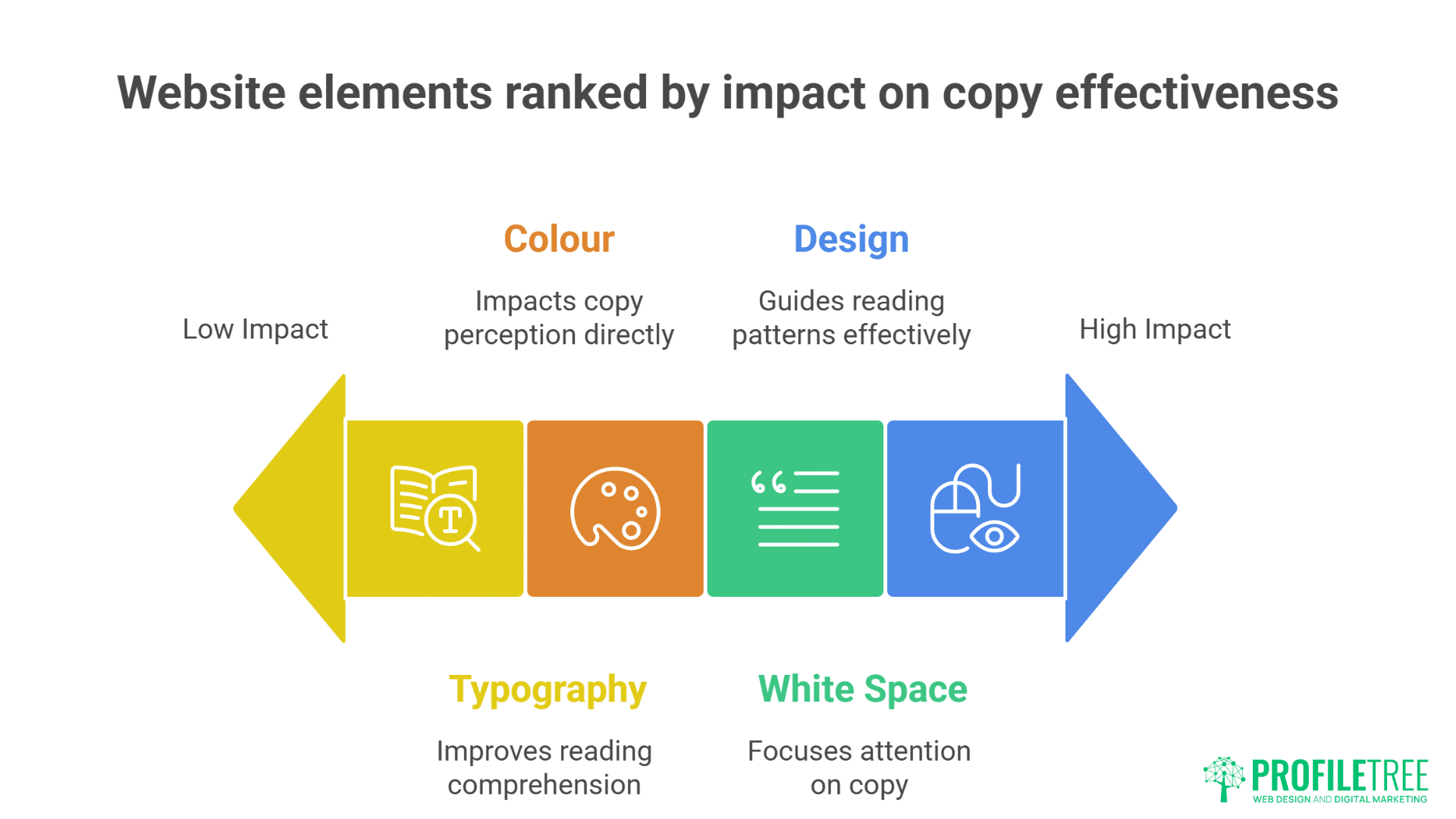
Colour psychology directly impacts copy perception. Red creates urgency that amplifies limited-time offers. Blue builds trust that supports credibility claims. Green suggests growth and prosperity for financial services. Yet 81% of websites choose colours based on brand guidelines rather than psychological impact. ProfileTree’s design services align colour choices with copy objectives, multiplying persuasive power.
Typography affects reading comprehension more than most realise. Serif fonts increase reading speed for long-form content by 7%. Sans-serif improves scanability for headlines and CTAs by 12%. Line height, letter spacing, and paragraph width all influence whether visitors read or abandon copy. Optimal typography can increase time-on-page by 45% without changing a single word.
White space, paradoxically, makes copy more powerful rather than wasting screen real estate. Increasing white space around CTAs improves conversion by 232%. Padding around value propositions increases comprehension by 34%. The absence of visual elements focuses attention on carefully chosen words. This strategic emptiness costs nothing but delivers extraordinary returns.
The Hierarchy Dance: Guiding Eyes and Minds
Visual hierarchy determines reading order whilst copy hierarchy determines importance. When these hierarchies align, visitors naturally follow intended paths toward conversion. Misalignment creates confusion that kills conversions. The largest headline must contain the most important message. The brightest button must trigger the primary action. Every variance between visual and verbal importance reduces effectiveness.
Size relationships communicate relative importance before visitors read anything. A subheading larger than the main headline confuses priority. CTAs smaller than navigation links get ignored. Body copy matching heading sizes destroys scanability. Successful websites maintain consistent size ratios: headlines 2.5x body copy, subheadings 1.5x, CTAs 1.3x minimum. These ratios guide attention naturally toward key messages.
Contrast creates emphasis that copy alone cannot achieve. Dark text on light backgrounds improves readability by 31%. High-contrast CTAs achieve 43% higher click rates. Low contrast between sections blurs boundaries and confuses structure. ProfileTree’s web development team uses contrast strategically to highlight crucial copy elements without overwhelming overall design.
Progressive disclosure through design prevents copy overload. Rather than presenting everything immediately, effective designs reveal information as visitors demonstrate interest. Expandable sections, tabbed content, and staged reveals maintain engagement whilst preventing overwhelm. Websites using progressive disclosure see 56% lower bounce rates and 34% higher conversion rates.
The position of copy within layouts affects perceived value. Content “above the fold” receives 84% of attention. Left-aligned copy gets read 38% more than centred text. Right-sidebar content gets ignored by 74% of visitors. Understanding these positional biases enables strategic placement of high-value copy where it receives maximum attention.
Animation and micro-interactions guide attention to specific copy elements. Subtle movement draws eyes naturally—a gently pulsing CTA, expanding form fields, or highlighting testimonials. But excessive animation distracts from message comprehension. The sweet spot: 2-3 subtle animations focusing attention on conversion elements without creating visual chaos.
Mobile Integration: Where Partnership Matters Most
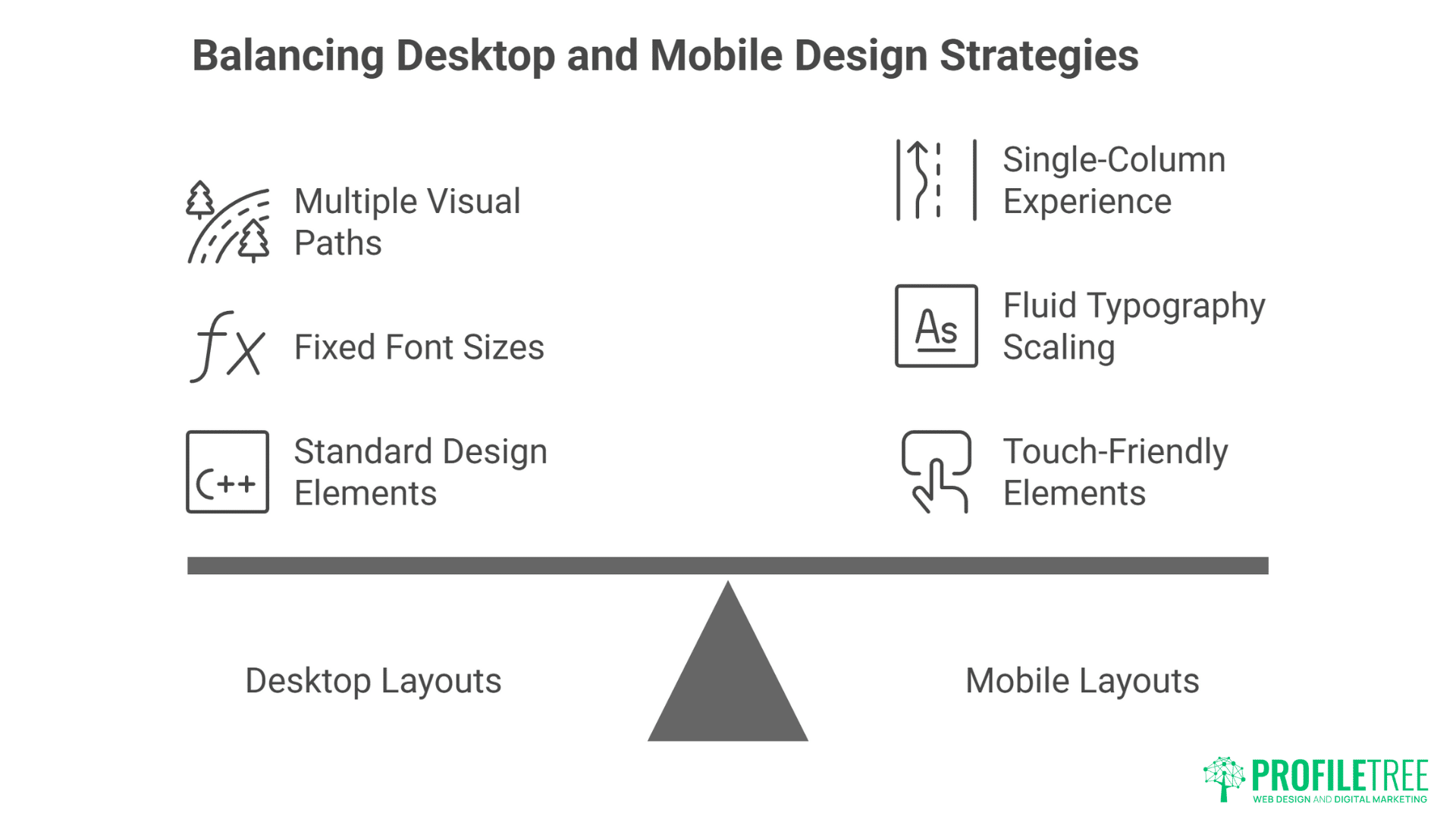
Mobile devices demand even tighter copywriting-design integration due to severe space constraints. Desktop layouts offering multiple visual paths collapse into single-column mobile experiences. Every pixel matters. Every word counts. The partnership between copy and design determines whether mobile visitors convert or abandon.
Responsive typography ensures copy remains readable across all screen sizes. Fixed font sizes that work on desktop become microscopic on mobile or grotesquely large on tablets. Fluid typography scaling with viewport width maintains optimal readability. Line lengths should never exceed 30-35 characters on mobile for comfortable reading. ProfileTree’s responsive design approach ensures perfect readability across all devices.
Touch-friendly design elements must accommodate copy requirements. Buttons need sufficient space for descriptive CTAs—”Get Your Free Audit” requires larger buttons than “Submit.” Link spacing must prevent accidental taps whilst maintaining narrative flow. Forms must balance field quantity with mobile typing frustration. Every design decision affects copy effectiveness on mobile.
Accordion menus and collapsible sections solve the mobile copy challenge elegantly. Visitors see essential information immediately whilst accessing details on demand. This approach reduces initial cognitive load whilst maintaining comprehensive information access. Mobile pages using progressive disclosure achieve 67% better engagement than those showing everything immediately.
Loading priorities must favour critical copy and conversion elements. Hero images loading before headlines frustrate visitors seeking information. Decorative elements loading before CTAs prevent conversions. Progressive enhancement ensures essential copy appears instantly whilst aesthetic elements load subsequently. This priority alignment improves mobile conversion rates by 43%.
Thumb-zone optimisation places crucial copy and CTAs within comfortable reach. The bottom third of mobile screens receives 49% more interactions than the top third. Right-handed users (90% of population) struggle with top-left elements. Successful mobile designs position value propositions in the visual centre whilst placing CTAs in the interaction sweet spot.
Conversion-Focused Design Patterns
The two-column value proposition layout maximises both visual appeal and copy effectiveness. Left column contains emotional imagery or product visualisation. Right column delivers benefit-focused copy with clear CTAs. This pattern accommodates both visual and verbal processors whilst maintaining clear hierarchy. Conversion rates average 34% higher than single-column layouts.
F-pattern layouts optimise content-heavy pages by aligning with natural scanning behaviour. Important copy placed along the top horizontal line gets maximum attention. Key points down the left vertical receive secondary focus. Less critical information fills the right space. ProfileTree’s content marketing services structure long-form content following these proven patterns.
Card-based designs excel at presenting multiple options without overwhelming visitors. Each card combines visual appeal with focused copy, creating digestible information chunks. Consistent card structures enable quick comparison whilst maintaining individual appeal. E-commerce sites using card layouts see 45% better product exploration and 23% higher add-to-cart rates.
Hero sections set the partnership tone for entire websites. The background image or video creates emotional context. Overlaid copy delivers specific value propositions. Strategic contrast ensures readability whilst maintaining visual impact. CTAs positioned at natural eye-rest points capture interest at peak engagement. This critical first impression determines whether visitors explore further or leave immediately.
Testimonial integration requires delicate balance between design appeal and copy credibility. Stylised quote designs look professional but can seem manufactured. Raw text testimonials appear authentic but lack visual interest. The solution: clean design highlighting genuine quotes with real photos and specific details. This balance increases trust by 56% compared to either extreme.
Sticky navigation and floating CTAs maintain copy context whilst enabling instant action. As visitors scroll through persuasive copy, persistent conversion opportunities remain accessible. This eliminates the frustration of searching for CTAs after being convinced. Websites with intelligent sticky elements achieve 34% higher conversion rates than static designs.
The Form Factor: Where Copy Meets Interaction
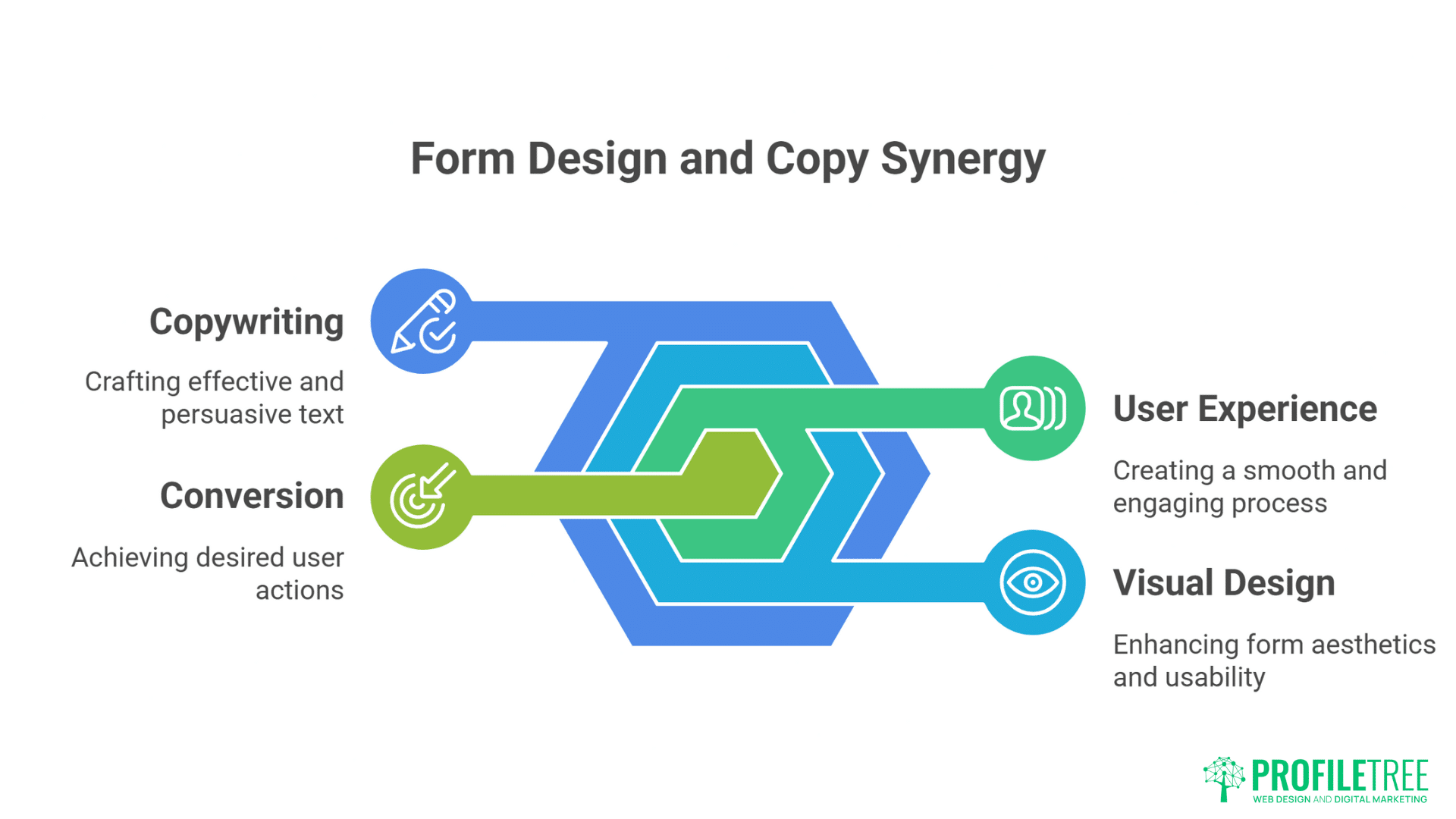
Form design represents the ultimate copywriting-design partnership test. Every field label, placeholder text, and error message requires careful copy consideration. Every visual element affects completion rates. The intersection of words and design determines whether interested visitors become actual leads.
Inline validation provides immediate feedback without disrupting flow. Green checkmarks confirm correct entries. Red highlights with specific error messages guide correction. This real-time partnership between copy and design reduces form abandonment by 42%. ProfileTree’s lead generation strategies prioritise frictionless form experiences.
Multi-step forms use design to make lengthy processes feel manageable. Progress bars show advancement. Each step focuses on specific information categories. Encouraging micro-copy celebrates progress: “Great! Just two more quick steps.” This designed journey with supportive copy achieves 73% completion rates versus 31% for single long forms.
Smart defaults and progressive profiling reduce copy requirements intelligently. Pre-filling known information, detecting location for address fields, and requesting only essential data initially respects visitor time. Optional fields clearly marked as such prevent abandonment from perceived overreach. Every field eliminated increases completion probability by 11%.
The psychology of button copy and design working together drives action. “Get Started” on a green button suggests easy beginning. “Claim Your Free Audit” on an orange button implies value and urgency. “Book Your Strategy Call” on a blue button builds trust in professional service. These partnerships between words and colours increase click rates by up to 67%.
Thank you page design often wastes conversion momentum through poor integration. After form submission, visitors remain engaged and receptive. Strategic thank you pages combining celebratory design with next-step copy capture secondary conversions. “Check your email for your free guide. Meanwhile, watch this 2-minute video about our process.” This continued partnership generates 34% additional value from existing conversions.
SEO and Design: The Technical Partnership
Search engines evaluate both design and copy when determining rankings. Page speed, mobile responsiveness, and user experience signals directly impact SEO performance. Beautiful copy on slow-loading pages ranks poorly. Optimised copy on broken designs fails users and search engines equally. ProfileTree’s SEO services ensure technical excellence supports content effectiveness.
Core Web Vitals marry design performance with user experience. Largest Contentful Paint measures how quickly main content appears. First Input Delay tracks interaction responsiveness. Cumulative Layout Shift penalises jumping content. These metrics force designers and copywriters to collaborate on lean, stable, fast experiences that serve both users and rankings.
Image optimisation balances visual quality with performance impact. Heavy hero images delay copy visibility, increasing bounce rates by 32% per second of delay. Properly compressed images maintain visual appeal whilst loading instantly. Lazy loading ensures above-fold content appears immediately whilst below-fold images load as needed. This technical partnership enables rich visual experiences without sacrificing copy effectiveness.
Schema markup bridges the gap between human-readable copy and machine understanding. Design might visually distinguish testimonials, but schema ensures search engines recognise them as reviews. Visual pricing tables look clear to humans, but structured data helps search engines understand offerings. This invisible partnership improves rich snippet appearances by 67%.
Internal linking requires both navigational design and contextual copy integration. Navigation menus provide structural linking whilst in-content links offer contextual connections. Breadcrumbs combine wayfinding design with keyword-rich anchor text. ProfileTree’s technical SEO audits identify opportunities where design and copy can better support search visibility.
Mobile-first indexing makes responsive design inseparable from SEO success. Google primarily evaluates mobile versions of websites. If mobile design compromises copy visibility or readability, rankings suffer regardless of desktop excellence. This reality forces absolute integration between mobile design decisions and copy optimisation strategies.
Video Integration: The Multimedia Partnership
Video content creates unique opportunities for copy-design synergy. Text overlays, captions, and supporting copy multiply video impact whilst design frames and contextualises visual content. When executed strategically, video integration increases page value, engagement time, and conversion rates simultaneously.
Video transcripts serve multiple partnership purposes. They provide accessibility for hearing-impaired visitors. Search engines index transcript copy for SEO benefit. Visitors can scan text when unable to watch videos. Design must elegantly incorporate transcripts without cluttering pages—expandable sections below videos work perfectly.
Video thumbnails act as visual headlines that determine click rates. Custom thumbnails combining compelling imagery with text overlays achieve 34% higher play rates than auto-generated frames. The partnership between thumbnail design and overlay copy creates micro-conversions that lead to macro-conversions. ProfileTree’s video production services create thumbnails that compel clicks.
Call-to-action overlays within videos bridge content consumption and conversion action. YouTube cards, end screens, and embedded CTAs maintain momentum from video engagement. The timing, design, and copy of these elements determine whether viewers become leads. Videos with strategic CTAs generate 380% more conversions than those without.
Supporting copy around videos provides context that video alone cannot. Pre-video copy sets expectations and builds anticipation. Post-video copy reinforces key messages and provides next steps. Sidebar copy offers additional resources. This textual framework multiplies video value whilst improving SEO through relevant content.
Animated text and kinetic typography merge motion design with copywriting for maximum impact. Key messages animated in sync with voiceover increase retention by 42%. Statistics appearing as motion graphics feel more credible than static numbers. This dynamic partnership creates memorable experiences that static designs cannot match.
Landing Page Perfection: Integration in Action
Landing pages represent the purest expression of copy-design partnership. Without navigation distractions or multiple objectives, every element focuses on single conversion goals. The success or failure of landing pages directly correlates with integration quality between persuasive copy and conversion-focused design.
Message match between ad copy and landing page design prevents cognitive dissonance. If ads promise “Free SEO Audit,” landing pages must immediately reinforce this offer visually and verbally. Mismatched messages increase bounce rates by 73%. ProfileTree’s PPC services ensure perfect continuity from click to conversion.
The hero section blueprint for high-converting landing pages follows predictable patterns. Compelling headline stating primary benefit. Supporting subheadline expanding on the promise. Visual proof through imagery or video. Trust indicators like testimonials or logos. Clear, contrasting CTA above the fold. This formula, refined through millions of tests, consistently delivers superior results.
Social proof integration requires sophisticated design treatment of copy elements. Testimonials need visual prominence without overwhelming main messages. Trust badges must build credibility without cluttering designs. Case study statistics require graphical treatment for impact. The partnership between proof copy and design treatment determines persuasive power.
Scarcity and urgency elements demand careful balance between effectiveness and authenticity. Countdown timers create temporal pressure. Limited quantity indicators suggest exclusivity. Design must make these elements noticeable without appearing manipulative. Copy must justify scarcity genuinely. This delicate partnership influences conversion psychology significantly.
Form optimisation on landing pages requires extreme copy-design integration. Every unnecessary field reduces conversions. Every confusing label creates friction. Design must make forms appear simple whilst copy clarifies exactly what visitors receive in exchange for information. Landing pages perfecting this balance achieve 67% higher conversion rates.
The Storytelling Symphony
Visual storytelling through design progression partners with narrative copy to create engaging journeys. Rather than presenting all information simultaneously, effective websites reveal stories progressively. Each scroll unveils new chapters. Design transitions guide emotional arcs whilst copy provides narrative substance.
Case study presentation showcases perfect partnership potential. Design creates visual timeline of client journey. Copy provides specific details and outcomes. Before-and-after imagery demonstrates transformation. Pull quotes highlight key victories. Data visualisations make results tangible. This multi-layered approach increases case study engagement by 340%.
About pages blend company story with visual journey effectively. Timeline designs show company evolution. Team photos humanise the business. Office imagery builds transparency. Meanwhile, copy provides personality, values, and differentiation. ProfileTree’s approach demonstrates how design and copy together build trust and connection.
Product storytelling transforms features into experiences through integrated presentation. Instead of listing specifications, design visualises benefits whilst copy explains value. Lifestyle imagery shows products in use. Infographics simplify complex features. Interactive elements let visitors explore at their pace. This partnership increases product page conversion by 45%.
Customer journey visualisation helps visitors see themselves succeeding. Design maps the path from problem to solution. Copy describes each stage specifically. Visual metaphors make abstract concepts concrete. Progress indicators show advancement toward goals. This partnership reduces anxiety about complex purchases whilst building excitement about outcomes.
Brand personality emerges through consistent copy-design partnership across all touchpoints. Playful brands use bright colours and casual copy. Professional services combine conservative design with authoritative copy. The alignment between visual and verbal personality creates authentic connections that transcend individual transactions.
Accessibility: The Inclusive Partnership
Accessible design ensures copy reaches every potential customer. Screen readers, keyboard navigation, and visual accommodations expand audience reach whilst improving usability for everyone. The partnership between accessible design and clear copy creates inclusive experiences that serve diverse needs.
Alt text represents the most direct copy-design partnership for accessibility. Every image requires descriptive text that conveys both content and function. Decorative images need empty alt attributes. Informative images require detailed descriptions. This invisible copy ensures visual content doesn’t exclude vision-impaired visitors.
Colour contrast requirements force thoughtful design decisions that improve copy readability universally. WCAG AA standards requiring 4.5:1 contrast ratios ensure text remains readable in bright sunlight or dim environments. High contrast benefits aging eyes and reduces eye strain for everyone. ProfileTree’s accessibility audits ensure compliance whilst maintaining aesthetic appeal.
Heading structure provides both visual and semantic organisation. Screen readers use heading tags for navigation. Search engines analyse heading hierarchy for content understanding. Visual users scan headings for quick comprehension. This triple purpose requires careful coordination between design prominence and semantic accuracy.
Focus indicators and keyboard navigation demand design attention often overlooked. Every interactive element needs visible focus states. Tab order must follow logical reading flow. Skip links help keyboard users bypass repetitive navigation. These technical requirements, when designed thoughtfully, improve usability for all visitors.
Captions and transcripts extend video content to hearing-impaired audiences whilst benefiting everyone. Captions help in noisy environments or quiet spaces. Transcripts enable quick scanning of video content. Search engines index text for better visibility. This accessibility requirement multiplies content value when implemented strategically.
Measuring Partnership Success
Analytics reveal whether copy-design partnership achieves intended outcomes. Heat maps show if visual hierarchy guides attention to key copy. Scroll depth indicates if design maintains engagement through content. Click maps reveal if CTAs positioned effectively capture interest. Data transforms partnership from art to science.
A/B testing isolates variables to identify optimal partnerships. Testing headline copy with consistent design reveals message effectiveness. Testing design layouts with consistent copy shows visual impact. Testing integrated changes measures partnership synergy. ProfileTree’s conversion optimisation services use systematic testing to maximise partnership performance.
Conversion attribution across touchpoints reveals partnership impact throughout customer journeys. First-touch attribution credits awareness creation. Last-touch identifies closing power. Multi-touch modelling shows how repeated exposure to integrated messages builds toward conversion. Understanding attribution guides resource allocation between design and copy investments.
User feedback provides qualitative insights that quantitative metrics miss. Survey responses reveal whether messages resonate. User testing identifies confusion points. Session recordings show real behaviour patterns. This human insight guides partnership refinement beyond what data alone suggests.
Performance metrics must evaluate both elements equally. Beautiful designs with poor copy waste visual investment. Compelling copy with poor design wastes messaging power. Success requires excellence in both disciplines working together. Businesses achieving this balance see average conversion improvements of 340%.
Return on investment calculations must consider partnership multiplier effects. Investing £5,000 in copy alone might improve conversions 50%. Investing £5,000 in design alone might improve conversions 60%. But investing £5,000 in integrated copy-design partnerships typically improves conversions 200-300% through synergistic effects.
Industry Applications and Examples
E-commerce websites demonstrate partnership power through product page optimisation. High-quality product photography provides visual appeal. Benefit-focused descriptions explain value. Size guides and specifications answer practical questions. Customer reviews provide social proof. Add-to-cart buttons positioned strategically capture purchase intent. This integration increases average order value by 43%.
B2B service websites require sophisticated partnership approaches. Professional design builds credibility. Educational copy demonstrates expertise. Case studies combine visual proof with detailed outcomes. Lead magnets offer value in exchange for contact information. ProfileTree’s B2B website solutions balance professionalism with persuasion effectively.
SaaS platforms use partnership to simplify complex offerings. Interactive demos visualise functionality. Feature comparison tables clarify options. Pricing calculators help decision-making. Free trial CTAs reduce commitment anxiety. This integrated approach reduces sales cycle length by 34% on average.
Professional services websites build trust through conservative design paired with authoritative copy. Clean layouts suggest organisation. Expert articles demonstrate knowledge. Team profiles humanise the firm. Contact forms positioned prominently capture enquiries. This partnership approach generates 67% more qualified leads than template websites.
Non-profit websites leverage emotional design with compelling storytelling. Impact imagery creates emotional connection. Donation stories show specific outcomes. Progress bars visualise campaign goals. Recurring donation options simplify giving. This partnership increases average donation size by 45% and donor retention by 31%.
Educational institutions use partnership to attract and convert prospective students. Campus imagery sells the experience. Course descriptions explain outcomes. Student testimonials provide peer validation. Application CTAs positioned strategically capture interest at peak engagement. This integration improves application rates by 34%.
Tools and Technologies for Integration
Design systems ensure consistent partnership across large websites. Component libraries standardise copy-design relationships. Style guides document voice and visual standards. Pattern libraries provide tested solutions. These systems reduce development time whilst maintaining quality. ProfileTree’s design systems scale excellence across entire websites.
Content management systems must support flexible copy-design integration. WordPress’s Gutenberg blocks enable visual content creation. Shopify’s sections allow modular design updates. Custom fields separate content from presentation. These capabilities enable non-technical users to maintain partnership quality.
Collaboration tools facilitate partnership between copywriters and designers. Figma enables copy editing within designs. Google Docs allows collaborative writing. Slack facilitates rapid feedback. Version control prevents confusion. Project management ensures alignment. These tools transform partnership from sequential to simultaneous.
Testing platforms reveal partnership performance objectively. Google Optimise enables A/B testing. Hotjar provides behavioural insights. Crazy Egg shows interaction patterns. These tools guide optimisation decisions based on actual user behaviour rather than assumptions.
AI tools increasingly support copy-design partnership. Copy.ai generates headline variations. Canva suggests design layouts. Grammarly ensures copy clarity. These tools augment human creativity rather than replacing strategic thinking. ProfileTree’s AI training services help businesses leverage these tools effectively.
Performance monitoring ensures partnership remains effective over time. Google Analytics tracks conversion paths. PageSpeed Insights measures technical performance. Search Console monitors SEO impact. Regular monitoring identifies degradation before it impacts business outcomes.
Future Evolution of Partnership
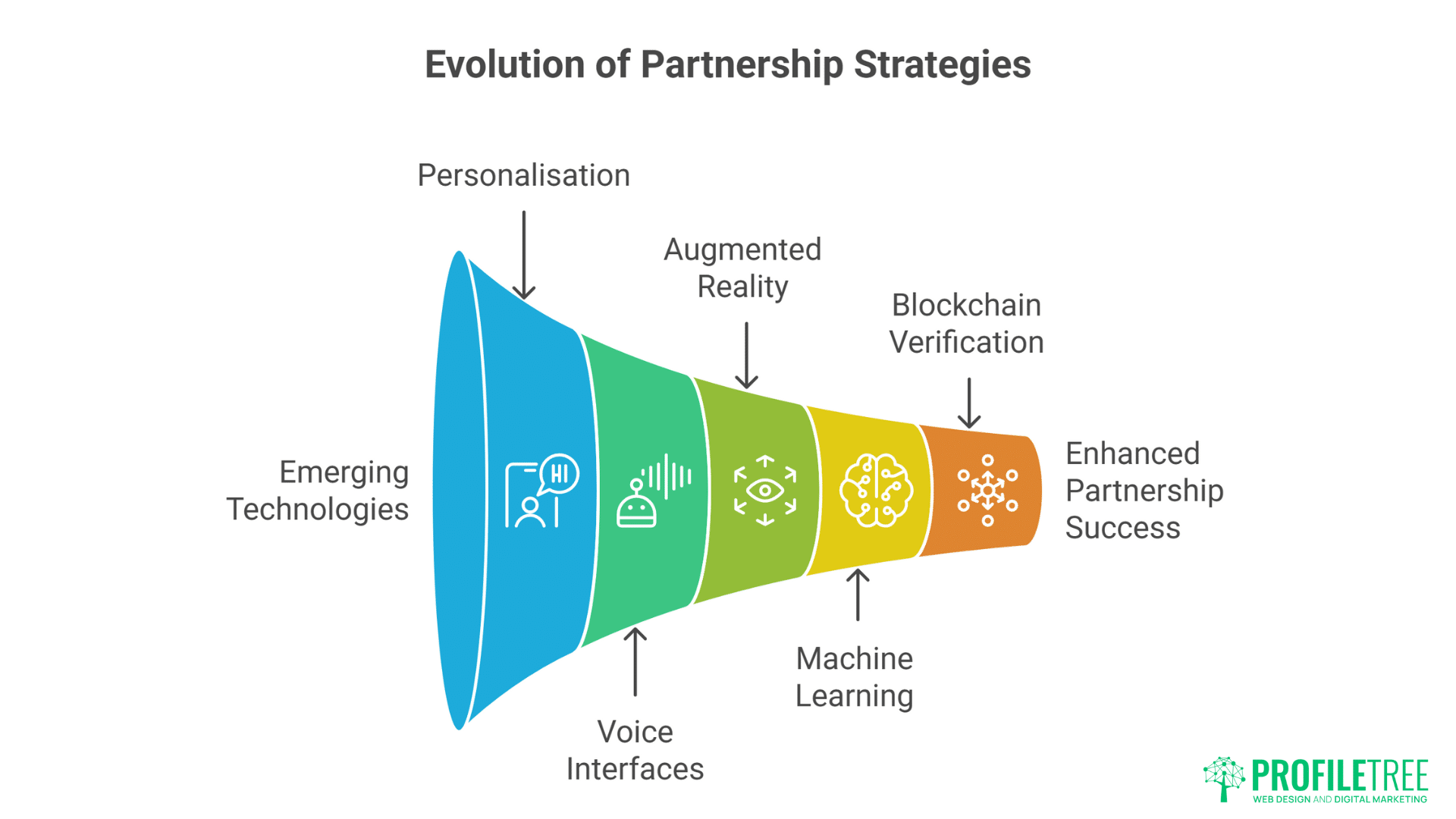
Personalisation technology will enable dynamic copy-design partnerships adapting to individual visitors. AI will adjust messaging based on behaviour patterns. Design elements will reorganise based on preferences. This evolution will multiply conversion rates through perfect individual relevance.
Voice interfaces require new partnership paradigms. Conversational copy must work without visual support. Audio branding replaces visual identity. Multimodal experiences blend voice, visual, and text seamlessly. Early adopters of voice-optimised partnerships will capture emerging opportunities.
Augmented reality merges physical and digital experiences requiring unprecedented integration. Virtual showrooms combine spatial design with informational overlays. Product visualisations blend real environments with digital information. This technology demands entirely new partnership approaches.
Machine learning optimises partnerships automatically through continuous testing. Algorithms identify optimal copy-design combinations. Predictive models forecast partnership performance. Automated optimisation improves results continuously. This technology democratises sophisticated partnership strategies.
Blockchain verification may authenticate human-created partnerships as AI-generated content proliferates. Verified human copy and design could command premium value. Authenticity will become a differentiator. The partnership between human creativity and technological capability will define success.
Implementation Roadmap
Week 1-2: Audit current copy-design relationship identifying misalignments. Document where design undermines copy effectiveness. Note where copy fails to support design objectives. This baseline assessment guides improvement priorities.
Week 3-4: Align teams around partnership principles. Educate designers about copy requirements. Train copywriters on design constraints. Establish collaboration protocols. Create shared success metrics. ProfileTree’s team training accelerates partnership development.
Week 5-6: Develop integrated style guides covering both disciplines. Document voice and tone standards. Define visual hierarchy principles. Create component libraries. Establish testing protocols. These foundations ensure consistent partnership quality.
Week 7-8: Redesign high-impact pages using partnership principles. Start with homepage or primary landing pages. Apply learnings to product or service pages. Test integrated improvements. Measure performance changes. Quick wins fund broader transformation.
Week 9-10: Expand partnership approach across entire website. Update templates maintaining consistency. Train content creators on partnership principles. Implement quality control processes. Monitor performance metrics. Systematic expansion ensures sustainable improvement.
Week 11-12: Establish continuous optimisation processes. Schedule regular partnership reviews. Implement testing programmes. Create feedback loops. Plan quarterly updates. Continuous improvement maintains competitive advantage as markets evolve.
Conclusion: The Partnership Imperative
The evidence overwhelmingly demonstrates that copywriting and web design must work in harmony for digital success. Separation of these disciplines creates friction that kills conversions. Integration multiplies the power of both, creating experiences that engage, persuade, and convert at rates impossible through isolation.
The partnership between words and visuals reflects deeper business truth: success requires integration across all disciplines. Marketing and sales must align. Technology and creativity must collaborate. Strategy and execution must synchronise. The copy-design partnership exemplifies broader organisational integration requirements.
Modern consumers expect seamless experiences where every element reinforces core messages. They notice misalignment between visual promises and verbal delivery. They abandon websites where design and copy work against each other. But they reward businesses that deliver integrated excellence with loyalty and advocacy.
As Ciaran Connolly, ProfileTree founder, states: “Great design makes people want to read your copy. Great copy makes people want to take action. When both work together perfectly, websites stop being expenses and become investments that generate predictable, scalable returns.”
The framework, strategies, and examples presented provide clear pathways to partnership excellence. Whether building new websites or optimising existing ones, the principles remain consistent: align visual and verbal hierarchies, ensure mutual reinforcement, test integrated solutions, and maintain partnership quality through growth.
Your competitors are discovering partnership power. Visitors expect integrated excellence. The opportunity to multiply conversion rates through copy-design partnership exists right now. Contact ProfileTree to transform your website from disconnected elements into an integrated conversion system that drives measurable business growth. The partnership between copywriting and web design isn’t just nice to have—it’s essential for digital success.
FAQs
Should we hire separate copywriters and designers or integrated teams?
Integrated teams deliver 43% better results through natural collaboration. However, specialists working closely together outperform generalists attempting both disciplines. The key is structured collaboration rather than combined roles. Regular partnership meetings, shared briefs, and joint reviews ensure integration regardless of team structure.
How much should we invest in copy versus design?
Successful websites typically invest 40% in design, 35% in copy, and 25% in technical implementation. However, current weaknesses should guide allocation. If copy converts poorly, prioritise messaging. If design looks dated, prioritise visual updates. The partnership requires both elements performing well, so address weakest links first.
Can we update copy without redesigning, or vice versa?
Isolated updates deliver 30-40% of potential improvement. Copy updates within existing design constraints help but limit possibilities. Design updates without copy refinement look better but may not convert better. Integrated updates deliver 200-300% better results through synergistic improvements.
How do we maintain partnership quality as websites grow?
Design systems and content guidelines scale partnership quality. Component libraries ensure consistent relationships. Editorial calendars coordinate updates. Regular audits identify drift. ProfileTree’s maintenance services ensure partnership quality persists through growth and change.
What metrics best measure partnership effectiveness?
Micro-conversions reveal partnership performance throughout user journeys. Engagement metrics show if design maintains interest through copy. Conversion rates measure ultimate effectiveness. But qualitative feedback often reveals partnership issues that metrics miss. Combine quantitative and qualitative measures for complete understanding.
When should we completely rebuild versus iteratively improve?
If current partnership misalignment exceeds 60%, rebuilding delivers better ROI. If foundations are sound with specific weaknesses, iterative improvement works well. Most websites benefit from phased approaches: fix critical issues immediately, plan systematic improvements, rebuild when technology or strategy shifts fundamentally.