
Mastering Digital Skills for Personal Development: UK Guide
Table of Contents
Personal development refers to the continuous process of improving oneself through purposeful effort and expanding capabilities and potential. In our increasingly connected world, digital skills have become fundamental to this journey. Personal development encompasses building valuable life skills, setting and achieving measurable goals, gaining knowledge about your strengths and weaknesses, improving behaviours and habits, and building self-confidence and esteem.
Digital skills add a crucial dimension to personal development, enabling more efficient learning, better communication, and access to opportunities that weren’t previously possible. Whether you’re looking to advance your career, pursue personal interests, or simply navigate modern life more effectively, developing your digital capabilities is now an essential component of personal growth.
Digital skills development isn’t merely about technical proficiency – it’s about empowering individuals to thrive in an increasingly connected world. When approached strategically, these skills transform both personal and professional capabilities, creating a foundation for continuous growth and adaptation,” explains Ciaran Connolly, Director of ProfileTree.
Why Digital Skills Matter for Personal Development
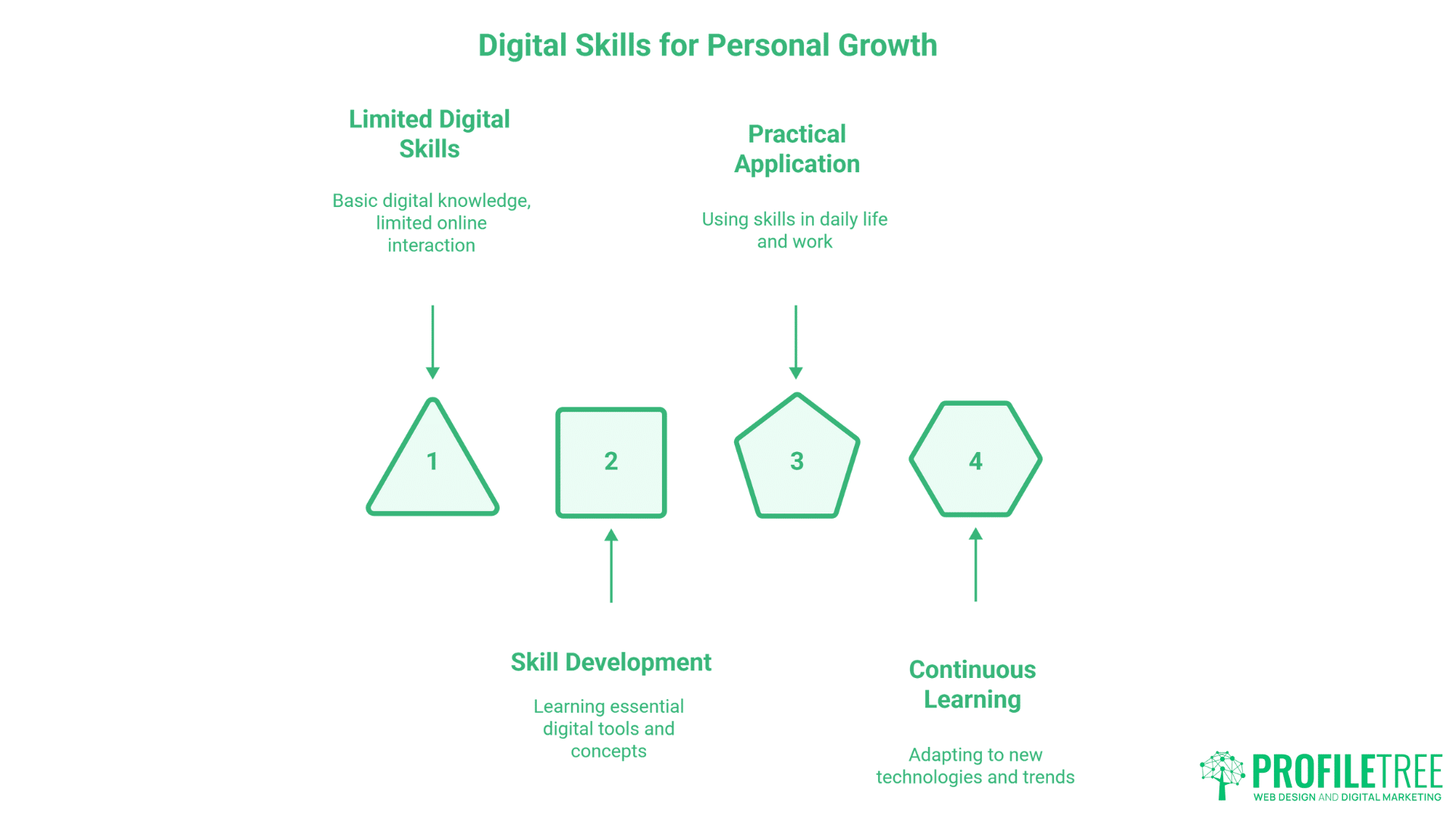
The importance of digital skills transcends mere technical knowledge; they’ve become integral to how we learn, work, connect, and solve problems in modern society. Developing these skills doesn’t just improve employability – it fundamentally enhances quality of life and personal agency.
Navigating Modern Life Beyond the Workplace
In the UK today, digital skills touch nearly every aspect of daily life. From managing personal finances through banking apps to booking NHS appointments online, these capabilities determine how efficiently and confidently we handle everyday tasks. Consider how digital skills impact:
Personal Finance Management: Understanding secure digital banking, budgeting apps, and online investment platforms helps you take greater control of your financial well-being. The ability to confidently manage finances online reduces stress and creates opportunities for better financial planning.
Health and Wellness: From NHS apps to fitness trackers, digital tools provide unprecedented access to health information and personal data. Digital literacy enables you to discern credible health resources from misinformation, potentially making better healthcare decisions.
Public Services: As UK government services increasingly adopt “digital by default” approaches, those with stronger digital skills can access support, information, and services more readily. This includes everything from council tax payments to accessing government support programmes.
Home and Lifestyle: Smart home technologies, online shopping, entertainment streaming, and communication tools all require digital competence to utilise fully. These tools can significantly improve quality of life when used effectively.
The Employability Advantage
While personal development extends beyond career considerations, there’s no denying the powerful impact digital skills have on professional prospects. According to research from the Confederation of British Industry (CBI), up to 82% of UK jobs require some form of digital skills, and this percentage continues to grow annually.
Developing digital capabilities opens doors to:
- Wider job opportunities across diverse sectors
- Higher earning potential (with digitally skilled workers earning up to 29% more on average)
- Greater job security in an evolving marketplace
- More flexible work arrangements, including remote and hybrid options
Continuous Learning and Adaptability
Perhaps most importantly, digital skills foster a mindset of continuous learning. The digital landscape evolves rapidly, creating both challenges and opportunities. By developing your digital capabilities, you’re not just learning specific tools – you’re building the adaptability and resilience needed to navigate ongoing technological change.
This adaptive mindset becomes a powerful personal development asset, transferring to other areas of life and creating a virtuous cycle of growth and learning. Digital skills help you become more resourceful, confident in problem-solving, and comfortable with continuous improvement.
Essential Digital Skills for Personal Growth

Developing your digital capabilities requires understanding which skills offer the most significant benefits for personal growth. These skills range from foundational digital literacy to more specialised capabilities that can dramatically enhance your personal effectiveness.
Foundational Digital Literacy
These fundamental skills form the bedrock of digital competence and serve as prerequisites for more advanced capabilities:
Device and System Navigation: Confidently using computers, smartphones, tablets, and their operating systems without frustration or anxiety.
Internet Browsing and Search: Effectively finding information online using search engines, understanding search results, and navigating websites securely.
Basic Software Usage: Comfortable use of common applications such as word processors, spreadsheets, and presentation software for personal organisation and productivity.
Digital Security Awareness: Understanding the basics of online safety, including password management, recognising phishing attempts, and protecting personal information.
Building these foundational skills eliminates the friction and anxiety many people experience with technology, creating confidence for further digital exploration.
Communication and Collaboration Tools
Digital communication skills significantly expand your personal and professional networks while enabling more efficient collaboration:
Email Management: Beyond basic email use, developing skills in email organisation, effective communication, and time management through email systems.
Video Conferencing: Setting up and participating in video calls confidently, understanding etiquette and features like screen sharing.
Messaging Platforms: Effectively using WhatsApp, Messenger, Slack, Microsoft Teams and other platforms for different communication contexts.
Social Media Literacy: Understanding how different social platforms work, their cultures, privacy settings, and how to engage constructively while maintaining well-being.
These skills have become essential for maintaining connections, accessing support networks, and engaging with communities that align with your personal development goals.
Information and Media Literacy
In an era of information abundance, these critical skills help you navigate content effectively:
Critical Evaluation: Assessing the credibility and relevance of online information sources through verification techniques.
Data Privacy Understanding: Comprehending how personal data is collected and used online, and how to manage your digital footprint.
Media Consumption: Skills for effective consumption of digital media, including podcasts, videos, and interactive content for learning.
Fake News Identification: Recognising misinformation and disinformation strategies to make better-informed decisions.
These capabilities help protect you from manipulation while enabling you to harness digital information for personal growth.
Digital Content Creation
Creating digital content builds confidence, enables self-expression, and opens opportunities for sharing knowledge:
Basic Graphic Design: Using accessible tools like Canva to create visual content for personal projects or communication.
Video and Audio Production: Creating simple videos or audio recordings using smartphone apps or basic software.
Blogging and Writing Tools: Using platforms for written expression, whether for personal reflection or knowledge sharing.
Photography Skills: Capturing, editing, and organising digital images effectively.
Content creation skills transform you from a passive consumer to an active participant in digital spaces, fostering creativity and confidence.
Problem-Solving with Digital Tools
These skills help you approach challenges more effectively in both personal and professional contexts:
Online Research: Finding solutions through targeted online searches, forums, and knowledge bases.
Productivity Apps: Using digital tools to manage time, tasks, and personal projects more efficiently.
Basic Automation: Understanding simple automation concepts to streamline repetitive tasks.
Troubleshooting: Developing a methodical approach to solving common technical problems without immediate assistance.
Problem-solving skills with digital tools create greater self-sufficiency and confidence when facing challenges of all kinds.
Digital Well-being and Security
These increasingly crucial skills help maintain balance and safety in your digital life:
Screen Time Management: Strategies for healthy technology use that support rather than detract from well-being.
Cybersecurity Practices: Beyond basics, developing habits that protect your digital identity and personal information.
Online Privacy Management: Controlling personal data sharing across platforms and services.
Digital Detox Techniques: Methods for intentional disconnection to support mental health and focus.
Mastering these skills ensures that technology enhances rather than diminishes your quality of life and personal development journey.
Assessing Your Skills and Creating a Development Plan

Effective digital skills development begins with honest self-assessment and strategic planning. This structured approach ensures your efforts align with personal goals and produce meaningful improvements.
Evaluating Your Current Digital Competence
Before embarking on skill development, take time to assess your current capabilities:
Self-Assessment Approach:
- Reflect on your comfort level with different digital technologies
- Identify specific tasks that cause frustration or anxiety
- Consider the feedback you’ve received about your digital capabilities
- Note areas where you feel confident versus those where you struggle
Competency Framework: Consider using established frameworks such as the UK Essential Digital Skills Framework, which outlines capabilities across different domains:
- Communicating
- Handling information and content
- Transacting
- Problem-solving
- Being safe and legal online
Rate yourself honestly in each area to identify patterns of strengths and development needs.
Connecting Skills to Personal Development Goals
Digital skill development becomes more meaningful when connected to broader personal goals:
Career Advancement: Identify specific digital skills that could enhance your professional prospects or enable career pivots.
Personal Interests: Consider digital capabilities that would deepen engagement with hobbies, creative pursuits, or learning interests.
Life Management: Focus on skills that would simplify daily tasks, improve organisation, or save time.
Connection and Community: Prioritise skills that would strengthen relationships or community involvement.
By linking skill development to meaningful outcomes, you create stronger motivation and clearer direction for your learning path.
Creating Your Digital Skills Development Plan
With assessment complete and goals clarified, create a structured development plan:
SMART Goals Framework:
- Specific: Target precise skills rather than general improvement
- Measurable: Define clear indicators of progress
- Achievable: Set realistic expectations given your starting point
- Relevant: Ensure skills align with your broader goals
- Time-bound: Establish deadlines for development milestones
Resource Identification: Research appropriate learning resources for your chosen skills, considering:
- Online courses (free options like FutureLearn or paid platforms)
- UK-specific resources (such as Learn My Way or Digital Unite)
- Local workshops or classes
- Books or structured guides
- Mentorship opportunities
Learning Schedule: Develop a realistic timetable that:
- Allocates specific time blocks for skill development
- Incorporates both learning and practical application
- Allows for regular review and adjustment
- Considers your personal energy levels and availability
A well-structured plan transforms vague intentions into actionable steps, dramatically increasing your chances of meaningful progress.
The Seven Key Steps to Digital Skills Development
Developing digital skills effectively follows a process similar to other forms of personal development, but with some unique considerations. These seven steps provide a framework for sustainable skill building that leads to lasting capability improvement.
1. Start with Purpose and Motivation
Begin your digital skills journey with clarity about why these capabilities matter to you personally:
Identify Meaningful Benefits:
- How will these skills make daily life easier or more efficient?
- What new opportunities might they create for you?
- Which frustrations or limitations will they help overcome?
Connect with Core Values: Link skill development to your personal values, such as:
- Independence and self-reliance
- Continuous growth and learning
- Connection with others
- Professional excellence or creativity
“Finding your ‘why’ is crucial for sustaining digital skills development. When people connect technical capabilities to personal meaning – whether that’s staying connected with grandchildren or pursuing a passion project – their motivation becomes much more resilient,” notes Ciaran Connolly of ProfileTree.
Maintaining this connection to purpose helps overcome the inevitable challenges and frustrations that arise during learning.
2. Embrace a Growth Mindset
Your attitude toward learning significantly impacts success with digital skills:
Cultivate Key Beliefs:
- Skills are developed through effort, not innate talent
- Mistakes and struggles are valuable learning opportunities
- Your capabilities can expand with practice and persistence
- Age is not a barrier to developing digital proficiency
Challenge Common Misconceptions:
- “I’m too old to learn this” → “People of all ages successfully develop digital skills”
- “I’m not a technical person” → “Technical capability is built, not born”
- “I’ll break something if I try” → “Experimentation is how we learn”
A growth mindset transforms obstacles from discouraging barriers into interesting challenges to overcome, creating resilience throughout your learning journey.
3. Create a Supportive Learning Environment
Your learning context significantly influences progress:
Physical Environment:
- Ensure a comfortable, ergonomic setup for device use
- Minimise distractions during learning sessions
- Have necessary resources easily accessible
- Consider lighting and comfort for reduced eye strain
Social Support:
- Identify a “learning buddy” for mutual encouragement
- Join online communities focused on digital skills development
- Consider finding a mentor with patience and expertise
- Share your goals with supportive friends or family
Technical Setup:
- Ensure a reliable internet connection
- Update devices and software appropriately
- Consider using learning-specific accounts for experimentation
- Install helpful learning tools or browser extensions
Creating an environment conducive to learning reduces friction and increases the likelihood of consistent practice.
4. Take a Structured, Incremental Approach
Digital skills development works best when approached methodically:
Break Skills into Components:
- Divide complex skills into smaller, manageable sub-skills
- Master fundamentals before advancing to more complex applications
- Identify logical skill sequences that build upon each other
Follow the 80/20 Principle:
- Focus first on the 20% of capabilities that deliver 80% of value
- Prioritise commonly-used functions over obscure features
- Learn core principles that transfer across multiple applications
Build Through Progressive Challenges:
- Start with basic tasks that ensure early success
- Gradually increase complexity as confidence grows
- Set mini-milestones to track progress and maintain motivation
This incremental approach prevents overwhelm while creating a strong foundation for advanced capabilities.
5. Emphasise Practical Application
Theory alone rarely develops true digital proficiency:
Apply Skills to Real Situations:
- Create personal projects that utilise new capabilities
- Look for opportunities to apply skills in daily life
- Solve actual problems rather than hypothetical scenarios
Create Learning Projects: Examples might include:
- Building a personal budget spreadsheet
- Creating a photo album for family memories
- Setting up a calendar system for better time management
- Researching and planning a holiday entirely online
Implement Regular Practice:
- Schedule short, frequent practice sessions
- Create “deliberate practice” focusing on challenging aspects
- Establish habits that incorporate new skills into daily routines
Practical application cements learning and reveals nuances that theoretical knowledge alone cannot provide.
6. Learn from Setbacks Constructively
Challenges and mistakes offer valuable learning opportunities:
Develop Troubleshooting Skills:
- Learn to search effectively for solutions to problems
- Keep notes on issues encountered and their resolutions
- Identify patterns in mistakes to prevent recurrence
Maintain Perspective:
- Remember that everyone encounters difficulties with technology
- View errors as learning data rather than personal failures
- Celebrate progress rather than focusing solely on setbacks
Seek Help Appropriately:
- Know when to persist versus when to ask for assistance
- Learn to describe problems specifically when seeking help
- Utilise online forums, support resources, and knowledgeable contacts
A constructive approach to setbacks transforms frustration into valuable learning experiences that actually accelerate development.
7. Reflect and Adapt Your Approach
Regular reflection enhances learning effectiveness:
Schedule Review Sessions:
- Periodically assess progress against goals
- Identify which learning methods are most effective for you
- Adjust plans based on changing needs or interests
Document Your Journey:
- Keep notes on key learnings and breakthroughs
- Record useful resources for future reference
- Track questions that arise for further investigation
Celebrate Achievements:
- Acknowledge milestones reached, no matter how small
- Share successes with your support network
- Recognise the broader impact of your developing capabilities
This reflective practice ensures your development remains aligned with your goals and leverages your personal learning style for maximum effectiveness.
Future-Proofing Your Digital Skills
As technology continues to evolve rapidly, developing an approach to ongoing skill development becomes as important as mastering current capabilities.
Developing Digital Adaptability
Rather than focusing solely on specific tools, cultivate adaptability:
Cross-Platform Thinking:
- Learn underlying principles that transfer between applications
- Focus on understanding why features work rather than just how
- Practice using new interfaces to build confidence with change
Identify Core Capabilities: Some fundamental skills remain valuable regardless of technological shifts:
- Critical information evaluation
- Systematic problem-solving approaches
- Effective digital communication
- Data organisation and retrieval
Cultivate Technical Curiosity:
- Follow technology news relevant to your interests
- Experiment with new tools in low-pressure contexts
- Question how technologies might evolve in the future
Building adaptability creates resilience against the inevitable changes in the digital landscape.
Emerging Digital Skills Worth Developing
While specific tools change, several skill areas show enduring and growing importance:
AI Literacy and Interaction:
- Understanding artificial intelligence capabilities and limitations
- Learning effective prompting for AI tools
- Developing judgment about an appropriate AI application
- Ethical considerations in AI use
Data Interpretation:
- Basic data analysis and visualisation
- Critical evaluation of statistics and data claims
- Personal data management and privacy protection
- Using data for informed decision-making
Digital Collaboration:
- Effective asynchronous communication
- Remote work and collaboration tools
- Digital project management capabilities
- Cross-cultural digital communication competence
Cybersecurity Awareness:
- Evolving threat recognition
- Personal data protection strategies
- Secure online behaviour habits
- Digital identity management
Focusing development efforts in these areas creates valuable capabilities with long-term relevance.
Creating a Continuous Learning Practice
Establish sustainable habits for ongoing digital skill development:
Information Sources: Identify reliable resources for staying informed:
- Technology news sites relevant to your interests
- Trusted YouTube channels or podcasts
- Professional organisations or community groups
- Online learning platforms with updated content
Learning Community:
- Join online forums or local groups focused on digital skills
- Participate in webinars or virtual meetups
- Consider mentoring others as a way to deepen your own learning
- Share resources and discoveries with your network
Reflection Rituals:
- Schedule quarterly reviews of your digital capabilities
- Identify emerging technologies relevant to your goals
- Assess which skills need refreshing or updating
- Adjust learning priorities based on technological trends
Establishing these practices ensures your digital capabilities remain relevant and valuable as technology continues to evolve.
How Professional Support Accelerates Digital Skills Development
While self-directed learning is valuable, professional guidance can significantly accelerate and deepen skill development.
The Value of Structured Digital Training
Formal training offers distinct advantages for digital skills development:
Expert Curriculum Design:
- Properly sequenced learning that builds logically
- Focus on best practices rather than bad habits
- Comprehensive coverage without knowledge gaps
- Time-tested approaches to common challenges
Personalised Feedback:
- Identification of specific improvement areas
- Correction of misunderstandings before they become ingrained
- Guidance tailored to individual learning styles
- Encouragement and support through challenges
Efficiency and Focus:
- Elimination of unnecessary trial and error
- Clear pathways through complex topics
- Structured practice with appropriate difficulty progression
- Accountability for consistent progress
For many learners, professional training significantly reduces the time required to develop proficiency while ensuring a stronger foundational understanding.
ProfileTree’s Digital Skills Training Approach
At ProfileTree, we specialise in practical digital skills development that transforms capabilities quickly and effectively:
Personalised Learning Pathways: Our training programmes begin with a thorough assessment of current capabilities and specific goals, creating learning experiences tailored to individual needs rather than generic curricula.
Practical, Project-Based Learning: We emphasise hands-on application through real-world projects relevant to learners’ actual needs, ensuring skills transfer effectively to daily life and work situations.
Supportive Learning Environment: Our expert trainers combine technical expertise with teaching skills, creating encouraging learning contexts where questions are welcomed and mistakes become valuable learning opportunities.
Comprehensive Digital Skills Coverage: From foundational digital literacy to specialised capabilities in areas like digital marketing, website development, content creation, and AI utilisation, our training addresses the full spectrum of valuable digital capabilities.
Whether through individualised coaching, small group workshops, or organisational training programmes, professional guidance creates faster, more confident skill development with fewer frustrations along the way.
FAQ: Digital Skills for Personal Development
What are the most important digital skills for beginners to learn first?
Focus initially on foundational skills: basic device navigation (computer/smartphone/tablet), essential internet usage (browsing, searching, basic security), email management, and simple document creation. These core capabilities create the foundation for all other digital skills and deliver immediate quality-of-life improvements.
I’m not technically minded – can I still develop strong digital skills?
Absolutely. Technical aptitude is developed, not innate. Many people who consider themselves “non-technical” have simply lacked structured learning opportunities or supportive environments for skill development. With the right approach—starting with basics, building gradually, and connecting skills to personal interests—anyone can develop digital proficiency.
How much time should I dedicate to digital skills development?
Consistency matters more than duration. Short, regular practice sessions (15-30 minutes daily) typically yield better results than occasional longer sessions. The key is integration into your routine—perhaps replacing some passive screen time with active skill-building several times weekly.
Is it better to learn a broad range of basic digital skills or specialise deeply in one area?
For personal development, start with a solid foundation across essential skills, then specialise based on your specific goals and interests. Ensure you’re comfortable with fundamental digital tasks before focusing on specialised capabilities like advanced data analysis, content creation, or programming.
How can I stay motivated when learning digital skills becomes frustrating?
Connect skills to meaningful personal outcomes, break learning into smaller achievements, celebrate progress, practice with others when possible, and remember that frustration is a normal part of all learning. Creating specific projects that use your developing skills can also provide motivation through visible progress and practical results.
What’s the best approach for keeping digital skills updated as technology changes?
Rather than trying to master every new tool, focus on understanding core principles and developing adaptability. Follow relevant technology news sources, participate in learning communities, schedule regular skill reviews, and approach new technologies with curiosity rather than anxiety. Remember that technological change is typically incremental, building on existing concepts.
Conclusion: Your Digital Skills Development Journey
The development of digital skills represents one of the most valuable investments you can make in your personal growth journey. In our increasingly connected world, these capabilities enhance not just employability but also overall quality of life, personal agency, and connection with others.
The path to digital proficiency isn’t about perfection or comprehensive technical knowledge—it’s about developing the specific capabilities that enhance your unique life circumstances and goals. By approaching skill development with purpose, structure, and a growth mindset, you can transform your relationship with technology from one potentially marked by frustration or limitation to one characterised by confidence and possibility.
Whether through self-directed learning, community resources, or professional training programmes like those offered by ProfileTree, the development of digital skills opens doors to opportunities that might otherwise remain inaccessible. Each new capability you develop creates compound benefits, making subsequent learning easier and expanding what’s possible in both personal and professional contexts.
The journey toward digital proficiency is ultimately a deeply personal one, shaped by your specific goals, interests, and starting point. By following the principles outlined in this guide—purposeful planning, incremental progress, practical application, and continuous learning—you can develop the digital capabilities that will serve you not just today, but well into an increasingly digital future.
Looking to accelerate your digital skills development? ProfileTree offers personalised training programmes for individuals and organisations across Northern Ireland, Ireland, and the UK. Our expert trainers specialise in digital marketing, web development, content creation, SEO, and AI implementation. Contact us to discuss how we can support your personal or professional digital skills journey.