
Storytelling Techniques for Blogs and Vlogs
Table of Contents
Most blog posts and vlogs lose their audience in the first thirty seconds. The information is usually fine. What’s missing is a story holding it together. Storytelling techniques fix that, and they’re more systematic than most writers assume. This guide covers the vlog storytelling methods and blog frameworks that work in practice, with a checklist you can apply to your next post or upload.
Why Storytelling Works in Digital Content

Storytelling techniques work because the brain handles a story differently from a list of facts, and two pieces of published research explain the mechanism well enough to use on purpose.
Greg Stephens, Lauren Silbert and Uri Hasson recorded brain activity from speakers and listeners during natural speech at Princeton and published the results in the Proceedings of the National Academy of Sciences. The listener’s brain activity became coupled to the speaker’s. That coupling vanished when the two failed to communicate, and the listeners whose brains anticipated the speaker were the ones who understood the story best. Coupling tracked comprehension, not simply interest.
Paul Zak’s lab at Claremont Graduate University supplies the emotional half of the picture. Volunteers watched one of two versions of the same short film: one built around a dramatic arc, one flat. The version with the arc raised oxytocin and cortisol, and the size of the oxytocin change predicted both empathy for the characters and a willingness to give money to a stranger once the film ended. The flat version moved neither chemical, and viewers reported no empathy at all. Zak set the work out in Cerebrum.
The second finding is the practical one. Tension does the work, so the struggle in the middle of a story isn’t padding you can trim for time. A post that opens with a problem a real person faces will usually outperform one that opens with a definition. A vlog that opens in the middle of an experience beats one that begins with a lengthy introduction. Structure isn’t decoration; it’s the mechanism that keeps people reading or watching.
ProfileTree, a Belfast-based web design and digital marketing agency, sees this pattern across client content marketing work. When content teams shift from information-first to story-first structures, time on page tends to rise and bounce rates drop. The information stays the same. The frame changes how people respond to it.
The Framework Finder: Choosing the Right Technique
Different storytelling techniques serve different content goals. Use this table to match your objective to the right structure before writing or filming.
| Technique | Ideal for | Core emotional trigger |
|---|---|---|
| The Hero’s Journey | Brand origin stories, case studies | Inspiration |
| In Media Res | Blog intros, vlogs, social video | Curiosity |
| The Mountain | Tutorials, explainer content | Tension and relief |
| Sparklines | Sales pages, pitch content | Hope |
| Personal Anecdote | Social posts, vlogs, thought leadership | Trust and relatability |
| The 5 C’s Framework | Any format, used as a quality check | Completeness |
The technique should follow the content’s job. A tutorial benefits from the Mountain structure because it gives readers a clear sense of progress. A vlog about a personal experience usually works better with an anecdote built around conflict and resolution than a straight chronological account.
The 4 P’s of storytelling, People, Place, Plot, and Purpose, offer a simpler starting checklist for anyone new to structuring content. Before choosing a technique from the table above, name the person the story is about, the setting that grounds it, the sequence of events, and the reason the story needs telling at all. If any of the four is missing, the piece will read as a list of facts rather than a story, whichever technique you apply on top of it.
Core Storytelling Techniques for Blogs and Vlogs
These storytelling techniques aren’t abstract creative concepts. Each has a practical application in written and video content, and each addresses a specific engagement problem.
The Hero’s Journey
The Hero’s Journey is one of the oldest narrative structures in recorded storytelling, running from ancient myth through to modern brand content. A protagonist starts in an ordinary world, meets a challenge, faces resistance, and changes through the experience.
For blog content, this is one of the most widely used storytelling techniques for blogs covering case studies and origin stories. Rather than listing what a business does, you tell the story of where it started, what changed, and what became possible. For vlogs, it suits travel, skill acquisition, and personal development content well; the audience isn’t watching a report on an experience, they’re travelling through it.
The discipline is not skipping the struggle. Content that jumps from problem to solution without showing the difficulty in between loses its emotional credibility. Zak’s flat-version result is the same point measured in a lab: no arc, no response.
In Media Res
In media res means starting in the middle of the action, with context filled in afterwards. It’s one of the most effective storytelling techniques for blog intros, and in vlog storytelling it solves the biggest retention problem: the slow opening that loses viewers before the content begins.
A blog post about social media strategy that opens with a general statement about digital marketing asks the reader to trust that something interesting is coming. A post that opens with a specific, surprising result has already given the reader a reason to continue. The context and the advice follow. The hook comes first.
For vlogs, this translates directly. Open on the strongest or most emotionally charged moment from the experience, then cut back to the beginning. Viewers who might scroll past a slow opening will stay once they’ve already seen something worth watching.
The Mountain Structure
The Mountain structure builds tension progressively. Each section raises the stakes slightly, introduces a complication or deepens the problem, before offering a resolution at the peak. Unlike a three-act structure where conflict concentrates in the middle, the Mountain keeps the audience engaged throughout because something stays unresolved.
This works well in long-form tutorials and explainer posts. Each step in a how-to guide can introduce a new challenge that the previous step created, so there’s always a pull forward. In vlog format, it suits projects or journeys where obstacles accumulate before a clear breakthrough.
A post about a website redesign, for instance, can build from an initial brief through technical problems and client feedback before reaching a resolution that demonstrates expertise through the process rather than the outcome alone.
Sparklines
Sparklines alternate between the current reality and the potential future. The structure was identified by presentation researcher Nancy Duarte in her analysis of persuasive speeches, and the pattern moves between what is and what could be. The emotional gap motivates action without a hard push.
In blog and vlog content, Sparklines maps onto problem-solution formats when handled with intention. In vlog storytelling, it suits product demonstrations and before-and-after content particularly well. The difference between an effective Sparklines piece and a generic problem-solution post is specificity: the current reality has to be accurate about the audience’s actual situation, and the future has to be concrete rather than vague.
Personal Anecdotes and Experience-Led Content
Personal anecdotes remain one of the most consistent trust-building tools in content creation, and one of the most underused storytelling techniques for blogs specifically. For vlogs, they’re the obvious starting point, since the format is built around personal perspective. In blog writing, they get skipped in B2B content, where writers default to a formal tone at the cost of credibility.
An anecdote works when it has earned its place. It should illustrate a point the audience already half-believes but hasn’t seen validated. A digital marketing post that opens with a specific failed campaign, including what went wrong and why, gives the reader more than one that outlines standard practice without showing what happens when it breaks down.
The constraint is relevance. An anecdote that runs longer than it needs to, or that interests the writer more than the reader, undermines trust rather than building it. Keep the experience tight and make the connection to the reader’s situation explicit.
Characters and Conflict in Non-Fiction Content
Characters and conflict aren’t reserved for fiction. Any piece of content featuring a real person, a client, a team member or the writer can use character development to draw the reader in.
The conflict doesn’t have to be dramatic. A small business owner who doesn’t know where to start with their website, a vlogger who can’t find an editing workflow that fits their schedule, a marketing manager who’s tried three content strategies without results: these are all characters with genuine conflicts an audience will recognise.
When content teams produce case studies or industry guides, a named perspective, even a composite based on real client experience, tends to hold attention better than abstract analysis. The brain is looking for people in the information.
Vlog Storytelling Methods That Hold Attention
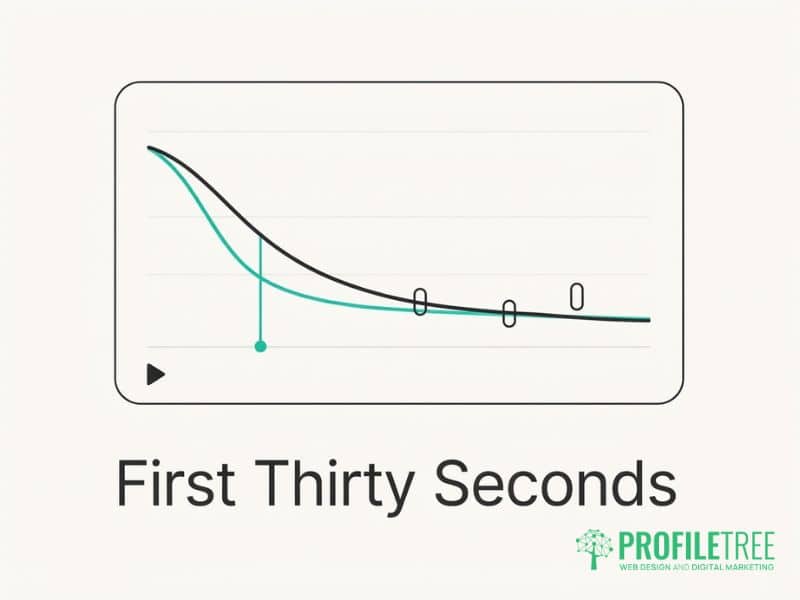
Vlog storytelling methods live or die on the opening and the pacing, and both are measurable rather than matters of taste. The storytelling techniques above still apply. What changes is that a video platform will tell you exactly where your story lost people.
The First Thirty Seconds Decide the Rest
YouTube’s own audience retention documentation defines the Intro marker as the share of your audience still watching after the first thirty seconds. Its stated recommendations for a weak intro are to edit those opening thirty seconds and try different styles, and to bring the thumbnail and title into line with what the video actually delivers.
Read that as story advice rather than technical advice, and it’s In Media Res with a number attached. The opening has to do two jobs at once: land on a moment worth watching, and confirm the promise the viewer clicked on. A hook that contradicts the title fails even when the hook itself is strong, because the viewer came for something else.
Re-Hooks and the Pull Forward
A single opening hook won’t carry a ten-minute vlog. The Mountain structure solves this by design: each stage introduces a complication the previous stage created, so there’s a reason to stay through the middle where most attention leaks away.
In practice, that means naming the next obstacle before resolving the current one. A renovation vlog that says what went wrong on day three while the viewer is still on day two has given them an open loop. A narrative vlog that resolves each segment cleanly before moving on has given them a natural exit point every ninety seconds.
Map the Arc Before You Film
Narrative decided in the edit is narrative decided under constraint, because you can only assemble a story from footage you happened to capture. Mapping the arc first, even as five bullet points, changes what you shoot. The formats differ in how they carry that arc, and how blogs and vlogs compare as formats is worth settling before you commit to one.
Write the Change step first: what’s different by the end. Then work backwards to the moment that proves it, and open there. A storytelling vlog built that way has a spine before a single clip is shot.
The 5 C’s Framework
The 5 C’s framework is a practical checklist for assessing whether a piece of content has the basic components of a story. It sits alongside the storytelling techniques above as a test rather than a structure. It applies equally to a five-hundred-word blog post and a ten-minute vlog, and it’s worth running through before writing rather than after.
| Element | What it means | Ask yourself |
|---|---|---|
| Character | A person the audience can follow | Whose story is this about? |
| Conflict | The problem or obstacle driving the narrative | What’s the barrier to success? |
| Context | Setting, timing and stakes | Why does this matter now? |
| Change | The transformation that takes place | What shifts by the end? |
| Conclusion | The takeaway or call to action | What should the reader do next? |
The most common failure point in any storytelling blog post or vlog is the absence of Change. A post that describes a problem accurately and explains a solution thoroughly, but doesn’t show what shifts as a result, leaves the audience with information and no narrative momentum. Change is what separates a useful article from a memorable one.
Ciaran Connolly, founder of ProfileTree, puts it directly: “Most business content fails at the Change step, not the Character or Conflict step. Teams describe the problem well and the fix well, but they don’t show what’s actually different afterwards. That’s the sentence that stays with readers.”
How Storytelling Differs Between Blogs and Vlogs
The storytelling techniques transfer between formats. Execution differs, because each medium handles attention in its own way.
Blogs rely on descriptive language to create mental pictures. Knowing how to use storytelling techniques in blog posts means recognising that word choice carries more weight than in video, since the reader builds the scene entirely from text. A vlog can show a messy desk; a blog post has to describe it with enough specificity that the reader pictures it. Generic description produces generic engagement.
Vlogs have an immediacy that written content can’t match, and a pacing problem that written content doesn’t have. Ofcom’s Media Nations 2026 report put total in-home video viewing at 4 hours 23 minutes per person per day across all devices in 2025, down seven minutes year on year, and notes that the most popular content watched on YouTube is short form. Your vlog is competing inside that block against everything else in it, which is why the arc has to declare itself early.
The boundary worth drawing is between technique and application. This page covers the narrative methods themselves. Applying them to commissioned, story-driven video is a separate craft, covered in ProfileTree’s guide to video storytelling, and the production side sits with our video marketing services.
Storytelling Techniques and Search Visibility

Storytelling techniques and search optimisation get treated as competing priorities. They aren’t. The same structural choices that hold a reader also affect how search engines and AI systems evaluate and surface a page.
A long-form storytelling blog post with a clear narrative structure produces lower bounce rates and longer dwell times, and both feed into how pages are assessed. Self-contained sections, particularly those written answer-first, are easier to extract for AI Overviews and featured snippets. The opening sentence of each section should answer the question the heading poses, which is the same BLUF discipline a good story opening uses.
Internal linking benefits from story logic too. When content moves naturally from one related topic to the next, there are real opportunities to link to service pages or related guides in context rather than bolting them on at the end.
Practice and Common Pitfalls
Storytelling techniques improve through deliberate practice, and the failures are predictable enough to plan around.
Build a Story Bank
The most effective starting point is a running document recording experiences, client conversations, project outcomes and observations that might form the basis of future content. Most marketers have a richer archive of genuine material than they realise. Retrieval is the gap, not material.
Record yourself, too. Vloggers know this intuitively, but it applies equally to bloggers: read your own posts aloud and, where you slow down, stumble, or find a sentence hard to finish, the structure has broken down. The spoken version reveals what the written version hides.
Use the 5 C’s Before You Start, Not After
Before opening a blank document or hitting record, confirm there’s a character, a conflict, a context, a change and a conclusion worth reaching. Content that starts without these elements rarely acquires them during writing. For teams building this as an internal skill, ProfileTree’s digital marketing training covers narrative frameworks alongside the technical side of content production.
Where Business Stories Fail
The most common failure in business content storytelling is removing the conflict. Trying to present the brand positively, marketers cut the problem out of the narrative and leave only the solution and the result. Without conflict, there’s no story, just a press release, and readers recognise it.
Vague attribution undermines credibility as well. A hedge that dodges naming a source, something along the lines of “plenty of companies run into this issue”, carries no weight. If the point’s worth making, it’s worth backing with a specific example, a real data point, or a named source.
Inconsistent voice across a series breaks the audience relationship. A channel that alternates between polished production and unscripted rambling, or a blog that shifts between technical analysis and lifestyle content, can’t build the expectations that keep subscribers coming back. Storytelling style is part of a brand’s voice, and readers notice when it moves around.
Client feedback tends to name the same thing. Tara Thompson, reviewing ProfileTree on Google: “From start to finish, he made our session fun and interesting. His attention to detail and ability to capture the essence of our brand through video was fantastic. He listened to our vision, offered great suggestions, and delivered a series of high-quality videos that exceeded our expectations.”
Putting the Techniques to Work
You don’t need to use these storytelling techniques in isolation. A single case study might open in media res, follow the Mountain structure through the project’s complications, and close with the Change and Conclusion steps from the 5 C’s. It’s a starting frame, not a rulebook.
Start with one piece of upcoming content. Apply the 4 P’s checklist to confirm the basics are in place, then choose the technique from the Framework Finder that matches its goal. Write the Change step before anything else, and the rest of the structure tends to fall into place behind it.
FAQs
1. What are the most effective storytelling techniques for vlogs?
Vlog storytelling methods work best when the arc is mapped before filming rather than discovered in the edit. In Media Res is the strongest opening technique for vlogs because it front-loads the most engaging moment instead of easing viewers in. The Hero’s Journey and the Mountain structure both suit longer vlogs where a project unfolds over several stages.
2. What are the core storytelling techniques for blog posts?
The most useful storytelling techniques for blog posts are In Media Res, the Mountain structure, personal anecdotes grounded in specific experience, and character-led problem framing. Applying the 5 C’s before writing puts the structural foundations in place before a paragraph gets drafted.
3. What are the 5 C’s of storytelling?
The 5 C’s are Character, Conflict, Context, Change, and Conclusion. Character gives the audience someone to follow, Conflict supplies the obstacle, Context sets the stakes, Change shows the transformation, and Conclusion states the takeaway. The element missing most often in business content is Change.
4. What’s the 4 P’s storytelling method?
The 4 P’s are People, Place, Plot, and Purpose. People identify who the story follows, Place sets the scene, Plot covers what happens and in what order, and Purpose explains why the story needs telling at all. It works as a quick pre-writing check before applying a fuller technique.
5. What’s the difference in storytelling between blogs and vlogs?
Blogs rely on word choice to build mental imagery, since readers construct everything from the text. Vlogs use editing, transitions, and audio to pace the narrative instead, and platform analytics show precisely where the pacing failed. Both formats benefit from the same underlying storytelling techniques.