
Storytelling in Training: 9 Great Tips to Enhance Your Programmes
Table of Contents
Storytelling in training turns abstract concepts into relatable scenarios that learners remember and apply. Used well, it improves engagement, retention, and behavioural change across in-person, virtual, and e-learning formats. ProfileTree designs digital training programmes for SMEs across Northern Ireland, Ireland, and the UK.
Most training content fails at the same point: the learner forgets it within a week. Slides get clicked through, compliance modules get half-watched, and the knowledge rarely makes it into day-to-day work. Storytelling fixes a large part of that problem because the human brain holds onto narrative far more readily than it holds onto a bullet list.
This guide covers why storytelling improves training outcomes, the story types that suit different goals, how to build stories into a programme without it feeling like a gimmick, and how to measure whether any of it worked.
“We’ve run training sessions where the facts were correct and the slides were tidy, and people still walked out with nothing,” says Ciaran Connolly, founder of ProfileTree. “The sessions that stick are the ones built around a real situation the learner recognises. Story gives the information somewhere to live.”
Why Storytelling Works in Training
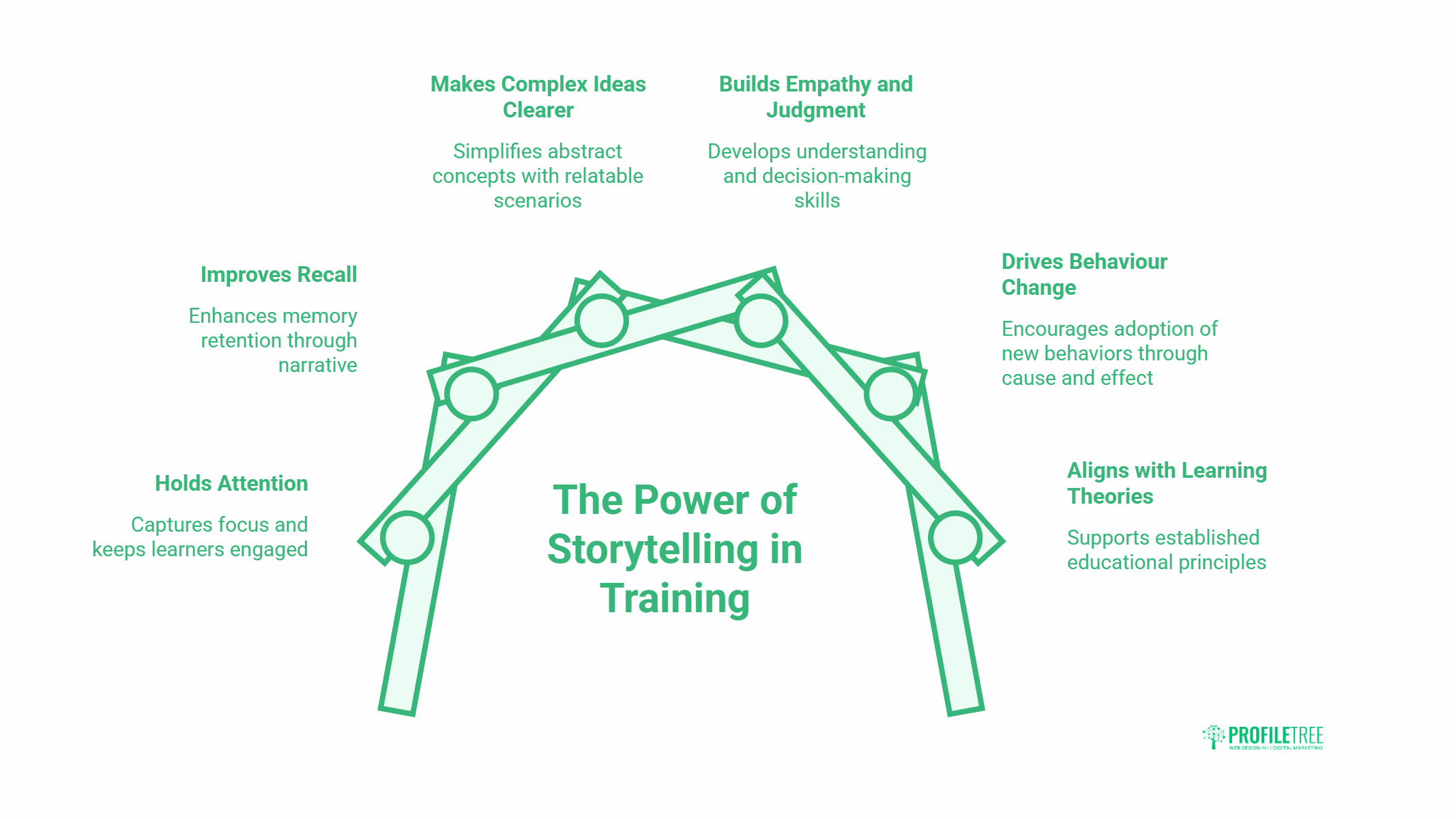
Storytelling improves training because narrative is easier to follow, remember, and act on than isolated information. The benefits show up across engagement, retention, comprehension, and behaviour, whether the session runs in a room, over video, or inside an e-learning platform.
It Holds Attention
A story pulls focus in a way a data table cannot. When someone becomes invested in a character or situation, they pay closer attention and take in more of what follows. That attention is the foundation on which everything else builds.
It Improves Recall
Information set inside a narrative is easier to retrieve than the same information presented as standalone points. The brain organises and recalls knowledge through stories, which is why a well-placed scenario can carry a key message long after the session ends.
It Makes Complex Ideas Clearer
Technical or abstract concepts land better when they sit inside a recognisable situation. Rather than explaining a process in theory, a story shows it in action, so learners can see how to apply it in their own role. The same principle shapes how we approach digital training for SMEs: tie the lesson to a task the learner actually does.
It Builds Empathy and Judgment
Narratives that explore workplace dilemmas or different viewpoints help learners see a situation from more than one angle. That strengthens interpersonal skills and decision-making, which matter most in leadership and customer-facing roles.
It Drives Behaviour Change
Effective training changes what people do, not just what they know. Stories show cause and effect: the result of adopting a behaviour and the cost of ignoring it. That makes a change feel achievable rather than like another instruction to file away.
How Storytelling Connects to Learning Theory
Storytelling lines up with several established learning theories, which is part of why it works so reliably.
- Constructivism: learners build new knowledge by linking it to existing experience, and familiar stories give them something to attach the new idea to.
- Experiential learning: Kolb’s cycle holds that people learn through experience, reflection, and experimentation; a relatable story simulates that experience at low risk.
- Social learning theory: Bandura showed that people learn by observing others, so stories that model good behaviour give learners a pattern to copy.
Types of Stories that Work in Training
Different story types serve different training goals, so the right choice depends on the audience, the objective, and the delivery method. The table below maps common types to the situations they suit best.
| Story type | Best for | Delivery fit |
|---|---|---|
| Personal anecdote | Building trust and credibility | In-person, live virtual |
| Case study / success story | Showing theory applied in practice | Sales, service, leadership training |
| Hypothetical scenario | Problem-solving and decision-making | Group work, role-play, reflection |
| Customer or client journey | Building a customer-first mindset | Product and client-facing roles |
| Micro-story / interactive snippet | Short, focused concepts | E-learning, microlearning |
| Historical story | Leadership, ethics, innovation | Any format, adds context |
Personal Anecdotes From the Trainer
When a trainer shares a real challenge they faced or a mistake they learned from, they stop being just an authority figure and become someone who has dealt with the same problems the learners have. That credibility is hard to manufacture any other way.
Case Studies and Real Success Stories
Case studies show how the training content played out in a real situation, which is why they work so well for data-driven or process-based topics like sales techniques, customer service, and leadership. They give the material credibility and show the tangible result of doing it well.
Hypothetical Scenarios
For problem-solving and decision-making, an invented scenario lets you build exactly the situation the training needs. Learners can work through it in group discussion, role-play, or private reflection, applying their judgment in a setting where mistakes carry no real cost.
Customer and Client Journeys
Following a customer from the first problem to resolution shows learners how their own work affects the people they serve. That perspective builds empathy and a customer-first mindset, which is valuable for anyone in a client-facing role.
Micro-stories and Interactive Snippets
Short story fragments suit e-learning and microlearning, where attention is limited, and topics need to be broken into digestible pieces. Interactive snippets, where a learner’s choice changes the outcome, work especially well for compliance, safety, and customer-interaction training because they show consequences in real time. If you deliver this online, the platform matters as much as the content, which is where solid website development, reliable hosting and management earn their keep.
Historical Stories
Stories from history, whether scientific discoveries, strategic decisions, or cultural turning points, show how timeless principles play out in practice. Connecting a past event to current content helps learners see that today’s challenges are often older problems in new clothing.
How to Build Storytelling Into Your Programmes
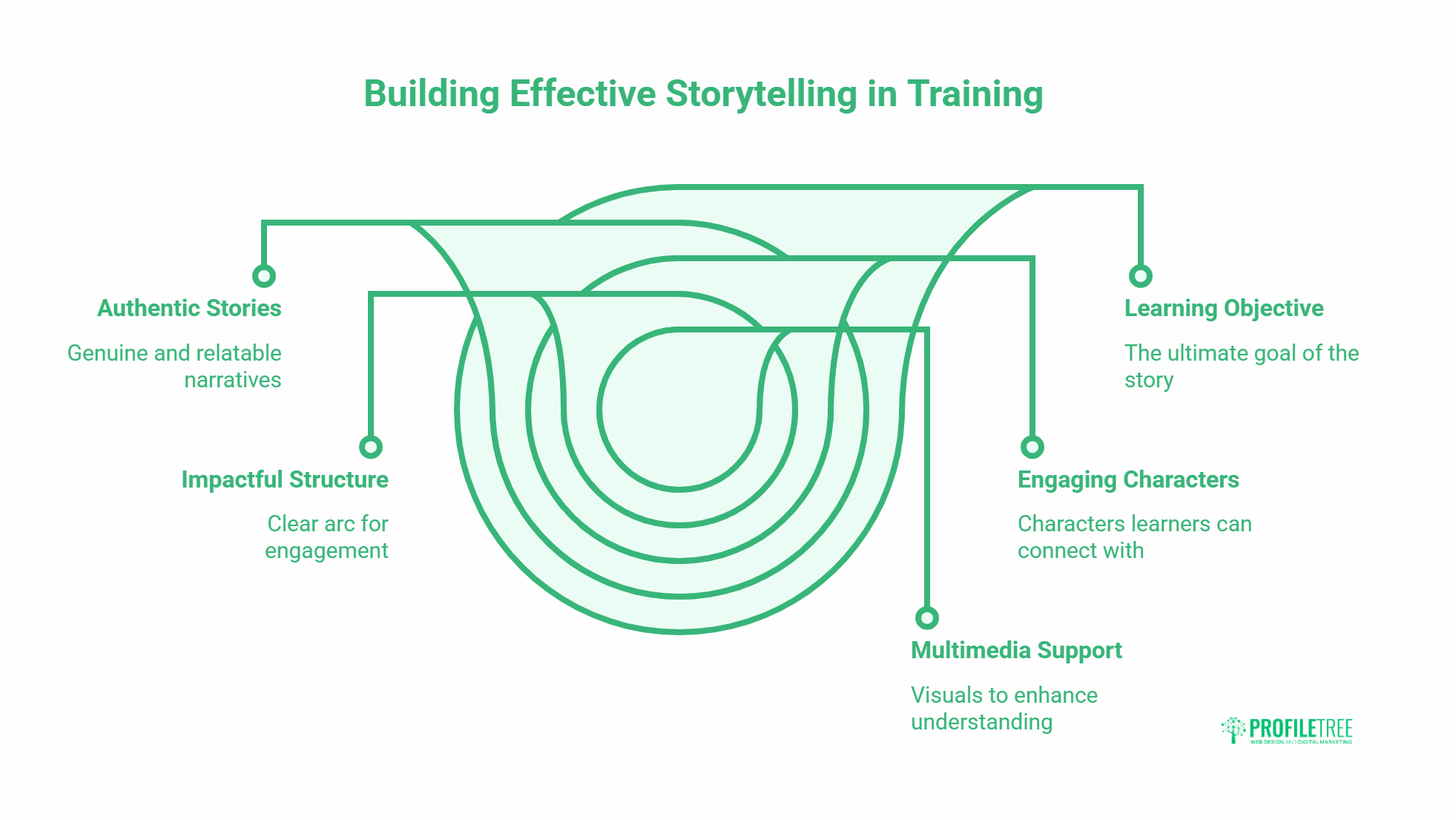
Storytelling only helps when it’s purposeful and tied to a learning objective; a story told for its own sake just eats time. The steps below keep stories aligned with what you actually want learners to take away.
Know your Audience
Start with who the learners are: their roles, industry, and the problems they face daily. A session for frontline retail staff might use stories about difficult customer interactions, while a leadership programme leans on stories about managing team dynamics. The closer the story sits to the learner’s reality, the more attention it earns.
Anchor Every Story to an Objective
Before choosing a story, decide which skill or behaviour it needs to reinforce. Each story should illustrate that objective directly, so the learner experiences the lesson rather than just hearing it stated.
Develop Relatable Characters
Strong stories rely on characters learners recognise, whether invented personas or composites of real colleagues and customers. When a character faces a problem the learner knows, such as a tight deadline or a dissatisfied customer, the story becomes a practical tool rather than an anecdote.
Choose Themes that Match the Content
Themes should connect to both the training goal and the audience’s working life. Diversity training might explore unconscious bias; sales training might focus on active listening or handling objections. Aligning the theme with the content keeps the story useful rather than distracting.
Structure the Story for Impact
A training story should follow a clear arc. Set the scene and introduce the challenge, work through the struggle and the decisions it forces, then close with a resolution that lands the learning point. That structure keeps learners engaged and ties the story back to the objective.
Use Multimedia Where It Helps
Visuals, animation, voice-over, and video can deepen a story, particularly in digital learning. Animated sequences can show scenarios that are hard to describe in text, and video brings characters to life. Producing that material well takes planning, which is why teams often bring in video production support rather than relying on stock clips.
Engage Learners Actively
Storytelling works best as a two-way process. Q&A, group discussion, and role-play let learners shape the story’s direction, and inviting them to share their own experiences builds a sense of shared ground that reinforces the material.
Adapt the Format to the Delivery Method
Storytelling suits more than the in-person workshop. Online courses can use narrated video, branching storylines, or case studies; microlearning can deliver bite-sized narratives that reinforce a single skill. Mapping content to the right format is part of any sound digital strategy.
Keep It Authentic
Learners disengage fast from stories that feel contrived or overdramatic. Use genuine, recognisable situations and avoid clichés. Whether the story comes from trainer experience, company history, or a customer journey, it should reflect the learner’s reality closely enough that they can see themselves in it.
Measuring the Impact of Storytelling
To prove storytelling is more than an engaging extra, measure it. A mix of quantitative and qualitative signals shows whether stories are improving understanding, retention, and on-the-job application.
Engagement Metrics
Attendance, completion rates, and session ratings give an early read on whether stories are drawing learners in. Quick feedback forms that ask whether the story made the material clearer add a useful real-time signal.
Knowledge Retention
Compare quiz results immediately after training with results a few weeks later. Consistent recall over time suggests the narrative made the lesson stick. When learners reference a specific character or plot point to recall an answer, that’s a strong sign the story did its job.
Learner Feedback
Post-training surveys should go beyond satisfaction and ask whether the stories clarified abstract ideas, whether the characters were relatable, and whether the content felt applicable to real tasks. Qualitative answers often reveal which elements landed and which fell flat.
Long-term Behaviour Change
The real test is whether behaviour shifts. Work with managers to track whether learners apply the lessons, reference the stories in decisions, and show improved judgment. Manager check-ins and performance reviews turn a vague sense of impact into something you can evidence. The same measurement discipline applies to any digital marketing programme: define the outcome first, then track it.
How ProfileTree Helps with Training that Sticks
ProfileTree is a Belfast-based digital agency that builds training and learning content for SMEs across Northern Ireland, Ireland, and the UK. We design AI training programmes and broader digital training built around real scenarios rather than slide decks, and we produce the supporting video and e-learning material in-house. If you’re planning a programme and want it to change behaviour rather than just fill a calendar slot, that’s the work we do.
Frequently Asked Questions
What Is Storytelling in Training?
Storytelling in training is the use of narrative, characters, and real or hypothetical scenarios to teach a concept or skill. It works because people retain and apply information more easily when it sits inside a story than when it’s presented as standalone facts.
Does Storytelling Actually Improve Learning Outcomes?
Yes. Stories improve attention, recall, and the likelihood that learners apply what they’ve learned. The effect is strongest when the story is tied directly to a learning objective and reflects situations the learner recognises.
What Types of Stories Work Best in Corporate Training?
Case studies and customer journeys suit process and service training, hypothetical scenarios suit decision-making, and personal anecdotes build trust. The right type depends on your goal and audience, rather than any single format being best.
How Do I Measure Whether Storytelling Worked?
Track engagement (completion and session ratings), retention (quizzes immediately after and weeks later), learner feedback, and on-the-job behaviour change observed by managers. Behaviour change is the most meaningful measure.
Can Storytelling Work in E-learning and Not Just Live Sessions?
Yes. Micro-stories, narrated video, and branching interactive scenarios bring storytelling into e-learning effectively. Compliance and safety training, in particular, benefits from interactive snippets that show the consequences of a learner’s choices.
Where to Take This Next
Storytelling makes training more engaging, easier to remember, and more likely to change how people work. Tie each story to a clear objective, choose the type that fits your goal, and measure the result against behaviour rather than satisfaction scores. Do that consistently and your training stops being something people sit through and starts being something they use.