
SEO for Accountants: Attract More Clients Through Search
Table of Contents
Most business owners searching for an accountant start with Google. They type “accountant near me” or “small business accountant Belfast” and choose from the firms appearing in those first few results. If your accounting practice isn’t visible when potential clients search, you’re losing business to competitors who’ve invested in their online presence.
SEO for accountants differs from other professional services in important ways. You’re competing in a trust-based industry where credentials matter enormously. Clients are handing over sensitive financial information and relying on your expertise for compliance and strategic advice. Your website and search presence need to communicate competence and reliability before a prospect ever picks up the phone.
The good news is that many accounting firms still rely primarily on referrals and networking, leaving significant opportunity for practices willing to invest in search visibility. ProfileTree works with professional services firms across Northern Ireland and beyond, and we consistently see that accountants who commit to SEO gain a substantial competitive advantage in their local markets.
Why Search Visibility Matters for Accounting Practices
The accounting profession is changing. While referrals remain valuable, an increasing number of business owners and individuals research accountants online before making contact. They compare services, read reviews, and assess credibility through websites long before scheduling a consultation.
Research shows that 70% of people would rather learn about a business through articles than advertisements. For accountants, this means educational content about tax planning, compliance requirements, and financial management creates opportunities to demonstrate expertise while attracting search traffic.
Local search matters particularly for accountants. Most clients prefer working with a firm they can visit in person, especially for initial meetings and sensitive matters. When someone searches for “chartered accountant Derry” or “tax advisor Belfast,” they’re actively seeking local expertise. Appearing in Google’s Map Pack for these searches puts your firm directly in front of motivated prospects.
The regulatory environment also creates SEO opportunities. HMRC deadlines, Making Tax Digital requirements, and changing legislation generate predictable search interest. Firms that publish timely, accurate content around these topics capture traffic from business owners seeking guidance—exactly the audience most likely to need accounting services.
Setting Up Your Accounting Firm’s Google Business Profile
Your Google Business Profile determines whether you appear in local search results and the Map Pack. For accountants, a well-optimised profile builds credibility and generates enquiries directly from search results.
Selecting Appropriate Categories
Google offers several relevant categories for accounting firms:
- Accountant (primary for most general practices)
- Chartered Accountant
- Tax Consultant
- Bookkeeping Service
- Payroll Service
- Financial Consultant
Choose your primary category based on your main service. A traditional accounting practice should use “Accountant” or “Chartered Accountant” rather than a specialist category. Add secondary categories for additional services you provide—tax consulting, bookkeeping, payroll, and financial advisory work.
Building a Complete Profile
Every field in your profile should be completed thoughtfully:
Business Description: Write a clear summary of your services, specialisms, and the types of clients you serve. Mention your location and any particular expertise—whether that’s small business accounting, contractor specialists, or specific industries you focus on.
Services: List each service with descriptions using terms clients actually search for. “Self-assessment tax returns” alongside “personal tax services,” for instance. Include services like management accounts, company formation, VAT registration, and audit if you offer them.
Qualifications and Credentials: While Google doesn’t have a specific field for professional memberships, mention your ICAEW, ACCA, CIMA, or AAT credentials in your description. These matter enormously to potential clients evaluating your firm.
Photos: Upload professional images of your office, team, and meeting spaces. Accounting is a trust-based profession—clients want to see who they’ll be working with. Avoid stock photography; authentic images of your actual premises and team members build confidence.
Opening Hours: Keep these accurate, including any reduced hours during summer or extended availability around tax deadlines. Inaccurate information frustrates potential clients and damages trust before you’ve even met.
Encouraging and Managing Reviews
Reviews significantly influence both rankings and client decisions. Accounting clients who’ve had positive experiences often need prompting to share feedback online. Effective approaches include:
- Sending a follow-up email after completing significant work (annual accounts, tax returns, successful advisory projects)
- Mentioning reviews during year-end meetings with satisfied clients
- Including a review link in your email signature
- Training staff to ask for reviews when clients express satisfaction
Respond to every review professionally. For positive reviews, thank the client and briefly reinforce the service provided. For negative reviews—rare in accounting but not unknown—respond calmly, acknowledge the concern, and offer to discuss offline. Never reveal confidential client information in review responses.
Website Structure for Accounting Firms
Your website needs to convert visitors into enquiries while satisfying Google’s requirements for professional services content. Structure matters for both user experience and search engine understanding.
Essential Pages for Accountants
Service Pages: Create individual pages for each core service rather than listing everything on a single page. Separate pages for:
- Accounts and tax returns for limited companies
- Self-assessment tax returns
- Bookkeeping and management accounts
- VAT registration and returns
- Payroll services
- Company formation
- Tax planning and advisory
- Audit services (if applicable)
Each page should explain the service clearly, outline what’s included, indicate who it’s suitable for, and include a clear call to action.
Industry or Sector Pages: If you specialise in particular sectors, create dedicated pages. Accountants for contractors, property investors, healthcare professionals, or hospitality businesses can target specific search terms while demonstrating relevant expertise.
Location Pages: For firms serving multiple areas or with multiple offices, create location-specific pages. An accountant with offices in Belfast and Newry should have distinct pages for each, with unique content about serving businesses in those areas.
About and Team Pages: Accounting is personal. Clients want to know who will handle their affairs. Create detailed profiles for partners and key staff, including qualifications, experience, and areas of specialisation. These pages build E-E-A-T signals that Google values for professional services.
Resources Section: A blog or resources area for guides, tax tips, and deadline reminders serves multiple purposes—attracting search traffic, demonstrating expertise, and providing value to existing clients.
Technical Foundations
Professional services websites need solid technical foundations. Accounting clients expect competence, and a slow or poorly functioning website undermines that perception.
Ensure your site loads quickly on mobile devices. Many prospects will find you while searching on their phone, and slow sites lose visitors before they’ve even seen your content.
Implement HTTPS security—essential for any business handling client information. Google also uses HTTPS as a ranking factor, though more importantly, clients notice (and distrust) unsecured sites.
Use clear navigation that helps visitors find relevant services quickly. Someone looking for contractor accountants shouldn’t need to dig through multiple menus to find information relevant to them.
Our guide to SEO basics at profiletree.com/seo-basics/ covers these technical fundamentals in more detail for firms building or improving their websites.
Content Strategy for Accounting Firms
Content marketing builds authority, attracts search traffic, and demonstrates the expertise that differentiates your firm from competitors. For accountants, content opportunities are both predictable (around tax deadlines and regulatory changes) and evergreen (fundamental questions clients always have).
Deadline-Driven Content
The accounting calendar creates natural content opportunities:
January: Self-assessment deadline content, last-minute tax tips, payment on account explanations
March/April: Year-end tax planning for individuals, ISA allowances, pension contributions before tax year-end
April: New tax year changes, threshold updates, allowance changes
September/October: Company year-end planning, advance self-assessment preparation
Throughout the year: Corporation tax payment deadlines, VAT quarter ends, RTI submissions, Making Tax Digital updates
Publishing timely content around these dates captures search traffic from people actively seeking guidance—exactly when they’re most likely to need professional help.
Evergreen Educational Content
Some topics generate consistent search interest year-round:
- How to register as self-employed
- Limited company vs sole trader comparison
- Allowable business expenses guides
- Director’s salary and dividend planning
- IR35 and contractor status
- Capital gains tax basics
- Inheritance tax planning fundamentals
These pieces attract steady traffic and position your firm as a helpful resource. Someone reading your guide to business expenses today may need full accounting services in six months.
Local Content for Accountants
Content with local relevance strengthens your position in geographic searches:
- Guides to business grants and support in Northern Ireland
- Local business networking events and opportunities
- Regional economic updates relevant to your client base
- Industry-specific content for sectors prominent in your area
For Northern Ireland firms, content addressing cross-border considerations—businesses trading in both the UK and the Republic of Ireland—addresses real client needs while targeting less competitive search terms.
Demonstrating E-E-A-T
Google’s E-E-A-T guidelines (Experience, Expertise, Authoritativeness, Trustworthiness) apply strongly to financial advice. Every piece of content should:
Show expertise: Include author information with qualifications. Content written or reviewed by qualified accountants carries more weight than anonymous articles.
Demonstrate experience: Reference real scenarios (anonymised appropriately) and practical applications rather than purely theoretical explanations.
Build authority: Link to official sources (HMRC, Companies House, professional bodies) and demonstrate understanding of current regulations.
Establish trust: Include clear contact information, display professional memberships, and maintain accurate, up-to-date content.
Our guide to Google’s E-E-A-T requirements at profiletree.com/seo-guide-google-e-a-t-update/ explains how these factors influence rankings for professional services firms.
“Accountants have a natural advantage in content marketing—you’re explaining topics that business owners genuinely need to understand. The firms that translate technical knowledge into accessible guidance build trust long before a client ever makes contact.” — Ciaran Connolly, ProfileTree
Local SEO Strategies for Accountants
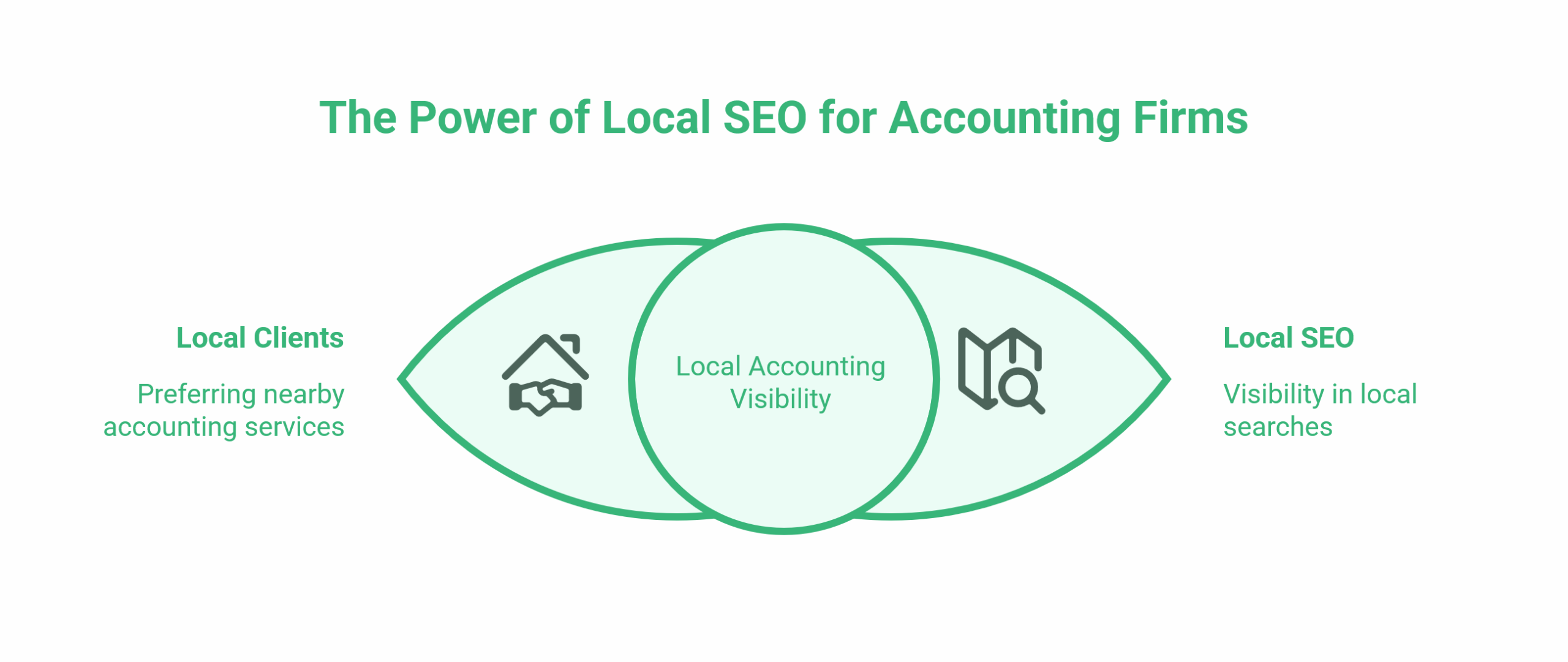
Most accounting clients prefer working with local firms. Local SEO ensures you’re visible when potential clients search for accountants in your area.
Building Local Citations
Directory listings reinforce your local presence and send trust signals to Google. Prioritise:
Professional directories:
- ICAEW Find a Chartered Accountant
- ACCA Find an Accountant
- CIMA directory
- AAT Licensed Accountant directory
Business directories:
- Yell.com
- Thomson Local
- Yelp
- Local chamber of commerce directories
Industry-specific platforms:
- AccountingWEB member directory
- Unbiased (for financial advisors offering accounting)
Northern Ireland specific:
- Invest NI business directories
- Local council business listings
- Discover Northern Ireland
Ensure your Name, Address, and Phone number are identical across all listings. Inconsistencies confuse search engines and reduce the effectiveness of your local SEO efforts. Our backlink checking guide at profiletree.com/check-backlinks/ explains how to audit your citation profile.
Hyperlocal Targeting
Consider targeting specific neighbourhoods, business parks, or areas within your broader region. An accountant in Belfast might create content targeting businesses in the Titanic Quarter, Cathedral Quarter, or specific industrial estates where they serve multiple clients.
This hyperlocal approach captures searches with less competition than broader terms while demonstrating relevant local knowledge. Our hyperlocal SEO guide at profiletree.com/hyperlocal-seo/ covers these strategies in detail.
Building Local Authority
Local links strengthen your position in geographic searches:
- Sponsor local business events or awards
- Contribute expert commentary to local business publications
- Partner with complementary professionals (solicitors, mortgage advisors, business coaches)
- Join and actively participate in local business networks
- Offer free workshops or seminars for local business organisations
These activities generate mentions and links while building genuine relationships that lead to referrals.
Competitive Differentiation Through SEO
The accounting market is competitive. SEO provides opportunities to differentiate your firm and attract clients seeking specific expertise.
Specialisation Content
If your firm has particular strengths, build content around them:
Industry specialisms: Accountants for medical professionals, creative industries, technology startups, or hospitality businesses can target industry-specific searches with less competition than generic terms.
Service specialisms: Firms with particular expertise in R&D tax credits, patent box claims, EMI share schemes, or international tax planning can attract searches from businesses with those specific needs.
Client type focus: Contractor specialists, landlord accountants, or firms focused on scaling businesses can create targeted content addressing those audiences’ particular concerns.
Competitor Analysis
Understanding what competing firms are doing helps identify opportunities:
- Which search terms do local competitors rank for?
- What content gaps exist in your market?
- How complete are competitors’ Google Business Profiles?
- What’s the review landscape like?
Often, even basic SEO execution puts a firm ahead of competitors who haven’t invested in their online presence. In many local markets, the opportunity is less about outspending competitors and more about simply showing up where they haven’t.
Technical SEO for Accounting Websites
Technical foundations ensure search engines can properly crawl, index, and rank your content.
Site Speed and Performance
Financial professionals expect competence. A slow, clunky website undermines that expectation. Ensure:
- Images are compressed appropriately
- Hosting is reliable with good response times
- Code is clean and efficient
- Mobile experience is smooth
Test your site using Google’s PageSpeed Insights and address any significant issues. Mobile performance matters particularly, as many initial searches happen on phones.
Schema Markup for Accountants
Structured data helps search engines understand your content. Implement:
LocalBusiness schema: Including your address, phone, opening hours, and service area.
ProfessionalService schema: Appropriate for accounting firms, allowing you to specify the types of services offered.
FAQPage schema: For FAQ content, potentially generating rich results in search.
Person schema: For team member profiles, including credentials and areas of expertise.
If your current website lacks proper technical optimisation, ProfileTree’s web development team builds sites designed for both user experience and search performance. Details at profiletree.com/services/website-development/.
Content Freshness
Accounting content needs regular updates. Tax rates change, thresholds adjust, and regulations evolve. Content referencing outdated figures damages credibility and can harm rankings.
Establish a review schedule for key content:
- Update threshold and rate information immediately when changes take effect
- Review evergreen guides annually for continued accuracy
- Refresh deadline content each year with current dates
- Remove or redirect content about expired schemes or superseded legislation
Measuring SEO Success for Accountants
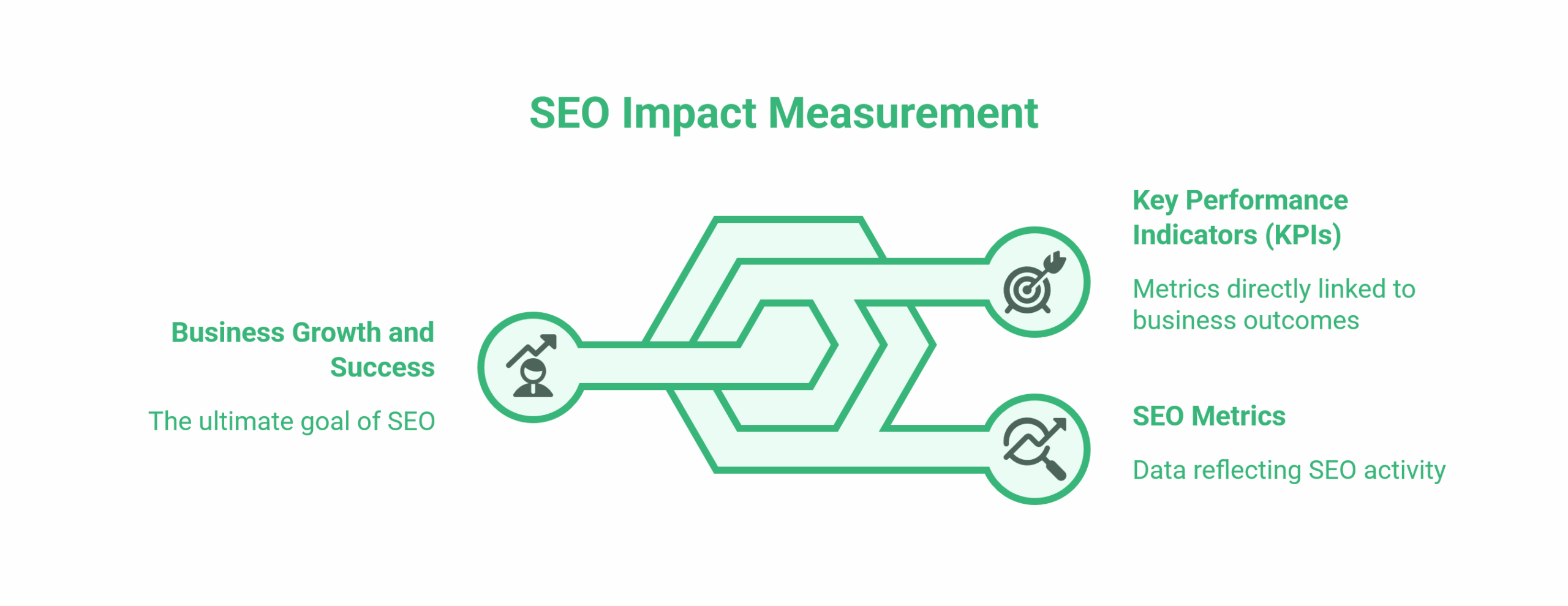
Track metrics that connect SEO activity to business outcomes.
Key Performance Indicators
Search visibility:
- Rankings for target keywords (both service terms and local terms)
- Organic traffic to service and location pages
- Impressions and clicks from Google Search Console
Engagement:
- Time on page for key content
- Pages per session
- Bounce rate on service pages
Conversions:
- Contact form submissions
- Phone calls from the website
- Email enquiries
- Download of resources (guides, checklists)
Business outcomes:
- New client enquiries attributed to organic search
- Quality of leads (are searchers becoming clients?)
- Revenue from search-acquired clients
Attribution Considerations
Accounting clients often research extensively before making contact. Someone might find your firm through search, read several articles over weeks, then call months later when they have a specific need. Simple last-click attribution understates SEO’s contribution.
Consider tracking:
- First touch attribution (how clients initially found you)
- Assisted conversions (SEO’s role in multi-touch journeys)
- Time lag from first visit to enquiry
Ask new clients how they found you. I searched online and found your website” confirms SEO’s contribution even when analytics data is incomplete.
Common SEO Mistakes Accountants Make
Avoid these frequent errors:
Neglecting Google Business Profile: Many firms set up a basic profile and forget it. Regular posts, updated photos, and prompt review responses improve visibility and engagement.
Thin service pages: Single paragraphs describing services don’t rank well or convert visitors. Develop comprehensive service pages that answer common questions and demonstrate expertise.
Ignoring content updates: Tax content with outdated figures damages credibility. Establish processes to update content when regulations change.
Overlooking mobile experience: Many prospects search on phones. If your site is difficult to use on mobile, you lose potential clients.
Missing local opportunities: Generic content without local relevance misses easier ranking opportunities. Include location-specific content and references.
No clear calls to action: Visitors need obvious next steps. Include phone numbers, contact forms, and consultation booking options prominently on every page.
Getting Started with SEO for Your Accounting Practice
If you’re beginning SEO work or reviewing an existing strategy:
Immediate priorities:
- Claim and fully complete your Google Business Profile
- Ensure your website clearly explains your services with dedicated pages
- Verify NAP consistency across existing directory listings
- Check mobile experience and basic technical health
First three months:
- Develop content around upcoming deadlines and common client questions
- Build citations in professional and local directories
- Implement review request processes
- Add schema markup for local businesses and services
Ongoing:
- Publish regular content aligned with the accounting calendar
- Respond to all reviews promptly
- Update content when regulations change
- Monitor rankings and traffic, adjusting strategy based on results
FAQs
How long before SEO generates new client enquiries?
Most accounting firms see initial improvements in visibility within two to three months, with meaningful enquiry increases typically appearing between four and eight months. SEO builds momentum over time—results after 12 months often exceed those after 6 months by a substantial margin.
Should I target national or local search terms?
For most accounting firms, local terms offer better return on investment. Competition for “accountant” nationwide is intense; “accountant Lisburn” or “small business accountant Belfast” is far more achievable and targets people who are likely to become clients. Target national terms only if you genuinely serve clients regardless of location.
How much content do I need to publish?
Quality matters more than quantity. One comprehensive, well-researched article monthly is better than weekly thin content. Focus on topics with genuine search demand and where you can provide real expertise. Build a content calendar around the natural rhythm of the accounting year.
Do I need to blog if I hate writing?
Content remains important, but you have options. Video content works well for explaining complex topics. Podcasting suits accountants comfortable speaking about their expertise. Alternatively, work with professional content writers who understand accounting—you provide the expertise, they handle the writing.
Building Long-Term Search Visibility: SEO for Accountants
SEO for accountants isn’t about tricks or shortcuts. It’s about building a genuine online presence that reflects your firm’s expertise and helps potential clients find you when they’re searching for help.
The fundamentals are straightforward: maintain an accurate, complete Google Business Profile; build a website that clearly explains your services; create helpful content that demonstrates your knowledge; and ensure consistent information across online directories.
Firms that execute these basics consistently gain a significant advantage over competitors still relying solely on traditional referral networks. In many local markets, simply being present and visible in search results differentiates you from firms that haven’t made the investment.
If you’re ready to improve your accounting firm’s search visibility, ProfileTree’s SEO team works with professional services firms across Northern Ireland, Ireland, and the UK. We understand both the technical requirements and the professional context that shapes effective marketing for accountants. Get in touch at profiletree.com/contact-us/ to discuss how we can help your practice attract more clients through search.